

P2181 on 2015 Volkswagen Jetta TDI: Cooling System Performance Causes and Fixes
On a 2015 VW Jetta TDI, code P2181 almost always means the thermostat is stuck open, preventing the engine from warming up. The fix is to replace the entire coolant regulator (thermostat) housing assembly, which is a moderately difficult job. A faulty coolant temperature sensor is a rare secondary cause.
- P2181 on your 2015 Jetta TDI means the engine is running too cool, not too hot.
- The cause is almost certainly a thermostat that has failed in the 'stuck open' position.
- The fix requires replacing the entire coolant regulator housing (Part No. 04L121026AH), not just a simple thermostat part, making it a moderately complex and costly repair.
- Confirm the diagnosis by watching the coolant temperature on a scan tool; if it drops at highway speeds, the thermostat is bad.
- While you're at it, be aware of other common EA288 cooling system issues like clogged heater cores.
What's Unique About the 2015-2015 Volkswagen Jetta
The 2015 Jetta TDI uses the 2.0L EA288 diesel engine, which features a complex thermal management system with multiple cooling circuits for the head and block to speed up warm-up and improve efficiency. Unlike older cars with a simple, standalone thermostat, the EA288 integrates the thermostat into a large, plastic 'coolant regulator housing' or 'thermal management module'. This module is designed for precise temperature control to improve efficiency and emissions. The thermostat is designed to fail in the open position as a fail-safe to prevent overheating, which is why P2181 (engine too cool) is the common result of a failure on this specific engine.
Symptoms You May Notice
- Check Engine Light is on
- Engine temperature gauge reads low or never reaches the 90°C (195°F) mark
- Temperature gauge drops at highway speeds, especially when coasting downhill
- Poor or no heat from the cabin heater, or it blows lukewarm air
- Reduced fuel economy
- Engine may take longer to feel like it's running smoothly
- Replacing only the ECT sensor when the thermostat is the actual problem. Because a stuck thermostat is the most likely cause, diagnosing it first by monitoring temperature at highway speeds can save the cost of an unnecessary sensor replacement.
Most Likely Causes
- Failed Thermostat (Stuck Open) 🔴 High Probability → Shop Integrated Thermostat Housing Assembly The thermostat is a very common wear item on the EA288 engine. It is part of a complex plastic housing that is a known failure point across the VW/Audi group. It is designed to fail open, directly causing this code.
How to confirm: Use a scan tool (like VCDS) to monitor live engine coolant temperature (G62) and radiator outlet temperature (G83). If the engine warms up very slowly from cold and the G62 temperature drops significantly (e.g., from 90°C to 70°C) when driving at highway speeds, the thermostat is almost certainly stuck open.
Typical fix: Replace the entire coolant regulator (thermostat) housing assembly. The system must be drained, the part replaced, and then refilled with the correct G13-spec (or newer, like G12evo) coolant and vacuum-bled of air to prevent air pockets.
Est. part cost: $150-$400 - Faulty Engine Coolant Temperature (ECT) Sensor (G62) ⚪ Low Probability → Shop Engine Coolant Temperature Sensor While the sensor can fail, it is much less common than a thermostat failure for this specific code. A sensor failure often produces more erratic readings or other fault codes (like P0116 or P0118).
How to confirm: Compare the ECT sensor reading on a scan tool to another temperature sensor (like the radiator outlet sensor G83) and to ambient temperature when the car is cold. If the G62 reading is illogical (e.g., -40°F on a warm day, or doesn't change at all), the sensor is bad. A resistance check can also be performed: it should be 2000-3000 Ohms at 20°C (68°F).
Typical fix: Replace the Engine Coolant Temperature sensor. It is often replaced as a preventative measure when replacing the thermostat housing since it is located in the housing and labor overlaps.
Est. part cost: $20-$70
Rare But Worth Checking
- Low Engine Coolant Level: → Shop Engine Coolant / Antifreeze If the coolant is low enough for the temperature sensor to be exposed to an air pocket, it can send an incorrect reading. Always check the coolant level first, as it's the simplest check. A leak from the regulator housing itself is a possible cause of coolant loss.
- Wiring or Connector Issue: A damaged wire or corroded connector for the ECT sensor can cause erratic readings, mimicking a sensor failure. VW technical bulletins advise using only gold-plated terminals for repairs on this circuit to prevent future corrosion. This is rare but worth inspecting if a new sensor doesn't solve the issue.
- Air in Cooling System: If the system was recently serviced and not properly vacuum-bled, trapped air can cause poor circulation and incorrect temperature readings. The EA288 engine requires a specific bleeding procedure using a scan tool like VCDS to cycle its various electric pumps and valves.
Diagnosis Steps
- Check for any other stored DTCs. Codes like P0116 or P0118 alongside P2181 may point more strongly toward a sensor issue.
- Visually inspect the cooling system. Check the coolant level in the expansion tank and look for any obvious signs of leaks, particularly around the thermostat housing area below the intake manifold.
- Use an OBD-II scan tool (VCDS is highly recommended for VWs) to view live data for the Engine Coolant Temperature (G62) and Radiator Outlet Temperature (G83) sensors.
- From a cold start, compare the G62 and ambient air temp readings. They should be within a few degrees of each other. If not, suspect the G62 sensor.
- Start the engine and monitor the G62 temperature. It should rise steadily. The G83 sensor should remain cool until the thermostat opens.
- Drive the vehicle to get it to full operating temperature (around 90°C). Then, drive at a steady highway speed. If the G62 temperature drops significantly (e.g., to 70°C or lower), the thermostat is stuck open. This is the definitive test.
- If the temperature gauge behaves erratically or provides an obviously incorrect reading from the start (e.g., reads 100°C on a cold engine), suspect the ECT sensor or its wiring. Check freeze frame data; a value of -40°C or +140°C points to a sensor/wiring electrical fault.
- If the thermostat and sensor are confirmed to be good, check for air pockets in the system or, in very rare cases, a failing water pump causing insufficient circulation (though this usually causes overheating).
Parts You'll Likely Need
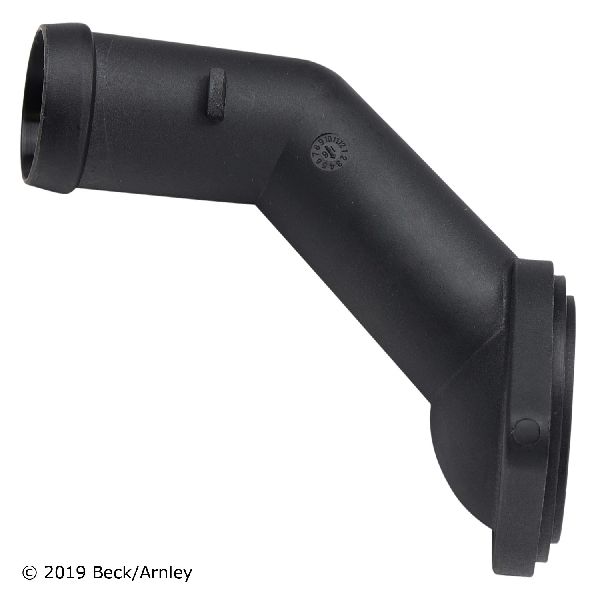
- Coolant Regulator Housing / Thermostat Assembly
(OEM #04L121026AH)— This is the most common failure part for a P2181 code on the EA288 TDI engine. The internal thermostat fails in the open position, and the entire housing must be replaced as a unit.
Trusted brands: Volkswagen (OEM), Mahle (often the OEM supplier), Rein, Febi
OEM price range: $250-$400
Aftermarket price range: $150-$250 - Engine Coolant Temperature Sensor (ECT/G62)
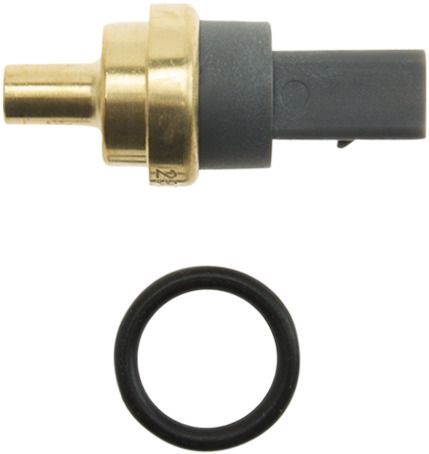
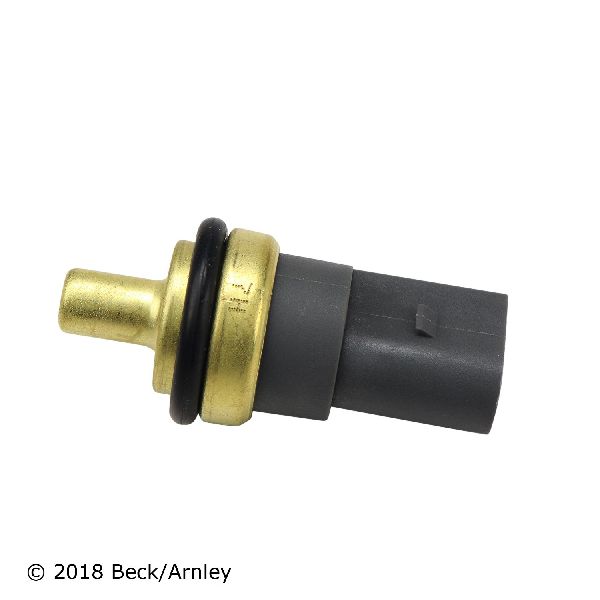
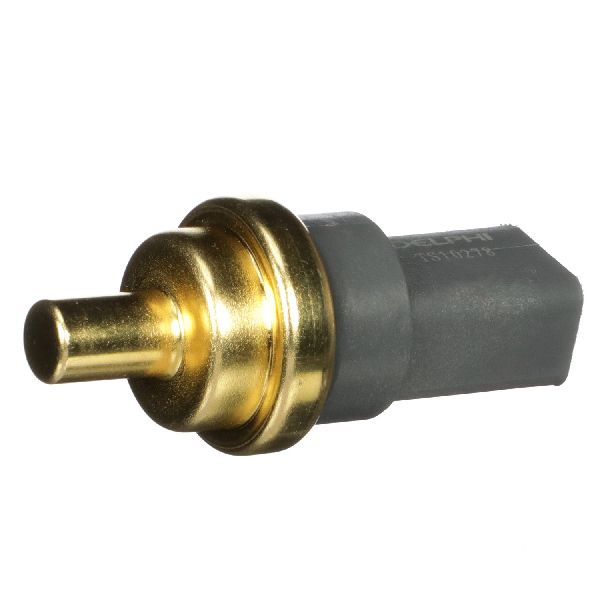
(OEM #06A919501A)— This sensor provides the temperature data to the ECM. While less likely to be the cause, it's an inexpensive part that is often replaced proactively during the thermostat job due to its location.
Trusted brands: Bosch, Hella, Delphi, NTK
OEM price range: $40-$70
Aftermarket price range: $20-$50 - G13 / G12evo Engine Coolant
(OEM #G013A8J1G (G13) or G12E050A3 (G12evo))— The cooling system must be drained and refilled for the repair. Using the correct VW-specific, phosphate-free, silicate-hybrid coolant is critical to prevent corrosion and damage to system components, including preventing heater core clogs.
Trusted brands: Volkswagen (OEM), Pentofrost E (G13 compatible), Febi (G13 compatible)
OEM price range: $25-$40 per gallon
Aftermarket price range: $20-$35 per gallon
Related Codes That Often Appear With This One
- P0116 - Engine Coolant Temperature Sensor 1 Circuit Range/Performance
Technical Service Bulletins (TSBs) & Recalls
- Audi TSB 01-14-88 (Number 2038045/2) - While for an Audi V8 engine, this TSB for P2181 is relevant. It notes the cause can be particles from the production process preventing the thermostat from closing fully. The prescribed fix is to flush the cooling system, replace the thermostat, and refill. It explicitly states, 'Replacing the coolant temperature sender does not fix the problem.' This reinforces the diagnostic priority of the thermostat over the sensor.
Platform-Specific Known Issues
- TDIClub Forum Experience: A user with a 2015 Golf TDI (same EA288 engine) reported a P2181 code at 105k miles. Symptoms were the temp gauge dropping on the highway and poor heat. The definitive diagnosis was made by logging coolant temp with VCDS, which showed a drop from 90C to 72C at speed. The fix was replacing the coolant regulator assembly (thermostat). The user noted the job was difficult due to the part's location. (Source: TDIClub Forums, thread title 'P2181 - 2015 GSW EA288 - Thermostat?')
- Reddit r/TDI Owner Story: An owner of a 2015 Jetta TDI described the classic P2181 symptoms. After confirming with an OBD-II scanner that temps were dropping at highway speeds, they had an independent shop replace the thermostat housing for approximately $850. The owner emphasized that this is a known, common failure on the EA288. (Source: Reddit r/tdi, thread title 'P2181 on my '15 Jetta')
Mechanic-Grade Diagnostic Values
- Engine Coolant Temperature Sensor (G62) Resistance — expected: Approx. 2,000-3,000 Ω at 20°C (68°F) and 275-375 Ω at 80°C (176°F).. Failure: Readings significantly outside these ranges, or an open/short circuit (infinite/zero resistance), indicate a faulty sensor.
- Freeze Frame Data for P2181 — expected: A plausible temperature in the warm-up range (e.g., 68°C - 80°C).. Failure: A stored temperature of -40°C or +140°C strongly suggests an electrical fault (open or short circuit) in the G62 sensor or its wiring, not a mechanical thermostat issue.
- VCDS Live Data - G62 vs. G83 — expected: From a cold start, G62 (engine outlet) should rise steadily while G83 (radiator outlet) stays near ambient. When G62 reaches ~87-90°C, the thermostat opens, causing G83's temperature to rise sharply.. Failure: If G62 and G83 rise at nearly the same rate from a cold start, the thermostat is stuck open.
Scan Tool Commands That Help
- VCDS (VAG-COM) or ODIS: Graphing Measuring Blocks (MVB) Group 130/131 — This is the primary diagnostic method for P2181. It allows a technician to simultaneously graph the Engine Outlet Temp (G62) and Radiator Outlet Temp (G83) to visually confirm if the thermostat is opening correctly, definitively diagnosing a stuck-open thermostat without disassembly.
- VCDS (VAG-COM) or ODIS: Basic Settings: 'IDE08087-Test - Bleed cooling circuit' — After replacing the thermostat housing or any part requiring coolant drainage. The EA288 has multiple cooling circuits and electric pumps that must be cycled by the scan tool to properly remove air pockets, which can cause cooling issues if not done.
Wiring & Ground Locations
- Engine Harness Ground — Typically located on the left side (driver's side in North America) frame rail, below or near the battery tray.. A poor main engine ground can introduce voltage fluctuations and offsets into sensor readings. This can cause the ECU to receive incorrect data from the G62 coolant temperature sensor, potentially triggering P2181 even if the sensor and thermostat are functioning correctly.
- G62 Sensor Connector — On the coolant regulator (thermostat) housing, which is located under the intake manifold on the EA288 engine.. This 2-pin connector provides the signal and ground reference to the ECU. Pin 1 is the signal wire and Pin 2 is the ground. Technicians can test for ~5V reference voltage and continuity to ground at this connector to diagnose wiring issues.
- Ground Connection on Cylinder Head — A ground strap or point directly on the cylinder head.. This is a primary ground point for many engine sensors. Corrosion or looseness here can directly impact the G62 sensor's reading accuracy.
Real Owner Repair Stories
- SEATCupra.net forum user (SEAT Leon with 2.0 TDI EA288 engine (mechanically identical cooling system)) — Not specified, but repair was for timing belt, coolant flush, and thermostat.
✅ What actually fixed it The user replaced the thermostat housing as part of a larger service. They noted extreme difficulty in removing a corroded exhaust temperature sensor required for access, ultimately having to cut a slot into a deep socket to remove it. This highlights a real-world difficulty of the job not mentioned in manuals.
OEM Part Supersession History
04L121026E, 04L121026F, 04L121026G, 04L121026J, 04L121026AE→04L121026AH— Likely revisions to improve the reliability of the plastic housing and internal thermostat mechanism to prevent premature failure (stuck open or leaking).
Heads up: All previous part numbers are superseded by 04L121026AH. While older versions might fit, installing the latest revision is highly recommended to benefit from any design improvements.
Diagnostic Flowchart
Other Known Issues on This Vehicle
Issues unrelated to this code that are worth knowing about as an owner of this generation:
- Diesel Particulate Filter (DPF) Clogging 🔴 High — Common for vehicles used primarily for short trips, as the DPF doesn't get hot enough to perform its regeneration cycle. Can lead to limp mode and costly replacement.
- Heater Core Clogging 🟠 Medium — Very common issue leading to poor or no cabin heat. Some owners report needing multiple replacements. The cause is often attributed to coolant breakdown (G12/G13) forming sediment that clogs the core's small passages.
- Intercooler Icing (in cold climates) 🟠 Medium — In freezing, humid conditions, condensation can freeze inside the intercooler, potentially blocking airflow or, upon melting, sending water into the engine, which can cause a hydrolock condition. This was a more pronounced issue on previous TDI engines but can still occur on the EA288. (Ref: An updated intercooler was released for earlier models to mitigate this.)
- Timing Belt Failure 🔴 High — While the service interval is long (130,000 miles), failure of the belt or its tensioner before this interval is not unheard of and results in catastrophic engine damage.
- Leaking Water-to-Air Intercooler 🟡 Low — The intercooler integrated into the intake manifold can develop internal leaks, causing a slow, mysterious loss of coolant. This can lead to an oil/water emulsion forming in the intake.
Used vs. New Parts: Buying Guide for This Vehicle
When a used part is the smart pick: For this specific repair, using a used part is almost never a smart choice. The primary failure part, the coolant regulator housing, is a known high-failure item made of plastic that degrades with heat cycles. A used part has unknown remaining life and carries a high risk of failing soon after installation, forcing you to repeat a labor-intensive job.
Donor-vehicle mileage cap: roughly under 10000 miles for the part to have meaningful remaining life.
What to inspect on the donor part:
- Not recommended. The risk of premature failure is too high regardless of visual condition.
- If forced to consider, only use a part from a very low-mileage, recent model year vehicle with documented service history.
- Inspect for any hairline cracks, chalky appearance, or signs of coolant weeping around seams.
OEM-only on this vehicle (don't cheap out):
- Coolant Regulator Housing / Thermostat Assembly: While OEM-supplier brands are good, this part is so critical and labor-intensive to replace that using a genuine VW part (04L121026AH) is the safest bet to ensure longevity.
Aftermarket brands forum-validated for this vehicle:
- Mahle (often the original equipment manufacturer for VW)
- Bosch or Hella (for the ECT sensor)
Brands owners have reported issues with on this vehicle:
- Unnamed, 'white-box' or unusually cheap thermostat assemblies found on auction sites. The quality of the plastic and thermostat calibration is critical and often poor on these parts, leading to rapid failure.
Real Owner Stories
Aggregated from forums and TSBs cited above. Mileages and costs reflect what owners reported in those sources.
2015 Volkswagen Golf TDI (EA288) — 105000 miles
Symptoms: The temp gauge was dropping on the highway and there was poor heat.
What fixed it: Replacing the coolant regulator assembly (thermostat).
Source hint: TDIClub Forums, thread title 'P2181 - 2015 GSW EA288 - Thermostat?'
2015 Volkswagen Jetta TDI
Symptoms: Classic P2181 symptoms, with an OBD-II scanner confirming that coolant temperatures were dropping at highway speeds.
What fixed it: An independent shop replaced the thermostat housing.
Cost: $850-$850
Source hint: Reddit r/tdi, thread title 'P2181 on my '15 Jetta'
Related OBD-II Codes
Frequently Asked Questions
Is the P2181 code on my 2015 Jetta TDI more likely the thermostat or the temperature sensor?
What's the definitive way to test if the thermostat has failed on my EA288 engine?
If I'm replacing the thermostat, what type of coolant should I use to refill my Jetta TDI?
My Jetta has poor cabin heat and the Check Engine Light is on with code P2181. Are these two issues related?
Should I replace the coolant temperature sensor (G62) at the same time as the thermostat housing?
I see other VWs like the Golf and Passat TDI get this P2181 code. Is it the same problem?
Does the Audi TSB 01-14-88 about P2181 apply to my Volkswagen?
We Have This Part in Stock

The information in this article is provided for general reference and educational purposes only. Vehicle specifications, procedures, and part compatibility can vary by production date, trim level, and region. Always consult your vehicle's factory service manual and verify part numbers before purchasing or performing repairs. Safety-critical components such as airbags, seat belts, and braking systems should be installed by a qualified professional.
- Volkswagen Jetta:
- 🧭 Diagnostic Flowchart
- 🛍️ Shop This Part
- What's Unique About the 2015-2015 Volkswagen Jetta
- Symptoms You May Notice
- Most Likely Causes
- Rare But Worth Checking
- Diagnosis Steps
- Parts You'll Likely Need
- Related Codes That Often Appear With This One
- Technical Service Bulletins (TSBs) & Recalls
- Platform-Specific Known Issues
- Mechanic-Grade Diagnostic Values
- Scan Tool Commands That Help
- Wiring & Ground Locations
- Real Owner Repair Stories
- OEM Part Supersession History
- Other Known Issues on This Vehicle
- Used vs. New Parts: Buying Guide for This Vehicle
- Real Owner Stories
- 2015 Volkswagen Golf TDI (EA288) — 105000 miles
- 2015 Volkswagen Jetta TDI
- Related OBD-II Codes
- Frequently Asked Questions
- 🎟️ Get 5% Off