

P2181 on 2016 Volkswagen Jetta: Cooling System Performance Causes and Fixes
On a 2016 VW Jetta, code P2181 almost always means the thermostat is stuck open. Because the thermostat is integrated with the water pump housing on the EA211 (1.4T) and EA888 (1.8T/2.0T) engines, the entire assembly usually needs to be replaced. This is a well-documented failure. Expect a shop repair cost of $800-$1400.
- P2181 on your 2016 Jetta means the engine is running too cold, not overheating.
- The cause is almost certainly a thermostat that is stuck open.
- The repair requires replacing the entire water pump and thermostat assembly, which is a complex and costly job.
- Do not trust the temperature gauge on your dashboard for diagnosis; use a scan tool to read the actual coolant temperature.
- Always use the correct VW G13 coolant when refilling the system.
What's Unique About the 2016-2016 Volkswagen JETTA
Unlike many vehicles with a simple, inexpensive, and separate thermostat, the 2016 Jetta's engines (1.4T EA211, 1.8T/2.0T EA888 Gen 3) use a complex, integrated water pump and thermostat housing assembly, sometimes called a 'thermal control module'. The plastic construction of this unit is a known failure point, with the housing prone to cracking from thermal stress and the thermostat commonly failing in the 'stuck open' position. This design makes the repair significantly more labor-intensive and costly than on vehicles with a traditional, standalone thermostat. The part has been through several revisions (e.g., 06L121111H, 06L121111J, 06L121111M) in an attempt by VW to improve reliability.
Diagnostic Flowchart
Tap your situation to follow the diagnostic path that matches what you're seeing on this vehicle.
Symptoms You May Notice
- Check Engine Light is illuminated
- Engine temperature gauge on the dashboard takes a very long time to reach the middle (190°F / 90°C)
- Engine temperature drops when coasting downhill or at a steady cruise on the highway
- Heater blows lukewarm or cool air, even when the engine should be warm 🎬 Watch: A guide to common signs of a failing thermostat.
- Noticeable decrease in fuel economy
- Sweet smell of coolant from the engine bay, indicating a leak from the housing.
- Replacing only the coolant temperature sensor when the thermostat is the actual problem. Because the sensor is cheaper and easier to replace, it's often tried first, but the issue frequently returns until the thermostat assembly is replaced.
- Trusting the dashboard temperature gauge. The gauge is heavily buffered and programmed to point directly to 190°F/90°C as long as the actual temperature is within a wide range (e.g., 160-220°F). Diagnosis must be done with a scan tool showing live data from the G62 sensor.
Most Likely Causes
- Thermostat Stuck Open (Integrated in Water Pump Assembly) 🔴 High Probability → Shop Integrated Thermostat Housing Assembly The thermostat is part of a large plastic housing that is a well-documented failure point on VW's EA211 and EA888 engines. The plastic can become brittle and crack, and the thermostat is designed to fail in the open position as a failsafe to prevent overheating.
How to confirm: Use a scan tool with live data graphing (like VCDS/VAG-COM) to monitor the Engine Coolant Temp sensor (G62) and the Radiator Outlet Temp sensor (G83). From a cold start, G62 should rise steadily while G83 stays at ambient temperature. If G83's temperature begins to rise along with G62 before G62 reaches ~87°C (189°F), the thermostat is stuck open and allowing coolant to circulate prematurely. This is the definitive diagnostic method.
Typical fix: Replace the entire water pump and thermostat housing assembly. It is sold as a single unit. The system must be drained, the old unit replaced, and then refilled with the correct VW G13 (or newer compatible) coolant.
Est. part cost: $150-$400 - Low Engine Coolant Level 🟡 Medium Probability → Shop Engine Coolant / Antifreeze Coolant leaks can trigger this code. A very common source of the leak is the plastic water pump/thermostat housing itself, which can crack and seep coolant. This is often the first sign of the assembly's failure.
How to confirm: Visually check the coolant level in the expansion tank. If it is below the 'MIN' line, you have a leak. Look for signs of pink/purple dried coolant crust around the engine bay, especially on and under the intake manifold where the water pump is located. A cooling system pressure test can confirm the leak source.
Typical fix: Top off the coolant with the correct type (VW G13 or compatible) and perform a cooling system pressure test to find the source of the leak. If the water pump assembly is leaking, it must be replaced.
Est. part cost: $25-$35 for a gallon of coolant - Faulty Engine Coolant Temperature (ECT) Sensor ⚪ Low Probability → Shop Engine Coolant Temperature Sensor While less common than thermostat failure, the ECT sensors (G62 at the engine, G83 at the radiator) can fail and send incorrect temperature readings to the ECM, causing the code to be set erroneously.
How to confirm: With a cold engine, use a scan tool to compare the Intake Air Temperature (IAT), Engine Coolant Temperature (G62), and Radiator Outlet Temperature (G83). They should all be within a few degrees of each other. If the G62 or G83 reading is illogical (e.g., reads -40°F or 200°F on a cold engine), the sensor is bad.
Typical fix: Replace the faulty ECT sensor. The G62 sensor is located on the thermostat housing, while the G83 is on the lower radiator hose.
Est. part cost: $25-$70
Rare But Worth Checking
- ECM Software Glitch (1.4T Engine): Volkswagen released a Technical Service Bulletin (TSB 01-21-01 / NHTSA ID 10186803) for an ECM software update on 1.4T engines that addresses an erroneously set P2181 fault, among many others. The TSB advises performing the update before replacing any hardware.
- Wiring Harness Issues: In some cases, coolant can wick up the wiring harness from a leaking sensor, causing corrosion and incorrect readings at the ECM connector. An Audi owner on AudiWorld forums experienced this, where coolant intrusion into the harness caused persistent, difficult-to-diagnose P2181 and related codes even after replacing the pump. Inspecting the sensor connectors and the corresponding ECM pins for corrosion or moisture is a valid diagnostic step in complex cases.
Diagnosis Steps
- Check the coolant level in the expansion tank. If it's low, stop and find the leak. A pressure test is recommended.
- If the coolant level is okay, use an OBD-II scanner with live data graphing (VCDS is highly recommended) to monitor Engine Coolant Temperature (G62) and Radiator Outlet Temperature (G83).
- Start the car from a completely cold state. Both G62 and G83 should read ambient temperature and be nearly identical.
- Go for a drive while graphing both sensors. G62 should climb steadily. G83 should remain low.
- The engine is considered warm when G62 reaches 85-100°C (185-212°F). G83 should only begin to rise sharply after G62 is in this range, indicating the thermostat has opened correctly.
- If G83's temperature rises almost in unison with G62 from the start, the thermostat is stuck open and the entire water pump/thermostat assembly needs replacement.
- If the G62 or G83 reading is erratic, nonsensical from the start (e.g., reading hot when the engine is cold), or doesn't change, the sensor itself or its wiring is the likely problem.
- For 1.4T engines, contact a VW dealer with your VIN to see if TSB 01-21-01 (NHTSA ID 10186803) applies and has been performed before replacing parts.
Parts You'll Likely Need
- Water Pump and Thermostat Assembly
(OEM #04E121600CS (1.4T), 06L121111M or 06L121111P (1.8T/2.0T, supersedes G, H, J, L))— This is the most common failure. The thermostat sticks open, and since it's integrated into the housing, the entire unit must be replaced. Using the latest revision part is recommended.
Trusted brands: Volkswagen (OEM), INA, Graf, Mahle
OEM price range: $250-$450
Aftermarket price range: $150-$280 - Engine Coolant / Antifreeze
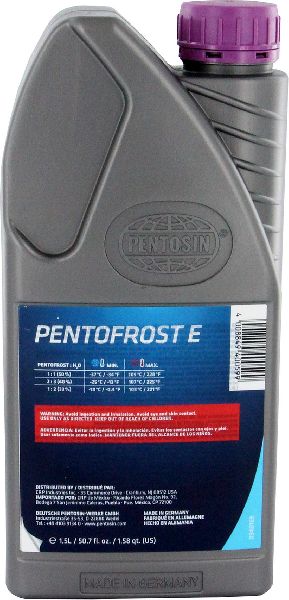
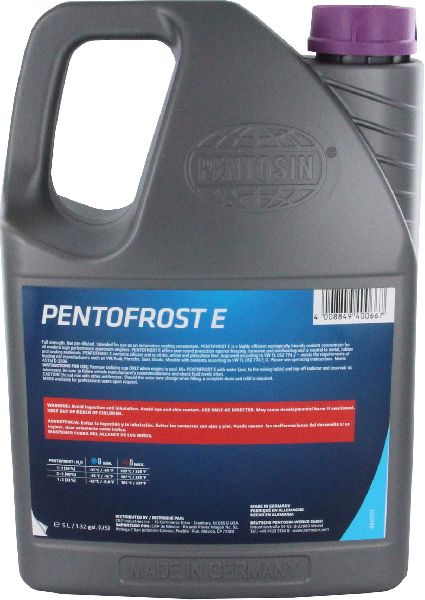
(OEM #G013A8J1G (G13) or G12EVO (newer compatibility))— The cooling system must be drained and refilled during the repair. Using the correct VW-specific phosphate-hybrid organic acid technology (HOAT) coolant is critical to prevent corrosion and damage.
Trusted brands: Volkswagen (OEM), Pentosin (Pentofrost E), Febi
OEM price range: $25-$35
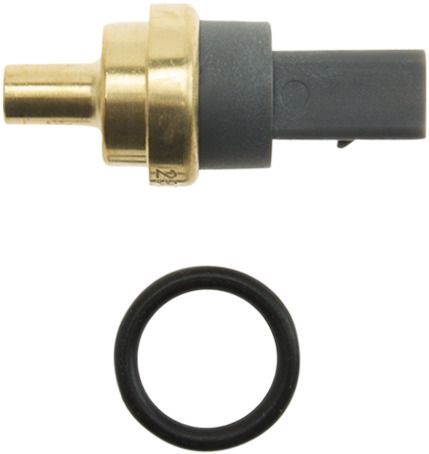
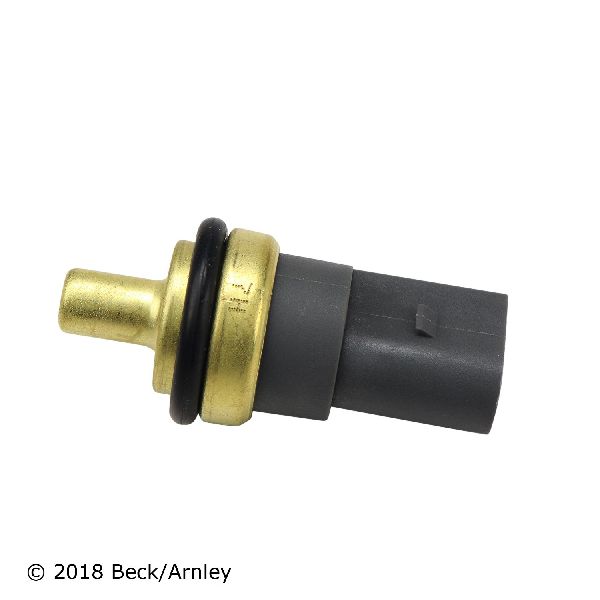
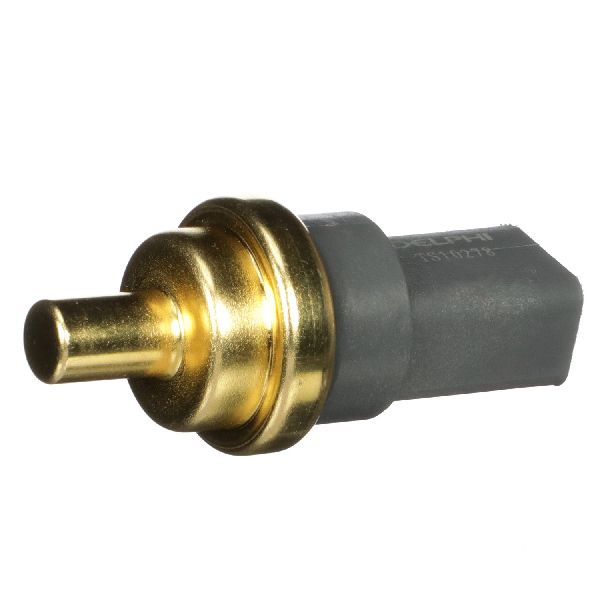
Aftermarket price range: $20-$30 - Engine Coolant Temperature Sensor (G62)
(OEM #06A919501A)— A less common cause, but possible. It's often replaced as a preventative measure during the water pump job since it's inexpensive and access is easy once the pump is removed.
Trusted brands: Bosch, Delphi, Hella, Facet
OEM price range: $40-$70
Aftermarket price range: $25-$50
Related Codes That Often Appear With This One
- P0128 — P0128 'Coolant Thermostat (Coolant Temperature Below Thermostat Regulating Temperature)' is a very similar code that is also triggered by a thermostat stuck open. They often point to the exact same failure.
- P0116 — P0116 'Engine Coolant Temperature Sensor 1 Circuit Range/Performance' can appear alongside P2181 if the ECT sensor itself is failing or providing erratic readings, which confuses the ECM's performance check.
Technical Service Bulletins (TSBs) & Recalls
- VIN-4-A-PIN APRI (2016): Confirms that P2181 is a recognized fault code in the ECM for this vehicle.
- 01-21-01 / NHTSA ID 10186803: An ECM software update for the 1.4T engine that includes a modification for fault code P2181, advising to perform the update before replacing parts as the fault could be triggered erroneously by software logic.
Platform-Specific Known Issues
- The dashboard temperature gauge is intentionally misleading. It is programmed to point directly to 190°F/90°C as long as the actual temperature is within a wide range (e.g., 160-220°F). This means you cannot rely on it for accurate diagnosis; a scan tool is required.
- The integrated water pump/thermostat assembly is a well-documented weak point on these engines, with many owners experiencing this failure, often between 60,000 and 100,000 miles. Forum discussions on Reddit's r/Volkswagen are filled with ow
Mechanic-Grade Diagnostic Values
- Engine Coolant Temperature Sensor (G62/G83, P/N 06A919501A) Resistance — expected: Approx. 2,000 - 3,000 Ohms at 20°C (68°F); Approx. 210 - 270 Ohms at 90°C (194°F).. Failure: Readings that are infinite (open circuit) or near zero (short circuit), or that don't change smoothly with temperature, indicate a faulty sensor.
- Freeze Frame Data Temperature for P2181 — expected: Normal operating temperature is ~87-105°C.. Failure: If the freeze frame data shows the fault was triggered at a temperature between 68°C and 80°C, it strongly suggests the engine was running too cool, pointing to a stuck-open thermostat.
Scan Tool Commands That Help
- VCDS (VAG-COM) or ODIS: Graphing Measuring Value Block (MVB) 130 — This is the primary diagnostic step. It allows for simultaneous graphing of the engine outlet temp (G62) and radiator outlet temp (G83). If G83 rises with G62 before G62 reaches ~87°C, the thermostat is confirmed to be stuck open.
- VCDS (VAG-COM) or ODIS: Basic Settings: Bleeding Cooling System / Cooling Circuit Air Purge — After replacing the water pump/thermostat assembly, this function must be used. It cyclically runs the various electric coolant pumps and controls valves to properly bleed air from the complex cooling circuits of the EA211 and EA888 engines, which is nearly impossible to do manually.
- VCDS (VAG-COM) or ODIS: Output Test: Thermostat Map-Controlled Cooling / Cooling Fan Activation — This can test the electrical components of the cooling system. Activating the map-controlled thermostat's heater can check its electrical integrity (though P2181 is usually a mechanical failure). Testing the cooling fans helps rule out overheating-related causes.
Wiring & Ground Locations
- Engine Sensor Ground — A common ground point for engine sensors on the EA888 engine is a ground stud on the engine block, near the intake manifold.. A poor ground connection at this point can cause erratic or incorrect readings from the G62 and other sensors, potentially leading to a false P2181 code. Checking that this ground is clean and tight is a crucial step in diagnosing electrical faults.
- G62 / G83 Sensor Connectors — The G62 sensor is on the thermostat housing; the G83 is on the lower radiator hose. They are typically 2-pin connectors.. These connectors should be inspected for corrosion or signs of coolant intrusion ('wicking'), where coolant travels up the wiring harness. This can cause short circuits or high resistance, leading to incorrect temperature readings at the ECM.
Real Owner Repair Stories
- Reddit user in r/mechanicadvice (2016 VW Jetta 1.4T) — P2181 code, coolant temperature dropping from 195°F to 170°F while cruising on the highway.
❌ Tried (didn't work) The owner went straight for the correct diagnosis based on symptoms.
✅ What actually fixed it Replacement of the entire water pump and thermostat housing assembly. A shop quoted the owner $1200 for the repair. - Ross-Tech Forums user (2017 VW GLI (EA888 Gen 3 engine, same as 1.8T/2.0T Jetta)) — P2181 code at 65,000 miles, slow engine warmup, and temperature gauge dropping on the highway.
❌ Tried (didn't work) Replaced the G62 coolant temperature sensor.
✅ What actually fixed it The code returned after replacing the sensor. The final, successful repair was replacing the complete water pump and thermostat assembly. This confirms the common misdiagnosis of trying the sensor first.
"I Checked Everything" — The Actual Cause
- For code P2181, the equivalent of a 'smoke test clean' scenario is when a cooling system pressure test passes, showing no leaks. Many owners report that their system holds pressure perfectly and the coolant level is stable, yet the P2181 code persists. This is the classic sign of an internal thermostat failure (stuck open) where coolant is bypassing the thermostat and circulating prematurely through the radiator. The housing itself has not yet cracked to create an external leak, but the performance issue is present, preventing the engine from reaching operating temperature correctly.
OEM Part Supersession History
06L121111G / 06L121111H / 06L121111J / 06L121111L / 06L121111M→06L121111P— Applies to the EA888 1.8T/2.0T engines. Volkswagen has released multiple revisions of the water pump/thermostat assembly to improve the durability of the plastic housing and the reliability of the thermostat mechanism, which were prone to cracking and failing open.
Heads up: All newer revisions are backward-compatible and are recommended over older versions.04E121600D / 04E121600AL→04E121600CS— Applies to the EA211 1.4T engine. Similar to the EA888 part, revisions were made to address the common failure of the integrated thermostat and the plastic housing.
Heads up: Newer revisions are backward-compatible and recommended.
Helpful Videos
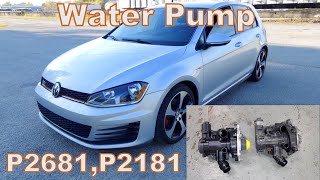
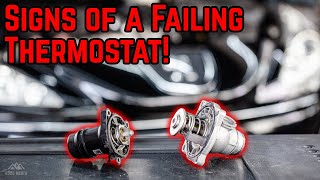
Used OEM Parts in Stock
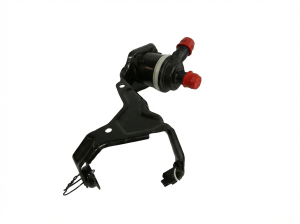
New Aftermarket Parts Available

The information in this article is provided for general reference and educational purposes only. Vehicle specifications, procedures, and part compatibility can vary by production date, trim level, and region. Always consult your vehicle's factory service manual and verify part numbers before purchasing or performing repairs. Safety-critical components such as airbags, seat belts, and braking systems should be installed by a qualified professional.
- Volkswagen JETTA:
- 🧭 Diagnostic Flowchart
- 🎬 Helpful Videos
- 🛍️ Shop This Part
- What's Unique About the 2016-2016 Volkswagen JETTA
- Symptoms You May Notice
- Most Likely Causes
- Rare But Worth Checking
- Diagnosis Steps
- Parts You'll Likely Need
- Related Codes That Often Appear With This One
- Technical Service Bulletins (TSBs) & Recalls
- Platform-Specific Known Issues
- Mechanic-Grade Diagnostic Values
- Scan Tool Commands That Help
- Wiring & Ground Locations
- Real Owner Repair Stories
- "I Checked Everything" — The Actual Cause
- OEM Part Supersession History
- 🎟️ Get 5% Off