

P2181 on 2015 Volkswagen Jetta TDI: Cooling System Performance Causes and Fixes
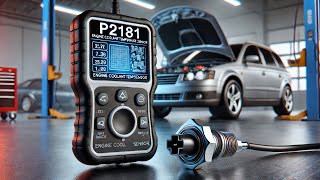
On a 2015 VW Jetta TDI, code P2181 almost always means the thermostat is stuck open, preventing the engine from warming up. The fix is to replace the thermostat, which is often part of a larger housing assembly. A faulty coolant temperature sensor is a less common but possible cause.
- P2181 on your 2015 Jetta TDI means the engine is running too cool.
- The most likely cause, by far, is a thermostat that has failed in the 'stuck open' position.
- A faulty Engine Coolant Temperature sensor is a less common but possible secondary cause.
- Symptoms include a low temperature gauge reading (especially at highway speeds) and poor cabin heat.
- The repair involves replacing the thermostat, which is part of a complex housing on the EA288 engine.
What's Unique About the 2015-2015 Volkswagen JETTA TDI
The 2015 Jetta TDI uses the 2.0L EA288 diesel engine, which has a complex thermal management system. Unlike older cars with a simple, standalone thermostat, the EA288 integrates the main thermostat, a secondary thermostat, the water pump, and sometimes an EGR cooler bypass valve into a single plastic housing. This assembly is designed for precise temperature control to improve efficiency and emissions. The thermostats are designed to fail in the open position as a fail-safe to prevent overheating, which is why P2181 (engine too cool) is the common result of a failure. Due to this integration, replacing the failed thermostat often involves replacing the entire housing assembly, a significantly more labor-intensive job.
Diagnostic Flowchart
Tap your situation to follow the diagnostic path that matches what you're seeing on this vehicle.
Symptoms You May Notice
- Check Engine Light is on
- Engine temperature gauge on the dashboard reads lower than normal or doesn't move to the middle
- Temperature gauge drops from the middle position when driving at highway speeds or coasting downhill.
- Heater blows lukewarm or cool air, especially on colder days.
- Noticeable decrease in fuel economy
- Engine may run rough or idle slightly differently until it eventually warms up
- Replacing the water pump for an engine-too-cool issue. While the water pump is part of the assembly, its failure typically leads to overheating 🎬 See how the complex EA288 electric water pump functions (code P0217), not an engine-too-cool condition (P2181).
Most Likely Causes
- Faulty Thermostat (Stuck Open) 🔴 High Probability → Shop Integrated Thermostat Housing Assembly Thermostats are a common wear item. On the EA288 engine, the main thermostat is designed to fail in the open position to prevent overheating. This allows coolant to circulate constantly through the radiator, preventing the engine from reaching operating temperature quickly, especially in cooler weather.
How to confirm: Use an OBD-II scanner to monitor live engine coolant temperature data. Start the car cold and drive. The temperature should rise steadily to ~195°F (90°C) and stabilize. If it rises very slowly, never reaches temperature, or drops significantly at highway speeds, the thermostat is stuck open. You can also feel the upper and lower radiator hoses; if both get warm at roughly the same rate, the thermostat is open and letting coolant flow to the radiator prematurely.
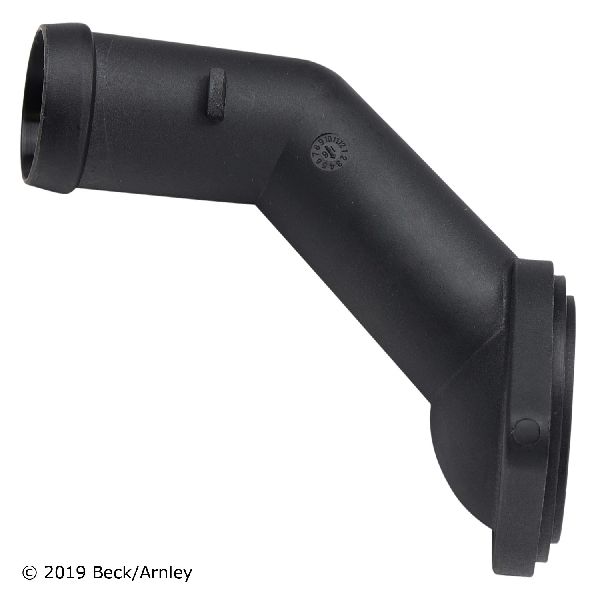
Typical fix: Replace the thermostat. On the 2.0L TDI engine, this can mean replacing just the thermostat insert (regulator) or, more commonly, the entire thermostat and water pump housing assembly due to the integrated design and potential for the plastic housing to become brittle.
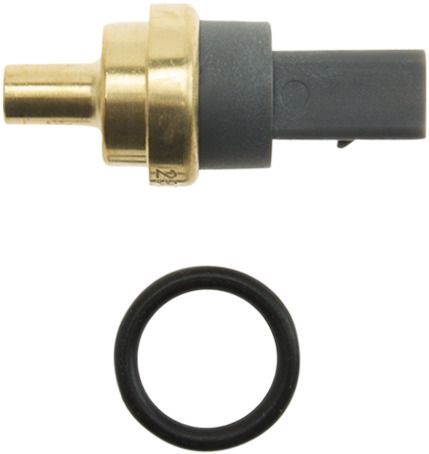
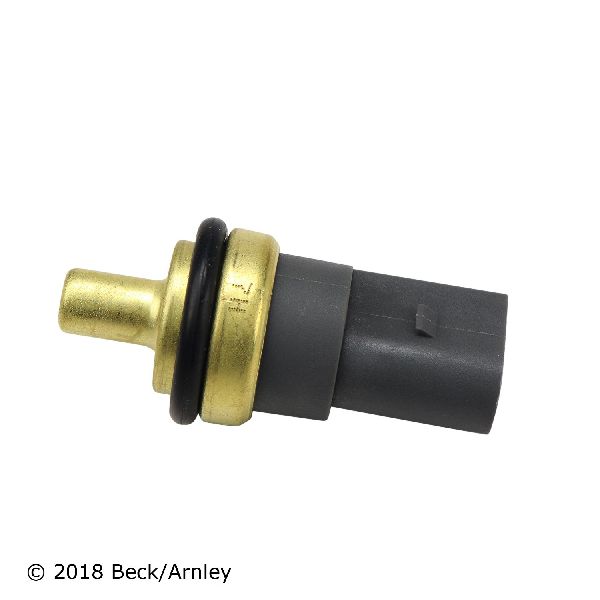
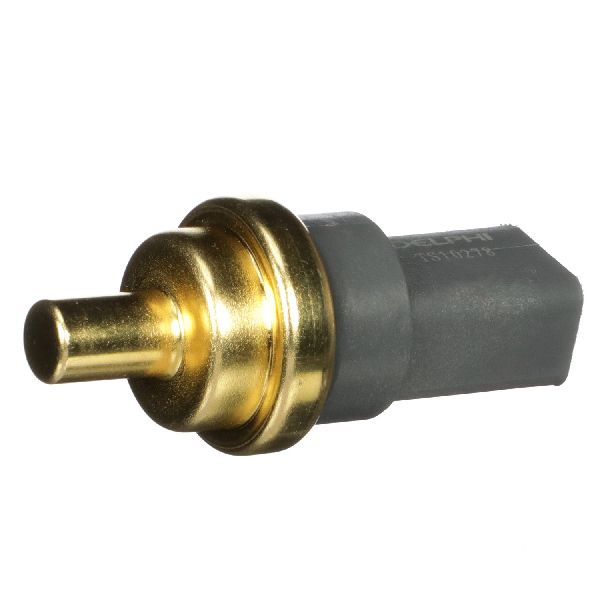
Est. part cost: $50-$250 - Faulty Engine Coolant Temperature (ECT) Sensor 🟡 Medium Probability → Shop Engine Coolant Temperature Sensor ECT sensor failure is a known issue on many Volkswagen models. The sensor can send incorrect, low, or erratic temperature readings to the ECM, making it think the engine is cold when it is not.
How to confirm: With the engine cold, use a scan tool to compare the Engine Coolant Temperature (ECT) reading to the Intake Air Temperature (IAT) reading. They should be within a few degrees of each other. If the ECT shows an irrational value (like -40°F or 250°F), the sensor is bad.
Typical fix: Replace the engine coolant temperature sensor. It's often replaced as a preventative measure when doing a thermostat job due to its low cost and the labor overlap.
Est. part cost: $20-$60
Rare But Worth Checking
- Low Engine Coolant Level: → Shop Engine Coolant / Antifreeze While low coolant usually leads to overheating, if the level is just low enough to create an air pocket around the ECT sensor, it can cause erratic readings and trigger a P2181 code. The plastic water pump/thermostat housings on these engines are known to develop hairline cracks and leaks over time.
- Air in the Cooling System: If the cooling system was recently serviced and not bled properly, trapped air can cause incorrect temperature readings. A proper vacuum fill and a VCDS-guided bleeding procedure are often required on these systems to ensure all air is purged.
- Leaking EGR Cooler: A less common but possible cause on TDI engines is an internal leak in the EGR cooler. This can allow high-pressure exhaust gas to enter the cooling system, creating air pockets and flow problems that can affect temperature readings and trigger P2181.
- Wiring or Grounding Issues: A corroded ground wire or a damaged wire in the ECT sensor circuit can cause incorrect signals to be sent to the ECM, triggering the code even if the components are good.
Diagnosis Steps
- Check for other Diagnostic Trouble Codes (DTCs) with an OBD-II scanner.
- Inspect the engine coolant level in the reservoir. Ensure it is between the MIN and MAX marks when the engine is cold. If low, look for signs of pink/purple coolant residue, especially around the thermostat/water pump housing under the intake manifold.
- With a cold engine, use a scanner to view live data. Compare the Engine Coolant Temperature (ECT) and Intake Air Temperature (IAT) readings. They should be nearly identical. If not, suspect a faulty ECT sensor.
- Start the engine and monitor the ECT reading as you drive. The temperature should rise steadily to approximately 195°F (90°C) and remain stable.
- If the temperature is slow to rise or drops significantly when driving at steady, higher speeds (e.g., on the highway), the thermostat is stuck open and needs replacement.
- If the temperature reading is erratic or behaves illogically, inspect the ECT sensor wiring and connector for damage 🎬 Watch: How to replace a Volkswagen coolant temperature sensor or corrosion before replacing the sensor.
- If coolant levels were low, perform a cooling system pressure test to check for leaks, paying close attention to the water pump/thermostat housing area.
Parts You'll Likely Need
- Thermostat (Regulator Insert)
(OEM #04L121113C)— This is the most common failure part for a P2181 code. The thermostat fails in the open position. This part is the insert that fits inside the larger housing.
Trusted brands: Mahle, Behr, Genuine Volkswagen
OEM price range: $45-$65
Aftermarket price range: $30-$50 - Engine Coolant Temperature Sensor (ECT)
(OEM #04L919501 (or 06A919501A))— This sensor provides the temperature data to the engine computer. A faulty sensor can send incorrect signals. While06A919501Ais a common replacement,04L919501is more specific to the EA288 family. Always verify by VIN.
Trusted brands: Bosch, Delphi, Genuine Volkswagen
OEM price range: $40-$70
Aftermarket price range: $20-$40 - Volkswagen G12evo or G13 Coolant
(OEM #G12E050A2 (G12evo) / G013A8J1G (G13))— The correct coolant is required when refilling the system. G13 was the factory fill but has been superseded by G12evo, which is backward compatible.
Trusted brands: Genuine VW/Audi
OEM price range: $25-$40
Aftermarket price range: $20-$30
Technical Service Bulletins (TSBs) & Recalls
- VIN-4-A-PIN APRI (2015 ENGINE, dated 2016-04-21): MIL ON, FAULT P2181 IN THE ECM
- VIN-4-A-PIN APRI (2015 FUEL SYSTEM, OTHER, dated 2016-04-13): MIL ON, FAULT P2181 IN THE ECM
- VW TSB 19-17-01 (dated Jan 8, 2020): Details the supersession of G13 coolant with the new G12evo specification, confirming backward compatibility.
Platform-Specific Known Issues
- The provided NHTSA Technical Service Bulletins (TSBs) VIN-4-A-PIN APRI (dated 2016-04-21 and 2016-04-13) confirm that "MIL ON, FAULT P2181 IN THE ECM" is a recognized issue for the 2015 Jetta, although they are data-gathering bulletins and do not specify a remedy.
- Owner experiences on forums like TDIClub overwhelmingly point to the thermostat failing open. A common story involves noticing the temperature gauge dropping on the highway during winter, followed by the Check Engine Light with code P2181.
Mechanic-Grade Diagnostic Values
- ECT (G62) Sensor Resistance vs. Temperature — expected: Approx. 2000-3000 Ω at 20°C (68°F); Approx. 275-375 Ω at 80°C (176°F); Approx. 200-300 Ω at 90°C (194°F).. Failure: Readings significantly outside these ranges indicate a faulty sensor. An open circuit may read as -40°C, while a short circuit may read as +140°C on a scan tool.
- VCDS Live Data Graphing (MVB Group 130) — expected: From a cold start, Engine Outlet Temp (G62) should rise steadily, while Radiator Outlet Temp (G83) remains near ambient temperature until G62 reaches ~87-90°C.. Failure: If G83 begins to rise in temperature along with G62 well before the ~87°C mark (e.g., at 60-70°C), the thermostat is opening prematurely and is faulty.
- Normal Operating Temperature Range (Post-Warmup) — expected: After warming up, the ECM expects the coolant temperature to stay stable within a range of 80.0°C to 110.0°C.. Failure: If the coolant temperature drops below 80°C after being fully warm (e.g., while cruising at highway speed), it will trigger the P2181 fault.
Hidden / Shadow Codes Worth Checking
- 18613: This is the VAG-specific (Volkswagen Auto Group) internal fault number that directly corresponds to the generic OBD-II code P2181, 'Performance Malfunction in Cooling System'. (see via A VW-specific scan tool like VCDS (VAG-COM) or ODIS will display this code in the Engine Control Module (01-Engine).)
Scan Tool Commands That Help
- VCDS (VAG-COM) or ODIS: Graphing Measuring Blocks (MVB) Group 130/131 — This is the primary diagnostic method for P2181. It allows a technician to simultaneously graph the Engine Outlet Temp (G62) and Radiator Outlet Temp (G83) to visually confirm if the thermostat is opening at the correct temperature, definitively diagnosing a stuck-open thermostat without disassembly.
- VCDS (VAG-COM) or ODIS: Basic Settings: 'IDE08087-Test - Bleed cooling circuit' — After replacing a thermostat, water pump, or any part that requires draining the coolant. The EA288 has a complex dual-circuit cooling system that is difficult to bleed manually. This function runs the electric coolant pumps and cycles the engine to properly purge all air from the system, which is critical to prevent future cooling issues.
- VCDS (VAG-COM) or ODIS: Basic Settings: 'IDE04795-Test - Bleeding of low temperature circuit' — This is a secondary bleeding procedure for the low-temp side of the cooling system (e.g., for the charge air cooler). It is used in conjunction with the main bleeding procedure to ensure the entire system is free of air pockets.
Wiring & Ground Locations
- G62 ECT Sensor Connector — On the 2.0L TDI EA288, the G62 sensor is typically located on the coolant connector adapter on the left side of the cylinder head.. The 2-pin connector is a common point of failure due to corrosion or damaged wires, which can cause an incorrect temperature signal. Pin 1 is for the signal and Pin 2 is the ground.
- Engine Harness Ground Point — A primary engine ground point is typically located on the left side frame rail, near or under the battery tray.. A poor ground connection at this point can cause erratic voltage readings for multiple engine sensors, including the ECT sensor, leading to a false P2181 code.
- ECM Connector T60 — This is a 60-pin connector at the Engine Control Module (ECM), designated J623.. When diagnosing a persistent P2181 with a known-good sensor, a technician would check for continuity and resistance between the pins at the G62 sensor connector and the corresponding pins at the T60 ECM connector to find any breaks or shorts in the wiring harness.
Real Owner Repair Stories
- Reddit user in r/mechanicadvice (2016 VW Jetta 1.4T (EA211 engine, similar cooling system design)) — P2181 code present, coolant temperature gauge would drop from the normal 195°F down to 170°F while cruising on the highway.
❌ Tried (didn't work) The owner correctly diagnosed the issue from the classic symptoms without trying other parts first.
✅ What actually fixed it Replacement of the entire integrated water pump and thermostat housing assembly. A repair shop quoted $1200 for the job. - Commenter on YouTube (2009 VW Jetta 2.5L (different engine, but demonstrates a common misdiagnosis pattern)) — Coolant temperature was barely climbing to 160°F after driving, triggering a P2181 code.
❌ Tried (didn't work) Replaced the thermostat, assuming it was stuck open.
✅ What actually fixed it The problem persisted after the thermostat replacement. The final fix was replacing the engine coolant temperature (ECT) sensor.
When the Usual Fixes Don't Work
- While the thermostat is the most frequent cause of P2181, it is not the only one. There are documented cases where owners have replaced the thermostat, only for the code to return. In one such instance involving a Jetta, the problem was not resolved until the Engine Coolant Temperature (ECT) sensor was also replaced. This highlights the importance of testing the ECT sensor's resistance and comparing its readings to the intake air temp sensor on a cold engine before committing to the labor-intensive thermostat replacement. A faulty sensor can mimic the symptoms of a stuck-open thermostat perfectly.
OEM Part Supersession History
G013A8J1G (G13 Coolant)→G12E050A2 (G12evo Coolant)— G12evo was developed to offer improved long-term corrosion protection and stability, addressing some issues found with the G13 formulation.
Heads up: G12evo is fully backward-compatible with G13 and can be mixed, though a full flush and fill is always recommended for best performance.
Helpful Videos
We Have This Part in Stock

The information in this article is provided for general reference and educational purposes only. Vehicle specifications, procedures, and part compatibility can vary by production date, trim level, and region. Always consult your vehicle's factory service manual and verify part numbers before purchasing or performing repairs. Safety-critical components such as airbags, seat belts, and braking systems should be installed by a qualified professional.
- Volkswagen JETTA TDI:
- 🧭 Diagnostic Flowchart
- 🎬 Helpful Videos
- 🛍️ Shop This Part
- What's Unique About the 2015-2015 Volkswagen JETTA TDI
- Symptoms You May Notice
- Most Likely Causes
- Rare But Worth Checking
- Diagnosis Steps
- Parts You'll Likely Need
- Technical Service Bulletins (TSBs) & Recalls
- Platform-Specific Known Issues
- Mechanic-Grade Diagnostic Values
- Hidden / Shadow Codes Worth Checking
- Scan Tool Commands That Help
- Wiring & Ground Locations
- Real Owner Repair Stories
- When the Usual Fixes Don't Work
- OEM Part Supersession History
- 🎟️ Get 5% Off