

P2181 on 2012-2016 Volkswagen Passat: Cooling System Performance Fixes
On a 2012-2016 VW Passat, code P2181 almost always points to a failed thermostat that is stuck open. This prevents the engine from reaching its specified operating temperature in a timely manner. Replacing the complete thermostat assembly is the most common and definitive fix.
- P2181 on a 2012-2016 Passat means the engine is taking too long to warm up.
- The most likely cause by far is a thermostat that has failed and is stuck in the open position.
- Symptoms include a low-reading temperature gauge, poor cabin heat, and a Check Engine Light.
- While a faulty coolant temperature sensor is possible, it's a less frequent cause for these specific symptoms.
- The fix usually involves replacing the entire thermostat housing assembly and refilling the system with fresh VW-specific coolant.
What's Unique About the 2012-2016 Volkswagen PASSAT

The 2012-2016 North American Passat (B7/NMS generation) was available with several engines, most commonly the 2.5L 5-cylinder and later the 1.8T 4-cylinder (EA888). For both engines, the P2181 code is overwhelmingly caused by a thermostat that fails in the open position. Unlike older, simpler thermostats, these VW engines use a more complex thermostat integrated into a larger plastic housing. On the 1.8T (and 2.0T) EA888 engines, this assembly is even more complex, often combined with the water pump into a single 'thermal control module', making replacement more involved and costly.
Diagnostic Flowchart

Tap your situation to follow the diagnostic path that matches what you're seeing on this vehicle.
Generation note: The 2012-2016 Volkswagen Passat in North America is a single generation, often referred to as the NMS (New Midsize Sedan) or B7. The causes and fixes are generally consistent across this year range, though part numbers will differ between the 2.5L, 1.8T, and 3.6L VR6 engines.
Symptoms You May Notice

- Engine temperature gauge takes a very long time to reach the middle (190°F/90°C) or never gets there, especially during highway driving.
- Temperature gauge drops from normal (190°F) down towards 160-175°F when driving at speed, then may climb back to normal at idle.
- Check Engine Light is on.
- Poor or no heat from the cabin heater, especially on cold days.
- Decreased fuel economy due to the engine running a richer fuel mixture.
- In some cases, the cooling fans may run constantly at high speed as a fail-safe measure.
- Replacing the coolant temperature sensor when the thermostat is actually the problem. It's a common first step because the sensor is cheaper and sometimes easier to replace, but a stuck-open thermostat is the more frequent cause for this specific code and its classic symptoms (temp dropping at speed).
Most Likely Causes

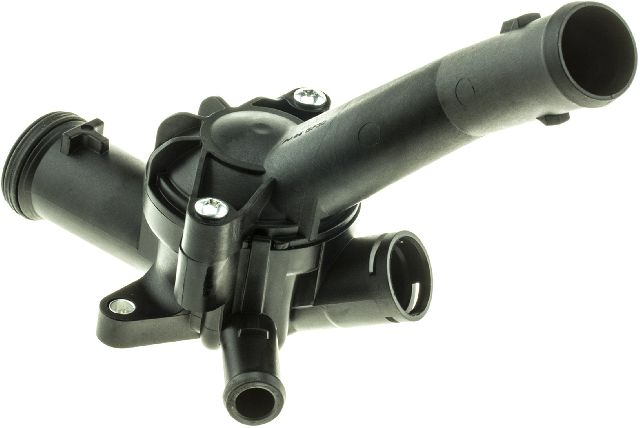
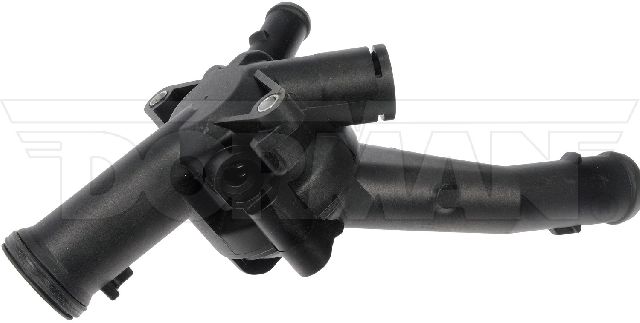
- Failed Thermostat (Stuck Open) 🔴 High Probability → Shop Integrated Thermostat Housing Assembly The plastic thermostat housings and the thermostats themselves are a very common failure item on these VW engines. They frequently fail in the open position 🎬 Watch: See how these VW thermostats fail and trigger code P2181., which allows coolant to circulate constantly through the radiator, over-cooling the engine. On the EA888 engines, the integrated water pump/thermostat housing is a known failure point prone to cracking and leaking.
How to confirm: Monitor the live coolant temperature data with a scan tool like VCDS. Graph the Engine Outlet (G62) and Radiator Outlet (G83) sensors. If both sensors start to show a temperature rise at the same time from a cold start, the thermostat has failed open. A healthy system will show G62 warming up first, with G83 only starting to rise after the engine reaches ~80-90°C and the thermostat opens.
Typical fix: Replace the thermostat and its housing as a complete assembly. On EA888 engines (1.8T/2.0T), this is often a larger job involving the integrated water pump module. Since the system will be drained, this is also a good time to replace the coolant with the correct G12/G13/G12evo specification fluid.
Est. part cost: $50-$250 - Faulty Engine Coolant Temperature (ECT) Sensor 🟡 Medium Probability → Shop Engine Coolant Temperature Sensor VW models have been known to have issues with failing coolant temperature sensors (often called G62 or G83), which can send incorrect readings to the ECM. However, this is a much less frequent cause for P2181 than the thermostat.
How to confirm: Use a scan tool to compare the ECT sensor reading to the ambient air temperature sensor reading on a cold engine; they should be very close. If the reading is erratic, illogical (e.g., -40°F), or never changes, the sensor is bad. The resistance can also be tested with a multimeter; for example, at 80°C (176°F), the resistance should be between 275-375 ohms.
Typical fix: Replace the engine coolant temperature sensor. On many VW engines, it is held in by a simple plastic clip and an o-ring, but access can be tight.
Est. part cost: $15-$40 - Low Engine Coolant Level ⚪ Low Probability → Shop Engine Coolant / Antifreeze While not specific to this platform, any coolant leak (from hoses, the radiator, or a cracked plastic thermostat housing) will eventually cause system performance issues. A leak that prevents the system from pressurizing correctly can also trigger P2181.
How to confirm: Visually inspect the coolant reservoir. If it is below the 'MIN' line, there is a leak in the system that must be found and repaired. A pressure test is the best way to find a leak.
Typical fix: Find and repair the source of the coolant leak (e.g., hoses, radiator, water pump, thermostat housing) and refill the system with the correct G12/G13 coolant.
Est. part cost: $10-$500+
Rare But Worth Checking
- Air in the Cooling System: If the cooling system was recently serviced (e.g., thermostat or water pump replaced), trapped air can cause erratic temperature readings and trigger this code. The system may need to be properly bled, sometimes requiring a vacuum-fill tool for best results.
- Faulty Water Pump: → Shop Engine Water Pump Less common for an under-heating condition, but a failing water pump with a broken impeller could cause insufficient flow, leading to unpredictable temperature regulation. On the 1.8T/2.0T EA888 engines, the water pump and thermostat are an integrated unit, and failure of the electronic controls can cause P2181.
Diagnosis Steps
- Check for any other stored trouble codes. P2181 often appears alone when the thermostat is the cause.
- Visually inspect the coolant level in the reservoir. Ensure it is between the 'MIN' and 'MAX' marks when cold. If low, suspect a leak.
- With a scan tool (VCDS is recommended), monitor the live data for the Engine Coolant Temperature sensor (G62) and, if available, the Radiator Outlet Temperature Sensor (G83). Start the car from cold.
- Observe the temperature rise. It should climb steadily to around 190-205°F (88-96°C) and stabilize.
- If the temperature struggles to reach this range, or if it reaches it at idle but then drops significantly while driving at highway speeds, the thermostat is almost certainly stuck open. This is the most definitive test.
- If using VCDS, graph measuring block group 130. If G62 and G83 temperatures rise together from a cold start, the thermostat has failed and is stuck open.
- If the temperature reading is erratic, jumps around, or reads an impossible value (like -40°F) from the start, the ECT sensor or its wiring is likely the problem. Check sensor resistance against specifications.
- If no issues are found with the live data, perform a cooling system pressure test to check for hard-to-find leaks. A system that cannot hold pressure may not warm up correctly.
Parts You'll Likely Need
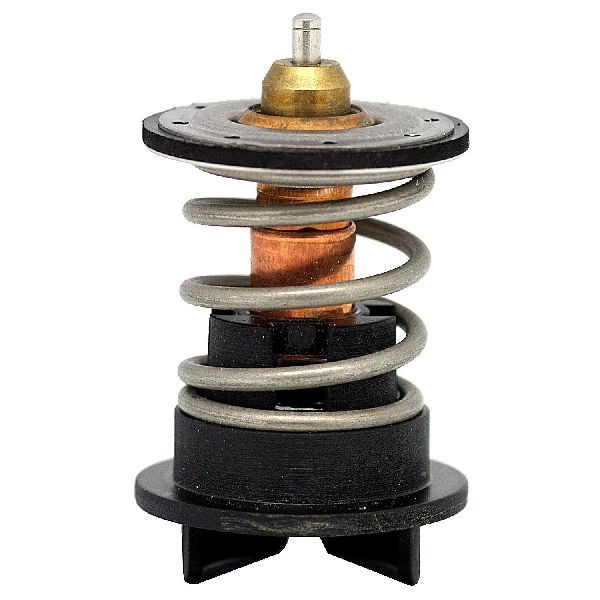
- Thermostat Assembly
(OEM #For 2.5L: 07K121113H. For 1.8T EA888: 06L121111H (or newer revisions like J, K, L, M, N, P).)— This is the most common cause of P2181 on this vehicle, as they frequently fail in the open position, preventing the engine from warming up properly.
Trusted brands: Mahle, Behr, Wahler, Genuine VW/Audi
OEM price range: $100-$280
Aftermarket price range: $50-$150 - Engine Coolant Temperature (ECT) Sensor
(OEM #06A919501A (common across many VW engines).)— A less common but possible cause. A faulty sensor can send incorrect data to the ECM, triggering the code even if the temperature is normal.
Trusted brands: Bosch, Delphi, Febi Bilstein, Genuine VW/Audi
OEM price range: $25-$50
Aftermarket price range: $15-$30 - Engine Coolant / Antifreeze (G12/G13/G12evo) — The coolant must be drained to replace the thermostat, so you will need to refill the system with the correct VW-specified fluid. Do not mix with generic green or orange coolants.
Trusted brands: Pentosin (Pentofrost E), HEPU, Genuine VW
OEM price range: $25-$40 per gallon
Aftermarket price range: $20-$35 per gallon
Technical Service Bulletins (TSBs) & Recalls
- TSB 20-14-03: Directly addresses P2181 and points to thermostat replacement as the solution.
- VIN-4-A-PIN APRI (2015 ENGINE, dated 2016-04-21): A generic bulletin that lists 'MIL ON, FAULT P2181 IN THE ECM' as one of many possible customer complaints, confirming it's a recognized issue.
- VIN-4-A-PIN APRI (2015 AIR BAGS, dated 2016-04-13): Also lists P2181 as a possible fault code.
Platform-Specific Known Issues
- Official VW Technical Service Bulletin (TSB 20-14-03): Volkswagen issued TSB 20-14-03, which specifically addresses DTC P2181 stored in the ECM. The bulletin confirms the condition is the engine taking too long to warm up and directly advises technicians to replace the Coolant Thermostat. This is a strong indicator from the manufacturer that the thermostat is the primary known failure point for this code.
- Real Owner Experience (2.5L Engine): A user on the Mechanics Stack Exchange with a 2012 Passat reported the classic P2181 symptoms: temperature dropping from 190°F to ~165-175°F on the highway and returning to normal at idle. The community correctly diagnosed this as a 'classic bad t-stat' that was stuck open, allowing too much cooling at speed.
- Real Owner Experience (2.0T Engine - Similar Platform): On a VWVortex forum thread, a user with a GTI (which shares engine architecture) described getting code P2181 after replacing the easier ECT sensor first. The code returned, and the temperature gauge would drop after getting off the freeway. Another user confirmed the fix was replacing the entire thermostat assembly, noting the job was complex and that they 'ended up paying the dealer to do it'.
Mechanic-Grade Diagnostic Values
- Engine Coolant Temperature (G62) Sensor Resistance — expected: 1500-2000 Ω at 30°C (86°F); 275-375 Ω at 80°C (176°F).. Failure: Readings significantly outside these ranges indicate a faulty sensor.
- Engine Coolant Temperature (G62) Sensor Voltage — expected: Approximately 2.0V on a cold engine, dropping to approximately 0.5V when fully warmed up.. Failure: Incorrect cold voltage (e.g., 1.5V) or failure to drop to the correct warm voltage (e.g., only dropping to 1.25V) suggests a faulty sensor.
- VCDS Live Data Graph (MVB Group 130) — expected: From a cold start, the G62 (engine outlet) temperature should rise steadily. The G83 (radiator outlet) temperature should remain low and stable until G62 reaches ~80-90°C, at which point G83 will begin to rise sharply as the thermostat opens.. Failure: If G62 and G83 temperatures rise together and follow a similar curve from a cold start, the thermostat has failed in the open position.
Scan Tool Commands That Help
- VCDS (VAG-COM) or equivalent VW diagnostic tool: Read Measuring Value Block (MVB) - Group 130 (or 001 on older controllers) — This is the primary diagnostic method for P2181. By graphing the engine outlet (G62) and radiator outlet (G83) temperature sensors simultaneously, a technician can definitively confirm if the thermostat is stuck open without physically removing any parts.
Wiring & Ground Locations
- Ground Point 15 — On the cylinder head.. The ECT sensor (G62) is located on the cylinder head or nearby coolant flanges. A poor ground connection at this point could introduce noise or voltage offsets into the sensor's reading, leading to an incorrect temperature signal to the ECM.
- Ground Point 652 — Main ground point for the engine and gearbox assembly to the chassis.. A compromised main engine ground can cause a wide range of bizarre electrical issues, including faulty sensor readings across the entire engine management system.
Real Owner Repair Stories
- YouTube user 'scom', 2009 VW Passat 2.0T (B6, CCTA engine) (2009 VW Passat Komfort Sedan, 2.0T TSI engine. The B6 Passat shares engine architecture with the B7.) — Check Engine Light with P2181 would appear 10-15 minutes after a cold start, especially when going directly onto the highway. Scan tool showed temperature fluctuating between 70-90°C.
❌ Tried (didn't work) Resetting the code with a TORQUE app, but it would always return.
✅ What actually fixed it The owner replaced the thermostat assembly. After replacement, the scan tool showed a stable temperature of 97-98°C, and the Check Engine Light did not return for over three months, confirming the fix. - Ross-Tech Forums user (High-mileage (173k miles) VW, specific model not listed but symptoms and diagnosis are directly applicable.) — P2181 stored in ECM but no Check Engine Light on the dash. VCDS log showed the engine took 13 minutes of highway driving to reach 80°C.
❌ Tried (didn't work) Initial diagnosis focused only on the slow warm-up time, implying a stuck thermostat.
✅ What actually fixed it The root cause was a coolant leak that prevented the system from holding pressure. The comprehensive repair involved replacing the water pump, 'crack pipe', thermostat and housing, cooling fans, and ECT sensor to resolve the leak and associated component wear. This fixed the pressure issue, allowing the system to warm up and operate correctly.
OEM Part Supersession History
06L121111H→06L121111J, 06L121111K, 06L121111L, 06L121111M, 06L121111N, 06L121111P— This is the integrated water pump and thermostat housing for the EA888 engine. The frequent supersessions indicate VW's repeated attempts to improve the design and materials (likely the plastic housing) to prevent cracking and leaks which are a notorious problem for this engine family.
Heads up: All revisions (H, J, K, L, M, N, P) are generally interchangeable, but it is always recommended to install the latest available revision to get the most updated and presumably most durable version of the part.
Model Year Variations Within This Range
- 2012-2014 (approx.): Models equipped with the 2.5L 5-cylinder engine have a more traditional cooling system with a separate thermostat (PN: 07K121113H) and water pump. Diagnosis is simpler and part replacement is typically less expensive.
- 2014-2016 (approx.): Models equipped with the 1.8T 4-cylinder EA888 engine use a complex, integrated 'thermal management module' that combines the water pump, thermostat, and housing into a single, large plastic assembly (PN: 06L121111-series). This unit is a very common failure point and is significantly more labor-intensive and expensive to replace.
Helpful Videos

We Have This Part in Stock


The information in this article is provided for general reference and educational purposes only. Vehicle specifications, procedures, and part compatibility can vary by production date, trim level, and region. Always consult your vehicle's factory service manual and verify part numbers before purchasing or performing repairs. Safety-critical components such as airbags, seat belts, and braking systems should be installed by a qualified professional.
- Volkswagen PASSAT:
- 🧭 Diagnostic Flowchart
- 🎬 Helpful Videos
- 🛍️ Shop This Part
- What's Unique About the 2012-2016 Volkswagen PASSAT
- Symptoms You May Notice
- Most Likely Causes
- Rare But Worth Checking
- Diagnosis Steps
- Parts You'll Likely Need
- Technical Service Bulletins (TSBs) & Recalls
- Platform-Specific Known Issues
- Mechanic-Grade Diagnostic Values
- Scan Tool Commands That Help
- Wiring & Ground Locations
- Real Owner Repair Stories
- OEM Part Supersession History
- Model Year Variations Within This Range
- 🎟️ Get 5% Off