

P2181 on 2015 Volkswagen Passat TDI: Cooling System Performance Causes and Fixes
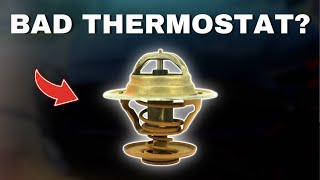
On a 2015 VW Passat TDI with the EA288 engine, code P2181 almost always means the thermostat is stuck open, preventing the engine from warming up correctly. The fix is to replace the thermostat, which is integrated into a larger, complex housing. While often called a 'water pump/thermostat assembly', on the TDI, the water pump is separate but the thermostat is still in a complex module. Expect to pay $150-$400 for the part and several hours of labor.
- P2181 on your 2015 Passat TDI means the engine is running too cool, not that it's overheating.
- The most probable cause is a thermostat that is stuck in the open position.
- The best way to confirm a bad thermostat is to monitor the coolant temperature with a scan tool while driving at highway speeds; a noticeable temperature drop is a clear indicator.
- The repair involves replacing the thermostat, which is typically part of a larger plastic housing on this engine, making it a moderately difficult and costly job.
- Always use the correct VW-specific G12/G13/G12evo coolant when refilling the system to avoid damage.
What's Unique About the 2015-2015 Volkswagen PASSAT TDI
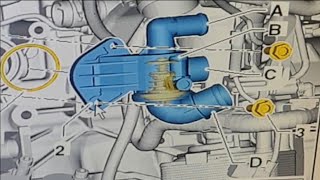
The 2015 Passat TDI uses the 2.0L EA288 diesel engine. For this platform, the P2181 code is a very common issue. Unlike older vehicles with a simple, standalone metal thermostat, the EA288 engine integrates the thermostat into a complex plastic housing sometimes called a 'coolant regulator housing'. This design features multiple coolant passages and sensors to allow for more precise temperature control, including a separate head and block cooling circuit to speed up warm-up. However, the thermostat itself is a common failure point. Its replacement requires removing this entire expensive housing assembly, making the repair more labor-intensive and costly than on simpler engines.
Diagnostic Flowchart
Tap your situation to follow the diagnostic path that matches what you're seeing on this vehicle.
Symptoms You May Notice
- Check Engine Light is on
- Engine temperature gauge reads lower than normal or takes a very long time to reach the middle (90°C/195°F)
- Temperature gauge drops at highway speeds or when coasting downhill and rises when idling or in traffic
- Poor or inconsistent heat from the cabin heater, especially on colder days
- Reduced fuel economy
- Cooling fans may run at high speed as a default fail-safe action 🎬 Watch: A breakdown of common symptoms for a failing thermostat.
- Replacing only the coolant temperature sensor when the thermostat is actually the problem. The definitive test is to watch live temperature data from both the G62 and G83 sensors while driving to see if the engine fails to maintain temperature.
- Using a cheap, unbranded aftermarket thermostat assembly. Forum users report that low-quality parts can fail quickly, causing the P2181 code to return. Sticking to OEM or high-quality OES brands like Mahle or Behr is recommended.
Most Likely Causes
- Faulty Thermostat (Stuck Open) 🔴 High Probability → Shop Integrated Thermostat Housing Assembly Thermostats on the EA288 engine are a very common wear item and are designed to fail in the open position as a fail-safe to prevent overheating. This failure mode directly causes the 'engine not warming up' condition that triggers P2181. The plastic housing is also prone to developing cracks over time.
How to confirm: Use a scan tool (like VCDS) to monitor live engine coolant temperature data. Graph the engine outlet temp sensor (G62) and the radiator outlet temp sensor (G83). Start the engine from cold. If both temperatures rise together almost immediately, the thermostat is stuck open, allowing coolant to flow through the radiator when it shouldn't. G83 should only start to rise after G62 reaches ~90°C (195°F).
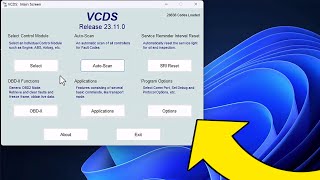
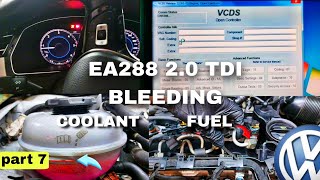
Typical fix: Replace the entire thermostat/coolant regulator housing assembly. 🎬 Watch: Step-by-step 2015 Passat TDI thermostat replacement walkthrough. The cooling system must be drained, refilled with correct G13 or G12evo coolant, and properly bled of air using a vacuum tool or a specific electronic procedure 🎬 See how to use VCDS to properly bleed the system. to cycle the pumps and valves.
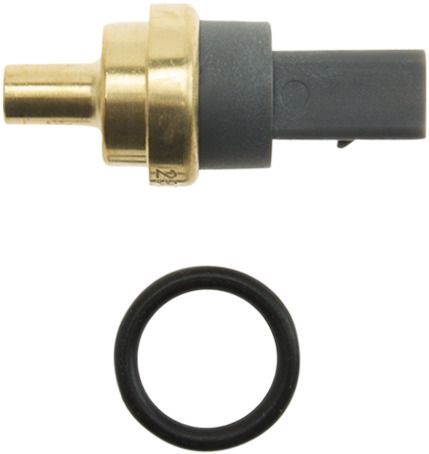
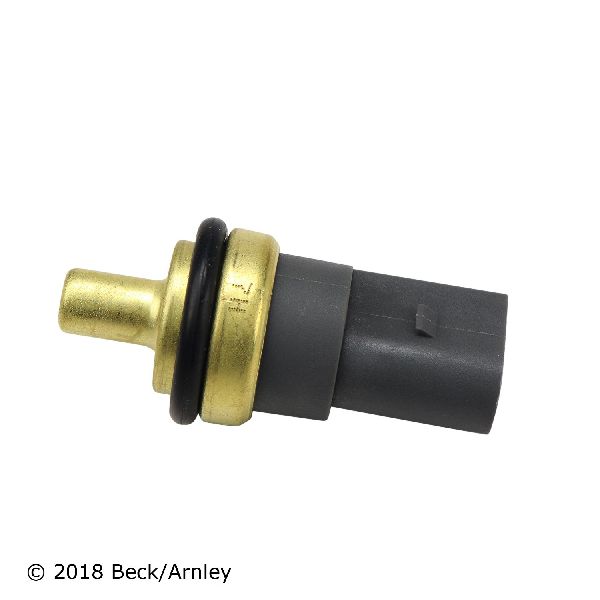
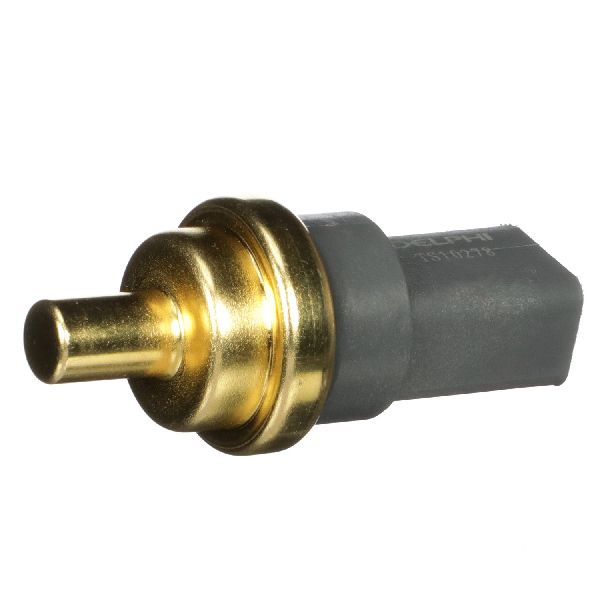
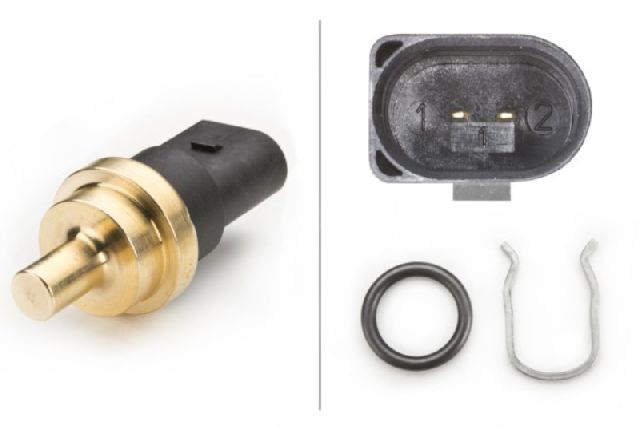
Est. part cost: $150 - $400 - Faulty Engine Coolant Temperature (ECT) Sensor 🟡 Medium Probability → Shop Engine Coolant Temperature Sensor ECT sensor failure is a known issue across many Volkswagen models. The EA288 uses multiple sensors (G62 at the engine, G83 at the radiator outlet) which the ECM compares. A faulty sensor can send incorrect temperature data, triggering the code even if the engine temperature is normal.
How to confirm: With a scan tool, check for illogical temperature readings (e.g., -40°F or an unchanging value). Compare G62 and G83 readings on a cold engine; they should be nearly identical to ambient temperature. You can also test the sensor's resistance with a multimeter; it should be around 2000-3000 ohms at room temperature (~68°F/20°C).
Typical fix: Replace the specific engine coolant temperature sensor that is faulty. The main sensor (G62) is located on the thermostat housing. Given its low cost, it's often replaced preventatively during a thermostat job.
Est. part cost: $20 - $50 - Low Engine Coolant Level ⚪ Low Probability → Shop Engine Coolant / Antifreeze The plastic thermostat housing on these engines can develop hairline cracks and leak over time, which would lead to low coolant levels and could introduce air into the system, causing erratic temperature readings.
How to confirm: Visually inspect the coolant reservoir tank; the level should be between the MIN and MAX marks when the engine is cold. Look for pink or white crusty residue around the thermostat housing, hoses, and radiator, which indicates a G12/G13 coolant leak.
Typical fix: Find and repair the leak, which may require replacing the leaking component (e.g., thermostat housing, hose, or radiator). Then, top off and bleed the cooling system with the correct VW-spec coolant.
Est. part cost: $20 - $400+
Rare But Worth Checking
- Air in the Cooling System: If the cooling system was recently serviced and not bled properly using a vacuum tool or the correct VCDS/ODIS procedure, air pockets can cause erratic temperature readings and trigger this code. The EA288's complex cooling circuits make it difficult to bleed manually.
- Faulty Cooling Fan Control Module: A cooling fan that runs constantly at high speed, even when the engine is cold, can prevent the engine from reaching operating temperature. This is typically caused by a failed fan control module or a wiring short.
Diagnosis Steps
- Check the engine coolant level in the reservoir. Ensure it is between the 'MIN' and 'MAX' marks when the engine is cold. If it's low, top it off with the correct VW-spec coolant (G13/G12evo) and check for visible leaks (pink crust).
- Connect an OBD-II scanner (VCDS is highly recommended) to read the fault code and check for any other related codes.
- Use the scanner's live data function to monitor and graph the Engine Coolant Temperature sensor (G62) and the Radiator Outlet Temperature sensor (G83).
- Start the car from cold. G62 and G83 should read nearly the same at the start. As the engine runs, G62 should climb steadily while G83 remains cool and stable.
- If G62 and G83 rise together, the thermostat is stuck open and must be replaced.
- If G62 rises normally to ~90°C (195°F) and then G83 begins to rise, the thermostat is likely opening correctly.
- Take the vehicle for a drive at highway speeds. If the G62 temperature drops significantly (e.g., to 70-80°C / 160-175°F) while cruising and then climbs back up when you stop, this is a classic sign of a thermostat stuck open.
- If the temperature reading from either sensor is erratic, jumps around, or shows an impossible value (like -40°F), the sensor itself or its wiring is likely faulty.
Parts You'll Likely Need
- Thermostat / Coolant Regulator Housing
(OEM #04L121026AH)— This is the most common failure part for a P2181 code on the EA288 TDI engine. The thermostat fails in the open position, and it is integrated into a complex housing that must be replaced as a complete assembly.
Trusted brands: Genuine VW/Audi, Mahle, Behr, VEMO
OEM price range: $250-$400
Aftermarket price range: $150-$250 - Engine Coolant Temperature Sensor (ECT)
(OEM #06A919501A)— This sensor provides the primary temperature data to the computer. A faulty sensor can send incorrect signals, triggering the P2181 code. It's a common failure point and often replaced with the thermostat as a preventative measure.
Trusted brands: Bosch, Delphi, Febi Bilstein
OEM price range: $25-$50
Aftermarket price range: $15-$30 - Engine Coolant / Antifreeze
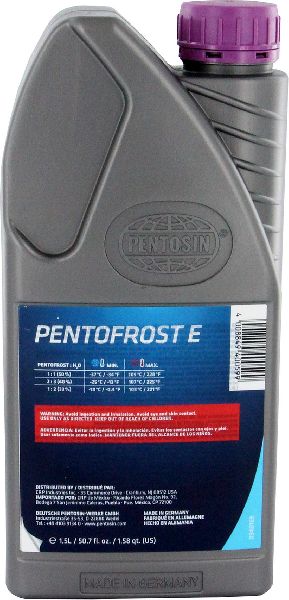
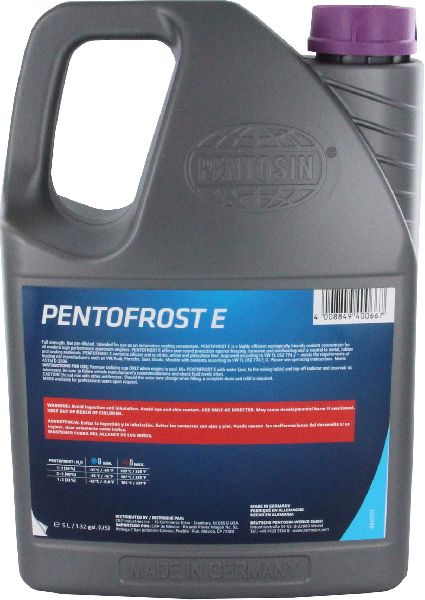
(OEM #G13 (G013A8J1G) or G12evo (G12E050A3))— The coolant must be drained to replace the thermostat. You must refill the system with the correct VW-specified fluid (G13 or the newer G12evo) to prevent damage. Do not mix with generic coolants.
Trusted brands: Pentosin (Pentofrost E), HEPU, Genuine VW
OEM price range: $25-$40 per gallon
Aftermarket price range: $20-$35 per gallon
Technical Service Bulletins (TSBs) & Recalls
- VIN-4-A-PIN APRI (2015 ENGINE, dated 2016-04-21): Lists P2181 as a possible fault in the ECM. This is a generic TSB that lists many potential codes without
Platform-Specific Known Issues
- The provided NHTSA Technical Service Bulletins (TSBs) VIN-4-A-PIN APRI for the 2015 Passat list 'MIL ON, FAULT P2181 IN THE ECM' as a recognized potential fault, confirming the manufacturer is aware of this issue on this specific model. [Bulletin #VIN-4-A-PIN APRI (2015 ENGINE), Bulletin #VIN-4-A-PIN APRI (2015 AIR BAGS)]
- Owner Experience: A user on Reddit with a VW experiencing P2181 was advised by others that it is 'statistically, a thermostat is most likely' and that on these engines, it is not a simple $20 part but a complex housing assembly.
- Diagnostic Wisdom: The Ross-Tech Wiki, a definitive source for VAG vehicle diagnostics, provides a detailed procedure for confirming a failed thermostat using VCDS software to graph the G62 and G83 sensors, stating 'If G62 and G83 both increase while engine warms up, suspect failed thermostat'.
Mechanic-Grade Diagnostic Values
- Engine Coolant Temperature (ECT) Sensor Resistance — expected: Approx. 2000-3000 Ω at 20°C (68°F); Approx. 275-375 Ω at 80°C (176°F).. Failure: Readings significantly outside these ranges, or an open/short circuit (infinite/zero resistance).
- Live Data Graph of G62 vs. G83 Sensors — expected: From a cold start, G62 (engine outlet) temperature should rise steadily while G83 (radiator outlet) remains near ambient temperature. G83 should only begin to rise after G62 reaches ~80-90°C.. Failure: If G83 temperature begins to rise along with G62 almost immediately from a cold start, the thermostat is stuck open.
Scan Tool Commands That Help
- VCDS or ODIS: Cooling System Bleeding/Purging Procedure — This is a mandatory procedure after replacing the thermostat or draining the coolant on an EA288 engine. The complex system has multiple circuits and electric pumps that cannot be bled manually.
- VCDS: 1. [01-Engine] -> [10-Adaptation] -> Select "IDE08287-Bleed cooling circuit" -> Set to "Active". 2. [04-Basic Settings] -> Select "IDE08087-Test - bleed cooling circuit" -> [Go!]. This runs the high-temp circuit bleed with the engine running. 3. After completion, engine off, ignition on. [04-Basic Settings] -> Select "IDE04795-Test - Bleeding of low temperature circuit" -> [Go!]. This runs the low-temp circuit bleed. — This is the specific sequence of commands to properly purge air from the entire cooling system. A battery charger is required, and the process involves the engine running at various RPMs and then shutting off for the second stage.
Wiring & Ground Locations
- G62/G83 ECT Sensor Connector — The G62 sensor is located on the main thermostat housing assembly. The G83 sensor is on the lower radiator hose/outlet.. A faulty sensor can be diagnosed by testing its wiring. A break or short in the wiring to the ECM will cause illogical readings and can trigger P2181 even with a good sensor and thermostat.
- ECT Sensor Wiring Test — At the G62 sensor connector.. To rule out a wiring fault, disconnect the G62 sensor and jump terminals 1 and 2 of the harness-side connector. With the ignition on, the temperature on a scan tool should read a maximum, fixed value (e.g., ~140°C). If it does, the wiring to the ECM is likely intact. If the reading is unchanged or shows -40°C, there is an open or short-to-ground in the wiring that must be repaired. Note: Service information specifies using only gold-plated terminals for any repairs to this connector.
Real Owner Repair Stories
- Ross-Tech Forums user @Kgehrels (2007 MKV GTI (BPY engine), ~180,000 km) — Poor fuel efficiency followed by a Check Engine Light for P2181. Freeze frame data showed the fault occurred at 73°C.
❌ Tried (didn't work) Initial graphing of only the main coolant temp (MVB 001) was slow but inconclusive.
✅ What actually fixed it The user correctly diagnosed a failing thermostat by graphing both the G62 (engine) and G83 (radiator outlet) sensors in MVB 130. They observed the G83 temperature began to rise when the G62 had only reached 66°C, well below the thermostat's target opening temperature of ~87°C. This confirmed the thermostat was leaking and not holding temperature correctly, leading them to replace it.
OEM Part Supersession History
04L121026F, 04L121026Q, 04L121026AE, 04L121026E, 04L121026J→04L121026AH— Likely internal design improvements to the thermostat mechanism or housing material to increase longevity and prevent premature failure.
Helpful Videos


We Have This Part in Stock

The information in this article is provided for general reference and educational purposes only. Vehicle specifications, procedures, and part compatibility can vary by production date, trim level, and region. Always consult your vehicle's factory service manual and verify part numbers before purchasing or performing repairs. Safety-critical components such as airbags, seat belts, and braking systems should be installed by a qualified professional.
- Volkswagen PASSAT TDI:
- 🧭 Diagnostic Flowchart
- 🎬 Helpful Videos
- 🛍️ Shop This Part
- What's Unique About the 2015-2015 Volkswagen PASSAT TDI
- Symptoms You May Notice
- Most Likely Causes
- Rare But Worth Checking
- Diagnosis Steps
- Parts You'll Likely Need
- Technical Service Bulletins (TSBs) & Recalls
- Platform-Specific Known Issues
- Mechanic-Grade Diagnostic Values
- Scan Tool Commands That Help
- Wiring & Ground Locations
- Real Owner Repair Stories
- OEM Part Supersession History
- 🎟️ Get 5% Off