

P2183 on 2010-2015 Land Rover LR4: ECT Sensor and Software Fixes
On a 2010-2015 LR4, code P2183 often points to a software glitch in the Engine Control Module (ECM). Before replacing any parts, check with a dealer for a required software update, as specified in multiple Technical Service Bulletins, particularly for 2014-2015 models.
- For a 2014-2015 Land Rover LR4, your first step for code P2183 should be to check if a software update is available.
- This code rarely indicates a serious mechanical problem and usually does not affect how the vehicle drives.
- Do not replace the ECT sensor without first ruling out the well-documented software issue to avoid unnecessary expense.
- If performing other repairs on the 3.0L V6, be extremely careful not to swap the identical ECT sensor and manifold sensor connectors, as this will cause a no-start condition.
What's Unique About the 2010-2015 Land Rover LR4

For the LR4, particularly 2014-2015 models with the 3.0L V6, this code is frequently caused by a 'diagnostic routine error' within the vehicle's software, not a hardware failure. Land Rover acknowledged this by issuing several Technical Service Bulletins (TSBs) advising that a Powertrain Control Module (PCM) software update is the correct fix in many cases where no physical fault can be found. Ignoring this can lead to unnecessary replacement of the ECT sensor. A particularly confusing issue on these engines is that the ECT sensor 2 connector is physically identical to a nearby manifold sensor connector, and they can be accidentally swapped during other repairs, which will prevent the engine from starting.
Diagnostic Flowchart

Tap your situation to follow the diagnostic path that matches what you're seeing on this vehicle.
Generation note: This range covers the entire Land Rover LR4 (L319) generation. The primary engines were the 5.0L V8 (2010-2013) and the 3.0L Supercharged V6 (2014-2015). The software-related TSBs specifically mention the 2014 and 2015 model years, which use the 3.0L V6. However, the underlying sensor and wiring can fail on any model year.
Symptoms You May Notice
- Check Engine Light (Malfunction Indicator Lamp, MIL) is on
- No other drivability concerns are typically present
- In rare cases related to wiring faults, a no-start condition may occur if the ECT sensor connector is swapped with an identical nearby connector.
- Replacing the ECT sensor without first checking for software updates. The TSBs make it clear that a software update is a very common solution and should be investigated first to avoid unnecessary repairs.
- On the 3.0L V6, mistaking the ECT sensor 2 connector for the manifold sensor connector during reassembly of other parts, leading to a no-start condition and confusion.
Most Likely Causes

- Engine Control Module (ECM) Software Error 🔴 High Probability → Shop Engine Control Module (ECM) Land Rover issued multiple TSBs (LTB00759NAS1, SSM72178) stating the diagnostic logic for P2183 was too sensitive and could set the code without an actual hardware fault, especially on 2014-2015 models.
How to confirm: A Land Rover dealer or specialist with access to the Symptom Driven Diagnostics (SDD) system can check if the vehicle's software is up to date by referencing the VIN against the TSBs.
Typical fix: Reprogramming the ECM with the latest software calibration.
Est. part cost: $0 - Faulty Engine Coolant Temperature (ECT) Sensor 2 🟡 Medium Probability → Shop Engine Coolant Temperature Sensor Sensors are common failure items. On the 5.0L V8, ECT sensor 2 is located at the rear of the engine near the firewall, making it susceptible to heat and difficult to access. On the 3.0L V6, it is often part of the thermostat housing assembly or located on the radiator outlet hose.
How to confirm: Using a diagnostic tool, compare the live data readings from ECT Sensor 1 and ECT Sensor 2 on a cold engine. They should be nearly identical and close to the ambient air temperature. If Sensor 2's reading is erratic, stuck, or significantly different, it is likely faulty.
Typical fix: Replace the ECT Sensor 2. On the 5.0L V8, this involves removing the intake components to access the sensor 🎬 Watch: 5.0L V8 coolant temperature sensor location and replacement guide at the back of the engine. On the 3.0L V6, it is often replaced with the entire thermostat housing or as part of the lower radiator hose assembly.
Est. part cost: $20-$60 - Low Engine Coolant Level ⚪ Low Probability
How to confirm: Visually inspect the coolant reservoir to ensure the level is between the 'MIN' and 'MAX' marks when the engine is cold. The LR4 is known for developing leaks from plastic cooling components like the thermostat housing and crossover pipes.
Typical fix: Top off the coolant with a DEX-COOL compatible OAT (Organic Acid Technology) coolant, typically orange in color. Investigate and repair the source of the coolant loss, which is a common issue on these vehicles. 🎬 See this walkthrough for replacing common LR4 coolant leak points
Est. part cost: $25-$40 - Wiring or Connector Issue ⚪ Low Probability
How to confirm: Visually inspect the wiring harness and connector for ECT Sensor 2. Look for signs of corrosion, backed-out pins, or physical damage. On the 3.0L V6, be aware that the ECT sensor connector and a nearby manifold sensor connector are identical and can be swapped, which will cause a no-start issue.
Typical fix: Repair the damaged wiring or clean/replace the connector. Ensure connectors are plugged into the correct components.
Est. part cost: $5-$50
Rare But Worth Checking
- Sticking Thermostat: → Shop Integrated Thermostat Housing Assembly A thermostat that is stuck open can cause the engine to warm up too slowly, which may cause the ECM to flag the sensor readings as implausible. The plastic thermostat housing on the 3.0L V6 is a known failure point that can cause leaks and potentially sticking issues.
- Blockage in Cooling System: A blockage could cause temperature differentials within the system, leading to one sensor reading much differently than the other. This was noted as a possibility to investigate in TSB SSM72178.
Diagnosis Steps
- Check with a Land Rover dealer or specialist to see if your vehicle's VIN is covered by TSBs #SGI15-14, #LTB00759NAS1, or #SSM72178 and if the required ECM software update has been performed.
- If software is up to date, check the engine coolant level and condition. Ensure it is full and not contaminated. The correct coolant is an orange-colored OAT DEX-COOL compatible type.
- Use an OBD-II scanner with live data capability. Monitor the values for ECT Sensor 1 and ECT Sensor 2 from a cold start. The readings should be within a few degrees of each other and the ambient air temperature.
- As the engine warms up, both sensor readings should rise smoothly and in tandem. If ECT Sensor 2's reading is stuck, jumps erratically, or does not follow ECT Sensor 1, it points to a problem with the sensor or its circuit.
- Locate and inspect the wiring and connector for ECT Sensor 2. On the 5.0L V8, it is at the rear of the engine. On the 3.0L V6, it is on the radiator outlet hose assembly. Check for damage, corrosion, or loose connections. Verify it is not swapped with an identical adjacent connector.
- If the wiring is intact and the software is correct, the ECT Sensor 2 is the most likely component to have failed. Proceed with replacement. 🎬 Watch: Quick DIY methods to diagnose and fix code P2183
- If the problem persists, investigate the possibility of a sticking thermostat or a blockage in the cooling system, as these are less common but possible causes.
Parts You'll Likely Need
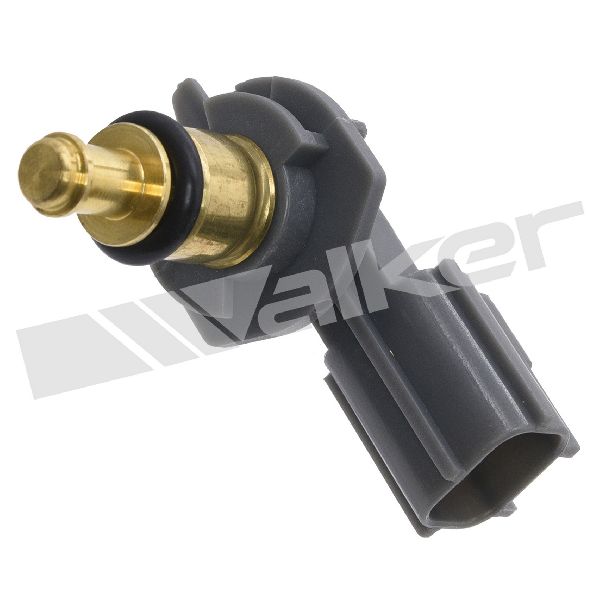
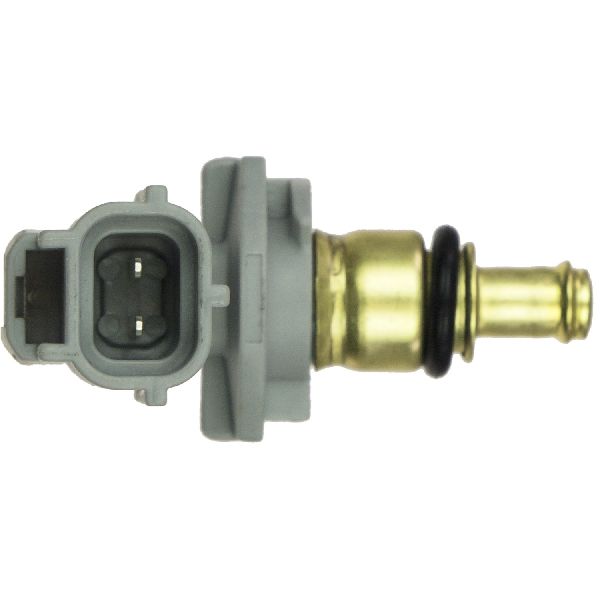
- Engine Coolant Temperature Sensor
(OEM #LR044930)— This is the physical sensor that provides the temperature reading to the ECM. If it fails, it will directly cause this code. Note that some TSBs indicate a software update is the fix, not the sensor itself.
Trusted brands: Genuine Land Rover, Britpart, GPD, Wells
OEM price range: $40-$60
Aftermarket price range: $15-$40 - ECM Software Update — As per Land Rover TSBs, a diagnostic logic error in the ECM is a primary cause for this code on 2014-2015 models, requiring a software reflash to fix. This must be done at a dealer or specialist shop.
OEM price range: $150-$300 - Engine Coolant — Required if replacing the sensor, thermostat, or topping off a low system. The specified type is an OAT (Organic Acid Technology) coolant, often labeled as DEX-COOL compatible and orange in color.
Trusted brands: Genuine Land Rover, Zerex DEX-COOL, Prestone DEX-COOL
OEM price range: $40-$50 per gallon
Aftermarket price range: $20-$30 per gallon
Technical Service Bulletins (TSBs) & Recalls
- SGI15-14: 2015 LR4, MIL on with P2183-00 stored.
- LTB00759NAS1: 2014 LR4, MIL on with P2183-00 due to a diagnostic routine error.
- SSM72178: 2015 LR4, P2183-00 stored due to diagnostic logic error, no drivability concerns.
Platform-Specific Known Issues
- TSB #LTB00759NAS1: States that for 2014 LR4s, the Malfunction Indicator Lamp (MIL) may illuminate with P2183-00 stored due to a 'diagnostic routine error'. The fix is to update the Engine Control Module (ECM) software.
- TSB #SSM72178: Notes that on 2015 LR4s, P2183-00 can be stored with no customer-reported drivability issues. It confirms the code is set due to a problem with the diagnostic logic and that revised PCM software is the intended solution. It explicitly states the diagnostic is intended to detect a fault, but in some situations, it is not working as expected.
- TSB #SGI15-14: Also identifies that on 2015 LR4s, the MIL may illuminate and store DTC P2183-00 in the ECM.
- Connector Confusion: A significant issue reported by DIY mechanics on forums is that the ECT sensor 2 connector on the 3.0L V6 is identical to a nearby manifold sensor connector. Swapping them during reassembly after a repair (like replacing coolant pipes) will cause a no-start condition, creating a confusing diagnostic situation.
Mechanic-Grade Diagnostic Values
- ECT Sensor Resistance — expected: Approximately 2000-3000 Ω at 20°C (68°F), dropping to 200-300 Ω at 90°C (194°F).. Failure: A reading of 0 Ω (short circuit), infinite resistance (open circuit), or values significantly outside the expected temperature-to-resistance curve.
- ECT Sensor Signal Voltage (at sensor, referenced to ground) — expected: Approximately 2.0-3.0V on a cold engine, dropping smoothly to approximately 0.5V when the engine is at full operating temperature.. Failure: Voltage is stuck near 5V (open circuit), stuck at 0V (short circuit to ground), or does not decrease as the engine warms up.
Hidden / Shadow Codes Worth Checking
- P2183-00: The '-00' suffix is a manufacturer-specific sub-type identifier. It often indicates a general or primary fault type for the base code and is visible on dealer-level tools like Land Rover's SDD. Generic scanners may only display 'P2183'. (see via Land Rover Symptom Driven Diagnostics (SDD) or equivalent advanced diagnostic tool.)
- P2183-22: The '-22' suffix indicates a specific fault condition, noted in a TSB for other Land Rover models (LR2/Evoque) as being related to an OBD calibration error when an engine block heater is installed. While not specific to the LR4 TSBs, it demonstrates the use of suffixes for different failure modes. (see via Land Rover Symptom Driven Diagnostics (SDD).)
Scan Tool Commands That Help
- Land Rover SDD (Symptom Driven Diagnostics): Configure existing module - Powertrain Control Module — This function is used to re-flash or update the ECM/PCM software, which is the specific fix called for in TSBs LTB00759NAS1 and SSM72178 for the 'diagnostic routine error'.
- Land Rover SDD (Symptom Driven Diagnostics): Clear Adaptations / Reset DTCs — After performing a software update or replacing a physical component like the sensor, the fault codes must be cleared from the module. Clearing adaptations can also reset learned values that may have been skewed by the faulty sensor readings.
Wiring & Ground Locations
- Engine Ground Strap (5.0L V8) — For the 5.0L V8 engine (2010-2013), a key ground strap runs from the firewall to the back of the engine.. A corroded or loose ground strap can cause erratic behavior in various engine electronics, including sensors. While not a direct cause of P2183, poor grounding can introduce voltage fluctuations that lead to sensor performance codes.
- ECT Sensor 2 Harness Chafe Point (3.0L V6) — On the 3.0L V6 engine (shared with Jaguar models), the wiring harness for ECT Sensor 2 can potentially rub against the power steering pulley.. Vibrations can cause the harness to chafe through, leading to a short or open circuit for the sensor. This will directly trigger a P2183 or related circuit code and may not be obvious without a careful physical inspection of the harness routing.
Real Owner Repair Stories
- Jaguar F-Type owner on JaguarForums (engine shared with 3.0L V6 LR4) (Jaguar F-Type with 3.0L Supercharged V6) — Check Engine Light with code P2184 (ECT Sensor 2 Circuit Low), which is functionally related to P2183.
❌ Tried (didn't work) Topping off low coolant in the expansion tank temporarily cleared the code, but it returned.
✅ What actually fixed it The root cause was found to be the wiring to ECT sensor #2 rubbing against the power steering pulley. The shop repaired the damaged wire and re-routed the harness to prevent it from happening again.
OEM Part Supersession History
LR041442→4346360— Part revision or supplier change.
Heads up: This part number often refers to the ECT sensor #2 when it is integrated into the lower radiator hose and sold as a complete assembly. This is different from a standalone sensor. Always verify by VIN if you need the assembly or just the sensor.
Model Year Variations Within This Range
- All years, but more common on 3.0L V6: On some configurations, particularly with the 3.0L V6, ECT Sensor #2 is not sold as a standalone part but is integrated into the radiator outlet (lower) hose assembly. In these cases, the entire hose must be replaced to replace the sensor.
Helpful Videos


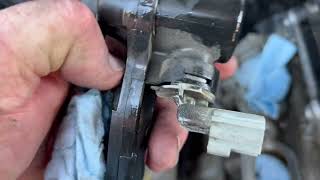
![How to Fix P2183 Engine Code in 4 Minutes [3 DIY Methods / Only $7.38]](https://img.youtube.com/vi/q-ErQPuWngI/mqdefault.jpg)
Used OEM Parts in Stock
New Aftermarket Parts Available


The information in this article is provided for general reference and educational purposes only. Vehicle specifications, procedures, and part compatibility can vary by production date, trim level, and region. Always consult your vehicle's factory service manual and verify part numbers before purchasing or performing repairs. Safety-critical components such as airbags, seat belts, and braking systems should be installed by a qualified professional.
- Land Rover LR4:
- 🧭 Diagnostic Flowchart
- 🎬 Helpful Videos
- 🛍️ Shop This Part
- What's Unique About the 2010-2015 Land Rover LR4
- Symptoms You May Notice
- Most Likely Causes
- Rare But Worth Checking
- Diagnosis Steps
- Parts You'll Likely Need
- Technical Service Bulletins (TSBs) & Recalls
- Platform-Specific Known Issues
- Mechanic-Grade Diagnostic Values
- Hidden / Shadow Codes Worth Checking
- Scan Tool Commands That Help
- Wiring & Ground Locations
- Real Owner Repair Stories
- OEM Part Supersession History
- Model Year Variations Within This Range
- 🎟️ Get 5% Off