

P2183 on 2020-2022 Ram 1500: Engine Coolant Sensor 2 Causes & Fixes
On a 2020-2022 Ram 1500, especially with the 3.0L EcoDiesel, P2183 is most often caused by a low coolant level or a faulty Engine Coolant Temperature (ECT) Sensor #2. Start by checking your coolant. If it's full, replacing the sensor is the next likely fix, costing about $30-$70 for the part. In some cases, especially on EcoDiesel models, a PCM software update may be needed to resolve the issue, as outlined in TSB #18-002-23.
- For a 2020-2022 Ram 1500 with code P2183, the very first step is to check the engine coolant level when the truck is cold.
- The most common failed part is the Engine Coolant Temperature (ECT) Sensor #2 itself.
- If you live in a cold climate and use a block heater, the code may be a false positive caused by uneven coolant heating.
- This code will disable your remote start feature until the fault is corrected and the code is cleared.
- The repair is straightforward for a DIYer, typically involving topping off coolant or replacing a single sensor.
What's Unique About the 2020-2022 Ram 1500
On the 5th Generation Ram 1500, particularly those with the 3.0L EcoDiesel engine, this code has specific known triggers. The cooling system design can make it sensitive to low coolant levels, which can expose ECT Sensor #2 and cause a temperature reading mismatch. Additionally, owners in cold climates have reported that using an engine block heater can falsely trigger this code by warming the coolant around one sensor more than the other, leading the PCM to believe there's a fault. TSB #18-002-23 was released for the EcoDiesel models, which involves a PCM software update to address this and other DTCs, suggesting a calibration sensitivity issue. 🎬 Watch: A quick guide to understanding the P2183 engine code. [TSB #18-002-23]
Diagnostic Flowchart
Tap your situation to follow the diagnostic path that matches what you're seeing on this vehicle.
Symptoms You May Notice
- Check Engine Light (Malfunction Indicator Lamp) is on.
- Remote start feature is disabled. [TSB #S2218000009]
- Inconsistent or erratic readings on the coolant temperature gauge.
- Slight decrease in fuel economy.
- Engine may idle roughly, especially during warm-up.
- Cooling fans may run excessively or at unusual times.
- A forum member on RamForum.com reported their dealer initially diagnosed the P2183 code as a faulty temperature sensor in the rear differential on a truck with a thermal management system. While some axles have temp sensors, P2183 specifically refers to Engine Coolant Temperature Sensor #2, making this diagnosis highly unlikely and a probable misinterpretation by the technician.
Most Likely Causes
- Low Engine Coolant Level 🔴 High Probability On the EcoDiesel, ECT Sensor #2 is positioned higher in the cooling system. If the coolant level drops even slightly, the sensor can become exposed to an air pocket, causing it to read a very different temperature than the submerged ECT Sensor #1, triggering the code.
How to confirm: Visually inspect the coolant reservoir when the engine is cold. The level should be between the 'MIN' and 'MAX' lines. If it is low, this is the likely cause.
Typical fix: Top off the cooling system with the correct Mopar OAT coolant (or equivalent like Zerex HD Yellow for diesels). If the level is significantly low, inspect for leaks from common areas like the radiator, water pump, or EGR cooler.
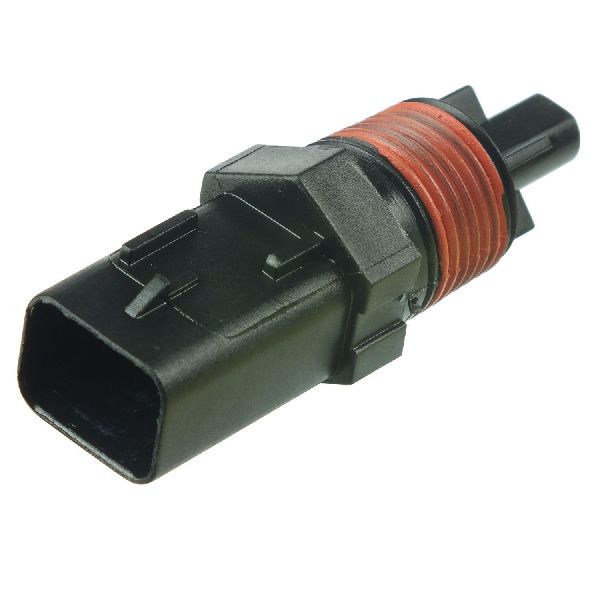
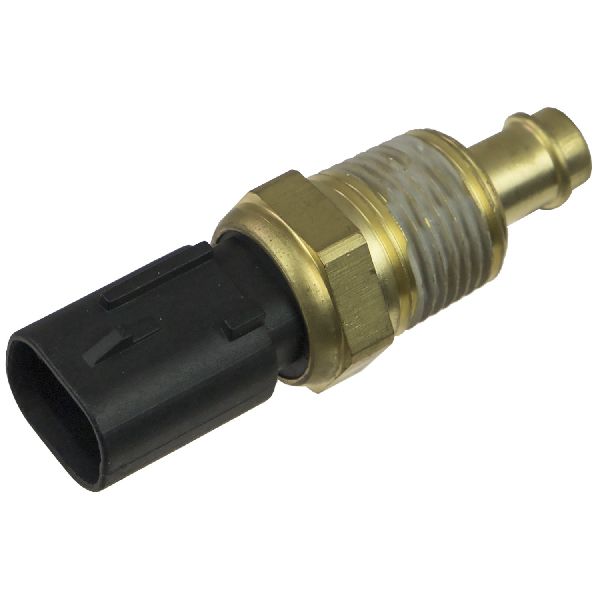
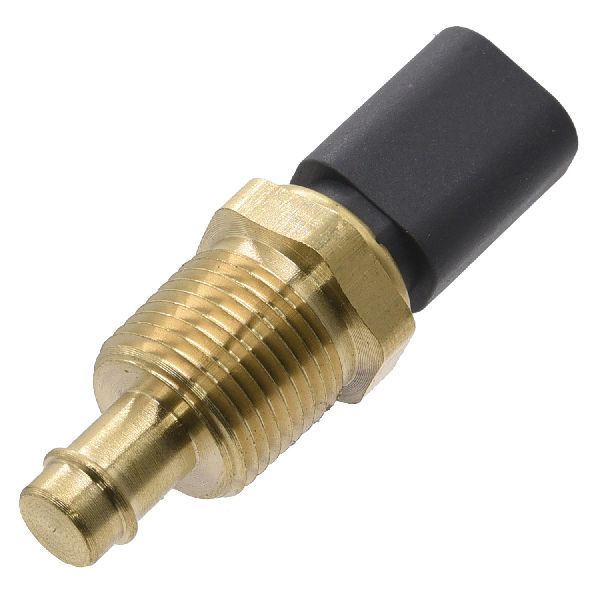
Est. part cost: $25-$40 for a gallon of coolant - Faulty Engine Coolant Temperature (ECT) Sensor #2 🔴 High Probability → Shop Engine Coolant Temperature Sensor The sensor is a common failure point. Forum members report the original sensor may have plastic threads, and replacing it with a brass-threaded aftermarket or OEM part is a common fix. The sensor's resistance can drift out of spec over time.
How to confirm: Using an OBD-II scanner with live data, compare the readings from ECT1, ECT2, and the Intake Air Temp sensor on a cold engine. They should be within a few degrees of each other. If ECT2 is reading an illogical temperature (e.g., -40°F or 250°F on a cold engine), the sensor is likely bad. You can also test the sensor's resistance with a multimeter; at 68°F (20°C), it should be between 2,000 and 3,000 ohms.
Typical fix: Replace ECT Sensor #2. On the 3.0L EcoDiesel, it is located on the upper driver's side of the block, towards the back. On the 5.7L Hemi, it is typically found on the front of the engine, near the thermostat housing. 🎬 See this walkthrough for replacing the 5.7 Hemi coolant sensor.
Est. part cost: $30-$70 - Wiring or Connector Issue 🟡 Medium Probability The wiring harness to the sensor can be susceptible to damage from heat, vibration, or corrosion, especially the connector itself.
How to confirm: Visually inspect the wiring harness and connector going to ECT Sensor #2. Look for any signs of corrosion, damaged wires, or loose pins. A user on a Jeep forum noted the connector has a lever and a red locking tab that can be tricky to release. Use a multimeter to check for the 5V reference signal and a good ground at the connector with the key on, engine off.
Typical fix: Repair the damaged section of the harness or clean/replace the connector. Pigtail repair kits are available.
Est. part cost: $15-$50 for a connector pigtail or wiring repair supplies - False Trigger from Engine Block Heater ⚪ Low Probability In very cold weather, using a block heater can warm the coolant unevenly, creating a significant temperature difference between the two sensors at startup, which the PCM flags as a fault. This is a known issue that manufacturers sometimes address with software updates.
How to confirm: Note if the code only appears on cold mornings after the block heater has been used. Clear the code and see if it returns after a cold start without using the heater. A forum user on 5thGenRams specifically linked P2183 to block heater use at 10°F.
Typical fix: A software update from the dealer may be required to adjust the sensor correlation parameters, as mentioned in TSBs like #18-002-23 for the EcoDiesel. [TSB #18-002-23] Alternatively, avoid using the block heater or clear the code when it appears.
Est. part cost: $0-$200 for a dealer calibration update
Rare But Worth Checking
- Stuck Thermostat: → Shop Integrated Thermostat Housing Assembly If the thermostat is stuck open, the engine may warm up too slowly, causing the PCM to flag a correlation error between the two sensors over time. This would likely be accompanied by a P0128 code.
- Powertrain Control Module (PCM) Fault: → Shop Engine Control Module (ECM) In rare cases, the sensor and wiring are fine, but the PCM itself is unable to correctly interpret the sensor's signal. TSB #18-002-23 for the EcoDiesel involves a PCM re-flash, which corrects software logic that could falsely trigger P2183. [TSB #18-002-23, 5] This should be considered a last resort after all other possibilities are exhausted.
Diagnosis Steps
- Check Coolant Level: With the engine cold, verify the coolant in the reservoir is between the MIN and MAX lines. If low, top it off with the correct Mopar OAT coolant and see if the code returns. This is the most common fix on the EcoDiesel.
- Scan Live Data: Connect an OBD-II scanner. On a cold-soaked engine (not run for 6+ hours), view the live data for ECT Sensor 1, ECT Sensor 2, and Intake Air Temperature. All three should read within a few degrees of the ambient air temperature. If ECT2 is significantly different (a variance of 5.4°F / 3°C or more is often flagged), the sensor is the primary suspect. 🎬 Watch: Three simple DIY methods to fix the P2183 code.
- Inspect Sensor Wiring: Locate ECT Sensor #2. On the 3.0L EcoDiesel, it's on the upper driver's side of the block toward the rear. On the 5.7L Hemi, it's typically near the thermostat housing. Inspect the electrical connector and nearby wiring for any visible damage, corrosion, or looseness. Pay attention to the locking tab on the connector.
- Test the Sensor (Optional): For advanced DIYers, disconnect the sensor and measure its resistance with a multimeter. At an ambient temperature of 68°F (20°C), the resistance should be between 2000-3000 Ohms. A reading far outside this range confirms a bad sensor.
- Check for TSBs: Check with a dealer or online for TSBs related to P2183 for your specific engine and model year, such as TSB #18-002-23 for the EcoDiesel, which requires a PCM software update. [TSB #18-002-23]
- Replace ECT Sensor #2: If the coolant level is good and the live data points to a bad sensor, replacement is the next step. Be prepared for a small amount of coolant to spill. Tighten the new sensor to the specified torque.
- Clear Code and Drive: After the repair, clear the DTC with your scanner and perform a drive cycle to ensure the code does not return. Note that some codes may be 'permanent' and will only clear after the PCM verifies the fix over several drive cycles.
Parts You'll Likely Need
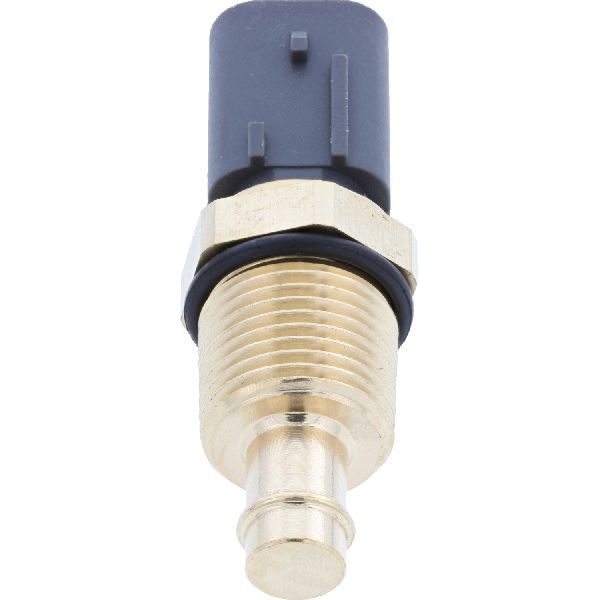
- Engine Coolant Temperature Sensor 2
(OEM #68447295AA (Verify with VIN))— This sensor is the most common part to fail or read inaccurately, causing the performance/range error.
Trusted brands: Mopar, NTK, Standard Motor Products
Related Codes That Often Appear With This One
- P258B — TSB #1813322 lists P2183 and P258B (Electric Vacuum Pump Performance) together, suggesting a potential shared electrical or PCM software issue that is resolved with a re-flash.
- P040F — TSB #1813322 also links P2183 with P040F (EGR Temperature Sensor A-B Correlation), indicating the PCM is seeing implausible temperature readings across multiple, unrelated sensors, often pointing to a software calibration issue.
- P016F — TSB #18-002-23 for diesel models groups P2183 with P016F (Closed Loop Fuel Pressure Control At Limit - Pressure Too Low), pointing to a comprehensive PCM software update that addresses multiple engine management parameters. [TSB #18-002-23]
- P0128 — This code for 'Coolant Thermostat (Coolant Temperature Below Thermostat Regulating Temperature)' can appear if a faulty ECT sensor is providing an inaccurate reading, or if the thermostat is genuinely stuck open.
Technical Service Bulletins (TSBs) & Recalls
- TSB #S2218000009: Confirms that DTC P2183 will cause the remote start to be disabled.
- TSB #1813322: Groups P2183 with P258B and P040F, suggesting a PCM software update can fix multiple seemingly unrelated codes.
- TSB #18-002-23: A critical TSB for 3.0L EcoDiesel models that involves a PCM software update to address P2183 and a long list of other potential codes, indicating a calibration fix.
Platform-Specific Known Issues
- EcoDiesel Coolant Level Sensitivity: The 3.0L EcoDiesel engine is known to throw code P2183 if the coolant level is even slightly low, as it can cause the #2 sensor to read air temperature instead of coolant temperature. This is the first thing to check.
- Block Heater False Positive: Using an engine block heater in cold climates can heat the coolant unevenly, causing the PCM to log a P2183 code at startup. A dealer may have a PCM software update (like TSB 18-002-23) to address this known condition.
- Disabled Remote Start: As confirmed by TSB #S2218000009, an active P2183 code will disable the remote start functionality on the vehicle. Restoring this function is a major motivator for repair. [TSB #S2218000009]
Mechanic-Grade Diagnostic Values
- ECT Sensor #2 Signal Voltage (Cold Engine) — expected: ~2.0V to 3.0V at 20°C (68°F). Failure: A voltage significantly outside this range, or one that doesn't correspond to the actual coolant temperature.
- ECT Sensor #2 Signal Voltage (Hot Engine) — expected: ~0.5V at operating temperature (approx. 90°C / 194°F). Failure: Voltage does not decrease as the engine warms up, or remains high (e.g., 1.25V) at operating temperature.
- ECT Sensor #2 Resistance (Cold Engine) — expected: 2000Ω - 3000Ω at 20°C (68°F). Failure: Resistance is significantly higher or lower than the expected range for the ambient temperature.
- ECT Sensor #2 Resistance (Hot Engine) — expected: 200Ω - 300Ω at 90°C (194°F). Failure: Resistance does not drop into this range when the engine is at full operating temperature.
- Live Data Correlation (Cold Soak) — expected: ECT1, ECT2, and IAT sensor readings should all be within 5.4°F (3°C) of each other and the ambient air temperature after the vehicle has been off for 6+ hours.. Failure: ECT Sensor 2 reading differs by more than 5.4°F (3°C) from the other sensors.
Hidden / Shadow Codes Worth Checking
- Permanent DTC (pDTC): P2183 is often stored as a 'permanent' diagnostic trouble code. Unlike regular DTCs, it cannot be cleared by a simple scan tool 'Clear Codes' command or by disconnecting the battery. (see via Visible with most standard OBD-II scanners, but its permanent status is the key attribute. The code will only be cleared by the PCM itself after it successfully runs and passes the internal diagnostic monitor for the ECT sensor circuit on subsequent drive cycles.)
Scan Tool Commands That Help
- wiTECH (OEM FCA/Stellantis Tool) or equivalent professional scanner: PCM Communication Test / Module Test — This function is used as a last resort when the sensor and wiring have been verified as good, but the code persists. The scan tool forces a known voltage into the sensor circuit, and if the PCM does not acknowledge or report this exact input, it suggests an internal PCM fault (like a bad analog-to-digital converter).
Wiring & Ground Locations
- Engine Block Ground — The main battery ground cable connects to the front of the engine block, typically on the driver's side on older models. A secondary strap often connects the block to the frame.. The ECT sensor, like many engine sensors, relies on a clean path to ground through the engine block. A corroded or loose main engine ground can introduce electrical noise and resistance, potentially affecting sensor readings and causing various electrical issues.
- Body/Chassis Ground — A smaller ground wire runs from the negative battery terminal to the body, often located on the passenger side wheel well/fender area near the alternator or above the driver's side headlight.. This provides the ground reference for the PCM and other modules. While less likely to directly cause a single sensor code, a poor body ground can lead to unpredictable module behavior and diagnostic headaches.
Real Owner Repair Stories
- RamForum.com user 'Upnorthwi' (2021 Ram 1500 EcoDiesel (2 months old)) — Check Engine Light with code P2183. The code was stored as a 'permanent' code that could not be cleared with a BlueDriver scanner.
❌ Tried (didn't work) The dealership initially could not find a fix.
✅ What actually fixed it The dealer opened a STAR case with Chrysler and ultimately diagnosed the issue as a faulty temperature sensor in the rear differential, which they ordered for replacement. This is a documented case of misdiagnosis, as P2183 is explicitly an Engine Coolant Temperature sensor code. The final resolution from the owner was not posted after this point, but the story serves as a strong example of technician error.
Helpful Videos
![What is P2183 Engine Code [Quick Guide]](https://img.youtube.com/vi/NQNQZuGGWiE/mqdefault.jpg)
![How to Fix P2183 Engine Code in 4 Minutes [3 DIY Methods / Only $7.38]](https://img.youtube.com/vi/q-ErQPuWngI/mqdefault.jpg)



We Have This Part in Stock


The information in this article is provided for general reference and educational purposes only. Vehicle specifications, procedures, and part compatibility can vary by production date, trim level, and region. Always consult your vehicle's factory service manual and verify part numbers before purchasing or performing repairs. Safety-critical components such as airbags, seat belts, and braking systems should be installed by a qualified professional.
- Ram 1500:
- 🧭 Diagnostic Flowchart
- 🎬 Helpful Videos
- 🛍️ Shop This Part
- What's Unique About the 2020-2022 Ram 1500
- Symptoms You May Notice
- Most Likely Causes
- Rare But Worth Checking
- Diagnosis Steps
- Parts You'll Likely Need
- Related Codes That Often Appear With This One
- Technical Service Bulletins (TSBs) & Recalls
- Platform-Specific Known Issues
- Mechanic-Grade Diagnostic Values
- Hidden / Shadow Codes Worth Checking
- Scan Tool Commands That Help
- Wiring & Ground Locations
- Real Owner Repair Stories
- 🎟️ Get 5% Off