

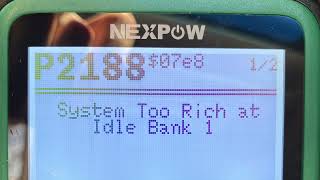
P2188 on 2012-2014 Kia RIO: "System Too Rich at Idle" Causes and Fixes
On a 2012-2014 Kia Rio, code P2188 is most often caused by a need for an engine control module (ECM) software update, as specified in Kia's technical service bulletins. This should be the first check. If the software is current, the next most likely cause is a failing high-pressure fuel pump (HPFP), a common issue on these GDI engines which can leak fuel into the crankcase. A stuck-open purge control valve is another frequent culprit.
- For a 2012-2014 Kia Rio, P2188 is very likely a software issue that a Kia dealer must fix with an update.
- If the software is up-to-date, the next most common cause is a failing high-pressure fuel pump (HPFP).
- Check your engine oil for a gasoline smell. If present, the HPFP is almost certainly the cause and the vehicle should not be driven.
- A faulty EVAP purge valve is another common, but less expensive, part to check.
- Do not replace the O2 sensor as a first step; it is less likely to be the root cause than the software or fuel pump.
What's Unique About the 2012-2014 Kia RIO
For the 2012-2014 Kia Rio with the 1.6L GDI engine, this code is uniquely tied to manufacturer-acknowledged software issues. Kia released multiple Technical Service Bulletins (TSBs), including TSBENG146R1, advising that an ECM software upgrade is the primary fix. This is different from many other vehicles where P2188 is almost always a mechanical or sensor failure. Therefore, checking the software version with a dealer should be the first step. These GDI engines also have a higher incidence of high-pressure fuel pump failures compared to port-injected engines, making it the next logical item to inspect.
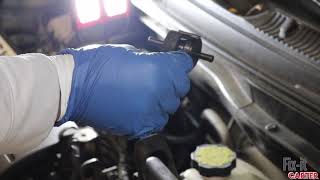
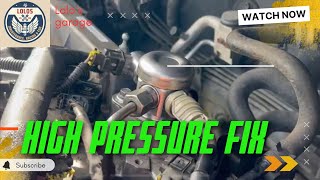
🎬 Watch: How to replace the high-pressure fuel pump yourself.Diagnostic Flowchart
Tap your situation to follow the diagnostic path that matches what you're seeing on this vehicle.
Symptoms You May Notice
- Check Engine Light is on
- Reduced fuel economy
- Rough or unstable idle
- Engine hesitation or stalling at low speeds.
- Strong smell of gasoline from the exhaust
- Black smoke from the tailpipe
- Engine oil level rising or smelling strongly of gasoline.
- Engine cranks but has difficulty starting.
- Replacing the oxygen sensor first without checking for TSBs or testing the fuel system. While an O2 sensor *can* cause this code, the ECM software and high-pressure fuel pump are much more common culprits on this specific vehicle.
- Assuming a generic cause without considering the platform-specific TSBs. The software update is the most probable and manufacturer-documented starting point.
Most Likely Causes
- Engine Control Module (ECM) Software Update Needed 🔴 High Probability Kia issued specific TSBs (TSBENG146R1, TSB-ENG118R2) for this exact issue on 2012-2014 Rio models, indicating the original software calibration for fuel control at idle was faulty.
How to confirm: A Kia dealership or a qualified shop with OEM tools must check the current software calibration ID against the numbers listed in the TSBs. This is the definitive first step.
Typical fix: Update the ECM with the revised software provided by Kia. This is a dealer-level or specialized shop repair.
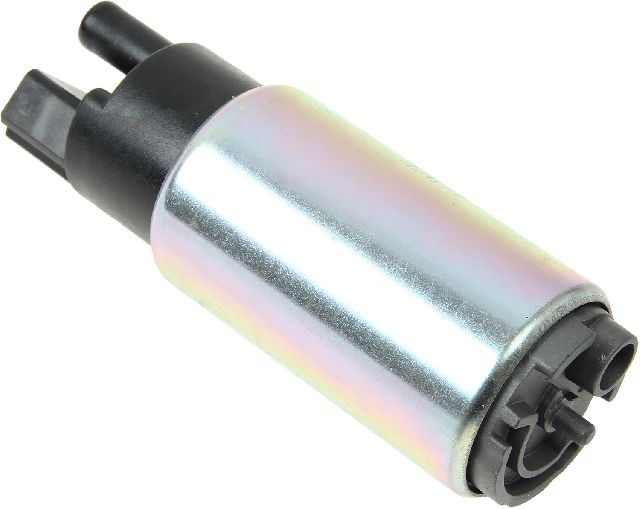
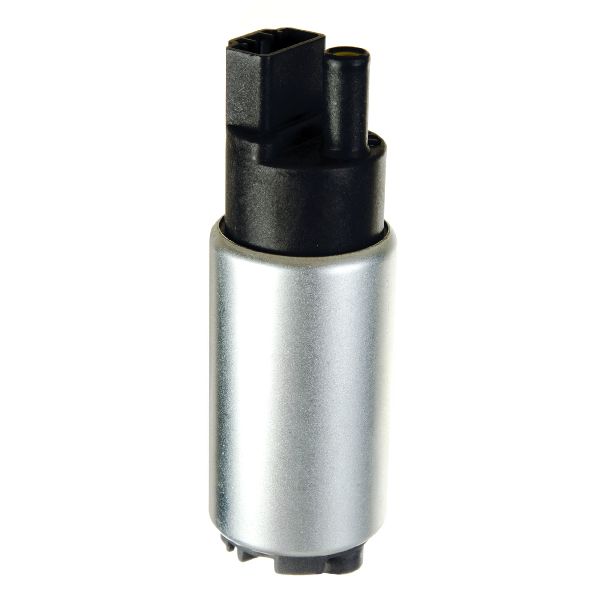
Est. part cost: $0-$150 - Failing High-Pressure Fuel Pump (HPFP) 🟡 Medium Probability → Shop Fuel Pump The Gamma 1.6L GDI engine's HPFP is a known failure point. The internal seals can fail, causing excess fuel to be sent to the rail and, more critically, leak raw fuel directly into the engine crankcase, contaminating the oil.
How to confirm: Monitor fuel rail pressure with a scan tool at idle; it should be around 40 bar (approx. 580 PSI). If it's significantly higher, the pump may be at fault. The most critical sign is pulling the oil dipstick and smelling a strong odor of raw gasoline. The oil level may also appear overfull.
Typical fix: Replace the high-pressure fuel pump and the contaminated engine oil and filter immediately.
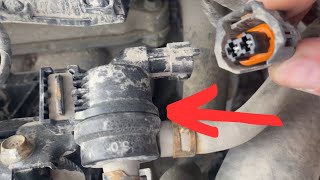
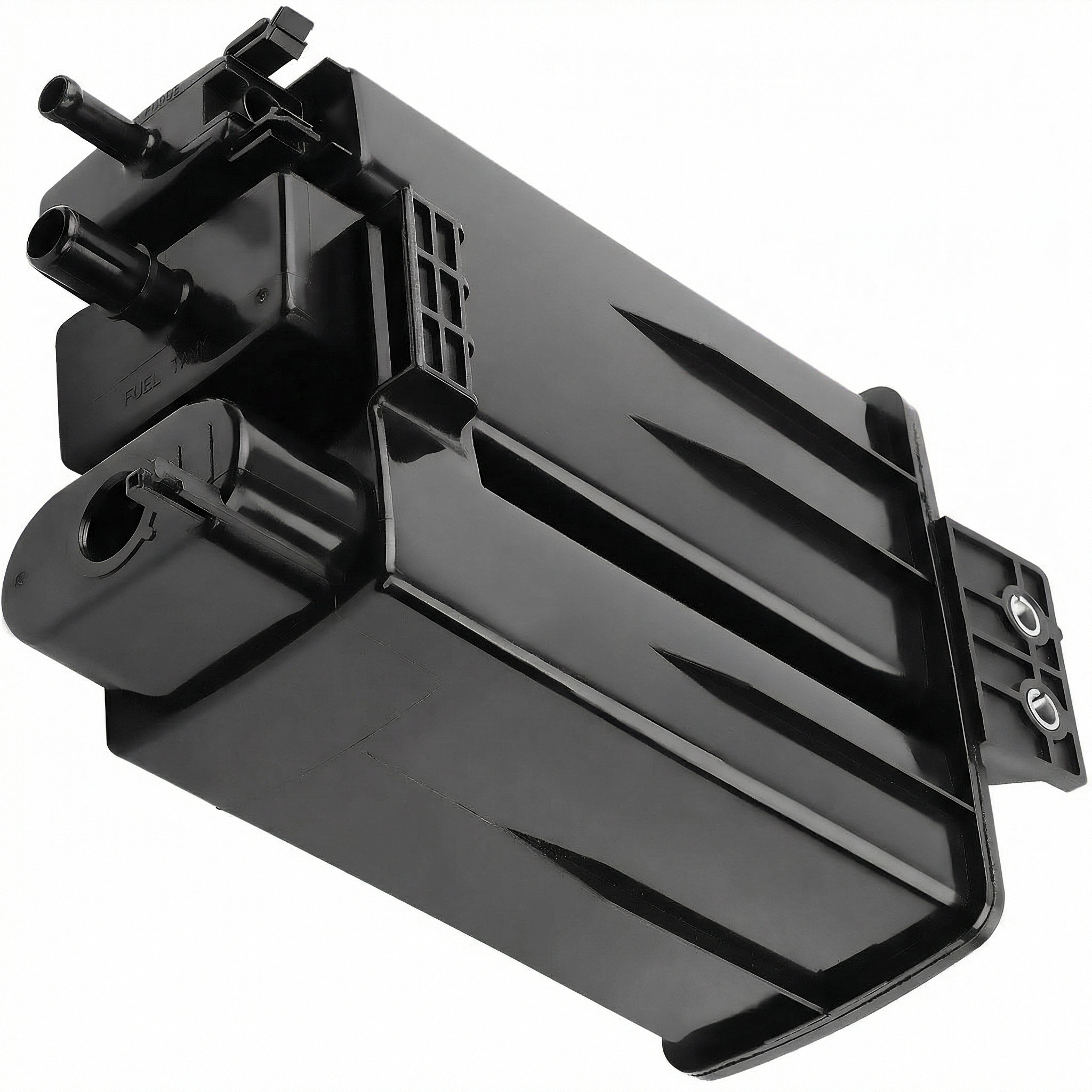
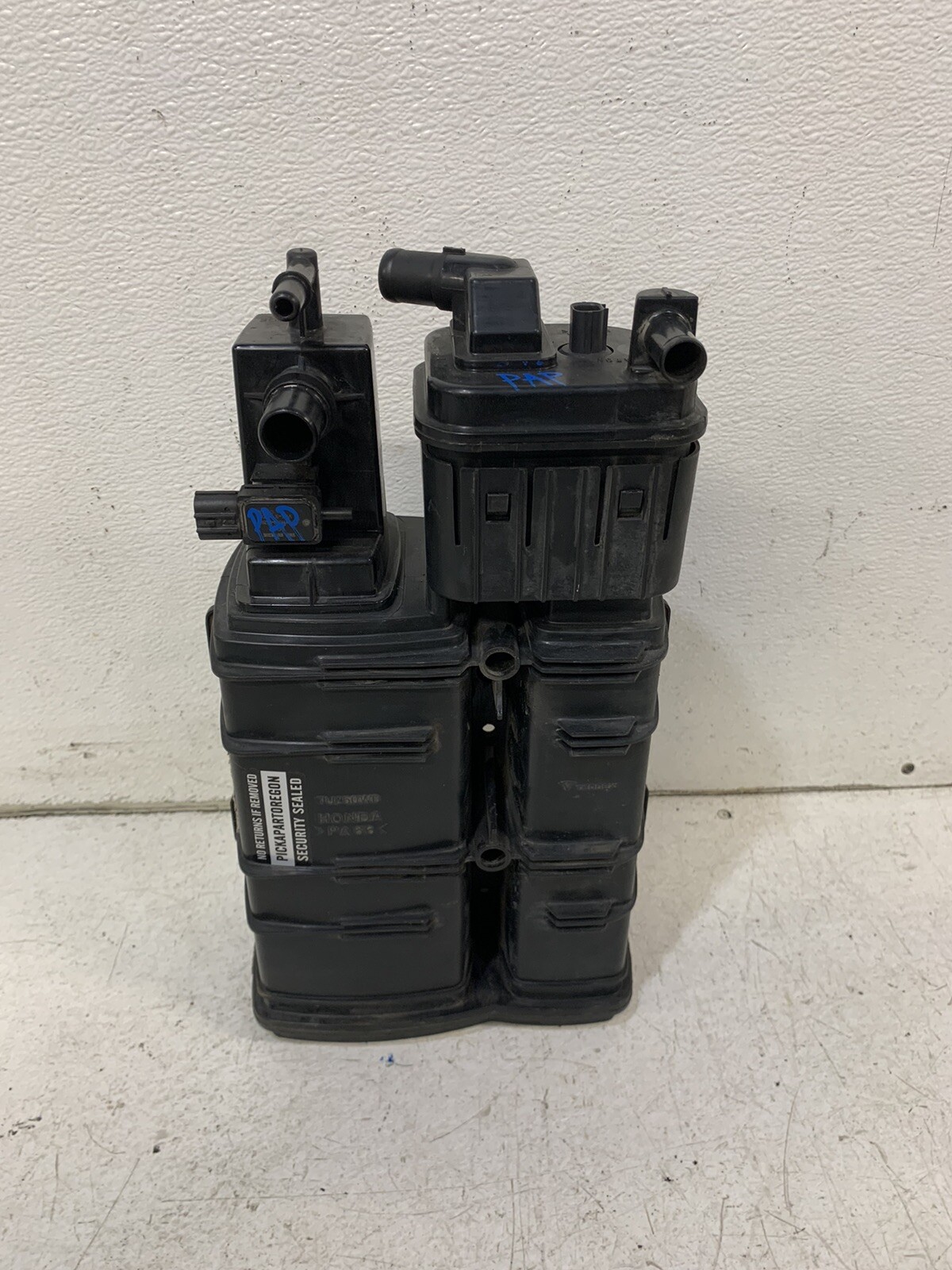
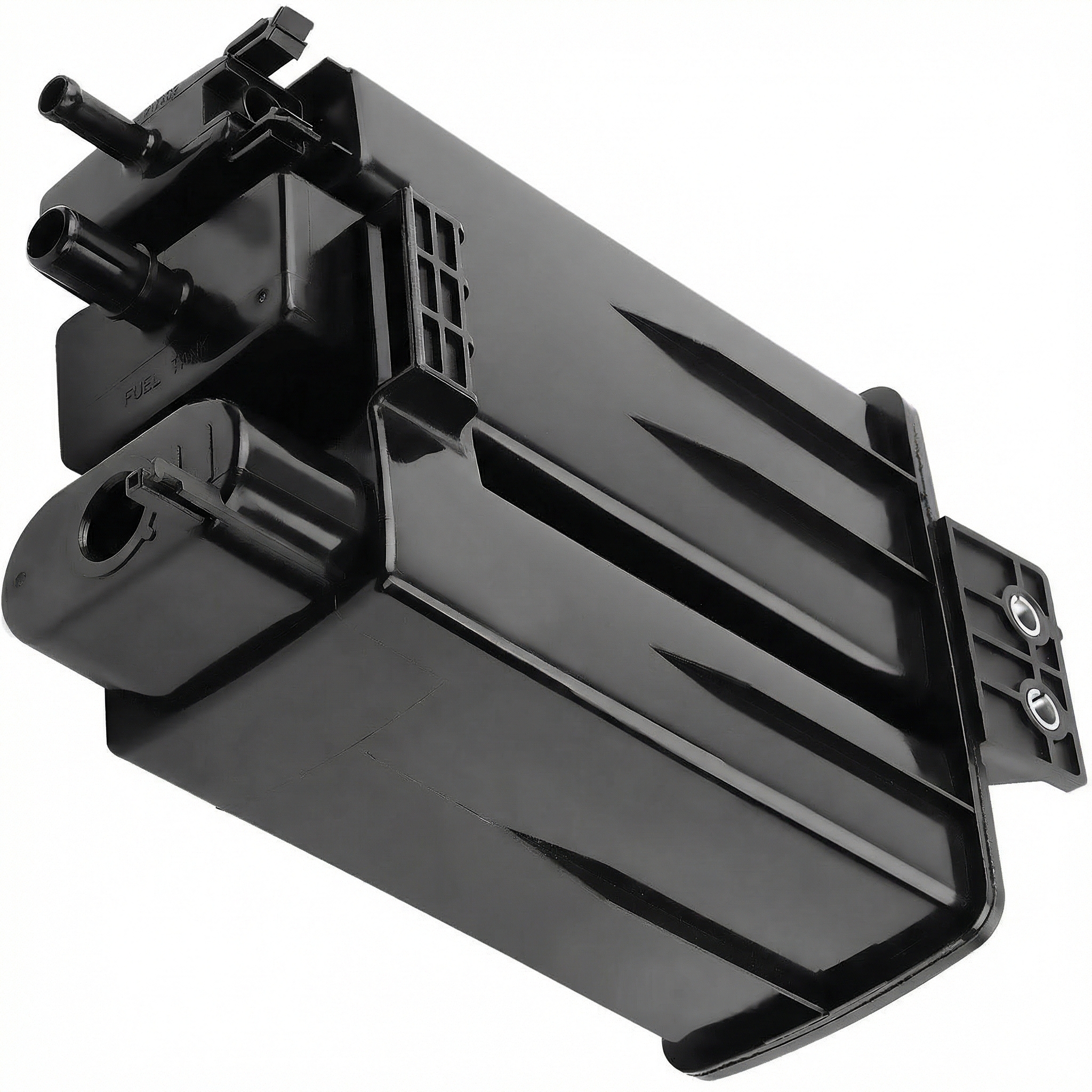
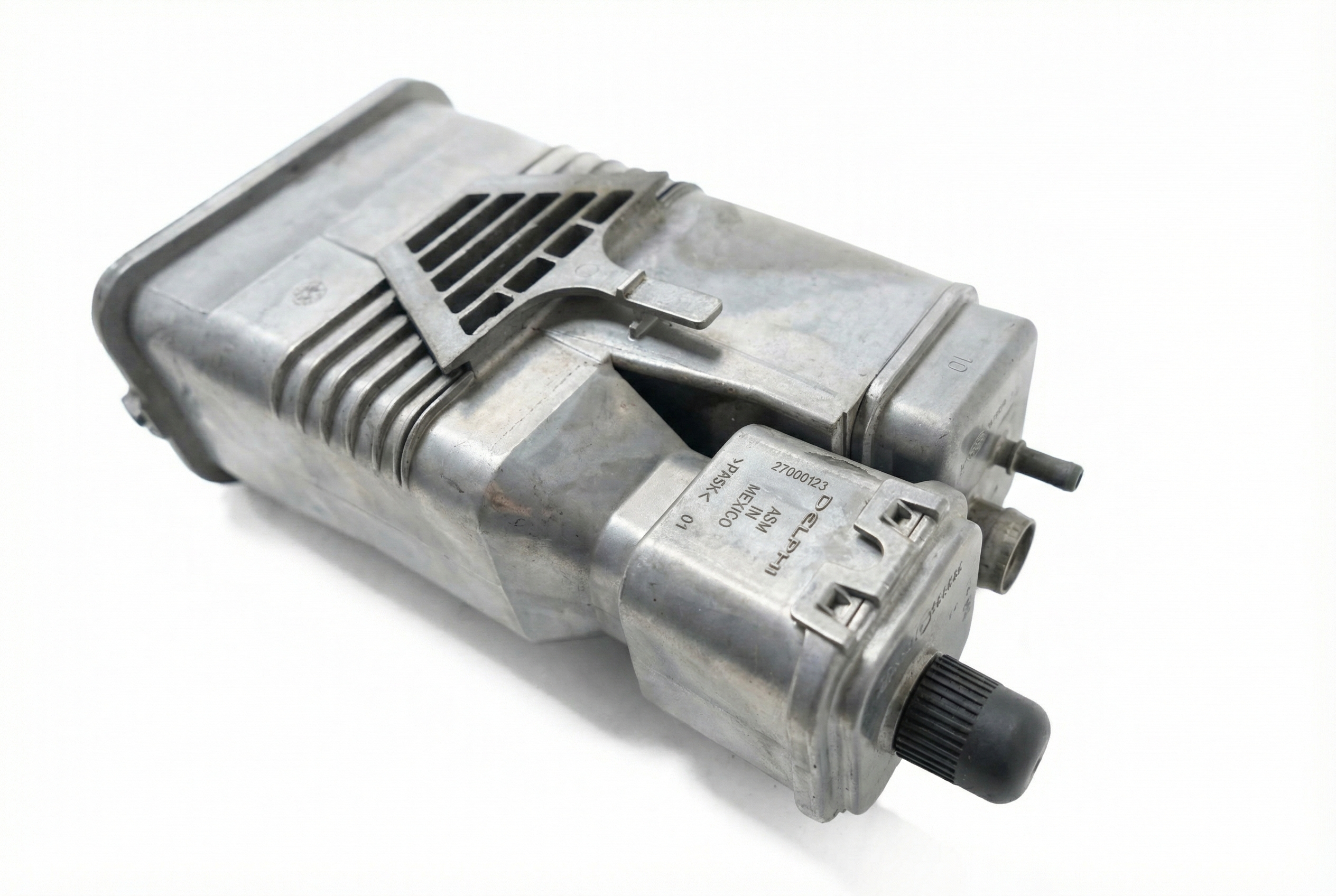
Est. part cost: $200-$500 - Faulty Purge Control Solenoid Valve (PCSV) 🟡 Medium Probability → Shop Vapor Canister Purge Solenoid The purge valve controls the flow of fuel vapors from the charcoal canister to the engine. It's a common failure part that can stick open, allowing un-metered fuel vapors into the intake manifold at idle, creating a rich condition.
How to confirm: With the engine off, disconnect the valve and try to blow air through it. If air passes, it's stuck open and faulty. A hissing sound from the gas tank area after shutdown can also be a symptom. Difficulty starting the engine immediately after refueling is another classic sign of a stuck-open purge valve.
Typical fix: Replace the purge control solenoid valve. This is a relatively simple and accessible part to replace.
Est. part cost: $40-$100 - Leaking Fuel Injector(s) ⚪ Low Probability → Shop Fuel Injector While less common than the HPFP, a GDI injector can leak fuel into a cylinder after the engine is shut off. This leads to a rich condition on startup and can dilute engine oil.
How to confirm: Perform a fuel pressure leak-down test. After shutting the engine off, the fuel rail pressure should hold steady. A rapid drop indicates a leak. Another method is to remove the spark plugs after the car has sat and check for signs of wetness or a strong fuel smell in the cylinders. An endoscope can be used to visually confirm fuel pooling on top of the pistons.
Typical fix: Replace the faulty fuel injector(s) and change the engine oil as a precaution against fuel contamination.
Est. part cost: $70-$150 per injector - Faulty Upstream Oxygen (O2) Sensor ⚪ Low Probability → Shop Oxygen Sensor
How to confirm: A faulty O2 sensor can send incorrect (biased rich) signals to the ECM. Graphing the Bank 1, Sensor 1 voltage on a scan tool will show if it is slow to respond, stuck high (above 0.8v), or not fluctuating rapidly as it should during closed-loop operation.
Typical fix: Replace the Bank 1, Sensor 1 (upstream) oxygen sensor.
Est. part cost: $60-$120
Rare But Worth Checking
- Faulty Fuel Rail Pressure Sensor: If this sensor reports lower-than-actual pressure, the ECM may command the high-pressure pump to work harder, resulting in an overly rich condition. A diagnostic scan tool can be used to compare the sensor's readings to specified values at idle and under load.
- Clogged Air Filter: A severely clogged engine air filter can restrict airflow, creating a naturally rich air-fuel mixture. This is a simple and inexpensive check that should not be overlooked.
Diagnosis Steps
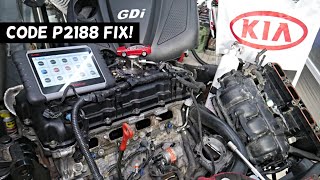
- Check for Technical Service Bulletins (TSBs): The absolute first step for this vehicle is to contact a Kia dealer or use a professional database to see if the ECM software update from TSBENG146R1 or TSB-ENG118R2 has been performed. If not, this is the most likely fix.
- Scan Tool Data Analysis: Connect an OBD-II scanner. Observe Long-Term Fuel Trim (LTFT) and Short-Term Fuel Trim (STFT) at idle. A significant negative number (e.g., -15% or more) confirms the ECM is removing fuel to correct a rich condition.
- Check for Fuel in Oil: This is a critical safety and diagnostic step. Carefully pull the engine oil dipstick and smell it. A strong odor of raw gasoline is a definitive indicator of a failing high-pressure fuel pump or a severely leaking fuel injector. If found, service immediately.
- Check Fuel Rail Pressure: Using a scan tool, monitor the fuel rail pressure sensor reading at idle. The specified value for the 1.6L GDI engine is approximately 40 bar (~580 PSI). Pressures significantly above this at idle point towards a faulty HPFP or, less commonly, a bad fuel pressure sensor.
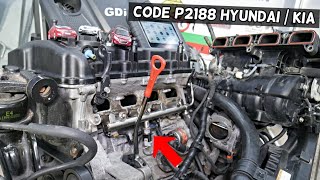
- Inspect the Purge Control Solenoid Valve (PCSV): Locate the PCSV on top of the engine. With the engine off, disconnect the electrical connector and hoses. Attempt to blow through it. If air passes freely, the valve is stuck open and must be replaced.
- Test the Oxygen Sensor: Graph the upstream O2 sensor's voltage (Bank 1, Sensor 1). It should fluctuate rapidly between approximately 0.1V and 0.9V. A sensor that is stuck high or responds slowly may be faulty.
Parts You'll Likely Need
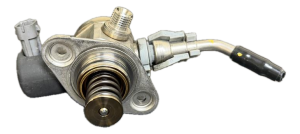
- High-Pressure Fuel Pump
(OEM #35320-2B220 (Verify with VIN))— This is a very common failure point on Kia/Hyundai 1.6L GDI engines that directly causes a rich condition, often by leaking fuel into the crankcase.
Trusted brands: Bosch, Delphi, Genuine Hyundai/Kia
OEM price range: $350-$500
Aftermarket price range: $200-$350 - Vapor Canister Purge Valve
(OEM #28910-26900 (Verify with VIN))— A common failure where the valve sticks open, allowing excess fuel vapors into the engine at idle. It's a relatively inexpensive and easy part to replace.
Trusted brands: Standard Motor Products (SMP), Genuine Hyundai/Kia
OEM price range: $70-$100
Aftermarket price range: $40-$60
Related Codes That Often Appear With This One
- P2192 — This code means "System Too Rich at Higher Load." If both P2188 (rich at idle) and P2192 appear, it strongly points to a systemic fuel delivery problem like a faulty high-pressure fuel pump or leaking injectors, as the issue is present across different engine speeds.
- P0172 — This is the generic OBD-II code for "System Too Rich (Bank 1)." P2188 is more specific, indicating the problem occurs at idle. Seeing them together reinforces the diagnosis of a rich condition and is often caused by the same list of components.
Technical Service Bulletins (TSBs) & Recalls
- TSBENG146R1: Recommends an ECM software upgrade for 2012-2014 Rio and 2012-2013 Soul.
- TSB-ENG118R2: An earlier bulletin, also recommending an ECM software upgrade for 2012-2013 Rio and Soul models for this and other codes.
Platform-Specific Known Issues
- The most significant issue for the 2012-2014 Kia Rio with code P2188 is the need for an ECM software update. Kia released Technical Service Bulletin #TSBENG146R1 (and its predecessors like #TSB-ENG118R2) to specifically address this code by reprogramming the engine computer. This should always be the first check.
- A secondary, but severe, vehicle-specific issue is the failure of the high-pressure fuel pump (HPFP) leading to fuel contamination of the engine oil. Owners on forums report smelling gas on the dipstick as the primary confirmation of this failure mode.
Wiring & Ground Locations
- ECM Power Ground Pins — On the main Engine Control Module (ECM) connector.. A poor ground connection for the ECM can cause erratic sensor readings and incorrect calculations for fuel delivery, potentially leading to a false rich condition. According to wiring diagrams, power grounds are typically located on pins like 3 and 4 on some ECMs for this generation. Ensuring these have a clean, tight connection to the chassis is a crucial, though often overlooked, electrical check.
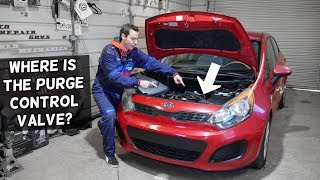
- Vapor Canister Purge Solenoid (PCSV) — On top of the engine, on the right side when facing the car, making it very accessible.. Knowing the exact location simplifies testing and replacement, which is a common fix for P2188. It involves disconnecting two hoses and one electrical connector.
Real Owner Repair Stories
- YouTube channel 312Drive (2015-2016 Hyundai Elantra (similar 1.6L GDI engine architecture)) — P2188 and P0172 codes, sluggish performance, and significantly reduced fuel economy (20-25 MPG instead of ~30 MPG). Short and long term fuel trims were showing very high negative numbers at idle.
❌ Tried (didn't work) The owner confirmed spark plugs, ignition coils, and all filters were new and in good condition.
✅ What actually fixed it The owner used an endoscope and found visible liquid gasoline inside the cylinders after the engine was shut off, confirming a fuel leak past the injectors. Replacing the upstream and downstream oxygen sensors (which were likely fouled by the rich condition) improved MPG and drivability, but the underlying injector leak was identified as the root cause. The video highlights the diagnostic step of using an endoscope to confirm leaking injectors when other components check out.
OEM Part Supersession History
35320-2B130, 35320-2B140→35320-2B220— Likely an updated design to improve reliability and address the internal seal failure that leads to fuel-in-oil contamination.
Heads up: When replacing the High-Pressure Fuel Pump, using the latest part number (35320-2B220) is recommended to benefit from any design improvements. Always verify the part number with the vehicle's VIN.
Model Year Variations Within This Range
- 2012-2014: Within the 2012-2014 model years, there are no significant variations in the 1.6L GDI Gamma engine or its fuel system that would alter the diagnosis or common causes of code P2188. All models in this range share the same 138hp engine and are covered by the same key TSBs.
Helpful Videos

Used OEM Parts in Stock
New Aftermarket Parts Available


The information in this article is provided for general reference and educational purposes only. Vehicle specifications, procedures, and part compatibility can vary by production date, trim level, and region. Always consult your vehicle's factory service manual and verify part numbers before purchasing or performing repairs. Safety-critical components such as airbags, seat belts, and braking systems should be installed by a qualified professional.
- Kia RIO:
- 🧭 Diagnostic Flowchart
- 🎬 Helpful Videos
- 🛍️ Shop This Part
- What's Unique About the 2012-2014 Kia RIO
- Symptoms You May Notice
- Most Likely Causes
- Rare But Worth Checking
- Diagnosis Steps
- Parts You'll Likely Need
- Related Codes That Often Appear With This One
- Technical Service Bulletins (TSBs) & Recalls
- Platform-Specific Known Issues
- Wiring & Ground Locations
- Real Owner Repair Stories
- OEM Part Supersession History
- Model Year Variations Within This Range
- 🎟️ Get 5% Off