

P2192 on 2012-2014 Kia Soul: System Too Rich at Higher Load Causes and Fixes
On a 2012-2014 Kia Soul, this code is most often caused by a software issue. Kia issued a Technical Service Bulletin (TSB) for an ECM (engine computer) update to fix it. Before replacing any parts, check with a Kia dealer if your vehicle has had this critical software update, which typically costs one hour of labor.
- The most likely fix for P2192 on a 2012-2014 Soul (especially 1.6L GDI) is a software update from a Kia dealer, not a new part.
- Before spending money on parts, verify if your vehicle's software has been updated per TSB #TSBENG146R1.
- On GDI engines, check the oil dipstick for a strong smell of gasoline. This is a key symptom of a failing High-Pressure Fuel Pump (HPFP), a known but rarer cause.
- Do not replace the oxygen sensor first; it is doing its job by reporting the rich condition.
- If the software is up to date, the next most likely causes are a leaking fuel injector or a failing HPFP (on GDI models).
What's Unique About the 2012-2014 Kia SOUL
The most common reason for P2192 on the 2012-2014 Kia Soul isn't a faulty part, but the engine's software logic, particularly for the 1.6L GDI engine. Kia released technical service bulletins to address this specific problem, indicating the original factory software was too sensitive. The fix is an official ECM software update that recalibrates how the computer interprets sensor data and controls the fuel mixture under load.
Diagnostic Flowchart
Tap your situation to follow the diagnostic path that matches what you're seeing on this vehicle.
Generation note: This range covers the end of the first generation (AM; 2012-2013) and the start of the second generation (PS; 2014). Kia's Technical Service Bulletins for this issue cover all three model years, indicating the software problem was present in both the 1.6L GDI and 2.0L engines of both generations at launch.
Symptoms You May Notice
- Check Engine Light is on
- Poor or sluggish acceleration, especially when trying to pass or go uphill.
- Hesitation or stumbling from the engine under load.
- Black smoke from the tailpipe during acceleration.
- Decreased fuel economy.
- Smell of gasoline from the exhaust.
- Engine oil level rising and smelling of gasoline (on GDI engines, indicates a severe issue like a failing HPFP).
- Replacing the oxygen (O2) sensor. The O2 sensor is correctly detecting the rich condition, but it is not the cause of it. Replacing the sensor will not fix the underlying fuel delivery or software problem.
Most Likely Causes
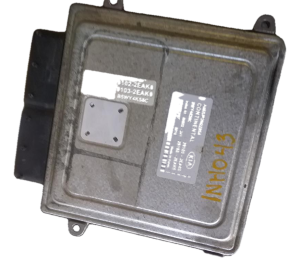
- ECM Software Requires Update 🔴 High Probability Kia issued TSBs #TSBENG146R1 and #TSB-ENG118R2 specifically to address this code on 1.6L GDI models via a software reflash. This indicates the original programming was flawed.
How to confirm: A Kia dealership or a shop with a J2534 pass-thru device can check the current software (ROM ID) against the TSB to see if an update is available and has not been performed. The TSB explicitly states not to replace parts for this DTC unless the reflash has been done first.
Typical fix: Reprogramming the Engine Control Module (ECM) with the updated software provided by Kia.
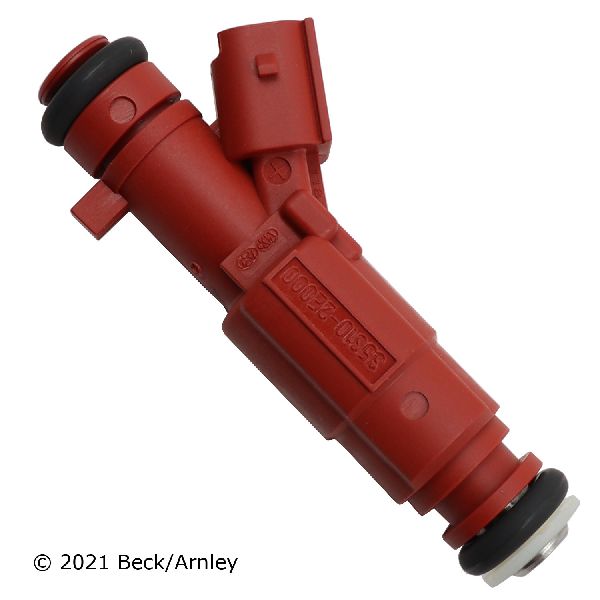
Est. part cost: $0 (if under warranty), $100-$250 (dealer labor for reflash). - Leaking Fuel Injector(s) 🟡 Medium Probability → Shop Fuel Injector GDI (Gasoline Direct Injection) injectors operate under very high pressure and can be prone to leaking over time, allowing excess fuel to enter the cylinder.
How to confirm: Perform a fuel pressure leak-down test. If pressure drops quickly after the pump is turned off, injectors may be leaking. A professional may also use a boroscope to visually inspect injector nozzles for dripping after shutdown. A slow drop in pressure often points to leaky injectors.
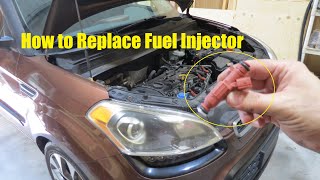
Typical fix: Replace the faulty fuel injector(s). It is often recommended to replace them as a set for balanced performance. 🎬 See this step-by-step walkthrough for replacing your fuel injectors.
Est. part cost: $50-$150 per injector - High Fuel Pressure ⚪ Low Probability While less common than software or injector issues, a faulty fuel pressure regulator (on MPI engines) or a failing high-pressure fuel pump sensor (on GDI engines) can lead to excessive fuel pressure.
How to confirm: Connect a fuel pressure gauge (or use a scan tool for the high-pressure side on GDI) and check that the pressure is within the manufacturer's specified range at idle and under load.
Typical fix: Replace the fuel pressure regulator or, in some cases, the entire fuel pump module if the regulator is integrated. 🎬 Watch: How to replace the fuel pump module yourself. For GDI, the high-pressure fuel sensor may need replacement.
Est. part cost: $100-$300 - Dirty or Faulty Mass Airflow (MAF) Sensor ⚪ Low Probability → Shop Fuel Injection Air Flow Meter
How to confirm: The MAF sensor can be inspected for debris and cleaned with a dedicated MAF sensor cleaner. If cleaning doesn't help, its readings (in grams/sec) can be checked with a scan tool to see if they are plausible for the given engine speed and load.
Typical fix: Clean the MAF sensor. If the problem persists, replace the MAF sensor.
Est. part cost: $70-$200
Rare But Worth Checking
- Failing High-Pressure Fuel Pump (HPFP) (GDI Engines): → Shop Fuel Pump
- Clogged Catalytic Converter:
Diagnosis Steps
- Check for Technical Service Bulletins (TSBs). The first step for this specific vehicle and code is to determine if TSB #TSBENG146R1 or #TSB-ENG118R2 applies and has been performed.
- If the TSB has not been performed, get the ECM updated by a dealer or qualified shop. This is the most likely fix and Kia's recommended first step.
- If the TSB has been performed or does not resolve the code, proceed with mechanical diagnosis.
- Check the Oil. On GDI engines, remove the oil dipstick and smell it for gasoline. A strong fuel smell and/or a high oil level indicates a likely leaking High-Pressure Fuel Pump (HPFP).
- Use a scan tool to check live data for Long Term Fuel Trim (LTFT) at idle and under load. A highly negative number (e.g., -25%) confirms the ECM is trying to correct a rich condition.
- Check fuel pressure. Connect a fuel pressure gauge to the fuel rail (for MPI) or use a scan tool to monitor the high-pressure rail (for GDI). Verify the pressure is within OEM specifications. Excess pressure can cause a rich condition.
- Inspect for leaking fuel injectors. Perform a fuel pressure leak-down test. A slow, steady drop in pressure after shutdown can indicate one or more leaking injectors.
- Inspect the air intake system for any blockages and check the condition of the air filter. A severely clogged filter can restrict air and cause a rich mixture.
- Inspect and clean the Mass Airflow (MAF) sensor. A dirty sensor can under-report airflow, causing the ECM to command too much fuel.
Parts You'll Likely Need
- ECM Software Update — This is not a physical part, but a software reflash identified by Kia as the primary fix in TSBs #TSBENG146R1 and #TSB-ENG118R2.
Trusted brands: Kia
OEM price range: $125-$250
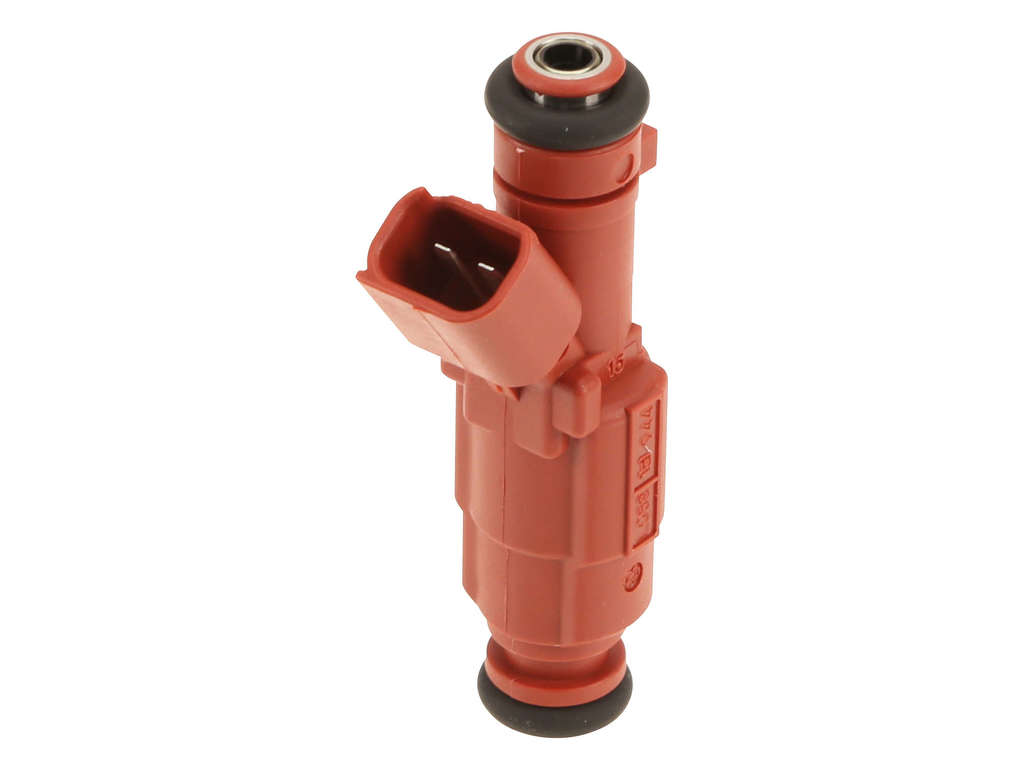
Aftermarket price range: N/A - Fuel Injector (1.6L GDI)
(OEM #35310-2B130 (supersedes 35310-2B110, 35310-2B120))— If the software update does not fix the issue, a leaking fuel injector is a common mechanical cause of a rich condition.
Trusted brands: Kia/Hyundai (OEM), Bosch
OEM price range: $120-$200
Aftermarket price range: $50-$100 - Fuel Injector (2.0L GDI)
(OEM #35310-2E500)— For the 2.0L GDI engine found in 2014+ models, a leaking injector can also be the cause.
Trusted brands: Kia/Hyundai (OEM)
OEM price range: $130-$220
Aftermarket price range: $60-$120
Related Codes That Often Appear With This One
- P2188 — This code for 'System Too Rich at Idle' is often triggered along with P2192 by the same ECM software issue, as noted in Kia's TSBs.
- P0456 — This EVAP code was also part of the group of DTCs addressed by the Kia ECM software update.
- P0128 — This thermostat-related code was also included in the list of issues fixed by the Kia ECM reflash.
Technical Service Bulletins (TSBs) & Recalls
- TSBENG146R1: ECM UPGRADE ... MIL ON WITH DTC(S) P0456/P0461/P050A/P2188/P2192/P0128/P0326/P0441
- TSB-ENG118R2: COMBINED TSB/SERVICE ACTION ... MIL ON WITH DTCS P0456/P0461/P050A/P2188/P2192/P0128
Platform-Specific Known Issues
- An ECM software logic issue is a widely documented problem for this code on 2012-2014 Kia Souls. Kia acknowledged this by issuing TSBs #TSBENG146R1 and #TSB-ENG118R2, which instruct technicians to update the ECM software as the primary solution for the 1.6L GDI engine.
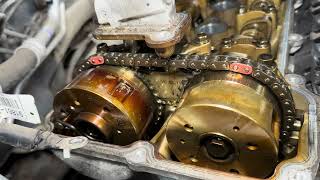
- A detailed two-part YouTube series by 'sandy anderson' on a 2013 Kia Soul 1.6L GDI with P2188/P2192 documented a long diagnostic process. After checking timing and injectors, the root cause was a failing high-pressure fuel pump (HPFP) leaking fuel into the crankcase, contaminating the oil and causing an extreme rich condition. 🎬 Watch this deep-dive diagnostic series on a real-world P2192 case.
Mechanic-Grade Diagnostic Values
- High-Pressure Fuel Rail Pressure at Idle (1.6L GDI) — expected: 38-40 bar (~550-580 PSI).. Failure: Pressure that is highly inconsistent, does not build correctly, or is commanded high but reads low. Note: A pump can still hold pressure while leaking fuel into the crankcase.
- Low-Pressure Fuel System Pressure (In-tank pump) — expected: 69.6 PSI for 1.6L GDI, 71.8 PSI for 2.0L GDI.. Failure: Pressure significantly below specification points to an issue with the in-tank pump, not the HPFP.
- Long Term Fuel Trim (LTFT) on Scan Tool — expected: Close to 0%, typically within +/- 10%.. Failure: A deeply negative value, such as -25% or more, indicates the ECM is removing a large amount of fuel to compensate for a rich condition.
- Engine Equivalence Ratio on Scan Tool — expected: Should hover around 1.0.. Failure: A value significantly below 1.0 (e.g., 0.726) indicates a severe rich condition.
- Upstream O2 Sensor Current (mA) on Scan Tool — expected: Should hover around 0 mA on a healthy engine.. Failure: A strong negative current (e.g., -1.44 mA) indicates a rich condition.
Scan Tool Commands That Help
- Kia GDS (Global Diagnostic System): Resetting Adaptive Values — After replacing a component like the HPFP or injectors, this function should be used to clear the old learned fuel trim values from the ECM, allowing it to learn new values for the new parts.
- Kia GDS (Global Diagnostic System): Trigger Module (Flight Record) — For intermittent rich conditions that don't occur at idle. This function records sensor data during a drive cycle to be reviewed later, helping to capture what is happening when the fault occurs under load.
- Kia GDS (Global Diagnostic System): Actuation Test — To test components like the purge control solenoid valve. The scan tool can command the valve to open and close to verify its mechanical and electrical operation without removing it from the vehicle.
Wiring & Ground Locations
- ECM Connector C100-MA, Pin 58 — At the Engine Control Module (ECM), which is typically located in the engine bay.. This is the signal input pin for the Rail Pressure Sensor (RPS) on the 2014+ PS model. A technician can back-probe this pin to check the voltage signal from the sensor to diagnose issues with the sensor or its wiring harness.
- ECM Connector C100-MA, Pin 24 — At the Engine Control Module (ECM).. This is a sensor ground pin. A poor ground connection here could affect multiple sensors, including the Engine Coolant Temperature Sensor, potentially leading to incorrect fuel calculations.
Real Owner Repair Stories
- 'sandy anderson' YouTube Series (Parts 1 & 2) (2013 Kia Soul 1.6L GDI) — Codes P2188 and P2192, extremely rich running condition, long term fuel trims at -25%, engine oil level rising and smelling strongly of gasoline, black spark plugs.
❌ Tried (didn't work) Checked for stretched timing chain (chain was slack but timing marks aligned)., Inspected intake for carbon buildup., Temporarily blocked PCV hose to check for vapor intrusion (this improved trims, pointing toward fuel in oil)., Used a borescope to inspect inside cylinders; injectors were not visibly dripping.
✅ What actually fixed it Replacing the high-pressure fuel pump (HPFP). The original pump was leaking fuel internally past its seals and into the engine crankcase, contaminating the oil. The fuel-laden oil vapor was then ingested through the PCV system, causing the extreme rich condition. After replacing the pump and changing the oil, fuel trims returned to normal. - Reddit user in r/KiaSoulClub (2013 Kia Soul) — Codes P0420 (Catalyst Efficiency Below Threshold) and P2192 (pending). Vehicle had no power, which got worse the longer it ran.
❌ Tried (didn't work) A temperature test on the catalytic converter was inconclusive due to the heat shield.
✅ What actually fixed it The primary manifold catalytic converter had disintegrated. Upon removal, only a tennis ball-sized chunk of the catalyst material was left inside. The lack of power was caused by the debris clogging the exhaust path, likely also affecting sensor readings and causing the P2192 code.
"I Checked Everything" — The Actual Cause
- In a well-documented case on a 2013 Soul 1.6L GDI, the engine was running extremely rich (P2188/P2192) and the oil was contaminated with fuel. Standard diagnostics for external vacuum or fuel leaks would show nothing. The actual cause was the high-pressure fuel pump (HPFP) failing internally and leaking fuel directly into the crankcase. The fuel vapors were then drawn into the intake through the PCV system, creating a massive, unmetered rich condition that a smoke test would not identify.
OEM Part Supersession History
35320-2B100→35320-2B130— Likely an internal revision to improve durability and prevent the common failure of fuel leaking into the crankcase.
Heads up: Later models may use a different part number (e.g., 35320-2B250); always verify by VIN.
Model Year Variations Within This Range
- 2012-2013 vs 2014: The 2012-2013 Soul is the first generation (AM), while the 2014 is the second generation (PS). The 1.6L GDI engine in the 2012-2013 models was rated at 138 hp, while the same engine in the 2014 model was rated at 130 hp. Despite this change, both versions are affected by the ECM software TSB and the potential for high-pressure fuel pump failure.
Helpful Videos

Used OEM Parts in Stock
New Aftermarket Parts Available


The information in this article is provided for general reference and educational purposes only. Vehicle specifications, procedures, and part compatibility can vary by production date, trim level, and region. Always consult your vehicle's factory service manual and verify part numbers before purchasing or performing repairs. Safety-critical components such as airbags, seat belts, and braking systems should be installed by a qualified professional.
- Kia SOUL:
- 🧭 Diagnostic Flowchart
- 🎬 Helpful Videos
- 🛍️ Shop This Part
- What's Unique About the 2012-2014 Kia SOUL
- Symptoms You May Notice
- Most Likely Causes
- Rare But Worth Checking
- Diagnosis Steps
- Parts You'll Likely Need
- Related Codes That Often Appear With This One
- Technical Service Bulletins (TSBs) & Recalls
- Platform-Specific Known Issues
- Mechanic-Grade Diagnostic Values
- Scan Tool Commands That Help
- Wiring & Ground Locations
- Real Owner Repair Stories
- "I Checked Everything" — The Actual Cause
- OEM Part Supersession History
- Model Year Variations Within This Range
- 🎟️ Get 5% Off