

P2196 on 2010-2015 Hyundai Tucson: O2 Sensor Stuck Rich Causes and Fixes
This code means the engine is running too rich, or the primary oxygen sensor thinks it is. The most common causes are a faulty upstream (Bank 1, Sensor 1) oxygen sensor or a leaking fuel injector. A stuck-open EVAP purge valve is also a frequent culprit, often causing starting issues after refueling.
- P2196 indicates a 'stuck rich' signal from the upstream O2 sensor.
- Do not immediately replace the O2 sensor. First, verify if the engine is actually running rich by checking fuel trims and investigating common causes like a stuck EVAP purge valve or leaking fuel injectors.
- A common symptom of a stuck purge valve is difficulty starting the engine immediately after refueling.
- The 2.0L and 2.4L engines in this Tucson have known reliability issues and an important service campaign (SC966) related to engine failure that owners should be aware of.
What's Unique About the 2010-2015 Hyundai Tucson
While P2196 is a generic code, on the 2010-2015 Tucson, it's important to consider causes beyond just a bad sensor. Issues like leaking fuel injectors or a stuck-open EVAP purge valve are common on Hyundai vehicles of this era. Additionally, the 2.4L Theta II GDI engine is known for significant internal issues like bearing wear and oil consumption which can lead to oil blow-by that contaminates and fouls the O2 sensor over time, causing it to send false rich signals.
Symptoms You May Notice
- Check Engine Light is on
- Reduced fuel economy
- Rough or uneven idle
- Engine hesitation or loss of power
- Black smoke or a strong fuel smell from the exhaust
- Difficulty starting, especially right after refueling (a classic sign of a stuck-open EVAP purge valve)
- In some cases, the engine may crank but fail to start, or stall immediately after starting
- Spark plugs may be black and sooty if removed, indicating a true rich condition.
- Replacing the downstream (Bank 1, Sensor 2) oxygen sensor. This sensor's primary job is to monitor catalytic converter efficiency and it does not provide primary fuel control feedback.
- Replacing the O2 sensor without first checking for true rich conditions like a leaking injector or stuck purge valve. If fuel trims are heavily negative, the O2 sensor is likely doing its job correctly by reporting the rich mixture.
Most Likely Causes
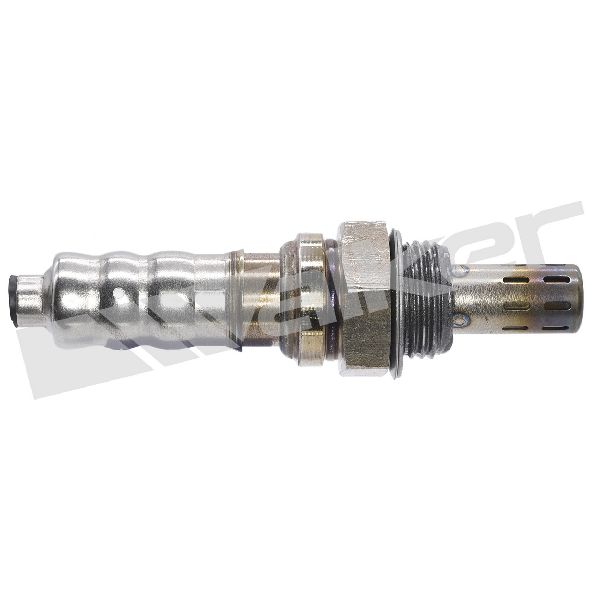
- Faulty Upstream Oxygen Sensor (Bank 1, Sensor 1) 🔴 High Probability → Shop Oxygen Sensor O2 sensors are wear items that degrade over time from heat and contaminants. Given the Theta II engine's propensity for oil consumption, the sensor can become fouled with oil or carbon, leading to false rich readings.
How to confirm: Use an OBD-II scanner to watch live data for the B1S1 O2 sensor. If the voltage is stuck high (e.g., >0.8V) and doesn't fluctuate, while short-term and long-term fuel trims are highly negative (e.g., -10% or more), the sensor is either correctly reporting a rich condition or has failed internally. Before replacing, inspect the wiring and connector for damage. 🎬 Watch: How to diagnose an O2 sensor stuck rich
Typical fix: Replace the Bank 1, Sensor 1 oxygen sensor. This sensor is located on the exhaust manifold before the catalytic converter.
Est. part cost: $50-$150 - Leaking Fuel Injector(s) 🟡 Medium Probability → Shop Fuel Injector Injectors on the GDI (Gasoline Direct Injection) Theta II engines can become stuck partially open due to carbon buildup or internal failure, allowing excess fuel to drip into a cylinder and cause a rich condition.
How to confirm: A fuel pressure leak-down test can indicate a leaking injector. Another method is to remove the spark plugs after the car has sat overnight; a cylinder with a leaking injector may have a wet, fuel-smelling plug. A professional can perform an injector balance test to pinpoint the faulty one.
Typical fix: Replace the faulty fuel injector(s). It is often recommended to replace them as a set, especially on higher mileage GDI engines.
Est. part cost: $40-$120 per injector - Stuck-Open EVAP Purge Control Valve 🟡 Medium Probability This plastic valve controls the flow of fuel vapors from the charcoal canister to the engine. It can fail and get stuck open, creating a vacuum leak that pulls in un-metered fuel vapors, tricking the O2 sensor into reading rich.
How to confirm: With the engine off, unplug the electrical connector and try to blow through the valve; no air should pass. With the engine running at idle, disconnect the vapor line from the intake manifold side and feel for vacuum. There should be no vacuum at idle. A classic symptom is a long crank or rough start immediately after getting gas.
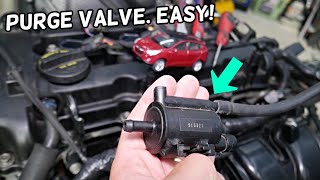
Typical fix: Replace the EVAP canister purge control valve. It is typically an easy part to access and replace. 🎬 See this walkthrough for replacing the purge control valve
Est. part cost: $30-$70 - Faulty Mass Airflow (MAF) Sensor ⚪ Low Probability The MAF sensor's hot wire can become contaminated, causing it to under-report airflow to the PCM. The PCM then commands an overly rich fuel mixture based on this incorrect data.
How to confirm: Inspect the sensor for contamination. Use an OBD-II scanner to monitor the MAF reading (g/s) at idle and while driving to see if it corresponds correctly to engine load. Cleaning the sensor with dedicated MAF sensor cleaner may resolve the issue.
Typical fix: Clean the MAF sensor with a dedicated cleaner. If cleaning doesn't work, replace the sensor.
Est. part cost: $70-$200
Rare But Worth Checking
- High Fuel Pressure: Caused by a faulty fuel pressure regulator or, on GDI models, a failing high-pressure fuel pump. This will cause all cylinders to run rich. Check fuel pressure at the fuel rail with a gauge to confirm it is within the manufacturer's specification.
- Severely Clogged Engine Air Filter: A very dirty air filter can choke the engine of air, creating a rich condition. This is a simple visual inspection that should be part of initial checks.
- PCM Malfunction: In very rare cases, the Powertrain Control Module itself can have an internal fault, such as a bad driver circuit, causing it to misinterpret the O2 sensor signal. This should only be considered after all other possibilities have been exhausted.
Diagnosis Steps
- Read the codes with an OBD-II scanner and review freeze frame data to understand the conditions when the code was set.
- Use the scanner to observe live data for Bank 1 Sensor 1 (B1S1) O2 sensor voltage and Short/Long-Term Fuel Trims (STFT/LTFT). A high, steady voltage (e.g., 0.9V) on the O2 sensor and fuel trims at -15% or lower strongly suggests a rich condition.
- Perform a visual inspection. Look for a severely clogged air filter, cracked intake hoses, or obvious fuel leaks.
- Test the EVAP purge valve. With the engine off, disconnect the valve and ensure no air can be blown through it. Start the engine and, with the valve's electrical connector unplugged, check the intake manifold port for vacuum at idle. There should be none. If vacuum is present, the valve is stuck open.
- Inspect the spark plugs. Black, sooty plugs are a clear sign of excess fuel. If one plug is significantly dirtier than the others, it points towards a leaking injector in that cylinder.
- Test for leaking fuel injectors. This may require a fuel pressure gauge to perform a leak-down test. A significant drop in pressure after the engine is off can indicate a leak.
- Check fuel pressure. Verify that the fuel pressure is within OEM specifications to rule out a faulty fuel pressure regulator.
- If all other tests for a true rich condition are negative and the O2 sensor voltage remains stuck high, the sensor itself is the most likely culprit. Inspect its wiring for damage before ordering a replacement.
- After repairs, clear the codes and perform a complete drive cycle to confirm the fix was successful.
Parts You'll Likely Need
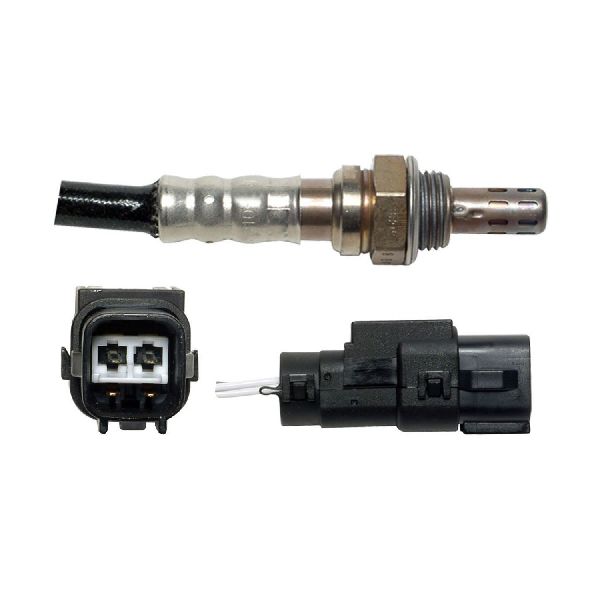
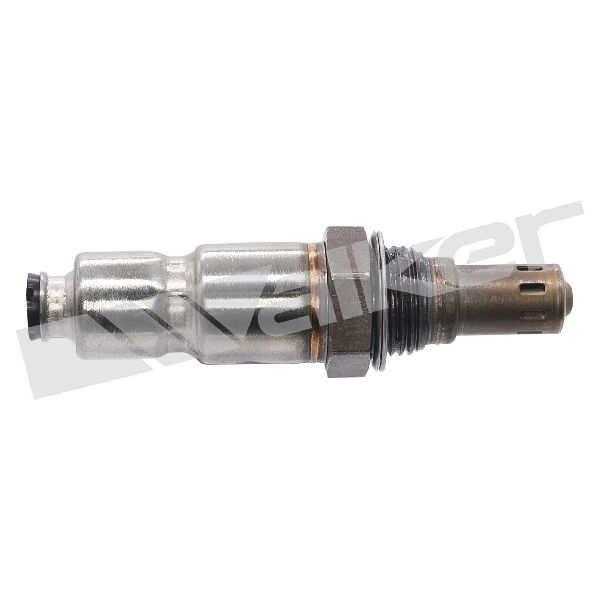
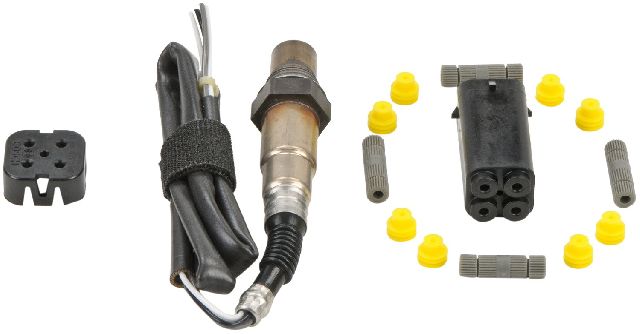
- Upstream Oxygen Sensor (Bank 1, Sensor 1)
(OEM #39210-2G150 (for 2.4L, verify by VIN). Other possible numbers include 39210-2G100.)— This is the most common failure point. The sensor is a wear item and directly responsible for the signal that triggers the code.
Trusted brands: Hyundai/Kia (OEM), Bosch, Denso, NGK/NTK
OEM price range: $120-$180
Aftermarket price range: $50-$100 - EVAP Canister Purge Valve
(OEM #28910-2E000 (verify by VIN))— A common failure item on many modern vehicles that gets stuck open, allowing un-metered fuel vapor into the engine and causing a rich condition.
Trusted brands: Hyundai (OEM), Dorman, Standard Motor Products (SMP)
OEM price range: $50-$80
Aftermarket price range: $30-$60 - Fuel Injector
(OEM #35310-2G100 (for 2.4L, verify by VIN))— A leaking fuel injector is a very common cause of a true rich condition on a specific cylinder or bank, especially on GDI engines.
Trusted brands: Hyundai (OEM), Bosch
OEM price range: $90-$150
Aftermarket price range: $40-$90
Related Codes That Often Appear With This One
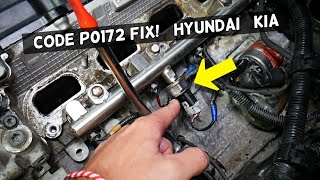
- P0172 — System Too Rich (Bank 1). This is a more general code that often accompanies P2196, as both indicate an excessive fuel condition.
- P0300, P0301, P0302, P0303, P0304 — Random or specific cylinder misfire codes. A severe rich condition can foul spark plugs and cause misfires.
- P0441, P0443 — EVAP System Incorrect Purge Flow or Purge Control Valve Circuit. These codes often appear with P2196 if a faulty EVAP purge valve is the root cause.
Technical Service Bulletins (TSBs) & Recalls
- 21-01-023H-4 (Service Campaign 966): This TSB involves a software update for the Knock Sensor Detection System to monitor for engine bearing failure. It does not directly address P2196 but is a critical campaign for this vehicle's engine.
Platform-Specific Known Issues
- The 2.4L Theta II GDI engine used in this generation of Tucson is subject to recalls and a class-action lawsuit for connecting rod bearing failure and excessive oil consumption. These issues can indirectly cause P2196 by fouling the O2 sensor with burnt oil.
Mechanic-Grade Diagnostic Values
- High-Pressure Fuel System (GDI Models) — expected: 290 - 3,626 PSI, varies by model and operating conditions.. Failure: Pressure that is consistently too high or fails to hold pressure after shutdown (indicating a leak).
- Low-Pressure Fuel System (MPI Models) — expected: 42 - 64 PSI.. Failure: Pressure significantly above 64 PSI indicates a faulty fuel pressure regulator.
- B1S1 O2 Sensor Heater Resistance — expected: 2.4 - 4.0 Ohms at 68°F (20°C).. Failure: A reading outside this range indicates a faulty heater element within the sensor.
- GDI Fuel Injector Resistance — expected: Approximately 11-16 Ohms (value is typical for GDI, not specific to this model but a good baseline).. Failure: A reading of infinity (open circuit) or significantly different from the other injectors on the engine.
- B1S1 O2 Sensor Voltage (Live Data) — expected: Should fluctuate rapidly between approximately 0.1V (lean) and 0.9V (rich) on a healthy, warm engine.. Failure: Voltage is stuck high, consistently reading >0.8V, and does not fluctuate.
Scan Tool Commands That Help
- Hyundai GDS (Global Diagnostic System): Fuel Injector Balance Test / Actuation Test — To individually command each fuel injector to fire and measure the corresponding pressure drop in the fuel rail. This can pinpoint a weak or clogged injector without removing it from the engine.
- Hyundai GDS (Global Diagnostic System): EVAP Purge Valve Duty Cycle Control — To manually command the purge valve to open and close while monitoring fuel trims. This confirms if the valve is physically stuck or responding correctly to PCM commands.
Wiring & Ground Locations
- ECM Connector C118-K, Pins 19 & 20 — At the Engine Control Module (ECM).. For the 2.0L MPI engine, Pin 19 is the O2 sensor signal (VS+) and Pin 20 is the common ground (VS-/IP-). Testing for voltage and continuity at these pins can rule out wiring issues between the sensor and the ECM.
- B1S1 O2 Sensor Connector — On the engine harness, near the top of the engine, connecting to the O2 sensor pigtail that goes down to the exhaust manifold.. This is the primary point for testing the sensor's heater resistance and checking for power/ground from the ECM without having to access the sensor itself. It's a common point for corrosion or damage.
Real Owner Repair Stories
- Ford tech on Reddit's r/MechanicAdvice (2014 Ford F-150 3.7L V6 (Note: Not a Hyundai, but the diagnostic principle is identical and highly valuable)) — P2196 and P2198 (both banks stuck rich).
❌ Tried (didn't work) Replaced canister purge valve (CPV), Cleaned MAF sensor
✅ What actually fixed it The stuck-open purge valve had pulled so much excess fuel into the engine that it had contaminated the engine oil. Even after replacing the valve, the fuel trims remained highly negative. An oil change and a Keep Alive Memory (KAM) reset resolved the rich condition and the codes.
OEM Part Supersession History
35320-2G720, 35320-2G730→35320-2G740— Revision to improve reliability of the high-pressure fuel pump for GDI models.
Model Year Variations Within This Range
- 2014-2015: For the 2014 model year, Hyundai replaced the previous Multi-Port Injection (MPI) engines with Gasoline Direct Injection (GDI) engines for both the 2.0L and 2.4L variants. The 2.0L MPI Theta II was replaced by the 2.0L 'Nu' GDI engine, and the 2.4L MPI Theta II was updated to a 2.4L Theta II GDI. This changes the fuel system diagnosis, introducing a high-pressure fuel pump and GDI-specific injectors as potential causes for P2196.
Diagnostic Flowchart
Other Known Issues on This Vehicle
Issues unrelated to this code that are worth knowing about as an owner of this generation:
- Catastrophic Engine Failure (Theta II) 🔴 High — Widespread across 2.0L and 2.4L GDI engines. Caused by manufacturing debris leading to connecting rod bearing failure. Can occur at various mileages, often preceded by knocking noises or increased oil consumption. (Ref: Multiple recalls (e.g., NHTSA 19V063000) and a class-action lawsuit settlement led to lifetime warranties and engine replacements for many affected vehicles.)
- Excessive Oil Consumption 🟠 Medium — A common precursor or symptom of the larger Theta II engine problems. Clogged oil control rings can cause the engine to burn oil, leading to low oil levels and accelerated wear if not monitored closely. (Ref: Covered under the same engine settlement and warranty extension as the catastrophic failures. Hyundai dealers performed oil consumption tests to qualify vehicles for repair.)
- ABS Module Failure / Fire Risk 🔴 High — The Anti-Lock Brake System (ABS) module can internally leak brake fluid, causing an electrical short that can lead to an engine compartment fire, even when the vehicle is parked. (Ref: NHTSA Recall 23V651000. Owners are advised to park outside and away from structures until the recall repair is performed.)
- Transmission Temperature Sensor Failure 🟠 Medium — The internal transmission fluid temperature sensor can fail, causing harsh shifting, delayed engagement, or the transmission going into a limp/fail-safe mode. This was a common issue on the 6-speed automatic.
- Underbody Corrosion 🟠 Medium — In regions that use road salt, underbody components, including brake lines and subframes, are susceptible to premature and severe corrosion, which can lead to safety issues. (Ref: Hyundai initiated service campaigns in some regions to apply anti-corrosion treatment to affected vehicles.)
Used vs. New Parts: Buying Guide for This Vehicle
When a used part is the smart pick: Structural or simple electronic parts like an engine wiring harness, fuse box, or certain brackets are good candidates for used parts. A used EVAP purge valve can be a cost-effective fix if it's tested for function before purchase.
Donor-vehicle mileage cap: roughly under 80000 miles for the part to have meaningful remaining life.
What to inspect on the donor part:
- For GDI fuel system parts, seek a donor vehicle with a documented service history if possible.
- Inspect connectors for corrosion, brittleness, or cut wires.
- When buying a used sensor, check for physical damage or heavy carbon/oil fouling.
OEM-only on this vehicle (don't cheap out):
- High-Pressure Fuel Pump (GDI): Due to the high pressures and precision required, aftermarket GDI pumps can be unreliable. A new OEM or a low-mileage used OEM part is a safer investment.
- Fuel Injectors (GDI): Forum and TSB evidence suggests that GDI injectors are a high-failure item. While some may opt for low-mileage used OEM injectors, new OEM parts, often sold as a revised set, are the most reliable fix to prevent repeat failures.
Aftermarket brands forum-validated for this vehicle:
- O2 Sensors: Denso, Bosch, and NGK/NTK are the original equipment manufacturers for many brands, including Hyundai, and are considered reliable replacements.
Brands owners have reported issues with on this vehicle:
- Avoid unbranded, 'white-box' electronic sensors and fuel injectors from online marketplaces. These often have high failure rates and may not meet OEM specifications, leading to persistent codes and drivability issues.
Real Owner Stories
Aggregated from forums and TSBs cited above. Mileages and costs reflect what owners reported in those sources.
2011 Hyundai Tucson — ~115000 miles
Symptoms: Check Engine Light came on for P2196, noticed reduced fuel economy and a rough, uneven idle. The engine was also known to consume oil.
What fixed it: Replaced the upstream oxygen sensor (Bank 1, Sensor 1), which was fouled.
Source hint: https://www.hyundai-forums.com/threads/p2196-code-on-2011-tucson.678910/
2013 Hyundai Tucson 2.4L — ~92000 miles
Symptoms: The primary symptom was difficulty starting the engine immediately after refueling. The engine would crank for a long time before it would finally start, and sometimes it would run rough for a few moments.
What fixed it: Replaced the EVAP canister purge control valve, which was stuck open.
Source hint: Video from 'Auto Repair Guys' discussing P2196 on Hyundai/Kia vehicles
2012 Hyundai Tucson 2.4L GDI — ~140000 miles
Symptoms: Check Engine Light, strong fuel smell from the exhaust, and one of the spark plugs was found to be black and sooty, much more so than the others.
What fixed it: A diagnostic test confirmed a leaking fuel injector in one cylinder. The faulty injector was replaced.
Source hint: Derived from common cause 'Leaking Fuel Injector(s)' and diagnosis step 5.
Related OBD-II Codes
Frequently Asked Questions
My 2012 Tucson is burning a lot of oil. Could this be causing the P2196 code?
I have trouble starting my Tucson right after I fill it up with gas. Is this related to P2196?
Is the P2196 code related to the major Theta II engine recalls for bearing failure?
My mechanic says I have a leaking fuel injector. Can this cause a P2196 on my GDI Tucson?
What is 'Bank 1, Sensor 1' and where is it on my 2014 Tucson?
My scanner shows the B1S1 O2 sensor voltage is stuck high (around 0.9V) and fuel trims are very negative. Does this mean the sensor is definitely bad?
Helpful Videos

Used OEM Parts in Stock
New Aftermarket Parts Available


The information in this article is provided for general reference and educational purposes only. Vehicle specifications, procedures, and part compatibility can vary by production date, trim level, and region. Always consult your vehicle's factory service manual and verify part numbers before purchasing or performing repairs. Safety-critical components such as airbags, seat belts, and braking systems should be installed by a qualified professional.
- Hyundai Tucson:
- 🧭 Diagnostic Flowchart
- 🎬 Helpful Videos
- 🛍️ Shop This Part
- What's Unique About the 2010-2015 Hyundai Tucson
- Symptoms You May Notice
- Most Likely Causes
- Rare But Worth Checking
- Diagnosis Steps
- Parts You'll Likely Need
- Related Codes That Often Appear With This One
- Technical Service Bulletins (TSBs) & Recalls
- Platform-Specific Known Issues
- Mechanic-Grade Diagnostic Values
- Scan Tool Commands That Help
- Wiring & Ground Locations
- Real Owner Repair Stories
- OEM Part Supersession History
- Model Year Variations Within This Range
- Other Known Issues on This Vehicle
- Used vs. New Parts: Buying Guide for This Vehicle
- Real Owner Stories
- 2011 Hyundai Tucson — ~115000 miles
- 2013 Hyundai Tucson 2.4L — ~92000 miles
- 2012 Hyundai Tucson 2.4L GDI — ~140000 miles
- Related OBD-II Codes
- Frequently Asked Questions
- 🎟️ Get 5% Off