

P2198 on 2009-2019 Ford Flex 3.5L: Causes and Fixes for O2 Sensor Stuck Rich
On a 2009-2019 Ford Flex with the 3.5L V6, code P2198 is most often caused by a faulty and stuck-open EVAP purge valve. This is an inexpensive part (around $30-$50) and is a very common failure on Ford vehicles. When this part fails, it often triggers P2196 for the other bank and P1450 as well.
- Code P2198 on a 3.5L Ford Flex is most likely caused by a stuck-open EVAP purge valve, a common and inexpensive part to replace.
- Before replacing the expensive O2 sensor, always test the purge valve first by attempting to blow through it when it's disconnected.
- If you have both P2198 (Bank 2 Rich) and P2196 (Bank 1 Rich), the purge valve is almost certainly the cause.
- If you only have P2198 and the purge valve is good, the next most likely cause is a leaking fuel injector on Bank 2 (the front bank).
- Ignoring this code can lead to catalytic converter damage, turning a simple repair into a very costly one.
What's Unique About the 2009-2019 Ford Flex
The 3.5L Cyclone V6 engine family used across many Ford models, including the Flex, has a well-documented and extremely common issue with the evaporative emissions (EVAP) purge valve failing. This valve can get stuck open, allowing unmetered fuel vapors to be constantly drawn into the engine from the gas tank, creating a rich condition that frequently triggers P2198 and its companion code for the other bank, P2196. While other issues like leaking injectors can cause this code, the purge valve is the highest probability culprit and the easiest to check first. A video guide shows the replacement takes only a few minutes.
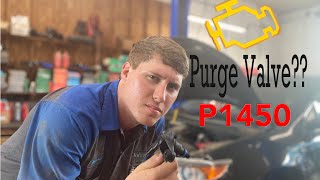
🎬 Watch: How to replace the canister purge valveSymptoms You May Notice
- Check Engine Light is on
- Reduced fuel economy
- Rough idle or engine hesitation, sometimes feeling like a shutter before stalling
- Smell of gasoline from the exhaust
- Difficulty starting immediately after refueling (engine may crank but fail to start, or start and immediately die)
- Engine may sputter or stall at low speeds or when coming to a stop
- A lurching acceleration from a stop
- Replacing the oxygen sensor without first testing the EVAP purge valve or checking for leaking injectors. The O2 sensor is often just accurately reporting a real rich condition caused by another component. One owner on a Reddit forum replaced O2 sensors, MAF sensor, and intake gaskets before finally replacing the purge valve which fixed the issue.
Most Likely Causes
- Stuck-Open EVAP Purge Valve 🔴 High Probability → Shop Vapor Canister This is a very common failure part on many Ford vehicles equipped with the 3.5L V6 engine family. The valve's internal components wear out, causing it to stick open. This failure is so common that it's the first thing to check for P2198/P2196 codes.
How to confirm: With the engine off, disconnect the purge valve (located on top of the engine) and try to blow through it. If any air passes through, it is stuck open and needs to be replaced. A properly functioning valve should be closed when unpowered. Another test is to start the engine, then disconnect the vapor line from the valve; if you feel suction from the valve's port with your thumb, it is stuck open.
Typical fix: Replace the EVAP purge valve. This is a simple repair that involves removing two 8mm bolts and two connectors. It is highly recommended to use an OEM Motorcraft part, as aftermarket versions have a reputation for premature failure.
Est. part cost: $30-$60 - Leaking Fuel Injector(s) on Bank 2 🟡 Medium Probability → Shop Fuel Injector Fuel injectors can fail over time, getting stuck partially open and dripping excess fuel into a cylinder. This is a common cause for a rich condition that is isolated to a single bank. A gasoline film inside the intake manifold can be a sign of this issue.
How to confirm: If fuel trims are very negative only on Bank 2, suspect an injector. Pull the spark plugs on Bank 2 (front three cylinders) and inspect them. A plug that is black, sooty, or wet with fuel indicates the cylinder with the leaking injector.
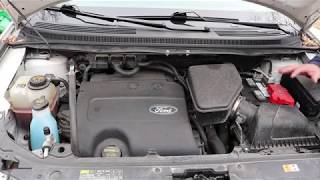
Typical fix: Replace the faulty fuel injector. Accessing the fuel rail on this engine requires removing the upper intake manifold. It is often recommended to replace all three injectors on the affected bank at the same time. 🎬 See this step-by-step fuel injector replacement guide
Est. part cost: $50-$150 per injector - Faulty Upstream Oxygen (O2) Sensor (Bank 2, Sensor 1) ⚪ Low Probability → Shop Oxygen Sensor While O2 sensors do fail, they are often replaced unnecessarily for this code. The sensor is usually just accurately reporting a rich condition caused by something else.
How to confirm: Use a scan tool to monitor live O2 sensor data. A healthy upstream sensor's voltage should fluctuate rapidly between approximately 0.1V and 0.9V. If the B2S1 voltage is stuck high (e.g., above 0.8V) and does not switch, the sensor may have failed. This should only be confirmed after ruling out actual rich conditions from the EVAP valve or injectors.
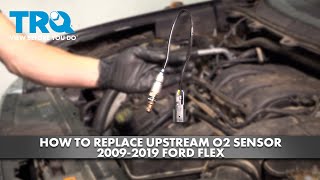
Typical fix: Replace the Bank 2, Sensor 1 oxygen sensor. This sensor is located in the front exhaust manifold, before the catalytic converter. 🎬 Watch: How to replace the upstream O2 sensor
Est. part cost: $50-$100
Rare But Worth Checking
- High Fuel Pressure: A faulty fuel pressure regulator or a failing fuel pump can cause excessive fuel pressure, affecting both engine banks and potentially leading to rich codes.
- Dirty or Faulty Mass Air Flow (MAF) Sensor: A MAF sensor that is dirty or failing may incorrectly measure the air entering the engine, causing the PCM to calculate the wrong amount of fuel. This usually affects both banks, triggering P2196 as well.
- Failed PCV System (Integrated Valve Cover): On the related 3.7L Cyclone engine, a failed PCV valve integrated into the valve cover is known to cause oil consumption that fouls the O2 sensor, triggering a rich code. While less documented on the 3.5L, it's a possibility if you are also experiencing high oil consumption.
- Fuel Contaminated Engine Oil: In a case on a similar Ford engine, a severely stuck-open EVAP purge valve allowed so much excess fuel into the engine that it contaminated the engine oil. Even after replacing the valve, the rich condition persisted until an oil change was performed.
Diagnosis Steps
- Plug in an OBD-II scanner and check for other codes. The presence of P2196 (Bank 1 Rich) and/or P1450 is a strong clue pointing towards the EVAP purge valve.
- Observe Long-Term Fuel Trim (LTFT) for both banks. A highly negative number on Bank 2 (e.g., -15% or more) confirms the rich condition. If both banks are highly negative, suspect a shared component like the purge valve or fuel pressure.
- Test the EVAP Purge Valve: This is the most critical and easiest test. With the engine off, locate the valve on the engine. Disconnect it and try to blow through the port where the vapor line connects. If air passes, the valve is stuck open and must be replaced. Alternatively, start the engine and disconnect the vapor line from the valve; feel for vacuum with your thumb. There should be no vacuum at idle.
- If the purge valve is good and only Bank 2 is rich, investigate the fuel injectors. Pull the spark plugs for cylinders 4, 5, and 6 (Bank 2, front of vehicle) and look for one that is black, sooty, or smells strongly of fuel.
- If injectors and the purge valve are ruled out, monitor the live voltage of the Bank 2 Sensor 1 O2 sensor. If it is stuck high (above 0.8V) and does not fluctuate, and you have confirmed there is no actual rich condition, the sensor itself may be faulty.
- Inspect the O2 sensor wiring and connector for any damage, corrosion, or melting.
- If the purge valve was found to be severely stuck, consider changing the engine oil, as it may have become contaminated with fuel.
Parts You'll Likely Need
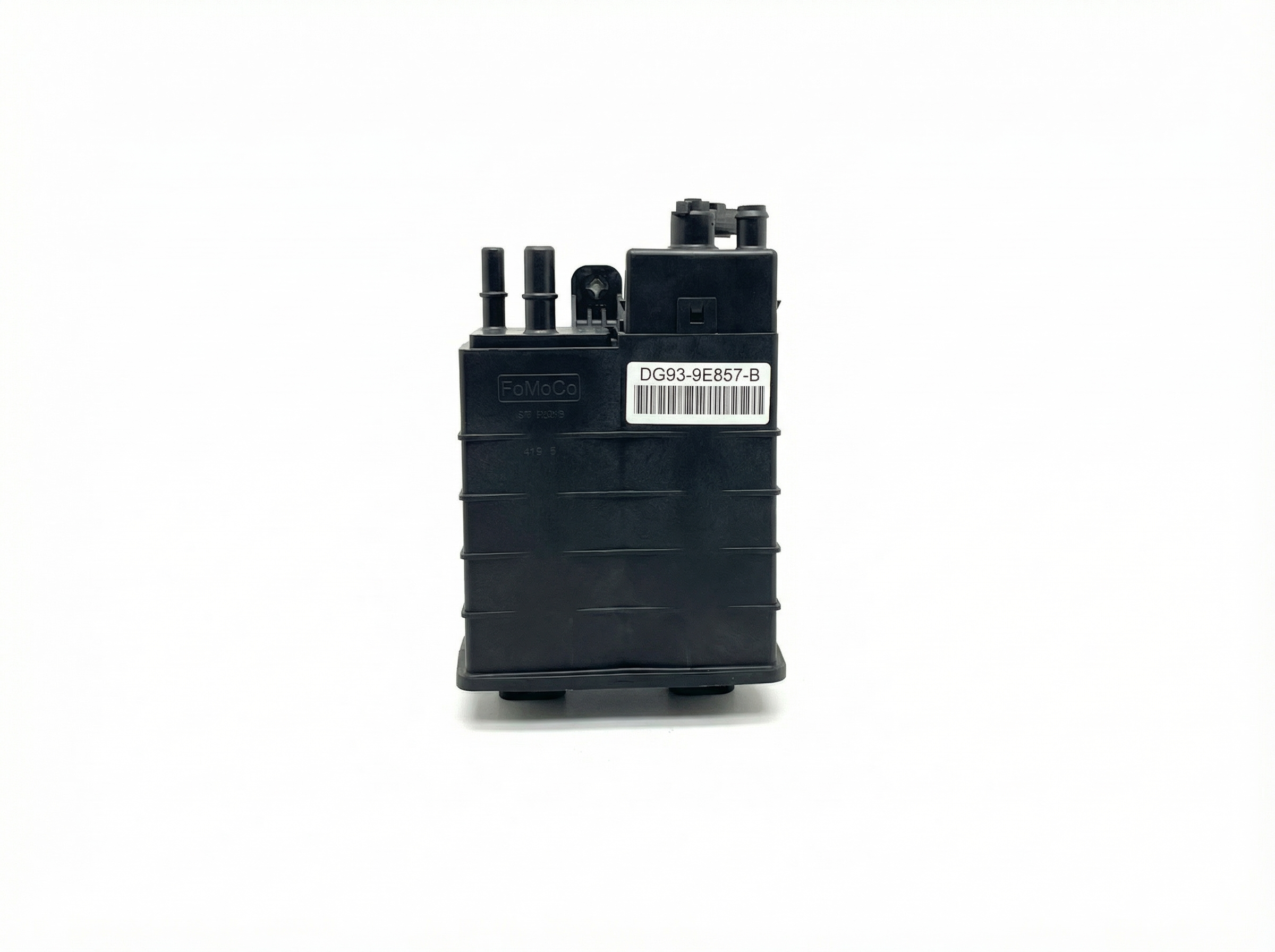
- Vapor Canister Purge Valve
(OEM #CX2407 (Motorcraft))— This is the most common cause of code P2198 on the Ford Flex and related vehicles with the 3.5L engine. It's a well-documented failure point.
Trusted brands: Motorcraft, Dorman
OEM price range: $40-$60
Aftermarket price range: $25-$45 - Upstream Oxygen Sensor (Bank 2, Sensor 1)
(OEM #DY1153 (Motorcraft))— If the sensor itself has failed, it will need to be replaced. This is a less common cause than the purge valve or injectors.
Trusted brands: Motorcraft, Bosch, Denso, NGK
OEM price range: $60-$90
Aftermarket price range: $40-$70 - Fuel Injector
(OEM #BR3Z-9F593-B (Motorcraft, for 2013-2019 Naturally Aspirated))— If a rich condition is isolated to a single cylinder, a leaking fuel injector is the likely cause.
Trusted brands: Motorcraft, Bosch, Standard Motor Products (SMP)
OEM price range: $70-$150
Aftermarket price range: $40-$80
Related Codes That Often Appear With This One
- P2196 — This is the identical 'Stuck Rich' code for Bank 1. If both P2196 and P2198 are present, it strongly points to a global issue affecting the entire engine, most commonly a stuck-open EVAP purge valve.
- P0175 — This is the general code for 'System Too Rich Bank 2'. P2198 is more specific, indicating the sensor signal is not just rich, but completely stuck. P0175 often appears with P2198.
- P1450 — This code for 'Unable to Bleed Up Fuel Tank Vacuum' often appears alongside P2196 and P2198 when the EVAP purge valve is the culprit. Ford has issued TSBs like 19-2207 for other models that recommend replacing the purge valve and reprogramming the PCM to fix P1450.
Technical Service Bulletins (TSBs) & Recalls
- TSB 19-2207: While for different models (C-Max/Fusion/MKZ), this TSB shows a pattern of Ford fixing EVAP codes like P1450 by replacing the canister purge valve and updating the PCM software, reinforcing the purge valve as a common culprit.
Platform-Specific Known Issues
- Owner Experience: The Parts Cannon Approach: An owner of a high-mileage (253,000 miles) 2008 Ford Edge with the 3.5L V6 reported a persistent P2198 code. Before finding the solution, they replaced the upstream O2 sensors, MAF sensor, PCV va
Mechanic-Grade Diagnostic Values
- EVAP Canister Purge Valve Solenoid Resistance — expected: 22 to 38 Ohms. Failure: A reading of 'OL' (infinite/open circuit) or near-zero Ohms (short circuit) indicates a failed solenoid coil.
- Fuel Pressure (at fuel rail, naturally aspirated 3.5L) — expected: 35-65 PSI. Failure: Pressure significantly above 65 PSI can cause a rich condition on both banks.
- Upstream O2 Sensor (B2S1) Live Data Voltage — expected: Rapidly fluctuating between ~0.1V (lean) and ~0.9V (rich).. Failure: Voltage is stuck high, consistently above 0.8V, and does not fluctuate even when the engine is revved.
- Long Term Fuel Trim (LTFT) for Bank 2 — expected: Between -10% and +10%.. Failure: A strong negative value, such as -15% to -30%, confirms the PCM is actively trying to correct a rich condition.
Scan Tool Commands That Help
- FORScan, Ford IDS, or other high-end scanner: EVAP Purge Solenoid On/Off Command (Bidirectional Control) — This allows a technician to manually command the purge valve to open and close while monitoring short-term fuel trims (STFT). With the valve commanded closed at idle, STFT should be near 0%. If you command it open, STFT should go sharply negative as the unmetered fuel vapor is introduced. If STFT is already negative with the valve commanded closed, it confirms the valve is physically stuck open.
- FORScan, Ford IDS: Reset Fuel Alcohol Content / Flexible Fuel Reset — On Flex Fuel models, if the PCM incorrectly learns a high ethanol percentage (e.g., 64% when the tank has E10), it will command longer injector pulse widths, causing a severe rich condition and codes P2196/P2198. If the 'Ethanol %' PID is high but you know the fuel is standard gasoline, performing this reset forces the PCM to relearn the correct value.
Wiring & Ground Locations
- G102 — Right rear of the engine compartment.. This is a primary ground point in the engine bay. A loose or corroded connection here can cause erratic sensor readings.
- G103 — On the left side of the engine compartment, sometimes on the cowl above the brake booster or on the inner fender.. Serves as a ground for multiple engine management components and modules. A poor connection at G103 can lead to various electrical issues, including sensor signal faults.
- G104 — On the transmission assembly or at the right rear of the engine.. Provides a ground path for the engine and transmission assembly to the chassis. A compromised G104 can affect sensors mounted on the engine block, including the O2 sensors.
- Bank 2 Sensor 1 O2 Sensor Connector — The B2S1 sensor is in the front exhaust manifold (closer to the radiator). Follow the wire from the sensor to its connector, which is typically clipped to the engine or firewall.. This is the primary connection for the sensor reporting the fault. Check for corrosion, damage, or melted plastic from contact with the exhaust manifold.
Real Owner Repair Stories
- NZ Diagnostics on YouTube (2012 Ford F-150 with 3.7L V6 (similar Cyclone family and fuel system logic)) — No start condition, codes P2196 and P2198 (both banks stuck rich). Short term fuel trims were maxed out negative at -30%.
❌ Tried (didn't work) Initial checks of fuel pressure and MAF sensor showed no issues., Replacing the O2 sensors would not have fixed the problem, as they were accurately reporting the rich condition.
✅ What actually fixed it The root cause was an incorrect Flex Fuel value stored in the PCM. The scan tool showed the PCM believed the fuel was 64% ethanol, but it was actually 10% ethanol gasoline. This caused the PCM to command excessively long injector pulse widths, flooding the engine. The fix was to perform a 'Fuel Ethanol Content Reset' using a capable scan tool (like Ford's IDS or FORScan), which forced the PCM to relearn the correct alcohol percentage.
Model Year Variations Within This Range
- 2013-2019: The Ford Flex received a major facelift for the 2013 model year. The naturally aspirated 3.5L V6's power increased from 262 hp to 287 hp. While the fundamental causes of P2198 remain the same, some part numbers and software calibrations may differ between pre-facelift (2009-2012) and post-facelift (2013-2019) models.
- 2017+: Later versions of the 3.5L engine family began incorporating a dual fuel injection system (Port Fuel and Direct Injection - PFDI). While the Flex primarily used the port-injected version, it's important to verify the specific fuel system, as direct injection introduces a high-pressure fuel pump and different injectors, which could be potential (though less likely) causes for a rich condition.
Diagnostic Flowchart
Other Known Issues on This Vehicle
Issues unrelated to this code that are worth knowing about as an owner of this generation:
- Internal Water Pump Failure 🔴 High — Common after 80,000-120,000 miles. Failure allows coolant to leak directly into the engine oil, causing catastrophic engine damage if not caught immediately.
- Power Transfer Unit (PTU) Failure (AWD Models) 🔴 High — The PTU fluid is often described as 'lifetime' but degrades from heat (due to proximity to the exhaust), leading to bearing failure. Symptoms include grinding noises or a 'propane' smell from cooked fluid. Preventative fluid changes every 30,000 miles are recommended.
- Electronic Throttle Body (ETB) Failure 🟠 Medium — Widespread issue causing the vehicle to unexpectedly enter 'limp mode' with a wrench light. The problem was so common Ford issued Customer Satisfaction Program 13N03, extending the warranty to 10 years/150,000 miles (now expired for most vehicles). (Ref: Customer Satisfaction Program 13N03, TSB 16-0139)
- Timing Chain Stretch / Phaser Rattle (EcoBoost) 🔴 High — Primarily affects the 3.5L EcoBoost variant, not the naturally aspirated Cyclone V6. A rattle on cold start is the key symptom, caused by a stretched timing chain. (Ref: TSB 15-0131)
- Door Ajar Switch Failure 🟡 Low — A faulty switch inside the door latch causes the 'door ajar' light to stay on, preventing interior lights from turning off and potentially draining the battery.
Used vs. New Parts: Buying Guide for This Vehicle
When a used part is the smart pick: For this repair, buying used parts is generally not recommended due to the low cost of new parts and the nature of the failures. However, if sourcing from a junkyard, a used wiring harness connector or a mounting bracket could be a cost-effective choice if the original is damaged.
Donor-vehicle mileage cap: roughly under 80000 miles for the part to have meaningful remaining life.
What to inspect on the donor part:
- For an EVAP Purge Valve: Ensure the plastic housing is not cracked and the electrical pins are clean and straight.
- For an O2 Sensor: Avoid. O2 sensors are wear items and a used one has an unknown remaining lifespan.
- For a Fuel Injector: Risky. If you must, ensure the donor vehicle was not in a front-end collision and has reasonably low mileage. Check for clean electrical connectors and no physical damage.
OEM-only on this vehicle (don't cheap out):
- EVAP Purge Valve: While aftermarket is available, the OEM Motorcraft part has a much better reputation for longevity. The price difference is often minimal, making OEM the smarter choice to avoid a repeat failure.
Aftermarket brands forum-validated for this vehicle:
- O2 Sensors: Bosch, Denso, NTK are reputable brands that are often the original equipment manufacturer for Ford.
- Fuel Injectors: Bosch, Standard Motor Products (SMP)
Brands owners have reported issues with on this vehicle:
- Unbranded or 'white box' electronic parts from online marketplaces. For critical components like sensors and valves, sticking to known brands is crucial for reliability.
Real Owner Stories
Aggregated from forums and TSBs cited above. Mileages and costs reflect what owners reported in those sources.
2008 Ford Edge 3.5L V6 — 253000 miles
Symptoms: Persistent P2198 code. The owner attempted a 'parts cannon' approach, replacing upstream O2 sensors, MAF sensor, and PCV valve without success.
What fixed it: Identifying and replacing the faulty EVAP purge valve.
Source hint: Vehicle_specific_issues: Owner Experience: The Parts Cannon Approach / Reddit.com r/AskAMechanic
2013 Ford Flex 3.5L V6
Symptoms: Sputtering and stalling, specifically throwing codes P144A, P1450, P2196, and P2198.
What fixed it: A simple 2-bolt replacement of the canister purge valve.
Source hint: YouTube - 'Ford Flex Sputters and Stalls Canister Purge Valve Replacement P144A P1450 P2196 P2198'
2010-2019 Ford Taurus 3.5L V6
Symptoms: Rich codes and potential PTU issues including a 'propane' smell from cooked fluid.
What fixed it: Replacing the purge valve to address the rich condition codes.
Source hint: Platform_mates: 2010-2019 Ford Taurus 3.5L V6 / Ford Edge Forum
Related OBD-II Codes
Frequently Asked Questions
Does TSB 19-2207 apply to my Ford Flex for fixing the P2198 code?
I have a P2198 on my 2013 Ford Flex; should I replace the O2 sensor first?
Is there a specific brand of purge valve I should use for my 3.5L Cyclone V6?
Can a stuck-open purge valve on my Flex cause engine oil issues?
Why does my Ford Flex struggle to start only after I fill up the gas tank?
Helpful Videos


Used OEM Parts in Stock
New Aftermarket Parts Available


The information in this article is provided for general reference and educational purposes only. Vehicle specifications, procedures, and part compatibility can vary by production date, trim level, and region. Always consult your vehicle's factory service manual and verify part numbers before purchasing or performing repairs. Safety-critical components such as airbags, seat belts, and braking systems should be installed by a qualified professional.
- Ford Flex:
- 🧭 Diagnostic Flowchart
- 🎬 Helpful Videos
- 🛍️ Shop This Part
- What's Unique About the 2009-2019 Ford Flex
- Symptoms You May Notice
- Most Likely Causes
- Rare But Worth Checking
- Diagnosis Steps
- Parts You'll Likely Need
- Related Codes That Often Appear With This One
- Technical Service Bulletins (TSBs) & Recalls
- Platform-Specific Known Issues
- Mechanic-Grade Diagnostic Values
- Scan Tool Commands That Help
- Wiring & Ground Locations
- Real Owner Repair Stories
- Model Year Variations Within This Range
- Other Known Issues on This Vehicle
- Used vs. New Parts: Buying Guide for This Vehicle
- Real Owner Stories
- 2008 Ford Edge 3.5L V6 — 253000 miles
- 2013 Ford Flex 3.5L V6
- 2010-2019 Ford Taurus 3.5L V6
- Related OBD-II Codes
- Frequently Asked Questions
- 🎟️ Get 5% Off