

P2198 on 2012-2018 Ford Focus 2.0L: Explaining an Impossible Code and Finding the Real Fix
The code P2198 (Bank 2) is not possible on a 4-cylinder Ford Focus, which only has Bank 1. The correct code is likely P2196 (Bank 1). The problem is almost always a faulty canister purge valve, a common issue covered by Ford recall 18S32. This is an inexpensive part (~$30-$60) and a simple DIY fix.
- P2198 is the wrong code for your 4-cylinder Focus; the actual code is almost certainly P2196 (Bank 1).
- The most likely cause by a wide margin is a faulty canister purge valve, a known issue with a safety recall (18S32). Check for this first.
- Symptoms like stalling after getting gas or an erratic fuel gauge are strong signs the purge valve has failed.
- Do not replace the oxygen sensor unless you have definitively ruled out the purge valve.
- Check if your vehicle is eligible for a free repair under Ford's recall before buying any parts.
What's Unique About the 2012-2018 Ford Focus
This is a classic case of mistaken identity. While P2198 is a valid code for Ford's V6 or V8 engines, it shouldn't appear on the 4-cylinder Focus. The real story for this platform is that a rich condition, which would trigger the correct code P2196, is overwhelmingly caused by a faulty canister purge valve (CPV). This part failure is so common that Ford issued a major safety recall (18S32) because the stuck-open valve can create enough vacuum to deform the plastic fuel tank, leading to stalling and inaccurate fuel gauge readings. Owners frequently misdiagnose the issue and replace the O2 sensor, only for the code to return because the purge valve was the true culprit.
Generation note: The 2012-2018 model years cover the entire third generation (Mk3) of the Ford Focus in North America. The canister purge valve issue is a well-documented problem across this entire generation with the 2.0L GDI engine.
Symptoms You May Notice
- Check Engine Light is on
- Rough or unstable idle
- Difficulty starting the engine, especially right after refueling 🎬 Watch: Why your Focus dies after getting gas
- Reduced fuel economy
- Sluggish acceleration or loss of power
- Inaccurate or erratic fuel gauge, sometimes jumping to full or empty
- Engine stalling, particularly at low speeds or when coming to a stop
- Audible 'sucking' or 'whoosh' sound from the gas cap when opening it
- Replacing the oxygen sensor before checking the canister purge valve. The O2 sensor is often just the 'messenger' reporting the rich condition caused by the faulty valve. This is a very common mistake according to owner forums.
Most Likely Causes
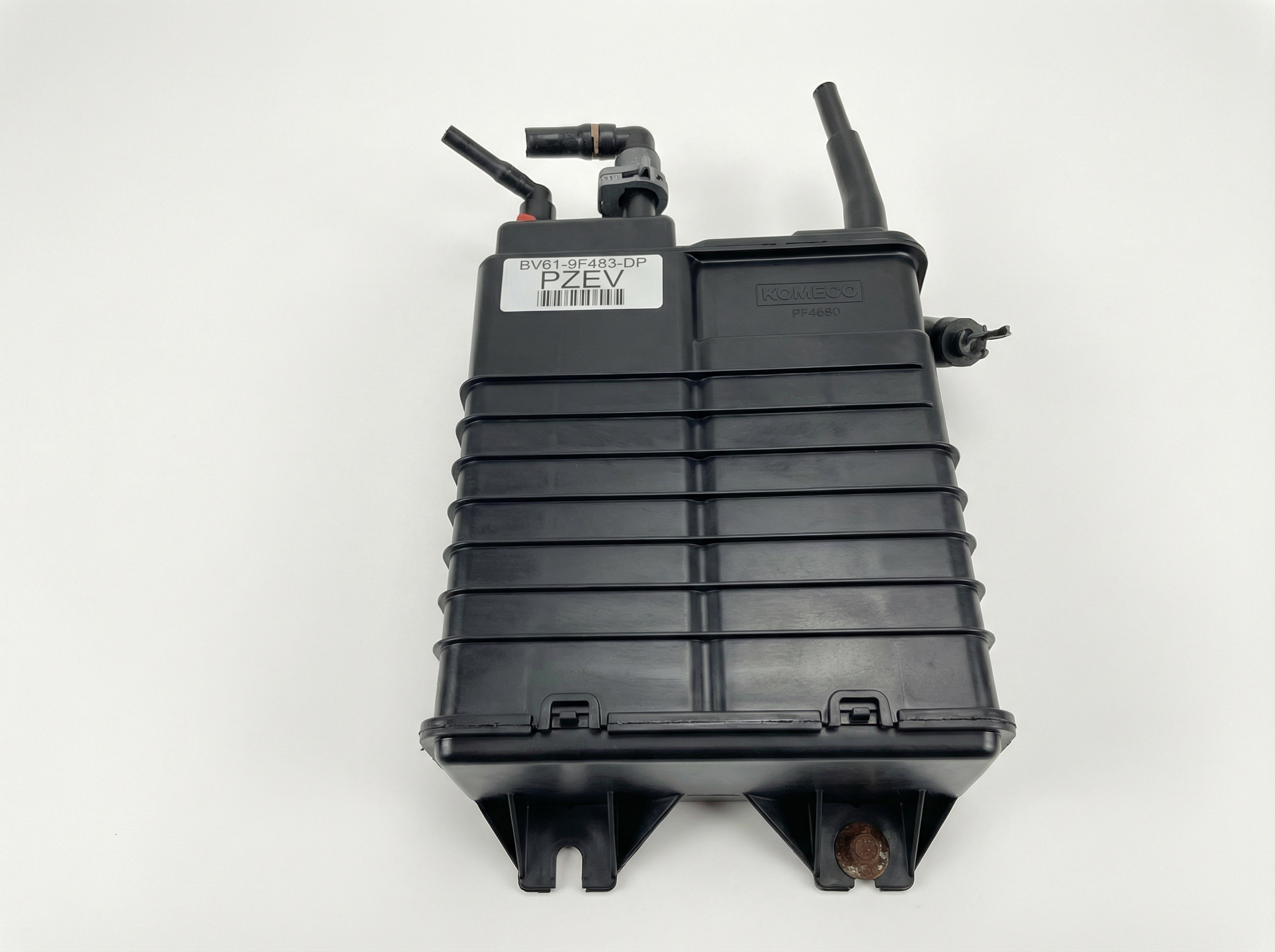
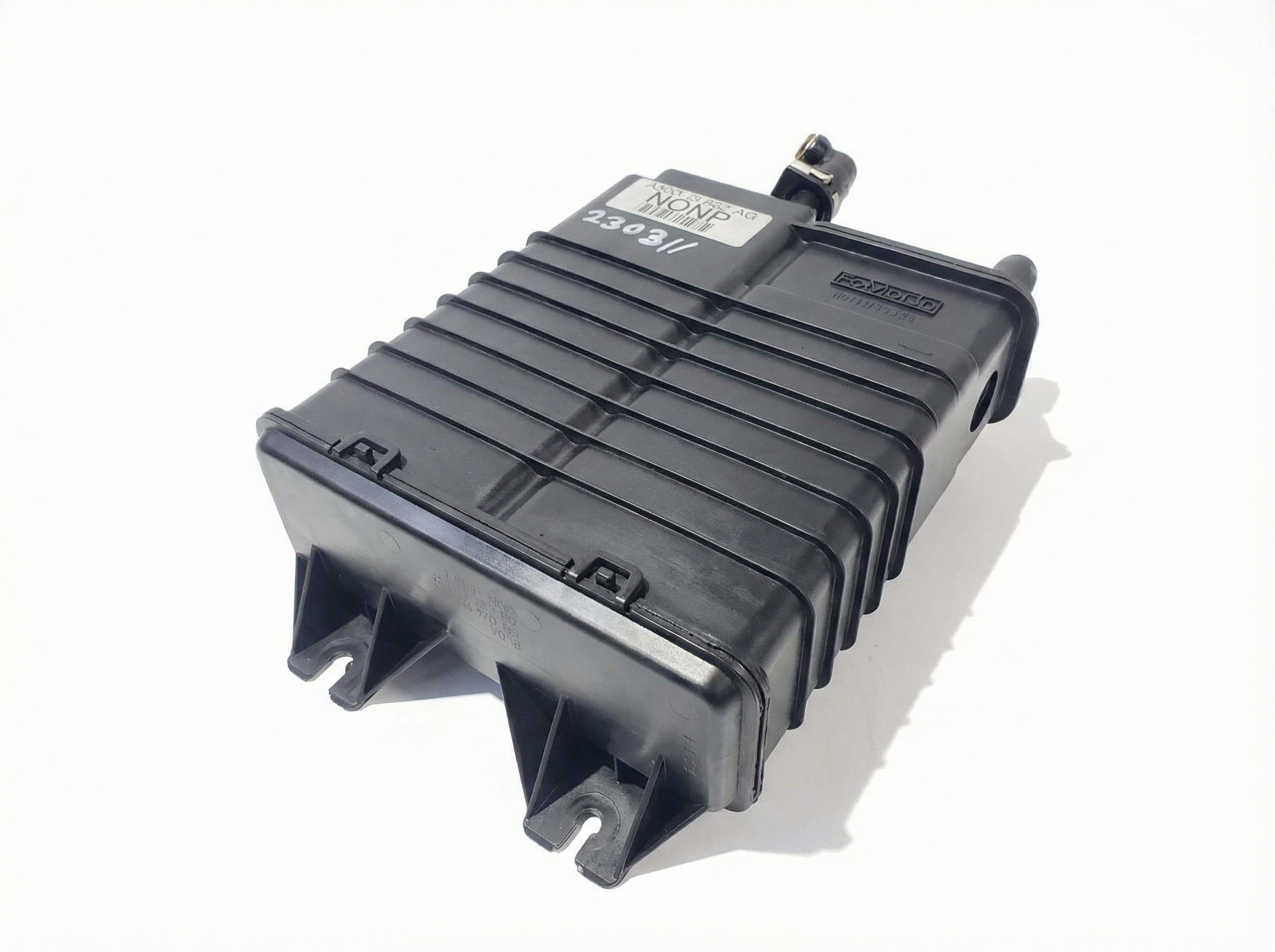
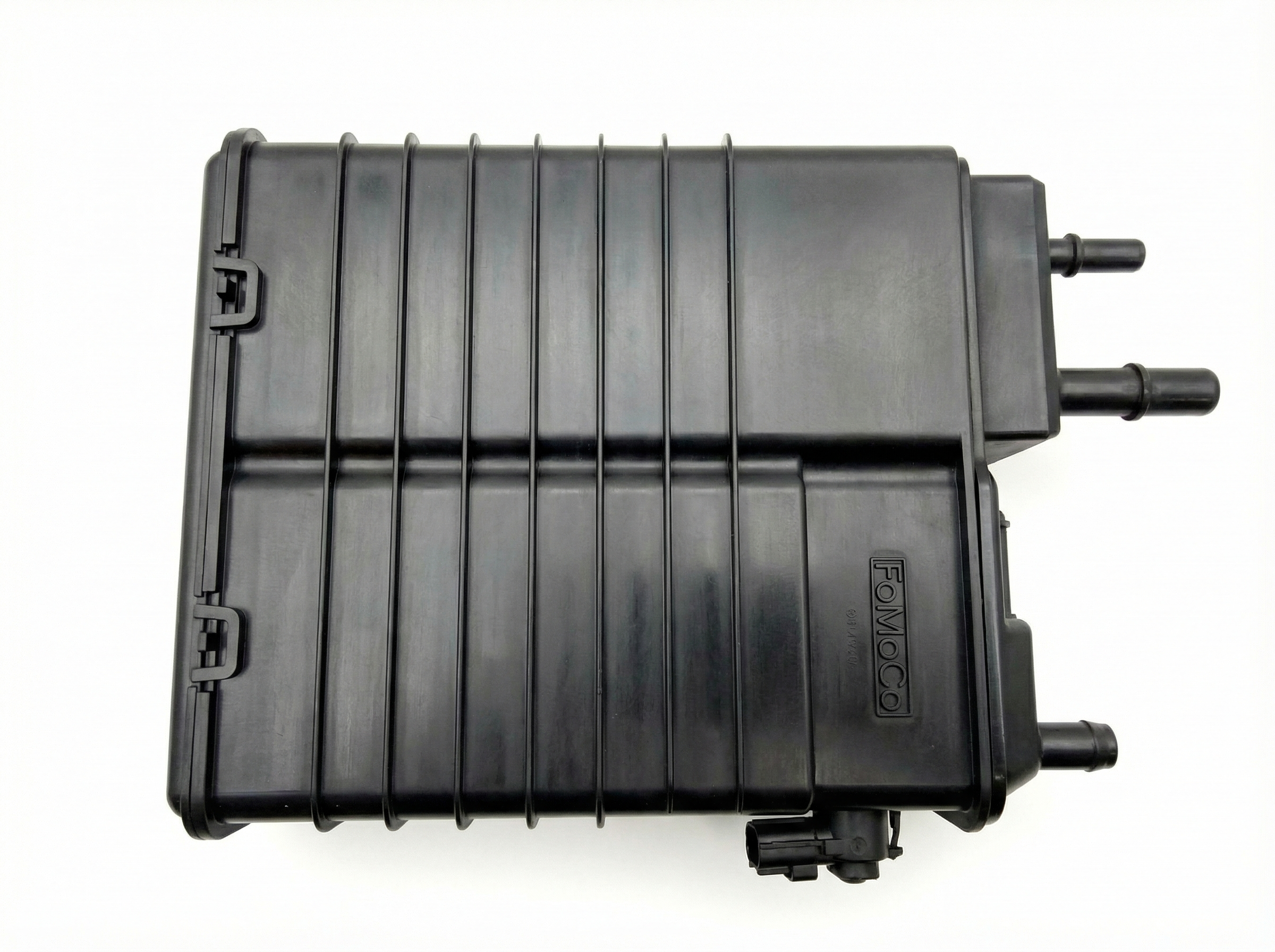
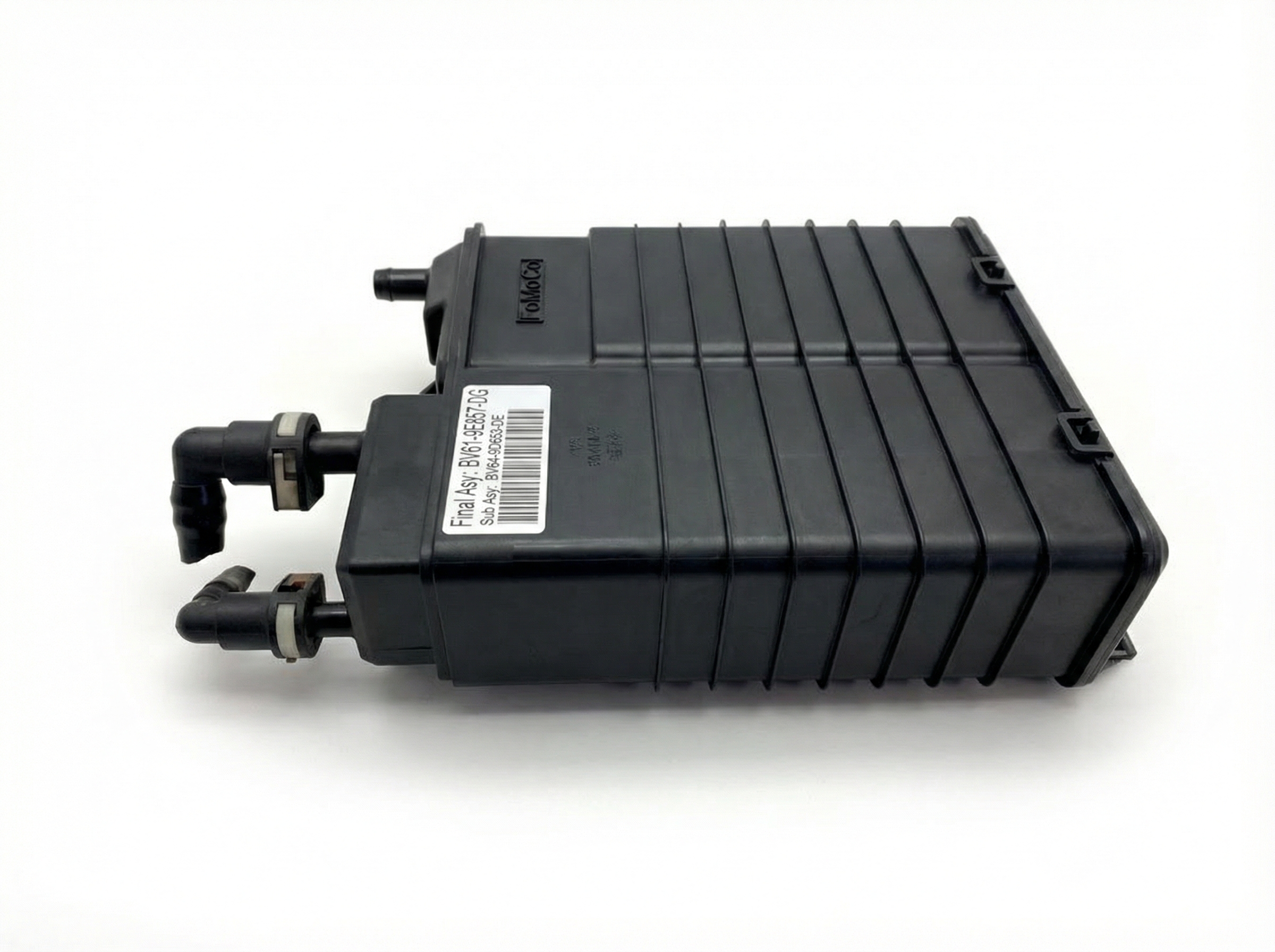
- Faulty Canister Purge Valve (CPV) 🔴 High Probability → Shop Vapor Canister This is a widespread, documented failure on this platform, leading to Ford Safety Recall 18S32 and multiple TSBs. The valve's internal components fail, causing it to stick open, which allows unmetered fuel vapor to constantly enter the intake manifold.
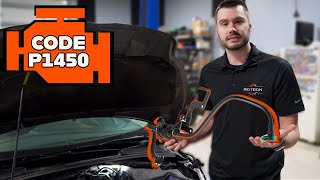
How to confirm: With the engine running, disconnect the vapor line from the purge valve. If you can feel vacuum suction from the valve port, it is stuck open and must be replaced. Another test is to remove the valve and try to blow through it; if air passes, it is faulty. This issue is often accompanied by code P1450 (Unable to Bleed Up Fuel Tank Vacuum 🎬 See how to quickly test and fix code P1450).
Typical fix: Replace the canister purge valve assembly. It is located in the engine bay near the intake manifold and is easily accessible.
Est. part cost: $25-$60 - Faulty Upstream Oxygen Sensor (Bank 1, Sensor 1) 🟡 Medium Probability → Shop Oxygen Sensor
How to confirm: Use a scan tool to monitor live data for the B1S1 O2 sensor. A healthy sensor's voltage should fluctuate rapidly between ~0.1V and ~0.9V. If the voltage is stuck high (above 0.5V), the sensor has likely failed. This should only be considered after ruling out the purge valve, as the O2 sensor is often correctly reporting the rich condition caused by the valve.
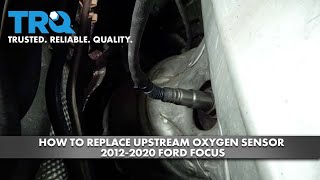
Typical fix: Replace the upstream oxygen sensor, located on the exhaust manifold before the catalytic converter. 🎬 Watch: Upstream oxygen sensor replacement walkthrough
Est. part cost: $50-$100 - Leaking Fuel Injector(s) ⚪ Low Probability → Shop Fuel Injector As a Gasoline Direct Injection (GDI) engine, the injectors are under high pressure and can be prone to leaking over time, though less common than the purge valve failure.
How to confirm: A leaking injector may cause a specific cylinder misfire code (P030x) and a strong smell of fuel on the spark plug for that cylinder or in the engine oil.
Typical fix: Replace the faulty fuel injector. It is often recommended to replace them as a set.
Est. part cost: $40-$90 per injector
Rare But Worth Checking
- Leaking High-Pressure Fuel Pump (HPFP): This GDI-specific pump can leak fuel internally into the engine crankcase. Check the engine oil dipstick for a strong gasoline smell. If present, stop driving immediately to prevent severe engine damage.
- Faulty Fuel Pressure Sensor: The low-side fuel pressure sensor can fail and send incorrect readings to the PCM, causing a rich condition. This may set other codes like P0190 or P0087.
- Damaged Wiring Harness: Ford issued TSB 18-2062 for some 2012-2014 models regarding a wiring harness that could chafe near the intake manifold, causing various electrical issues and fault codes.
Diagnosis Steps
- Confirm the code with a scanner. If it is P2198, double-check the reading as it is likely an error for P2196.
- Check if your vehicle's VIN is covered by Ford Safety Recall 18S32 on the NHTSA website. If so, a dealer will perform the necessary repairs for free. The recall procedure involves reprogramming the PCM and, if DTCs are present, replacing the CPV and potentially the fuel tank and other components.
- Inspect the canister purge valve. With the engine running, disconnect the vapor line and feel for vacuum at the valve's port. If suction is present, the valve is stuck open and is the cause of the problem.
- If the purge valve is good, check the engine oil for a strong smell of gasoline, which would indicate a failing high-pressure fuel pump.
- If the oil is fine, use a scan tool to observe the live data from the upstream O2 sensor (B1S1). If the voltage is fixed high (e.g., >0.8V) and does not fluctuate, the sensor may be faulty.
- Inspect the wiring harness for the O2 sensor and fuel pressure sensor for any signs of chafing, melting, or damage, particularly near the intake manifold.
- If all else fails, consider testing for a leaking fuel injector or incorrect fuel pressure.
Parts You'll Likely Need
- Vapor Canister Purge Valve
(OEM #BV6Z-9D289-R (latest revision, supersedes -A, -B, -D, -E))— This is the most common failure part on this vehicle for a rich condition code. It sticks open, feeding unmetered fuel vapors into the engine.
Trusted brands: Motorcraft, Dorman, Standard Motor Products
OEM price range: $40-$70
Aftermarket price range: $25-$50 - Upstream Oxygen Sensor
(OEM #F1FZ-9F472-A)— If the purge valve is not the cause, the sensor itself may have failed and is sending a false rich signal.
Trusted brands: Motorcraft, Bosch, Denso, NGK
OEM price range: $80-$110
Aftermarket price range: $45-$80
Related Codes That Often Appear With This One
- P2196 — This is the correct code for a 'Stuck Rich' condition on Bank 1 of this engine. P2198 is almost certainly a misreading of P2196.
- P1450 — This code for 'Unable to Bleed Up Fuel Tank Vacuum' is a classic indicator that the canister purge valve is stuck open, which is the root cause of the rich condition.
- P0172 — This is a more general code for 'System Too Rich (Bank 1)' and points to the same set of underlying problems, most commonly the purge valve.
- P0456 — A small EVAP leak code that can also be triggered by the faulty purge valve as part of the same system failure described in recall 18S32.
Technical Service Bulletins (TSBs) & Recalls
- 18S32 / 18V-735: Safety recall for a stuck-open canister purge valve causing fuel tank deformation and potential stalling.
- 16-0062: Addresses inaccurate fuel gauge/DTE and DTCs including P2196, pointing to a faulty evaporative canister purge valve and potentially a deformed fuel tank.
- 18-2062: Notes potential for wiring harness chafing on 2012-2014 models, leading to various DTCs and drivability issues.
- 19-2133 / 19-2338: While for F-150s, these TSBs on oil consumption show Ford's diagnostic processes and are sometimes referenced in broader engine discussions, but are not directly applicable to this Focus issue.
Platform-Specific Known Issues
- Safety Recall 18S32 (NHTSA 18V-735): Ford recalled over 1.2 million vehicles for a canister purge valve that can stick open. This causes excessive vacuum that deforms the fuel tank, leading to stalling and inaccurate fuel gauge readings. The fix involves a PCM software update to better detect the fault. If codes are present, the dealer will replace the CPV, and if the tank is deformed by more than 1 inch, the carbon canister, fuel tank, and fuel delivery module will also be replaced free of charge.
- Deformed Fuel Tank: A direct consequence of an ignored faulty purge valve. The constant vacuum can suck the bottom of the plastic fuel tank upwards, trapping the fuel level float and causing incorrect gauge readings.
Mechanic-Grade Diagnostic Values
- Canister Purge Valve (CPV) Solenoid Resistance — expected: 12 to 130 ohms, with many Ford-specific valves reading between 20-30 ohms.. Failure: A reading of 0 ohms (short circuit) or infinite/OL (open circuit) indicates a failed solenoid coil.
- Low-Side Fuel Pressure (supplying HPFP) — expected: 55-75 PSI. Failure: Pressure below this range indicates a weak in-tank fuel pump or clogged filter, which can starve the high-pressure pump.
- Upstream O2 Sensor (B1S1) Live Data Voltage — expected: Rapidly fluctuating between approximately 0.1V (lean) and 0.9V (rich) during closed-loop operation.. Failure: Voltage stuck high (e.g., >0.8V) indicates a persistent rich condition or a failed sensor. Voltage stuck low indicates a lean condition or failed sensor.
- Short-Term Fuel Trim (STFT) and Long-Term Fuel Trim (LTFT) — expected: Should hover close to 0%, ideally within +/- 10%.. Failure: Strongly negative values (e.g., -15% or more) confirm the PCM is trying to remove fuel to compensate for a rich condition detected by the O2 sensor.
Scan Tool Commands That Help
- Ford IDS / FORScan: EVAP Purge Valve Command (or similar active test) — This bidirectional control allows you to command the purge valve to open and close while the engine is running. You can command it to 0% (closed) and verify no vacuum is present at the port, then command it to 50% or higher and listen for clicking and feel for vacuum to confirm it is functioning mechanically and electrically.
- Ford IDS / FORScan / High-End Scanners: PCM Reset / Clear Fuel Adaptations / Keep Alive Memory (KAM) Reset — This should be performed after replacing a component that affects the air/fuel mixture, such as the purge valve, O2 sensor, or fuel injectors. The PCM 'learns' fuel trim adjustments over time; resetting this memory forces it to start learning again with the new, functional part, preventing it from running rich or lean based on old data.
Wiring & Ground Locations
- PCM Location — On many Mk3 Focus models, the PCM is located in the front driver's side wheel well, behind the fender liner and bumper cover.. This location makes it susceptible to damage from front-end collisions or water intrusion, which could affect its ability to read sensors correctly. A bad PCM is a rare cause, but its location is important for advanced diagnosis.
- PCM Grounds (Example: G105) — Ford often grounds the PCM via multiple pins to a splice (e.g., S252) which then runs to a chassis ground point in the engine bay or kick panel. For a similar era Focus, a key ground point (G105) was located on the passenger side of the engine compartment.. A poor PCM ground can cause erratic sensor readings, including from the O2 sensor, leading to false rich codes. If sensor readings are illogical and all components test good, verifying PCM power and ground pins is a critical step.
- Main Chassis Grounds — A primary ground point is typically located on the chassis underneath the airbox, in front of the battery. Other key grounds are on the strut towers.. Corrosion or looseness at these main ground points can cause a host of seemingly unrelated electrical issues, including incorrect sensor readings that could trigger a P2196/P2198.
Real Owner Repair Stories
- YouTube user 'Duraguy' (2013+ Ford Focus ST (2.0L Turbo)) — Check Engine Light with code P2196 (O2 Sensor Stuck Rich).
❌ Tried (didn't work) Replacing the upstream O2 sensor. The code returned shortly after.
✅ What actually fixed it Replacing the canister purge valve. The user noted that even though the O2 sensor was new, the code pointed to it, but the root cause was the faulty purge valve creating a real rich condition. - Reddit user in r/FocusST (2016 Ford Focus ST, 47k miles) — Check Engine Light with code P2196, excessive exhaust 'pops' on deceleration.
❌ Tried (didn't work) Initial diagnosis pointed towards common purge valve issue, but the user opted to address the sensor first.
✅ What actually fixed it Replacing the upstream (Bank 1, Sensor 1) O2 sensor. The user determined the sensor itself had failed and was sending a false rich signal, causing the PCM to create a genuinely rich mixture and unburnt fuel to pop in the exhaust.
When the Usual Fixes Don't Work
- While the canister purge valve is the cause in over 90% of cases for a P2196 on this platform, there are documented instances where the code was resolved only by replacing the upstream O2 sensor itself. In one case, a user reported that after replacing the purge valve did not fix the issue, a new O2 sensor finally resolved the code. This highlights that while the purge valve should always be the first check, the O2 sensor can still fail independently and should not be completely ruled out if the purge valve tests good.
OEM Part Supersession History
BV6Z-9D289-A, BV6Z-9D289-B→BV6Z-9D289-R— Ford iteratively updated the part to improve durability and prevent the internal valve from sticking open, which was the primary failure mode leading to the recall.
Model Year Variations Within This Range
- 2012-2014: These earlier models were cited in TSB 18-2062 for a wiring harness that could chafe near the intake manifold. While not a direct cause of P2196, it could lead to erratic sensor signals or other DTCs that might confuse diagnosis.
- 2015-2018: These are post-facelift models. While the 2.0L GDI engine and the purge valve issue remained largely the same, some connector types and harness routing may have minor differences from the earlier 2012-2014 models. The recall 18S32 covers the entire 2012-2018 range.
Diagnostic Flowchart
Other Known Issues on This Vehicle
Issues unrelated to this code that are worth knowing about as an owner of this generation:
- DPS6 'PowerShift' Dual-Clutch Transmission Failure 🔴 High — Extremely common across all model years (2012-2018) with the automatic transmission. Issues can start early in the vehicle's life. (Ref: Multiple class-action lawsuits and extended warranties (e.g., 14M01, 14M02) were issued, but no permanent recall fix was developed.)
- Passenger-Side Engine Mount Collapse 🟠 Medium — Very common after 60,000 miles. The hydraulic mount fails, causing the rubber to sag and ground out on the metal bracket, transmitting severe vibration into the cabin at idle and during acceleration.
- Electric Power Steering Rack Failure 🔴 High — Common failure leading to a sudden loss of power steering assist. Often presents with a 'Steering Assist Fault' message and codes like U3000. (Ref: A recall (14S05) was issued for some early models, but failures are common across the generation.)
Used vs. New Parts: Buying Guide for This Vehicle
When a used part is the smart pick: For this specific repair, using used parts is generally not recommended. The primary failure component, the canister purge valve, is a known high-failure item and is inexpensive to buy new. Other potential causes like O2 sensors and fuel injectors are also wear items that are best replaced with new parts.
Donor-vehicle mileage cap: roughly under 30000 miles for the part to have meaningful remaining life.
What to inspect on the donor part:
- If forced to use a junkyard part, inspect the purge valve for cracks in the plastic housing.
- Check the electrical connector pins for corrosion or damage.
- Avoid parts from vehicles that show signs of a major front-end collision, as the PCM and nearby wiring may be damaged.
OEM-only on this vehicle (don't cheap out):
- Canister Purge Valve: Given the high failure rate and subsequent recalls/revisions, using the latest revision OEM Motorcraft part (BV6Z-9D289-R) is strongly advised to ensure the most durable version is installed.
Aftermarket brands forum-validated for this vehicle:
- O2 Sensors: Denso, NGK/NTK, Bosch are reputable brands if the O2 sensor is confirmed to be the fault.
- Purge Valve: Dorman and Standard Motor Products (SMP) are generally considered reliable aftermarket alternatives if an OEM part is unavailable.
Brands owners have reported issues with on this vehicle:
- Unbranded, 'white-box' parts from online marketplaces for critical components like sensors and valves. The low cost often reflects poor quality control, and they are a common source of repeat failures.
Real Owner Stories
Aggregated from forums and TSBs cited above. Mileages and costs reflect what owners reported in those sources.
2014 Ford Focus ST
Symptoms: Experienced code P2196 (stuck rich) along with the fuel gauge jumping from 1/4 tank to 1/2 tank. After filling up, the car struggled to start and stumbled.
What fixed it: Replacement of the purge valve.
Source hint: Reddit r/FocusST - P2196 stuck rich
2018 Ford Focus — ~124 miles
Symptoms: P2196 code appeared. The dealer replaced the O2 sensor, but the code returned 200km later.
What fixed it: The context identifies this as a misdiagnosis where the purge valve should have been the focus instead of the O2 sensor.
Source hint: Reddit r/FordFocus - Help with P2196
2017 Ford Fiesta 1.0L EcoBoost
Symptoms: Experienced P2196, start/stop issues, and a sucking noise from the fuel cap. Replaced the O2 sensor twice (aftermarket and OEM) but the code kept returning.
What fixed it: Purge valve replacement (identified as the likely culprit after O2 sensors failed to fix it).
Source hint: FordOwnersClub - Intermittent engine management p2196
Related OBD-II Codes
Frequently Asked Questions
Is there a recall for the P2198/P2196 code on my 2012-2018 Ford Focus?
Why does my Focus struggle to start specifically after I fill up the gas tank?
My fuel gauge is jumping between full and empty; could this be related to the P2198 code?
The dealer already replaced my O2 sensor, but the P2196/P2198 code came back. What should I check next?
What is the 'whoosh' sound I hear when I open my gas cap?
Can a wiring issue cause these rich codes on a 2012-2014 Focus?
Helpful Videos


Used OEM Parts in Stock

New Aftermarket Parts Available



The information in this article is provided for general reference and educational purposes only. Vehicle specifications, procedures, and part compatibility can vary by production date, trim level, and region. Always consult your vehicle's factory service manual and verify part numbers before purchasing or performing repairs. Safety-critical components such as airbags, seat belts, and braking systems should be installed by a qualified professional.
- Ford Focus:
- 🧭 Diagnostic Flowchart
- 🎬 Helpful Videos
- 🛍️ Shop This Part
- What's Unique About the 2012-2018 Ford Focus
- Symptoms You May Notice
- Most Likely Causes
- Rare But Worth Checking
- Diagnosis Steps
- Parts You'll Likely Need
- Related Codes That Often Appear With This One
- Technical Service Bulletins (TSBs) & Recalls
- Platform-Specific Known Issues
- Mechanic-Grade Diagnostic Values
- Scan Tool Commands That Help
- Wiring & Ground Locations
- Real Owner Repair Stories
- When the Usual Fixes Don't Work
- OEM Part Supersession History
- Model Year Variations Within This Range
- Other Known Issues on This Vehicle
- Used vs. New Parts: Buying Guide for This Vehicle
- Real Owner Stories
- 2014 Ford Focus ST
- 2018 Ford Focus — ~124 miles
- 2017 Ford Fiesta 1.0L EcoBoost
- Related OBD-II Codes
- Frequently Asked Questions
- 🎟️ Get 5% Off