

P2198 on 2014-2022 Toyota 4Runner: Stuck Rich Bank 2 Sensor Causes and Fixes
This code means the driver's side upstream Air/Fuel Ratio sensor is stuck on a 'rich' reading. The most likely cause is a failed sensor itself, but a leaking fuel injector on that bank is also a strong possibility. Expect to pay $150-$250 for an OEM Denso sensor. Before replacing the sensor, swap it with the passenger side sensor to see if the code changes to P2196, which confirms the sensor is the problem.
- P2198 on a 2014-2022 4Runner points to a rich condition on the driver's side of the engine.
- The most likely culprit is a failed Air/Fuel Ratio sensor, but don't replace it without testing.
- A highly effective DIY test is to swap the driver's side and passenger's side upstream A/F sensors to see if the code follows the sensor.
- If the code does not move, the problem is a true rich condition, likely caused by a leaking fuel injector on the driver's side.
- Driving for too long with this code can lead to costly damage to your catalytic converter.
What's Unique About the 2014-2022 Toyota 4Runner
The 1GR-FE engine in the 5th Generation 4Runner is known for its robust reliability, so this code rarely points to a major internal engine failure. The diagnostic challenge with P2198 isn't unique to the 4Runner but is critical: you must determine if the Air/Fuel sensor has failed or if it's correctly reporting a real rich condition from another part. Owners of similar Toyota trucks have traced intermittent P2198 and P2196 codes that appear after refueling to clogs in the EVAP system, which is a less common but important possibility to consider.
Symptoms You May Notice
- Check Engine Light is on
- Noticeably reduced fuel economy
- Rough or unstable idle
- Slight hesitation during acceleration
- A smell of gasoline from the exhaust
- Failed emissions test due to high hydrocarbons (HC) and carbon monoxide (CO).
- Replacing the Air/Fuel Ratio sensor without first verifying it is the cause of the problem. The sensor may be accurately reporting a problem that lies elsewhere. Always use scan tool data or swap the sensors between banks to confirm the sensor is faulty before replacing it.
Most Likely Causes
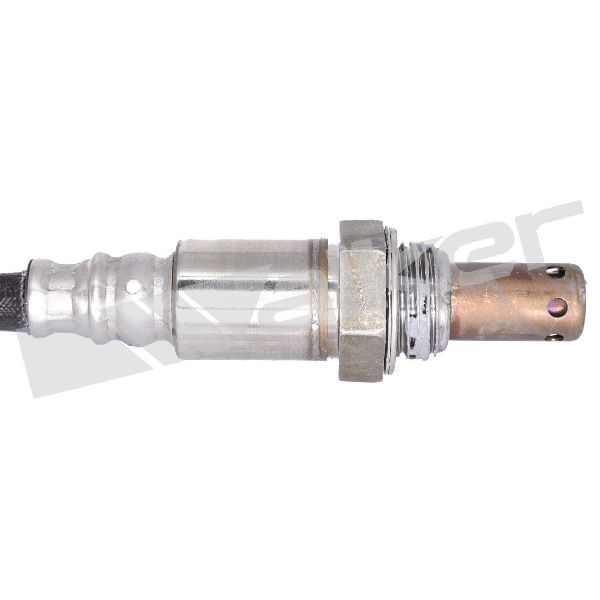
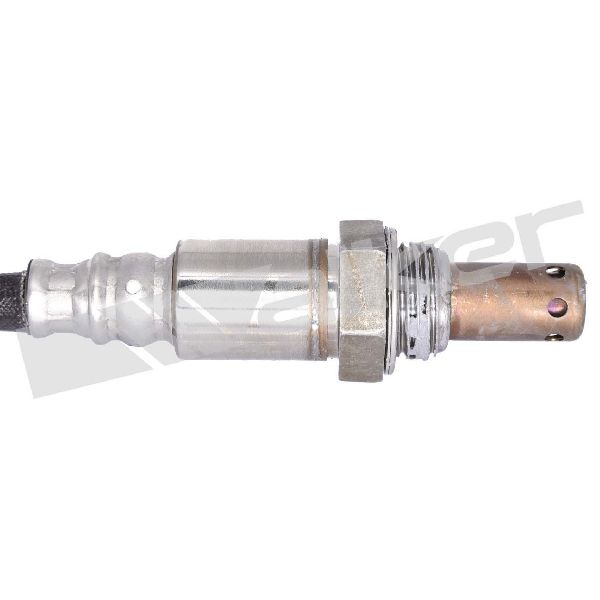
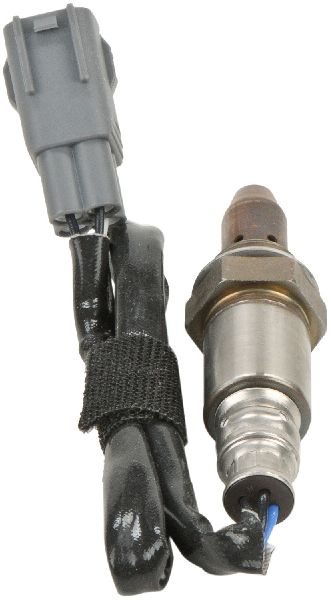
- Faulty Bank 2 Air/Fuel Ratio Sensor (Sensor 1) 🔴 High Probability → Shop Oxygen Sensor Air/Fuel ratio sensors are wear items and can fail over time, sending an incorrect, fixed signal to the PCM. Denso is the OEM supplier, and their sensors are generally reliable but have a finite lifespan. Using non-OEM sensors can sometimes cause these codes to appear even if the sensor is new.
How to confirm: Use a scan tool to observe live data for the Bank 2 Sensor 1 voltage. If it's stuck high (typically >0.6V-0.8V) and doesn't fluctuate rapidly, it's likely bad. The easiest and most definitive confirmation is to swap the Bank 1 and Bank 2 upstream sensors; if the code changes to P2196 (Bank 1 Stuck Rich), the sensor is confirmed bad.
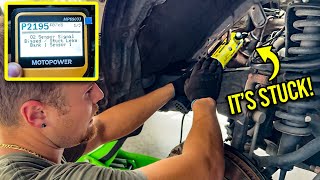
Typical fix: Replace the Bank 2, Sensor 1 Air/Fuel Ratio Sensor. The OEM part number is 89467-35110, which corresponds to Denso part number 234-9051. 🎬 Watch: Step-by-step walkthrough for replacing the upstream sensor.
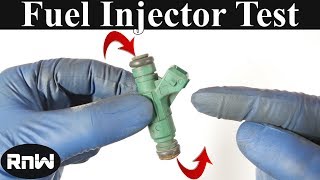
Est. part cost: $150-$250 - Leaking Fuel Injector on Bank 2 🟡 Medium Probability → Shop Fuel Injector A fuel injector can become stuck partially open or leak fuel into a cylinder after the engine is off. This adds uncommanded fuel to Bank 2, causing a genuine rich condition that the A/F sensor correctly reports. Some analysis on 1GR-FE engines suggests the rear cylinders, particularly cylinder #6 (on Bank 2), may run hotter, potentially contributing to injector issues over time.
How to confirm: After confirming the A/F sensor is working (e.g., via the swap test), check fuel trims on a scan tool; Bank 2 will show significant negative correction (e.g., -15% or more). You can pull the spark plugs on Bank 2 (driver's side, cylinders 2, 4, 6) and check for one that is wet with fuel or significantly darker/more sooty than the others. A fuel pressure leak-down test can also point to a leaking injector.
Typical fix: Identify and replace the faulty fuel injector(s) on Bank 2.
Est. part cost: $70-$150 per injector - Stuck-Open EVAP Purge Valve ⚪ Low Probability → Shop Vapor Canister If the evaporative emissions purge valve sticks open, it allows fuel vapors from the charcoal canister to be drawn into the intake manifold at the wrong time, creating a rich mixture. This can sometimes affect one bank more than the other depending on intake manifold design. This issue is sometimes reported to occur specifically after refueling.
How to confirm: With the engine running at idle, disconnect the vacuum hose from the tank side of the purge valve solenoid. There should be no vacuum present. If you feel suction, the valve is stuck open. A smoke test of the EVAP system can also reveal this issue.
Typical fix: Replace the EVAP purge valve solenoid.
Est. part cost: $40-$90 - Dirty or Faulty Mass Airflow (MAF) Sensor ⚪ Low Probability A MAF sensor contaminated with dirt or oil (especially from over-oiled aftermarket air filters) can under-report the amount of air entering the engine. The PCM then calculates an incorrect (too high) amount of fuel to inject. This usually affects both banks, triggering P2196 and P2198 together, but can sometimes manifest on one bank first.
How to confirm: Inspect the MAF sensor wires for contamination. You can try cleaning it with dedicated MAF sensor cleaner. Monitor the g/s reading on a scan tool to see if it responds correctly to throttle changes and is within the expected range 🎬 Watch this diagnostic guide for troubleshooting a P2198 code. (typically 2-5 g/s at idle).
Typical fix: Clean the MAF sensor with a dedicated cleaner. If the problem persists, replace the MAF sensor.
Est. part cost: $10-$20 (cleaner), $100-$180 (sensor)
Rare But Worth Checking
- High Fuel Pressure: A failing fuel pressure regulator can cause excessive pressure across the entire fuel rail. This is a rare cause but should be checked if both banks are running rich (P2198 and P2196).
- Wiring Harness Damage: A short to voltage in the A/F sensor's signal wire can mimic a stuck rich sensor. Inspect the harness for any signs of melting, chafing, or corrosion, especially near hot exhaust components.
- Exhaust Leak: An exhaust leak before the A/F sensor can sometimes draw in outside air, paradoxically causing the sensor to read incorrectly and the PCM to overcompensate with fuel, leading to a rich condition. Check for soot or listen for ticking noises from the exhaust manifold.
- PCM Fault: In very rare cases, the internal circuits of the Powertrain Control Module (PCM) that interpret the sensor's signal can fail. This should only be considered after all other possibilities have been exhaustively ruled out.
Diagnosis Steps
- Read Freeze Frame Data: Use a scan tool to note the engine conditions (RPM, load, temperature) when the code was set.
- Visual Inspection: Check the Bank 2 (driver's side) A/F sensor wiring and connector for any obvious damage, melting, or corrosion. Also inspect the intake system for any obvious vacuum leaks and the exhaust manifold for signs of leaks.
- Analyze Live Data: With a scan tool, monitor the live voltage of the Bank 2, Sensor 1. A healthy sensor fluctuates rapidly. If the voltage is stuck high (e.g., >0.8V or >3.35V depending on scan tool parameter), the sensor is either bad or is correctly reading a rich condition.
- Check Fuel Trims: Observe the Short-Term (STFT) and Long-Term (LTFT) fuel trims for Bank 2. If the PCM is trying to correct a rich condition, you will see significant negative values (e.g., -15% or more). Compare to Bank 1 trims to see if the problem is isolated.
- Swap the Upstream A/F Sensors: This is the most effective test. Swap the Bank 1 (passenger side) and Bank 2 (driver's side) upstream sensors. Clear the codes and drive the vehicle. If the code returns as P2196 (for Bank 1), the sensor you moved is faulty and needs replacement.
- Test for a True Rich Condition: If the code stays P2198 after the swap, you have a real rich condition on Bank 2. Proceed to inspect fuel injectors, fuel pressure, and the EVAP system.
- Inspect Fuel Injectors: Pull the spark plugs on Bank 2 (cylinders 2, 4, 6). A wet, fuel-fouled plug points to a leaking injector in that cylinder.
- Test Fuel Pressure: Connect a fuel pressure gauge to verify the pressure is within the manufacturer's specification (typically 41-42 psi at idle for the 1GR-FE).
- Test EVAP Purge Valve: Check if the purge valve is stuck open by feeling for vacuum at idle when it should be closed. This is a more likely cause if the CEL appears after refueling.
Parts You'll Likely Need
- Air/Fuel Ratio Sensor (Bank 2, Sensor 1)
(OEM #89467-35110)— This is the most common failure point for a P2198 code. It is a wear-and-tear item. Bank 2 Sensor 1 is on the driver's side, upstream of the catalytic converter.
Trusted brands: Denso (OEM) 234-9051
OEM price range: $180-$250
Aftermarket price range: $100-$160 - Fuel Injector
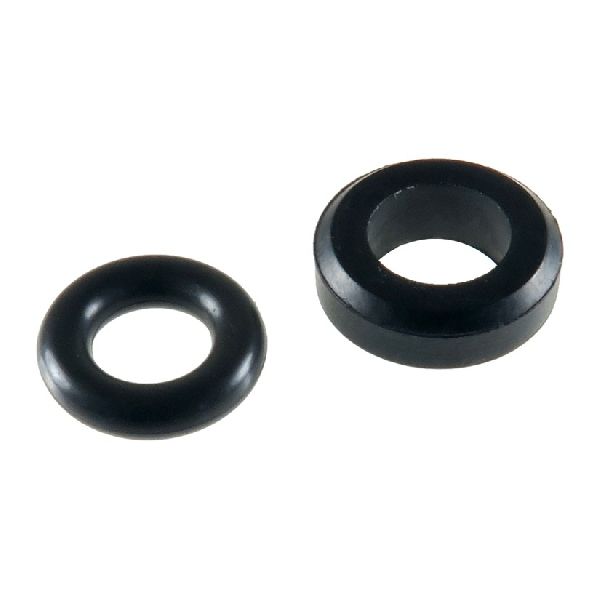
(OEM #23209-39145)— If the A/F sensor is good, the next most likely cause is a leaking fuel injector on Bank 2, causing a true rich condition.
Trusted brands: OEM Toyota, Aisan
OEM price range: $100-$170
Aftermarket price range: $40-$80
Related Codes That Often Appear With This One
- P0175 — System Too Rich (Bank 2). This is a more general code indicating the long-term fuel trim has reached its limit trying to correct the rich condition that P2198 is specifically reporting from the sensor.
- P2196 — O2 Sensor Signal Stuck Rich (Bank 1 Sensor 1). If both P2196 and P2198 are present, it strongly suggests a problem affecting the entire engine, such as high fuel pressure, a faulty MAF sensor, or a major EVAP system issue.
- P0101 — Mass Air Flow (MAF) Circuit Range/Performance. If the MAF sensor is dirty or failing, it can provide incorrect airflow data, leading the PCM to miscalculate fuel injection and potentially trigger a rich code like P2198.
Mechanic-Grade Diagnostic Values
- Fuel Pressure at Idle — expected: 281 to 287 kPa (40.8 to 41.7 psi). Failure: Significantly higher pressure may indicate a faulty fuel pressure regulator. Lower pressure could be a weak pump or leak.
- Fuel Pressure Leak-Down — expected: Remains at or above 147 kPa (21 psi) for 5 minutes after engine stop.. Failure: A rapid drop in pressure indicates a leak in the system, possibly from a fuel injector, fuel pump check valve, or pressure regulator.
- Fuel Injector Resistance — expected: 11.6 to 12.4 Ω at 20°C (68°F). Failure: Readings outside this range indicate a faulty injector coil.
- A/F Sensor Voltage (Techstream Data List) — expected: Should fluctuate rapidly. A common reference voltage is around 3.3V, with fluctuations above (rich) and below (lean).. Failure: A voltage stuck high (e.g., > 3.6V) or low (< 3.0V) indicates a biased or failed sensor.
- MAF Sensor Airflow at Idle — expected: Approximately 2-5 g/s. Failure: Readings that are incorrectly low can cause the ECU to command a rich mixture. Readings that don't increase with RPM are also a sign of failure.
Hidden / Shadow Codes Worth Checking
- Mode 6 Data: While not a hidden code, Mode 6 data on a capable scanner like Techstream provides non-continuous monitor test results. A technician can check the test IDs ($TID) and component IDs ($CID) for the Bank 2 A/F sensor to see if it is failing its internal tests, even before a DTC is set. This can help confirm a marginal sensor. (see via Advanced scan tool or Toyota Techstream software.)
Scan Tool Commands That Help
- Toyota Techstream: Active Test: Control the Injection Volume for A/F Sensor — This test allows a technician to command a lean (-12.5%) or rich (+12.5%) mixture and observe the A/F sensor's voltage response. If the sensor voltage does not change accordingly (e.g., go up with +12.5% injection and down with -12.5%), it confirms the sensor is faulty or unresponsive.
- Toyota Techstream: Active Test: Control the Fuel Pump / Speed — This allows you to turn on the fuel pump without the engine running. It is useful for safely checking fuel pressure and listening for pump operation during diagnosis.
- Toyota Techstream: Data List: AFS Voltage B2 S1 — This is the primary live data parameter to monitor. It shows the real-time output voltage of the Bank 2 Air/Fuel sensor, which is essential for diagnosing a stuck-rich condition.
Wiring & Ground Locations
- Engine Ground Points — On the 1GR-FE, critical ground points are located on the cylinder heads and the engine block, typically near the starter and alternator. A key ground strap also connects the engine to the chassis.. A poor engine ground can cause floating or incorrect readings from various sensors, including the A/F sensor. Verifying that ground connections are clean and tight is a crucial step in diagnosing electrical sensor faults.
- A/F Sensor Connector (Bank 2, Sensor 1) — Located on the driver's side of the engine, tracing the wire up from the sensor in the exhaust manifold. The connector is typically mounted to a bracket on the engine or firewall to keep it away from heat.. This connector is the primary point for testing sensor resistance and checking for voltage/ground from the ECM. It is susceptible to corrosion or damage, which can mimic a failed sensor.
Model Year Variations Within This Range
- 2014-2022: The core 4.0L 1GR-FE engine and its associated fuel and emissions systems remained fundamentally the same throughout this period. While there were cosmetic and infotainment updates to the 4Runner, the causes and fixes for P2198 are consistent across these model years.
Diagnostic Flowchart
Other Known Issues on This Vehicle
Issues unrelated to this code that are worth knowing about as an owner of this generation:
- Front Differential Needle Bearing Failure 🟠 Medium — Common, especially on lifted vehicles or after 60,000+ miles. Causes a cyclical groaning/grinding noise from the front driver's side in 2WD that disappears in 4WD. (Ref: T-SB-0026-15 (older models), T-SB-0075-23 (newer models).)
- Seized Front Brake Caliper Pistons 🟠 Medium — Very common, particularly in regions with road salt. The lower pistons are prone to rusting and seizing, causing brake drag, pulling, and overheating. Often requires caliper replacement every 3-5 years.
- Secondary Air Injection System (SAIS) Failure 🔴 High — More common on the 4.7L V8 (4th Gen), but the 4.0L V6 in the 5th Gen also has this system. The foam filter inside the pump can degrade, sending debris into the switching valves, or the pump motor can fail. This can lead to expensive repairs and limp mode.
- Warped Front Brake Rotors 🟡 Low — Many owners report a steering wheel shimmy or pulsation during braking, often caused by warped front rotors. This can be exacerbated by seized caliper pistons.
- EVAP System Faults 🟡 Low — Failures of the charcoal canister or purge valves can occur, leading to EVAP-related trouble codes and sometimes rich-running issues after refueling.
Used vs. New Parts: Buying Guide for This Vehicle
When a used part is the smart pick: For a leaking fuel injector, a low-mileage used OEM injector from a reputable salvage yard (like LKQ) can be a cost-effective alternative to a new OEM part. Given the high cost of new OEM injectors, this is a common practice.
Donor-vehicle mileage cap: roughly under 80000 miles for the part to have meaningful remaining life.
What to inspect on the donor part:
- Verify the donor vehicle's mileage.
- Inspect the injector for any physical damage, cracks in the plastic, or heavy corrosion.
- Ensure the electrical connector pins are straight and clean.
- If possible, get a set from the same engine to ensure they are similarly aged.
OEM-only on this vehicle (don't cheap out):
- Air/Fuel Ratio Sensor
Aftermarket brands forum-validated for this vehicle:
- Denso (for A/F Sensor, as they are the OEM supplier)
- Aisan (often the OEM supplier for fuel injectors)
Brands owners have reported issues with on this vehicle:
- Unknown or generic 'no-name' brands for electronic parts like A/F sensors and fuel injectors are strongly discouraged by Toyota technicians and enthusiasts. Forum consensus indicates that non-Denso A/F sensors frequently fail prematurely or do not work correctly out of the box on Toyota vehicles.
Real Owner Stories
Aggregated from forums and TSBs cited above. Mileages and costs reflect what owners reported in those sources.
Toyota Tacoma (1GR-FE engine)
Symptoms: Intermittent P2196 and P2198 codes appearing specifically after filling up the fuel tank.
What fixed it: The owner confirmed the problem was caused by a clog in the EVAP system.
Source hint: Tacoma World thread titled 'P2196 and P2198 codes after fill up (intermittent)'
4th Gen Toyota 4Runner
Symptoms: The P2198 code appeared after the owner replaced a catalytic converter and the O2 sensor with a non-OEM (Walker) part.
What fixed it: The community diagnosed the issue as a faulty aftermarket sensor. The recommended fix was to swap the sensors between banks to confirm the new part was bad and replace it with an OEM Denso sensor.
Source hint: Reddit r/4thGen4Runner thread titled 'Code P2198?'
2nd Gen Toyota Tacoma
Symptoms: The owner experienced code P2198 along with P0101 after cleaning their MAF sensor.
What fixed it: The issue was directly linked to the MAF sensor and air metering. While the final repair isn't detailed, the cause was identified as an intake/air metering problem.
Source hint: Tacoma World thread titled 'Code p0101 and p2198'
Related OBD-II Codes
Frequently Asked Questions
Where is the Bank 2 Air/Fuel Ratio Sensor (Sensor 1) located on my 2014-2022 4Runner?
What is the specific OEM part number for the Bank 2 A/F sensor I should buy?
How can I definitively test the A/F sensor on my 4Runner before replacing it?
My Check Engine Light for P2198 seems to come on only after I refuel. What could be the cause?
I replaced my O2 sensor with an aftermarket part and now I have a P2198 code. Is the new sensor bad?
What are the correct fuel pressure specifications for the 4.0L engine in my 4Runner?
Helpful Videos

We Have This Part in Stock


The information in this article is provided for general reference and educational purposes only. Vehicle specifications, procedures, and part compatibility can vary by production date, trim level, and region. Always consult your vehicle's factory service manual and verify part numbers before purchasing or performing repairs. Safety-critical components such as airbags, seat belts, and braking systems should be installed by a qualified professional.
- Toyota 4Runner:
- 🧭 Diagnostic Flowchart
- 🎬 Helpful Videos
- 🛍️ Shop This Part
- What's Unique About the 2014-2022 Toyota 4Runner
- Symptoms You May Notice
- Most Likely Causes
- Rare But Worth Checking
- Diagnosis Steps
- Parts You'll Likely Need
- Related Codes That Often Appear With This One
- Mechanic-Grade Diagnostic Values
- Hidden / Shadow Codes Worth Checking
- Scan Tool Commands That Help
- Wiring & Ground Locations
- Model Year Variations Within This Range
- Other Known Issues on This Vehicle
- Used vs. New Parts: Buying Guide for This Vehicle
- Real Owner Stories
- Toyota Tacoma (1GR-FE engine)
- 4th Gen Toyota 4Runner
- 2nd Gen Toyota Tacoma
- Related OBD-II Codes
- Frequently Asked Questions
- 🎟️ Get 5% Off