

P2198 on 2008-2013 Toyota Highlander: Causes and Fixes for Stuck Rich A/F Sensor
This code means the Bank 2, Sensor 1 Air/Fuel ratio sensor is stuck reading rich. On the Highlander's 2GR-FE V6, this is most often caused by a failed sensor itself. Bank 2 is the cylinder bank closer to the radiator. Expect to pay $120-$200 for a quality replacement Denso sensor, with a DIY difficulty of 2/5.
- P2198 means the front (radiator side) upstream Air/Fuel sensor is stuck reading rich.
- The most likely cause on a 2008-2013 Highlander V6 is a failed A/F sensor itself.
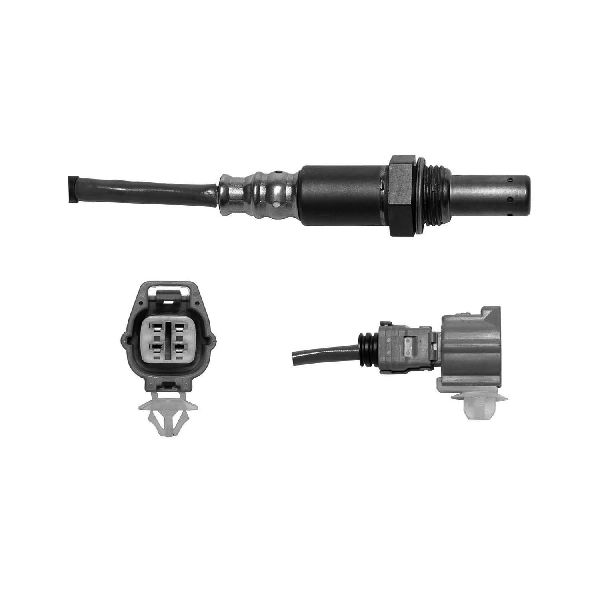
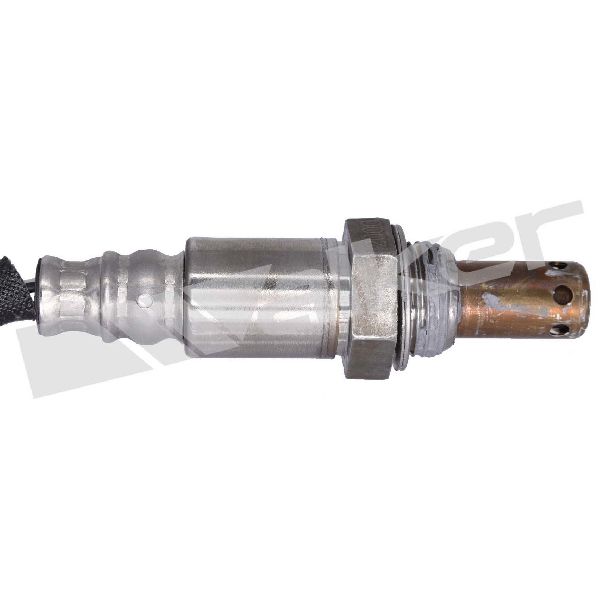
- Use a quality OEM brand like Denso for the replacement sensor to ensure compatibility and longevity. The correct part is Denso #234-9050.
- Driving with this code active will hurt your gas mileage and can lead to expensive catalytic converter damage over time.
- The repair is DIY-friendly as the sensor is located in an accessible position on the front of the engine.
What's Unique About the 2008-2013 Toyota Highlander
On this generation of Highlander with the 2GR-FE V6, the upstream oxygen sensors are a specific type called Air/Fuel (A/F) Ratio sensors. While many vehicles can trigger a P2198 from issues like leaking fuel injectors or bad purge valves, the most common cause on this specific Toyota platform is simply the failure of the A/F sensor itself due to age or contamination. Owners often find that replacing the sensor resolves the code without needing to diagnose more complex fuel system issues. This is a well-documented pattern for the 2GR-FE engine across multiple Toyota and Lexus models.
Symptoms You May Notice
- Illuminated Check Engine Light
- Decreased fuel economy
- Rough or uneven idle
- Engine hesitation or lack of acceleration
- A smell of gasoline or rotten eggs from the exhaust
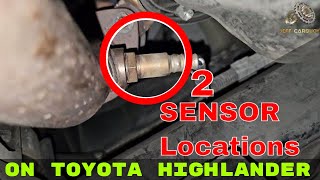
- Replacing the downstream (Sensor 2) oxygen sensor. P2198 specifically refers to Sensor 1, the upstream Air/Fuel Ratio sensor used for fuel control.
- Replacing the Bank 1 (rear, firewall side) A/F sensor instead of the Bank 2 (front, radiator side) sensor.
Most Likely Causes
- Failed Bank 2, Sensor 1 Air/Fuel Ratio Sensor 🔴 High Probability → Shop Oxygen Sensor The A/F sensors on the 2GR-FE engine are known to fail with age, sending a false 'stuck rich' signal even when the engine's air-fuel mixture is normal. This is the most frequently reported resolution for P2198 on this platform in owner forums.
How to confirm: Use a scan tool to monitor the live voltage or current data for 'A/FS B2S1'. If the reading is flat and unchanging (typically high voltage, above 0.8V or a low current reading) compared to the Bank 1 sensor ('A/FS B1S1') which should be fluctuating rapidly, the sensor is very likely faulty. Another good test is to swap the Bank 1 and Bank 2 upstream sensors; if the code changes to P2196 (Bank 1 Stuck Rich), the sensor is confirmed bad.
Typical fix: Replace the Bank 2, Sensor 1 Air/Fuel Ratio Sensor. Bank 2 is located on the front of the engine, near the radiator, making it relatively easy to access.
Est. part cost: $120-$200 - Leaking Fuel Injector(s) on Bank 2 🟡 Medium Probability → Shop Fuel Injector
How to confirm: If the A/F sensor appears to be reading a genuine rich condition (i.e., its signal fluctuates but stays mostly high), and the long-term fuel trim for Bank 2 is highly negative (e.g., -15% or more), it suggests a real fuel issue. A mechanic can perform a fuel injector balance test to identify a leaking injector. Another sign can be misfire codes (P0302, P0304, P0306) accompanying the P2198.
Typical fix: Identify and replace the faulty fuel injector(s) on Bank 2 (cylinders 2, 4, 6). It is often recommended to replace all injectors on the affected bank as a set.
Est. part cost: $50-$150 per injector - High Fuel Pressure ⚪ Low Probability
How to confirm: Connect a fuel pressure gauge to the fuel rail. Check if the pressure is within the manufacturer's specifications (typically 44-50 psi for the 2GR-FE). If it's too high, the fuel pressure regulator may be faulty.
Typical fix: Replace the fuel pressure regulator.
Est. part cost: $60-$120
Rare But Worth Checking
- Exhaust Leak: An exhaust leak before the A/F sensor can sometimes, paradoxically, cause a rich code by confusing the sensor's readings, although it more commonly causes a lean code.
- Wiring or Connector Issue: Damage to the sensor's wiring harness or corrosion in the connector can cause a short or high resistance, leading to a false rich signal. A visual inspection of the harness from the sensor to the main loom is recommended.
- Faulty Engine Control Module (ECM): → Shop Engine Control Module (ECM) In very rare cases, the ECM itself may have a faulty driver circuit for the A/F sensor. Some manufacturers release software updates to correct for sensor bias issues. This should only be considered after all other possibilities have been exhaustively ruled out.
- Dirty or Faulty Mass Airflow (MAF) Sensor: A contaminated MAF sensor can under-report airflow, causing the ECM to inject too much fuel. This typically affects both banks and would likely set codes for both Bank 1 (P2196) and Bank 2 (P2198) simultaneously. Cleaning the MAF sensor is a simple and inexpensive diagnostic step.
Diagnosis Steps
- Connect an OBD-II scanner and confirm that P2198 is the primary code. Check for any other codes and address them first if they relate to misfires or the fuel system.
- View live data on the scanner. Compare the signals from 'A/FS B1S1' (Bank 1 Sensor 1) and 'A/FS B2S1' (Bank 2 Sensor 1).
- B1S1 should show a rapidly fluctuating voltage or current. If B2S1 is stuck at a high, non-fluctuating value (e.g., >0.8V), the sensor has likely failed.
- Check the short-term and long-term fuel trims for both banks. If Bank 2 long-term fuel trim is highly negative (e.g., -15% or lower), the ECM is trying to compensate for a real rich condition. If the fuel trims are near normal but the sensor reads rich, it's a faulty sensor.
- If a real rich condition is suspected, investigate potential causes like leaking fuel injectors or a faulty fuel pressure regulator.
- Inspect the wiring and connector for the Bank 2 Sensor 1 for any visible damage, corrosion, or looseness.
- If the sensor is suspected, the easiest confirmation is to swap the Bank 1 and Bank 2 upstream sensors. Clear the codes and drive the vehicle. If the code returns as P2196 (Bank 1 Stuck Rich), you have definitively proven the sensor is the problem.
Parts You'll Likely Need
- Air/Fuel Ratio Sensor (Bank 2, Sensor 1)
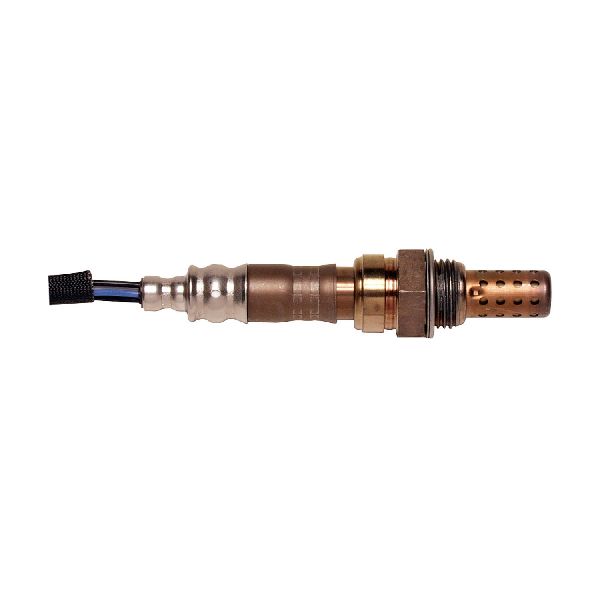
(OEM #89467-48050)— This is the most common point of failure for this specific code on the 2GR-FE engine. The sensor is located on the front exhaust manifold, near the radiator. The OEM equivalent from the original manufacturer, Denso, is part number 234-9050.
Trusted brands: Denso (OEM)
OEM price range: $180-$250
Aftermarket price range: $120-$200
Related Codes That Often Appear With This One
- P0175 — System Too Rich (Bank 2). This is a more general code indicating a rich condition on Bank 2, which is the root cause detected by the P2198 code.
- P0302, P0304, P0306 — Cylinder Misfire Detected on Bank 2. If a leaking fuel injector is the cause, it can foul the spark plug and lead to misfires on the affected cylinders.
- P2196 — O2 Sensor Signal Stuck Rich (Bank 1 Sensor 1). If this code appears alongside P2198, it points towards a more global issue affecting both engine banks, such as a faulty MAF sensor or fuel pressure regulator.
Technical Service Bulletins (TSBs) & Recalls
- EG034-07 (superceded): Provided initial bank identification for Toyota engines.
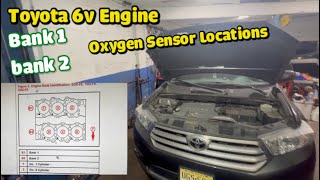
- TSB-0036-10 (Revision of EG037-04): Provides updated information on identifying Bank 1 vs Bank 2 for various Toyota engines, including the 2GR-FE. Bank 2 is confirmed as the bank opposite of the one with cylinder #1.
- Note: No specific TSBs for P2198 on this platform were found, as the issue is typically wear-and-tear sensor failure rather than a design flaw requiring a specific bulletin.
Platform-Specific Known Issues
- Easy Access to Bank 2 Sensor: Unlike many V6 engines where one bank is pressed against the firewall and difficult to access, the Bank 2 sensor on the Highlander's 2GR-FE is on the front exhaust manifold, facing the radiator. This makes it significantly easier to access and replace for a DIY mechanic, often requiring only the removal of a heat shield.
Mechanic-Grade Diagnostic Values
- Fuel Pressure at Idle — expected: 304 to 343 kPa (44 to 50 psi). Failure: Pressure significantly above this range indicates a faulty regulator; pressure below this range could be a weak pump or clogged filter.
- Fuel Injector Resistance — expected: 11.6 to 12.4 Ω. Failure: A reading outside this range on any injector indicates an internal fault requiring replacement.
- A/F Sensor Heater Resistance — expected: 1.8 to 3.4 Ω at 20°C (68°F). Failure: Resistance outside this range indicates a failed heater circuit within the sensor, requiring sensor replacement. Test between terminals HA1A and +B.
- A/F Sensor Current (Techstream) — expected: Fluctuating around a baseline value.. Failure: For a P2198, the current will be stuck low, less than 0.78 mA or 0.8 mA for more than 3 seconds, indicating a rich condition.
- A/F Sensor Voltage (Live Data) — expected: Fluctuating around 3.3V. Unlike traditional O2 sensors, on Toyota A/F sensors, a lower voltage indicates a richer mixture, while a higher voltage indicates a leaner mixture.. Failure: A voltage that is stuck low and not fluctuating indicates a persistent rich signal.
Hidden / Shadow Codes Worth Checking
- Mode 6 Data: While not a 'shadow code,' Toyota's diagnostic strategy relies on checking monitor status in Mode 6. Using a capable scanner like Techstream, a technician can check 'All Readiness' and input DTC P2198 to see the specific test results and thresholds the ECM is using to determine the fault. This provides deeper insight than the generic code alone. (see via Toyota Techstream or advanced OBD-II scanner with Mode 6 capabilities.)
Scan Tool Commands That Help
- Toyota Techstream: Active Test: Control the Injection Volume for A/F Sensor — This is the most definitive way to test the A/F sensor's function. It allows the user to command the fuel mixture lean (e.g., -12.5%) or rich (e.g., +25%) while watching the sensor's live data. If you command the mixture lean and the sensor's output does not change, you have proven the sensor is stuck and faulty. If the sensor responds correctly, the problem is a genuine rich condition elsewhere in the system.
Wiring & Ground Locations
- Engine Harness Ground (Front Head) — On the front cylinder head (Bank 2), there is a primary grounding point for the engine wiring harness.. A poor ground at this location can introduce electrical noise or voltage offsets into sensor circuits, including the A/F sensor, potentially causing false readings.
- Valve Cover Grounds — The 2GR-FE has ground wires going from the valve covers to the chassis, often terminating on a bracket on the strut tower.. Ensures the engine block and heads have a solid ground reference to the chassis, which is critical for all engine sensors.
- A/F Sensor Connector Pins — At the sensor connector for Bank 2, Sensor 1.. Knowing the pin identifiers (HA1A, +B, A1A-, A1A+) allows for precise resistance testing of the sensor's heater circuit and insulation as per the service manual.
Real Owner Repair Stories
- ToyotaNation Forum & General DIY Procedure (Multiple 2008-2013 Toyota Highlanders with 2GR-FE V6) — Check Engine Light, VSC Off, and TRAC OFF lights illuminated, with code P2198 stored.
❌ Tried (didn't work) Clearing the code without repair (code returns quickly)., Replacing the wrong sensor (Bank 1 or downstream Sensor 2).
✅ What actually fixed it The most definitive diagnostic step reported is swapping the upstream A/F sensors between Bank 1 (firewall side) and Bank 2 (radiator side). After the swap, the code changed to P2196 (Bank 1 Stuck Rich). This confirmed the sensor itself was faulty. Replacing the identified faulty sensor (originally from Bank 2) with a new Denso part (234-9050) permanently resolved the issue.
OEM Part Supersession History
89467-08010→89467-48050— Standard part revision and consolidation by Toyota.
Model Year Variations Within This Range
- 2008-2013: While there was a cosmetic refresh for the 2011 model year, there were no significant changes to the 2GR-FE engine's fuel or emission control systems that would alter the diagnosis or common causes of a P2198 code within this generation.
Diagnostic Flowchart
Other Known Issues on This Vehicle
Issues unrelated to this code that are worth knowing about as an owner of this generation:
- VVT-i Oil Line Rupture 🔴 High — Common on earlier 2GR-FE engines (approx. 2006-2010). A rubber section of the Bank 1 VVT-i oil line can burst, leading to rapid, catastrophic oil loss and engine seizure. (Ref: Limited Service Campaign (LSC) was issued, but expired. The fix involves replacing the rubber/metal line with an all-metal line (P/N 15772-31030).)
- Water Pump Failure 🟠 Medium — A well-known weak point on the 2GR-FE, often failing between 60,000-100,000 miles. Signs include a whining noise and pink, crusty coolant residue near the passenger side of the engine.
- Melting / Sticky Dashboard 🟡 Low — Common in hot, humid climates. The dashboard material can degrade, becoming sticky, shiny, and cracked. While not a Highlander-specific issue, it affected many Toyota models of this era. (Ref: Warranty Enhancement Program (ZE6) was issued, but has since expired.)
- Steering Intermediate Shaft Clunk 🟡 Low — Some owners report a clunking or popping noise from the steering column when turning. An updated intermediate shaft was released to fix this. (Ref: T-SB-0034-13)
- Ignition Coil Failure 🟠 Medium — Failure of one or more ignition coils is a common cause of engine misfires, rough idle, and hesitation on the 2008 and 2013 model years in particular.
Used vs. New Parts: Buying Guide for This Vehicle
When a used part is the smart pick: For this P2198 code, using used parts is generally not recommended for the primary suspect (the A/F sensor). However, if the cause is a leaking fuel injector, a used injector from a low-mileage, reputable donor vehicle can be a cost-effective option, but it should be professionally cleaned and flow-tested before installation.
Donor-vehicle mileage cap: roughly under 75000 miles for the part to have meaningful remaining life.
What to inspect on the donor part:
- For a fuel injector, check the donor vehicle's history for consistent maintenance.
- Avoid parts from vehicles that have been sitting for long periods, as seals can dry out.
- Inspect the part for any physical damage, rust, or signs of extreme heat.
OEM-only on this vehicle (don't cheap out):
- Engine Control Module (ECM) - Aftermarket or incorrectly matched used ECMs often have programming and compatibility issues.
Aftermarket brands forum-validated for this vehicle:
- Denso (for Air/Fuel Ratio Sensor - they are the Original Equipment Manufacturer)
- NTK (for Air/Fuel Ratio Sensor)
Brands owners have reported issues with on this vehicle:
- Unbranded or 'white-box' sensors from online marketplaces. These are notorious for premature failure, incorrect readings, and causing more diagnostic confusion.
Real Owner Stories
Aggregated from forums and TSBs cited above. Mileages and costs reflect what owners reported in those sources.
2011 Toyota Highlander Limited V6
Symptoms: Check engine light illuminated with code P2198.
What fixed it: Replaced the Bank 2 Sensor 1 (front, radiator side) with a Denso sensor.
Source hint: https://www.toyotanation.com/threads/p2198-code-on-2011-highlander-limited-v6.1693890/
2011 Toyota Highlander V6
Symptoms: Check Engine, VSC, and TRAC OFF lights are on; code P2198 present.
What fixed it: Confirmed front sensor is Bank 2 and replaced it with Denso 234-9050.
Source hint: https://www.toyotanation.com/threads/check-engine-vsc-trac-off-lights-are-on-p2198.1660670/
2013 Toyota Highlander V6
Symptoms: P2198 code triggered.
What fixed it: Confirmed with a mechanic that the B2S1 sensor was the cause and replaced it.
Source hint: https://www.reddit.com/r/ToyotaHighlander/comments/1b7t85e/p2198_code/
Related OBD-II Codes
Frequently Asked Questions
Which bank is Bank 2 on my Highlander's 2GR-FE engine for the P2198 code?
Is there a specific Air/Fuel sensor part recommended for the 2011 Highlander to fix P2198?
How can I tell if my P2198 is a bad sensor or a real fuel issue like a leaking injector?
Is the Bank 2 Sensor 1 difficult to reach on the 2GR-FE V6?
Could my P2198 code be related to the VVT-i oil line issue on my 2008 Highlander?
Will a faulty ignition coil cause a P2198 code?
Helpful Videos


We Have This Part in Stock

The information in this article is provided for general reference and educational purposes only. Vehicle specifications, procedures, and part compatibility can vary by production date, trim level, and region. Always consult your vehicle's factory service manual and verify part numbers before purchasing or performing repairs. Safety-critical components such as airbags, seat belts, and braking systems should be installed by a qualified professional.
- Toyota Highlander:
- 🧭 Diagnostic Flowchart
- 🎬 Helpful Videos
- 🛍️ Shop This Part
- What's Unique About the 2008-2013 Toyota Highlander
- Symptoms You May Notice
- Most Likely Causes
- Rare But Worth Checking
- Diagnosis Steps
- Parts You'll Likely Need
- Related Codes That Often Appear With This One
- Technical Service Bulletins (TSBs) & Recalls
- Platform-Specific Known Issues
- Mechanic-Grade Diagnostic Values
- Hidden / Shadow Codes Worth Checking
- Scan Tool Commands That Help
- Wiring & Ground Locations
- Real Owner Repair Stories
- OEM Part Supersession History
- Model Year Variations Within This Range
- Other Known Issues on This Vehicle
- Used vs. New Parts: Buying Guide for This Vehicle
- Real Owner Stories
- 2011 Toyota Highlander Limited V6
- 2011 Toyota Highlander V6
- 2013 Toyota Highlander V6
- Related OBD-II Codes
- Frequently Asked Questions
- 🎟️ Get 5% Off