

P2199 on 2020 Ram 1500: Intake Air Temp Sensor Correlation Causes & Fixes
On a 2020 Ram 1500, especially with the 3.0L EcoDiesel engine, code P2199 indicates a mismatch between the two intake air temperature sensors. This is often caused by a faulty sensor or, most commonly, outdated engine computer software. A software update performed by a dealer is a frequent and manufacturer-recommended fix, as outlined in specific Technical Service Bulletins (TSBs).
- P2199 means the readings from your truck's two intake air temperature sensors don't agree.
- For the 2020 Ram 1500 3.0L EcoDiesel, the first step should be to check with a dealer for a required PCM software update, as specified in TSB #18-008-21.
- If software is not the issue, a faulty IAT sensor is the next most likely cause.
- Diagnosis involves using a scan tool to compare the live data from both sensors to see which one is faulty.
- Driving with this code may cause poor performance and fuel economy, so it's best to get it diagnosed promptly.
What's Unique About the 2020-2020 Ram 1500
🎬 Watch: A quick guide to understanding the P2199 engine codeFor the 2020 Ram 1500 equipped with the 3.0L EcoDiesel (Gen 3) engine, P2199 is frequently not an isolated issue. It often appears alongside a specific group of other engine and emissions-related codes. Ram has issued Technical Service Bulletins (TSBs), specifically TSB 18-008-21, that address P2199 as part of a larger software calibration problem. This indicates that the root cause is often not a simple hardware failure but a correctable software issue, making a trip to the dealer for a PCM reflash a more likely and necessary solution than for many other vehicles.
Diagnostic Flowchart
Tap your situation to follow the diagnostic path that matches what you're seeing on this vehicle.
Symptoms You May Notice
- Check Engine Light (MIL) is illuminated.
- Reduced engine performance or hesitation during acceleration.
- Decreased fuel efficiency.
- Rough idle, especially during cold starts or at high altitude.
- Strong exhaust fumes on a cold start.
- Replacing an IAT sensor without checking for available PCM software updates first. The TSBs strongly suggest the software is a primary fix for the 2020 model year.
- Replacing the wrong IAT sensor. It's crucial to use a scan tool to identify which of the two sensors is providing the incorrect reading. Remember IAT1 is likely in the MAF and IAT2 in the MAP sensor.
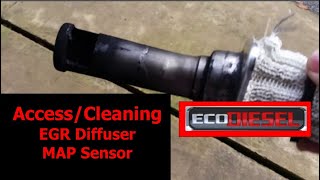
- Replacing a sensor when the actual issue is heavy soot/oil buildup on the sensor element, which could potentially be cleaned. 🎬 See how to locate and clean your EcoDiesel MAP sensor
Most Likely Causes
- Outdated Powertrain Control Module (PCM) Software 🔴 High Probability → Shop Engine Control Module (ECM) Manufacturer TSB #18-008-21 specifically lists P2199 as one of several codes fixed by a PCM software update for the 2020 Ram 1500 with the 3.0L Gen 3 EcoDiesel engine. This TSB addresses a wide range of DTCs, indicating a comprehensive calibration update.
How to confirm: A Ram dealership or a qualified shop with access to OEM tools (like wiTECH) can check the current software calibration version against the latest available version referenced in TSB 18-008-21.
Est. part cost: $0 - Faulty Intake Air Temperature (IAT) Sensor 🟡 Medium Probability → Shop Fuel Injection Air Flow Meter Sensors can fail over time due to heat cycles and contamination from crankcase ventilation or EGR systems. One sensor failing will cause its reading to deviate from the other, triggering the correlation code. The IAT2/MAP sensor on the intake manifold is particularly susceptible to soot buildup.
How to confirm: Using an OBD-II scanner with live data, compare the readings of IAT Sensor 1 and IAT Sensor 2. With the engine cold and off, they should be nearly identical to the ambient air temperature. If one is stuck or reads an irrational value (like -40°F), it is likely faulty. As the engine runs, IAT2 should read higher than IAT1 due to heat from the turbocharger.
Est. part cost: $25-$75 - Damaged Wiring or Poor Connection ⚪ Low Probability Engine harnesses can be subject to chafing or corrosion, especially near connectors or where the harness is routed close to hot or vibrating components.
How to confirm: Visually inspect the wiring and connectors for both the MAF sensor (IAT1) and MAP sensor (IAT2) for any signs of damage, corrosion, or loose pins. A multimeter can be used to check for continuity and proper voltage at the sensor connector.
Est. part cost: $5-$50
Rare But Worth Checking
- Faulty Powertrain Control Module (PCM): → Shop Engine Control Module (ECM) This is the least likely cause. All other possibilities, especially software updates and sensor failures, should be thoroughly ruled out before considering PCM replacement.
Diagnosis Steps
- Connect an OBD-II scanner and confirm that P2199 is the active code. Check for any other stored codes, paying close attention to those listed in TSB #18-008-21.
- Check for Technical Service Bulletins (TSBs). For a 2020 Ram 1500 EcoDiesel, TSB #18-008-21 is highly relevant and suggests a PCM reflash is a likely solution. Confirm with a dealer if this TSB has been applied to your vehicle's VIN.
- Using the live data function on your scanner, monitor the values for "IAT Sensor 1" and "IAT Sensor 2".
- With the engine cold and off (after sitting for several hours), both sensor readings should be within a few degrees of each other and the ambient air temperature.
- Start the engine and monitor the sensor readings as it warms up. IAT2 (post-turbo/intercooler) should show a higher temperature than IAT1, especially under load.
- If one sensor is stuck at a default value (e.g., -40°F) or doesn't change with engine temperature, that sensor is suspect.
- If the sensor readings seem plausible but the code persists, perform a visual inspection of the wiring and connectors for both the MAF and MAP sensors. Look for any signs of chafing, melting, or corrosion.
- Inspect the IAT/MAP sensor on the intake manifold for soot or oil contamination. Carefully cleaning it with appropriate sensor cleaner may resolve the issue.
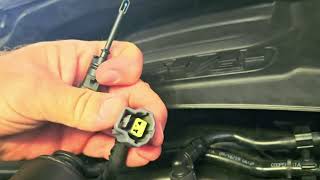
- If a sensor is identified as faulty, replace it. 🎬 Watch this walkthrough on replacing the air intake sensor If wiring is damaged, repair it.
- If sensors and wiring are good, the most likely remaining cause is a software issue. The vehicle will need to be taken to a dealer or qualified shop to have the PCM reprogrammed per TSB 18-008-21.
Parts You'll Likely Need
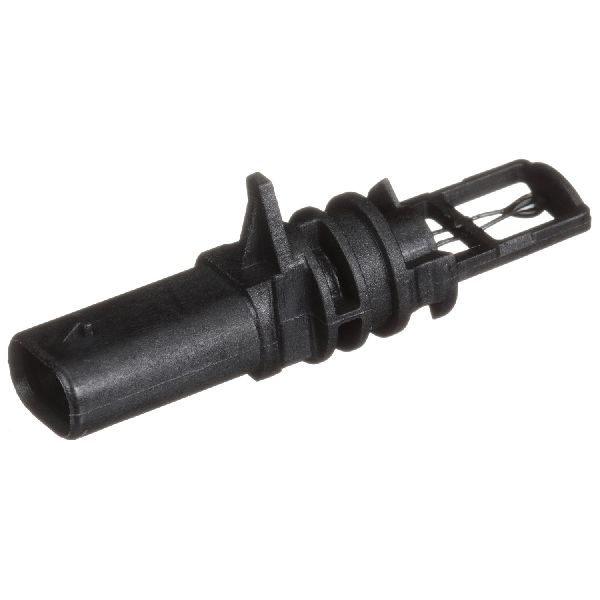
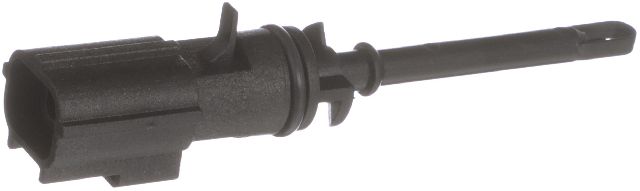
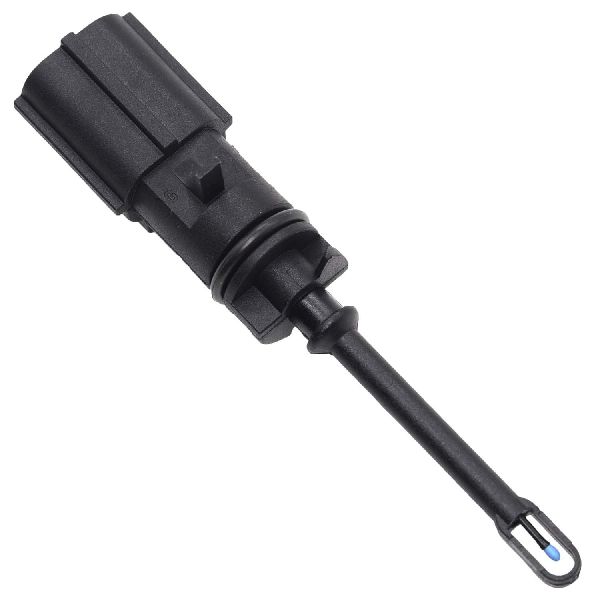
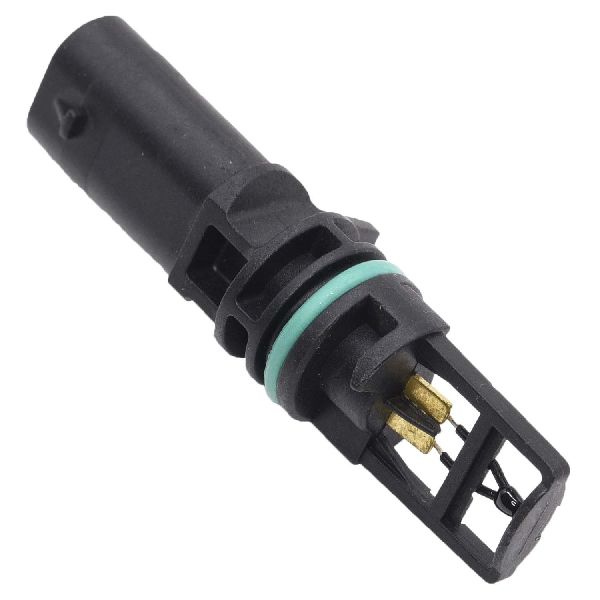
- Intake Air Temperature Sensor
(OEM #68226930AA)— One of the two IAT sensors may have failed, providing an inaccurate reading that conflicts with the other sensor. This is a common hardware failure for this code. Note that this part number may apply to one of the sensors, but often the IAT is integrated with the MAP or MAF sensor, requiring replacement of the entire assembly.
Trusted brands: Mopar, Bosch, Delphi
OEM price range: $50-$90
Aftermarket price range: $25-$60
Related Codes That Often Appear With This One
- P2D2D — Cold Start Intake Manifold Runner Performance Bank 1. Listed in the same TSB as P2199, indicating a related software calibration issue. [⭐ MANUFACTURER TSB — highest authority] Bulletin #18-002-23
- P2D2E — Cold Start Intake Manifold Runner Performance Bank 2. Also listed in the same TSB, pointing to a common software fix. [⭐ MANUFACTURER TSB — highest authority] Bulletin #18-002-23
- P22FA — NOX Sensor Performance. This code is also included in the PCM reflash TSB for the 3.0L EcoDiesel. [⭐ MANUFACTURER TSB — highest authority] Bulletin #1800821
- P2002 — Diesel Particulate Filter Efficiency Below Threshold. Another code addressed by the same software update, suggesting a comprehensive calibration fix. [⭐ MANUFACTURER TSB — highest authority] Bulletin #1800821
- P200A / P200B — Intake Manifold Runner Performance Bank 1 / Bank 2. These codes are also listed in TSB 18-008-21 and are often associated with soot buildup issues that can affect sensor readings.
Technical Service Bulletins (TSBs) & Recalls
- 18-002-23: Mentions P2199-00 - Intake Air Temperature Sensor 1/2 Correlation in a list of potential DTCs.
- 18-008-21 / 18-008-21 Rev. A: This is the primary TSB. It lists P2199-00 as a code that can be resolved by a Powertrain Control Module (PCM) software update on 2020 Ram 1500s with the 3.0L Gen 3 EcoDiesel engine. It also includes a long list of other codes and provides enhancements for issues like rough idle and cruise control behavior.
Platform-Specific Known Issues
- TSB #18-008-21 (and its revisions like Rev. A) is the most critical piece of information for this code on a 2020 3.0L EcoDiesel. It explicitly states that a PCM software update is available to correct MIL illumination for P2199 and a host of other DTCs.
- Owners on forums for platform mates like the Jeep Gladiator with the same engine have reported a wide array of electrical-seeming issues, including sensor codes, that were ultimately traced back to a failing auxiliary battery, which can cause low voltage problems.
Mechanic-Grade Diagnostic Values
- IAT Sensor Resistance vs. Temperature — expected: Resistance decreases as temperature increases. Example values: 336,600 Ohms @ -40°C, ~2,500 Ohms @ 25°C (77°F), 390 Ohms @ 120°C.. Failure: A sensor reading infinite resistance (open circuit) or very low resistance (short circuit) regardless of temperature, or values that do not correspond to the chart.
- MAP/IAT Sensor Reference Voltage (Key On, Engine Off) — expected: Approximately 5.0 Volts on the reference wire.. Failure: Voltage significantly below 4.8V or above 5.2V indicates a problem with the PCM or wiring, not necessarily the sensor itself.
- MAP/IAT Sensor Signal Voltage (Engine Idling) — expected: Between 1.0 and 2.0 Volts.. Failure: Voltage is stuck high (near 5V) or low (near 0V) and does not change with engine RPM or load.
Scan Tool Commands That Help
- wiTECH: Initiate P2BA9 SCR Inducement Action Lamp Refill Monitor — While not directly for P2199, this command is used for related emissions codes that often appear with P2199. It forces the system to run a self-test on the SCR system after a repair, which can be necessary when multiple codes are present.
Wiring & Ground Locations
- Engine Harness Chafe Point — On the 3.0L Diesel, inspect the harness where it passes over the generator (alternator), approximately 18 inches from the ECM connectors.. Vibrations can cause the harness to rub through on the generator or brackets, potentially shorting or opening circuits for the nearby intake sensors.
- Engine Harness Chafe Point — Inspect the engine harness near the driver-side upper control arm and the shock tower bolt.. A GM-platform bulletin for the same 3.0L diesel engine (LM2) notes that a missing harness clip can lead to uncontrolled movement and chafing in these areas, affecting various sensor signals.
- Battery Ground Bolt (CSN W14) — The main battery ground cable connection to the engine block on 2020 3.0L EcoDiesel models.. A specific Customer Satisfaction Notification (W14) was issued because some vehicles were built with the wrong length bolt, causing a loose ground. A poor ground can cause erratic behavior and incorrect readings from multiple engine sensors.
Real Owner Repair Stories
- YouTube user @mikesent (2020 Ram 1500 Rebel) — Check Engine Light with code for 'Intake Air Temperature Sensor Circuit High'.
❌ Tried (didn't work) Replacing the original sensor with a cheap aftermarket sensor purchased from Amazon.
✅ What actually fixed it The problem persisted after installing a cheap aftermarket sensor. The owner then purchased a genuine Mopar sensor, which looked identical to the original factory part, and replaced the faulty aftermarket one. This resolved the check engine light.
OEM Part Supersession History
Unknown→68226930AA— This is the current OEM part number for the intake air temperature sensor, often integrated with the MAP sensor.
Heads up: While listed for the 3.0L Diesel, fitment is primarily shown for 2014-2017 ProMaster vans. It's critical to verify the correct sensor part number for the 2020 Gen 3 EcoDiesel via VIN, as IAT1 (in MAF) and IAT2 (in MAP) are different parts.
Helpful Videos
![What is P2199 Engine Code [Quick Guide]](https://img.youtube.com/vi/AMwrVF5IxZE/mqdefault.jpg)
We Have This Part in Stock


The information in this article is provided for general reference and educational purposes only. Vehicle specifications, procedures, and part compatibility can vary by production date, trim level, and region. Always consult your vehicle's factory service manual and verify part numbers before purchasing or performing repairs. Safety-critical components such as airbags, seat belts, and braking systems should be installed by a qualified professional.
- Ram 1500:
- 🧭 Diagnostic Flowchart
- 🎬 Helpful Videos
- 🛍️ Shop This Part
- What's Unique About the 2020-2020 Ram 1500
- Symptoms You May Notice
- Most Likely Causes
- Rare But Worth Checking
- Diagnosis Steps
- Parts You'll Likely Need
- Related Codes That Often Appear With This One
- Technical Service Bulletins (TSBs) & Recalls
- Platform-Specific Known Issues
- Mechanic-Grade Diagnostic Values
- Scan Tool Commands That Help
- Wiring & Ground Locations
- Real Owner Repair Stories
- OEM Part Supersession History
- 🎟️ Get 5% Off