

P2201 on 2009-2015 Audi Q7 TDI: NOx Sensor Circuit Range/Performance Causes and Fixes
On a 2009-2015 Audi Q7 TDI, code P2201 most often points to a failed Bank 1 NOx sensor. However, before replacing this expensive part (around $400-$1000 OEM), it is critical to check for exhaust leaks, especially around the low-pressure EGR system, as this is a known cause of false codes on this platform. Soot buildup is also a common cause of sensor failure. Finally, check if your vehicle's emissions system is still covered under the 'Dieselgate' extended warranty, as this repair may be covered
- P2201 on your Q7 TDI points to an issue with the Bank 1 NOx sensor circuit.
- **ALWAYS** check for exhaust leaks upstream of the sensor before replacing it. A small leak can trigger this expensive code.
- Inspect the sensor's wiring harness for heat damage or corrosion, as this is another common cause.
- The OEM NOx sensor is very expensive; however, aftermarket options are available from reputable brands like Bosch and Continental.
- If you replace the sensor, you may need a specialized oxygen sensor socket to remove the old one from the exhaust pipe.
What's Unique About the 2009-2015 Audi Q7
The V6 TDI engine in the Audi Q7 relies on a complex SCR (AdBlue) system to meet emissions standards. This system's components, particularly the NOx sensors, are exposed to high heat and corrosive exhaust gases, making them a common failure point. A key issue for this platform, as noted in Volkswagen/Audi technical literature, is the potential for exhaust leaks upstream of the NOx sensor, particularly at the low-pressure EGR system flap. These leaks can introduce oxygen into the exhaust stream, causing the sensor to send incorrect readings and trigger a false P2201 code. Owners often replace the expensive NOx sensor only to have the code return, because the root cause was a much cheaper-to-fix exhaust gasket leak. Many of these vehicles were also subject to the 'Dieselgate' emissions recall, which included an extended warranty on emissions components that may cover this repair.
Generation note: The 2009-2015 model years all fall within the first generation of the Audi Q7 (Typ 4L). A facelift occurred for the 2010 model year, but the underlying V6 TDI engine and emissions systems are fundamentally the same, so the causes and fixes for P2201 are consistent across this entire year range.
Symptoms You May Notice
- Check Engine Light is illuminated
- Vehicle enters 'limp mode' with reduced engine power and acceleration
- Decreased fuel economy
- Noticeable increase in black exhaust smoke, especially during acceleration
- AdBlue/DEF warning light is illuminated, sometimes with a 'no-start' countdown
- Failure to pass an emissions test
- Rough or erratic idle
- Replacing the NOx sensor without first checking for exhaust leaks. An upstream leak will cause the new sensor to read incorrectly as well, leading to the code returning. This is a common frustration shared by owners on forums.
Most Likely Causes
- Faulty Bank 1 NOx Sensor 🔴 High Probability → Shop Nitrogen Oxide (NOx) Sensor The sensor operates in a high-heat, harsh exhaust environment, leading to eventual failure of its internal electronics or sensing element. Soot buildup from diesel combustion is also a primary cause of contamination and failure.
How to confirm: After confirming no exhaust leaks or wiring issues, monitor the NOx sensor's live data with a capable scan tool like VCDS. A healthy sensor will show fluctuating readings that respond to engine load and deceleration. A sensor that is stuck on one value, provides erratic readings, or shows no value at all is likely faulty. An adaptation/reset procedure is required after replacement.
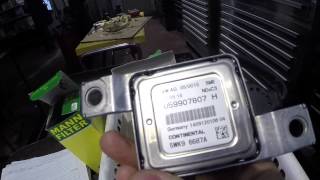
Typical fix: Replace the Bank 1 NOx sensor and its integrated control module. The sensor and module are sold as a single unit. 🎬 Watch: Audi Q7 NOx sensor replacement walkthrough
Est. part cost: $350-$1100 - Exhaust Leak Upstream of the NOx Sensor 🟡 Medium Probability → Shop Nitrogen Oxide (NOx) Sensor A Volkswagen/Audi Technical Tip (01-20-03TT) specifically highlights that leaks at the exhaust pipe connections for the low-pressure EGR system flap can allow unmetered oxygen into the exhaust, skewing sensor readings and falsely triggering P2201. This is a well-documented issue on forums, with many owners replacing the sensor multiple times before finding the leak.
How to confirm: Perform a thorough visual inspection of the exhaust system from the turbocharger back to the NOx sensor. Look for black soot trails around gaskets and flanges. A smoke test is the most effective method, where smoke is forced into the cold exhaust system to reveal any leaks from gaskets or flex pipes.
Typical fix: Replace the leaking gasket or repair the leaking section of the exhaust pipe. Common leaking gaskets include the EGR valve gasket (059131547P, 059131547R) and the EGR cooler gasket (059131358B).
Est. part cost: $20-$100 - Damaged Wiring or Connectors 🟡 Medium Probability The wiring harness for the NOx sensor runs underneath the vehicle and is exposed to heat, moisture, and road debris, which can cause corrosion ('green death'), chafing, or broken wires over time. The connector at the NOx control module is a common failure point.
How to confirm: Visually inspect the entire wiring harness from the NOx sensor to its connection point. Check for any signs of melting, chafing, or corrosion at the connector pins. Use a multimeter to test for continuity, power, and ground at the sensor connector according to the factory service manual.
Typical fix: Repair the damaged section of the wiring harness or replace the connector pigtail.
Est. part cost: $15-$75
Rare But Worth Checking
- Engine Control Module (ECM) Software Issue: → Shop Engine Control Module (ECM) Some Volkswagen/Audi models have had Technical Service Bulletins (TSBs) issued to update the ECM software for being too sensitive in its monitoring of the NOx sensor. TSB V011517 for the related Touareg notes that P2201 can be triggered by overly sensitive diagnostics. Always check with a dealer if any software updates are available for your vehicle's VIN before replacing hardware.
- Faulty Engine Control Module (ECM): → Shop Engine Control Module (ECM) This is a very rare cause. The ECM itself can fail, but this should only be considered after all other possibilities (sensor, wiring, exhaust leaks) have been exhaustively ruled out by a professional.
Diagnosis Steps
- Scan for Codes: Use a VAG-specific scanner like VCDS to confirm P2201 is present and check for any other related emissions or communication codes. Note the freeze-frame data.
- Check for TSBs & Warranty: Contact an Audi dealer with your VIN to check for any open recalls, relevant TSBs (like software updates), and to determine if your vehicle is still covered under the TDI Extended Emissions Warranty.
- Inspect for Exhaust Leaks (Crucial Step): Before inspecting parts, thoroughly check the exhaust system for leaks between the engine and the Bank 1 NOx sensor. Use a smoke machine for best results. Pay close attention to the gaskets and flex pipe near the low-pressure EGR system, a known weak point.
- Visual Inspection of Wiring: Carefully inspect the NOx sensor's wiring harness and connector for any signs of damage, melting, corrosion, or loose connections.
- Analyze Live Data: Use an advanced scan tool (VCDS) to monitor the live data stream from the Bank 1 NOx sensor. Observe the readings at idle, during acceleration, and on deceleration. A healthy sensor should show fluctuating values. A stuck or unresponsive sensor points to a problem.
- Test Sensor Circuit: If wiring appears intact, use a multimeter to test for correct voltage and ground at the sensor's connector, following the vehicle's service manual specifications. This will help differentiate between a bad sensor and a wiring problem.
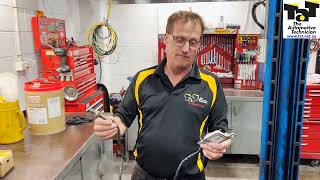
- Replace the NOx Sensor: If all previous steps have been completed and point to a faulty sensor, proceed with replacing the Bank 1 NOx sensor. After installation, an adaptation/reset procedure using a scan tool is mandatory 🎬 See how to replace the TDI NOx sensor for the system to recognize the new sensor.
Parts You'll Likely Need
- Bank 1 NOx Sensor
(OEM #059907807G)— This is the sensor that directly measures NOx levels and is the most common component to fail, triggering the P2201 code. Part number 059907807G may be superseded by 059907807T. 🎬 Watch: Step-by-step Audi NOx sensor replacement
Trusted brands: Genuine VW/Audi, Bosch, Continental
OEM price range: $400-$1100
Aftermarket price range: $250-$500 - EGR Flap / Cooler Gaskets
(OEM #059131547R / 059131358B)— An exhaust leak is a common cause of a false P2201 code on this platform. Replacing the relevant gasket is the fix.
Trusted brands: Victor Reinz, Elring
OEM price range: $20-$50
Aftermarket price range: $10-$30
Related Codes That Often Appear With This One
- P2200 — This code indicates an electrical malfunction in the NOx sensor circuit, which can be caused by the same wiring or sensor failures that trigger P2201.
- U029D — This code means 'Lost Communication With NOx Sensor A'. A severe wiring issue or internal failure of the NOx sensor module can cause both a performance fault (P2201) and a total loss of communication.
- P20EE — This code for 'SCR NOx Catalyst Efficiency Below Threshold' often appears alongside P2201, as an inaccurate reading from the upstream NOx sensor can lead the ECM to believe the catalyst is not working effectively.
Technical Service Bulletins (TSBs) & Recalls
- VW Technical Tip 01-20-03TT (While for a Passat, it details the crucial diagnostic step of checking for exhaust leaks at the low-pressure EGR system for P2201, which is highly relevant to the simil
Platform-Specific Known Issues
- The 'Dieselgate' emissions recall resulted in an Extended Emissions Warranty for many of these vehicles. This warranty covers the entire exhaust gas after-treatment system, including the NOx sensors. Owners should always check with an Audi dealer using their VIN to see if their specific vehicle is still covered, as this could result in a no-cost repair. Coverage varies by model year and state, but could extend up to 10 years/120,000 miles from the original in-service date.
Mechanic-Grade Diagnostic Values
- NOx Sensor Live Data (VCDS) — expected: A healthy sensor shows fluctuating values, typically between 200-800 ppm under load, which drop to near 0 ppm during deceleration fuel cut-off.. Failure: Readings are stuck at a specific value (e.g., 65,535 ppm), are erratic, or do not change in response to engine conditions.
- NOx Sensor Heater Circuit (VCDS) — expected: The heater status should show as active or 'ON' during warm-up and normal operation to bring the sensor to its required operating temperature.. Failure: Heater status remains 'OFF' or shows a fault, indicating a problem with the sensor's internal heating element or its power supply.
Scan Tool Commands That Help
- VCDS (VAG-COM): Engine -> Basic Settings -> Group for 'Resetting of SCR catalytic converter learning values' — This procedure is mandatory after replacing a NOx sensor. It clears the old adaptation values from the ECM and allows it to learn the characteristics of the new sensor. Failure to perform this reset can cause the P2201 code to return even with a new, functional sensor.
- VCDS (VAG-COM): Engine -> Measuring Blocks -> Groups 098, 254 (or similar, may vary slightly by ECU) — Used to monitor live data from the NOx sensors and related exhaust gas temperature sensors. This is the primary method for determining if the sensor is providing plausible, responsive data or if it is stuck/failed.
Wiring & Ground Locations
- NOx Sensor 1 Control Module — The control module for the Bank 1 NOx sensor is typically located on the underside of the vehicle, near the transmission tunnel, attached to the vehicle floor pan.. This location makes the module and its connector susceptible to water intrusion and physical damage from road debris, which can cause communication errors (U029D) or performance faults (P2201).
- Main Engine Ground Points — Key ground points are located on the front long members in the engine bay (e.g., G671 on the left, G685 on the right) and on the A-pillars inside the cabin.. A poor ground connection for the ECM or related sensors can introduce electrical noise and voltage drops, leading to implausible sensor readings and triggering range/performance codes like P2201.
- ECM Location — The Engine Control Module (J623) is located in the plenum chamber (the area under the windshield wipers).. The plenum chamber drains can become clogged with leaves and debris, potentially leading to water ingress and damage to the ECM and its connectors, which could cause a variety of engine codes, including P2201.
Real Owner Repair Stories
- AudiWorld Forums (2012 Audi Q7 TDI) — Persistent P2201 'Implausible Signal' code with MIL illuminated.
❌ Tried (didn't work) Replaced the Bank 1 NOx sensor twice with new parts.
✅ What actually fixed it The user suspected a wiring fault after two new sensors failed to resolve the issue. While the final fix was not posted in the thread, the experience highlights that repeat sensor failures often point towards an underlying wiring, connector, or ECM issue rather than defective new parts.
OEM Part Supersession History
059907807G→059907807T— Component revision and improvement by the manufacturer.
Heads up: 059907807T is the direct replacement for 059907807G for the Bank 1 (upstream) sensor on many Q7 TDI models within this range. Always confirm the correct part number with a VIN at the dealership, as other revisions (like H, E, etc.) exist and may not be interchangeable.4L0906261B / 4L0906261D / 4L0906261E→4L0906261G— Part revisions for later model years within the generation.
Heads up: This part number series appears to be for a different sensor location or later model year configuration. It is listed for 2013-2015 models specifically. This highlights the importance of verifying the correct part number for the specific sensor (Bank 1, Sensor 1) and the vehicle's production date.
Model Year Variations Within This Range
- 2009-2012 vs 2013-2015: The hardware installed during the 'Dieselgate' emissions modification varied by model year. For example, 2009-2010 models received two new Cylinder Pressure Sensors along with new software. Later models (2013-2015) received a new SCR system, a new Particulate Matter sensor, and potentially a new Cylinder Pressure Sensor. These hardware changes can affect the diagnostic process and the potential causes of subsequent emissions-related codes.
Diagnostic Flowchart
Other Known Issues on This Vehicle
Issues unrelated to this code that are worth knowing about as an owner of this generation:
- Oil Cooler and Valley Leaks 🔴 High — Very common after 80,000 miles. Seals for the oil cooler, located in the 'V' of the engine, degrade and leak oil and/or coolant into the valley, which then runs down the back of the engine.
- Timing Chain Tensioner Rattle on Cold Start 🟠 Medium — A brief (1-2 second) rattle upon cold start is common as the vehicle ages. It's caused by oil pressure bleeding down from the hydraulic tensioners. While often considered 'normal' by dealers, it can progress to more serious issues if ignored.
- AdBlue (DEF) Heater Failure 🟠 Medium — The heater element within the AdBlue/DEF tank can fail, which is problematic in colder climates as it prevents the fluid from thawing. This will trigger a check engine light and can lead to a no-start condition.
- Leaking Sunroof Drains 🔴 High — The drains for the panoramic sunroof are prone to clogging with debris, causing water to back up and leak into the cabin, often damaging sensitive electronics located in the footwells and dashboard.
- Carbon Buildup on Intake Manifold 🟠 Medium — Like many direct-injection diesel engines, the V6 TDI can suffer from significant carbon buildup in the intake manifold and on the intake valves, which can restrict airflow and reduce performance over time.
Used vs. New Parts: Buying Guide for This Vehicle
When a used part is the smart pick: It is strongly advised NOT to use a used NOx sensor for this repair. These sensors are sensitive electronic components with a finite lifespan, exposed to extreme heat and corrosive exhaust gases. A used sensor from a junkyard has an unknown history and is highly likely to fail prematurely, if it works at all.
What to inspect on the donor part:
- Not applicable, as used parts are not recommended.
OEM-only on this vehicle (don't cheap out):
- NOx Sensor: Due to the complex electronics, required software adaptations, and high failure rate of non-OEM parts, using a Genuine VW/Audi sensor or one from the original equipment manufacturer (e.g., Continental, Bosch) is critical for a lasting repair.
Aftermarket brands forum-validated for this vehicle:
- Bosch
- Continental
Brands owners have reported issues with on this vehicle:
- Unknown, unbranded sensors from online marketplaces. These often lack the correct calibration and durability, leading to the code returning quickly.
Real Owner Stories
Aggregated from forums and TSBs cited above. Mileages and costs reflect what owners reported in those sources.
2012 Audi Q7 TDI — ~85000 miles
Symptoms: The P2201 code for 'implausible signal' returns consistently 40 miles after being cleared, even after the Bank 1 NOx sensor was replaced.
What fixed it: The context suggests the next logical steps are checking for exhaust leaks at the EGR gaskets or inspecting the wiring harness for 'green death' corrosion.
Source hint: Ross-Tech Forums: '2012 Audi Q7 TDI Keeps throwing NOx sensor bank 1 code'
2012 Audi Q7 TDI
Symptoms: Owner experienced repeated NOx sensor failures, having replaced the sensor twice without a permanent resolution.
What fixed it: Discussion points to a failure in the wiring and connectors rather than the sensor itself.
Source hint: AudiWorld Forums: 'Audi Q7 2012 TDI 26253 - NOx Sensor 1 Bank 1 P2201'
2009-2015 Audi Q7 V6 TDI
Symptoms: Nitrogen Oxide sensor code P2201 and an AdBlue system warning.
What fixed it: Replacement of the NOx sensor to avoid the AdBlue system triggering a no-start condition.
Source hint: Reddit r/tdi: 'Nitrogen Oxide sensor. Code P2201'
Related OBD-II Codes
Frequently Asked Questions
Is the P2201 repair covered under the Audi TDI Extended Emissions Warranty?
I replaced my NOx sensor but the P2201 code came back after 40 miles. What should I check next?
Can I just replace the NOx sensor probe, or do I need the whole module?
Does VW Technical Tip 01-20-03TT apply to my Audi Q7 V6 TDI?
What happens if I ignore the AdBlue warning light associated with P2201?
Do I need any special tools to finish the NOx sensor replacement?
Helpful Videos

We Have This Part in Stock


The information in this article is provided for general reference and educational purposes only. Vehicle specifications, procedures, and part compatibility can vary by production date, trim level, and region. Always consult your vehicle's factory service manual and verify part numbers before purchasing or performing repairs. Safety-critical components such as airbags, seat belts, and braking systems should be installed by a qualified professional.
- Audi Q7:
- 🧭 Diagnostic Flowchart
- 🎬 Helpful Videos
- 🛍️ Shop This Part
- What's Unique About the 2009-2015 Audi Q7
- Symptoms You May Notice
- Most Likely Causes
- Rare But Worth Checking
- Diagnosis Steps
- Parts You'll Likely Need
- Related Codes That Often Appear With This One
- Technical Service Bulletins (TSBs) & Recalls
- Platform-Specific Known Issues
- Mechanic-Grade Diagnostic Values
- Scan Tool Commands That Help
- Wiring & Ground Locations
- Real Owner Repair Stories
- OEM Part Supersession History
- Model Year Variations Within This Range
- Other Known Issues on This Vehicle
- Used vs. New Parts: Buying Guide for This Vehicle
- Real Owner Stories
- 2012 Audi Q7 TDI — ~85000 miles
- 2012 Audi Q7 TDI
- 2009-2015 Audi Q7 V6 TDI
- Related OBD-II Codes
- Frequently Asked Questions
- 🎟️ Get 5% Off