

P2201 on 2018-2019 Chevrolet Equinox Diesel: NOx Sensor Fixes
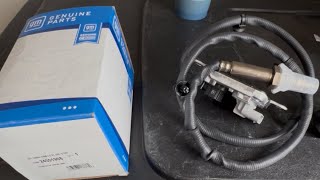
This code indicates a performance problem with the upstream NOx Sensor (Bank 1, Sensor 1). The most common fix is to replace the sensor itself, which can be contaminated by soot. The OEM part number is GM 12676706 (or superseding numbers). Expect to pay $250-$450 for a new OEM sensor.
- P2201 on your 2018-2019 Equinox Diesel almost always points to a problem with the upstream NOx sensor (Bank 1, Sensor 1).
- The most likely cause is the sensor itself failing due to age or soot contamination.
- Before replacing the sensor, always perform a thorough visual inspection of the wiring and connectors for any damage, especially near hot exhaust components.
- The correct OEM part number is likely GM 12676706, but this may have been superseded, so always check with your VIN.
- After replacement, it's a good practice to clear the codes and run the vehicle to ensure the fix was successful.
What's Unique About the 2018-2019 Chevrolet Equinox
The 1.6L 'Whisper Diesel' engine in the Equinox and its sibling, the GMC Terrain, uses a complex selective catalytic reduction (SCR) system to meet emissions standards. This system is highly dependent on accurate readings from its NOx sensors. Soot buildup is a common issue in diesel engines and can directly impact the performance of these sensitive components, leading to codes like P2201. While no major recalls are specific to P2201 on this vehicle, GM has issued recalls for other diesel models for soot buildup on NOx sensors, indicating a known sensitivity. The entire emissions system, particularly DEF-related components, is a known weak point on this platform.
🎬 Watch: Learn how DPF, DEF, and EGR emissions systems workSymptoms You May Notice
- Check Engine Light is on
- Reduced fuel economy
- Erratic or rough idle
- Excessive black smoke from the exhaust
- Reduced engine power or entering "limp mode"
- DEF system warnings on the dashboard
- Replacing the downstream (Bank 1, Sensor 2) NOx sensor when the code is for Sensor 1.
- Replacing oxygen sensors instead of the NOx sensor.
- Assuming the SCR catalyst is bad without first diagnosing the NOx sensor that monitors it.
Most Likely Causes
- Defective Upstream (Bank 1) NOx Sensor 🔴 High Probability → Shop Nitrogen Oxide (NOx) Sensor Diesel exhaust creates significant soot, which can accumulate on and foul the NOx sensor, causing it to send inaccurate readings. This is a common failure mode for these sensors across many diesel vehicles, and the emissions system is a known trouble area for the LH7 engine.
How to confirm: Use a capable OBD-II scanner to monitor the live data from the Bank 1 NOx sensor. A healthy sensor's readings should fluctuate with engine load and temperature. A sensor that is stuck on a specific value, shows no reading, or does not return to zero during a zero-fueling deceleration event is likely faulty. 🎬 Watch: How to troubleshoot and fix a P2201 code
Typical fix: Replace the upstream (Bank 1, Sensor 1) NOx sensor. The sensor and its control module are typically replaced as a single unit. 🎬 See this diesel NOx sensor replacement and diagnostic guide After replacement, the ECM may need to be reset or a regeneration cycle initiated with a scan tool.
Est. part cost: $250-$450 - Damaged Wiring or Connectors 🟡 Medium Probability The sensor wiring is routed along the vehicle's undercarriage and exhaust system, exposing it to heat, moisture, and road debris which can cause corrosion or physical damage over time. Wires can be snagged by road debris or melt from proximity to hot exhaust components.
How to confirm: Visually inspect the entire wiring harness from the NOx sensor to its control module and the ECM. Check for frayed wires, loose connections, melted plastic sheathing, or corrosion in the connectors. Perform a continuity test with a multimeter to check for opens or shorts in the circuit.
Typical fix: Repair the damaged section of the wiring harness or replace the connector. Ensure all connections are clean and secure. Use heat-resistant loom or tape for repairs near the exhaust.
Est. part cost: $10-$100
Rare But Worth Checking
- Exhaust Leaks: An exhaust leak upstream of the NOx sensor can introduce fresh air, skewing the sensor's readings and causing the ECM to set a performance code. While less common for this specific code, leaks at the turbo-to-catalytic converter clamp are a known issue on this platform for other emissions codes like P0421.
- Faulty Engine Control Module (ECM): → Shop Engine Control Module (ECM) This is very rare, but an internal failure of the ECM can cause it to misinterpret sensor data. All other possibilities, especially the sensor and wiring, should be exhaustively ruled out before considering ECM replacement. GM has issued TSBs for ECM software updates to correct other overly sensitive emissions codes on this platform, suggesting software glitches are possible.
Diagnosis Steps
- Connect a professional-grade OBD-II scanner to the vehicle.
- Read the fault codes and review the freeze-frame data to understand the conditions when the code was set.
- Monitor the live data stream for the upstream (Bank 1) NOx sensor. Observe its readings during idle, acceleration, and deceleration. A healthy sensor will show fluctuating values, while a faulty one may be stuck or unresponsive.
- Perform a zero-fueling deceleration from ~50 MPH. The NOx reading should drop to near zero. If it doesn't, the sensor is likely faulty.
- Visually inspect the NOx sensor for any physical damage or heavy soot buildup.
- Carefully inspect the wiring harness and connectors for the NOx sensor. Look for any signs of damage, corrosion, or loose connections from the sensor to the control module. Pay close attention to areas near the hot exhaust pipes.
- If wiring appears intact, test for proper voltage and ground at the sensor's connector using a multimeter, following the vehicle's service manual specifications.
- If the sensor and wiring are confirmed to be good, check for any exhaust leaks between the turbocharger and the NOx sensor.
- If all other components check out, the issue may be with the ECM, but this is highly unlikely and should be the last resort.
Parts You'll Likely Need
- Upstream Nitrogen Oxide (NOx) Sensor
(OEM #12676706)— This is the most frequent cause of a P2201 code, as the sensor element fails or becomes contaminated over time. Note: This part number may be superseded; always verify with a dealer using your VIN. For example, 12676706 has been replaced by 12741484 for some applications.
Trusted brands: ACDelco, GM Genuine
OEM price range: $300-$450
Aftermarket price range: $200-$350
Related Codes That Often Appear With This One
- P20EE — This code indicates an issue with the efficiency of the SCR catalyst. A faulty upstream NOx sensor (causing P2201) can provide incorrect data, leading the ECM to also flag the catalyst's performance.
- U029D — This code means "Lost Communication With NOx Sensor A." It often points to a wiring or connector issue that could also cause the P2201 performance code.
- P2BAA — This code relates to NOx exceedance due to a DEF system fault. An owner on the Chevy Equinox Forum reported this code appeared alongside other DEF warnings, indicating the systems are closely linked and can fail concurrently.
Technical Service Bulletins (TSBs) & Recalls
- TSB 18-NA-114: Details a potential for engine harness chafing against a ground stud, causing various electrical and communication faults. Relevant for any wiring-related diagnosis.
- Bulletin #N242469060: Notes that certain vehicles may erroneously experience an illuminated Check Engine Lamp with DTC P2201 and/or P20EE, requiring an ECM reprogram.
- Bulletin #N232427260: Describes a customer satisfaction program where vehicles may experience a MIL with DTC P2201 and/or DTC P20EE set in the DEF Control Unit (DCU).
Platform-Specific Known Issues
- GM issued a product emission recall (17337) for some 2018 Equinox/Terrain diesels because the ECM may not properly diagnose a fault in the exhaust particulate matter sensor. While not directly for P2201, it involves an ECM reprogram that could affect overall emissions system diagnostics.
- GM TSB 18-NA-114: While not for P2201 specifically, this bulletin addresses a wide range of communication DTCs (U-codes) on 2018-2020 Equinox models caused by the engine wiring harness chafing on a ground stud. This highlights a potential wiring vulnerability in the engine bay that could conceivably affect the NOx sensor circuit.
Mechanic-Grade Diagnostic Values
- NOx Sensor 1 vs. Estimated NOx Concentration Delta — expected: The values should track each other closely under various engine loads.. Failure: If the 'Estimated Nitrogen Oxide Concentration' is significantly higher for extended periods compared to the actual measured NOx level from sensor 1, it can trigger the code.
- NOx Sensor 1 Reading During Deceleration — expected: During a coast-down from highway speed with 0% throttle, the NOx reading should drop to near zero PPM.. Failure: If the NOx sensor reading does not drop to zero shortly after deceleration begins, the sensor is likely faulty or the system is saturated with DEF.
Scan Tool Commands That Help
- GDS2 (GM Dealer Software): NOx Sensor 1 Reset — This procedure MUST be performed after replacing a NOx sensor to clear learned values and allow the ECM to adapt to the new component.
- GDS2 (GM Dealer Software): Reductant System Malfunction Warning Service Bay Test — This is a diagnostic test used to verify the proper operation of the entire SCR/NOx system after a repair or to confirm a fault. It helps determine if learned values are correct.
- GDS2 (GM Dealer Software): Graphing NOx Sensor Data — GM service information details a procedure for graphing NOx sensor readings and exhaust temperatures from stored data to aid in diagnosing intermittent or performance-related faults.
OEM Part Supersession History
12676706→12741484— Standard part number update and consolidation by the manufacturer.
Heads up: The new part number 12741484 is the correct service replacement for 12676706. Some sources indicate that programming or a special setup procedure is required after installation.
Diagnostic Flowchart
Other Known Issues on This Vehicle
Issues unrelated to this code that are worth knowing about as an owner of this generation:
- DEF System Malfunctions 🔴 High — Common issue reported by owners, can occur at various mileages. Often relates to the DEF tank heater, pump, or injector nozzle clogging. (Ref: GM has offered extended warranty coverage on DEF tank heaters for some models. TSB 18NA058 addresses related DIC messages.)
- Torque Converter Shudder 🟠 Medium — Some owners report a shudder or vibration during light acceleration, often described as driving over rumble strips. Affects vehicles with the 8-speed and 9-speed automatic transmissions. (Ref: TSB 18-NA-355 describes a procedure to flush the transmission fluid with a new type of fluid to resolve the issue.)
- Timing Belt Replacement Interval 🟠 Medium — This is a critical maintenance item. While modern belts are durable, failure is catastrophic for the engine. The replacement interval is a key ownership cost to be aware of. (Ref: No TSB, but manufacturer maintenance schedules call for replacement around 90,000 miles.)
- Engine Exchange Program (Early Models) 🔴 High — Primarily affected 2017-2018 models. For certain internal engine faults, GM's initial procedure was a complete engine replacement rather than repair. (Ref: GM PIP5456A outlined the engine exchange program for the 1.6L LH7 engine in the Cruze, Equinox, and Terrain.)
- Start/Stop Accumulator Bolt Issue 🔴 High — Affected a range of 2018-2019 GM vehicles, including the Equinox. Missing bolts could lead to a transmission fluid leak and loss of propulsion. (Ref: NHTSA Recall 20V668000)
Used vs. New Parts: Buying Guide for This Vehicle
When a used part is the smart pick: For this repair, a used part is strongly discouraged. NOx sensors are sensitive electronic components exposed to extreme heat and soot, and they have a finite lifespan. A used sensor may have significant wear and could fail shortly after installation, leading to repeated labor costs.
Donor-vehicle mileage cap: roughly under 40000 miles for the part to have meaningful remaining life.
What to inspect on the donor part:
- Check for any physical damage to the sensor probe, module, or wiring harness.
- Ensure connectors are free of corrosion, dirt, or bent pins.
- Avoid parts from vehicles with known engine or emissions system issues.
- Verify the part number on the module matches the required OEM number or its direct supersession.
OEM-only on this vehicle (don't cheap out):
- Nitrogen Oxide (NOx) Sensor
Aftermarket brands forum-validated for this vehicle:
- ACDelco
- GM Genuine
Brands owners have reported issues with on this vehicle:
- Unnamed, no-brand sensors from online marketplaces should be avoided. Forum discussions and mechanic consensus for sensitive emissions parts heavily favor OEM or OEM-supplier brands to ensure compatibility and longevity.
Real Owner Stories
Aggregated from forums and TSBs cited above. Mileages and costs reflect what owners reported in those sources.
2018 Chevrolet Equinox Turbo Diesel
Symptoms: The owner reported getting a P2BAA code along with DEF warning lights on the dashboard.
What fixed it: The owner discussed the sensitivity of the DEF/SCR system, though the specific mechanical fix for the P2BAA code was not detailed, it highlights the commonality of emissions system failures on this platform.
Source hint: Chevy Equinox Forum - "Check engine code" (https://www.chevroletforum.com/forum/equinox-23/check-engine-code-102329/)
2018 Chevrolet Equinox Turbo-Diesel
Symptoms: General frustration with the reliability of the diesel emissions system.
What fixed it: The owner was considering a 'DEF delete' modification due to ongoing reliability concerns with the factory emissions equipment.
Source hint: Reddit r/Diesel - "Equinox Turbo-Diesel" (https://www.reddit.com/r/Diesel/comments/113f99u/equinox_turbodiesel/)
Related OBD-II Codes
Frequently Asked Questions
Does GM Recall 17337 apply to my 2018 Equinox diesel and this P2201 code?
Could a wiring issue in the engine bay cause my NOx sensor code?
What specific NOx sensor should I buy for my LH7 1.6L Turbo-Diesel?
Is it possible to just clean the soot off the sensor instead of replacing it?
Are there any other common emissions issues I should watch for on the 2018-2019 Equinox diesel?
Can I use a used NOx sensor from a salvage yard to save money?
Helpful Videos

We Have This Part in Stock


The information in this article is provided for general reference and educational purposes only. Vehicle specifications, procedures, and part compatibility can vary by production date, trim level, and region. Always consult your vehicle's factory service manual and verify part numbers before purchasing or performing repairs. Safety-critical components such as airbags, seat belts, and braking systems should be installed by a qualified professional.
- Chevrolet Equinox:
- 🧭 Diagnostic Flowchart
- 🎬 Helpful Videos
- 🛍️ Shop This Part
- What's Unique About the 2018-2019 Chevrolet Equinox
- Symptoms You May Notice
- Most Likely Causes
- Rare But Worth Checking
- Diagnosis Steps
- Parts You'll Likely Need
- Related Codes That Often Appear With This One
- Technical Service Bulletins (TSBs) & Recalls
- Platform-Specific Known Issues
- Mechanic-Grade Diagnostic Values
- Scan Tool Commands That Help
- OEM Part Supersession History
- Other Known Issues on This Vehicle
- Used vs. New Parts: Buying Guide for This Vehicle
- Real Owner Stories
- 2018 Chevrolet Equinox Turbo Diesel
- 2018 Chevrolet Equinox Turbo-Diesel
- Related OBD-II Codes
- Frequently Asked Questions
- 🎟️ Get 5% Off