

OBD-II Code P2203: NOx Sensor Circuit High Input Bank 1
What P2203 means, why it triggers, and how to fix it
- P2203 flags a high voltage signal from the Bank 1 NOx sensor, pinpointing a hard electrical fault like a broken wire, corroded connector, or internally shorted sensor.
- Test the wiring harness for 12V power, ground, and 120-Ohm CAN bus resistance before spending $300 to $700 on a replacement sensor.
- Driving with an active P2203 blocks DPF regeneration, leading to a clogged filter that costs $2,500 to $8,000 to replace within 1 to 3 months.
- Check for manufacturer Technical Service Bulletins (TSBs) first; Ford and GM frequently resolve this specific code with a 1-hour PCM software update rather than new parts.
What Does P2203 Mean?
Code P2203 means your Powertrain Control Module (PCM) detects the voltage signal from the Bank 1 Nitrogen Oxide (NOx) sensor is consistently above the normal expected range. This sensor measures harmful NOx gases in your exhaust to manage the emissions control system. A high voltage signal indicates a hard electrical fault in the circuit—most often an open wire, a short to power, or an internal failure in the sensor itself.
Technical definition: The SAE/ISO definition for P2203 is 'NOx Sensor Circuit High Input Bank 1'. This indicates the PCM registers a voltage reading from the upstream NOx sensor that exceeds the specified maximum threshold. A high input code points directly to an open circuit, a short to power, an unplugged connector, or an internal sensor failure.
Can I Drive With P2203?
Yes, But With Caution. You can drive temporarily, but your vehicle will likely enter a low-power 'limp mode' and fail emissions tests. Continued driving prevents Diesel Particulate Filter (DPF) regeneration. This clogs the DPF, turning a sensor issue into a $2,500-$8,000 exhaust system overhaul within weeks. Address the issue immediately to avoid escalating costs.
Common Causes
- Faulty NOx Sensor (Very Common) — The sensor itself is the most frequent culprit. Internal electronics exposed to extreme heat cycles fail over time, causing an internal open or short that results in a high voltage signal.
- Damaged or Corroded Wiring and Connectors (Common) — The wiring harness is exposed to extreme heat, moisture, and road debris. Wires melt on hot exhaust components, fray from chassis rubbing, or corrode from water intrusion (a known issue on Ford Super Duty trucks). This causes an open circuit or a short to power.
- Aftermarket Engine Tuning or 'Delete' Kits (Common) — Vehicles with aftermarket performance tunes or DPF deletes have altered emissions parameters. This causes the PCM to receive unexpected data from the NOx sensor, triggering P2203 even if the hardware is functional.
- Exhaust System Leaks (Less Common) — A leak in the exhaust pipe or manifold before the NOx sensor allows outside air into the exhaust stream. This changes the chemical composition of the gases and skews sensor readings, occasionally resulting in circuit codes.
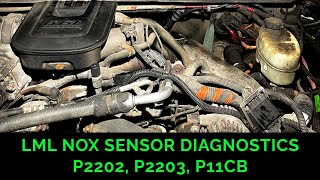
- PCM Software Anomaly (Rare) — The PCM software contains logic errors that falsely trigger P2203. A software update (reflash) from the manufacturer is required to fix this, particularly on newer GM and Ford trucks. 🎬 Watch: Diagnosing P2203 and P2202 on a Duramax diesel engine.
Symptoms
- Check Engine Light is On — The Malfunction Indicator Lamp (MIL) illuminates on your dashboard immediately after the fault is detected.
- Reduced Engine Power (Limp Mode) — The manufacturer programs the vehicle to enter a reduced power mode, limiting speed and acceleration to prevent emissions system damage.
- AdBlue/SCR System Warning Light — A specific warning message related to the emissions system appears, often accompanied by a 'no-start' countdown timer on European models.
- Failed Emissions Test — A malfunctioning NOx sensor circuit disables the emissions control system, causing an automatic failure of any state emissions inspection.
- Failed DPF Regeneration (also visible on scanner) — A faulty NOx sensor provides incorrect data, forcing the PCM to block DPF regeneration. This rapidly clogs the DPF.
Diagnostic Flowchart
Tap your situation to follow the diagnostic path that matches what you're seeing on this code.
Common Fixes & Costs
- Replacing the NOx Sensor — Parts: $300-$700, Labor: $150-$300, ~1.5 hr book time (Intermediate)
- Repairing Damaged Wiring or Connectors — Parts: $10-$50, Labor: $150-$300, ~1.5 hr book time (Intermediate)
- Updating PCM Software — Parts: $0, Labor: $150-$250, ~1.0 hr book time (Specialized)
- Fixing Exhaust Leaks — Parts: $20-$150, Labor: $100-$300, ~1.2 hr book time (Intermediate)
DIY vs Professional
- Replacing the NOx Sensor 🟢 Beginner
Tools: NOx sensor socket, penetrating oil, torque wrench, advanced scan tool. - Repairing Damaged Wiring 🟢 Beginner
Tools: Digital multimeter, wire strippers, soldering iron, heat shrink tubing. - Updating PCM Software 🟢 Beginner
Tools: Manufacturer-specific diagnostic tool and software subscription. - Fixing Exhaust Leaks 🟢 Beginner
Tools: Socket/wrench set, new gaskets, exhaust sealant.
Used vs. New Parts: Buying Guide
When a used part is worth it: Buying a used NOx sensor is not recommended. These are sensitive electronic components exposed to extreme heat, making them high-failure items. A used sensor has an unknown history and fails quickly.
Donor-vehicle mileage cap: roughly under 40000 miles for the part to have meaningful remaining life.
Donor quality checklist:
- Only consider if from a low-mileage vehicle wrecked for non-engine reasons.
- Ensure the part number matches exactly.
- Inspect the connector for corrosion or bent pins.
Decision logic:
- If The price difference between a new OEM and a used part is less than 50% → Buy new OEM. The risk of a used part failing and requiring repeat labor outweighs the savings.
- If Budget is extremely tight and the vehicle is old → A used part is a gamble, but may be a last resort.
- If Aftermarket options are available from reputable brands → Consider a high-quality aftermarket new part as a cost-effective alternative to OEM.
Warranty tradeoff: Used parts typically have a 30-day warranty. Aftermarket new parts offer 1-year warranties. OEM new parts carry the manufacturer's parts warranty.
Worst-case if a used part fails: $300-$600 if a used part fails, representing the cost of a second replacement part plus repeat labor.
What Happens If You Wait — Timeline
- 0-1 month: Check Engine Light illuminates. Vehicle drives normally or experiences a slight drop in fuel economy. DPF regeneration becomes less efficient. (MPG impact: 0-5%% · Added cost: $0-$50 in wasted fuel.)
- 1-3 months: Vehicle enters 'limp mode' with reduced power. The PCM blocks DPF regeneration entirely. Soot accumulates rapidly in the DPF. (MPG impact: 5-15%% · Added cost: $50-$200 in wasted fuel. Risk of needing professional forced regeneration begins.)
- 3-6 months: DPF is significantly clogged, causing high exhaust backpressure. Symptoms include severe power loss and permanent limp mode. (MPG impact: 15-25%% · Added cost: $600-$1,500 for professional off-car DPF cleaning.)
- 6+ months: Catastrophic failure of the DPF. The filter substrate cracks or melts from extreme backpressure and heat. High backpressure damages turbocharger seals. (MPG impact: 25%+% · Added cost: $2,500-$8,000+ for DPF replacement and potential turbo repairs.)
Cost of Not Fixing It
- 0-1 month: Vehicle enters limp mode, fuel economy drops by 5-10%, and it fails emissions tests. (Added cost: Negligible, besides increased fuel cost.)
- 1-6 months: Inability to perform DPF regeneration leads to a completely clogged Diesel Particulate Filter (DPF). (Added cost: $2,500-$8,000+)
- 6+ months: A clogged DPF causes excessive backpressure, destroying turbochargers and contaminating the SCR catalyst. (Added cost: $1,500-$3,000 for SCR catalyst replacement, plus turbo repairs.)
Diagnosis Steps
- Check for TSBs and PCM Updates
Use an OBD-II scanner to read all stored codes. Check manufacturer Technical Service Bulletins (TSBs) for your specific vehicle. Many P2203 issues on Ford and GM trucks are resolved with a PCM software update rather than parts replacement.
Tools: OBD-II Scanner, Access to TSB Database (Beginner) - Analyze Live Data
Use an advanced scan tool to view live data for 'Aftertreatment 1 Inlet NOx Sensor'. For P2203, the reading is usually stuck at an abnormally high value (e.g., 65532 ppm) regardless of engine load. This confirms an electrical fault.
Tools: Advanced OBD-II Scan Tool (Advanced) - Visually Inspect and Wiggle Test
Locate the Bank 1 NOx sensor. Inspect the sensor, pigtail, main harness, and connector for melting, frayed wires, or corrosion. With the engine running and scan tool connected, wiggle the harness. If live data jumps or flatlines, you found the break.
Tools: Flashlight, Advanced OBD-II Scan Tool, Mechanic's Gloves (Intermediate) - Test Sensor CAN Bus Resistance
Disconnect the NOx sensor harness with the key off. Using a multimeter, measure the resistance between the two CAN bus pins on the sensor side. The reading must be ~120 ohms. A reading of infinity (OL) confirms an internal open circuit, requiring sensor replacement.
Tools: Digital Multimeter, Vehicle-specific Wiring Diagram, Pin-out Probes (Advanced) - Verify Harness Power and Ground
With the sensor unplugged and key on (engine off), use a multimeter on the vehicle-side connector. Verify battery voltage (12V+) at the power supply pin and continuity to ground on the ground pin. Lack of either causes a circuit fault.
Tools: Digital Multimeter, Vehicle-specific Wiring Diagram (Advanced) - Inspect for Exhaust Leaks
With the engine running, check for exhaust leaks between the engine and the NOx sensor. Listen for hissing and feel for escaping air. Exhaust leaks corrupt sensor readings and trigger faults.
Tools: Safety Glasses, Mechanic's Gloves (Intermediate)
When This Code Triggers (Freeze-Frame Conditions)
- Engine Coolant Temp: 180-200°F (82-93°C) (Fully warmed up)
- RPM: 1500-2500 (Cruise / steady throttle)
- Vehicle Speed: 50-65 mph (80-105 kph) (Steady highway driving)
- Engine Load: 30-60% (Sustained moderate load)
Related Codes
- P2202 — NOx Sensor Circuit Low Input Bank 1. P2203 points to an open circuit or short to power, while P2202 indicates a short to ground. Seeing both signals an intermittent wiring problem.
- P2201 — NOx Sensor Circuit Range/Performance Bank 1. P2201 means the signal is erratic or slow to respond (often a soot-fouled sensor), whereas P2203 is a hard electrical fault.
- P20EE — SCR NOx Catalyst Efficiency Below Threshold. This is a consequence of P2203. The faulty 'high' NOx reading makes the PCM believe the catalyst is failing. Fix P2203 before replacing a catalyst.
- P2200 — NOx Sensor Circuit Malfunction Bank 1. A general circuit fault code that often appears alongside the more specific P2203.
Climate & Environmental Factors
- High Humidity and Water Exposure: Water intrusion is a known cause of P2203. Ford TSB 18-2365 specifically points to water corroding the pins in the NOx sensor module connector. Driving through deep water forces moisture into connectors, leading to short circuits.
- Cold Climates: Cold weather makes wires and plastic connectors brittle and prone to cracking. Condensation builds up in the exhaust, causing temporary faults upon startup until the system heats up.
How to Talk to a Mechanic About This Code
Say this: "I have a check engine light with code P2203 for the NOx sensor circuit high on Bank 1. Please check for any related TSBs or software updates, and perform a full electrical diagnosis of the sensor's circuit—including the wiring and connector—before recommending a sensor replacement."
This signals you understand P2203 is a circuit fault. It directs the technician to perform a proper diagnosis instead of just replacing the expensive sensor.
Avoid saying:
- 'Just replace the NOx sensor.'
- 'My check engine light is on, can you look at it?'
- 'I think it's an emissions thing, just fix it.'
Questions to ask before authorizing the repair:
- Did you test the wiring harness for an open circuit, corrosion, or a short to power?
- What did the live data from the NOx sensor show? Was it stuck on a high value?
- Did you check if my vehicle has any open TSBs or required PCM software updates?
- What is your warranty on this specific repair?
Where to Take It: Dealer vs Independent vs Chain
- Dealer:
Best for: Vehicles under warranty or covered by an emissions recall., Newer vehicles where manufacturer-specific software updates are the likely fix., Complex diagnostics on German brands (Mercedes, VW, BMW).
Downsides: Highest labor rates., May default to replacing the entire sensor assembly when a wiring repair suffices. (Typical cost: +50% vs. baseline) - Independent Shop:
Best overall fit if you find a reputable diesel specialist. They perform thorough circuit tests to save you money. However, if a TSB requires a PCM reflash, a dealer is unavoidable.
Best for: Out-of-warranty vehicles, especially common diesel trucks., Shops specializing in diesel repair or advanced electrical diagnostics.
Downsides: Quality varies widely., May not have the equipment for PCM flashing on all models. (Typical cost: +0% vs. baseline) - Chain Shop:
AVOID for diagnosis. The risk of misdiagnosis and unnecessary parts replacement is very high for P2203.
Best for: Simple, pre-diagnosed part replacements.
Downsides: Technicians lack advanced training for complex emissions diagnosis., High pressure to sell parts leads to replacing the sensor without circuit testing., Cannot perform PCM software updates. (Typical cost: -10% vs. baseline)
When to Walk Away From the Repair
If the total estimated repair cost exceeds 40-50% of your vehicle's current private-party value, consider selling or trading it in.
- Car worth $25000, fix is $1100: Fix it. The repair cost is less than 5% of the vehicle's value.
- Car worth $8000, fix is $3500: Borderline. The repair cost (NOx sensor + clogged DPF) approaches 44% of the car's value. Get a second opinion.
- Car worth $4000, fix is $2500: Walk away. The repair cost for a clogged DPF is over 60% of the vehicle's value.
What Scan Tool You Need for This Code
Minimum: A scanner that reads and graphs live sensor data, specifically the NOx sensor's output in Parts Per Million (PPM) or voltage.
A basic $20 code reader only shows the 'P2203' code. It cannot show the live data required to confirm if the sensor reading is stuck high, which proves it's a circuit failure.
Budget: BlueDriver Pro Scan Tool (~$100) — Connects to your smartphone and graphs live data for the NOx sensor, allowing you to confirm the 'stuck high' reading.
Mid-range: Foxwell NT510 Elite (~$180) — Offers OEM-level live data and performs special functions like DPF regeneration or sensor resets after replacement.
Professional: Autel MaxiCOM MK808S (~$500) — Provides full-system diagnostics with bidirectional controls to actively test components. This is what a professional shop uses.
Rent vs buy: Buy. If you own a modern diesel, a tool like the BlueDriver is a mandatory investment for future diagnostics.
How to Clear the Code After You Fix It
- Use an OBD-II scan tool to clear the P2203 code.
- Perform the specific NOx sensor relearn/calibration procedure using an advanced scan tool.
- Complete a full OBD-II drive cycle to run readiness monitors.
Drive cycle (~30 minutes): A generic drive cycle includes a cold start, a 3-minute idle, 20 minutes of mixed city and highway driving including steady-state cruising at 55 mph, and several deceleration phases without braking. The vehicle must then cool down completely.
Readiness monitors affected: NOx/SCR Aftertreatment, Catalyst Monitor, Exhaust Gas Sensor
Before emissions retest: drive at least 100 miles to fully set monitors.
Watch out for:
- Clearing the code without fixing the electrical fault guarantees it returns immediately.
- Disconnecting the battery resets all readiness monitors, causing an automatic emissions test failure.
- Failing to perform a manufacturer-specific NOx sensor relearn procedure causes the code to return.
Will This Fail Emissions / State Inspection?
Yes — this code typically fails an OBD-II emissions inspection.
- California: An active P2203 code is an automatic failure. After repair, readiness monitors must be set to 'Ready'. Expect to drive for up to two weeks before re-testing.
- New York: An illuminated Check Engine Light results in an automatic failure. The vehicle must be driven to set readiness monitors after clearing the code.
- Texas: In emissions-testing counties, an active P2203 code is an automatic fail. The OBD-II test ensures readiness monitors are set.
Most Commonly Affected Vehicles
- Dodge/Ram 2500/3500 with Cummins Engine (2011-2018) — Extremely common. Recall 67A for 2013-2018 models includes a software update and an extended warranty for emissions components.
- Chevrolet/GMC Silverado/Sierra HD with Duramax Engine (2011-2023) — Prone to NOx sensor failures. TSB 23-NA-193 addresses a software anomaly causing P2203 on 2023 3.0L engines.
- Ford F-250/F-350 Super Duty with Power Stroke Engine (2017-2022) — TSB 24-2136 addresses P2203 on 2020-2022 models with a sensor replacement and PCM reprogram. TSB 18-2365 points to water intrusion in the connector.
- Mercedes-Benz Sprinter, E-Class, GL-Class (BlueTec) (2009-2018) — An emissions settlement provides an extended warranty for NOx sensors on affected vehicles. Ignoring the fault leads to a vehicle no-start countdown.
- Volkswagen Jetta, Golf, Passat, Touareg, Transporter (TDI) (2010-2019) — TDI models frequently log NOx circuit faults. Genuine replacement sensors are expensive but highly recommended over aftermarket.
- BMW 335d, X5 xDrive35d (M57/N57) (2009-2018) — Known for complex SCR system issues where P2203 is often one of several faults related to the emissions aftertreatment system.
- Audi A3, Q5, Q7 (TDI) (2010-2016) — Sharing platforms with VW, Audi TDI models are highly susceptible to P2203. OEM sensors are strongly preferred.
- Hyundai/Kia Santa Fe, Sorento (CRDi) (2012-2020) — Common in international markets; these diesel models experience P2203 and related SCR system faults.
Manufacturer-Specific Notes
- General Motors (Chevrolet/GMC): For 2023 Silverado/Sierra 1500 trucks with the 3.0L Duramax, TSB 23-NA-193 addresses P2203 with a simple ECM reprogram. Always check for software updates before replacing parts.
- Ford: On 2017-2019 Super Duty trucks, water intrusion into the NOx module connector causes P2203 (TSB 18-2365). For 2020-2022 models, TSB 24-2136 mandates a sensor replacement AND a PCM reprogram.
- Dodge/Ram: OEM NOx sensors are exceptionally expensive ($800+). Owners of 2013-2018 models must check eligibility for Recall 67A, which provides a software update and extended emissions warranty.
- Volkswagen/Audi: If the P2203 code returns instantly after being cleared with the key on (engine off), it guarantees a hard electrical fault rather than a performance issue.
- Mercedes-Benz: Many 2009-2016 BlueTec vehicles are eligible for an extended emissions warranty covering NOx sensors. A P2203 code triggers the dreaded 'xx starts remaining' countdown, rendering the vehicle inoperable.
Real Owner Stories
2015 GMC Duramax LML - The 'Parts Cannon' Trap
Vehicle repeatedly entered limp mode with a 'Service Exhaust Fluid System' message.
What they tried:
- Replaced NOx sensor 1.
- Replaced NOx sensor 2.
- Replaced exhaust temp sensor.
- Replaced mass air flow sensor.
- Replaced DEF injector and pump.
Outcome: The problem returned intermittently, putting the truck into permanent limp mode. The owner spent thousands with no resolution because the actual fault was a damaged wiring harness.
Lesson: Never replace expensive parts one by one without a proper circuit diagnosis. P2203 is an electrical code; the fault is often in the wiring or connectors, not the sensor.
2020 Ford F-350 Power Stroke - The TSB Solution
Check Engine Light on with code P2203.
What they tried:
- Initial diagnosis pointed towards a faulty NOx sensor.
Outcome: A search revealed Ford TSB 24-2136. The official fix required replacing the upstream NOx sensor AND reprogramming the PCM. Performing only one action would not permanently fix the issue.
Lesson: Always check for Technical Service Bulletins (TSBs) before starting repairs. The prescribed fix often requires a dealer-only software update.
2018 Mercedes Sprinter - The Countdown Clock
Vehicle started the '10 starts remaining' countdown, threatening to make the van inoperable.
What they tried:
- Took it to a dealer for diagnosis after the countdown started.
Outcome: The dealer found a P2203 code. They discovered a broken exhaust hanger caused the exhaust to shift, melting the nearby NOx sensor wiring and the AdBlue line. Both required replacement.
Lesson: On European models, NOx faults trigger a no-start countdown. Always perform a visual inspection; physical damage often causes electrical codes.
2019 VW Transporter T6 - The Hard Fault Diagnosis
Engine warning light on with P2203.
What they tried:
- Mechanic cleared the codes with the ignition on, but the engine off.
Outcome: The fault codes returned instantly without the engine running. This confirmed a 'hard' electrical fault (internal open circuit), not a performance issue. Replacing the sensor fixed it.
Lesson: If a circuit code returns immediately after clearing without starting the engine, it guarantees a permanent electrical failure rather than an intermittent issue.
How to Prevent This Code From Triggering
- Ensure Regular Highway Driving (At least once a week) — Promotes complete DPF regeneration. Short trips prevent the exhaust from getting hot enough, causing soot buildup and sensor contamination.
- Use High-Quality, API-Certified DEF (Every fill-up) — Prevents crystallization in the SCR system. Contaminated DEF forms crystals that clog the injector and foul the NOx sensor.
- Avoid Excessive Idling (Daily habit) — Reduces soot buildup. Long idling periods cool the exhaust, preventing passive regeneration and clogging the DPF faster.
- Address Engine Faults Promptly (As needed) — Prevents sensor contamination. Leaking injectors or EGR problems send raw fuel or excessive soot into the exhaust, chemically fouling the delicate NOx sensor.
Frequently Asked Questions
What is the most common mistake when diagnosing P2203?
The biggest mistake is replacing the NOx sensor without diagnosing the circuit. P2203 is an electrical code indicating a high voltage signal. Test the wiring and connectors first to avoid wasting money on unneeded parts.
What happens if I don't fix a P2203 code?
Your vehicle will enter limp mode and fail emissions tests. The faulty sensor data prevents the DPF from regenerating. This leads to a clogged filter that costs thousands of dollars to replace.
What is 'Bank 1'?
Bank 1 is the side of the engine containing cylinder number one. On inline engines, there is only one bank. The Bank 1 NOx sensor sits in that bank's exhaust piping.
What is the difference between NOx Sensor 1 and Sensor 2?
Sensor 1 (upstream) sits before the SCR catalyst to measure engine NOx output. Sensor 2 (downstream) sits after the catalyst to measure its efficiency. P2203 specifically flags a circuit fault with Sensor 1.
Can I clean a NOx sensor to fix P2203?
No, cleaning rarely fixes a P2203 code. This code indicates a hard electrical failure like an open wire or internal short. Cleaning soot off the probe only helps with performance codes, not circuit codes.
Is a NOx sensor the same as an O2 sensor?
No, they serve different purposes. An O2 sensor measures unburned oxygen to control the air-fuel ratio. A NOx sensor is a more complex, expensive component designed specifically to measure nitrogen oxide concentrations for the diesel emissions system.
Can a bad battery cause a P2203 code?
Low system voltage causes a wide range of electrical issues and module communication errors. While a bad battery rarely causes P2203 directly, it triggers false electrical codes. Always ensure your battery and alternator are healthy before starting complex diagnostics.
Key Takeaways
- P2203 flags a high voltage signal from the Bank 1 NOx sensor, pinpointing a hard electrical fault like a broken wire, corroded connector, or internally shorted sensor.
- Test the wiring harness for 12V power, ground, and 120-Ohm CAN bus resistance before spending $300 to $700 on a replacement sensor.
- Driving with an active P2203 blocks DPF regeneration, leading to a clogged filter that costs $2,500 to $8,000 to replace within 1 to 3 months.
- Check for manufacturer Technical Service Bulletins (TSBs) first; Ford and GM frequently resolve this specific code with a 1-hour PCM software update rather than new parts.
Helpful Videos

Shop the Parts Behind P2203
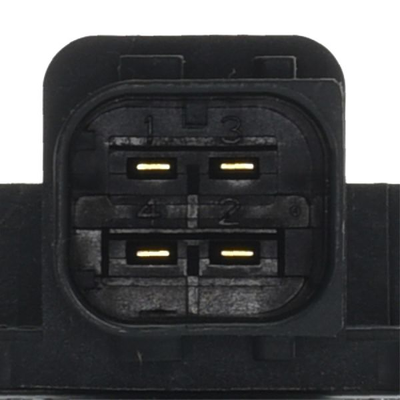
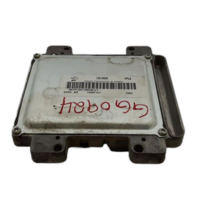
Below are the parts most often responsible for code P2203, ranked by how frequently each one is the actual culprit (per the diagnosis above). Tap any to see what we have for your vehicle.

The information in this article is provided for general reference and educational purposes only. Vehicle specifications, procedures, and part compatibility can vary by production date, trim level, and region. Always consult your vehicle's factory service manual and verify part numbers before purchasing or performing repairs. Safety-critical components such as airbags, seat belts, and braking systems should be installed by a qualified professional.
- 🧭 Diagnostic Flowchart
- 🎬 Helpful Videos
- 🛍️ Shop This Part
- What Does P2203 Mean?
- Can I Drive With P2203?
- Common Causes
- Symptoms
- Common Fixes & Costs
- DIY vs Professional
- Used vs. New Parts: Buying Guide
- What Happens If You Wait — Timeline
- Cost of Not Fixing It
- Diagnosis Steps
- When This Code Triggers (Freeze-Frame Conditions)
- Related Codes
- Climate & Environmental Factors
- How to Talk to a Mechanic About This Code
- Where to Take It: Dealer vs Independent vs Chain
- When to Walk Away From the Repair
- What Scan Tool You Need for This Code
- How to Clear the Code After You Fix It
- Will This Fail Emissions / State Inspection?
- Most Commonly Affected Vehicles
- Manufacturer-Specific Notes
- Real Owner Stories
- 2015 GMC Duramax LML - The 'Parts Cannon' Trap
- 2020 Ford F-350 Power Stroke - The TSB Solution
- 2018 Mercedes Sprinter - The Countdown Clock
- 2019 VW Transporter T6 - The Hard Fault Diagnosis
- How to Prevent This Code From Triggering
- Frequently Asked Questions
- What is the most common mistake when diagnosing P2203?
- What happens if I don't fix a P2203 code?
- What is 'Bank 1'?
- What is the difference between NOx Sensor 1 and Sensor 2?
- Can I clean a NOx sensor to fix P2203?
- Is a NOx sensor the same as an O2 sensor?
- Can a bad battery cause a P2203 code?
- Key Takeaways
- 🎟️ Get 5% Off