

P2227 on 2013-2015 Cadillac XTS: Barometric Pressure Sensor Causes and Fixes
This code indicates a problem with the Barometric Pressure (BARO) sensor circuit. On the Cadillac XTS, this sensor is typically integrated into the Manifold Absolute Pressure (MAP) sensor. The most common fix is replacing the sensor itself, which costs around $40-$90 for the part. However, on the 3.6L LFX engine, the sensor is located under the upper intake manifold, making replacement more labor-intensive than on other vehicles.
- P2227 on a 2013-2015 XTS points to a fault in the Barometric Pressure sensor circuit, which is integrated into the MAP sensor.
- The most likely cause is a failed MAP/BARO sensor. On this specific vehicle, the sensor is located under the intake manifold, making replacement a more complex and labor-intensive job.
- When replacing the sensor, it is critical to also replace the intake manifold gaskets to prevent future vacuum leaks.
- Diagnosis is best done with an OBD-II scanner by comparing the BARO reading at 'Key On, Engine Off' to the actual atmospheric pressure of your location.
- GM has acknowledged this issue in a Technical Service Bulletin (PI1445), so it is a documented problem for this model.
What's Unique About the 2013-2015 Cadillac XTS
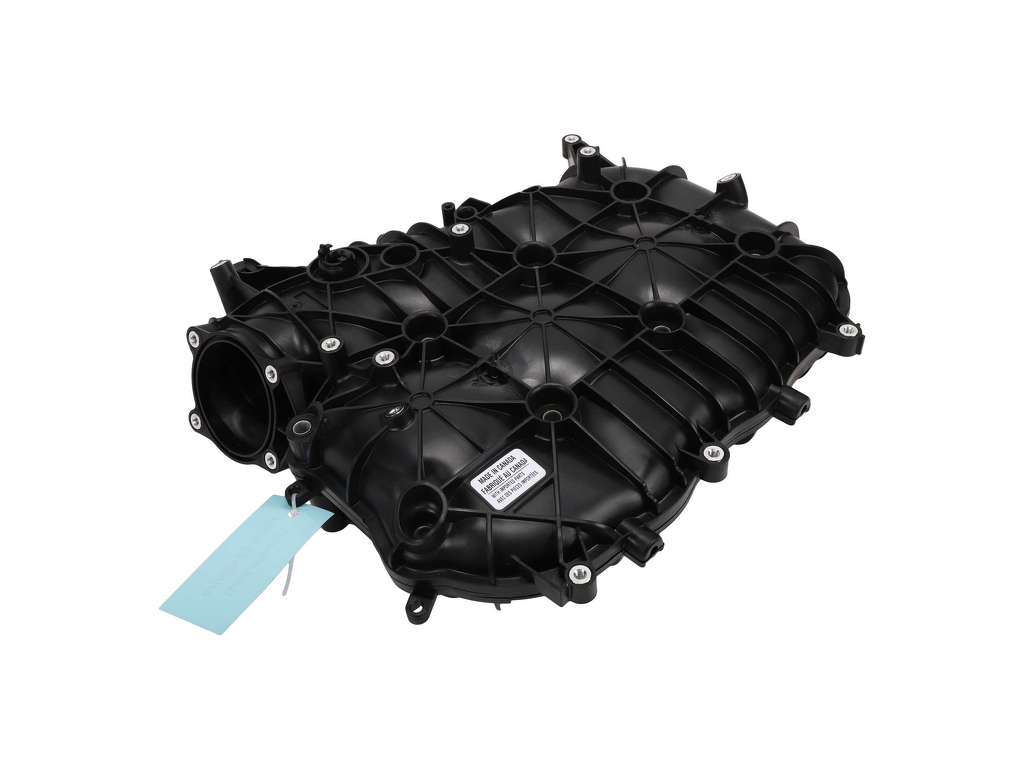
For the Cadillac XTS with the 3.6L V6 (LFX/LF3), the barometric pressure reading is generated by the Manifold Absolute Pressure (MAP) sensor rather than a separate, standalone BARO sensor. A significant challenge on this platform is the MAP sensor's location: it is mounted on the intake manifold, underneath the upper plenum. This requires partial disassembly and lifting of the intake manifold for access, increasing labor time and complexity. General Motors issued a Technical Service Bulletin (TSB #PI1445) specifically for the 2013 XTS acknowledging customer concerns about the Malfunction Indicator Lamp being on with DTC P2227 set, indicating this is a known issue on the platform.
Diagnostic Flowchart
Tap your situation to follow the diagnostic path that matches what you're seeing on this vehicle.
Symptoms You May Notice
- Check Engine Light is on
- Reduced engine performance or sluggish acceleration, particularly at higher altitudes
- Rough or erratic idle
- Decreased fuel economy
- Hesitation or a "flat spot" during initial acceleration
- Replacing the Mass Air Flow (MAF) sensor when the issue is with the separate MAP/BARO sensor circuit.
- Condemning the ECM before thoroughly testing the sensor and its wiring circuit.
Most Likely Causes
- Faulty Barometric Pressure (MAP) Sensor 🔴 High Probability The sensor provides a critical reading for fuel calculations, and internal failure can cause its signal to drift out of the expected voltage range. The existence of a TSB suggests a higher-than-average occurrence. On the LFX engine, this sensor is located under the intake manifold, where it is subjected to heat cycles that can contribute to failure over time.
How to confirm: Use an OBD-II scanner to check the BARO reading with the key on, engine off (KOEO). The reading should closely match the atmospheric pressure for your current altitude (e.g., ~14.7 psi / 101 kPa at sea level). A significant discrepancy of more than 0.5 psi (3.4 kPa) from the actual local atmospheric pressure points to a faulty sensor. 🎬 Watch: Understanding the P2227 code and how to fix it A KOEO voltage reading outside the typical 0.5V to 4.5V range also indicates a fault.
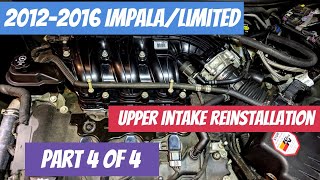
Typical fix: Replace the MAP/BARO sensor. Due to its location, it is highly recommended to also replace the intake manifold gaskets at the same time to prevent future vacuum leaks. 🎬 Watch: How to properly reinstall the manifold and gaskets
Est. part cost: $40 - $90 - Damaged Wiring or Loose Connector 🟡 Medium Probability Engine vibration and heat can cause wiring to fray or the connector to become loose or corroded over time, disrupting the signal to the ECM. The wiring harness runs in a tight, hot engine bay, making it susceptible to damage.
How to confirm: Visually inspect the wiring harness and connector leading to the MAP sensor for any signs of damage, corrosion, or looseness. This is difficult due to the sensor's location under the intake manifold. If the manifold is removed, use a multimeter to test for proper voltage (typically 4.8-5.2V reference) and ground at the connector.
Typical fix: Repair the damaged section of the wiring harness or clean/replace the connector.
Est. part cost: $5 - $50 - Vacuum Leak ⚪ Low Probability While not a direct cause of a P2227 at KOEO, a significant vacuum leak from aged gaskets or hoses can cause MAP sensor readings to be erratic once the engine is running, potentially contributing to a range/performance fault over time. TSBs for the LFX engine family (like #PIP5529B) point to loose intake manifold bolts as a known cause of vacuum leaks.
How to confirm: Perform a smoke test by feeding pressurized smoke into the intake system and look for leaks, particularly around the intake manifold gaskets, throttle body, and vacuum hoses.
Typical fix: Replace the leaking gasket or hose. If intake manifold bolts are loose, remove them one by one, apply threadlocker, and torque to specification.
Est. part cost: $20 - $150
Rare But Worth Checking
- Faulty Engine Control Module (ECM): → Shop Engine Control Module (ECM) This is very rare. Before condemning the ECM, all other possibilities, including the sensor and its entire circuit, must be thoroughly tested and ruled out. Sometimes an ECM software update or re-flash can resolve calibration-related issues.
Diagnosis Steps
- Connect an OBD-II scanner and confirm that P2227 is the primary code stored. Check for other codes like P0641, which would point to a wider circuit issue.
- Access the live data stream on the scanner. With the Key On, Engine Off (KOEO), observe the Barometric Pressure (BARO) PID.
- Compare this value to the known atmospheric pressure for your geographic location and altitude. At sea level, this should be around 14.7 psi, 29.9 inHg, or 101 kPa. A discrepancy greater than 0.5 psi (3.4 kPa) strongly suggests a sensor fault.
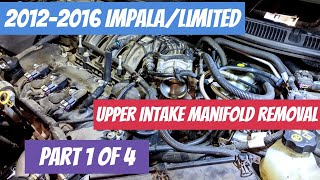
- If the BARO reading is incorrect, the next step is to access the sensor. On the 3.6L LFX, this requires removing the engine cover and partially disassembling and lifting the upper intake manifold to reach the MAP sensor. 🎬 See this walkthrough for removing the upper intake manifold
- Once the sensor is accessible, inspect its electrical connector and wiring harness for any visible damage, corrosion, or loose connections.
- If the wiring looks good, disconnect the sensor and test the circuit. With the key on, use a multimeter to check for the correct reference voltage (typically 4.8-5.2V) and a good ground (less than 5 ohms to chassis ground) at the connector pins.
- If the circuit tests good and the initial live data reading was incorrect, the MAP/BARO sensor is faulty and should be replaced. It is best practice to also replace the intake manifold gaskets during this procedure.
- If the sensor and wiring are confirmed to be good, the issue may lie with the ECM, but this is highly unlikely and should be the last consideration.
Parts You'll Likely Need
- Manifold Absolute Pressure (MAP) Sensor
(OEM #12711681)— This sensor provides the barometric pressure reading to the ECM. It is the most common failure point for code P2227 on this vehicle. This part number supersedes previous numbers 12594942, 12644228, 12694725, and 12701247.
Trusted brands: ACDelco, GM Genuine Parts, Bosch, Delphi
OEM price range: $70-$80
Aftermarket price range: $40-$90 - Intake Manifold Gasket Set — Because the upper intake manifold must be removed to access the MAP sensor, replacing the gaskets is essential to prevent vacuum leaks upon reassembly.
Trusted brands: Fel-Pro, ACDelco, Mahle
OEM price range: $30-$50
Aftermarket price range: $20-$40
Related Codes That Often Appear With This One
- P0641 (Sensor Reference Voltage 'A' Circuit/Open) - This code can appear if a short in the MAP sensor or another sensor on the same 5-volt reference circuit pulls the voltage down for all shared sensors.
Technical Service Bulletins (TSBs) & Recalls
- PI1445: An informational bulletin from GM providing repair information for a customer concern of a Malfunction Indication Lamp (MIL) on, where a technician may find DTC P2227 set.
Platform-Specific Known Issues
- A known issue is documented in GM Technical Service Bulletin #PI1445 for the 2013 model year, which addresses troubleshooting for a Malfunction Indicator Lamp with DTC P2227 present.
- The MAP sensor is located under the upper intake manifold, making replacement a more involved job (1.5-2.5 hours of labor) than on many other vehicles where the sensor is easily accessible.
Mechanic-Grade Diagnostic Values
- MAP/BARO Sensor 5V Reference Voltage — expected: 4.8-5.2 Volts DC with key on, engine off, measured between the reference circuit pin and ground.. Failure: Voltage below 4.8V or above 5.2V indicates a problem with the ECM or a short/open in the wiring.
- MAP/BARO Sensor Low Reference (Ground) Circuit Resistance — expected: Less than 5.0 Ohms between the low reference circuit pin and a known good chassis ground.. Failure: Resistance higher than 5.0 Ohms indicates a poor ground connection, which can cause incorrect sensor readings.
- MAP/BARO Sensor Signal Voltage (KOEO) — expected: Approximately 3.9V to 4.5V at sea level, decreasing with altitude. Should be stable and correlate to local atmospheric pressure.. Failure: Voltage outside the 0.5V to 4.5V range, or a reading that doesn't match local pressure, points to a faulty sensor.
- MAP Sensor Signal Voltage (Engine Idling) — expected: Should drop to approximately 1.0V to 1.5V at idle due to engine vacuum.. Failure: Voltage that remains high (close to KOEO reading) at idle indicates the sensor is not responding to vacuum, suggesting a sensor fault or a major vacuum leak.
- DTC Set Threshold (Voltage Out of Range) — expected: The ECM expects a voltage between 1.95V and 4.5V.. Failure: The P2227 code will set if the ECM sees a sensor voltage less than 1.95V or greater than 4.5V for more than 4 seconds.
Hidden / Shadow Codes Worth Checking
- P0641: Sensor Reference Voltage 'A' Circuit/Open. This code indicates a problem with the 5-volt reference circuit that the MAP sensor shares with other engine sensors. (see via A standard OBD-II scanner. If P2227 is present with P0641, it strongly suggests a circuit problem (short or faulty ECM) rather than just an isolated bad MAP sensor.)
Wiring & Ground Locations
- MAP Sensor Connector (3-wire) — On the MAP sensor itself, located under the upper intake manifold on the 3.6L LFX engine.. This is the primary test point for the sensor's power, ground, and signal circuits. A typical GM pinout for this sensor is: Pin 1: 5V Reference (Gray wire), Pin 2: Low Reference/Ground, Pin 3: Signal (Light Green wire).
- G103 — Located on the cowl in the left rear of the engine compartment, often near or above the brake booster.. This is a major engine compartment and Body Control Module (BCM) ground point. While the MAP sensor has a dedicated low-reference wire back to the ECM, a poor main engine or body ground can introduce electrical noise and voltage drop issues that affect sensor readings.
- G121 — On the right front of the engine block.. This is a primary engine block ground. A clean, tight connection here is essential for the proper operation of all engine sensors, including ensuring the ECM has a stable ground reference.
Helpful Videos

We Have This Part in Stock

The information in this article is provided for general reference and educational purposes only. Vehicle specifications, procedures, and part compatibility can vary by production date, trim level, and region. Always consult your vehicle's factory service manual and verify part numbers before purchasing or performing repairs. Safety-critical components such as airbags, seat belts, and braking systems should be installed by a qualified professional.
- Cadillac XTS:
- 🧭 Diagnostic Flowchart
- 🎬 Helpful Videos
- 🛍️ Shop This Part
- What's Unique About the 2013-2015 Cadillac XTS
- Symptoms You May Notice
- Most Likely Causes
- Rare But Worth Checking
- Diagnosis Steps
- Parts You'll Likely Need
- Related Codes That Often Appear With This One
- Technical Service Bulletins (TSBs) & Recalls
- Platform-Specific Known Issues
- Mechanic-Grade Diagnostic Values
- Hidden / Shadow Codes Worth Checking
- Wiring & Ground Locations
- 🎟️ Get 5% Off