

P2227 on 2010-2016 Hyundai Genesis Coupe: BARO Sensor and ECM Fault Guide
This code indicates a fault with the barometric pressure (BARO) sensor circuit. On the Genesis Coupe, this sensor is integrated inside the Engine Control Module (ECM). The most likely fix is replacing the entire ECM, which can be costly. Before replacement, thoroughly check the air intake system for restrictions and inspect all related wiring. A confirmed internal sensor failure requires a new, programmed ECM.
- P2227 on a Genesis Coupe points to a problem with the barometric pressure sensor, which is inside the main engine computer (ECM).
- Unlike many cars, you cannot replace just the sensor. A confirmed failure requires replacing the entire ECM.
- Before condemning the expensive ECM, always check for simpler issues like a clogged air filter or damaged wiring to the ECM.
- Diagnosis heavily relies on comparing the BARO and MAP sensor readings on a scan tool with the key on and engine off. They should match each other and the local weather.
- ECM replacement is not a simple DIY job; it requires professional programming to match your car's security system.
- Always use your vehicle's VIN to source the correct ECM part number.
What's Unique About the 2010-2016 Hyundai Genesis Coupe
The most critical detail for the 2010-2016 Hyundai Genesis Coupe is that the barometric pressure sensor is not a separate, replaceable part. It is integrated directly into the Engine Control Module (ECM). This design is also seen on some older Honda and Ford models. A confirmed failure of the BARO sensor itself condemns the entire ECM, making the repair significantly more complex and expensive than on vehicles with an external sensor, such as the contemporary Hyundai Sonata which integrates the BARO into the MAP sensor.
Generation note: This covers the entire first generation of the Genesis Coupe, often split into BK1 (2010-2012) and BK2 (2013-2016). The fundamental issue of the BARO sensor being internal to the ECM is the same for both. However, the specific ECM part numbers are different between BK1 and BK2 models, as well as between the 2.0T and 3.8L engines. Ensure you have the correct part number for your specific year, engine, and transmission.
Symptoms You May Notice
- Check Engine Light is on
- Reduced engine power and sluggish acceleration
- Rough or unstable idle, which may worsen as the engine warms up
- Increased fuel consumption
- Hesitation or stalling, especially under load or at altitude changes
- Noticeable smell of fuel from the exhaust due to a rich condition
- Replacing the Manifold Absolute Pressure (MAP) sensor. On many other Hyundai vehicles, the BARO sensor is integrated with the MAP sensor (e.g., 2011-2014 Sonata). However, on the Genesis Coupe, the BARO sensor is in the ECM, so replacing the MAP sensor will not fix a P2227 code. 🎬 Watch: Understanding P2227 barometric pressure sensor codes
Most Likely Causes
- Internal ECM Failure 🔴 High Probability The barometric pressure sensor is integrated into the ECM, making the entire module the point of failure if the sensor circuit malfunctions internally. This is the most common resolution after external factors are eliminated.
How to confirm: After ruling out all external factors like wiring and air intake restrictions, a diagnostic scan tool showing an irrational BARO reading that doesn't correspond to the local atmospheric pressure points to an internal ECM fault. The BARO and MAP sensor readings should be nearly identical with the key on, engine off.
Typical fix: Replace the Engine Control Module (ECM) and program the new unit to the vehicle.
Est. part cost: $600-$900+ - Wiring Harness or Connector Issue 🟡 Medium Probability
How to confirm: Visually inspect the ECM connectors and wiring harness for any signs of damage, corrosion, or loose pins. Use a multimeter to check for continuity and proper voltage at the ECM connector. Wiggling the harness while observing live data on a scan tool can help identify intermittent shorts or opens.
Typical fix: Repair the damaged wiring or clean/replace the affected connectors.
Est. part cost: $10-$100 - Clogged Engine Air Filter ⚪ Low Probability → Shop Air Cleaner Assembly
How to confirm: Visually inspect the engine air filter. A severely clogged filter can restrict airflow and potentially cause the ECM to register an implausible barometric pressure reading, especially when cross-referencing with other sensors.
Typical fix: Replace the engine air filter.
Est. part cost: $20-$50
Rare But Worth Checking
- Aftermarket ECU Tune:
Diagnosis Steps
- Verify the code with an OBD-II scanner. Check for any other accompanying codes, especially P0106 or P0069.
- With the key on and engine off (KOEO), use the scanner's live data function to view the BARO and MAP sensor readings. They should be nearly identical and should match your local atmospheric pressure (approx. 14.7 PSI / 101 kPa at sea level, decreasing with altitude). A significant discrepancy points to a problem.
- Inspect the engine air filter. A severely clogged filter can affect pressure readings. Replace if dirty.
- Thoroughly inspect the wiring harness leading to the ECM. Look for any signs of physical damage, chafing, or corrosion on the connectors. Perform a 'wiggle test' on the harness while watching live data to check for intermittent connections.
- If the wiring and air filter are in good condition and the BARO reading is still incorrect and does not match the MAP reading at KOEO, the fault is almost certainly internal to the ECM.
- Professional diagnosis is recommended to confirm ECM failure before replacement. This may involve using advanced tools to test the ECM's internal circuits.
- If the ECM is confirmed to be faulty, it must be replaced with a unit that matches the vehicle's year, engine, and transmission. The new ECM will require programming to the vehicle's VIN and immobilizer system.
Parts You'll Likely Need
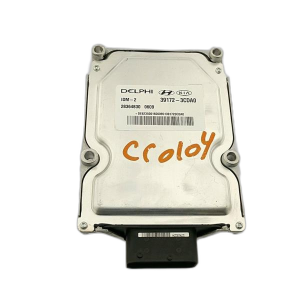
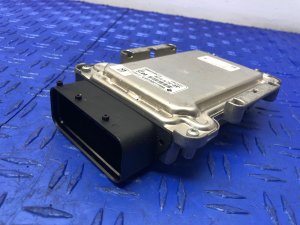
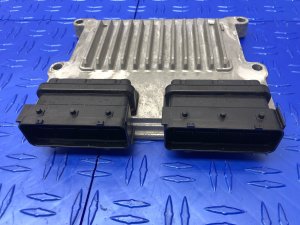
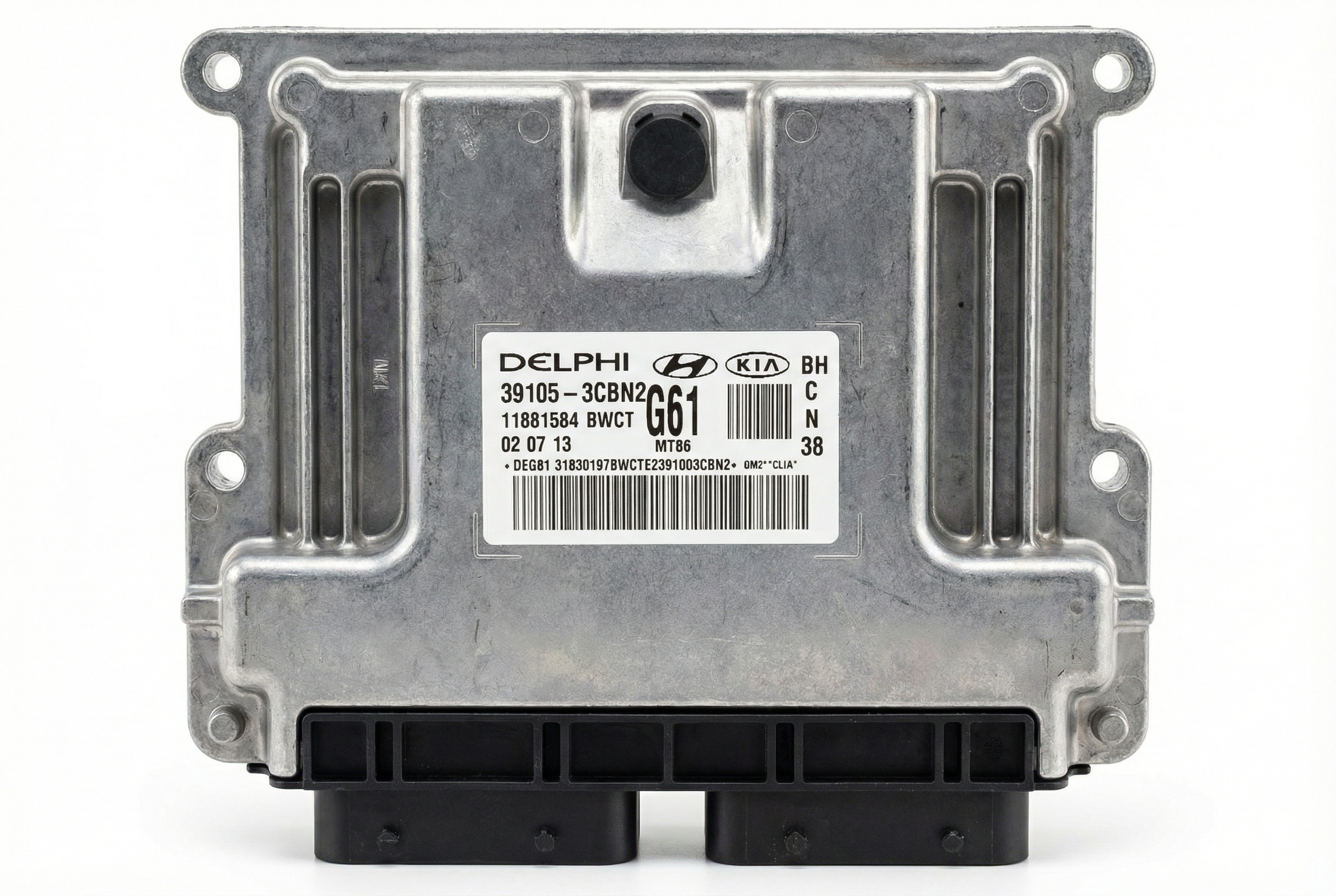
- Engine Control Module (ECM)
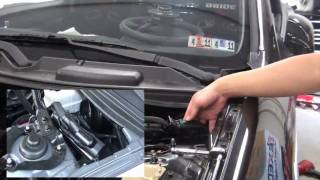
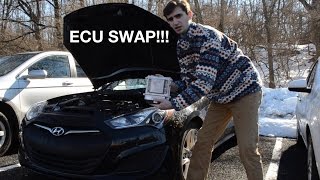
(OEM #Varies greatly. Examples: 39106-3C500 (BK1 3.8L MT), 39115-3CKN7 (BK2 3.8L MT), 39121-2C001 (2010 2.0T). Always verify with VIN.)🎬 Watch: How to remove the Genesis Coupe ECU — The BARO sensor is internal to this component, making it the primary point of failure for this code.
Trusted brands: Hyundai (OEM)
OEM price range: $600-$1200
Aftermarket price range: N/A (Remanufactured units vary)
Related Codes That Often Appear With This One
- P0106 — This code for 'Manifold Absolute Pressure/Barometric Pressure Circuit Range/Performance' can appear if the ECM sees a conflict between the MAP sensor reading and its own internal BARO sensor reading. This is a key correlation code used for diagnosis.
- P0605 — This code indicates an 'Internal Control Module Read Only Memory (ROM) Error.' Since the BARO sensor is internal to the ECM, a P2227 can sometimes be a precursor to or accompany a more general ECM failure code like P0605.
- P0069 — Similar to P0106, this code specifically refers to a MAP - Barometric Pressure Correlation fault. It is set when the two sensors do not align as expected during the key-on, engine-off check.
Technical Service Bulletins (TSBs) & Recalls
- TSB-13-FL-001: While not directly for P2227, this TSB for the 2010 model addresses replacing the PCM due to an internal control module read-only memory (ROM) error, which can be related to general ECM failure that might also present as a P2227 code.
Platform-Specific Known Issues
- Owner Experience with ECM Replacement: A user on Reddit with a 2010 3.8L Track model experienced a no-crank, no-start issue that was ultimately traced back to a faulty ECM, requiring replacement. This highlights that P2227 can be one of several symptoms of a failing computer.
Mechanic-Grade Diagnostic Values
- BARO vs. MAP Sensor Reading Correlation (KOEO) — expected: Readings should be nearly identical, within 0.5 PSI (approx. 3.4 kPa) of each other and should match the local atmospheric pressure.. Failure: A significant difference between the two readings, or a reading that does not match local altitude/weather, points to a fault in the circuit of the incorrect sensor. For P2227, this implicates the internal BARO sensor.
- Internal BARO Sensor Voltage Range — expected: The ECM expects to see a voltage signal from its internal sensor between 0.5V and 4.5V.. Failure: A signal that is stuck low (below 0.5V) or high (above 4.5V) indicates an internal circuit failure within the ECM.
Scan Tool Commands That Help
- Hyundai GDS / Specialized J-2534 Passthru Device: ECM Programming / VIN Writing — This function is mandatory after installing a new or refurbished ECM. It writes the vehicle's VIN to the module and pairs it with the immobilizer system, allowing the car to start.
- Specialized Bench Programming Tools (e.g., Hex Probe): ECU Cloning — Used by third-party services to read all data (VIN, immobilizer, coding) from the original failed ECM and write it directly to a compatible used donor ECM. This makes the replacement unit plug-and-play without needing dealer programming.
Wiring & Ground Locations
- ECM Main Ground — The primary factory ground for the ECM is located on the engine itself, typically on or near the intake manifold. Aftermarket grounding kits often use this same mounting point.. A poor ground connection can cause erratic behavior and incorrect readings from any sensor, including the internal BARO sensor. While less common than internal ECM failure, checking that this ground is clean and tight is a crucial step before replacing the module.
Model Year Variations Within This Range
- 2010-2012 (BK1) vs. 2013-2016 (BK2): The BK1 and BK2 generations have significant differences, including more powerful engines (GDI for the 3.8L, twin-scroll turbo for the 2.0T in BK2), different transmissions (8-speed auto in BK2 vs. 5/6-speed in BK1), and updated interior electronics. Consequently, their ECMs have different part numbers and are not interchangeable. Sourcing a replacement ECM requires an exact match for the vehicle's year, engine, and transmission type.
Diagnostic Flowchart
Other Known Issues on This Vehicle
Issues unrelated to this code that are worth knowing about as an owner of this generation:
- Manual Transmission Grind / Lockout 🔴 High — Very common, especially on BK1 (2010-2012) models and early BK2s. Can occur at any mileage. Often reported as grinding going into 2nd, 5th, or 6th gear. (Ref: A TSB (T96) was issued for early 2010 models to replace the shift lever assembly and transmission oil. Many owners report that upgrading transmission fluid (e.g., to Redline MT-85) and installing an upgraded transmission mount significantly improves shift feel.)
- 2.0T (BK2) Wastegate Rattle 🟡 Low — Extremely common on 2013-2016 2.0T models. The rattle is most noticeable on cold starts or during certain RPM ranges and is caused by play in the electronic wastegate actuator arm. (Ref: Hyundai generally considers this a normal characteristic of operation and not a component failure, so there is no recall. TSB 12-EM-003 (and its revisions) provides diagnostic information for the electronic wastegate actuator but does not specifically address the rattle.)
- Taillight Gasket Leaks / Water in Trunk 🟠 Medium — Common across all model years. The foam gaskets for the taillights degrade over time, allowing water to leak into the trunk and pool in the spare tire well.
- Interior Rattles and Peeling Chrome Trim 🟡 Low — Widespread issue reported by many owners. The clear coat on interior chrome-look plastic pieces (door handles, steering wheel trim) can flake off. Various interior panels are also prone to rattling and creaking over time.
- Theft System Alarm Sounds Randomly 🟡 Low — A known issue on earlier models where the alarm will go off for no reason. This is often attributed to a faulty hood latch sensor.
Used vs. New Parts: Buying Guide for This Vehicle
When a used part is the smart pick: For this repair, a used ECM that has been professionally refurbished and programmed, or cloned from your original unit, is an excellent and highly cost-effective alternative to a brand new module from a dealership.
What to inspect on the donor part:
- Ensure the part number on the donor ECM is an exact match to the original.
- Verify the donor vehicle was not subjected to flood or fire damage.
- Purchase from a reputable seller who offers programming/cloning services or a warranty.
OEM-only on this vehicle (don't cheap out):
- New Engine Control Module (from dealer)
Aftermarket brands forum-validated for this vehicle:
- Flagship One (Pre-programmed refurbished units)
- ECU Team Corp (Cloning and repair services)
- Specialized ECU cloning services (Found on platforms like eBay)
Brands owners have reported issues with on this vehicle:
- No specific brands were identified as problematic; the key is ensuring the unit is properly programmed or cloned for the specific vehicle. A used, unprogrammed ECM will not work.
Real Owner Stories
Aggregated from forums and TSBs cited above. Mileages and costs reflect what owners reported in those sources.
2010 Hyundai Genesis Coupe 3.8L Track
Symptoms: The vehicle experienced a no-crank, no-start condition, illustrating that ECM-related faults can manifest as multiple severe symptoms beyond just the P2227 code.
What fixed it: Replacement of the Engine Control Module (ECM).
Source hint: r/genesiscoupe on Reddit
Related OBD-II Codes
Frequently Asked Questions
Can I just replace the barometric pressure sensor on my 2010-2016 Hyundai Genesis Coupe?
Does TSB-13-FL-001 apply to my P2227 code?
How can I tell if the P2227 code is an internal ECM failure or just a dirty air filter?
Are there any specific aftermarket brands recommended for a replacement ECM?
Will a used ECM from a Genesis Sedan work for my Genesis Coupe?
Could my P2227 code be related to the common electrical issues mentioned on r/genesiscoupe?
Helpful Videos

We Have This Part in Stock

The information in this article is provided for general reference and educational purposes only. Vehicle specifications, procedures, and part compatibility can vary by production date, trim level, and region. Always consult your vehicle's factory service manual and verify part numbers before purchasing or performing repairs. Safety-critical components such as airbags, seat belts, and braking systems should be installed by a qualified professional.
- Hyundai Genesis Coupe:
- 🧭 Diagnostic Flowchart
- 🎬 Helpful Videos
- 🛍️ Shop This Part
- What's Unique About the 2010-2016 Hyundai Genesis Coupe
- Symptoms You May Notice
- Most Likely Causes
- Rare But Worth Checking
- Diagnosis Steps
- Parts You'll Likely Need
- Related Codes That Often Appear With This One
- Technical Service Bulletins (TSBs) & Recalls
- Platform-Specific Known Issues
- Mechanic-Grade Diagnostic Values
- Scan Tool Commands That Help
- Wiring & Ground Locations
- Model Year Variations Within This Range
- Other Known Issues on This Vehicle
- Used vs. New Parts: Buying Guide for This Vehicle
- Real Owner Stories
- 2010 Hyundai Genesis Coupe 3.8L Track
- Related OBD-II Codes
- Frequently Asked Questions
- 🎟️ Get 5% Off