

P2227 on 2007-2011 Subaru Impreza 2.5i: BARO Sensor and ECM Guide
On this Subaru Impreza, code P2227 is almost always caused by a failed barometric pressure (BARO) sensor that is integrated inside the Engine Control Module (ECM). The fix is not a simple sensor swap but requires a costly ECM replacement or specialized repair, making professional service highly recommended.
- P2227 on a 2007-2011 Impreza 2.5i points to a problem with the barometric pressure sensor.
- The sensor is not a separate part; it is built into the Engine Control Module (ECM).
- The most common fix is to replace the entire ECM or send it for specialized repair.
- A replacement ECM must be programmed for your specific vehicle's VIN and immobilizer system.
What's Unique About the 2007-2011 Subaru Impreza
Unlike many vehicles that have an external, easily replaceable BARO sensor, Subaru integrated this sensor directly into the Engine Control Module (ECM) on this generation of Impreza and other models using the EJ253 engine. This design choice means that a P2227 code is not a simple sensor failure, but a failure of a component within the main engine computer itself. As a result, the most common repair is a complete ECM replacement, which is significantly more complex and expensive than a typical sensor swap.
Generation note: This range covers the end of the second generation (2007, GD/GG) and the majority of the third generation (2008-2011, GE/GH/GR/GV). The design of integrating the barometric pressure sensor into the ECM is common across these models with the 2.5i (EJ253) engine.
Symptoms You May Notice
- Check Engine Light is on.
- Reduced engine performance and sluggish acceleration.
- Rough or unstable idle, which may worsen as the engine warms up.
- Decreased fuel economy.
- Engine hesitation or stalling, especially during acceleration or at changing altitudes.
- Replacing the Manifold Absolute Pressure (MAP) sensor. The MAP sensor is a separate, external sensor that measures pressure inside the intake manifold. While related to pressure, it is not the cause of a P2227 code, which specifically points to the atmospheric (barometric) pressure sensor internal to the ECM on this platform.
- Replacing the Mass Airflow (MAF) sensor. Some vehicles integrate the BARO sensor with the MAF, but on this Subaru, the BARO sensor is in the ECM. Replacing the MAF will not fix this code.
Most Likely Causes
- Internal Failure of the Engine Control Module (ECM) 🔴 High Probability → Shop Engine Control Module (ECM) The barometric pressure sensor is a non-serviceable component soldered onto the ECM's circuit board. Over time, this internal sensor can fail or drift out of calibration, leading to out-of-range performance and triggering the P2227 code. This is the most widely reported cause in owner forums.
How to confirm: Use an advanced scan tool to monitor the live data for the BARO sensor. With the Key On, Engine Off (KOEO), the reading should closely match the current local atmospheric pressure (which can be verified with a weather app for your altitude). If the reading is stuck (e.g., at sea level pressure when you are at 5,000 ft) or provides an illogical value, and all wiring is intact, the ECM's internal sensor is faulty.
Typical fix: There are two main repair paths: 1) Replace the Engine Control Module with a new or remanufactured unit. The replacement ECM must be programmed to the vehicle's VIN and key information. 2) Send the original ECM to a specialized electronics repair service that can diagnose and replace the faulty component on the circuit board. This is often more cost-effective but involves more downtime.
Est. part cost: $700-$1100 (New OEM), $400-$800 (Remanufactured), $200-$500 (Repair Service)
Rare But Worth Checking
- Wiring Harness or Connector Issue: While far less common than internal ECM failure for this specific code, it's worth checking. A corroded pin or damaged wire at the main ECM connector could theoretically disrupt the circuit, though it's not the typical failure mode.
- Aftermarket ECM/Tuning Calibration Error: If the vehicle has a non-OEM engine control module or has been tuned, it's possible the calibration tables for the barometric pressure sensor are mismatched, causing the ECM to reject otherwise valid sensor data and trigger the code.
Diagnosis Steps
- Confirm the P2227 code is present using an OBD-II scanner.
- Use a scan tool capable of viewing live data. Access the Barometric Pressure (BARO) sensor reading (PID).
- With the Key On, Engine Off (KOEO), compare the BARO sensor reading from the scanner to the actual atmospheric pressure for your location and altitude. A reliable weather app or local weather station data can provide this. For example, at sea level, it should be ~29.9 inHg or ~101 kPa. At 5,000 feet, it should be closer to ~24.9 inHg or ~84 kPa.
- If the scanner's reading is significantly incorrect (e.g., reading 29.9 inHg when you are in Denver) or stuck at a default value, the sensor is confirmed to be faulty.
- Since the sensor is internal to the ECM, the next step is a sanity check. Visually inspect the main ECM connectors for any signs of corrosion, moisture, or damage. The ECM is typically located in the passenger footwell, behind the glove box. Clean and reseat the connectors if necessary, then re-check the BARO reading.
- If the connectors are clean and the sensor reading remains incorrect, the ECM has an internal fault. The next step is to either replace the ECM or send it out for repair.
- If replacing, ensure the new ECM is the correct part number for the vehicle's VIN, transmission (A/T vs M/T), and emissions standard, and that it is properly programmed to the vehicle.
- If sending for repair, carefully remove the ECM and ship it to a reputable automotive electronics repair company. Reinstall upon its return.
Parts You'll Likely Need
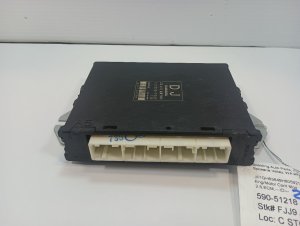
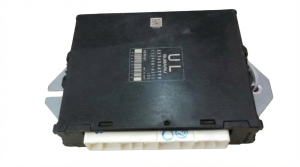
- Engine Control Module (ECM)
(OEM #Varies widely. Examples: 22611AM451 (2007), 22765AB35A (2011 AT PZEV). MUST be verified with VIN.)— This is the most common failure for a P2227 code on this vehicle because the barometric pressure sensor is integrated into it. Part numbers are extremely specific to year, model, transmission, and emissions (Federal or California/PZEV).
Trusted brands: Subaru (Genuine OEM), Flagship One (Remanufactured), Circuit Board Medics (Repair Service)
OEM price range: $800-$1200
Aftermarket price range: $400-$800 (Remanufactured) or $200-$500 (Repair Service)
Platform-Specific Known Issues
- The primary issue for this platform is the integration of the barometric pressure sensor into the ECM, which turns a simple sensor fault into a complex and expensive engine computer replacement or repair.
- Owners on forums frequently express frustration after being advised to replace external MAP or MAF sensors, which does not solve the problem.
Mechanic-Grade Diagnostic Values
- Barometric Pressure (BARO) Live Data PID — expected: Should match local atmospheric pressure at Key On, Engine Off (e.g., ~101 kPa / 29.9 inHg at sea level; ~84 kPa / 24.9 inHg at 5,000 ft).. Failure: Value is stuck, reads an illogical pressure for the altitude, or does not change.
- Internal BARO Sensor Voltage (Theoretical) — expected: A typical, functional external BARO sensor operates within a 0.5V to 4.5V range.. Failure: A voltage outside this range would indicate a fault. However, this is not directly measurable on this vehicle as the sensor is internal to the ECM.
Scan Tool Commands That Help
- Subaru Select Monitor or equivalent professional scanner: Current Data Display > Engine Control System > Atmospheric Pressure — This is the primary diagnostic step to read the live data from the internal barometric pressure sensor to verify if it is rational.
- Subaru Select Monitor or equivalent professional scanner: Immobilizer > Engine Control Module Registration — This function is mandatory after installing a new or used replacement ECM. It pairs the replacement ECM to the vehicle's keys and immobilizer system, allowing the engine to start.
Wiring & Ground Locations
- ECM Main Connectors & Ground — The ECM is located in the passenger-side footwell, typically behind or to the side of the glove compartment.. Since the BARO sensor is internal, its 'circuit' is inside the ECM. A fault could theoretically be caused by a poor power or ground connection to the entire module. Inspecting the main ECM connectors for corrosion or damage is a crucial, though unlikely, final check before condemning the module itself.
Real Owner Repair Stories
- Subaru Impreza Club forum user (2009 Impreza 2.5i non-turbo) — Check Engine Light with code P2227.
❌ Tried (didn't work) Checked and cleaned the MAP sensor, Checked and cleaned the MAF sensor, Looked for bad vacuum lines, Reset ECU
✅ What actually fixed it The user noted that the official service manual's procedure for P2227 was to replace the ECU, confirming that the BARO sensor is internal and the most likely point of failure is the module itself.
OEM Part Supersession History
22611AM450→22611AM451— Revision or update by the manufacturer.
Heads up: Part numbers are highly specific. Always verify with VIN, transmission type, and emissions standard (Federal vs. PZEV) before ordering.
Model Year Variations Within This Range
- 2007-2011: The most critical variation when replacing the ECM is not just the model year, but the vehicle's specific configuration. The correct ECM part number depends on the transmission (Automatic vs. Manual) and the emissions standard (Federal vs. PZEV/California). An ECM from a car with a different configuration will not work correctly.
Diagnostic Flowchart
Other Known Issues on This Vehicle
Issues unrelated to this code that are worth knowing about as an owner of this generation:
- Head Gasket Failure (EJ253) 🔴 High — Very common, typically occurs between 80,000 and 150,000 miles. The single overhead cam (SOHC) EJ253 engines in this range are prone to external oil and coolant leaks from the head gaskets.
- Premature Wheel Bearing Failure 🟠 Medium — Commonly reported failure, sometimes as early as 30,000-60,000 miles, though more typical around 100,000 miles. Owners report a humming or grinding noise that changes with vehicle speed. (Ref: Subaru has revised the part design in later years but no widespread recall was issued for this generation.)
- Timing Belt Replacement Interval 🔴 High — This is a critical maintenance item, not a failure, but ignoring it leads to catastrophic engine damage. The service interval is 105,000 miles. It is crucial for owners of used vehicles to verify if and when this service was performed.
- Oil Consumption/Leaks 🟠 Medium — The EJ253 engine is known for oil consumption and leaks from various seals, such as valve covers and the oil pan gasket, as the vehicle ages.
Used vs. New Parts: Buying Guide for This Vehicle
When a used part is the smart pick: For this repair, a used OEM ECM from a reputable recycler is a very common and cost-effective choice, often saving hundreds of dollars compared to a new unit from the dealer.
What to inspect on the donor part:
- Match the OEM part number on your original ECM EXACTLY. Do not use a part that is 'close enough'.
- Verify the donor vehicle had the same engine, transmission (A/T vs M/T), and emissions type (PZEV vs Federal).
- Visually inspect the used ECM for any signs of physical damage, water intrusion, or corrosion on the connector pins.
- Ensure the seller offers a warranty or return policy.
OEM-only on this vehicle (don't cheap out):
- Engine Control Module (ECM). While you can buy used, it should be a genuine OEM part. Unbranded, 'new' aftermarket ECMs are not recommended due to the complexity of vehicle-specific programming and communication protocols.
Aftermarket brands forum-validated for this vehicle:
- For repair services of your existing ECM: Circuit Board Medics, Flagship One.
- For ECM cloning services: Various online providers can perform this service (search 'Subaru ECM cloning').
Brands owners have reported issues with on this vehicle:
- Generic, no-name, or universal engine computers. The ECM must be specific to the Subaru platform.
Real Owner Stories
Aggregated from forums and TSBs cited above. Mileages and costs reflect what owners reported in those sources.
2008 Impreza 2.5i
Symptoms: Check engine light with codes P2227/P2229 appeared after an engine and transmission rebuild. The long term fuel trim was stuck at 0%.
What fixed it: The user did not report a final fix, but had already ruled out the MAP, MAF, O2 sensors, and vacuum leaks, pointing towards the common ECM failure.
Source hint: Reddit (r/subaruimpreza)
2009 Impreza 2.5i
Symptoms: Check Engine Light with code P2227.
What fixed it: The owner consulted the service manual, which confirmed the barometric pressure sensor is internal to the ECU and indicated that the required repair was to replace the ECU.
Source hint: Subaru Impreza Club (uk.subaruownersclub.com)
2007-2011 Impreza 2.5i
Symptoms: Check Engine Light with code P2227.
What fixed it: The consensus among multiple owners is that the problem requires either a full ECM replacement or sending the original ECM out for repair. Attempts to fix the code by replacing other sensors were reported to fail.
Source hint: NASIOC (North American Subaru Impreza Owners Club)
Related OBD-II Codes
Frequently Asked Questions
I have a P2227 code on my 2008 Impreza. Should I replace the MAP or MAF sensor first?
Where is the barometric pressure (BARO) sensor located on my 2007-2011 Impreza 2.5i?
My mechanic says I need a new ECM for a P2227 code. Is there a cheaper option?
How can I confirm the ECM is bad before spending money on a replacement or repair?
I have a 2010 Subaru Forester with a P2227 code. Is this the same problem as the Impreza?
If I buy a used ECM to fix the P2227 code, can I just plug it in?
We Have This Part in Stock

The information in this article is provided for general reference and educational purposes only. Vehicle specifications, procedures, and part compatibility can vary by production date, trim level, and region. Always consult your vehicle's factory service manual and verify part numbers before purchasing or performing repairs. Safety-critical components such as airbags, seat belts, and braking systems should be installed by a qualified professional.
- Subaru Impreza:
- 🧭 Diagnostic Flowchart
- 🛍️ Shop This Part
- What's Unique About the 2007-2011 Subaru Impreza
- Symptoms You May Notice
- Most Likely Causes
- Rare But Worth Checking
- Diagnosis Steps
- Parts You'll Likely Need
- Platform-Specific Known Issues
- Mechanic-Grade Diagnostic Values
- Scan Tool Commands That Help
- Wiring & Ground Locations
- Real Owner Repair Stories
- OEM Part Supersession History
- Model Year Variations Within This Range
- Other Known Issues on This Vehicle
- Used vs. New Parts: Buying Guide for This Vehicle
- Real Owner Stories
- 2008 Impreza 2.5i
- 2009 Impreza 2.5i
- 2007-2011 Impreza 2.5i
- Related OBD-II Codes
- Frequently Asked Questions
- 🎟️ Get 5% Off