

OBD-II Code P2230: Barometric Pressure Sensor 'A' Circuit Intermittent
What P2230 means, why it triggers, and how to fix it
- Over 60% of P2230 cases stem from a damaged wire or loose connector, not a failed sensor.
- The BARO sensor is integrated into the Mass Airflow (MAF) sensor on most modern vehicles, meaning you must diagnose and replace the entire MAF assembly if the sensor fails.
- Perform a live-data 'wiggle test' on the MAF sensor wiring harness to instantly confirm or rule out an intermittent electrical short.
- Ignoring this code for more than 3 months forces the engine to run rich or lean, risking a $1,200 to $2,800 catalytic converter replacement.
What Does P2230 Mean?
P2230 means the Powertrain Control Module (PCM) is receiving an inconsistent, fluctuating, or unreliable signal from the barometric pressure (BARO) sensor. This sensor measures outside atmospheric pressure, allowing the engine to adjust the air-fuel mixture for different altitudes and weather conditions. An erratic signal causes the engine to run inefficiently, leading to performance problems and increased emissions.
Technical definition: The official SAE/OBD-II definition is "Barometric Pressure Sensor 'A' Circuit Intermittent/Erratic". This indicates the PCM has detected the voltage signal from the BARO sensor circuit fluctuating, dropping out, or remaining unstable when it should be steady. The PCM sets the code when the signal randomly spikes or drops outside a pre-defined voltage range.
Can I Drive With P2230?
Yes, But With Caution. You can drive short distances, but extended driving is inadvisable. An erratic BARO signal forces poor fuel calculations, causing reduced power, hesitation, and poor fuel economy. Over time, this rich or lean condition overheats and damages the catalytic converter, a repair costing $1,200 to $2,800. Avoid long trips, highway speeds, or high altitudes until the issue is resolved.
Common Causes
- Damaged or Corroded Wiring/Connectors (Very Common) — The wiring harness leading to the sensor is exposed to engine heat, vibration, and moisture. Wires fray, insulation cracks, connector pins corrode, or ground connections loosen, causing the signal to drop out. This resolves over 60% of cases.
- Dirty or Clogged Engine Air Filter (Common) — A severely clogged air filter restricts airflow into the engine, creating an unnatural pressure differential in the intake that disrupts the sensor's readings and causes erratic data.
- Faulty Barometric Pressure (BARO) Sensor (Common) — The sensor fails internally due to age or diaphragm fatigue. On most modern cars, the BARO sensor is integrated into the Mass Airflow (MAF) sensor assembly, requiring a full MAF replacement.
- Dirty MAF/BARO Sensor Element (Common) — Oil vapor from the crankcase ventilation system and fine dust coat the delicate sensing elements, insulating the sensor and interfering with accurate pressure readings.
- Outdated PCM Software (Less Common) — The Powertrain Control Module (PCM) software contains overly sensitive parameters for monitoring the BARO sensor. Manufacturers release Technical Service Bulletins (TSBs) with software updates to fix this.
- Vacuum Leaks (Less Common) — A significant vacuum leak from a cracked hose or faulty gasket downstream of the MAF/BARO sensor alters intake pressure, mimicking an erratic sensor reading.
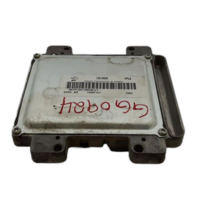
- Failing Powertrain Control Module (PCM) (Rare) — The PCM suffers an internal short or faulty analog-to-digital converter, preventing it from correctly interpreting a perfectly good sensor signal.
Symptoms
- Check Engine Light On — The Malfunction Indicator Lamp (MIL) illuminates. The code is stored as pending or active.
- Reduced Engine Power and Hesitation — The car feels sluggish, stumbles, or hesitates when pressing the gas pedal, especially during acceleration or hill climbs.
- Rough or Surging Idle — The engine shakes, surges in RPM, or idles erratically when stopped, occasionally stalling.
- Poor Fuel Economy — Average miles per gallon (MPG) drops significantly because the PCM cannot accurately manage the air-fuel ratio.
- Difficulty Starting Engine — An erratic signal interferes with initial fuel calculations, making the engine hard to start.
- Failed Emissions Test — The incorrect air-fuel mixture increases exhaust emissions, causing an automatic smog check failure.
Diagnostic Flowchart
Tap your situation to follow the diagnostic path that matches what you're seeing on this code.
Common Fixes & Costs
- Repair Damaged Wiring or Connector — Parts: $10-$50, Labor: $150-$300, ~1.5 hr book time (Professional)
- Replace Engine Air Filter — Parts: $15-$50, Labor: $0-$25, ~0.2 hr book time (DIY)
- Clean Mass Airflow / Barometric Pressure Sensor — Parts: $10-$15, Labor: $50-$100, ~0.5 hr book time (DIY)
- Replace Mass Airflow (MAF) / Barometric Pressure (BARO) Sensor
— Parts: $150-$400, Labor: $50-$100, ~0.7 hr book time
(Intermediate)
Ford F-150 (3.5L EcoBoost): OEM Motorcraft DY-1137 (Alt: Bosch, Denso, Walker, Delphi)
Chevrolet Silverado (5.3L): OEM GM 23262343 (Alt: Hitachi, Carquest, Duralast)
Subaru Outback/Forester: OEM Subaru 22680AA31A (Alt: Denso (197-6130), Walker, Duralast) - Update PCM Software — Parts: $0, Labor: $150-$300, ~1.0 hr book time (Professional)
DIY vs Professional
- Repair Damaged Wiring or Connector 🟢 Beginner
Tools: Multimeter, wire strippers, soldering iron/crimp tools, heat shrink tubing, replacement pigtail connector. - Replace Engine Air Filter 🟢 Beginner
Tools: Basic hand tools (screwdriver, socket set). - Clean Mass Airflow / Barometric Pressure Sensor 🟢 Beginner
Tools: MAF cleaner spray, screwdriver/Torx driver, basic hand tools. - Replace Mass Airflow (MAF) / Barometric Pressure (BARO) Sensor 🟢 Beginner
Tools: Basic hand tools (screwdriver, socket set). - Update PCM Software 🟢 Beginner
Tools: Specialized OEM-level scan tool and subscription to manufacturer software.
Used vs. New Parts: Buying Guide
When a used part is worth it: A used OEM MAF/BARO sensor from a low-mileage, accident-damaged vehicle is a cost-effective diagnostic tool or a budget-friendly replacement for an older car.
Donor-vehicle mileage cap: roughly under 80000 miles for the part to have meaningful remaining life.
Donor quality checklist:
- Verify the donor vehicle was not scrapped due to engine or emissions problems.
- Match the OEM part number exactly; visual similarities are not enough for electronic sensors.
- Ask about the warranty period, which is typically short (30-90 days) for used parts.
Decision logic:
- If The vehicle is less than 8 years old or has under 100,000 miles. → Buy a new OEM or OEM-supplier (e.g., Denso, Bosch) part. The reliability and warranty justify the cost.
- If The vehicle is over 10 years old and the budget is the primary concern. → A used OEM part is an acceptable risk, but avoid cheap aftermarket sensors known to be unreliable.
- If The goal is definitive diagnosis, not just repair. → Favor a new OEM part to eliminate any doubt about sensor calibration causing the issue.
Warranty tradeoff: Used parts typically offer a 30-90 day functional warranty. New aftermarket sensors often have a 1-year to limited lifetime warranty, but suffer calibration issues. New OEM parts carry a 1-year manufacturer warranty and guarantee factory specifications.
Worst-case if a used part fails: $200-$500 if a used or cheap aftermarket part fails shortly after installation, requiring repeat labor costs and the purchase of another part.
What Happens If You Wait — Timeline
- 0-1 month: Code is set, MIL is on. You notice a subtle rough idle on cold starts or a slight hesitation when accelerating. (MPG impact: 0-5%% · Added cost: $0-25 in wasted fuel.)
- 1-3 months: Engine performance degrades further. Hesitation becomes frequent, and a noticeable drop in fuel economy occurs. The engine runs consistently rich or lean. (MPG impact: 5-15%% · Added cost: $50-100 in wasted fuel.)
- 3-6 months: The persistent incorrect air-fuel ratio overheats the catalytic converter. Its internal substrate degrades, reducing efficiency and potentially triggering a P0420 code. (MPG impact: 10-20%% · Added cost: $200+ in wasted fuel. Catalytic converter damage begins.)
- 6+ months: Catastrophic failure of the catalytic converter occurs. The vehicle has severely reduced power, stalls frequently, and fails emissions testing. The converter becomes physically clogged. (MPG impact: 15-25%% · Added cost: $1200-$2800 for catalytic converter replacement.)
Cost of Not Fixing It
- 0-1 month: Noticeable drop in fuel economy by 5-15% and poor engine performance, such as hesitation and rough idling. (Added cost: $20-$60 per month in wasted fuel, depending on driving habits.)
- 1-6 months: A persistent rich or lean fuel mixture overheats and degrades the catalytic converter's precious metals, reducing its efficiency. (Added cost: $0)
- 6+ months: Complete failure of the catalytic converter, leading to P0420 and a failed emissions test. The vehicle enters 'limp mode' with severely restricted power. (Added cost: $1200-$2800 for catalytic converter replacement.)
Diagnosis Steps
- Read Codes and Review Live Data
Use an advanced OBD-II scanner to confirm P2230. Access live data to monitor the BARO sensor's voltage and pressure readings for 5-10 minutes to catch intermittent fluctuations.
Tools: OBD-II Scanner with Live Data (Beginner) - Inspect the Engine Air Filter
Remove and inspect the engine air filter. Replace it if dirty, clogged, or wet. A blocked filter is a simple, frequent cause of air-metering codes.
Tools: Basic hand tools (Beginner) - Visually Inspect Wiring and Connectors
Locate the BARO sensor (often part of the MAF sensor). Inspect the connector for corrosion, bent pins, or moisture. Follow the wiring harness to find fraying, melting, or chafing.
Tools: Flashlight (Beginner) - Perform a 'Wiggle Test'
With the engine running and a scanner displaying live BARO data, gently wiggle the sensor connector and wiring harness. If the voltage or pressure reading jumps erratically, you have confirmed an intermittent connection.
Tools: OBD-II Scanner with Live Data (Intermediate) - Clean the Sensor Element
If the sensor is part of the MAF assembly, remove it and spray it with dedicated Mass Airflow Sensor cleaner. Never touch the delicate wires. Allow it to dry completely before reinstalling.
Tools: Mass Airflow Sensor Cleaner, Screwdriver/Torx driver (Intermediate) - Test Sensor Circuit Voltage
Use a multimeter to back-probe the connector with the key on, engine off. The reference wire requires a steady 5.0V, the ground wire needs less than 0.1V, and the signal wire must show a stable voltage (0.5V to 4.5V).
Tools: Multimeter (Intermediate) - Compare Live Data PIDs (KOEO)
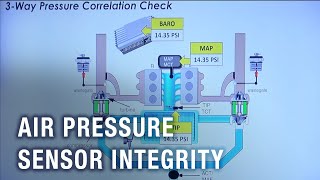
With the Key On, Engine Off, compare the 'BARO' and 'MAP' sensor pressure readings on a scan tool. They must be nearly identical (typically 14.7 PSI at sea level). A significant difference confirms a sensor or circuit fault.
Tools: OBD-II Scanner with Live Data (Advanced) - Validate Voltage vs. Altitude
Check the BARO signal voltage with the key on, engine off. The reading must correlate with your altitude (e.g., 4.6V at sea level, 3.7V at 5,000 feet). An incorrect but stable voltage indicates a calibration failure.
Tools: Multimeter, Altitude Information (Advanced) - Check for Technical Service Bulletins (TSBs)
Search online databases or contact a dealership for TSBs related to P2230. The issue is sometimes a known software glitch requiring a PCM re-flash.
Tools: Online TSB Database or Dealership Inquiry (Intermediate) - Use an Oscilloscope for Definitive Diagnosis
Connect an oscilloscope to the BARO sensor's signal and ground wires. A faulty sensor or circuit shows hash, noise, or sharp dropouts in the waveform, catching glitches a multimeter misses.
Tools: Oscilloscope (Advanced)
When This Code Triggers (Freeze-Frame Conditions)
- Engine Coolant Temp: 180-205°F (Engine at full operating temperature.)
- RPM: 1500-2500 RPM (Steady cruise or light acceleration, not at idle.)
- Engine Load: 25-60% (The engine is under a moderate, consistent load.)
- Vehicle Speed: 45-65 mph (Typical highway or steady-state driving speeds where sensor fluctuations are unexpected.)
Related Codes
- P2227 — Indicates the sensor's reading is outside its expected range. An intermittent fault (P2230) causes the voltage to spike or drop low enough to trigger P2227. They often appear together.
- P0102 — Because the BARO sensor is integrated with the MAF sensor, a damaged wire causes the entire assembly's signal to drop out, triggering both P0102 and P2230.
- P0106 — Points to a conflict between the MAP and BARO sensor readings. An erratic signal from the BARO sensor (P2230) fails to correlate with the stable MAP sensor, setting P0106.
- P0069 — Set when the PCM detects a discrepancy between the MAP and BARO sensor readings at key-on, engine-off. An intermittent BARO sensor triggers this before the engine starts.
Climate & Environmental Factors
- High Altitude: Rapid elevation changes force the BARO sensor to constantly adjust. A marginal sensor fails to keep up, causing its signal to become erratic and triggering P2230.
- High Humidity / Water Intrusion: Moisture penetrates weathered wiring connectors, causing corrosion and intermittent short circuits. This is a primary cause of erratic signals.
- Extreme Temperature Swings: Rapid changes between hot and cold stress the sensor's internal electronics and wiring connections, leading to intermittent open circuits.
How to Talk to a Mechanic About This Code
Say this: "I have an OBD-II code P2230 for an intermittent barometric pressure sensor circuit. I need a diagnostic to test the circuit, connector, and sensor. Please focus on finding the intermittent electrical fault, including a wiggle test of the harness, before recommending a part replacement."
This signals you understand the code is for an intermittent electrical fault, not necessarily a bad sensor. It directs the technician to perform a proper diagnosis, preventing them from immediately replacing the expensive MAF/BARO sensor assembly.
Avoid saying:
- 'Just fix whatever's wrong'
- 'My check engine light is on, can you look at it?'
- 'Whatever you recommend'
Questions to ask before authorizing the repair:
- Did you perform a wiggle test on the harness, and what were the results on the live data feed?
- Can you confirm if the fault is in the wiring, the connector, or the sensor itself?
- If you are recommending a sensor replacement, what specific test confirmed the sensor is bad?
- What is the warranty on this specific repair and the parts used?
Where to Take It: Dealer vs Independent vs Chain
- Dealer:
Recommended for in-warranty repairs, known software updates (TSBs), or makes like Subaru where the sensor is internal to the engine computer.
Best for: Vehicles under warranty, Known TSBs requiring a PCM software update, Complex manufacturer-specific issues (e.g., BARO sensor inside the PCM on a Subaru)
Downsides: Higher labor rates, often 1.5-2x more than independent shops., Defaults to replacing entire assemblies rather than repairing a specific wire. (Typical cost: +50% vs. baseline) - Independent Shop:
Best fit for most out-of-warranty P2230 issues. An experienced independent technician is well-equipped to diagnose the common wiring and sensor faults.
Best for: Out-of-warranty vehicles where cost is a factor., Diagnosing common electrical and wiring faults., Building a long-term relationship with a mechanic.
Downsides: Diagnostic skill and equipment quality vary widely., Lacks access to the latest manufacturer-specific software updates. (Typical cost: +0% vs. baseline) - Chain Shop:
Use with caution. Acceptable for replacing an air filter, but avoid for the initial diagnosis of an intermittent electrical code like P2230.
Best for: Simple, clear-cut part replacements like an air filter.
Downsides: Technician skill varies widely., Unsuited for diagnosing complex or intermittent electrical problems., Inclined to replace parts rather than perform detailed wiring diagnostics. (Typical cost: -10% vs. baseline)
When to Walk Away From the Repair
If the estimated repair cost exceeds 40% of the car's private-party value, pause and consider selling or trading in the vehicle.
- Car worth $5000, fix is $450: Fix it. This is a standard repair cost and is well below the threshold.
- Car worth $3000, fix is $1200: Borderline. The repair is 40% of the car's value. This is common for a PCM replacement on an older Subaru. Get a second opinion before authorizing.
- Car worth $2500, fix is $1500: Walk away. The repair cost is 60% of the vehicle's value. It is not economically sensible to proceed.
What Scan Tool You Need for This Code
Minimum: An OBD-II reader with the ability to display and graph live data.
A simple code reader only tells you the P2230 code exists. It cannot show the live voltage from the sensor, which is essential for spotting the intermittent drops that define this fault. Without live data, you cannot perform a 'wiggle test'.
Budget: Ancel BD310 or Topdon TopScan Lite (~$60-90) — These Bluetooth scanners connect to a smartphone app to display and graph live data for the BARO sensor. This is the minimum capability needed to watch the voltage fluctuate during a wiggle test.
Mid-range: BlueDriver Pro or Foxwell NT604 Elite (~$100-170) — In addition to robust live data graphing, these tools offer access to manufacturer-specific codes and enhanced data PIDs. BlueDriver provides user-friendly repair reports.
Professional: Autel MaxiCOM MK808 or Innova 5610 (~$350-550) — These tablet-style scanners offer comprehensive features, including full bidirectional control, extensive data logging, and access to all vehicle modules. Higher-end Autel models include an oscilloscope function to capture intermittent electrical glitches.
Rent vs buy: If this is a one-time diagnosis, auto parts stores offer a tool loaner program where you borrow a scanner for free with a refundable deposit. Buy a scanner only if you plan to perform diagnostics more than once a year.
How to Clear the Code After You Fix It
- Use an OBD-II scan tool to clear the P2230 code.
- Perform a complete OBD-II drive cycle to allow readiness monitors to run.
- Reconnect the battery if it was disconnected for the repair.
Drive cycle (~30 minutes): To reset the readiness monitors, perform a mixed driving cycle: Start the engine from cold and let it idle for 2-3 minutes. Drive for 5-10 minutes in stop-and-go city traffic. Drive for 15 minutes at a steady highway speed between 55-65 mph. Allow the vehicle to cool down completely.
Readiness monitors affected: Comprehensive Component Monitor (CCM), Catalyst (CAT) Monitor, Evaporative (EVAP) System Monitor
Before emissions retest: drive at least 100 miles to fully set monitors.
Watch out for:
- Clearing the code with a scanner does not reset the readiness monitors; a drive cycle is required.
- If the root cause of P2230 is not fixed correctly, the code returns during the drive cycle.
- Disconnecting the battery clears the code but resets all readiness monitors to 'Not Ready', guaranteeing an emissions test failure until a full drive cycle is completed.
Will This Fail Emissions / State Inspection?
Yes — this code typically fails an OBD-II emissions inspection.
- California: An active P2230 code is an automatic test failure. After repair, a full OBD-II drive cycle must be completed to set all readiness monitors to 'Ready' before a retest is possible.
- New York: The NYS DMV vehicle inspection includes an OBD-II scan. An illuminated Check Engine Light for code P2230 results in an automatic failure.
- Texas: In counties requiring emissions testing, an active P2230 code causes the vehicle to fail the inspection. After repair, readiness monitors must be set before re-inspection.
Most Commonly Affected Vehicles
- Ford F-150 (3.5L EcoBoost) (2015-2020) — Frequently traced to moisture intrusion in the wiring harness connectors or a faulty sensor assembly. TSBs exist for sensor calibration.
- Chevrolet Equinox / Silverado (2.4L, 5.3L) (2013-2018) — Commonly caused by a faulty MAF/BARO sensor assembly or a poor connection at the sensor.
- Chevrolet Malibu (2008-2012) — Aging wiring harnesses are a primary suspect. Check for chafed wires near the air intake box and engine mounts.
- Subaru Outback/Forester (2010-2015) — The BARO sensor is integrated directly into the PCM. A faulty sensor requires complete PCM replacement.
- Chevrolet Camaro (2016-2018) — Often traced back to a faulty MAP/BARO sensor or a loose electrical connection worsened by engine vibration.
- Hyundai Sonata / Elantra (2011-2018) — Commonly related to the combined MAF/BARO sensor assembly failing or intermittent connector issues.
- BMW 3-Series (E90, F30) (2006-2018) — The BARO sensor is part of the MAP sensor or integrated into the DME (PCM). Triggered by oil contamination from the crankcase ventilation system.
- Nissan Altima / Sentra (2013-2019) — Intermittent BARO sensor faults occur frequently. Using non-OEM sensors guarantees the code returns.
Manufacturer-Specific Notes
- General (Ford, GM, Toyota, Honda): The BARO sensor is not a standalone part. It is integrated into the Mass Airflow (MAF) sensor or Manifold Absolute Pressure (MAP) sensor, requiring replacement of the entire assembly.
- Subaru / SAAB / some BMW: The BARO sensor is located inside the Powertrain Control Module (PCM/DME). If the sensor fails, the entire computer must be repaired or replaced.
- Ford: On EcoBoost engines, TSBs address water intrusion into the MAP-T sensor wiring harness connectors. The fix involves replacing the connector and applying dielectric grease.
- Various: Manufacturers periodically release PCM software updates to correct overly sensitive diagnostic parameters. Always check for TSBs before replacing a sensor.
Real Owner Stories
2012 Ford F-150 EcoBoost with multiple codes
Check engine light came on with 9 different codes after driving through rain and splashing through water. The truck lost power and ran terribly.
What they tried:
- Inspected the entire body control wiring harness.
- Checked all main electrical connectors for corrosion.
- Traced symptoms back to the moment water splashed into the wheel wells.
Outcome: Found a single wire in the harness on the passenger side had rubbed through its insulation against a canvas-like material on the inner splash shield. The water caused the exposed wire to short. Repairing this one wire fixed all nine codes instantly.
Lesson: An intermittent electrical fault appearing after rain is often a wiring issue, not a failed sensor. Trace the harness for chafing or damage before replacing parts, as one bad wire triggers multiple codes.
2018 Chevrolet Silverado with P2230
Check Engine Light on with code P2230. The truck hesitated slightly off the line.
What they tried:
- Checked the air filter.
- Inspected the MAF/BARO sensor connector.
Outcome: The owner found the MAF/BARO sensor connector was loose and contaminated with dust. Cleaning the connector with electrical contact cleaner and re-seating it firmly resolved the code without replacing the sensor.
Lesson: Start diagnosis by checking the simple, high-frequency failure points: the air filter and the MAF sensor's electrical connector. A loose plug mimics a failed sensor perfectly.
2013 Subaru Outback with P2230
CEL came on, car had a slightly rough idle and hesitation when accelerating. The code was P2230.
What they tried:
- A shop diagnosed the issue after checking wiring and external sensors.
- The shop confirmed the BARO sensor was faulty.
Outcome: On this specific Subaru model, the BARO sensor is integrated inside the Powertrain Control Module (PCM). The entire PCM had to be replaced and programmed, a costly repair ($1,200).
Lesson: For certain manufacturers like Subaru, the BARO sensor is internal to the PCM. Always confirm sensor location for your specific vehicle before starting repairs to avoid surprise costs.
How to Prevent This Code From Triggering
- Replace engine air filter at recommended intervals (Every 12,000-15,000 miles or annually.) — A clean air filter prevents dirt and debris from restricting airflow, which causes unnatural pressure changes and contaminates the MAF/BARO sensor element.
- Clean the MAF/BARO sensor element periodically (Every 30,000-50,000 miles, or when changing the air filter.) — Using a dedicated MAF sensor cleaner spray removes oil vapor and fine dust that accumulate on the sensing wire, restoring accurate readings.
- Apply dielectric grease to the sensor connector (Whenever the connector is disconnected for service.) — Dielectric grease seals the electrical connector pins from moisture, road salt, and humidity, preventing corrosion and intermittent connections.
- Perform regular visual inspections of the wiring harness (During every oil change or other under-hood service.) — Catching chafed wiring, cracked insulation, or loose harness clips early prevents the wire from breaking or shorting.
Frequently Asked Questions
What is the difference between a Barometric Pressure (BARO) sensor and a Manifold Absolute Pressure (MAP) sensor?
A BARO sensor measures the pressure of the outside atmosphere, while a MAP sensor measures the pressure inside the engine's intake manifold. The PCM uses the BARO reading as a baseline to interpret the MAP sensor's data and calculate engine load.
Where is the barometric pressure sensor located?
It is usually integrated into the Mass Airflow (MAF) sensor, located in the air intake tube between the air filter and throttle body. In some vehicles, it is part of a MAP sensor or located inside the main engine computer (PCM).
Can I just clean the sensor to fix code P2230?
Sometimes. If the sensor element is coated in dirt or oil, cleaning it with a dedicated MAF sensor cleaner spray restores its function. However, this does not fix the most common causes: wiring issues or internal sensor failures.
Why did code P2230 appear after driving in the mountains?
Rapid changes in altitude force the BARO sensor to constantly adjust. A weak sensor or marginal electrical connection fails under this stress, causing its signal to drop out and trigger the code.
What are the most common mistakes when diagnosing P2230?
The biggest mistake is replacing the MAF/BARO sensor without a full diagnosis. Always inspect wiring, check the air filter, and look for software updates first. Using a cheap, uncalibrated aftermarket sensor also guarantees the code returns.
Will a basic OBD scanner fix P2230?
No. A basic scanner only reads and clears the code. Proper diagnosis requires a scanner with live data capabilities to watch the sensor's voltage in real-time and capture intermittent drops.
What voltage should the BARO sensor show?
The sensor's signal voltage typically falls between 0.5V and 4.5V with the key on and engine off, depending on altitude. At sea level, expect around 4.6V, while at 5,000 feet, it drops to roughly 3.7V. For P2230, the critical factor is that this voltage remains steady and does not jump erratically.
Key Takeaways
- Over 60% of P2230 cases stem from a damaged wire or loose connector, not a failed sensor.
- The BARO sensor is integrated into the Mass Airflow (MAF) sensor on most modern vehicles, meaning you must diagnose and replace the entire MAF assembly if the sensor fails.
- Perform a live-data 'wiggle test' on the MAF sensor wiring harness to instantly confirm or rule out an intermittent electrical short.
- Ignoring this code for more than 3 months forces the engine to run rich or lean, risking a $1,200 to $2,800 catalytic converter replacement.
Helpful Videos
Shop the Parts Behind P2230
Below are the parts most often responsible for code P2230, ranked by how frequently each one is the actual culprit (per the diagnosis above). Tap any to see what we have for your vehicle.




The information in this article is provided for general reference and educational purposes only. Vehicle specifications, procedures, and part compatibility can vary by production date, trim level, and region. Always consult your vehicle's factory service manual and verify part numbers before purchasing or performing repairs. Safety-critical components such as airbags, seat belts, and braking systems should be installed by a qualified professional.
- 🧭 Diagnostic Flowchart
- 🎬 Helpful Videos
- 🛍️ Shop This Part
- What Does P2230 Mean?
- Can I Drive With P2230?
- Common Causes
- Symptoms
- Common Fixes & Costs
- DIY vs Professional
- Used vs. New Parts: Buying Guide
- What Happens If You Wait — Timeline
- Cost of Not Fixing It
- Diagnosis Steps
- When This Code Triggers (Freeze-Frame Conditions)
- Related Codes
- Climate & Environmental Factors
- How to Talk to a Mechanic About This Code
- Where to Take It: Dealer vs Independent vs Chain
- When to Walk Away From the Repair
- What Scan Tool You Need for This Code
- How to Clear the Code After You Fix It
- Will This Fail Emissions / State Inspection?
- Most Commonly Affected Vehicles
- Manufacturer-Specific Notes
- Real Owner Stories
- 2012 Ford F-150 EcoBoost with multiple codes
- 2018 Chevrolet Silverado with P2230
- 2013 Subaru Outback with P2230
- How to Prevent This Code From Triggering
- Frequently Asked Questions
- What is the difference between a Barometric Pressure (BARO) sensor and a Manifold Absolute Pressure (MAP) sensor?
- Where is the barometric pressure sensor located?
- Can I just clean the sensor to fix code P2230?
- Why did code P2230 appear after driving in the mountains?
- What are the most common mistakes when diagnosing P2230?
- Will a basic OBD scanner fix P2230?
- What voltage should the BARO sensor show?
- Key Takeaways
- 🎟️ Get 5% Off