

OBD-II Code P2254: Oxygen Sensor Negative Current Control Circuit/Open (Bank 2, Sensor 1)
The Ultimate Guide to What P2254 Means, Why It Triggers, and How to Fix It for Good
- Code P2254 indicates a broken ground wire or open circuit in the upstream oxygen sensor on engine Bank 2.
- Test the sensor's ground circuit with a multimeter before spending $150+ on a new sensor, as broken wiring causes this code just as often as a failed part.
- Driving with an active P2254 code forces the engine to run rich, which will destroy a $1,000+ catalytic converter within a few months.
- Install only OEM-spec sensors like Denso or NTK; cheap universal sensors have incorrect resistance values and will trigger the P2254 code again immediately.
What Does P2254 Mean?
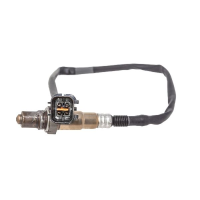
Code P2254 means the Powertrain Control Module (PCM) detects an open break in the negative current control circuit for the upstream oxygen sensor on engine Bank 2. This sensor, often a complex Air/Fuel Ratio (A/F) sensor, measures the exact amount of oxygen in the exhaust before it reaches the catalytic converter. The negative current control circuit is essentially the sensor's ground path. When it fails, the PCM loses the sensor signal, preventing it from making the precise fuel adjustments necessary for efficient combustion.
Technical definition: O2 Sensor Negative Current Control Circuit/Open Bank 2 Sensor 1. This diagnostic trouble code (DTC) indicates the powertrain control module (PCM) detects an open circuit in the negative current control (ground) circuit for the upstream oxygen (O2) sensor on engine bank two. A discrepancy greater than 10% from the expected resistance value triggers the code. 🎬 Watch: A quick overview of P2254 causes and common fixes. Bank 2 is the side of the engine opposite the #1 cylinder. Sensor 1 is the pre-catalytic converter sensor.
Can I Drive With P2254?
Yes, But With Caution. You can drive for a few days, but long distances will cause severe damage. Continuing to drive with P2254 causes poor fuel economy, rough engine performance, and inevitably destroys the catalytic converter. A glowing red-hot converter is a sign of immediate danger. This turns a $200 sensor repair into a $1,500+ catalytic converter replacement. Get the vehicle diagnosed and repaired within 100 miles.
Common Causes
- Failed Bank 2, Sensor 1 Oxygen (A/F) Sensor (Very Common) — The sensor itself is the most frequent culprit. Subjected to extreme heat and exhaust gases, its internal heater element and sensing cells wear out or fail electrically, causing an internal open circuit.
- Damaged Wiring, Corroded Connector, or Poor Ground (Common) — The O2 sensor wiring harness lives in a harsh environment. Wires burn on the exhaust, chafe against the engine block, or suffer from corroded connector pins due to moisture and road salt. A loose chassis ground strap also creates high resistance, mimicking an open circuit.
- Incompatible Aftermarket Sensor (Common) — Cheap, universal aftermarket sensors frequently cause the code to return immediately after repair. Their internal resistance, reference voltage, and heater specifications rarely align with strict OEM PCM requirements.
- Blown Fuse or Faulty Relay (Less Common) — The O2 sensor's heater circuit is protected by a fuse and controlled by a relay. A blown fuse interrupts power and triggers circuit codes like P2254, though a dedicated heater code (P0135) usually accompanies it.
- Exhaust Leak Near the Sensor (Less Common) — A cracked exhaust manifold or failed gasket introduces outside oxygen into the exhaust stream. This skews the sensor's readings so dramatically that the PCM interprets the abnormal signal as a hard circuit failure.
- PCM Software/Calibration Issue (Rare) — Sometimes, overly sensitive PCM software logic erroneously sets the P2254 code. Manufacturers release Technical Service Bulletins (TSBs) with software updates to correct this without replacing hardware.
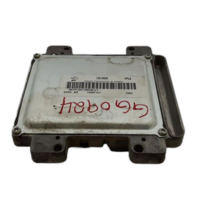
- Faulty Powertrain Control Module (PCM) (Very Rare) — This is the absolute last resort. An internal failure of the driver circuit within the PCM that controls the O2 sensor causes this code. Consider this only after exhaustively testing wiring, sensors, fuses, and grounds.
Symptoms
- Decreased Fuel Economy — The PCM defaults to a rich fuel mixture to protect the engine, dropping fuel economy by up to 20%.
- Reduced or Rough Engine Performance — The engine feels sluggish, hesitates on acceleration, or idles roughly due to the inefficient air/fuel mixture.
- Rotten Egg Smell from Exhaust — A strong sulfur or rotten egg smell from the tailpipe means the catalytic converter is overloaded with unburned fuel.
- Glowing Red Catalytic Converter — The catalytic converter gets so hot from burning excess fuel that it glows red, indicating imminent, catastrophic damage. Pull over safely and turn off the engine immediately.
- Check Engine Light On (also visible on scanner) — The check engine light illuminates steadily, but flashes if severe misfires occur alongside the sensor failure.
- Failed Emissions Test (also visible on scanner) — Code P2254 triggers an automatic failure for any state emissions or smog inspection, as the O2 sensor is the primary emissions monitor.
Diagnostic Flowchart
Tap your situation to follow the diagnostic path that matches what you're seeing on this code.
Common Fixes & Costs
- Replace Bank 2, Sensor 1 Oxygen Sensor — Parts: $80-$300, Labor: $75-$250, ~0.8 hr book time (DIY)
- Repair Damaged Wiring or Connector — Parts: $15-$60, Labor: $150-$400, ~2 hr book time (Intermediate)
- Replace Blown O2 Sensor/Heater Fuse — Parts: $1-$10, Labor: $25-$75, ~0.3 hr book time (Beginner)
- Repair Exhaust Manifold Gasket Leak — Parts: $20-$60, Labor: $200-$400, ~3.5 hr book time (Professional)
- Update Powertrain Control Module (PCM) Software — Parts: $0, Labor: $100-$200, ~1 hr book time (Professional)
DIY vs Professional
- Replace Bank 2, Sensor 1 Oxygen Sensor — Beginner:
- Repair Damaged Wiring or Connector — Beginner:
- Repair Exhaust Manifold Gasket Leak — Beginner:
- Update Powertrain Control Module (PCM) Software — Beginner:
Used vs. New Parts: Buying Guide
When a used part is worth it: Buying a used oxygen sensor is never recommended. They are wear-and-tear items with a finite lifespan. The small cost savings are not worth the risk of early failure and repeating the labor.
Donor-vehicle mileage cap: roughly under 20000 miles for the part to have meaningful remaining life.
Donor quality checklist:
- Only consider if from a very low-mileage vehicle wrecked for non-engine related reasons.
- Verify the exact OEM part number matches perfectly.
- Avoid parts from rust-belt states due to connector corrosion.
Decision logic:
- If The part is an Oxygen (A/F) Sensor → Buy a new, high-quality OEM or OEM-equivalent part (e.g., Denso, NTK). Reliability is paramount.
- If The consequential failed part is a Catalytic Converter → A used OEM converter from a low-mileage (<80k miles) donor is a viable option if the new OEM price is prohibitive.
Warranty tradeoff: Used sensors typically have a 30-day warranty. New aftermarket sensors have a 1-year to limited lifetime warranty. New OEM parts carry a 1-year/12,000-mile warranty.
Worst-case if a used part fails: $150-$400 if a used sensor fails shortly after installation, requiring repeat labor costs.
What Happens If You Wait — Timeline
- 0-2 weeks: Check Engine Light is on. No other symptoms are noticeable. The PCM uses default fuel maps. (MPG impact: 0-5%% · Added cost: $0-$20 in wasted fuel.)
- 2 weeks - 3 months: Consistent drop in fuel economy. The engine hesitates slightly on acceleration. The catalytic converter operates at higher-than-normal temperatures. (MPG impact: 5-15%% · Added cost: $50-$150 in wasted fuel.)
- 3-6 months: Noticeable rough idle, poor performance, and a 'rotten egg' exhaust smell. The internal substrate of the catalytic converter begins to melt and clog from sustained overheating. (MPG impact: 10-20%% · Added cost: $1000-$2500. The catalytic converter is permanently damaged and requires replacement.)
- 6+ months: Severe engine performance issues and stalling. The clogged catalytic converter creates massive exhaust backpressure. The converter glows red after driving. (MPG impact: >20%% · Added cost: $2500+. Requires a new catalytic converter, O2 sensor, and potential secondary repairs for fouled spark plugs or burned exhaust valves.)
Cost of Not Fixing It
- 0-1 month: Noticeable drop in fuel economy (5-15%) and failed emissions test. (Added cost: $20-$60 per month in extra fuel.)
- 1-6 months: Catalytic converter begins to overheat from a rich fuel mixture, leading to irreversible damage. Spark plugs foul. (Added cost: $1000-$2500 for catalytic converter replacement.)
- 6+ months: Complete catalytic converter failure, potential damage to exhaust valves or piston rings from running lean, and engine misfires. (Added cost: $2500+ for catalytic converter and engine repairs.)
Diagnosis Steps
- Scan for Codes and Review Freeze Frame Data
Connect an OBD-II scanner. Confirm P2254 is present and look for companion codes (e.g., P0135, P2197, P2251). Document the freeze frame data to see engine parameters at the exact moment the fault triggered.
Tools: OBD-II Scanner (Beginner) - Thorough Visual Inspection
Locate the Bank 2, Sensor 1 O2 sensor. Inspect the entire wiring harness from the sensor to the main engine harness. Look for melted plastic, chafing against heat shields, and brittle insulation. Unplug the connector and inspect for green corrosion or pushed-out pins.
Tools: Flashlight, Inspection Mirror, Safety Glasses (Beginner) - [PRO TIP] Perform a 'Wiggle Test'
While monitoring the circuit's continuity or live sensor data on a scanner, carefully wiggle the wiring harness at various points, especially near the connector. If the reading jumps or drops out, you have found an intermittent break in the wire.
Tools: Digital Multimeter or Advanced Scanner (Intermediate) - [PRO TIP] Test the Ground Circuit at the Connector
Using a multimeter and wiring diagram, identify the Negative Current Control/Ground pin on the harness-side of the O2 sensor connector. With the key off, measure resistance (Ohms) between this pin and a known good chassis ground. A reading of 'OL' (Over Limit) confirms the open circuit is in the wiring, not the sensor.
Tools: Digital Multimeter, Vehicle-Specific Wiring Diagram (Intermediate) - Test the Heater Circuit Fuse
Consult the owner's manual to find the fuse for the 'A/F Heater' or 'O2 Heater'. Pull the fuse and visually inspect it. A blown fuse points to a short circuit in the heater element or its wiring.
Tools: Owner's Manual, Fuse Puller (Beginner) - [ADVANCED] Analyze Live Sensor Data
Using an advanced scan tool, view live data for 'A/F Sensor Current Bank 2 Sensor 1'. A healthy sensor at idle fluctuates slightly around 0 mA. If the current is stuck at a fixed value and the wiring is confirmed good, the sensor has failed internally.
Tools: Advanced OBD-II Scanner with Live Data (Advanced) - Check for Exhaust Leaks
Start the engine cold. Listen for ticking or puffing sounds near the Bank 2 exhaust manifold. Use a piece of rubber hose as a stethoscope. An exhaust leak lets in oxygen and fools the PCM into setting a circuit code.
Tools: Mechanic's Stethoscope or Rubber Hose (Intermediate) - [ADVANCED] Check for Voltage Drop on the Ground Wire
Reconnect the sensor and start the engine. Set the multimeter to DC Volts. Place the positive lead on the battery's positive terminal and the negative lead on the ground wire at the sensor connector (back-probe it). A reading over 0.1V indicates excessive resistance in the ground path.
Tools: Digital Multimeter with Back-Probes (Advanced) - [ADVANCED] Test Heater Circuit Voltage
Identify the heater circuit power and ground pins on the harness-side connector. With Key On, Engine Off (KOEO), measure voltage between the power and ground pins. It should be approximately 12 volts. If voltage is missing, trace the power supply back from the fuse/relay.
Tools: Digital Multimeter, Vehicle-Specific Wiring Diagram (Advanced)
When This Code Triggers (Freeze-Frame Conditions)
- Engine Coolant Temp: 180-200°F (Fully warmed up (closed-loop operation).)
- RPM: 1500-2500 (Cruise / steady throttle.)
- Engine Load: 20-50% (Moderate load during steady speed driving.)
- Vehicle Speed: 40-60 mph (Steady highway driving.)
Related Codes
- P2251 — This is the direct companion code for the POSITIVE current control circuit. P2254 points to the ground side, while P2251 points to the positive/reference voltage side. If both appear, it indicates a severed wiring harness or a completely failed sensor unit.
- P0153 — O2 Sensor Circuit Slow Response (Bank 2, Sensor 1). An internal failure causing the P2254 open circuit also makes the sensor slow to respond. If you have both codes, the sensor is definitively defective.
- P2197 — O2 Sensor Signal Stuck Lean (Bank 2, Sensor 1). An open ground circuit (P2254) causes the sensor to send no signal, which the PCM interprets as a fixed, lean condition. Fixing the P2254 circuit fault resolves P2197.
- P0135 — Heater Circuit Malfunction for the same sensor. Because the heater and sensor elements share a housing and connector, a melted harness or blown fuse sets both codes simultaneously.
Climate & Environmental Factors
- Cold Climates / Rust Belt: Road salt greatly accelerates corrosion of the O2 sensor's wiring harness and connector pins. This corrosion creates high resistance or a complete open in the circuit, directly triggering the P2254 code.
- Cold Weather Operation: If accompanied by a heater circuit code (P0135), the sensor is slow to reach its 600°F operating temperature. This leads to prolonged open-loop operation, poor fuel economy, and hard starting in freezing conditions.
How to Talk to a Mechanic About This Code
Say this: "I have an OBD-II code P2254, which points to an open in the negative current control circuit for the Bank 2, Sensor 1 oxygen sensor. I'd like to schedule a diagnostic to confirm if the issue is the sensor itself or a problem in the wiring harness before replacing parts."
This signals you understand P2254 is a circuit code, not just a bad sensor. It guides the technician to perform a proper electrical diagnosis (testing continuity) rather than immediately replacing the most common part.
Avoid saying:
- 'My check engine light is on, can you look at it?' (Too vague, invites an expensive diagnostic process).
- 'Just replace the O2 sensor.' (You will be responsible if the new sensor doesn't fix the underlying wiring problem).
- 'Just fix whatever's wrong.' (Gives the shop a blank check).
Questions to ask before authorizing the repair:
- Did you test the ground circuit from the harness connector to the chassis, and what was the resistance reading?
- Did you find any visible damage, melting, or corrosion on the sensor's wiring harness or connector?
- Can you provide a written estimate that separates the cost of parts and labor?
- What is the warranty on the recommended parts and your labor?
Where to Take It: Dealer vs Independent vs Chain
- Dealer:
Best for: Vehicles still under the powertrain or a PZEV emissions warranty (15yr/150k miles in some states)., Known manufacturer-specific issues requiring a PCM software update., Complex electrical issues on German brands (BMW, Mercedes) requiring specialized diagnostic tools.
Downsides: Significantly higher labor rates (1.5-2x) compared to independent shops., More inclined to replace an entire wiring harness rather than repair a single broken wire. (Typical cost: +50% vs. baseline) - Independent Shop:
Best fit for most situations. P2254 is a standard electrical diagnostic code that a competent independent technician solves efficiently. Their flexibility leads to practical repairs (fixing a wire) versus expensive component replacement.
Best for: Out-of-warranty vehicles where cost is a primary concern., Diagnosing and repairing common electrical faults like a broken wire or corroded connector., Getting a second opinion on a high dealership quote.
Downsides: Shop quality and diagnostic skill vary greatly; look for ASE certifications in electrical work., May lack access to the latest manufacturer-specific software updates. (Typical cost: +0% vs. baseline) - Chain Shop:
Use with caution. Acceptable if you are certain the sensor needs replacing and it is easily accessible. AVOID for initial diagnosis.
Best for: Simple, straightforward part replacements when you have already confirmed the sensor itself is the failure.
Downsides: Technician skill varies dramatically; often lacks experience for in-depth electrical diagnostics., High pressure to meet sales targets leads to upselling unnecessary services. (Typical cost: -10% vs. baseline)
When to Walk Away From the Repair
If the total estimated repair cost exceeds 50% of your car's private-party market value, consider selling or trading it in.
- Car worth $4000, fix is $2200: Walk away. The repair cost is over half the car's value, likely because the catalytic converter is destroyed.
- Car worth $12000, fix is $600: Fix it. This repair is well below the threshold and necessary for emissions compliance.
- Car worth $2500, fix is $450: Borderline, but likely worth fixing. Get a second opinion to confirm the diagnosis before proceeding.
What Scan Tool You Need for This Code
Minimum: A scanner that reads and clears codes, shows freeze frame data, and displays live data streams with graphing for O2 sensor voltage.
A basic $20 code reader only gives you the 'P2254' code. It cannot show live sensor data, which is critical for performing a 'wiggle test' to find intermittent wiring faults.
Budget: BlueDriver Pro (~$100) — Connects to your smartphone via Bluetooth. It reads the code, provides freeze frame data, and graphs live O2 sensor data to help find wiring faults.
Mid-range: Foxwell NT510 Elite (~$180) — A handheld scanner offering brand-specific diagnostics. It provides robust live data graphing and performs bi-directional tests to verify circuit integrity.
Professional: Autel MaxiCOM MK808 / MK808BT (~$450-550) — A professional tablet scanner providing comprehensive diagnostics. It offers fast live data graphing and full bi-directional control to command components and pinpoint faults in the PCM driver.
Rent vs buy: AutoZone's Loan-A-Tool program allows you to borrow a basic scanner for free. However, loaner tools rarely offer live data graphing. Buying a tool like the BlueDriver Pro is a worthwhile investment for this diagnosis.
How to Clear the Code After You Fix It
- Use an OBD-II scan tool to clear the code
- Perform a complete drive cycle to run readiness monitors
- Reconnect battery (this also clears codes but resets all vehicle memory)
Drive cycle (~30 minutes): From a cold start, idle for 2-3 minutes. Drive at a steady speed of 55 mph for 5-10 minutes. Let the vehicle coast down to 20 mph without using the brakes. Repeat steady driving and coasting. Allow the engine to cool completely before re-testing.
Readiness monitors affected: Catalyst monitor, O2 sensor monitor, O2 sensor heater monitor
Before emissions retest: drive at least 100 miles to fully set monitors.
Watch out for:
- Disconnecting the battery resets all readiness monitors to 'Not Ready', requiring a full drive cycle before an emissions test.
- The code returns immediately if the root cause (e.g., bad wiring) was not fixed, even with a new sensor.
- Not following the specific drive cycle prevents the O2 sensor monitor from running.
Will This Fail Emissions / State Inspection?
Yes — this code typically fails an OBD-II emissions inspection.
- California: An active P2254 code is an automatic Smog Check failure. After repair, all readiness monitors must be 'Ready' before the vehicle passes.
- New York: The NYVIP3 inspection includes an OBD-II scan. A P2254 code causes an automatic failure. The O2 sensor readiness monitor must be complete to pass.
- Texas: In the 17 counties requiring emissions testing, an active P2254 code is an automatic failure during the OBD-II scan.
Most Commonly Affected Vehicles
- Subaru Outback, Forester, Legacy (2005-2014) — Highly prone to front A/F sensor failures. Using a non-OEM part guarantees the code returns. Bank 2 is the driver's side.
- Toyota Camry, Sienna, Highlander (V6 models) (2004-2012) — Bank 2, Sensor 1 is located on the firewall side of the V6 engine, making access very difficult and increasing labor costs significantly. OEM (Denso) sensor is mandatory.
- Nissan Altima, Maxima, Murano (V6 models) (2007-2015) — Bank 2 is against the firewall, making this a labor-intensive job. Repair costs often fall in the $400-$600 range due to difficult access.
- Honda Odyssey, Pilot, Accord (V6 models) (2005-2016) — Bank 2 is the front bank, closer to the radiator, making it much easier to access than on Toyota/Nissan V6s.
- Ford F-150, Explorer, Edge (V6/V8 models) (2008-2016) — Harness damage is a common issue. Inspect the wiring where it routes near the exhaust and transmission for melting or chafing before replacing the sensor.
- BMW 3-Series, 5-Series, X3, X5 (6-cylinder models) (2006-2013) — Bank 2 refers to cylinders 4-6. It is crucial to use a high-quality OEM-spec sensor to avoid compatibility issues with the sensitive DME (PCM).
- Hyundai Santa Fe, Sonata, Genesis (V6 models) (2007-2016) — Intermittent wiring issues are frequently noted by technicians. A wiggle test on the harness is mandatory during diagnosis.
- Kia Sorento, Optima, Cadenza (V6 models) (2011-2018) — Shares powertrain components with Hyundai. The issue is typically the sensor itself, but verify connector integrity first.
Manufacturer-Specific Notes
- Subaru: Subaru uses complex wideband Air/Fuel Ratio (A/F) sensors. Service Program WXW-80 was issued for models where the front A/F sensor element cracks and fails. TSB 11-131-13R addresses reprogramming the ECM logic to prevent false codes after repair.
- Nissan/Infiniti: On VQ series V6 engines, Bank 2 Sensor 1 is notoriously difficult to access, located on the exhaust manifold against the firewall. This turns a 30-minute job into a 3-hour job.
- Toyota/Lexus: These brands are extremely sensitive to the brand of A/F sensor used. Using a generic brand other than the OEM supplier (Denso) causes the code to return within a few drive cycles.
- General Motors (Chevrolet/GMC): TSB PIP5158A points to issues on V6/V8 models where the O2 sensor wiring harness chafes against the transmission bellhousing or heat shields. Harness inspection is a mandatory first step.
- California & PZEV States: For Partial Zero Emission Vehicles (PZEV) registered in CA, CT, ME, MD, MA, NJ, NY, RI, or VT, emissions components (including O2 sensors) are covered for 15 years or 150,000 miles. Check your under-hood emissions sticker before paying for repairs.
Real Owner Stories
2010 Toyota Camry V6 with 115K miles
Check Engine Light with code P2254 appeared. Owner noticed a 10-15% drop in fuel economy but no other major symptoms.
What they tried:
- Owner attempted to replace the Bank 2, Sensor 1 themselves but found it was on the firewall side of the engine and completely inaccessible without specialized tools.
- A local shop quoted $500+ for the repair due to the high labor involved (3-4 hours).
Outcome: Owner paid the shop to replace the sensor. The part was an OEM Denso A/F sensor costing $150, with the rest being labor. The code cleared and did not return.
Lesson: On many transverse V6 models, Bank 2 is wedged against the firewall. What seems like a simple $150 sensor swap becomes a labor-intensive job requiring a shop lift.
2013 Subaru Outback with 95K miles
P2254 code appeared intermittently over several weeks. The car ran perfectly fine. The owner cleared the code, but it returned every few days.
What they tried:
- Replaced the Bank 2 Sensor 1 with a new aftermarket sensor. The code returned within 50 miles.
- Performed a 'wiggle test' on the harness while watching live data on a scan tool. Found a spot near the main engine connector where wiggling the harness caused the sensor voltage to drop to zero.
Outcome: A pin inside the main connector was pushed back and not fully seated. After re-seating the pin and securing the connector, the code cleared permanently. The original sensor was perfectly fine.
Lesson: P2254 is an 'open circuit' code. Never assume the sensor is bad without testing. A loose connection is a common cause, and testing the circuit prevents wasting money on unneeded parts.
2015 Ford F-150 5.0L with 80K miles
Vehicle threw P2254 along with a P0300 (Random Misfire) code. The engine ran rough at idle, and fuel economy plummeted.
What they tried:
- A mechanic initially recommended replacing the O2 sensor based solely on the P2254 code.
- The owner insisted on addressing the misfire first. A different mechanic found a leaking intake manifold gasket causing a massive vacuum leak.
Outcome: Replacing the intake manifold gasket resolved the vacuum leak, fixing the random misfire (P0300). After clearing the codes, P2254 never returned. The skewed O2 readings were a symptom of the misfire, not a primary fault.
Lesson: When multiple codes are present, always address misfire or lean/rich codes first. Misfires dump raw fuel and air into the exhaust, confusing the O2 sensor and triggering false circuit codes.
How to Prevent This Code From Triggering
- Use Top Tier certified gasoline. (Every fill-up.) — High detergent levels in Top Tier fuels prevent carbon deposit buildup. This ensures a cleaner burn, reducing contaminants that foul the O2 sensor and overload the catalytic converter.
- Address engine misfires immediately. (As soon as they occur.) — A misfire sends unburned fuel into the exhaust, which overheats and destroys both the O2 sensor and the catalytic converter in a matter of days.
- Perform regular engine maintenance. (Per manufacturer's schedule (e.g., 30k/60k/90k miles).) — Replacing spark plugs and air filters on schedule prevents the lean/rich conditions and contamination that shorten the life of O2 sensors.
- Apply dielectric grease to sensor connectors. (During sensor replacement or harness inspection.) — In rust-belt climates, applying dielectric grease to the connector seal (not the pins) prevents moisture intrusion and corrosion, a primary cause of open circuit codes.
Frequently Asked Questions
What is Bank 2, Sensor 1?
On a V-style engine (V6, V8), Bank 2 is the cylinder bank that does not contain the #1 cylinder. Sensor 1 is the 'upstream' sensor located in the exhaust system before the catalytic converter.
What's the #1 mistake people make with code P2254?
The most costly mistake is immediately replacing the oxygen sensor without testing the circuit. Code P2254 specifically flags an 'open circuit', meaning a broken wire or bad connection is highly likely. Always test ground circuit continuity first.
Can cleaning the O2 sensor fix a P2254?
No. This code indicates an electrical failure (an open circuit), not a contaminated sensor tip. Cleaning the outside of the sensor has no effect on its internal electrical integrity.
I replaced the sensor and the P2254 code came back. Now what?
If a new, high-quality sensor doesn't fix the code, the fault is in the wiring or the PCM. Re-verify ground continuity from the harness connector to the chassis and check for breaks in the middle of the harness. If the wiring is flawless, consider professional diagnosis of the PCM.
How long does it take for a bad O2 sensor to damage a catalytic converter?
Damage begins within a few hundred miles of driving. If the engine runs excessively rich, the converter overheats and suffers permanent damage quickly. Replacing a catalytic converter costs between $1,000 and $2,500.
Is replacing an O2 sensor a DIY job?
It depends on the location. If the sensor is easily accessible on a 4-cylinder engine, it is a great DIY job. If it is on the firewall side of a transverse V6, access is extremely limited and requires professional tools.
Why is the upstream O2 sensor more expensive than the downstream one?
The upstream 'Sensor 1' is typically a wideband Air/Fuel Ratio (A/F) sensor that provides a precise, variable signal for fuel control. The downstream 'Sensor 2' is a simpler, cheaper narrowband sensor that only monitors catalytic converter efficiency.
What's the difference between the negative and positive current control circuits (P2254 vs P2251)?
The positive current control (P2251) is the 'power-in' side of the circuit, while the negative current control (P2254) is the 'ground' side. Both are necessary, but diagnosis requires tracing different wires back to the PCM based on the wiring diagram.
Key Takeaways
- Code P2254 indicates a broken ground wire or open circuit in the upstream oxygen sensor on engine Bank 2.
- Test the sensor's ground circuit with a multimeter before spending $150+ on a new sensor, as broken wiring causes this code just as often as a failed part.
- Driving with an active P2254 code forces the engine to run rich, which will destroy a $1,000+ catalytic converter within a few months.
- Install only OEM-spec sensors like Denso or NTK; cheap universal sensors have incorrect resistance values and will trigger the P2254 code again immediately.
Helpful Videos
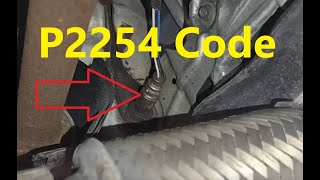
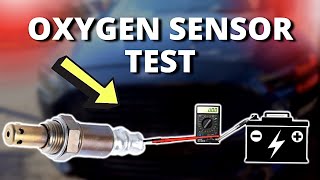
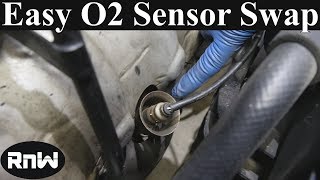
Shop the Parts Behind P2254
Below are the parts most often responsible for code P2254, ranked by how frequently each one is the actual culprit (per the diagnosis above). Tap any to see what we have for your vehicle.



The information in this article is provided for general reference and educational purposes only. Vehicle specifications, procedures, and part compatibility can vary by production date, trim level, and region. Always consult your vehicle's factory service manual and verify part numbers before purchasing or performing repairs. Safety-critical components such as airbags, seat belts, and braking systems should be installed by a qualified professional.
- 🧭 Diagnostic Flowchart
- 🎬 Helpful Videos
- 🛍️ Shop This Part
- What Does P2254 Mean?
- Can I Drive With P2254?
- Common Causes
- Symptoms
- Common Fixes & Costs
- DIY vs Professional
- Used vs. New Parts: Buying Guide
- What Happens If You Wait — Timeline
- Cost of Not Fixing It
- Diagnosis Steps
- When This Code Triggers (Freeze-Frame Conditions)
- Related Codes
- Climate & Environmental Factors
- How to Talk to a Mechanic About This Code
- Where to Take It: Dealer vs Independent vs Chain
- When to Walk Away From the Repair
- What Scan Tool You Need for This Code
- How to Clear the Code After You Fix It
- Will This Fail Emissions / State Inspection?
- Most Commonly Affected Vehicles
- Manufacturer-Specific Notes
- Real Owner Stories
- 2010 Toyota Camry V6 with 115K miles
- 2013 Subaru Outback with 95K miles
- 2015 Ford F-150 5.0L with 80K miles
- How to Prevent This Code From Triggering
- Frequently Asked Questions
- What is Bank 2, Sensor 1?
- What's the #1 mistake people make with code P2254?
- Can cleaning the O2 sensor fix a P2254?
- I replaced the sensor and the P2254 code came back. Now what?
- How long does it take for a bad O2 sensor to damage a catalytic converter?
- Is replacing an O2 sensor a DIY job?
- Why is the upstream O2 sensor more expensive than the downstream one?
- What's the difference between the negative and positive current control circuits (P2254 vs P2251)?
- Key Takeaways
- 🎟️ Get 5% Off