

OBD-II Code P2262: Turbo/Supercharger Boost Pressure Not Detected - Mechanical
The Ultimate Guide: What P2262 Means, Why It Triggers, and Exactly How to Fix It
- Code P2262 triggers when the engine control module commands boost but detects 0 PSI, indicating a severe mechanical failure rather than a minor electrical glitch.
- Soot buildup seizing the Variable Geometry Turbo (VGT) mechanism causes over 60% of P2262 codes in modern diesel engines.
- Driving over 100 miles with a P2262 code forces the engine to run excessively rich, which will permanently destroy a $2,000+ Diesel Particulate Filter (DPF).
- Always perform a $50-$100 smoke test to rule out cracked intercooler hoses before authorizing a $3,000 complete turbocharger replacement.
- Activating the exhaust brake daily on Cummins and Powerstroke engines physically scrapes carbon off the VGT vanes, preventing the mechanism from seizing.
What Does P2262 Mean?
The P2262 code signifies the Powertrain Control Module (PCM) commanded the turbocharger to build boost, but the Manifold Absolute Pressure (MAP) sensor detected 0 PSI of pressure increase. The turbo is not providing power, and the computer has logged a fault pointing to a major mechanical failure. The code sets when the expected boost and actual reading drastically differ, indicating a complete lack of boost rather than a low-boost condition.
Technical definition: The official SAE/OBD-II definition is "Turbocharger/Supercharger Boost Pressure Not Detected - Mechanical". This indicates the PCM verified the sensor's electrical circuits are intact and concluded the failure is in the physical components responsible for generating boost (e.g., a seized turbo, a failed actuator, or ruptured charge-air plumbing).
Can I Drive With P2262?
Yes, But With Caution. You can drive, but the engine enters 'limp mode' with severely reduced power, making acceleration and merging dangerous. Driving over 100 miles with no boost causes the engine to run excessively rich, washing raw fuel past the piston rings into the oil. In diesel engines, this overwhelms and destroys the Diesel Particulate Filter (DPF), adding a $1,500-$3,000 repair bill. Repair the issue immediately to prevent catastrophic secondary damage.
Common Causes
- Sticking or Seized Variable Geometry Turbocharger (VGT) Mechanism (Very Common) — This is the most frequent cause on modern diesels (Cummins, Powerstroke, Duramax). Exhaust soot and carbon deposits build up inside the turbine housing, causing the internal vanes or sliding nozzle ring to bind or seize completely. This prevents the turbo from adjusting to create boost.
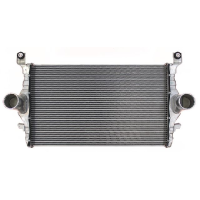
- Major Boost Leaks (Cracked Hoses, Blown Intercooler, Loose Clamps) (Common) — Pressurized air from the turbo travels through hoses and an intercooler. A large split in a boost hose, a blown-off clamp, or a ruptured intercooler end tank vents all boost pressure to the atmosphere before it reaches the engine, resulting in a 'no boost' reading at the MAP sensor.
- Faulty MAP Sensor or Broken Vacuum Hose (Common) — The MAP sensor measures boost pressure. If the sensor fails, its port clogs with soot, or its connecting vacuum hose breaks (notorious on the Ford 6.0L Powerstroke), it reports a static atmospheric pressure reading to the PCM, even if the turbo is producing maximum boost.
- Faulty Turbocharger Actuator or Control Solenoid (Common) — The actuator physically moves the turbo's VGT vanes or wastegate. Electronic actuators fail internally, while vacuum/oil-pressure actuators rely on solenoids that fail. If the actuator is inoperative, the turbo's geometry remains static and cannot build boost.
- Clogged or Restricted Exhaust System (Less Common) — A severely clogged catalytic converter or Diesel Particulate Filter (DPF) creates excessive exhaust backpressure. This backpressure chokes the turbo, preventing exhaust gases from spinning the turbine wheel fast enough to generate boost.
- Complete Turbocharger Mechanical Failure (Less Common) — Catastrophic internal failure, such as seized bearings from oil starvation, a snapped shaft, or shattered compressor/turbine wheels, physically prevents the turbo from spinning.
- Faulty Brake Booster Pressure Sensor (Less Common) — Some vehicles use a brake booster pressure sensor as a redundant check for the intake pressure system. A conflicting reading between this sensor and the MAP sensor triggers a P2262 code on specific models.
- Exhaust Leaks Before the Turbo (Rare) — A massive leak in the exhaust manifold or its gaskets located before the turbocharger vents the exhaust gas energy needed to spin the turbine, preventing boost generation.
- Software Calibration Issue or Faulty PCM (Very Rare) — A corrupted software calibration within the PCM causes the module to misinterpret a valid sensor voltage as 'not detected'. This is only considered after exhaustively ruling out all mechanical and wiring faults.
Symptoms
- Check Engine Light is On — The PCM illuminates the Malfunction Indicator Lamp (MIL) immediately upon detecting the 0 PSI boost condition.
- Drastic Loss of Engine Power — The engine enters 'limp mode' and feels extremely sluggish, struggling to accelerate or climb hills.
- Black Smoke from Exhaust (Diesel) — The lack of boost creates a rich fuel condition (too much fuel, not enough air), resulting in thick black smoke pouring from the exhaust during acceleration.
- Abnormal Hissing or Grinding Noises — A loud hissing or whooshing sound indicates a major boost leak. Grinding or siren-like noises indicate catastrophic internal turbo bearing failure.
- Decreased Fuel Economy — Without turbocharger efficiency, the engine works significantly harder to produce power, causing a dramatic drop in fuel mileage.
- Boost Gauge Reads Zero (also visible on scanner) — Factory or aftermarket boost gauges show 0 PSI building during acceleration.
Diagnostic Flowchart
Tap your situation to follow the diagnostic path that matches what you're seeing on this code.
Common Fixes & Costs
- Replacing the MAP Sensor or Vacuum Hose
— Parts: $50-$150, Labor: $50-$100, ~0.5 hr book time
(DIY)
Ford 6.0L Powerstroke (MAP Sensor Hose): OEM 4C2Z-9L474-AA (Alt: Dorman 904-222)
Dodge/Ram 6.7L Cummins (MAP Sensor): OEM Cummins 5698455 (Alt: Bosch 0281006338) - Replacing a Cracked Boost Hose/Pipe — Parts: $100-$300, Labor: $150-$250, ~1.5 hr book time (DIY)
- Replacing the Turbocharger Actuator/Solenoid
— Parts: $300-$800, Labor: $200-$500, ~2.5 hr book time
(Intermediate)
Dodge/Ram 6.7L Cummins: OEM Holset 4034315 (Alt: Dorman 689-100)
Ford 6.0L Powerstroke (Solenoid): OEM Motorcraft 5C3Z-6F089-BA (Alt: Standard Motor Products TBA1) - Cleaning the Variable Geometry Turbocharger (VGT) — Parts: $50-$100, Labor: $500-$1000, ~5.0 hr book time (Professional)
- Replacing the Complete Turbocharger Assembly — Parts: $1500-$3500, Labor: $800-$1500, ~6.5 hr book time (Professional)
DIY vs Professional
- Replacing the MAP Sensor or MAP Sensor Hose 🟢 Beginner
Tools: Basic hand tools, T20 Torx bit (for Ford 6.0L). - Replacing a Boost Hose/Pipe 🟢 Beginner
Tools: Socket set, screwdrivers, pliers. - Replacing the Turbocharger Actuator/Solenoid 🟢 Beginner
Tools: Basic hand tools, multimeter, bidirectional scan tool for calibration. - Cleaning the VGT Turbocharger 🟢 Beginner
Tools: Extensive mechanic's tools, torque wrench, specialty turbo tools, die grinder. - Replacing the Complete Turbocharger Assembly 🟢 Beginner
Tools: Professional tool set, specialty line wrenches, torque wrenches.
Used vs. New Parts: Buying Guide
When a used part is worth it: A used OEM turbocharger from a low-mileage wrecked vehicle (under 80,000 miles) is cost-effective for older, high-mileage trucks where a new turbo exceeds the vehicle's value.
Donor-vehicle mileage cap: roughly under 80000 miles for the part to have meaningful remaining life.
Donor quality checklist:
- Verify the donor vehicle did not suffer oil starvation or a blown engine.
- Ensure absolutely zero in-and-out (axial) shaft play.
- Verify compressor and turbine wheels spin freely with no bent or chipped blades.
- Inspect the exhaust housing for cracks, especially around the wastegate port.
Decision logic:
- If Vehicle is under warranty or has low mileage (<80k miles) → Buy a new OEM or high-quality remanufactured part to maintain reliability.
- If Vehicle is older (>150k miles) and budget is the primary concern → Purchase a carefully inspected used OEM part, accepting a shorter lifespan.
- If The specific turbo model has a known design flaw (e.g., early 6.0L Powerstroke) → Favor a high-quality aftermarket remanufactured unit that corrects original design weaknesses.
Warranty tradeoff: Used parts carry a 30-90 day part-only warranty. New aftermarket and remanufactured parts offer 1-3 year warranties, often with optional labor protection.
Worst-case if a used part fails: $800-$2000 if a used turbo fails shortly after installation, requiring a second labor charge and another replacement part.
What Happens If You Wait — Timeline
- 0-4 weeks: Intermittent fault. Code P226C appears first. A slight hesitation or 'turbo lag' is noticeable. The exhaust brake feels less effective. (MPG impact: 0-5%% · Added cost: $0-$50 in wasted fuel)
- 1-3 months: Code P2262 permanently sets. The engine enters 'limp mode' with severe power loss. Black smoke is visible during acceleration. Fuel economy drops significantly. (MPG impact: 10-25%% · Added cost: $50-$200 in wasted fuel)
- 3-6 months: The constant rich fuel condition clogs the Diesel Particulate Filter (DPF). The truck attempts frequent regenerations. The DPF requires professional cleaning. (MPG impact: 20-35%% · Added cost: $300-$800 for DPF cleaning, plus continued fuel waste.)
- 6+ months: Catastrophic secondary damage. The DPF becomes completely blocked and cracks internally, requiring full replacement. Unburnt fuel dilutes engine oil, accelerating internal engine wear. (MPG impact: 30-50%+% · Added cost: $2,000-$5,000+ for DPF replacement and engine repairs.)
Cost of Not Fixing It
- Short-Term (0-100 miles): Severe loss of power ('limp mode'), drastically reduced fuel economy, and black smoke from the exhaust. The vehicle is a safety hazard in traffic. (Added cost: Negligible, but accident risk is high.)
- Medium-Term (100-1,000 miles): The rich fuel condition overwhelms the Diesel Particulate Filter (DPF), clogging it with soot. This triggers additional codes and requires professional forced regeneration or chemical cleaning. (Added cost: $300-$800)
- Long-Term (1,000+ miles): Complete DPF failure requiring replacement. Excess fuel washes past piston rings, diluting engine oil and causing accelerated internal engine wear. Excessive backpressure destroys turbo seals. (Added cost: $2,000-$5,000+)
Diagnosis Steps
- Perform a Thorough Visual Inspection
Inspect the entire air intake and charge air system. Look for blown-off intercooler boots, loose clamps, or large cracks in plastic piping. Check the MAP sensor for physical damage, ensure its electrical connector is secure, and verify the vacuum hose connecting it to the intake manifold is intact.
Tools: Flashlight, Inspection Mirror (Beginner) - Analyze Freeze Frame & Associated Codes
Use an OBD-II scanner to read freeze frame data and identify exact engine conditions when P2262 set. Look for companion codes: P0299 (Underboost) suggests a leak, P0234 (Overboost) indicates vanes stuck closed before failing, and P226C (Slow Response) confirms a soot-clogged VGT mechanism.
Tools: OBD-II Scanner (Beginner) - Perform a Boost Leak Test (Smoke Test)
Connect a smoke machine to the intake system to fill the charge pipes and intercooler with low-pressure smoke. This reveals hidden leaks in hoses or intercooler end tanks. Never condemn a turbocharger without performing this test first.
Tools: Smoke Machine, Intake Adapter (Intermediate) - Verify MAP Sensor Voltage and BARO Correlation
With Key On, Engine Off (KOEO), verify the MAP sensor live data matches the Barometric Pressure (BARO) sensor (~14.7 PSI at sea level). Back-probe the MAP signal wire: KOEO voltage should be 4.5V-4.9V, dropping to 1.0V-1.5V at idle. An illogical KOEO voltage confirms a dead sensor.
Tools: OBD-II Scanner with Live Data, Multimeter, Back-probe Kit (Intermediate) - Command VGT Actuator and Observe Linkage
Use a bidirectional scan tool to command the VGT actuator from 0% to 100%. Observe the actuator arm on the turbo; it must move smoothly through its full range. Erratic movement, grinding, or no movement confirms a faulty actuator or a seized internal VGT mechanism.
Tools: Bidirectional OBD-II Scanner (Advanced) - Check for Exhaust Restriction via Back Pressure
Monitor the Exhaust Back Pressure (EBP) PID under load. At 2000 RPM, EBP should not exceed 3.0-4.5 PSI. A high EBP reading (>10 PSI) with a low MAP reading confirms a clogged DPF or catalytic converter is choking the turbo.
Tools: OBD-II Scanner with Live Data (Professional) - Test VGT Actuator/Solenoid Resistance
Disconnect the actuator and measure internal resistance. A 6.7L Cummins VGT actuator requires 108-132 Ohms between data link pins. A 6.0L Powerstroke solenoid requires 3.42-4.18 Ohms. An 'OL' reading confirms a burned-out actuator motor or solenoid.
Tools: Multimeter, Vehicle-Specific Repair Manual (Advanced) - Inspect Turbocharger Shaft Play
Remove the intake boot from the turbo compressor inlet. Attempt to move the center shaft side-to-side (radial) and in-and-out (axial). Any perceptible in-and-out play, or fins contacting the housing, confirms catastrophic bearing failure requiring turbo replacement.
Tools: Basic Hand Tools (Advanced)
When This Code Triggers (Freeze-Frame Conditions)
- Engine Coolant Temp: 180-210°F (82-99°C) (The engine is fully warmed up to normal operating temperature.)
- Engine RPM: 1500-2500 RPM (The engine is operating in the typical cruise or light acceleration range where boost is expected.)
- Engine Load: 30-70% (The driver is requesting moderate power, such as accelerating, merging, or climbing a grade.)
- Vehicle Speed: 30-60 MPH (48-97 KPH) (The fault occurs during city or highway driving under steady throttle or light acceleration.)
Related Codes
- P0299 — Turbo/Supercharger Underboost.
- P0234 — Turbo/Supercharger Overboost.
- P003A — Turbocharger Boost Control 'A' Position Exceeded Learning Limit.
- P226C — Turbocharger Boost Control 'A' Slow Response.
Climate & Environmental Factors
- Cold Weather / Snow: On 2004.5-2005 Chevy/GMC Duramax LLY models, the air intake ingests snow, soaking and freezing the air filter. This severely restricts airflow, starving the turbo and triggering P2262. GM issued a winter grille cover (TSB PI1164B) to address this.
- High Altitude: Operating at high altitude lowers ambient air pressure. A marginal component (like a slightly sticky actuator or a small boost leak) is pushed past its tipping point at altitude, causing the P2262 code to set when it functions normally at sea level.
How to Talk to a Mechanic About This Code
Say this: "I have a P2262 code indicating zero boost pressure. Please start with a comprehensive boost leak smoke test, verify MAP sensor live data, and command the VGT actuator before quoting a full turbo replacement."
This directs the shop to follow a logical diagnostic path, preventing them from immediately quoting the most expensive repair without ruling out cheap sensors or hoses.
Avoid saying:
- 'Just fix whatever's wrong'
- 'My check engine light is on, can you look at it?'
- 'I think I need a new turbo'
Questions to ask before authorizing the repair:
- Did the smoke test reveal any boost leaks?
- What were the MAP sensor readings at Key On, Engine Off and at idle?
- Were you able to command the VGT actuator with a scan tool, and did it move through its full range?
- If recommending a turbo replacement, why isn't cleaning it or replacing the actuator a viable option?
Where to Take It: Dealer vs Independent vs Chain
- Dealer:
Best for: Vehicles under powertrain or emissions warranty, Complex manufacturer-specific issues (e.g., Nissan Titan rotary valve), When a specific software update (TSB) is required
Downsides: Highest labor rate (1.5-2x vs. independent), Quicker to replace an entire turbo assembly rather than repair a sub-component. (Typical cost: +50% vs. baseline) - Independent Shop:
Best fit. A reputable independent diesel specialist has the experience and advanced diagnostic tools to accurately pinpoint the fault without the dealer price tag.
Best for: Out-of-warranty diesel trucks (Cummins, Powerstroke, Duramax), Owners wanting a thorough diagnosis to find the most cost-effective repair, Shops specializing in diesel performance
Downsides: Diagnostic equipment varies greatly. Ensure they are a well-reviewed diesel specialist. (Typical cost: +0% vs. baseline) - Chain Shop:
AVOID. This code requires specialized knowledge and tools beyond the scope of a general repair chain.
Best for: Simple maintenance like oil changes or tire rotations.
Downsides: Technicians lack specialized bidirectional scanners for VGT calibration., High risk of misdiagnosis leading to unnecessary part replacements. (Typical cost: -10% vs. baseline)
When to Walk Away From the Repair
If the estimated repair cost exceeds 40-50% of the vehicle's private-party value, seriously consider selling or trading it in as-is.
- Car worth $8000, fix is $4500: Walk away. The repair cost is over 50% of the truck's value. Sell it as a 'mechanic special'.
- Car worth $25000, fix is $4500: Fix it. The repair is well below the 50% threshold and restores significant value.
- Car worth $10000, fix is $800: Fix it. This is a low-cost repair relative to the vehicle's value.
What Scan Tool You Need for This Code
Minimum: A scanner that reads manufacturer-specific live data PIDs, such as MAP, EBP, and VGT Duty Cycle %.
A basic $20 code reader cannot show live sensor data needed to diagnose a restriction, nor can it perform bidirectional tests to command the turbo actuator.
Budget: BlueDriver Pro Scan Tool (~$100) — Reads freeze frame data and graphs live data PIDs like MAP and RPM to identify obvious sensor issues. Lacks bidirectional control.
Mid-range: FOXWELL NT510 Elite (~$180) — Offers bidirectional control to command the VGT actuator and performs service functions like DPF regeneration. Must be purchased pre-loaded for your specific vehicle make.
Professional: Autel MaxiCOM MK808BT / MK900BT (~$450-600) — Provides full bidirectional control to test the VGT actuator and performs the critical 'VGT Learn' calibration procedure required after replacing the actuator.
Rent vs buy: Buy. Free rental tools from auto parts stores lack the bidirectional control functions essential for diagnosing P2262 correctly.
How to Clear the Code After You Fix It
- Use an OBD-II scan tool to clear the P2262 code.
- Do not disconnect the battery, as this resets all readiness monitors to 'Not Ready'.
- Perform a complete drive cycle to allow the PCM to verify boost pressure generation.
Drive cycle (~30 minutes): Cold start (after sitting 8+ hours), idle for 3 minutes, drive in stop-and-go city traffic for 15 minutes, followed by 15 minutes of steady highway driving at 55-60 mph.
Readiness monitors affected: Catalyst Monitor, EGR System Monitor, Oxygen Sensor Monitor, Comprehensive Component Monitor
Before emissions retest: drive at least 100 miles to fully set monitors.
Watch out for:
- Clearing the code without performing a drive cycle results in an automatic emissions test failure.
- The code returns immediately under heavy acceleration if the mechanical fault remains.
- Failing to perform a VGT actuator calibration via scan tool after replacement triggers immediate codes.
Will This Fail Emissions / State Inspection?
Yes — this code typically fails an OBD-II emissions inspection.
- California: An illuminated Check Engine Light is an automatic Smog Check failure. A full drive cycle must be completed to set readiness monitors before a retest.
- New York: An active P2262 fails the annual safety and emissions inspection. Clearing the code resets all monitors, requiring a drive cycle before testing.
- Texas: In emissions-testing counties (Harris, Dallas, Tarrant), an active P2262 code causes an automatic failure.
Most Commonly Affected Vehicles
- Dodge/Ram 2500/3500 with 6.7L Cummins (2007.5-2018) — Extremely common due to EGR soot clogging the VGT sliding nozzle. TSBs 11-001-08 and 11-002-08 address cleaning procedures. Using the exhaust brake frequently prevents the mechanism from seizing.
- Ford F-250/F-350 with 6.0L Powerstroke (2003-2007) — Prone to carbon causing the VGT unison ring to bind. A broken MAP sensor hose nipple is also a highly frequent, inexpensive cause.
- Mazda CX-5, Mazda6, Mazda3 with 2.2L Skyactiv-D (2013-2018) — Caused by a faulty exhaust pressure sensor or its connecting pipe clogging with carbon. Mazda issued warranty extensions (SSP95) for this sensor due to high failure rates.
- Chevrolet/GMC Silverado/Sierra with 6.6L Duramax (LLY, LBZ, LMM) (2004.5-2010) — VGT actuator failure and soot buildup on the turbo vanes are common. The oil-controlled VGT solenoid fails due to contaminated oil.
- Jeep Grand Cherokee with 3.0L EcoDiesel (2014-2018) — Susceptible to boost leaks from cracked intercooler hoses and failures of the electronic turbo actuator.
- Volkswagen Jetta/Golf/Passat with TDI engines (2009-2015) — Caused by a failed turbocharger actuator, sticking VNT vanes due to carbon, or a failed N75 boost control solenoid.
- Volvo V60, XC90 with 2.0L D4 Bi-Turbo engines (2014-2018) — Indicates a failure of the smaller, low-pressure turbo or the valve controlling the transition between the two turbos, resulting in severe power loss at low RPMs.
- Nissan Titan XD with 5.0L Cummins (2016-2019) — TSB NTB20-071 addresses a known issue where the rotary turbine control valve in the low-pressure turbo binds, requiring replacement of the low-pressure turbocharger assembly.
Manufacturer-Specific Notes
- Dodge/Ram (Cummins): The Holset VGT turbo is highly prone to soot buildup. Dealers use a specific cleaning procedure (TSB 11-001-08) injecting cleaning solution. Using the factory exhaust brake daily fully cycles the VGT nozzle, clearing soot and preventing it from sticking.
- Ford (Powerstroke): On the 6.0L engine, the small plastic nipple on the intake manifold for the MAP sensor hose becomes brittle and breaks off. This creates a vacuum leak triggering P2262 even if the turbo is perfectly fine. Always check this $50 hose first.
- Mazda (Skyactiv-D): A faulty exhaust pressure sensor or a carbon-clogged tube leading to it is the most common cause for this code. Clean or replace this sensor and pipe before diagnosing the turbo.
- Chevrolet/GMC (Duramax): On LLY (2004.5-2005) engines in snowy climates, the air intake snorkel ingests snow, soaking the air filter. A frozen filter starves the engine for air, setting P2262. GM released a winter grille cover (TSB PI1164B) to prevent this.
Real Owner Stories
2015 Mazda CX-5 2.2D with ~100k miles
Check engine light came on with P2262. The code triggered when decelerating to low RPM, like stopping at a junction.
What they tried:
- Owner replaced the exhaust pressure sensor, a known failure point, but the code returned.
- Further diagnosis revealed the MAP sensor was faulty.
Outcome: Replacing the MAP sensor resolved the issue permanently.
Lesson: On Mazda Skyactiv-D engines, while the exhaust pressure sensor is a known issue, a faulty MAP sensor also triggers P2262 at low RPMs and must be tested.
2005 Ford F-250 6.0L Powerstroke
Sudden loss of boost and P2262 code. Scan tool showed very high Exhaust Back Pressure (EBP) of 38 PSI with a MAP reading of only 16 PSI.
What they tried:
- Based on the high EBP reading, the owner suspected a clogged catalytic converter.
- Disconnected the exhaust system before the catalytic converter to test.
Outcome: With the catalytic converter disconnected, the truck ran perfectly, confirming the exhaust restriction choked the turbo.
Lesson: A severe exhaust restriction creates so much backpressure that the turbo cannot spool, leading to a 'no boost' condition. Comparing MAP and EBP live data prevents unnecessary turbo replacement.
2012 Ram 2500 6.7L Cummins
Truck threw codes P2262 and P226C, but ran fine, made 30 PSI of boost, and the engine brake worked normally.
What they tried:
- Suspected a sensor issue due to the lack of physical symptoms.
- Removed and cleaned the EBP sensor and its connecting tube.
Outcome: Cleaning the EBP sensor resolved the codes permanently.
Lesson: Before assuming the turbo is seized, cleaning the EBP sensor and its passages is a simple, low-cost diagnostic step that resolves the issue if caused by a soot-clogged reading.
How to Prevent This Code From Triggering
- Use the Exhaust Brake Frequently (Daily, whenever safe.) — Activating the exhaust brake forces the VGT vanes through their full range of motion. This constant movement scrapes carbon off the mechanism, preventing soot from seizing the turbo.
- Avoid Excessive Idling and Short Trips (Daily habit.) — Long idle times prevent the exhaust system from reaching full operating temperature. Moisture and unburnt fuel mix with soot, creating hard carbon deposits that seize VGT components.
- Perform Regular, High-Quality Oil Changes (Per manufacturer's schedule (e.g., every 7,500 miles).) — The turbocharger is cooled and lubricated by engine oil. Clean oil prevents sludge buildup and premature wear on the turbo's bearings, preventing catastrophic failure.
- Ensure Clean Air and Fuel Filters (Per manufacturer's schedule (e.g., every 15,000 miles).) — A clogged air filter restricts airflow, forcing the turbo to work harder. Dirty fuel filters lead to poor combustion, creating excess soot that clogs the VGT and DPF.
- Perform a 'Spirited Drive' Periodically (Once or twice a month.) — Operating the truck under heavy load on the highway for 30 minutes increases exhaust gas temperatures, burning off soot deposits accumulated during low-speed city driving.
Frequently Asked Questions
Can I still drive my car with a P2262 code?
You can drive, but the vehicle enters 'limp mode' with severely reduced power, making highway merging dangerous. Driving over 100 miles forces the engine to run rich, which destroys the Diesel Particulate Filter (DPF). Repair the issue immediately to prevent a $3,000 secondary repair bill.
What does the 'Mechanical' part of the P2262 code definition mean?
It means the engine computer verified the electrical circuits are intact and concluded the failure is physical. The lack of a pressure signal stems from a seized vane, a massive air leak, or a shattered turbine.
Is it expensive to fix code P2262?
Repair costs range from $50 for a broken MAP sensor vacuum hose to over $4,000 for a complete turbocharger replacement. Accurate diagnosis is critical to avoid paying for a new turbo when a $100 sensor is the actual culprit.
What is the most common misdiagnosis for P2262?
The most expensive misdiagnosis is replacing the entire turbocharger without performing a smoke test first. Mechanics often overlook cracked intercooler hoses or broken sensor nipples that vent all boost pressure to the atmosphere.
Will a fuel additive or 'mechanic in a can' fix a sticking turbo?
No. The hard, baked-on carbon deposits that seize a VGT turbo are highly resistant to pour-in-tank fuel or oil additives. Resolving a seized mechanism requires professional chemical injection directly into the turbo housing or complete disassembly.
I cleared the code and it went away. Does that mean it's fixed?
No. A sticking turbo vane or failing actuator is often intermittent at first, but the code returns once the component binds again under load. An intermittent P2262 is a clear warning of an impending permanent mechanical failure.
Can a bad EGR valve cause a P2262 code?
Yes, indirectly. A leaking EGR valve recirculates excessive soot into the exhaust system, which rapidly clogs the VGT mechanism inside the turbo. The EGR malfunction is often the root cause of the turbo seizing on Cummins and Powerstroke engines.
What is 'turbo fart' and is it related to P2262?
A 'turbo fart' or 'bark' is a loud noise caused by VGT vanes sticking and suddenly snapping free under pressure changes. This erratic operation indicates a binding turbo and frequently precedes a P2262 code.
Key Takeaways
- Code P2262 triggers when the engine control module commands boost but detects 0 PSI, indicating a severe mechanical failure rather than a minor electrical glitch.
- Soot buildup seizing the Variable Geometry Turbo (VGT) mechanism causes over 60% of P2262 codes in modern diesel engines.
- Driving over 100 miles with a P2262 code forces the engine to run excessively rich, which will permanently destroy a $2,000+ Diesel Particulate Filter (DPF).
- Always perform a $50-$100 smoke test to rule out cracked intercooler hoses before authorizing a $3,000 complete turbocharger replacement.
- Activating the exhaust brake daily on Cummins and Powerstroke engines physically scrapes carbon off the VGT vanes, preventing the mechanism from seizing.
Helpful Videos

Shop the Parts Behind P2262
Below are the parts most often responsible for code P2262, ranked by how frequently each one is the actual culprit (per the diagnosis above). Tap any to see what we have for your vehicle.




The information in this article is provided for general reference and educational purposes only. Vehicle specifications, procedures, and part compatibility can vary by production date, trim level, and region. Always consult your vehicle's factory service manual and verify part numbers before purchasing or performing repairs. Safety-critical components such as airbags, seat belts, and braking systems should be installed by a qualified professional.
- 🧭 Diagnostic Flowchart
- 🎬 Helpful Videos
- 🛍️ Shop This Part
- What Does P2262 Mean?
- Can I Drive With P2262?
- Common Causes
- Symptoms
- Common Fixes & Costs
- DIY vs Professional
- Used vs. New Parts: Buying Guide
- What Happens If You Wait — Timeline
- Cost of Not Fixing It
- Diagnosis Steps
- When This Code Triggers (Freeze-Frame Conditions)
- Related Codes
- Climate & Environmental Factors
- How to Talk to a Mechanic About This Code
- Where to Take It: Dealer vs Independent vs Chain
- When to Walk Away From the Repair
- What Scan Tool You Need for This Code
- How to Clear the Code After You Fix It
- Will This Fail Emissions / State Inspection?
- Most Commonly Affected Vehicles
- Manufacturer-Specific Notes
- Real Owner Stories
- 2015 Mazda CX-5 2.2D with ~100k miles
- 2005 Ford F-250 6.0L Powerstroke
- 2012 Ram 2500 6.7L Cummins
- How to Prevent This Code From Triggering
- Frequently Asked Questions
- Can I still drive my car with a P2262 code?
- What does the 'Mechanical' part of the P2262 code definition mean?
- Is it expensive to fix code P2262?
- What is the most common misdiagnosis for P2262?
- Will a fuel additive or 'mechanic in a can' fix a sticking turbo?
- I cleared the code and it went away. Does that mean it's fixed?
- Can a bad EGR valve cause a P2262 code?
- What is 'turbo fart' and is it related to P2262?
- Key Takeaways
- 🎟️ Get 5% Off