

OBD-II Code P2266: Water in Fuel Sensor 'A' Circuit Low
The Ultimate Guide to Diagnosing and Fixing P2266
- P2266 triggers when the Water-in-Fuel (WIF) sensor signal drops below 1.0V, indicating either severe water contamination or a short to ground.
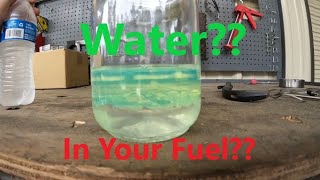
- Drain the fuel/water separator into a clear glass jar immediately; if you see a distinct water layer settling at the bottom, the sensor is working correctly.
- Never drive a diesel engine with an active P2266 and P2269 code combination, as water destroys high-pressure fuel pumps and causes $10,000+ in injector damage.
- Inspect the WIF sensor's electrical connector before buying parts; water intrusion into this specific plug is the root cause for most 2017-2018 Ford Super Duty trucks.
- If the drained fuel is clean, unplug the WIF sensor and test the signal wire with a multimeter; a reading near 0 ohms to ground confirms a wiring harness short.
What Does P2266 Mean?
Your vehicle's Engine Control Module (ECM) detects a voltage reading from the water-in-fuel (WIF) sensor below the normal expected range (typically under 1.0V). A 'Circuit Low' condition means the sensor's signal wire is shorted to ground, the sensor failed internally, or it is correctly detecting a massive amount of water creating a conductive path.
Technical definition: SAE/OBD-II defines P2266 as "Water in Fuel Sensor 'A' Circuit Low". The PCM sets this DTC when the WIF sensor circuit voltage drops below its specified threshold (typically 0.5V - 1.0V, compared to a dry 5.0V). This confirms a short to ground, an internally shorted sensor, or actual water completing the circuit to ground.
Can I Drive With P2266?
No, if symptoms present Do not drive if the engine stalls, hesitates, or refuses to start. Running a diesel engine with water in the fuel causes immediate, catastrophic damage to the high-pressure fuel pump and injectors, turning a simple drain procedure into a $10,000+ repair bill. If the engine runs perfectly normally, you can drive cautiously to the nearest safe location to drain the separator.
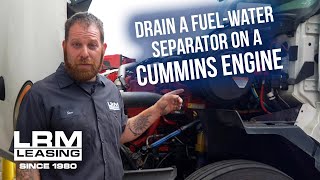
🎬 Watch: How to drain the water separator on a Ford F-250.Common Causes
- Contaminated fuel (significant water) (Very Common) — The sensor is performing its exact function by detecting water collected in the fuel filter/water separator. Water enters via condensation in station storage tanks or your vehicle's tank during temperature fluctuations.
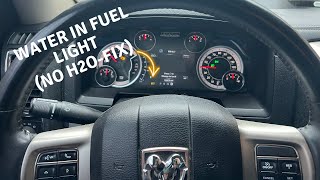
- Faulty Water-in-Fuel (WIF) sensor (Common) — The sensor fails internally, creating a short circuit that mimics the presence of water. 🎬 See how to fix a false warning light on Ram trucks. This sends a constant low voltage signal to the PCM even when the fuel is perfectly clean.
- Wiring harness or connector short to ground (Common) — The wiring harness chafes against the frame, or the electrical connector fills with moisture and corrodes. This creates a direct path to ground, pulling the circuit voltage low. This is a documented failure point on 2017-2018 Ford Super Duty trucks.
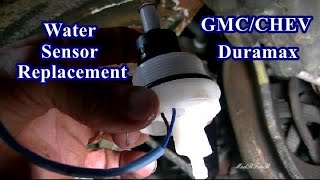
- Saturated fuel filter (Less Common) — An old fuel filter saturated with contaminants and water traps moisture against the sensor probes, 🎬 Watch: Duramax fuel filter and water sensor replacement walkthrough. triggering a constant low-voltage reading.
- Faulty Powertrain Control Module (PCM) (Very Rare) — An internal fault in the PCM's sensor driver circuit causes it to misinterpret a normal 5V signal as a low voltage signal. This requires replacing or reprogramming the computer.
Symptoms
- Water in Fuel and Check Engine Lights illuminated — The PCM triggers both the generic Check Engine Light and the dedicated diesel Water in Fuel warning indicator simultaneously.
- Engine stalling, hesitation, or rough running — Water pulled into the injection system causes the engine to run erratically, hesitate during acceleration, or stall completely.
- Reduced engine power ('Limp Mode') — The PCM forces the vehicle into a reduced power mode to prevent catastrophic high-pressure fuel pump damage.
- Engine will not start — Severe water contamination fills the fuel lines, causing the engine to crank indefinitely without firing.
- Visible water in drained fuel sample (also visible on scanner) — Draining a sample from the water separator reveals a distinct, clear or cloudy layer of water settling at the bottom of the container.
Diagnostic Flowchart
Tap your situation to follow the diagnostic path that matches what you're seeing on this code.
Common Fixes & Costs
- Draining water from the fuel filter/separator — Parts: $0, Labor: $50-$100, ~0.5 hr book time (DIY)
- Replacing the Water-in-Fuel (WIF) Sensor
— Parts: $40-$150, Labor: $100-$200, ~1.0 hr book time
(Intermediate)
Ford F-Series Super Duty (2017-2018): OEM Motorcraft HC3Z-9T321-B (Alt: Dorman 904-055)
Ram 2500/3500 Cummins (2010-2018): OEM Mopar 68197868AB (Alt: Dorman 904-462) - Repairing damaged wiring or connector pigtail — Parts: $20-$60, Labor: $150-$400, ~2.5 hr book time (Professional)
- Replacing the fuel filter
— Parts: $50-$120, Labor: $60-$150, ~0.8 hr book time
(DIY)
Ford F-Series Super Duty (2017+): OEM Motorcraft FD-4625 (Alt: Baldwin PF46174)
Chevy/GMC Duramax (2001-2016): OEM ACDelco TP3018 (Alt: WIX 33960XE) - Draining and cleaning the fuel tank (severe contamination) — Parts: $0, Labor: $400-$800, ~5.0 hr book time (Professional)
Used vs. New Parts: Buying Guide
When a used part is worth it: For a simple electronic component like a WIF sensor, a used OEM part from a reputable auto recycler is a cost-effective option for older vehicles. Never buy a used fuel filter.
Donor-vehicle mileage cap: roughly under 100000 miles for the part to have meaningful remaining life.
Donor quality checklist:
- Verify the part number matches your original sensor exactly.
- Inspect the connector pins on the used sensor for any signs of corrosion or damage.
Decision logic:
- If The cost of a new OEM or quality aftermarket sensor is less than $100 → Buy new. The small savings on a used part aren't worth the risk of premature failure.
- If The part is integrated into the fuel filter housing → Buy a new assembly. Disassembling the housing to install a used sensor increases leak risks.
Warranty tradeoff: Used parts typically have a 30-90 day warranty. New aftermarket parts offer 1-year warranties. New OEM parts usually have a 1-2 year warranty.
Worst-case if a used part fails: $150 - $300 if the used sensor fails soon after installation, requiring repeat labor costs.
What Happens If You Wait — Timeline
- 0-1 month: Code P2266 appears. If due to an electrical short, no symptoms occur. If due to actual water, the engine begins to hesitate or run rough intermittently. (MPG impact: 0-5%% · Added cost: $0-$50 in wasted fuel)
- 1-3 months: Water causes surface corrosion on internal fuel system components. The high-pressure fuel pump (HPFP) and injectors suffer from reduced lubricity. Engine stalling becomes frequent. (MPG impact: 5-10%% · Added cost: $500 - $2,500 (damage to the lift pump and early wear on injectors))
- 3-6 months: Severe wear on the HPFP begins. The pump sheds small metal particles into the high-pressure fuel system. Injector nozzles clog, leading to severe power loss. (MPG impact: 10-20%% · Added cost: $2,000 - $5,000 (impending HPFP failure and definite injector damage))
- 6+ months: Catastrophic failure of the HPFP occurs. The pump disintegrates internally, sending metal debris through the entire system, destroying the fuel rails and all injectors. (MPG impact: 20-50% (if vehicle runs at all)% · Added cost: $8,000 - $15,000+ (complete fuel system replacement))
Cost of Not Fixing It
- Immediate (0-1 month): If due to actual water, you experience engine hesitation, stalling, and reduced power. The fuel filter becomes saturated and clogged. (Added cost: $50 - $150 (for a new filter and tow))
- Short Term (1-3 months): Water causes corrosion inside the fuel system. It damages the low-pressure lift pump and degrades the high-pressure fuel pump by reducing lubricity. (Added cost: $500 - $2,500 (for lift pump and initial injector damage))
- Long Term (3+ months): Catastrophic failure of the high-pressure fuel pump (HPFP). The pump sends metal shavings throughout the system, destroying the fuel rails and all injectors. (Added cost: $8,000 - $15,000+)
Diagnosis Steps
- Scan Codes and Check Live Data
Use an OBD-II scanner to confirm P2266 and check for P2269 (Water in Fuel Condition). View the live data PID for the WIF sensor voltage; a reading below 1.0V confirms the active fault.
Tools: OBD-II Scanner (Beginner) - Drain Separator and Perform Visual Fuel Test
Locate the fuel filter/water separator drain valve. Drain a sample into a clear glass jar and let it sit for 5 minutes. Water is denser than diesel and settles at the bottom. If you see water, the sensor is working correctly.
Tools: Clear glass jar, Drain pan, Pliers or wrench (Beginner) - Inspect WIF Sensor Connector and Wiring
Disconnect the WIF sensor. Inspect the electrical connector for water intrusion, corrosion, or pushed-out pins. Trace the wiring harness back 12 inches, looking for chafing against metal brackets.
Tools: Flashlight (Beginner) - Test Sensor Circuit for Short to Ground
With the sensor unplugged and ignition off, use a multimeter to measure resistance between the harness signal wire pin and the negative battery terminal. A reading near 0 ohms confirms a short in the wiring harness. Infinite resistance means the harness is good.
Tools: Digital Multimeter, Vehicle-specific wiring diagram (Advanced) - Test Sensor Resistance
Remove the sensor and measure resistance across its two pins. Resistive-style sensors read around 240 ohms when dry. A reading near 0 ohms indicates an internal short, requiring sensor replacement.
Tools: Digital Multimeter (Advanced) - Replace Fuel Filter and WIF Sensor
If the sensor failed internally or the filter is saturated, replace both components. Prime the fuel system according to the manufacturer's procedure before starting the engine.
Tools: New fuel filter, New WIF sensor, Wrench set, Scan tool (for resets) (Intermediate) - Check Low-Pressure Fuel System
If drivability issues persist after draining clean fuel, connect a fuel pressure gauge. The lift pump must generate 50-60 PSI (KOEO) on most heavy-duty trucks to supply the high-pressure pump adequately.
Tools: Fuel Pressure Gauge with appropriate adapters (Advanced)
When This Code Triggers (Freeze-Frame Conditions)
- WIF Sensor Voltage: < 1.0V (The direct trigger for the code; PCM sees voltage below the minimum threshold.)
- Engine State: Key On, Engine Off or Running (The code sets during the initial power-on self-test or while running, as the circuit is continuously monitored.)
- Time Since Start: > 10 seconds (Requires the low voltage condition to be present for a few seconds before logging the code to prevent false alarms from fuel sloshing.)
Related Codes
- P2269 — Indicates 'Water in Fuel Condition Detected.' While P2266 flags a circuit fault, P2269 confirms the sensor physically detects water. Having both codes guarantees significant water contamination requiring immediate draining.
- P2267 — The opposite of P2266, indicating 'Water in Fuel Sensor Circuit High.' This points to an open circuit, such as a broken wire or a completely disconnected sensor.
- P1140 — A Ford-specific code for 'Water in Fuel Condition.' It appears alongside P2266 during connector water intrusion events, as outlined in Ford TSBs.
- P0087 — Indicates 'Fuel Rail/System Pressure - Too Low.' Severe water contamination prevents the high-pressure pump from building adequate pressure, triggering this code as a secondary effect.
Climate & Environmental Factors
- Temperature Fluctuations: Swings between daytime heat and nighttime cold cause condensation. Warm air in the tank holds moisture, and as the tank cools, droplets form and sink into the fuel.
- High Humidity: Humid air contains more moisture. As fuel is consumed, humid air fills the void, accelerating condensation on the tank walls.
- Cold Weather: In freezing temperatures, collected water turns into ice crystals, blocking fuel lines and filters entirely, preventing the engine from starting.
How to Talk to a Mechanic About This Code
Say this: "I have a P2266 code on my diesel truck. Please start by taking a fuel sample from the separator to check for actual water. If the fuel is clean, test the sensor circuit for a short to ground before replacing the sensor."
This signals you understand the common causes and want a logical diagnosis. It prevents the shop from immediately replacing the sensor, which is a common misdiagnosis if the issue is wiring or actual water contamination.
Avoid saying:
- 'My check engine light is on, can you just fix it?'
- 'I think I need a new water-in-fuel sensor.'
- 'Just do whatever you think is necessary.'
Questions to ask before authorizing the repair:
- Did you find water in the fuel sample? If so, how much?
- If the fuel was clean, did you test the wiring harness for a short to ground before condemning the sensor?
- If the sensor needs to be replaced, are you also replacing the fuel filter at the same time?
- What is the warranty on the parts and labor for this repair?
Where to Take It: Dealer vs Independent vs Chain
- Dealer:
Best for: Vehicles still under powertrain warranty., Known manufacturer-specific issues covered by a TSB, like the connector issue on 2017-2018 Ford Super Duty trucks., Repairs requiring proprietary software to reset the 'Water in Fuel' counter.
Downsides: Highest labor rate., Quicker to replace an entire assembly rather than performing a detailed wiring repair. (Typical cost: +50% vs. baseline) - Independent Shop:
Best overall fit. A reputable independent diesel mechanic offers the best balance of expertise and value for diagnosing P2266.
Best for: Out-of-warranty diesel trucks., Shops specializing in diesel repair familiar with this code on Ford, Ram, and GM trucks., Cost-effective diagnosis and repair for common wiring or sensor issues.
Downsides: Quality varies; look for ASE certifications and positive reviews specifically mentioning diesel work. (Typical cost: +0% vs. baseline) - Chain Shop:
Use with caution. Acceptable for a simple fuel filter change, but avoid for comprehensive diagnosis of a persistent P2266 code.
Best for: Simple fixes like draining the water separator if you are unable to do it yourself.
Downsides: Technician skill with diesel fuel systems is highly variable., Less likely to perform detailed electrical diagnostics. (Typical cost: -10% vs. baseline)
When to Walk Away From the Repair
If the estimated repair cost for the worst-case scenario (full fuel system replacement) exceeds 50-60% of the truck's private-party value, seriously consider selling the vehicle as-is.
- Car worth $25000, fix is $12000: Borderline. This is a major repair. Get a second opinion and weigh the cost against a down payment on a newer truck.
- Car worth $40000, fix is $1500: Fix it. A mid-range repair like a wiring fix or sensor replacement is well below the threshold.
- Car worth $15000, fix is $10000: Walk away. The repair cost is too high relative to the vehicle's value. List it for sale as a 'mechanic special'.
What Scan Tool You Need for This Code
Minimum: A scanner that reads and clears codes, and displays live data PIDs for the Water-in-Fuel sensor voltage.
A basic $20 code reader won't show live sensor voltage, which is critical for determining if the sensor reads low constantly (bad sensor/wiring) or only when water is present.
Budget: BlueDriver Pro (~$100) — Reads and clears the code, provides freeze frame data, and displays live data for the WIF sensor voltage on its app.
Mid-range: Foxwell NT510 Elite (~$180) — Offers bidirectional control needed to perform a 'Water in Fuel' counter reset required on some Ford and GM trucks after a repair.
Professional: Autel MaxiCOM MK808 (~$500) — Provides full OEM-level diagnostics, performs all necessary resets, and accesses proprietary PIDs for heavy-duty trucks.
Rent vs buy: To properly diagnose P2266 with live data, buying a tool like BlueDriver is a worthwhile investment for any diesel owner.
How to Clear the Code After You Fix It
- Use an OBD-II scan tool to clear the P2266 code and any related fault codes.
- Prime the fuel system if any fuel components were replaced.
- Start the engine and check for the return of the Check Engine Light or Water in Fuel message.
- Perform a drive cycle to allow the vehicle's readiness monitors to run.
Drive cycle (~30 minutes): A general OBD-II drive cycle includes a cold start (after sitting for 8+ hours), 2-3 minutes of idling, followed by mixed city driving and at least 15 minutes of steady highway speed (55-60 mph).
Readiness monitors affected: Fuel System Monitor, Comprehensive Component Monitor
Before emissions retest: drive at least 50 miles to fully set monitors.
Watch out for:
- Failing to properly prime the fuel system after replacing a filter, causing a no-start condition.
- Forgetting to reset the specific 'Water in Fuel' maintenance counter with a dealer-level scan tool on Ford models.
Will This Fail Emissions / State Inspection?
Yes — this code typically fails an OBD-II emissions inspection.
- California: An active Check Engine Light from code P2266 causes an automatic failure of the smog check. All readiness monitors must be set to 'Ready'.
- New York: The NYS Vehicle Inspection Program includes an OBD-II scan. An illuminated Malfunction Indicator Lamp (MIL) is an automatic failure.
- Texas: In the 17 Texas counties requiring emissions testing, an active P2266 code results in a failure.
Most Commonly Affected Vehicles
- Ford F-Series Super Duty (F-250, F-350) (2017-2018) — Covered by TSB 18-2133 for 6.7L Power Stroke engines. Water intrudes into the WIF sensor connector (C3080), causing a short and triggering P2266. The fix requires drying the connector and resetting the WIF system with a scan tool.
- Dodge/Ram 2500/3500 with Cummins Diesel (2005-2012) — Frequently experience WIF sensor codes related to the sensor located in the bottom of the fuel filter canister. The sensor housing cracks, leading to false readings or fuel leaks.
- Chevrolet/GMC Silverado/Sierra with Duramax Diesel (2004-2016) — Commonly affected by sensor and wiring issues at the fuel filter housing. The plastic bleeder screw becomes brittle and breaks, requiring sensor replacement alongside the filter.
- Jeep Grand Cherokee (EcoDiesel) (2014-2018) — P2266 on the 3.0L EcoDiesel engine indicates a failed WIF sensor. The sensor fails internally and reports a 'circuit low' condition even with perfectly clean fuel.
- Volkswagen Jetta, Golf, Passat (TDI models) (2009-2015) — Points to a faulty sensor at the fuel filter housing or corrosion in the connector. The compact engine bay causes wiring to chafe against brackets and short out.
- Nissan Titan XD (with 5.0L Cummins Diesel) (2016-2019) — Triggered by the WIF sensor integrated with the primary fuel filter assembly. The diagnostic process mirrors the Ram Cummins engines.
Manufacturer-Specific Notes
- Ford: On 2017-2018 Super Duty trucks, TSB 18-2133 identifies water intrusion into connector C3080 as the primary cause. After repair, the 'water in fuel' message persists until the system counter is reset using a bidirectional scan tool.
- GM / Duramax: On 2020+ models with keyless start, resetting the filter life requires pressing and holding the start button for 10 seconds without your foot on the brake to enter accessory mode, then using steering wheel controls.
- GM / Duramax: On older Duramax models (LB7, LLY), unplugging the sensor turns the warning light off. Creating a jumper wire across the two harness pins turns the light on, instantly verifying the wiring integrity to the PCM.
Real Owner Stories
2018 Ford F-250 6.7L Power Stroke - Easy Fix
Owner went through a high-pressure car wash. Immediately after, the 'Water in Fuel' light and Check Engine Light (P2266, P2269) illuminated. The truck ran normally.
Outcome: After reconnecting the dry connector and clearing the codes, the lights stayed off. The issue was water intrusion into the connector, costing $0.
Lesson: If the code appears immediately after heavy rain or a car wash, inspect the WIF sensor's electrical connector for moisture before draining fuel.
2012 Ram 2500 6.7L Cummins - Misdiagnosis Story
P2266 code appeared intermittently. The owner drained the separator, found no water, and replaced the sensor.
Outcome: The mechanic found the signal wire chafed against the frame, causing an intermittent short to ground. Repairing the wire permanently fixed the issue.
Lesson: Do not assume a new part fixes the problem. If a code returns after replacing the sensor, a wiring fault is the next logical suspect.
2015 GMC Sierra 2500 LML Duramax - The Real Deal
Truck suddenly started running rough, hesitating, and stalled, showing P2266 and P2269.
Outcome: The shop drained and cleaned the entire fuel tank, flushed the lines, and replaced both filters. The source was a bad tank of diesel from a station. Total repair cost was $750.
Lesson: Drivability symptoms combined with P2266/P2269 guarantee significant water in the system. Do not drive; immediate service prevents catastrophic damage.
How to Prevent This Code From Triggering
- Drain the fuel/water separator monthly (Monthly, or whenever the 'Water in Fuel' light illuminates) — Removes accumulated water before it reaches a level that triggers the sensor or gets pulled into the high-pressure fuel system.
- Keep the fuel tank more than half full (Daily habit) — A fuller tank has less empty space, reducing the volume of moist air that condenses into water droplets on the tank walls.
- Purchase fuel from high-volume stations (Every fill-up) — High-volume stations turn over inventory quickly, reducing the chance of water accumulating in their underground storage tanks.
- Inspect the WIF sensor connector during filter changes (Every 10,000-15,000 miles) — Visually checking the connector for moisture catches potential electrical shorts before they trigger a fault code.
Frequently Asked Questions
What is a Water-in-Fuel (WIF) sensor and how does it work?
It is an electronic probe at the bottom of the fuel filter housing. Water is conductive and denser than diesel, so it bridges the gap between the probes. This completes an electrical circuit, dropping the voltage and alerting the computer.
Can a car wash cause the P2266 code?
Yes. High-pressure water forces moisture into the WIF sensor's electrical connector, creating a short circuit. This is a documented failure point on 2017-2018 Ford Super Duty trucks.
I drained clean fuel, but the code returned. What next?
The problem is electrical. Test for a faulty WIF sensor that is internally shorted, corrosion inside the sensor's connector, or a short to ground in the wiring harness.
Is it safe to ignore code P2266?
Absolutely not. If the code stems from actual water in the fuel, you will destroy your high-pressure fuel pump and injectors. This leads to repair costs exceeding $10,000.
How does water enter my diesel fuel tank?
Water primarily enters through condensation caused by temperature fluctuations inside the tank. It also enters via poorly maintained underground storage tanks at filling stations or a damaged fuel cap seal.
Will a diesel fuel additive fix a P2266 code?
No. Additives cannot fix a faulty sensor or a wiring short. While demulsifiers help separate water for the filter to catch, you must still physically drain the water.
What is the most common misdiagnosis for P2266?
Mechanics often replace the WIF sensor without first draining the fuel separator to check for physical water. They also frequently overlook connector corrosion, which perfectly mimics a bad sensor.
How do I reset the 'Water in Fuel' light after a repair?
Clear the code with an OBD-II scanner. Some manufacturers, like Ford and GM, require a specific pedal sequence or a dealer-level scan tool to reset the internal maintenance counter.
Key Takeaways
- P2266 triggers when the Water-in-Fuel (WIF) sensor signal drops below 1.0V, indicating either severe water contamination or a short to ground.
- Drain the fuel/water separator into a clear glass jar immediately; if you see a distinct water layer settling at the bottom, the sensor is working correctly.
- Never drive a diesel engine with an active P2266 and P2269 code combination, as water destroys high-pressure fuel pumps and causes $10,000+ in injector damage.
- Inspect the WIF sensor's electrical connector before buying parts; water intrusion into this specific plug is the root cause for most 2017-2018 Ford Super Duty trucks.
- If the drained fuel is clean, unplug the WIF sensor and test the signal wire with a multimeter; a reading near 0 ohms to ground confirms a wiring harness short.
Helpful Videos

Shop the Parts Behind P2266
Below are the parts most often responsible for code P2266, ranked by how frequently each one is the actual culprit (per the diagnosis above). Tap any to see what we have for your vehicle.



The information in this article is provided for general reference and educational purposes only. Vehicle specifications, procedures, and part compatibility can vary by production date, trim level, and region. Always consult your vehicle's factory service manual and verify part numbers before purchasing or performing repairs. Safety-critical components such as airbags, seat belts, and braking systems should be installed by a qualified professional.
- 🧭 Diagnostic Flowchart
- 🎬 Helpful Videos
- 🛍️ Shop This Part
- What Does P2266 Mean?
- Can I Drive With P2266?
- Common Causes
- Symptoms
- Common Fixes & Costs
- Used vs. New Parts: Buying Guide
- What Happens If You Wait — Timeline
- Cost of Not Fixing It
- Diagnosis Steps
- When This Code Triggers (Freeze-Frame Conditions)
- Related Codes
- Climate & Environmental Factors
- How to Talk to a Mechanic About This Code
- Where to Take It: Dealer vs Independent vs Chain
- When to Walk Away From the Repair
- What Scan Tool You Need for This Code
- How to Clear the Code After You Fix It
- Will This Fail Emissions / State Inspection?
- Most Commonly Affected Vehicles
- Manufacturer-Specific Notes
- Real Owner Stories
- 2018 Ford F-250 6.7L Power Stroke - Easy Fix
- 2012 Ram 2500 6.7L Cummins - Misdiagnosis Story
- 2015 GMC Sierra 2500 LML Duramax - The Real Deal
- How to Prevent This Code From Triggering
- Frequently Asked Questions
- What is a Water-in-Fuel (WIF) sensor and how does it work?
- Can a car wash cause the P2266 code?
- I drained clean fuel, but the code returned. What next?
- Is it safe to ignore code P2266?
- How does water enter my diesel fuel tank?
- Will a diesel fuel additive fix a P2266 code?
- What is the most common misdiagnosis for P2266?
- How do I reset the 'Water in Fuel' light after a repair?
- Key Takeaways
- 🎟️ Get 5% Off