

OBD-II Code P2271: O2 Sensor Signal Stuck Rich (Bank 1, Sensor 2)
The Ultimate Guide to What P2271 Means, Why It Triggers, and How to Fix It for Good
- Code P2271 triggers when the Bank 1, Sensor 2 oxygen sensor outputs a constant voltage above 0.8V, indicating a stuck rich condition.
- Do not blindly replace the O2 sensor; damaged wiring or a true rich condition from a leaking fuel injector causes this code in 30% of cases.
- Driving with an active P2271 reduces fuel economy by up to 15% and destroys the catalytic converter within 6 months, turning a $200 repair into a $2,000 expense.
- Diagnose this code by graphing live O2 sensor data and performing a forced lean test (creating a vacuum leak) to see if the sensor voltage drops below 0.45V.
- Check for Technical Service Bulletins (TSBs) before buying parts, as vehicles like the 2011-2013 GM Express vans require a specific PCM software update to fix this exact code.
What Does P2271 Mean?
Your car's Powertrain Control Module (PCM) is receiving a signal from the 'Bank 1, Sensor 2' oxygen sensor indicating too much fuel in the exhaust. Located after the catalytic converter, this sensor monitors converter efficiency. When its voltage stays high (above 0.8V) and fails to fluctuate, the PCM triggers the Check Engine Light.
Technical definition: O2 Sensor Signal Biased/Stuck Rich Bank 1 Sensor 2. 🎬 Watch: A breakdown of P2271 causes and potential fixes. The PCM detects the downstream oxygen sensor for engine bank 1 continuously reporting a rich fuel condition. The voltage signal stays high (typically >0.8V) for a set period and fails to drop during deceleration when a lean reading is expected.
Can I Drive With P2271?
Yes, But With Caution. Yes, but diagnose and repair it within 100 miles. Driving with a P2271 code forces the engine to run rich, decreasing fuel economy by up to 15% and risking permanent damage to the catalytic converter. A replacement converter costs $800 to $2,500. Stop driving immediately if you smell raw fuel or see black exhaust smoke.
Common Causes
- Faulty or Contaminated O2 Sensor (Bank 1, Sensor 2) (Very Common) — The sensor's internal heating element fails, 🎬 Watch this walkthrough on replacing a Bank 1 Sensor 2 O2 sensor. or the sensing tip becomes coated with carbon, oil, or coolant, permanently skewing its oxygen readings.
- Damaged Wiring or Corroded Connectors (Common) — Exposed to extreme heat and road debris, the sensor's wiring harness melts, frays, or shorts to voltage. Corroded connector pins disrupt the low-voltage signal to the PCM.
- Exhaust System Leaks (Common) — An exhaust leak before the upstream sensor forces the PCM to over-fuel the engine to compensate for false lean readings, creating a genuine rich condition downstream.
- Fuel Delivery Issues (High Pressure or Leaking Injectors) (Less Common) — A failing fuel pressure regulator or a stuck-open fuel injector dumps excess fuel into the cylinders. The O2 sensor accurately reports this genuine rich condition.
- Contaminated Mass Airflow (MAF) Sensor (Less Common) — A dirty MAF sensor under-reports incoming air. The PCM injects fuel based on faulty data, creating a rich mixture that triggers the downstream O2 code.
- Failing Catalytic Converter (Rare) — A chemically depleted or partially clogged catalytic converter fails to process exhaust gases, causing the downstream sensor to read a constant rich state.
- PCM Software Glitch (Rare) — The vehicle's computer misinterprets a healthy sensor signal due to overly sensitive diagnostic parameters. This requires a manufacturer software update (TSB).
Symptoms
- Check Engine Light is On — The primary and often only symptom noticed by the driver.
- Decreased Fuel Economy — Fuel consumption increases by 5-15% because the engine defaults to a rich fuel mixture.
- Smell of Raw Fuel or Rotten Eggs — A strong gasoline or sulfur odor from the tailpipe indicates excessive unburned fuel or a failing catalytic converter.
- Black Smoke from Exhaust — Visible black smoke during acceleration confirms a severe, genuine rich condition.
Diagnostic Flowchart
Tap your situation to follow the diagnostic path that matches what you're seeing on this code.
Common Fixes & Costs
- Replace O2 Sensor (Bank 1, Sensor 2) — Parts: $50-$250, Labor: $100-$200, ~1.2 hr book time (DIY)
- Repair Damaged Wiring or Connector — Parts: $10-$50, Labor: $100-$250, ~1.8 hr book time (Intermediate)
- Repair Exhaust Leak — Parts: $20-$100, Labor: $100-$400, ~2.0 hr book time (Intermediate)
- Replace Fuel Pressure Regulator or Injectors — Parts: $150-$400, Labor: $200-$500, ~3.5 hr book time (Professional)
Used vs. New Parts: Buying Guide
When a used part is worth it: Never buy a used O2 sensor. If P2271 destroyed your catalytic converter, a used OEM converter from a low-mileage donor vehicle is a viable budget option.
Donor-vehicle mileage cap: roughly under 80000 miles for the part to have meaningful remaining life.
Donor quality checklist:
- Verify the donor vehicle was scrapped for collision, not engine or emissions failures.
- Inspect the converter for heavy rust, rattling sounds, or signs of extreme heat (bluing).
- Match the part number exactly to ensure CARB or Federal emissions compliance.
Decision logic:
- If The part is an O2 sensor → Always buy new. Used sensors have zero predictable lifespan.
- If The part is a catalytic converter and the vehicle is >150K miles → Buy a quality used OEM part to save $1,000+ over a new dealer part.
- If The vehicle is registered in California or New York → Buy a new CARB-compliant aftermarket or OEM converter to guarantee passing inspection.
Warranty tradeoff: Used converters carry a 30-90 day warranty. New aftermarket parts offer 1-5 years. OEM parts offer the longest lifespan but cost double.
Worst-case if a used part fails: $1500 if a used catalytic converter fails, requiring repeat labor and a second replacement part.
What Happens If You Wait — Timeline
- 0-1 month: Check Engine Light illuminates. Fuel economy drops by 5-15%. Exhaust smells like raw fuel at idle. (MPG impact: 5-15%% · Added cost: $20-$60 in wasted fuel)
- 1-3 months: Constant rich mixture overheats the catalytic converter. A sulfur (rotten egg) smell appears after hard acceleration. (MPG impact: 7-18%% · Added cost: $60-$150 in wasted fuel)
- 3-6 months: Catalytic converter efficiency drops below thresholds. P0420 code triggers. Internal damage is irreversible. (MPG impact: 10-20%% · Added cost: $800-$2500 for a new catalytic converter)
- 6+ months: Catalytic converter substrate melts completely, blocking the exhaust. Engine loses severe power, stalls, and becomes undrivable. (MPG impact: >25%% · Added cost: $1500-$3000+ for exhaust replacement and potential engine damage)
Cost of Not Fixing It
- 0-1 month: Fuel economy drops by 5-15%. Strong fuel odor from the exhaust at idle. (Added cost: $20-$60 per month in wasted fuel)
- 1-6 months: Raw fuel overheats the catalytic converter substrate. A sulfur smell appears after hard acceleration. (Added cost: $0 (Damage is occurring but replacement isn't strictly required yet))
- 6+ months: Catalytic converter melts internally, causing severe exhaust restriction, power loss, and a P0420 code. (Added cost: $1200-$2800 for catalytic converter replacement)
Diagnosis Steps
- Read Codes and Analyze Freeze Frame Data
Scan for P2271 and related codes (P0172, P2196). If P0172 or P2196 are present, the engine is genuinely running rich—do not replace the O2 sensor yet. Review freeze frame data to see engine load and RPM when the code triggered.
Tools: OBD-II Scanner (Beginner) - Analyze Live O2 Sensor Data
View the live voltage for Bank 1, Sensor 2. A healthy sensor fluctuates between 0.45V and 0.6V. If it is stuck above 0.8V, the 'stuck rich' condition is confirmed.
Tools: Advanced OBD-II Scanner (Intermediate) - Inspect O2 Sensor Wiring and Connector
Visually trace the Bank 1, Sensor 2 wiring harness. Look for melted insulation near the exhaust, chafed wires, or green corrosion inside the connector pins. Fix physical damage before testing components.
Tools: Flashlight, Mechanic's Mirror (Beginner) - Perform a Forced Lean Test
While graphing B1S2 voltage on your scanner, create a controlled vacuum leak (e.g., disconnect the brake booster hose). The voltage must drop toward 0.1V. If it remains stuck above 0.8V, the sensor is dead and requires replacement.
Tools: Advanced OBD-II Scanner, Pliers (Advanced) - Check Fuel Trims
View Short-Term (STFT) and Long-Term (LTFT) Fuel Trims. Consistently negative values (e.g., -10% or worse) prove the PCM is actively removing fuel to fight a genuine rich condition. Focus on fuel delivery, not the sensor.
Tools: Advanced OBD-II Scanner (Intermediate) - Test Fuel Pressure
Connect a gauge to the fuel rail. Key On, Engine Off (KOEO) pressure must match manufacturer specs (typically 40-60 PSI). High pressure indicates a failed regulator. A rapid pressure drop after shutoff indicates leaking injectors.
Tools: Fuel Pressure Gauge (Advanced) - Test O2 Sensor Circuit Integrity
Disconnect the O2 sensor. Measure resistance across the two heater pins on the sensor; it should read 2-30 Ohms. Then, check the signal wire on the harness side with the key on; it should show a 0.45V reference voltage. 12V indicates a short to power.
Tools: Multimeter, Vehicle-Specific Wiring Diagram (Advanced)
When This Code Triggers (Freeze-Frame Conditions)
- Engine Coolant Temp: 170-220°F (77-104°C) (Engine is fully warmed up and operating in closed loop.)
- RPM: 1200-3000 RPM (Steady cruise or during deceleration.)
- Engine Load: 20-70% (Light to moderate engine load, not full throttle.)
- Vehicle Speed: 40-65 mph (65-105 kph) (Steady highway or arterial road speed.)
Related Codes
- P0172 — 'System Too Rich (Bank 1)'. Confirms a genuine rich condition affecting the entire engine bank. Do not replace O2 sensors; diagnose high fuel pressure or leaking injectors.
- P2196 — 'O2 Sensor Signal Stuck Rich (Bank 1, Sensor 1)'. When both upstream and downstream sensors are stuck rich, the engine is over-fueling. Focus entirely on fuel delivery and MAF sensor diagnostics.
- P0420 — 'Catalyst System Efficiency Below Threshold'. A long-term P2271 rich condition dumps raw fuel into the exhaust, melting the catalytic converter. Fix the P2271 cause before replacing the ruined converter.
- P2270 — 'O2 Sensor Signal Stuck Lean'. The exact opposite of P2271. Seeing both intermittently indicates a wiring short, a bad ground, or a failing PCM.
Climate & Environmental Factors
- Cold Weather Condensation: Excessive exhaust condensation in freezing temperatures splashes onto the hot O2 sensor, cracking the internal ceramic element (common on 2011-2013 GM vans).
- Road Salt and Humidity: Accelerates corrosion inside the O2 sensor wiring connector, disrupting the 0-1V signal and causing false rich or lean readings.
How to Talk to a Mechanic About This Code
Say this: "I have a P2271 code. Please check the live data for the Bank 1 Sensor 2 O2 sensor and inspect its wiring harness. I want to rule out a dead sensor, wiring short, or fuel system issue before discussing a catalytic converter replacement."
Directs the technician to perform a logical, data-driven diagnosis rather than immediately firing the 'parts cannon' at the most expensive component.
Avoid saying:
- 'My check engine light is on, can you fix it?' (Invites unnecessary upselling).
- 'I need a new oxygen sensor.' (Don't diagnose for them; ask them to verify the fault).
- 'Just do whatever you think is best.' (Surrenders control over the repair bill).
Questions to ask before authorizing the repair:
- What was the live voltage reading from the Bank 1, Sensor 2 O2 sensor during deceleration?
- Did you physically inspect the wiring harness for heat damage or corrosion?
- If recommending a catalytic converter, can you show me the Mode $06 test results proving it failed?
Where to Take It: Dealer vs Independent vs Chain
- Dealer:
Best for: Vehicles under powertrain or emissions warranty., BMW, GM, or Honda models with known TSBs requiring PCM software updates.
Downsides: Labor rates are 50-100% higher than independent shops., Tendency to replace entire assemblies rather than repairing wiring. (Typical cost: +50% vs. baseline) - Independent Shop:
Best fit. A reputable independent shop can easily handle live data analysis, wiring repairs, and sensor replacements at a fair price.
Best for: Out-of-warranty vehicles., Diagnosing common codes like P2271 that require standard electrical testing.
Downsides: May lack access to the latest manufacturer-specific PCM software updates. (Typical cost: +0% vs. baseline) - Chain Shop:
Use with caution. Avoid if they recommend a catalytic converter without showing you live sensor data.
Best for: Simple O2 sensor replacements when the diagnosis is already 100% confirmed.
Downsides: High pressure to upsell unnecessary parts like catalytic converters without proper diagnostic proof. (Typical cost: -10% vs. baseline)
When to Walk Away From the Repair
If the repair estimate exceeds 50% of the vehicle's private-party value, strongly consider selling or trading it in.
- Car worth $4000, fix is $2200: Walk away. The repair is 55% of the car's value. Sell it as a 'mechanic special'.
- Car worth $12000, fix is $1800: Fix it. The repair is 15% of the value, making it a sound investment to keep the car on the road.
What Scan Tool You Need for This Code
Minimum: A scanner that reads codes, views freeze frame data, and graphs live O2 sensor voltage.
A $20 code reader only gives you the 'P2271' text. Without live voltage graphing, you cannot tell if the sensor is dead or accurately reporting a fuel leak.
Budget: BlueDriver Pro (~$100) — Connects via Bluetooth to graph live O2 sensor data and access Mode $06 test results. Perfect for confirming a dead sensor before buying parts.
Mid-range: Foxwell NT510 Elite (~$180) — Handheld scanner offering live data graphing and manufacturer-specific codes without relying on a smartphone.
Professional: Autel MaxiCOM MK808 (~$500) — Professional tablet with full bidirectional controls to run forced system tests. Overkill for most DIYers but essential for shops.
Rent vs buy: AutoZone offers a free 'Loan-A-Tool' program for basic scanners. However, buying a BlueDriver is a smart investment if you plan to diagnose live data yourself.
How to Clear the Code After You Fix It
- Use an OBD-II scan tool to clear the P2271 code and reset emissions data.
- Perform a complete drive cycle to allow the readiness monitors to run.
- Check readiness monitor status with the scan tool to confirm the O2 sensor and Catalyst monitors read 'Ready'.
Drive cycle (~30 minutes): Cold start (coolant below 122°F). Idle 3 minutes with A/C on. Accelerate to 55 mph and hold steady for 10 minutes. Coast down to 20 mph without touching the brakes. Accelerate back to 55 mph.
Readiness monitors affected: Catalyst monitor, O2 sensor monitor
Before emissions retest: drive at least 100 miles to fully set monitors.
Watch out for:
- Disconnecting the battery clears the code but resets all monitors to 'incomplete', resulting in an automatic emissions test failure.
- Failing to perform the deceleration portion of the drive cycle prevents the O2 sensor monitor from running.
Will This Fail Emissions / State Inspection?
Yes — this code typically fails an OBD-II emissions inspection.
- California: An active P2271 is an automatic failure. After repair, the O2 and Catalyst monitors must read 'Ready' to pass.
- New York: An illuminated Check Engine Light with P2271 results in immediate failure during the DMV OBD-II scan.
- Texas: Fails the OBD portion of the inspection in the 17 counties requiring emissions testing.
Most Commonly Affected Vehicles
- Volkswagen Golf, Passat, Jetta (2010-2015) — Highly prone to P2271 due to premature sensor failure or exhaust flange leaks. OEM Bosch sensors are strictly required for a permanent fix.
- BMW 3-Series, 5-Series (2007-2015) — Often requires a dealer-installed PCM software update (reflash) to adjust overly sensitive diagnostic parameters after ruling out physical leaks.
- Chevrolet / GMC Express, Savana (2011-2013) — Covered by TSB #14096B. Condensation cracks the sensor. Requires an updated sensor design and a PCM reprogram.
- Honda / Acura Accord, CR-V, Element (2005-2008) — TSB #ATS 180604 states the PCM misinterprets the upstream sensor, falsely flagging the downstream sensor. Fix requires replacing BOTH sensors.
- Ford F-150, Focus, Fusion (2005-2015) — Frequently caused by melted wiring harnesses resting against hot exhaust components rather than a failed sensor.
- Hyundai / Kia Sonata, Elantra, Tucson (2010-2022) — High incidence of wiring harness damage or corrosion in the connectors located under the vehicle.
- Subaru Impreza, Forester, Outback (2012-2017) — Often traced to exhaust gasket leaks near the downstream sensor drawing in false air, skewing fuel trims.
- Toyota Corolla, Camry (2010-2019) — Usually a straightforward sensor failure. Denso OEM replacements resolve the issue in 90% of cases.
Manufacturer-Specific Notes
- General Motors (Chevrolet/GMC): TSB #14096B for 2011-2013 vans addresses exhaust condensation cracking the O2 sensor. Requires an updated sensor part number and PCM reprogram.
- Honda / Acura: TSB #ATS 180604 for 2005-2008 models notes the PCM falsely sets P2271 due to upstream sensor data. The official fix replaces both upstream and downstream sensors.
- BMW: E90-chassis models frequently trigger false P2271 codes due to overly sensitive PCM parameters, requiring a dealer software reflash.
Real Owner Stories
2006 Honda Accord - The Parts Cannon Nightmare
Owner threw parts at a P2271 code without diagnosing.
What they tried:
- Replaced downstream O2 sensor; code returned.
- Replaced catalytic converter; code returned.
- Replaced cracked exhaust manifold; code returned.
Outcome: Spent $1,500+ and the code remained. The root cause was likely a wiring short or a leaking fuel injector that was never tested.
Lesson: Never replace parts without testing. A returning code proves the sensor was accurately reporting a mechanical or electrical failure elsewhere.
2013 VW GTI - The Intermittent Heat Fault
P2271 triggered only after aggressive driving with an aftermarket exhaust.
What they tried:
- Cleared the code and monitored conditions.
Outcome: The code cleared itself and only returned under extreme heat. The aftermarket exhaust flange warped when hot, creating a temporary leak that skewed the sensor reading.
Lesson: Note the exact driving conditions when the code appears. Intermittent faults are often tied to heat expansion or vibration.
2012 GMC Savana - The Deceleration Trigger
P2271 triggered repeatedly when downshifting off highway ramps.
What they tried:
- Replaced sensors twice; code kept returning.
Outcome: Discovered TSB #14096B. Exhaust condensation was splashing the hot sensor during deceleration. Fixed permanently with an updated GM sensor and PCM flash.
Lesson: Always check for Technical Service Bulletins. Specific, repeatable triggers often point to known manufacturer design flaws.
How to Prevent This Code From Triggering
- Use Top-Tier certified gasoline (Every fill-up) — High detergent levels prevent carbon buildup on fuel injectors, stopping the drips that cause rich conditions and foul O2 sensors.
- Replace upstream O2 sensors proactively (Every 80,000 to 100,000 miles) — Aging upstream sensors respond slowly, causing sloppy fuel control that forces the catalytic converter and downstream sensor to work harder.
- Fix engine misfires immediately (As soon as the CEL flashes) — Misfires dump raw fuel into the exhaust, instantly fouling O2 sensors and melting catalytic converters.
Frequently Asked Questions
What is 'Bank 1, Sensor 2'?
'Bank 1' is the side of the engine containing cylinder #1. 'Sensor 2' is the downstream oxygen sensor located in the exhaust pipe after the catalytic converter.
I replaced the O2 sensor and the code came back. Why?
You likely have a damaged wiring harness, an exhaust leak, or a genuine rich condition caused by a leaking fuel injector. The sensor was just the messenger reporting the actual problem.
Can an aftermarket part cause a P2271 code?
Yes. Vehicles from Toyota, Honda, and German manufacturers are highly sensitive to sensor resistance. Cheap aftermarket sensors fail to communicate properly with the PCM, triggering false codes.
Will a fuel additive or cleaner fix a P2271 code?
No. Additives cannot fix a dead sensor, melted wiring, or a blown exhaust gasket. You must diagnose and repair the mechanical or electrical failure.
Can a bad spark plug cause a P2271 code?
Yes, but it will be accompanied by a misfire code (like P0301). A misfire dumps raw fuel into the exhaust, which the O2 sensor reads as a rich condition. Fix the misfire first.
What's the difference between P2271 and P2270?
P2271 means the sensor is stuck rich (too much fuel), while P2270 means it is stuck lean (too much air). They require opposite diagnostic paths.
Will P2271 clear itself?
No. The code remains stored until the underlying mechanical or electrical fault is repaired and the PCM completes a successful drive cycle.
Key Takeaways
- Code P2271 triggers when the Bank 1, Sensor 2 oxygen sensor outputs a constant voltage above 0.8V, indicating a stuck rich condition.
- Do not blindly replace the O2 sensor; damaged wiring or a true rich condition from a leaking fuel injector causes this code in 30% of cases.
- Driving with an active P2271 reduces fuel economy by up to 15% and destroys the catalytic converter within 6 months, turning a $200 repair into a $2,000 expense.
- Diagnose this code by graphing live O2 sensor data and performing a forced lean test (creating a vacuum leak) to see if the sensor voltage drops below 0.45V.
- Check for Technical Service Bulletins (TSBs) before buying parts, as vehicles like the 2011-2013 GM Express vans require a specific PCM software update to fix this exact code.
Helpful Videos
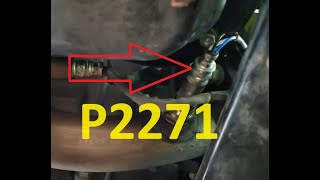
![How to Fix P2271 Engine Code in 5 Minutes [4 DIY Methods / Only $8.99]](https://img.youtube.com/vi/AcpFkGOyVtY/mqdefault.jpg)
Shop the Parts Behind P2271
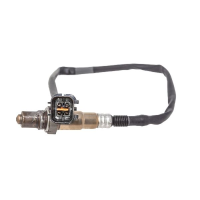
Below are the parts most often responsible for code P2271, ranked by how frequently each one is the actual culprit (per the diagnosis above). Tap any to see what we have for your vehicle.



The information in this article is provided for general reference and educational purposes only. Vehicle specifications, procedures, and part compatibility can vary by production date, trim level, and region. Always consult your vehicle's factory service manual and verify part numbers before purchasing or performing repairs. Safety-critical components such as airbags, seat belts, and braking systems should be installed by a qualified professional.
- 🧭 Diagnostic Flowchart
- 🎬 Helpful Videos
- 🛍️ Shop This Part
- What Does P2271 Mean?
- Can I Drive With P2271?
- Common Causes
- Symptoms
- Common Fixes & Costs
- Used vs. New Parts: Buying Guide
- What Happens If You Wait — Timeline
- Cost of Not Fixing It
- Diagnosis Steps
- When This Code Triggers (Freeze-Frame Conditions)
- Related Codes
- Climate & Environmental Factors
- How to Talk to a Mechanic About This Code
- Where to Take It: Dealer vs Independent vs Chain
- When to Walk Away From the Repair
- What Scan Tool You Need for This Code
- How to Clear the Code After You Fix It
- Will This Fail Emissions / State Inspection?
- Most Commonly Affected Vehicles
- Manufacturer-Specific Notes
- Real Owner Stories
- 2006 Honda Accord - The Parts Cannon Nightmare
- 2013 VW GTI - The Intermittent Heat Fault
- 2012 GMC Savana - The Deceleration Trigger
- How to Prevent This Code From Triggering
- Frequently Asked Questions
- What is 'Bank 1, Sensor 2'?
- I replaced the O2 sensor and the code came back. Why?
- Can an aftermarket part cause a P2271 code?
- Will a fuel additive or cleaner fix a P2271 code?
- Can a bad spark plug cause a P2271 code?
- What's the difference between P2271 and P2270?
- Will P2271 clear itself?
- Key Takeaways
- 🎟️ Get 5% Off