

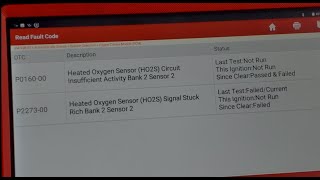
OBD-II Code P2273: O2 Sensor Signal Stuck Rich, Bank 2 Sensor 2
A Comprehensive Guide to Diagnosing and Fixing P2273
- P2273 indicates the Bank 2 downstream oxygen sensor is locked at a high voltage (above 0.8V), signaling a constant rich exhaust condition.
- Replacing the Bank 2 Sensor 2 oxygen sensor fixes this code 80% of the time, but melted wiring harnesses are a frequent hidden culprit.
- Driving with an active P2273 code drops fuel economy by 2-5 MPG and destroys the catalytic converter within 6 months, turning a $250 repair into a $2,500 replacement.
- If codes P0175 or P2198 are also present, stop diagnosing the downstream sensor; you have a legitimate fuel delivery issue or a failed upstream sensor.
- Perform a 5-minute 'lean out' test by creating a vacuum leak while watching live scanner data to instantly prove if the sensor is dead or alive.
What Does P2273 Mean?
P2273 means the Powertrain Control Module (PCM) receives a continuous 'rich' signal from the Bank 2, Sensor 2 oxygen sensor. 'Rich' means the exhaust contains too much fuel and not enough oxygen. This specific code points to the downstream sensor on the engine bank without cylinder #1, which monitors catalytic converter efficiency.
Technical definition: The SAE/OBD-II definition is "O2 Sensor Signal Biased/Stuck Rich Bank 2 Sensor 2". The PCM detects the post-catalytic converter oxygen sensor for engine bank 2 continuously sending a high voltage signal (typically above 0.8V) for an extended period, interpreting it as a persistent rich condition.
🎬 Watch: Understanding the causes of a biased rich O2 signal.Can I Drive With P2273?
Yes, But With Caution. You can drive temporarily, but fix it within a week. Continuing to drive causes poor gas mileage and destroys your catalytic converter, a repair costing between $1,000 and $3,000. An underlying rich condition also dilutes engine oil ('fuel wash'), accelerating internal engine wear.
Common Causes
- Faulty Bank 2, Sensor 2 Oxygen Sensor (Very Common) — The sensor fails internally from age or heat cycling, sending a constant high-voltage 'rich' signal regardless of actual exhaust composition. 🎬 See this walkthrough on replacing a Bank 2 Sensor 2 sensor.
- Wiring or Connector Issues (Common) — The O2 sensor wiring harness is exposed to extreme heat. Melted or frayed wires shorting to a power source create a constant high-voltage signal, tricking the PCM.
- Exhaust Leaks (Common) — Leaks between the engine and the O2 sensor pull outside air into the exhaust stream. This disrupts the sensor's reading, forcing the system to overcompensate with excess fuel.
- Sensor Tip Contamination (Common) — Engine oil (from worn rings) or coolant (from a head gasket leak) coats the sensing element. This fouling forces inaccurate, biased-rich readings.
- Leaking Fuel Injector(s) on Bank 2 (Less Common) — A stuck-open fuel injector dumps raw, unburned fuel into the cylinder. This travels down the exhaust, causing a legitimate rich signal and often triggering a P0175 code.
- High Fuel Pressure (Less Common) — A failing fuel pressure regulator forces excess fuel through the injectors on both banks, creating a genuine rich condition detected by Sensor 2.
- Stuck Open Purge Solenoid Valve (Less Common) — The EVAP purge valve gets stuck open, pulling a constant stream of raw fuel vapors from the charcoal canister into the intake manifold.
- Faulty Mass Airflow (MAF) Sensor (Uncommon) — A dirty MAF sensor under-reports incoming airflow. The PCM calculates an incorrect, richer fuel mixture, triggering P2273.
- Blown O2 Sensor Fuse (Rare) — The O2 sensor heater circuit fuse blows, preventing the sensor from reaching operating temperature and causing erroneous signals.
- PCM Software/Calibration Issue (Rare) — A software glitch causes the PCM to misinterpret normal sensor voltage as a 'stuck rich' condition. Requires a manufacturer software update.
- Faulty Powertrain Control Module (PCM) (Very Rare) — Internal PCM circuitry fails from voltage spikes or moisture, permanently misreading the O2 sensor signal.
Symptoms
- Check Engine Light is On — The primary and often only symptom. The light illuminates to alert you that the PCM stored a diagnostic trouble code.
- Decreased Fuel Economy — The vehicle uses more fuel because it runs rich or the PCM commands a rich mixture based on false data. Expect a drop of 2-5 MPG.
- Smell of Rotten Eggs or Gasoline from Exhaust — A strong sulfur (rotten eggs) or raw gasoline smell from the tailpipe indicates unburned fuel is destroying the catalytic converter.
- Rough Idle or Engine Hesitation — An underlying rich condition causes the engine to idle poorly, hesitate during acceleration, or feel sluggish.
- Black Smoke from Tailpipe — Severe rich conditions produce black smoke from the exhaust, which is soot created by the incomplete combustion of excess fuel.
Diagnostic Flowchart
Tap your situation to follow the diagnostic path that matches what you're seeing on this code.
Common Fixes & Costs
- Replace Bank 2, Sensor 2 Oxygen Sensor — Parts: $50-$150, Labor: $100-$200 (includes parts + labor), ~0.8 hr book time (DIY)
- Repair Damaged O2 Sensor Wiring/Connector — Parts: $10-$50, Labor: $100-$250 (includes parts + labor), ~1.5 hr book time (Intermediate)
- Repair Exhaust Leak — Parts: $30-$150, Labor: $150-$350 (includes parts + labor), ~2.5 hr book time (Intermediate)
- Replace Leaking Fuel Injector — Parts: $100-$300, Labor: $250-$600 (includes parts + labor), ~3 hr book time (Professional)
- PCM Reprogramming or Replacement — Parts: $0-$1000+, Labor: $150-$250 (includes parts + labor), ~1.2 hr book time (Professional)
Used vs. New Parts: Buying Guide
When a used part is worth it: Never buy a used oxygen sensor. They are wear items with a finite lifespan. The labor cost to install it exceeds the part cost, making it a guaranteed losing gamble.
Donor-vehicle mileage cap: roughly under 20000 miles for the part to have meaningful remaining life.
Donor quality checklist:
- Avoid sensors from high-mileage vehicles or regions with heavy road salt use.
- Ensure the part number is an exact match; aftermarket 'universal' sensors cause persistent codes.
- Favor OEM brands (Denso, Bosch, NTK/NGK) even when buying aftermarket.
Decision logic:
- If The part is an oxygen sensor → Buy new. The risk of premature failure and paying for labor twice is too high.
- If Vehicle is a BMW, VW, or Audi → Buy an OEM sensor from the dealer. European brands reject aftermarket sensor calibrations.
- If Budget is extremely tight → Buy a new aftermarket sensor from a reputable OE manufacturer (Denso or Bosch) rather than a used OEM sensor.
Warranty tradeoff: Used parts: 30-day functional warranty at best. Aftermarket new: 1-year to limited lifetime warranty. OEM new: 12-month/12,000-mile warranty.
Worst-case if a used part fails: $150-$300 if a used or cheap sensor fails shortly after installation, requiring repeat labor costs.
What Happens If You Wait — Timeline
- 0-2 weeks: Check Engine Light is on. The PCM logs P2273. No other symptoms are likely to be noticed by the driver. (MPG impact: 0-3%% · Added cost: $0)
- 2 weeks - 3 months: A noticeable drop in fuel economy occurs as the PCM commands a richer mixture based on false readings. A faint smell of gasoline is present at the exhaust after warm-up. (MPG impact: 3-8%% · Added cost: $20-$60 in wasted fuel)
- 3 - 8 months: The catalytic converter consistently overheats due to the rich exhaust. Its internal ceramic substrate begins to crack. Code P0430 (Catalyst Efficiency) appears alongside P2273. Engine performance feels sluggish. (MPG impact: 8-15%% · Added cost: $1200-$2800 (Catalytic converter replacement is now required))
- 8+ months: The catalytic converter substrate melts down completely, causing a significant exhaust blockage. The engine suffers severe power loss, stalls, and fails emissions tests. Fuel washing accelerates internal engine wear. (MPG impact: 15-25%+% · Added cost: $1500-$4000+ (Converter is destroyed; potential for additional engine damage))
Cost of Not Fixing It
- 0-1 month: Noticeable drop in fuel economy (2-5 MPG), resulting in higher fuel costs. (Added cost: $10-$30 per month in extra fuel)
- 1-6 months: The constant rich exhaust overheats the catalytic converter, melting its internal structure. This triggers a P0430 code and causes significant power loss. (Added cost: $1200-$2800 for catalytic converter replacement.)
- 6+ months: Severe catalytic converter damage is guaranteed. Prolonged fuel wash thins the engine oil, accelerating wear on piston rings, cylinder walls, and bearings, requiring major engine repairs. (Added cost: $3000-$8000+ for engine work on top of converter replacement.)
Diagnosis Steps
- Read the Codes and Freeze Frame Data
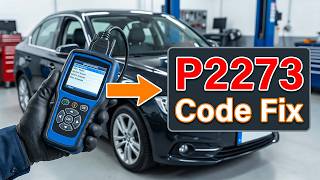
Use an OBD-II scanner to confirm P2273. Check for other codes. P0175 (System Too Rich Bank 2) proves a real fuel problem. P2198 (Bank 2 Sensor 1 Stuck Rich) points to the upstream sensor. Freeze frame data shows the exact engine conditions when the fault occurred.
Tools: OBD-II Scanner (Beginner) - Visually Inspect the O2 Sensor and Wiring
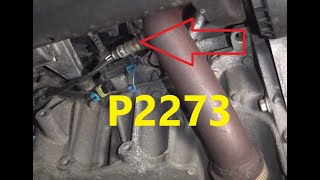
Safely raise the vehicle and locate the Bank 2, Sensor 2 O2 sensor (after the catalytic converter on the side without cylinder #1). Look for melted plastic from exhaust contact, frayed wires, and corrosion or bent pins in the connector.
Tools: Jack and Jack Stands, Flashlight (Beginner) - Analyze Live O2 Sensor Data
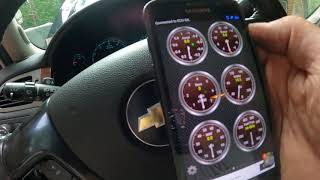
Using a scanner with live data, observe the voltage for Bank 2, Sensor 2 (B2S2). A healthy downstream sensor shows a stable voltage between 0.1V and 0.2V after warm-up. If the voltage is stuck above 0.8V and doesn't react when you rev the engine, it confirms the 'stuck rich' signal.
Tools: OBD-II Scanner with Live Data (Intermediate) - Swap the Downstream O2 Sensors
If your vehicle has an identical Bank 1, Sensor 2, swap it with Bank 2, Sensor 2. Clear codes and drive. If the code changes to P2271 (Bank 1), the sensor is definitively faulty. If P2273 returns, the problem is wiring or an upstream issue.
Tools: O2 Sensor Socket, Ratchet (Advanced) - Perform a 'Lean Out' Test
Intentionally introduce a large vacuum leak (e.g., disconnect the brake booster hose) while monitoring B2S2 live data. A healthy sensor's voltage immediately drops towards 0.1V. If voltage stays high, the sensor or wiring is bad.
Tools: OBD-II Scanner with Live Data, Pliers/Hose Removal Tool (Advanced) - Perform a Wiring Integrity Test
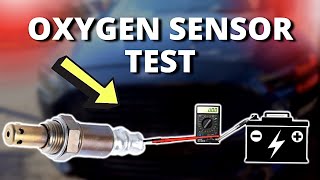
Disconnect the O2 sensor and the PCM. Set a multimeter to check for continuity. Test the signal wire for a short to ground (one lead on signal wire pin, one on negative battery terminal; should be infinite resistance). Test for a short to power by checking for voltage on the signal wire with the key on. Any short indicates a wiring harness problem.
Tools: Multimeter, Vehicle-Specific Wiring Diagram (Advanced) - Test the Sensor's Heater Circuit
Disconnect the O2 sensor and use a multimeter set to Ohms to measure resistance between the two heater circuit pins on the sensor side. A good heater circuit has resistance between 3 and 25 Ohms. An open circuit (infinite resistance) or dead short (near zero ohms) means the sensor needs replacement.
Tools: Multimeter, Vehicle-Specific Wiring Diagram (Advanced) - Perform a Smoke Test for Leaks
Small cracks in the exhaust or intake manifold cause this code. Use a smoke machine to force smoke into the exhaust system (engine off). Smoke pouring out of cracks or gasket leaks reveals the source of the problem.
Tools: Smoke Machine (Advanced) - Test the Fuel System
If you suspect an actual rich condition (especially with code P0175), check fuel pressure using a gauge. Compare the reading to specifications. High pressure points to a faulty fuel pressure regulator.
Tools: Fuel Pressure Gauge (Advanced) - Advanced Live Data Analysis
Monitor Short Term Fuel Trim (STFT) and Long Term Fuel Trim (LTFT) for Bank 2. Consistently negative values (-10% or more) indicate the PCM is aggressively removing fuel to correct a rich condition. Also monitor the upstream O2 sensor (Bank 2, Sensor 1); if it's also stuck high, the problem is upstream of both sensors.
Tools: Advanced OBD-II Scanner (Advanced)
When This Code Triggers (Freeze-Frame Conditions)
- Engine Coolant Temp: 170-220°F (Fully warmed up, closed-loop operation.)
- RPM: 1500-2500 (Cruise / steady throttle.)
- Engine Load: 20-60% (Light to moderate load, not heavy acceleration.)
- Vehicle Speed: 40-65 mph (Steady highway driving.)
Related Codes
- P0175 — System Too Rich Bank 2. If present with P2273, the engine is genuinely running rich. Diagnose the fuel system (injectors, pressure, purge valve) first.
- P2198 — O2 Sensor Signal Stuck Rich Bank 2 Sensor 1. A fault with the upstream sensor directly causes an abnormal reading downstream. Fix P2198 first.
- P0430 — Catalyst System Efficiency Below Threshold Bank 2. A long-term rich condition destroys the catalytic converter. Address P2273 immediately, but expect to replace the converter.
- P2272 — O2 Sensor Signal Stuck Lean Bank 2 Sensor 2. The exact opposite code, pointing to a vacuum leak, low fuel pressure, or a lean-biased sensor.
Climate & Environmental Factors
- Humidity / Moisture: High humidity or water splashes crack hot ceramic O2 sensor elements, instantly causing failure. Ford EcoBoost engines also ingest condensation from the charge air cooler, causing misfires and rich conditions.
- Cold Weather: Extreme cold makes wiring insulation brittle, leading to shorts. It also exposes weak O2 sensor heater circuits that fail to reach operating temperature.
- Road Salt / Corrosion: Road salt attacks the sensor body and connector pins. Corroded connectors create high resistance or shorts that directly trigger P2273.
How to Talk to a Mechanic About This Code
Say this: "I have a P2273 code and I'd like to schedule a diagnostic. Can you please check the live data from the Bank 2 Sensor 2 O2 sensor to see if the voltage is stuck high? I want to confirm if it's a sensor/wiring issue or a real rich condition before replacing any parts."
This signals that you have done your research, directs the mechanic to the most important data point (live sensor voltage), and prevents them from immediately suggesting an expensive catalytic converter replacement without proper diagnosis.
Avoid saying:
- 'My check engine light is on.' (Too vague and invites a wide-ranging, expensive diagnostic process).
- 'Just fix it.' (Gives the shop a blank check to replace parts without your approval).
- 'I think I need a new catalytic converter.' (Leads a dishonest shop to sell you one without confirming it's necessary).
Questions to ask before authorizing the repair:
- What was the live voltage reading from the Bank 2, Sensor 2 O2 sensor?
- Did you check the wiring and connector for any damage or shorts?
- If you are recommending a new sensor, what is the brand and the warranty on the part and labor?
- Can you show me the old part after the repair is complete?
Where to Take It: Dealer vs Independent vs Chain
- Dealer:
Best for: Vehicles still under a powertrain or emissions warranty., Known manufacturer-specific issues covered by a Technical Service Bulletin (TSB)., Complex electrical or PCM software issues, especially on German brands (BMW, Audi, VW).
Downsides: Labor rates are 50-100% higher than independent shops., Quicker to replace parts rather than perform detailed component-level diagnostics. (Typical cost: +50% vs. baseline) - Independent Shop:
Best fit for most situations. A reputable independent shop has the right tools to diagnose a P2273 (live data scanner, smoke machine) and offers flexibility in part choices to manage costs.
Best for: Out-of-warranty vehicles where cost is a factor., Diagnosing and repairing common codes like P2273., Building a long-term relationship with a trusted mechanic.
Downsides: Quality and diagnostic skill vary greatly; find a shop with good reviews and ASE-certified technicians. (Typical cost: +0% vs. baseline) - Chain Shop:
Use with caution. Acceptable for a straightforward O2 sensor replacement if you have already diagnosed the issue yourself. Avoid them for the initial diagnosis of a P2273 code.
Best for: Simple, routine maintenance like oil changes and tire rotations.
Downsides: Technician skill varies dramatically, lacking advanced diagnostic experience., High pressure to upsell services leads to recommendations for unnecessary repairs. (Typical cost: -10% vs. baseline)
When to Walk Away From the Repair
If the estimated repair cost exceeds 50% of your car's private-party value, seriously consider whether the repair is a wise investment. For older, high-mileage vehicles, lower this threshold to 40%.
- Car worth $4000, fix is $2200: Walk away. The repair cost is over 50% of the car's value. It's not a sound financial decision.
- Car worth $12000, fix is $800: Fix it. This repair is well below the threshold and is a normal cost of ownership for a vehicle of this value.
- Car worth $2500, fix is $1500: Walk away. The repair cost is 60% of the car's value. You are unlikely to recoup this cost, and other age-related failures are imminent.
What Scan Tool You Need for This Code
Minimum: A scanner that reads and graphs live O2 sensor voltage and displays fuel trims (Short-Term and Long-Term).
A basic $20 code reader only shows the P2273 code. It cannot show the live sensor data needed to determine if the sensor is actually broken or correctly reporting a problem from another part of the engine.
Budget: BlueDriver Pro (~$90) — Connects to your smartphone via Bluetooth to graph live data for the O2 sensor, show freeze frame data, and check emissions readiness. This proves if the sensor voltage is stuck high.
Mid-range: Innova 5610 or Foxwell NT301 (~$80) — These handheld scanners provide robust live data graphing and I/M readiness checks without needing a phone app. The Innova 5610 offers bi-directional controls to test related components like the EVAP purge solenoid.
Professional: Autel MaxiCOM MK808 / Launch X431 Series (~$500-1200) — Professional-grade tablets offering full bidirectional control, manufacturer-specific codes, and advanced diagnostic functions. They command specific system tests and view data with a faster refresh rate, making it easier to diagnose intermittent wiring issues.
Rent vs buy: Auto parts stores let you use a scanner for free to read codes, but you cannot take the tool home. For diagnosing P2273, you need to view live data while the engine is running, making buying a budget-friendly scanner a better investment.
How to Clear the Code After You Fix It
- Use an OBD-II scan tool to clear the code.
- Perform a complete drive cycle to run the onboard readiness monitors.
- Check for pending codes after the drive cycle.
Drive cycle (~20 minutes): A universal drive cycle involves: 1) Cold start and idle for 2-3 minutes. 2) Drive at a steady speed of 55 mph for 3-5 minutes. 3) Slowly decelerate to 20 mph without using the brakes. 4) Accelerate again to 55-60 mph and hold for another 5-10 minutes. 5) Come to a stop and idle for 1-2 minutes.
Readiness monitors affected: Catalyst monitor, O2 sensor monitor, O2 sensor heater monitor
Before emissions retest: drive at least 50 miles to fully set monitors.
Watch out for:
- Disconnecting the battery clears the code but resets all readiness monitors, guaranteeing an automatic emissions test failure.
- The code returns within 50 miles if the root cause is not fixed.
- Failing to meet specific 'enabling criteria' (like steady highway speeds) prevents the O2 sensor monitor from running.
Will This Fail Emissions / State Inspection?
Yes — this code typically fails an OBD-II emissions inspection.
- California: An illuminated Check Engine Light from P2273 is an automatic failure. All required readiness monitors must be 'Ready', taking 50-100 miles of driving after a repair.
- New York: A P2273 code and illuminated Check Engine Light results in an automatic emissions failure. For 2001+ vehicles, only one readiness monitor can be 'Not Ready' to pass.
- Texas: In the 17 counties requiring emissions testing, an active P2273 code causes an automatic failure. The Check Engine Light must be off, and readiness monitors must be set.
Most Commonly Affected Vehicles
- Ford F-150 (2011-2012) — Specifically models with the 3.5L EcoBoost engine. TSB 13-8-1 addresses misfires and related catalyst codes stemming from condensation buildup in the Charge Air Cooler (CAC).
- Chevrolet / GMC Silverado, Sierra, Express, Savana (2007-2013) — A TSB for 2011-2013 Express/Savana vans notes that moisture splashing on hot O2 sensors causes them to crack, triggering P2273. Requires new, robust sensors and an ECM reprogram.
- BMW Various (e.g., 3-Series, X3, X5) (2006-2013) — Failing fuel pressure regulators are a known cause of rich conditions. These vehicles also reject non-OEM oxygen sensors, causing persistent codes.
- Volkswagen/Audi Various (e.g., Jetta, Golf, A4) (2008-2015) — Frequently cited with P2273 due to premature O2 sensor failure or problems within the wiring harness.
- Mercedes-Benz Various (2005-2014) — Small, hard-to-detect cracks or leaks in the exhaust system near the O2 sensor mounting point are a frequent cause of this code.
- Honda Various with V6 Engines (2003-2012) — Experience this code due to common causes like faulty O2 sensors or leaking fuel injectors on one bank.
- Subaru Forester, Outback, Impreza (2005-2014) — Prone to this code stemming from exhaust leaks at the manifold gaskets or sensor failure.
- Hyundai / Kia Various (2011-2016) — Often reported in conjunction with other codes, caused by a failing O2 sensor or a wiring harness problem.
Manufacturer-Specific Notes
- General Motors (GM): On 2011-2013 vans, moisture splashes onto and cracks downstream O2 sensors. TSB PI0804A requires replacing sensors with updated parts and reprogramming the ECM.
- BMW: Fuel pressure regulator failures frequently cause system-wide rich conditions. BMWs also reject aftermarket O2 sensors; use only OEM parts to prevent repeat codes.
- Ford: On 2011-2012 F-150 3.5L EcoBoosts, Charge Air Cooler (CAC) condensation causes misfires and rich codes in humid weather (TSB 13-8-1).
- Mercedes-Benz: Microscopic cracks in the exhaust system near the O2 sensor mounting flange pull in air and trigger this code. A smoke test is mandatory for diagnosis.
Real Owner Stories
2012 Chevy Silverado 1500 at 115K miles
Check Engine Light came on. No noticeable symptoms other than a slight drop in MPG. Owner scanned the code and found P2273.
What they tried:
- Initially replaced the Bank 2 Sensor 2 O2 sensor with a new Bosch part. Code returned after 50 miles.
- Inspected wiring harness closely and found it had sagged and made contact with the exhaust pipe, melting the insulation and causing a short.
- Repaired the melted wires using a wiring repair kit and secured the harness away from the exhaust.
Outcome: After repairing the wiring and clearing the code, P2273 did not return. The truck passed its emissions test.
Lesson: Don't assume the sensor is bad. Always perform a thorough visual inspection of the wiring harness for heat damage, especially on trucks where harnesses route near hot exhaust components.
2011 BMW 328i at 98K miles
P2273 code appeared along with a P0175 (System Too Rich Bank 2). Car had a rough idle and a strong smell of gasoline from the exhaust.
What they tried:
- Owner suspected a bad O2 sensor and replaced both the upstream and downstream sensors on Bank 2. The codes returned immediately.
- Took the car to an independent BMW specialist. The mechanic performed a fuel pressure test and found it was significantly higher than the spec.
- The fuel pressure regulator was identified as the culprit.
Outcome: Replacing the fuel pressure regulator and clearing the codes resolved both P2273 and P0175. The rough idle and fuel smell disappeared.
Lesson: When P2273 pairs with a system rich code like P0175, the problem is a real fuel delivery issue, not the O2 sensor. Diagnose the fuel system before replacing sensors.
2014 Ford Explorer V6 at 130K miles
P2273 code was persistent. The owner had already replaced the O2 sensor twice with aftermarket parts with no success.
What they tried:
- Frustrated, the owner took the vehicle to a dealership. The technician performed a smoke test on the exhaust system.
- A small, hard-to-see crack was discovered in the exhaust manifold near the Bank 2 catalytic converter.
- The crack allowed air to pull in, confusing the O2 sensor readings and causing the PCM to over-fuel that bank.
Outcome: The exhaust manifold was replaced with an OEM part. After the repair, the P2273 code cleared and did not return.
Lesson: An exhaust leak causes a rich code. If replacing the sensor fails, a smoke test is mandatory to find hidden leaks in the manifold or pipes.
How to Prevent This Code From Triggering
- Use Top Tier certified gasoline. (Every fill-up) — Gasolines with enhanced detergent additives prevent and clean deposits from fuel injector tips. Clogged injectors have poor spray patterns, leading to incomplete combustion and a rich condition.
- Perform regular engine maintenance. (Per vehicle schedule (e.g., 30k/60k/90k miles)) — Replacing air filters, spark plugs, and PCV valves prevents rich conditions. A clogged air filter restricts air, while worn spark plugs cause misfires that dump raw fuel into the exhaust.
- Address engine oil and coolant leaks promptly. (As needed) — Oil or coolant that contaminates the exhaust stream 'poisons' the oxygen sensor's sensing element, causing it to fail and send false signals.
- Avoid long periods of engine idling. (Daily habit) — Extended idling leads to increased carbon build-up in the combustion chambers and on injector tips, contributing to rich running conditions over time.
- Consider replacing upstream O2 sensors proactively. (Every 100,000 miles) — O2 sensors are wear items with a typical lifespan of 60,000 to 100,000 miles. As they age, their response time slows, impairing fuel control accuracy.
Frequently Asked Questions
What does Bank 2 Sensor 2 mean?
Bank 2 is the side of the engine that does not contain cylinder #1. Sensor 2 is the 'downstream' oxygen sensor, located in the exhaust pipe immediately after the catalytic converter.
What is the most common misdiagnosis for P2273?
The most common mistake is replacing the oxygen sensor without confirming it's the root cause. The sensor might be accurately reporting a real rich condition caused by a leaking fuel injector. Performing a 'lean out' test prevents this error.
Will P2273 fail an emissions test?
Yes. A P2273 code illuminates the Check Engine Light and prevents onboard emissions monitors from running, resulting in an automatic failure.
What happens if I don't fix P2273?
You risk destroying your catalytic converter from constant overheating by unburned fuel, a repair costing thousands. The rich condition also causes fuel to wash past the pistons into the oil pan, accelerating engine wear.
Can I just clear the code?
You can clear the code with a scanner, but it returns within a few drive cycles if the underlying problem isn't fixed. Clearing the code does not repair the fault.
Can you clean an O2 sensor to fix this code?
Cleaning O2 sensors is not a reliable fix for a P2273 code. This fault is caused by an internal electrical failure or permanent contamination of the sensor's element. Replacement is the only correct repair.
Can a bad battery cause P2273?
Indirectly, yes. A failing battery causes low system voltage (below 11.5V), leading to glitches in the Powertrain Control Module (PCM) that set false diagnostic codes.
Key Takeaways
- P2273 indicates the Bank 2 downstream oxygen sensor is locked at a high voltage (above 0.8V), signaling a constant rich exhaust condition.
- Replacing the Bank 2 Sensor 2 oxygen sensor fixes this code 80% of the time, but melted wiring harnesses are a frequent hidden culprit.
- Driving with an active P2273 code drops fuel economy by 2-5 MPG and destroys the catalytic converter within 6 months, turning a $250 repair into a $2,500 replacement.
- If codes P0175 or P2198 are also present, stop diagnosing the downstream sensor; you have a legitimate fuel delivery issue or a failed upstream sensor.
- Perform a 5-minute 'lean out' test by creating a vacuum leak while watching live scanner data to instantly prove if the sensor is dead or alive.
Helpful Videos

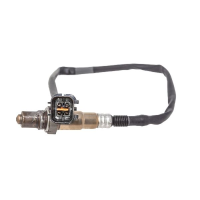
Shop the Parts Behind P2273
Below are the parts most often responsible for code P2273, ranked by how frequently each one is the actual culprit (per the diagnosis above). Tap any to see what we have for your vehicle.

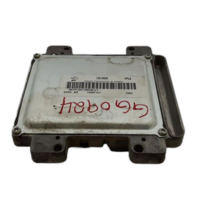

The information in this article is provided for general reference and educational purposes only. Vehicle specifications, procedures, and part compatibility can vary by production date, trim level, and region. Always consult your vehicle's factory service manual and verify part numbers before purchasing or performing repairs. Safety-critical components such as airbags, seat belts, and braking systems should be installed by a qualified professional.
- 🧭 Diagnostic Flowchart
- 🎬 Helpful Videos
- 🛍️ Shop This Part
- What Does P2273 Mean?
- Can I Drive With P2273?
- Common Causes
- Symptoms
- Common Fixes & Costs
- Used vs. New Parts: Buying Guide
- What Happens If You Wait — Timeline
- Cost of Not Fixing It
- Diagnosis Steps
- When This Code Triggers (Freeze-Frame Conditions)
- Related Codes
- Climate & Environmental Factors
- How to Talk to a Mechanic About This Code
- Where to Take It: Dealer vs Independent vs Chain
- When to Walk Away From the Repair
- What Scan Tool You Need for This Code
- How to Clear the Code After You Fix It
- Will This Fail Emissions / State Inspection?
- Most Commonly Affected Vehicles
- Manufacturer-Specific Notes
- Real Owner Stories
- 2012 Chevy Silverado 1500 at 115K miles
- 2011 BMW 328i at 98K miles
- 2014 Ford Explorer V6 at 130K miles
- How to Prevent This Code From Triggering
- Frequently Asked Questions
- What does Bank 2 Sensor 2 mean?
- What is the most common misdiagnosis for P2273?
- Will P2273 fail an emissions test?
- What happens if I don't fix P2273?
- Can I just clear the code?
- Can you clean an O2 sensor to fix this code?
- Can a bad battery cause P2273?
- Key Takeaways
- 🎟️ Get 5% Off