

OBD-II Code P2274: O2 Sensor Signal Stuck Lean (Bank 1, Sensor 3)
The Ultimate Guide to Diagnosing and Fixing P2274 for DIYers and Pros
- Always test for exhaust leaks and wiring damage before spending $150-$300 to replace the Bank 1 Sensor 3 oxygen sensor.
- Driving with an active P2274 code drops fuel economy by 5-10% and risks a $2,000 catalytic converter failure within 6 months.
- An active P2274 code triggers an automatic failure for state OBD-II emissions inspections.
- Owners of 2011-2016 Chevy 1.4L Turbos should check for a ruptured PCV valve diaphragm before replacing any exhaust sensors.
What Does P2274 Mean?
P2274 means the Powertrain Control Module (PCM) detects too much oxygen in the exhaust. This specific code points to the third sensor on the first engine bank (Bank 1, Sensor 3), located after the catalytic converter. The computer registers a 'lean' condition (too much air, not enough fuel) because the sensor's voltage is stuck below 0.2V. This sensor monitors the catalytic converter's final efficiency, so its reading should remain stable compared to upstream sensors.
Technical definition: The SAE/OBD-II definition is "O2 Sensor Signal Biased/Stuck Lean - Bank 1, Sensor 3". The PCM detects the post-catalytic converter oxygen sensor for engine bank 1 is stuck at a low voltage (under 0.1V), indicating a lean condition when the PCM expects a fluctuating or higher voltage reading based on current engine load.
Can I Drive With P2274?
Yes, but very limited Yes, but limit driving to under 100 miles. Driving with a P2274 code causes a 5-10% drop in fuel economy, rough idling, and engine stalling. The biggest risk is long-term damage to the catalytic converter from an improper air-fuel mixture, a repair costing $800 to $2,500.
Common Causes
- Faulty Bank 1, Sensor 3 Oxygen Sensor (Very Common) — The sensor itself fails from age (lifespan is 60,000-100,000 miles), internal shorts, or contamination from engine fluids and silicone sealants. Cheap aftermarket sensors also trigger this code due to incorrect heater circuit resistance.
- Exhaust System Leak (Common) — A crack or leak in the exhaust manifold, flex pipe, or gaskets before Sensor 3 lets unmetered oxygen into the exhaust stream. This tricks the sensor into reading a lean condition, even though the engine's air/fuel mixture is normal.
- Wiring or Connector Damage (Common) — The wiring harness going to the O2 sensor melts on the hot exhaust, suffers from corrosion in the connector pins, or gets severed by road debris. High resistance prevents the correct signal from reaching the PCM.
- Engine Vacuum Leak (Less Common) — A leak in a vacuum hose, PCV system, or intake manifold gasket causes the engine to run genuinely lean. This forces un-combusted oxygen into the exhaust, triggering the code alongside P0171.
- Low Fuel Pressure or Faulty Fuel Injector (Rare) — A weak fuel pump or clogged injector creates a true lean condition that the O2 sensor detects. This usually triggers misfire codes alongside P2274.
- PCM Software Issue (Rare) — A software glitch causes the PCM to misinterpret the sensor's signal. This is a documented issue on 2013-2019 Jaguar and Land Rover V6 models requiring a dealership software reflash.
- Failing Catalytic Converter (Rare) — A partially clogged converter alters exhaust flow and pressure, causing erratic readings on the downstream O2 sensor. This usually triggers a P0420 code first.
Symptoms
- Check Engine Light is On — The light illuminates and stays on as long as the fault is active.
- Reduced Fuel Economy — The PCM compensates for the perceived lean signal by adding more fuel, dropping gas mileage by 5-10%.
- Rough Idle or Engine Hesitation — The engine stutters or hesitates during acceleration as the computer struggles to maintain the correct air-fuel balance.
- Rotten Egg Smell from Exhaust — A sulfur smell occurs because the PCM runs the engine too rich to compensate for the lean signal, overheating the catalytic converter.
- Failed Emissions Test (also visible on scanner) — An active P2274 code triggers an automatic failure of any OBD-II emissions inspection.
- Stuck Low Voltage on Scan Tool (scan-tool only — no driver-felt sign) — Live data shows the B1S3 O2 sensor voltage stuck below 0.2V, confirming the fault electronically.
Diagnostic Flowchart
Tap your situation to follow the diagnostic path that matches what you're seeing on this code.
Common Fixes & Costs
- Replace the Bank 1, Sensor 3 Oxygen Sensor — Parts: $50-$150, Labor: $100-$200, ~0.8 hr book time (DIY)
- Repair an Exhaust Leak — Parts: $20-$100, Labor: $150-$300, ~2 hr book time (Intermediate)
- Repair Damaged Wiring or Connector — Parts: $15-$50, Labor: $100-$250, ~1.5 hr book time (Intermediate)
- Replace PCV Valve / Valve Cover (Chevy 1.4L) — Parts: $60-$120, Labor: $100-$150, ~1 hr book time (DIY)
- Update or Reprogram the PCM — Parts: $0, Labor: $150-$250, ~1.2 hr book time (Professional)
DIY vs Professional
- Replace Oxygen Sensor 🟢 Beginner
Tools: Jack stands, basic socket set, O2 sensor socket (22mm), penetrating oil, torque wrench. - Repair Exhaust Leak 🟢 Beginner
Tools: Wire brush, exhaust repair tape, clamps, or welding equipment. - Repair Wiring 🟢 Beginner
Tools: Multimeter, wire strippers, crimpers, heat shrink tubing, soldering iron, wiring diagram.
Used vs. New Parts: Buying Guide
When a used part is worth it: Never buy a used O2 sensor. They are wear items with unknown lifespans. A used OEM catalytic converter from a low-mileage collision wreck is acceptable if a new OEM unit is prohibitively expensive.
Donor-vehicle mileage cap: roughly under 60000 miles for the part to have meaningful remaining life.
Donor quality checklist:
- Verify the donor vehicle was not scrapped for engine or emissions problems.
- Match the part number exactly.
- Avoid parts from the Rust Belt to prevent flange corrosion.
- Ensure selling used catalytic converters is legal in your jurisdiction.
Decision logic:
- If The part is an O2 sensor → Buy new from an OEM or reputable aftermarket brand (Denso, NTK, Bosch).
- If The part is a catalytic converter and the vehicle is over 100K miles → Buy a new aftermarket direct-fit converter for the best balance of cost and reliability.
- If The part is a catalytic converter and a new OEM part costs over $1500 → Buy a certified used or remanufactured OEM part from a reputable supplier with a warranty.
Warranty tradeoff: Used parts carry a 30-90 day warranty. New aftermarket parts carry a 1-5 year warranty. New OEM parts carry a 1-year/12,000-mile warranty.
Worst-case if a used part fails: $500-$1500 if a used catalytic converter fails prematurely, requiring repeat labor and a new part.
What Happens If You Wait — Timeline
- 0-1 month: Check Engine Light illuminates. The PCM compensates by adding more fuel, but symptoms are unnoticeable to the driver. (MPG impact: 0-5%% · Added cost: $0-$40 in wasted fuel)
- 1-4 months: Fuel economy drops noticeably. The engine exhibits a rough idle or hesitation on cold starts as the PCM's rich compensation becomes aggressive. (MPG impact: 5-10%% · Added cost: $50-$150 in wasted fuel)
- 4-8 months: Sustained high temperatures from burning excess fuel degrade the catalytic converter's internal substrate. A 'rotten egg' smell appears. P0420 triggers. (MPG impact: 10-15%% · Added cost: $800-$2500 for a catalytic converter replacement.)
- 8+ months: The catalytic converter substrate melts, creating an exhaust blockage. This causes severe power loss, stalling, and burnt engine valves. (MPG impact: 15-25%+% · Added cost: $2500+ for catalytic converter and engine repairs.)
Cost of Not Fixing It
- 0-1 Month: The PCM enriches the fuel mixture to compensate for the lean signal, causing a 5-10% drop in fuel economy and rough idling. (Added cost: $20-$50 in wasted fuel per month.)
- 1-6 Months: Sustained rich fuel mixtures overheat the catalytic converter, causing internal damage and triggering a P0420 code. (Added cost: $1200-$2800 for a catalytic converter replacement.)
- 6+ Months: Severe catalytic converter failure creates an exhaust blockage, leading to extreme power loss, stalling, and burnt engine valves. (Added cost: $2500+ for a catalytic converter and engine repairs.)
Diagnosis Steps
- Read Codes and Analyze Live Data
Use an OBD-II scanner to confirm P2274. Switch to live data graphing. A healthy downstream sensor shows a steady voltage above 0.5V on a warm engine. If the B1S3 voltage is stuck under 0.2V and unresponsive, it confirms the 'stuck lean' condition.
Tools: OBD-II Scanner with Live Data (Beginner) - Induce a Rich Condition (Propane Test)
Force the engine rich to see if the sensor responds. Introduce a small amount of unlit propane or brake cleaner into the intake vacuum line while watching live data. If the upstream sensor (B1S1) reacts but B1S3 remains stuck low, the sensor or its wiring is faulty.
Tools: Propane torch (unlit) or brake cleaner, advanced scanner (Advanced) - Visually Inspect the Sensor and Wiring
Safely raise the vehicle. Locate Bank 1, Sensor 3 (after the catalytic converter). Inspect the sensor, connector, and wiring harness for frayed wires, exhaust melting, or corrosion. Ensure the sensor is securely tightened.
Tools: Jack and jack stands, flashlight (Beginner) - Check for Exhaust Leaks
With the engine cold, start it and feel for leaks from the exhaust manifold, gaskets, and pipes leading up to Sensor 3. Briefly block the tailpipe with a shop rag to increase pressure and make leaks audible. A professional smoke test is the best method for finding pinhole leaks.
Tools: Safety glasses, gloves, shop rag, smoke machine (optional) (Intermediate) - Test the Sensor's Wiring and Reference Voltage
Disconnect the sensor. Turn the key on, engine off. Use a multimeter on the harness-side connector to verify a good ground, a 12V supply for the heater circuit, and a reference voltage (typically 0.45V). Check for continuity on the signal wire between the sensor and PCM.
Tools: Multimeter, vehicle-specific wiring diagram (Advanced) - Test O2 Sensor Heater Circuit Resistance
With the sensor disconnected and cool, set a multimeter to Ohms. Measure resistance between the two heater pins on the sensor (usually the two same-colored wires). A good sensor reads between 3 and 25 ohms. Infinite resistance or near-zero ohms means the heater failed and the sensor requires replacement.
Tools: Multimeter, vehicle-specific service manual (Advanced) - Test for Vacuum Leaks
With the engine idling, spray short bursts of brake cleaner around vacuum lines, the intake manifold gasket, and the throttle body. If the engine RPM surges, you found a vacuum leak causing a true lean condition.
Tools: Brake cleaner or smoke machine (Intermediate) - Test Fuel Pressure
Connect a fuel pressure gauge to the fuel rail test port. With the key on, engine off, pressure must meet the manufacturer's specification (typically 35-65 PSI). Low pressure points to a weak fuel pump or clogged filter causing a lean condition.
Tools: Fuel pressure gauge, vehicle-specific service manual (Advanced)
When This Code Triggers (Freeze-Frame Conditions)
- Engine Coolant Temp: 180-200°F (82-93°C) (The engine must be fully warmed up for the O2 sensor monitors to run.)
- RPM: 1500-2500 RPM (The code sets during steady-state cruise conditions, not during heavy acceleration or deceleration.)
- Engine Load: 30-60% (Occurs under a moderate, stable engine load consistent with highway cruising.)
- Vehicle Speed: 35-55 mph (56-88 km/h) (Fault registers while driving at a constant highway speed.)
Related Codes
- P2275 — The opposite code: 'O2 Sensor Signal Biased/Stuck Rich'. Seeing P2274 and P2275 simultaneously points to a wiring short or PCM fault, as the sensor cannot be stuck lean and rich at the same time.
- P2276 / P2277 — The 'stuck lean' and 'stuck rich' codes for Bank 2, Sensor 3. Seeing P2274 and P2276 together proves a global engine issue (low fuel pressure, massive vacuum leak) rather than two independent sensor failures.
- P0171 — 'System Too Lean (Bank 1)'. Seeing P0171 with P2274 confirms a true lean condition from a vacuum leak or fuel delivery problem. Fix the P0171 cause first.
- P0137 — 'O2 Sensor Circuit Low Voltage (Bank 1 Sensor 2)'. If your vehicle only has two sensors, a scanner misinterprets the data and displays P2274. The diagnostic process is identical.
Climate & Environmental Factors
- Thermal Shock (Water): Driving through deep water suddenly cools a hot O2 sensor, cracking the internal ceramic element and causing immediate failure. This is a documented issue on Jaguar/Land Rover V6 engines.
- Road Salt (Corrosion): Winter road salt corrodes the sensor body, connector, and wiring. This seizes the sensor in the exhaust pipe and causes electrical connection failures.
- Extreme Cold: A weak O2 sensor heater circuit struggles to reach the required 600°F operating temperature in sub-zero weather, triggering intermittent codes on cold starts.
How to Talk to a Mechanic About This Code
Say this: "I have a P2274 code. I need you to check for exhaust leaks and inspect the sensor wiring before recommending a sensor replacement. Please also check for any relevant TSBs for my vehicle."
This directs the mechanic to perform a thorough diagnosis rather than just firing the parts cannon, saving you money on unnecessary sensor replacements.
Avoid saying:
- My check engine light is on, can you just fix it?
- I think I need a new oxygen sensor.
- Just do whatever you think is best.
Questions to ask before authorizing the repair:
- Did you find an exhaust leak or wiring damage during your inspection?
- Can you show me the live data graph that proves the sensor is faulty?
- What is the warranty on the parts and labor for this repair?
Where to Take It: Dealer vs Independent vs Chain
- Dealer:
Use only if your vehicle is under warranty or requires a manufacturer-specific software update.
Best for: Vehicles under warranty, Jaguar/Land Rover models requiring the TSB software update, Complex electrical issues
Downsides: Highest labor rates, Strictly uses expensive OEM parts (Typical cost: +50% vs. baseline) - Independent Shop:
The best choice for most P2274 situations. They have the diagnostic tools to handle this code cost-effectively.
Best for: Out-of-warranty vehicles, Standard diagnostics, sensor replacement, and exhaust leak repair
Downsides: Quality varies widely; verify ASE certification, May lack manufacturer-specific software flashing tools (Typical cost: +0% vs. baseline) - Chain Shop:
Avoid for initial diagnosis. They frequently miss underlying causes like exhaust leaks and default to replacing the sensor.
Best for: Simple oil changes or tire rotations
Downsides: Technician experience is generally lower, High pressure to upsell services, Lacks advanced diagnostic equipment for exhaust leaks (Typical cost: -10% vs. baseline)
When to Walk Away From the Repair
If the estimated repair cost exceeds 50% of the car's private-party value, sell or trade it in.
- Car worth $4000, fix is $2500: Walk away. The repair cost is 62% of the car's value. Sell it to an online car buyer like CarBrain.
- Car worth $12000, fix is $300: Fix it. The repair cost is only 2.5% of the vehicle's value.
- Car worth $3000, fix is $1600: Walk away. At 53% of the car's value, this repair is a bad investment on an older vehicle.
What Scan Tool You Need for This Code
Minimum: OBD-II reader with live data graphing for O2 sensor voltage.
A basic code reader only gives you the P2274 code. It cannot show live voltage, which is essential to confirm if the sensor is truly stuck lean or responding correctly to an exhaust leak.
Budget: BlueDriver Pro Scan Tool (~$99) — Provides live data graphing for O2 sensors directly on your smartphone, allowing you to determine if the sensor is responding.
Mid-range: Foxwell NT510 Elite (~$180) — Offers live data graphing plus bidirectional controls, allowing you to run active tests on vehicle components.
Professional: Autel MaxiCOM MK808BT (~$450) — A professional tablet scanner offering full system diagnostics, comprehensive live data, and advanced bidirectional controls.
Rent vs buy: Buy an affordable scanner with live data. Auto parts store loaner tools are basic code readers that lack the live data graphing required to diagnose P2274.
How to Clear the Code After You Fix It
- Use an OBD-II scan tool to clear the P2274 code from the PCM's memory.
- Start the engine cold and let it idle for 3 minutes to activate the O2 sensor heater.
- Perform a drive cycle to allow the readiness monitors to run and complete.
Drive cycle (~20 minutes): A standard drive cycle requires a cold start, 3 minutes of idling, 10 minutes of stop-and-go city driving, and 10 minutes of steady highway driving between 45-60 mph. Turn the engine off and let it sit for 5 minutes.
Readiness monitors affected: Catalyst (CAT) monitor, Oxygen (O2) Sensor monitor, Oxygen Sensor Heater monitor
Before emissions retest: drive at least 50 miles to fully set monitors.
Watch out for:
- Clearing the code resets all readiness monitors to 'Not Ready'. You automatically fail an emissions test until they switch to 'Ready'.
- The code returns within two drive cycles if the root cause (like a pinhole exhaust leak) was ignored.
Will This Fail Emissions / State Inspection?
Yes — this code typically fails an OBD-II emissions inspection.
- California: An illuminated Check Engine Light is an automatic failure. All readiness monitors must be 'Ready'.
- New York: An active code causes an automatic failure. You pass with exactly one monitor 'Not Ready'.
- Texas: An active P2274 code causes an automatic failure. Texas allows one or two 'Not Ready' monitors depending on vehicle age.
Most Commonly Affected Vehicles
- Jaguar F-Type, F-Pace, XE, XF, XJ (2013-2019) — 3.0L V6 models are subject to TSB JTB00420NAS1. Thermal shock triggers the code. The fix is a PCM software update, not sensor replacement.
- Land Rover LR4, Range Rover, Range Rover Sport (2014-2016) — Shares the 3.0L V6 engine with Jaguar and requires the same PCM software reflash per TSB JTB00420NAS1.
- Chevrolet Cruze, Sonic, Trax (2011-2016) — On the 1.4L turbo, this code is usually caused by a ruptured PCV valve diaphragm in the valve cover, creating a massive vacuum leak. Listen for a hissing noise from the engine cover.
- Volkswagen / Audi Passat, Jetta, Golf, A4 (2012-2016) — Recurring P2274 codes are often caused by pinhole leaks in the O2 sensor bung weld on the catalytic converter, requiring a weld repair.
- Hyundai Elantra, Sonata (2011-2017) — Wiring damage near the exhaust is common. Use OEM or high-quality NTK/Denso sensors to avoid compatibility issues.
- Mazda 3 (2007-2009) — The code frequently returns after sensor replacement due to underlying exhaust leaks missed during initial diagnosis.
- Ford Focus (2003-2004) — On 2.3L engines, scan tools incorrectly report a 'Sensor 3' fault even if the car only has two sensors. Diagnose the downstream (Sensor 2) sensor.
Manufacturer-Specific Notes
- Jaguar / Land Rover: TSB JTB00420NAS1 states this code triggers from thermal shock (driving through deep water) on 3.0L V6 models. The official fix is a PCM software update, not a new sensor.
- Chevrolet (1.4L Turbo): A ruptured PCV diaphragm in the valve cover creates a massive vacuum leak, triggering P2274. Check for a hissing sound or strong suction at the oil fill cap before replacing sensors.
- Volkswagen / Audi: A microscopic crack in the weld of the O2 sensor bung on the catalytic converter causes recurring P2274 codes. A smoke test is required to find it.
- Ford: Older Focus models trigger a 'Sensor 3' code on generic scan tools even when the vehicle only has two sensors. Diagnose the post-catalyst sensor.
Real Owner Stories
2012 VW Jetta 2.5L at 200K miles
Check Engine Light came on with poor fuel economy. The owner recently ran over a tree branch during a storm.
What they tried:
- Used a code reader to confirm the P2274 code.
- Visually inspected the undercarriage and found a severed wire leading to the downstream O2 sensor.
Outcome: A local shop spliced the damaged wiring harness. The sensor itself was perfectly fine.
Lesson: Always perform a visual inspection of the wiring harness. Physical damage from road debris severs connections, causing a code that mimics a failed sensor.
2014 Chevy Cruze 1.4L Turbo
Check Engine Light appeared, but the car ran perfectly fine.
What they tried:
- Almost bought a new O2 sensor.
- Read a forum post about the 1.4L engine's PCV issues.
- Checked for suction at the oil cap while the engine was running, confirming a massive vacuum leak.
Outcome: Replaced the valve cover (which contains the integrated PCV valve). The vacuum leak stopped and the P2274 code cleared permanently.
Lesson: On Chevy 1.4T engines, P2274 is a symptom of a failed PCV system, not the O2 sensor. Check for known TSBs before buying parts.
2015 Jaguar F-Pace 3.0L V6
P2274 code appeared intermittently after driving in heavy rain.
What they tried:
- Took the vehicle to a dealership to replace the sensor.
- The technician pulled Technical Service Bulletin JTB00420NAS1.
Outcome: The dealership performed a PCM software update. The sensor was not replaced, and the code never returned.
Lesson: For Jaguar and Land Rover V6 models, this code is a known software issue triggered by thermal shock. Always check for manufacturer TSBs.
How to Prevent This Code From Triggering
- Use Top-Tier Certified Gasoline (Every fill-up) — Top-Tier fuels contain detergents that prevent carbon buildup on fuel injectors. Clogged injectors cause a lean condition, triggering sensor codes.
- Address Engine Misfires and Oil Leaks Immediately (As they occur) — Misfires and oil leaks send contaminants into the exhaust that coat the O2 sensor's element, destroying it and the catalytic converter.
- Proactively Replace Upstream O2 Sensors (Every 100,000 miles) — Upstream sensors degrade over time, leading to an inefficient air-fuel mixture. This stresses the catalytic converter and causes downstream sensors to report faults.
- Perform Regular Highway Drives (At least once a month) — Short-trip driving prevents the exhaust system from reaching optimal operating temperature. A 30-minute highway drive burns off carbon deposits in the catalytic converter.
Frequently Asked Questions
Can I pass an emissions test with code P2274?
No. A P2274 code causes an automatic failure of an OBD-II emissions test. The Check Engine Light must be off and all emissions monitors must be 'Ready' to pass.
Why did the P2274 code come back after I replaced the oxygen sensor?
The sensor was misdiagnosed. The actual cause is usually a small exhaust leak before the sensor, a damaged wire, or a PCM software issue. Always perform a smoke test for leaks before replacing parts.
What's the most common mistake when diagnosing P2274?
Immediately replacing the oxygen sensor without checking for exhaust leaks. Failing to inspect the exhaust manifold and gaskets leads to a wasted $200 repair and the code returning.
Can a bad catalytic converter cause a P2274 code?
Rarely. A failing catalytic converter triggers efficiency codes like P0420. However, a severe exhaust restriction alters pressure and causes erratic downstream sensor readings.
What does 'Bank 1, Sensor 3' mean?
'Bank 1' is the side of the engine containing cylinder #1. 'Sensor 3' is the third sensor in the exhaust stream, located downstream after the second catalytic converter.
Is it better to use an OEM or aftermarket oxygen sensor?
Always use OEM or high-quality aftermarket brands like NTK, Denso, or Bosch. Cheap, unbranded online sensors have incorrect heater resistance and trigger recurring codes immediately.
Can a fuel injector cause a P2274 code?
Yes. A clogged fuel injector fails to deliver enough fuel, creating a genuinely lean condition. This triggers P2274 alongside a lean code (P0171) and misfire codes.
Key Takeaways
- Always test for exhaust leaks and wiring damage before spending $150-$300 to replace the Bank 1 Sensor 3 oxygen sensor.
- Driving with an active P2274 code drops fuel economy by 5-10% and risks a $2,000 catalytic converter failure within 6 months.
- An active P2274 code triggers an automatic failure for state OBD-II emissions inspections.
- Owners of 2011-2016 Chevy 1.4L Turbos should check for a ruptured PCV valve diaphragm before replacing any exhaust sensors.
Shop the Parts Behind P2274
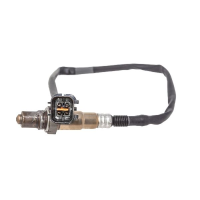
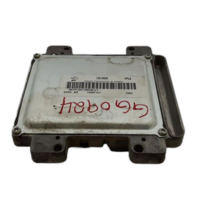
Below are the parts most often responsible for code P2274, ranked by how frequently each one is the actual culprit (per the diagnosis above). Tap any to see what we have for your vehicle.



The information in this article is provided for general reference and educational purposes only. Vehicle specifications, procedures, and part compatibility can vary by production date, trim level, and region. Always consult your vehicle's factory service manual and verify part numbers before purchasing or performing repairs. Safety-critical components such as airbags, seat belts, and braking systems should be installed by a qualified professional.
- 🧭 Diagnostic Flowchart
- 🛍️ Shop This Part
- What Does P2274 Mean?
- Can I Drive With P2274?
- Common Causes
- Symptoms
- Common Fixes & Costs
- DIY vs Professional
- Used vs. New Parts: Buying Guide
- What Happens If You Wait — Timeline
- Cost of Not Fixing It
- Diagnosis Steps
- When This Code Triggers (Freeze-Frame Conditions)
- Related Codes
- Climate & Environmental Factors
- How to Talk to a Mechanic About This Code
- Where to Take It: Dealer vs Independent vs Chain
- When to Walk Away From the Repair
- What Scan Tool You Need for This Code
- How to Clear the Code After You Fix It
- Will This Fail Emissions / State Inspection?
- Most Commonly Affected Vehicles
- Manufacturer-Specific Notes
- Real Owner Stories
- 2012 VW Jetta 2.5L at 200K miles
- 2014 Chevy Cruze 1.4L Turbo
- 2015 Jaguar F-Pace 3.0L V6
- How to Prevent This Code From Triggering
- Frequently Asked Questions
- Can I pass an emissions test with code P2274?
- Why did the P2274 code come back after I replaced the oxygen sensor?
- What's the most common mistake when diagnosing P2274?
- Can a bad catalytic converter cause a P2274 code?
- What does 'Bank 1, Sensor 3' mean?
- Is it better to use an OEM or aftermarket oxygen sensor?
- Can a fuel injector cause a P2274 code?
- Key Takeaways
- 🎟️ Get 5% Off