

OBD-II Code P2276: O2 Sensor Signal Stuck Lean (Bank 2, Sensor 3)
An ASE-Certified Master Technician's Expanded Guide to P2276: What it means, why it triggers, and how to fix it for good.
- A faulty Bank 2, Sensor 3 oxygen sensor causes 80% of P2276 codes, but exhaust leaks and wiring faults must be ruled out first.
- Inspect the exhaust manifold and sensor bung for leaks before buying parts; unmetered oxygen tricks the sensor into reporting a false lean condition.
- Driving with an active P2276 code for more than 3 months overheats the catalytic converter, turning a $200 sensor replacement into a $2,000+ repair.
- Verify a dead sensor using a live data scanner; a truly stuck lean downstream sensor consistently reads below 0.2 volts on a warm engine.
- If P2276 returns immediately after installing a new sensor, stop replacing parts and perform a smoke test to locate hidden vacuum or exhaust leaks.
What Does P2276 Mean?
Code P2276 means the Powertrain Control Module (PCM) detects a persistent problem with the third oxygen (O2) sensor on engine bank 2. This sensor monitors catalytic converter efficiency by measuring oxygen in the exhaust gases. When the PCM sees this sensor's voltage stay below the 0.2V threshold for a manufacturer-specified duration, it triggers P2276, indicating the exhaust is running 'lean' (too much oxygen).
Technical definition: O2 Sensor Signal Stuck Lean Bank 2 Sensor 3. The Powertrain Control Module (PCM) detects that the post-catalyst oxygen sensor for engine bank 2 fails to produce expected voltage fluctuations, remaining stuck below the normal operational range (typically under 0.2 volts) for a predetermined timeframe.
Can I Drive With P2276?
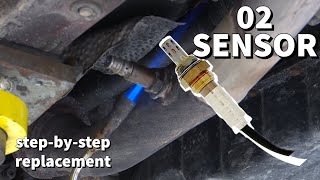
Yes, But With Caution. You can drive with this code, but you must repair it within a few weeks. Continued driving causes poor fuel economy, failed emissions tests, and irreversible damage to your catalytic converter. A failing O2 sensor forces the converter to overheat, turning a minor repair into a $800 to $2,500 replacement. 🎬 Learn how to replace an oxygen sensor yourself with this video. It is safe to drive under 100 miles to reach a repair shop.
Common Causes
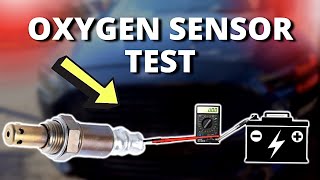
- Faulty or contaminated oxygen sensor (Very Common) — The O2 sensor itself is the most frequent culprit. It fails from age (typically over 100,000 miles) or becomes contaminated by fuel, oil, or coolant, degrading its ability to generate an accurate voltage signal. 🎬 Watch: A pro guide on how to test an oxygen sensor.
- Exhaust system leaks (Common) — A leak in the exhaust pipes, manifold, or an improperly tightened O2 sensor allows unmetered oxygen to enter the system. This tricks the sensor into sending a false 'lean' signal.
- Wiring or connector issues (Common) — The wiring harness or electrical connector for the O2 sensor becomes damaged, melted by exhaust heat, corroded, or loose. This causes a short to ground or an open circuit, interrupting the signal.
- Blown O2 sensor heater fuse (Less Common) — The O2 sensor requires an internal heater to function. A blown dedicated fuse disables the heater. On vehicles like BMWs, a single blown fuse disables heaters for multiple O2 sensors simultaneously.
- Engine vacuum leak (Less Common) — A leak in the intake manifold gasket or vacuum hoses introduces unmetered air, causing Bank 2 to run genuinely lean, which the O2 sensor correctly detects.
- Contaminated Mass Airflow (MAF) Sensor (Less Common) — A dirty MAF sensor under-reports incoming air. The PCM commands less fuel, creating a genuine lean condition across both engine banks. This usually triggers P0171 or P0174 alongside P2276.
- Low fuel pressure or faulty fuel injector(s) (Less Common) — A weak fuel pump or clogged fuel injectors on Bank 2 cause an actual lean condition. The O2 sensor accurately reports the fuel delivery problem.
- Faulty Powertrain Control Module (PCM) or software (Rare) — The car's main computer fails or experiences a software glitch, misinterpreting the sensor's signal. This is the absolute last item to consider.
Symptoms
- Check Engine Light is on — Often the first and only symptom noticed by the driver.
- Decreased fuel economy — The engine runs inefficiently as the PCM adjusts fuel trim based on faulty data, increasing fuel consumption by 5-15%.
- Rough engine operation — The engine idles poorly or runs roughly due to incorrect fuel adjustments.
- Failed emissions test — The vehicle automatically fails a smog check with this code active.
- Black smoke from tailpipe — The computer overcompensates for the false lean reading by dumping excess fuel, resulting in black exhaust smoke.
Diagnostic Flowchart
Tap your situation to follow the diagnostic path that matches what you're seeing on this code.
Common Fixes & Costs
- Replace Bank 2, Sensor 3 Oxygen Sensor
— Parts: $50-$200, Labor: $100-$300, ~1.2 hr book time
(DIY)
Ford F-150 (2011-2014, 5.0L): OEM BL3Z-9G444-A (Alt: Denso 234-4494)
Chevrolet Silverado (2007-2013, 5.3L): OEM 19209815 (Alt: Denso 234-4669)
BMW 3-Series E90 (N52): OEM 11787545075 (Alt: Bosch 17098) - Repair Exhaust Leak — Parts: $20-$200, Labor: $150-$600, ~2.5 hr book time (Intermediate)
- Repair Wiring or Replace Connector — Parts: $10-$50, Labor: $100-$250, ~1.5 hr book time (Intermediate)
- Clean or Replace Mass Airflow (MAF) Sensor — Parts: $10-$250, Labor: $20-$100, ~0.5 hr book time (DIY)
- Replace Clogged Fuel Injector(s) — Parts: $50-$300, Labor: $100-$400, ~2.5 hr book time (Professional)
Used vs. New Parts: Buying Guide
When a used part is worth it: Never buy a used O2 sensor; they are sensitive wear items with limited lifespans. However, a used OEM catalytic converter from a low-mileage donor vehicle is a smart, cost-effective option if your converter has failed.
Donor-vehicle mileage cap: roughly under 80000 miles for the part to have meaningful remaining life.
Donor quality checklist:
- Verify the donor vehicle was not scrapped for emissions failure.
- Ensure the catalytic converter part number is an exact match.
- Avoid exhaust parts from rust-belt regions due to severe corrosion.
Decision logic:
- If The part is an O2 sensor → Always buy new from a reputable OEM or aftermarket brand (Denso, Bosch, NTK).
- If The part is a catalytic converter and the vehicle is >150K miles → Buy a used OEM converter from a verified low-mileage donor (<80k miles).
- If The part is a catalytic converter and the vehicle is <80K miles → Buy a new aftermarket or OEM part to maximize lifespan and warranty coverage.
Warranty tradeoff: Used parts typically come with a 30-day warranty. New aftermarket O2 sensors include a 1-3 year warranty.
Worst-case if a used part fails: $200-$500 if a used O2 sensor fails, requiring repeat labor and the purchase of a new part.
What Happens If You Wait — Timeline
- 0-1 month: Check Engine Light illuminates. The PCM defaults to a richer fuel map. The vehicle fails emissions tests, but drivability remains normal. (MPG impact: 0-5%% · Added cost: $0)
- 1-3 months: Fuel economy drops noticeably. The engine exhibits a slightly rough idle on cold starts. The incorrect air-fuel ratio forces the catalytic converter to run hotter than normal. (MPG impact: 5-15%% · Added cost: $50-150 in wasted fuel)
- 3-6 months: The catalytic converter's internal ceramic substrate begins to degrade from sustained excessive heat. The driver notices a sulfur or 'rotten egg' smell from the exhaust. (MPG impact: 10-20%% · Added cost: $500-1,200 (catalytic converter damage begins))
- 6+ months: Catastrophic failure of the catalytic converter. The internal honeycomb structure breaks apart, clogging the exhaust pipe and causing severe power loss. (MPG impact: >20%% · Added cost: $1,500-3,000+)
Cost of Not Fixing It
- 0-1 Month: Noticeable drop in fuel economy (5-15%) and an automatic failure of any emissions test. (Added cost: $20-$60 per month in wasted fuel.)
- 1-6 Months: The faulty air-fuel mixture overheats the catalytic converter, reducing its efficiency and lifespan. (Added cost: $0 (damage is accumulating))
- 6+ Months: Catastrophic failure of the catalytic converter due to prolonged overheating. This requires replacing both the sensor and the converter. (Added cost: $1,000-$2,800+)
Diagnosis Steps
- Scan for Codes & Review Freeze Frame Data
Use an OBD-II scanner to confirm P2276 and check for related codes (e.g., P0174, P0430). Review freeze frame data to identify the engine speed, temperature, and load when the code set.
Tools: OBD-II Scanner (Beginner) - Analyze Live O2 Sensor Data
Use a live data scanner to watch the voltage of the Bank 2, Sensor 3 O2 sensor (PID 'O2S23'). A stuck lean sensor consistently reads below 0.2V. Compare this to Bank 1, Sensor 3. If B1S3 fluctuates normally (0.45V-0.8V) while B2S3 is stuck low, the issue is isolated to Bank 2.
Tools: Advanced OBD-II Scanner with Live Data (Intermediate) - Visually Inspect the Exhaust System
Look and listen for leaks between the engine and the Bank 2, Sensor 3 location. Check for cracked pipes, broken hangers, black soot trails, or leaking manifold gaskets.
Tools: Flashlight, Safety Glasses (Beginner) - Inspect O2 Sensor Wiring and Connector
Examine the wiring harness for Bank 2, Sensor 3. Look for melted insulation, corrosion in the pins, or loose connections. Unplug the connector and ensure the pins are straight.
Tools: Flashlight (Beginner) - Test the O2 Sensor Heater Circuit
With the sensor unplugged and engine cold, use a multimeter set to Ohms to measure resistance across the two heater wires (usually the same color). A healthy heater reads between 3 and 25 ohms. An 'OL' reading means the internal heater is broken.
Tools: Multimeter (Intermediate) - Test for Vacuum Leaks
With the engine running, use a smoke machine to check for leaks in the intake manifold and vacuum hoses on Bank 2. If smoke escapes, you have found a leak causing a true lean condition.
Tools: Smoke Machine or Brake Cleaner (Intermediate) - Perform a Forced Rich/Lean Test
While monitoring live voltage, introduce unlit propane into the intake to force a rich condition. The voltage should spike towards 0.9V. If the voltage remains stuck below 0.2V, the sensor or wiring is definitively faulty.
Tools: Advanced OBD-II Scanner, Propane Torch (unlit) (Advanced) - Check Fuel Pressure
If lean codes exist on both banks, connect a fuel pressure gauge to the Schrader valve. Verify the Key On, Engine Off (KOEO) and idle pressures match manufacturer specifications. Low pressure indicates a failing fuel pump.
Tools: Fuel Pressure Gauge (Advanced) - Inspect and Clean the MAF Sensor
If P0171 and P0174 are present, remove the MAF sensor and clean the delicate internal wires using only dedicated MAF sensor cleaner spray.
Tools: MAF Sensor Cleaner, Screwdriver/Torx bit set (Beginner)
When This Code Triggers (Freeze-Frame Conditions)
- Engine Coolant Temp: 180-200°F (82-93°C) (The engine must be fully warmed up to operating temperature.)
- RPM / Engine Load: 1500-2500 RPM (The code sets during steady-state cruising, not during heavy acceleration or deceleration.)
- Vehicle Speed: 40-65 mph (Triggers during highway or steady-speed driving for several minutes.)
- Closed Loop Operation: Active (The PCM must be in closed loop, actively using O2 sensor data to adjust fuel trim.)
Related Codes
- P2277 — The direct opposite code: 'O2 Sensor Signal Stuck Rich Bank 2 Sensor 3'.
- P0174 — 'System Too Lean (Bank 2)'. Set by the upstream (pre-catalyst) O2 sensor.
- P0430 — 'Catalyst System Efficiency Below Threshold (Bank 2)'.
- P2098 — 'Post Catalyst Fuel Trim System Too Lean Bank 2'.
Climate & Environmental Factors
- Cold Climates / Winter: Cold temperatures cause exhaust metal to contract, widening pre-existing small cracks or gasket leaks. This allows more oxygen into the exhaust on cold starts, triggering the P2276 code.
- Corrosion / Rust Belt Regions: Road salt accelerates exhaust system corrosion, creating holes that cause false lean readings. It also causes oxygen sensors to seize in the pipe, often requiring a torch for removal.
How to Talk to a Mechanic About This Code
Say this: "I have a P2276 code and I'd like to schedule a diagnostic. I want to confirm if the issue is the sensor itself, wiring, or an exhaust leak. Please check the live data for the Bank 2 Sensor 3 voltage before recommending any part replacements."
This signals to the shop that you've done your research and directs them toward a specific diagnostic path, reducing the chance of being upsold on unrelated services.
Avoid saying:
- 'My check engine light is on, can you just fix it?'
- 'I think I need a new oxygen sensor.'
- 'Just do whatever you think is necessary.'
Questions to ask before authorizing the repair:
- Did you see the sensor's voltage stuck low on the live data scan?
- Did you inspect the wiring and connector for damage?
- Have you checked for exhaust or vacuum leaks that could cause this code?
- What is the warranty on the recommended parts and labor?
Where to Take It: Dealer vs Independent vs Chain
- Dealer:
Best for: Vehicles under an emissions or powertrain warranty., Complex, manufacturer-specific issues like the Jaguar TSB requiring a software update., Newer vehicles where access to proprietary diagnostic software is critical.
Downsides: Labor rates are 20-40% higher than independent shops., Dealers often recommend replacing an entire assembly when a smaller component has failed. (Typical cost: +40% vs. baseline) - Independent Shop:
Best fit for most situations. A reputable independent shop easily diagnoses and repairs the common causes of P2276 more affordably than a dealer.
Best for: Out-of-warranty vehicles where cost is a major factor., Common diagnostic codes like P2276 that don't require manufacturer-exclusive software., Building a long-term relationship with a trusted mechanic.
Downsides: Quality varies significantly; vetting through reviews and ASE certifications is crucial., May lack the latest diagnostic tools for brand-new luxury models. (Typical cost: +0% vs. baseline) - Chain Shop:
Acceptable, but with caution. A chain shop can replace the O2 sensor, but AVOID them for any complex diagnosis involving leaks or wiring.
Best for: Simple, straightforward part replacements like an easily accessible O2 sensor.
Downsides: Technician skill varies dramatically, with high pressure to upsell unnecessary services., Less likely to perform in-depth diagnostics for tricky issues like intermittent wiring faults. (Typical cost: -10% vs. baseline)
When to Walk Away From the Repair
If the estimated repair cost exceeds 50% of the car's private-party value, seriously consider selling the car as-is or trading it in.
- Car worth $4000, fix is $2200: Walk away. The repair cost is over 50% of the car's value. It's not a sound financial decision.
- Car worth $12000, fix is $450: Fix it. The repair cost is well below the threshold and is a routine part of vehicle maintenance.
- Car worth $2500, fix is $1600: Walk away. The repair cost is a significant percentage of the vehicle's low value. Put that money toward a reliable replacement.
What Scan Tool You Need for This Code
Minimum: A scanner that reads codes, displays live sensor data, and shows freeze frame data.
A basic $20 code reader only gives you the P2276 code, leading to guesswork. A scanner with live data is required to watch the sensor's voltage to confirm if it's truly 'stuck'.
Budget: BlueDriver Pro (~$100) — Connects to your smartphone, provides live data graphing for the O2 sensor, reads freeze frame data, and checks Mode 6 for advanced diagnostics.
Mid-range: Foxwell NT510 Elite (~$160) — Offers live data graphing and bidirectional controls (active tests), allowing you to command vehicle components to test their function.
Professional: Autel MaxiCOM MK808S (~$400) — A professional tablet scanner with full bidirectional control, all-system diagnostics, and service functions for in-depth troubleshooting of complex wiring problems.
Rent vs buy: AutoZone's Loan-A-Tool program allows you to borrow an OBD-II scanner for free after a refundable deposit. Renting is the most cost-effective option for a one-time repair.
How to Clear the Code After You Fix It
- Use an OBD-II scan tool to clear the P2276 code.
- Reconnect the battery if it was disconnected.
- Perform a complete OBD-II drive cycle to run the system's self-tests.
Drive cycle (~20 minutes): A drive cycle includes a cold start, 3 minutes of idling with the A/C on, mixed city driving, and 10 minutes of steady highway driving between 55-60 mph.
Readiness monitors affected: O2 Sensor Monitor, Catalyst Monitor
Before emissions retest: drive at least 100 miles to fully set monitors.
Watch out for:
- Disconnecting the battery clears the code but resets all emissions monitors, causing an automatic failure at a smog check.
- The code returns within 50 miles if the underlying exhaust leak or wiring issue was not fixed.
Will This Fail Emissions / State Inspection?
Yes — this code typically fails an OBD-II emissions inspection.
- California: A P2276 code is an automatic failure. All OBD readiness monitors must be set to 'Ready' before a test can be passed.
- New York: The NYS DMV inspection includes an OBD-II scan. An active P2276 code causes an immediate test failure.
- Texas: In the 17 counties requiring emissions testing, a vehicle with code P2276 fails the OBD portion of the inspection.
Most Commonly Affected Vehicles
- Ford F-150, Explorer (2011-2018) — Often related to exhaust manifold leaks from broken studs or faulty O2 sensors.
- Chevrolet / GMC Silverado / Sierra (2007-2013) — Caused by exhaust leaks near the manifold or failing sensors. Bank 2 is the passenger's side.
- BMW 3-Series (E90), 5-Series (E60) (2006-2013) — A blown fuse in the engine bay fuse box causes multiple O2 sensor codes simultaneously.
- Jaguar F-Type, XF, XJ (2013-2017) — Requires a PCM software update per TSB LTB00671NAS5 to prevent thermal shock to the sensor.
- Honda Accord / Odyssey (2008-2017) — Check for vacuum leaks and MAF sensor issues if a new O2 sensor doesn't solve the problem.
- Hyundai / Kia Sonata, Optima, Sorento (2011-2019) — Typically a failed oxygen sensor. Avoid cheap aftermarket sensors; use OEM equivalents.
- Volkswagen Jetta, Golf, Passat (2010-2018) — Usually indicates a failed O2 sensor, but vacuum leaks are a common secondary cause.
- Toyota / Subaru Camry, RAV4, Forester (2005-2015) — Exhaust leaks are a common cause. On Toyotas, check the 'A/F Heater' relay in the fuse box.
Manufacturer-Specific Notes
- Jaguar / Land Rover: On 2013-2017 models, a software glitch makes sensors susceptible to thermal shock. TSB LTB00671NAS5 requires a PCM software update alongside sensor replacement.
- General Motors (GM): V8 exhaust manifold bolts frequently break off due to heat cycles, creating an exhaust leak at the cylinder head. Special brackets are available to clamp the manifold without extracting the broken bolts.
- BMW: A single 30-amp fuse in the engine bay provides power to the heaters for multiple O2 sensors. If this fuse blows, several O2 sensor codes appear at once.
- Toyota / Lexus: Power to the O2 sensor heater circuits is controlled by a dedicated 'A/F Heater Relay'. A failure of this single relay mimics multiple sensor failures simultaneously.
Real Owner Stories
2016 Jaguar F-Type R with 40K miles
Check Engine Light appeared. A scan revealed code P2276-00, 'sensor stuck lean bank 2 sensor 3'.
What they tried:
- The owner inquired about repair costs and emissions warranty coverage.
Outcome: The repair fell under the 8-year/80,000-mile Federal Emissions Warranty. Jaguar also issued TSB LTB00671NAS5 requiring a PCM software update alongside sensor replacement to prevent thermal shock.
Lesson: Always check for federal emissions warranties and Technical Service Bulletins (TSBs) before paying out of pocket, especially on newer luxury vehicles.
2008 BMW 328i (E90) with multiple O2 sensor codes
The check engine light illuminated with codes for all four O2 sensor heaters. The 30A engine management fuse kept blowing.
What they tried:
- The owner suspected oil-contaminated sensors, but forum research pointed to a blown fuse in the engine bay.
Outcome: Replacing the blown 30-amp fuse cleared all O2 sensor codes. The root cause was a short in a related component on the same circuit.
Lesson: If you get multiple O2 sensor heater codes simultaneously (e.g., P0031, P0037, P0051, P0057), check the dedicated O2 sensor fuse before replacing any sensors.
Ford F-150 with repeated O2 sensor failures
An owner experienced a recurring check engine light for the same O2 sensor, even after the dealership replaced it three times.
What they tried:
- The dealer replaced the sensor and re-pinned the connector, but the code returned immediately.
Outcome: The issue was a wiring harness improperly routed from the factory, causing it to melt against the hot exhaust pipe and short out.
Lesson: If a code returns immediately after replacing a part, the issue is in the wiring or connector. Insist on a full circuit diagnosis.
2005 Honda Accord driven 8,000 miles with CEL on
The owner drove for 8,000 miles ignoring an O2 sensor-related Check Engine Light.
What they tried:
- Took the car to a mechanic who diagnosed a bad O2 sensor and a destroyed catalytic converter.
Outcome: Driving with a faulty O2 sensor caused the engine to run rich, overheating and melting the catalytic converter's internal ceramic substrate.
Lesson: Never ignore an O2 sensor code. A $150 sensor replacement quickly escalates into a $1,500 catalytic converter failure if driven for months.
How to Prevent This Code From Triggering
- Use Top Tier certified gasoline (Every fill-up) — Top Tier gas contains detergents that prevent carbon buildup on fuel injectors. Clean injectors ensure proper combustion and protect the catalytic converter.
- Perform periodic highway driving (At least 20-30 minutes of continuous highway-speed driving weekly) — Sustained highway driving allows the catalytic converter to reach optimal temperatures, burning off carbon and sulfur deposits to maintain efficiency.
- Address engine misfires immediately (As soon as a flashing Check Engine Light or rough running occurs) — Misfires dump raw fuel into the exhaust, which superheats and melts the catalytic converter's internal structure in a matter of miles.
- Replace engine air filter at recommended intervals (Every 15,000-30,000 miles) — A clogged air filter restricts airflow, causing the MAF sensor to provide inaccurate readings and stressing the O2 sensors.
- Replace upstream O2 sensors proactively (Every 100,000 miles) — Aging upstream sensors slow down, causing the engine to run slightly rich. This reduces fuel economy and slowly degrades the catalytic converter.
Frequently Asked Questions
What does 'Bank 2, Sensor 3' mean?
Bank 2 is the side of the engine that does not contain the #1 cylinder. Sensor 3 is the third oxygen sensor in the exhaust stream on that bank, located downstream of the catalytic converter.
What is the most common misdiagnosis when fixing P2276?
Immediately replacing the oxygen sensor without checking for exhaust or vacuum leaks. If an external leak causes a true lean condition, the new sensor will read the same way and the code will return.
What should I do if the P2276 code comes back after replacing the O2 sensor?
The sensor was not the root cause. Re-start the diagnostic process by using a smoke machine to find hidden exhaust or vacuum leaks, and inspect the wiring harness for shorts.
Can I just clear the code and see if it comes back?
Yes, after recording the freeze frame data, you can clear the code. However, if the underlying mechanical or electrical problem still exists, the code will return within 50 miles.
Is it expensive to diagnose this code?
A professional diagnostic check at an independent repair shop typically costs between $100 and $165. This covers scanning codes, analyzing live data, and performing a visual inspection.
Could a blown fuse cause the P2276 code?
Yes. Oxygen sensors require an internal heater to read accurately, powered by a dedicated fuse. On vehicles like BMWs, a single blown fuse disables multiple sensor heaters simultaneously. Check the O2 heater fuse before buying replacement parts.
Will a fuel additive or cleaner fix a P2276 code?
It is highly unlikely. While injector cleaner helps a mildly clogged injector, it cannot fix a failed sensor, an exhaust leak, melted wiring, or a blown fuse.
Can a bad catalytic converter cause a P2276 code?
No, a P2276 code indicates a problem with the sensor monitoring the converter. However, ignoring P2276 for months causes incorrect fuel mixtures that will eventually destroy the catalytic converter.
Key Takeaways
- A faulty Bank 2, Sensor 3 oxygen sensor causes 80% of P2276 codes, but exhaust leaks and wiring faults must be ruled out first.
- Inspect the exhaust manifold and sensor bung for leaks before buying parts; unmetered oxygen tricks the sensor into reporting a false lean condition.
- Driving with an active P2276 code for more than 3 months overheats the catalytic converter, turning a $200 sensor replacement into a $2,000+ repair.
- Verify a dead sensor using a live data scanner; a truly stuck lean downstream sensor consistently reads below 0.2 volts on a warm engine.
- If P2276 returns immediately after installing a new sensor, stop replacing parts and perform a smoke test to locate hidden vacuum or exhaust leaks.
Helpful Videos
Shop the Parts Behind P2276
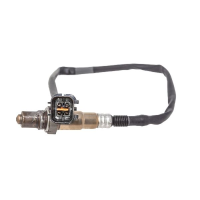
Below are the parts most often responsible for code P2276, ranked by how frequently each one is the actual culprit (per the diagnosis above). Tap any to see what we have for your vehicle.



The information in this article is provided for general reference and educational purposes only. Vehicle specifications, procedures, and part compatibility can vary by production date, trim level, and region. Always consult your vehicle's factory service manual and verify part numbers before purchasing or performing repairs. Safety-critical components such as airbags, seat belts, and braking systems should be installed by a qualified professional.
- 🧭 Diagnostic Flowchart
- 🎬 Helpful Videos
- 🛍️ Shop This Part
- What Does P2276 Mean?
- Can I Drive With P2276?
- Common Causes
- Symptoms
- Common Fixes & Costs
- Used vs. New Parts: Buying Guide
- What Happens If You Wait — Timeline
- Cost of Not Fixing It
- Diagnosis Steps
- When This Code Triggers (Freeze-Frame Conditions)
- Related Codes
- Climate & Environmental Factors
- How to Talk to a Mechanic About This Code
- Where to Take It: Dealer vs Independent vs Chain
- When to Walk Away From the Repair
- What Scan Tool You Need for This Code
- How to Clear the Code After You Fix It
- Will This Fail Emissions / State Inspection?
- Most Commonly Affected Vehicles
- Manufacturer-Specific Notes
- Real Owner Stories
- 2016 Jaguar F-Type R with 40K miles
- 2008 BMW 328i (E90) with multiple O2 sensor codes
- Ford F-150 with repeated O2 sensor failures
- 2005 Honda Accord driven 8,000 miles with CEL on
- How to Prevent This Code From Triggering
- Frequently Asked Questions
- What does 'Bank 2, Sensor 3' mean?
- What is the most common misdiagnosis when fixing P2276?
- What should I do if the P2276 code comes back after replacing the O2 sensor?
- Can I just clear the code and see if it comes back?
- Is it expensive to diagnose this code?
- Could a blown fuse cause the P2276 code?
- Will a fuel additive or cleaner fix a P2276 code?
- Can a bad catalytic converter cause a P2276 code?
- Key Takeaways
- 🎟️ Get 5% Off