

OBD-II Code P2278: O2 Sensor Signals Swapped
The Ultimate Guide to What P2278 Means, Why It Triggers, and How to Fix It
- Over 80% of P2278 codes trigger immediately after a transmission or exhaust repair due to mechanics accidentally swapping the identical downstream O2 sensor connectors.
- Ignoring a P2278 code forces the engine to run on an incorrect fuel mixture, destroying catalytic converters and leading to repair bills exceeding $2,000 within 3 to 6 months.
- Before buying any parts, physically trace the wires for Bank 1 Sensor 3 and Bank 2 Sensor 3 to ensure they are plugged into the correct, matching harnesses.
- Vehicles with V6 or V8 engines are highly susceptible to this code because their dual exhaust systems place identical downstream O2 sensors within inches of each other.
- Use a scan tool with live data to force a temporary vacuum leak on Bank 1; if the Bank 2 sensor voltage drops below 0.45V, the connectors are definitively swapped.
What Does P2278 Mean?
Your Powertrain Control Module (PCM) detects that the signal wires for the third oxygen sensor on engine bank 1 and bank 2 are crossed. This occurs almost exclusively on V6 or V8 engines with dual identical sensors located after the catalytic converters. The PCM uses fuel trim logic to realize the sensors are reporting data for the wrong engine banks.
Technical definition: O2 Sensor Signals Swapped Bank 1 Sensor 3 / Bank 2 Sensor 3. This indicates the Powertrain Control Module (PCM) determined through a logic-based strategy that the signal wires from the post-catalyst oxygen sensors for bank 1 and bank 2 are crossed. Bank 1 contains cylinder #1, and Sensor 3 refers to the downstream sensor.
Can I Drive With P2278?
Yes, But With Caution. You can drive short distances, but extended driving is not recommended. Your vehicle suffers reduced fuel economy and exhibits rough idling. Continuing to drive forces the engine to run on an incorrect air-fuel mixture, destroying catalytic converters over time and causing repairs exceeding $2,000.
Common Causes
- O2 Sensor Connectors Swapped (Very Common) — This is the most frequent cause. During a recent repair (like replacing a transmission, clutch, or exhaust), the electrical connectors for the two downstream O2 sensors were accidentally plugged into the wrong harnesses. They have identical shapes and are easily mixed up. 🎬 Watch: How O2 connectors get accidentally reversed during repairs.
- Damaged Wiring or Connectors (Common) — The wiring harness for the O2 sensors gets damaged from heat, rubbing against the driveshaft, or road debris. This causes a short circuit between the two signal wires, making the PCM read them as swapped. Corrosion or bent pins inside the connectors also cause this issue.
- Aftermarket Exhaust Modifications (Less Common) — Installing aftermarket headers or exhaust systems relocates O2 sensor bungs to positions that alter their readings. This often requires harness extensions that get wired incorrectly or swapped during installation.
- Exhaust Leaks (Less Common) — A significant exhaust leak near one of the downstream O2 sensors lets extra oxygen into the exhaust stream. This alters the sensor's voltage reading so dramatically that the PCM's logic flags the signals as swapped, even when the wiring is correct.
- Faulty Oxygen Sensors (Rare) — It is uncommon for two oxygen sensors to fail simultaneously in a way that perfectly mimics a swapped signal. However, installing an incorrect aftermarket sensor with different internal resistance, or a sensor developing an internal short, contributes to the PCM making an incorrect diagnosis.
- Powertrain Control Module (PCM) Fault (Very Rare) — An internal logic failure, software glitch, or corruption causes the PCM to misinterpret the incoming signals from the O2 sensors. This is the absolute last component to suspect after ruling out all wiring and connector issues.
Symptoms
- Check Engine Light is On — The Check Engine Light illuminates and stays on as long as the fault is present.
- Failed Emissions Test — The O2 sensors are a critical part of the emissions system. A P2278 code causes an automatic failure of any state-mandated OBD-II emissions inspection.
- Worse Gas Mileage — The PCM commands an incorrect fuel mixture based on swapped data, causing a 5-15% drop in fuel economy.
- Rough Idle or Hesitation — The incorrect fuel mixture leads to a rough, fluctuating idle and noticeable hesitation when accelerating.
- Strong Smell of Fuel or Black Smoke — The PCM compensates for the swapped signals by adding excessive fuel, creating a rich condition that results in the smell of unburnt gasoline or black smoke from the tailpipe.
Diagnostic Flowchart
Tap your situation to follow the diagnostic path that matches what you're seeing on this code.
Common Fixes & Costs
- Swap O2 Sensor Connectors — Parts: $0, Labor: $0 - $150 (Typically 0.5-1.0 hour of diagnostic time if done at a shop), ~0.5 hr book time (DIY)
- Repair Damaged Wiring or Connector
— Parts: $20 - $60 for pigtails or wiring supplies, Labor: $150 - $300, depending on the location and extent of damage., ~1.5 hr book time
(Intermediate)
: OEM
: OEM
: OEM - Repair Exhaust Leak — Parts: $30 - $100 for gaskets or sealant, Labor: $150 - $400 for welding or component replacement, ~2.0 hr book time (Professional)
- Replace Oxygen Sensors
— Parts: $50 - $150 per sensor, Labor: $130 - $200 for a pair, ~1.0 hr book time
(DIY)
: OEM
: OEM
: OEM - Reprogram or Replace PCM
— Parts: $600 - $1,500+ for a replacement module, Labor: $150 - $300 for programming and installation, ~1.5 hr book time
(Professional)
: OEM
: OEM
: OEM
DIY vs Professional
- Swap O2 Sensor Connectors 🟢 Beginner
Tools: Flashlight, flathead screwdriver to release connector clips. - Repair Damaged Wiring or Connector 🟢 Beginner
Tools: Digital multimeter, wire strippers, crimpers, heat shrink tubing, soldering iron, vehicle-specific wiring diagram. - Repair Exhaust Leak 🟢 Beginner
Tools: Welder, pipe cutters, grinders, vehicle lift, safety equipment. - Replace Oxygen Sensors 🟢 Beginner
Tools: Jack and jack stands, O2 sensor socket set, penetrating oil, anti-seize lubricant. - Reprogram or Replace PCM 🟢 Beginner
Tools: Manufacturer-specific scan tool, subscription to programming software, battery voltage maintainer.
Used vs. New Parts: Buying Guide
When a used part is worth it: Buying a used O2 sensor is never recommended. They are wear-and-tear items with a finite lifespan (typically 60k-100k miles). The small cost savings are not worth the risk of installing a part already near the end of its life.
Donor-vehicle mileage cap: roughly under 30000 miles for the part to have meaningful remaining life.
Donor quality checklist:
- Verify the part number is an exact match for your vehicle's specific position.
- Inspect the electrical connector for corrosion or damage.
- Avoid sensors from vehicles scrapped due to engine or emissions failures.
Decision logic:
- If The part is an oxygen sensor → Buy new from a reputable OEM or aftermarket brand (e.g., Denso, Bosch, NTK). The reliability is significantly higher for a relatively low cost.
- If The part is a wiring pigtail/connector → Used is acceptable if it is in excellent condition with no corrosion or brittle wires. New is preferred for better longevity.
- If The part is a PCM → A used, professionally refurbished, and VIN-programmed unit is a cost-effective alternative to a new dealer part. Ensure it comes with a warranty.
Warranty tradeoff: Used O2 sensors rarely come with a warranty. New aftermarket sensors typically offer a 1-year to limited lifetime warranty. Reputable used parts suppliers offer a 30-90 day warranty on PCMs.
Worst-case if a used part fails: $150 - $300 if a used O2 sensor fails shortly after installation, requiring repeat labor costs and the purchase of a new sensor.
What Happens If You Wait — Timeline
- 0-2 weeks: Code P2278 is set, and the Check Engine Light turns on. The PCM sets temporary rich/lean codes (P0172/P0175) as it tries to compensate. No other symptoms are likely to be noticed by the driver. (MPG impact: 0-5%% · Added cost: $0)
- 2 weeks - 3 months: A noticeable drop in fuel economy occurs as the PCM consistently runs one bank rich and the other lean. A slight rough idle or hesitation on acceleration is present. The smell of sulfur or fuel from the exhaust is intermittent. (MPG impact: 5-15%% · Added cost: $50-$150 in wasted fuel.)
- 3-8 months: The catalytic converter on the bank running rich begins to overheat from burning excess fuel. The internal ceramic substrate starts to crack or melt. The vehicle fails an emissions test. Misfire codes appear. (MPG impact: 10-20%% · Added cost: $1,200 - $2,800 for catalytic converter replacement. The prolonged incorrect mixture damages the O2 sensors.)
- 8+ months: Complete catalytic converter meltdown occurs, causing a significant exhaust blockage. The car has a severe loss of power, fails to accelerate above a certain speed, and stalls. The extreme heat damages surrounding components. (MPG impact: 20-50%+% · Added cost: $3,000+ for replacement of the catalytic converter, all O2 sensors, and potentially fouled spark plugs.)
Cost of Not Fixing It
- 0-1 month: Noticeable drop in fuel economy (5-15%) and automatic failed emissions test. (Added cost: $20-$60 per month in wasted fuel, depending on mileage.)
- 1-6 months: The engine running consistently rich causes unburnt fuel to enter the exhaust, overheating and damaging the catalytic converters. (Added cost: $1,200 - $2,800 for catalytic converter replacement.)
- 6+ months: Prolonged rich conditions lead to fouled spark plugs, internal engine sludge, and damage to other emission components. (Added cost: $3,000+ for multiple component failures (catalytic converters, O2 sensors, spark plugs).)
Diagnosis Steps
- Check for Recent Repairs
Verify if any work was recently done on the exhaust, transmission, or driveshaft. This code triggers almost exclusively after a repair where the downstream sensors were disconnected.
Tools: Service records (Beginner) - Visually Inspect the O2 Sensor Connectors
Safely raise the vehicle. Locate the two downstream O2 sensors after the catalytic converters. Trace their wires back to their connectors. Check if the connectors are plugged into the correct harnesses. Look for obvious signs of melting, chafing, or corrosion.
Tools: Jack stands, flashlight (Beginner) - Swap the Connectors and Retest
If the connectors look identical and you suspect they are swapped, unplug them and switch them. Clear the code with an OBD-II scanner and drive the car. If the code does not return, the problem is solved.
Tools: OBD-II scanner (Beginner) - Analyze Live Data with a Scan Tool
Use a scan tool to watch the voltage readings for Bank 1 Sensor 3 and Bank 2 Sensor 3. If the wiring is correct, the voltage patterns correspond to their respective engine banks. If Bank 1's fuel trim adjustments reflect in Bank 2's sensor voltage, it confirms a swapped signal.
Tools: Advanced OBD-II scanner (Intermediate) - [PRO TIP] Force a Rich/Lean Condition
With the scan tool graphing both downstream O2 sensor voltages, create a temporary lean condition on one bank by introducing a small vacuum leak near an intake runner for Bank 1. The voltage for the Bank 1 O2 sensor must drop below 0.45V. If the Bank 2 sensor voltage drops instead, you have 100% confirmation the connectors are swapped.
Tools: Advanced OBD-II scanner, vacuum hose (Advanced) - Check for Exhaust Leaks
With the engine running, carefully listen and feel for air blowing out from the exhaust system around the O2 sensors and catalytic converters. A professional shop performs a smoke test to pinpoint microscopic leaks altering the sensor readings.
Tools: Smoke machine (professional) (Intermediate) - Test the Wiring Harness
Unplug the connectors from both the O2 sensors and the PCM. Use a digital multimeter to check for continuity on each wire to ensure there are no breaks. Check for shorts between the two signal wires and for shorts to ground or power.
Tools: Digital multimeter, vehicle-specific wiring diagram (Advanced)
When This Code Triggers (Freeze-Frame Conditions)
- Engine Coolant Temp: 170-220°F (77-104°C) (Engine at normal operating temperature.)
- RPM: 1500-2500 (Steady cruise or light load.)
- Engine Load: 20-50% (Maintaining speed on a flat road, not accelerating hard.)
- Vehicle Speed: 40-60 mph (64-97 km/h) (Steady highway driving.)
Related Codes
- P0172 — System Too Rich (Bank 1). If P2278 is active, the PCM sees a false lean signal from Bank 1 (because it reads Bank 2) and commands more fuel. This causes a real rich condition on Bank 1, triggering P0172. Fix P2278 first.
- P0175 — System Too Rich (Bank 2). Triggered for the exact same reason as P0172 but on the opposite bank when P2278 is present. The diagnostic logic is identical: verify which physical sensor reacts to changes on which engine bank.
- P2270 — O2 Sensor Signal Stuck Lean (Bank 1 Sensor 2). While P2278 is about swapped signals, P2270 is about a non-responsive signal. If they appear together, suspect a major wiring issue or a large exhaust leak causing a false lean reading and confusing the PCM's cross-check logic.
- P2272 — O2 Sensor Signal Stuck Lean (Bank 2 Sensor 2). Similar to P2270, this indicates a sensor flat-lined lean. Address the stuck code first, as fixing the underlying cause (e.g., repairing a leak or short) likely resolves both codes.
Climate & Environmental Factors
- High Humidity / Road Salt: Regions with high humidity or that use road salt in winter experience accelerated corrosion on O2 sensor connectors and wiring. This corrosion causes high resistance or short circuits, confusing the PCM and triggering a P2278 code even if connectors are not swapped.
- Extreme Cold: Extreme cold (-18°C / 0°F or less) makes plastic connectors and wire insulation brittle and prone to breaking during repairs, leading to the wiring faults that trigger this code.
How to Talk to a Mechanic About This Code
Say this: "I have a P2278 code, which indicates 'O2 sensor signals swapped'. I'd like to schedule a diagnostic. I suspect the issue is either swapped connectors from a recent repair or a wiring problem. Please start by visually inspecting the downstream O2 sensor connectors and wiring harness before recommending any part replacements."
This language shows you've done your research and directs the technician to the most likely and cheapest fixes first. It discourages them from immediately quoting new O2 sensors, which is a common misdiagnosis for this specific code.
Avoid saying:
- 'My check engine light is on, can you look at it?'
- 'Just fix whatever's wrong.'
- 'I think I need new oxygen sensors.'
Questions to ask before authorizing the repair:
- Did you find that the connectors were swapped or that there is physical damage to the wiring?
- If you are recommending new sensors, can you show me the live data graph or test results that prove the old ones are faulty?
- Will you provide a printout of the freeze-frame data and the final codes after the repair?
- What is your warranty on this specific repair, including both parts and labor?
Where to Take It: Dealer vs Independent vs Chain
- Dealer:
Recommended only if the vehicle is under warranty or if an independent shop has diagnosed a confirmed PCM failure. Otherwise, it is not cost-effective for this code.
Best for: Vehicles still under a powertrain or emissions warranty., Complex electrical issues on newer or high-end European vehicles., Confirmed PCM-related faults that require manufacturer-specific software.
Downsides: Highest labor rates, often 1.5x to 2x more than independent shops., Defaults to replacing larger assemblies instead of performing a specific wiring repair. (Typical cost: +50% vs. baseline) - Independent Shop:
Best fit. P2278 is a classic diagnostic problem that a good independent technician solves efficiently. Their lower labor rates and focus on targeted repairs make them ideal for this issue.
Best for: Out-of-warranty vehicles where cost is a factor., Diagnosing common codes with well-known causes., Building a long-term relationship with a trusted mechanic.
Downsides: Quality and diagnostic skill varies greatly; vetting via reviews and ASE certifications is crucial., Lacks the latest specialized tools for very new or obscure models. (Typical cost: +0% vs. baseline) - Chain Shop:
Use with caution. While they handle a simple O2 sensor replacement, they are quick to recommend that without properly diagnosing the more likely wiring or connector issue. Avoid for the initial diagnosis.
Best for: Simple, routine maintenance like oil changes, tires, and brake pads.
Downsides: High pressure to meet sales quotas leads to upselling unnecessary parts., Technician skill varies dramatically; lacks the deep diagnostic experience needed for electrical faults beyond simple part replacement. (Typical cost: -10% vs. baseline)
When to Walk Away From the Repair
If the estimated repair cost exceeds 40-50% of the car's current private-party value, pause and consider your options. For older, high-mileage cars, this threshold is lower, around 30-40%.
- Car worth $4000, fix is $2000: Borderline. This repair represents 50% of the car's value. Get a second opinion before authorizing, as a misdiagnosis of P2278 inflates the cost.
- Car worth $12000, fix is $250: Fix it. A wiring repair is well below the threshold and restores full function and value.
- Car worth $2500, fix is $1800: Walk away. The repair cost is 72% of the car's value. It is not an economically sound repair.
What Scan Tool You Need for This Code
Minimum: A scanner that reads and graphs live O2 sensor voltage data. A basic code reader that only provides the code number is not sufficient for diagnosing P2278.
A $20 code reader tells you the P2278 code is present, but it cannot show you the live sensor signals. To solve this problem, you must see if the sensor voltages are swapped, stuck, or responding correctly. Without live data, you are guessing and wasting money replacing good parts.
Budget: BlueDriver Pro (~$99) — Pairs with your smartphone to read/clear codes, view freeze-frame data, and graph live O2 sensor data for both banks simultaneously. This is the minimum required to effectively diagnose a P2278 at home.
Mid-range: Foxwell NT510 Elite / Innova 5610 (~$180-320) — These handheld units offer robust features, including bi-directional controls to test components. For P2278, their key advantage is faster live data refresh rates and the ability to access manufacturer-specific PIDs, crucial for advanced diagnostics like forcing a rich/lean condition.
Professional: Autel MaxiCOM MK808 / MK906BT (~$500-1200) — Provides full bidirectional control, comprehensive live data with advanced graphing, and access to OEM-level diagnostic functions. These tools perform the 'force rich/lean' test with precision and help diagnose underlying PCM communication issues.
Rent vs buy: Most auto parts stores read your codes for free, but their loaner tool programs for scanners have become rare due to liability. For P2278, you need to analyze data while driving, so a free in-store read is not enough. Buying a budget pick like the BlueDriver is your most cost-effective option.
How to Clear the Code After You Fix It
- Use an OBD-II scan tool to clear the P2278 and any related codes.
- Ensure the fuel tank is between 25% and 75% full.
- Perform a complete drive cycle to allow the readiness monitors to run.
Drive cycle (~20 minutes): Start with a cold engine. Idle for 2-3 minutes. Drive at a steady highway speed (around 55 mph) for 5-10 minutes. Perform 10-15 minutes of mixed city/suburban driving with stop-and-go traffic.
Readiness monitors affected: Catalyst monitor, O2 sensor monitor, O2 sensor heater monitor
Before emissions retest: drive at least 50 miles to fully set monitors.
Watch out for:
- Disconnecting the battery clears the code but resets all readiness monitors to 'Not Ready', guaranteeing an emissions test failure.
- The code returns immediately if the underlying fault (swapped connectors or wiring issue) is not fixed.
- Not driving long enough or under the right conditions leaves monitors incomplete. Several days of normal driving are required if a specific drive cycle isn't followed.
Will This Fail Emissions / State Inspection?
Yes — this code typically fails an OBD-II emissions inspection.
- California: A P2278 code is an automatic failure. All required OBD readiness monitors must be 'Ready'. After a repair, a drive cycle of up to 100-200 miles is needed to reset the monitors before a retest.
- New York: The NYVIP3 inspection includes an OBD-II scan. An active P2278 code causes an immediate test failure. The Malfunction Indicator Light must be off and readiness monitors must be set.
- Texas: In counties requiring emissions testing, an illuminated Check Engine Light from P2278 is an automatic failure. Clearing the code right before the test results in a 'Not Ready' status and a failure.
Most Commonly Affected Vehicles
- Various V6 and V8 Engines (1996-Present) — Common on any vehicle with a V-style engine where the two downstream O2 sensor connectors are physically close and identical, making them easy to mix up during repairs.
- Ford F-150, Explorer, Mustang GT (2000-2015) — Often reported after transmission or exhaust work. On the 2004-2008 F-150, the identical connectors are located on the transmission crossmember, making a swap highly common.
- Chevrolet / GMC Silverado, Sierra, Tahoe, Camaro (2000-2016) — These models have dual exhaust with downstream sensors whose connectors are easy to confuse during service. TSBs exist for related O2 sensor wiring issues.
- Dodge / Ram / Chrysler Ram 1500, Durango, Charger, 300 (2002-2017) — The Hemi V8 and other V-engines have sensor layouts that make a connector swap highly probable during service.
- Hyundai / Kia Genesis Coupe (V6), Stinger (V6), Sorento (V6) (2010-2020) — These V6 models have dual exhaust systems where post-catalyst sensor connectors are in close proximity and easily swapped.
- Nissan Frontier, Pathfinder, Titan (V6/V8) (2005-2018) — V-engine configurations in Nissan trucks and SUVs are susceptible to this code after exhaust or transmission work.
- BMW Models with N62, N63 V8 engines (5, 6, 7 Series, X5) (2002-2016) — Repairs for notorious oil and coolant leaks require significant disassembly near the exhaust, increasing the risk of O2 sensor connectors being swapped upon reassembly.
- Audi / Volkswagen Q7, Touareg (V6/V8) (2004-2015) — On the VW Touareg with the VR6 engine, the downstream sensor connectors are located near the MAF sensor; Bank 1 connectors are black and Bank 2 are brown to help differentiate them.
Manufacturer-Specific Notes
- General Motors (GM): On Chevy and GMC trucks, the wiring harness routing makes it particularly easy to cross the post-catalyst O2 sensor connectors after a transmission service. The identical connectors mount directly on the transmission bellhousing or crossmember.
- Ford: Ford issues TSBs related to wire chafing on the O2 sensor harness, leading to shorts that trigger a P2278 code. Note: Code B2278 (B-prefix) is a common but unrelated code on Fords for a steering torque sensor fault and must not be confused with P2278.
- Volkswagen / Audi: On many VW and Audi V6/V8 models, the connectors for the downstream O2 sensors are identical and located near each other. On models like the Touareg VR6, the connectors are color-coded (black for Bank 1, brown for Bank 2) to prevent swaps.
- Subaru: Subaru models with the 2.5L engine require significant engine disassembly for head gasket repairs. During reassembly, it is highly common for the downstream O2 sensor connectors to be inadvertently swapped.
How to Prevent This Code From Triggering
- Use Top-Tier certified gasoline at every fill-up. (Every fill-up) — Higher levels of detergents prevent carbon buildup on fuel injectors and valves. This ensures complete combustion, preventing unburnt fuel from contaminating and damaging O2 sensors and the catalytic converter.
- Replace engine air filter at recommended intervals. (Per vehicle manufacturer's schedule (typically 15,000-30,000 miles)) — A clogged air filter restricts airflow, causing a rich fuel condition. This fouls O2 sensors with carbon soot, making them slow and inaccurate, and eventually leads to catalytic converter damage.
- Perform regular engine maintenance, including spark plug replacement. (Per vehicle manufacturer's schedule (spark plugs typically 60,000-100,000 miles)) — Worn spark plugs cause incomplete combustion and misfires. This sends raw fuel into the exhaust, which overheats and destroys both the O2 sensors and the catalytic converter.
- Fix any engine oil or coolant leaks promptly. (As needed) — Leaking oil or antifreeze contaminates the O2 sensor's sensing element, a condition known as 'poisoning'. This permanently damages the sensor and requires replacement.
- When performing repairs, label or photograph connectors before disconnecting them. (During any DIY or professional repair) — This simple step is the #1 way to prevent the most common cause of P2278: accidentally swapping identical connectors during reassembly.
Frequently Asked Questions
Can I fix P2278 myself?
Yes, if the cause is swapped connectors. It involves locating the two sensors, unplugging them, and plugging them into the correct harnesses. Wiring damage or exhaust leaks require advanced skills.
What happens if I ignore the P2278 code?
Ignoring it causes an automatic emissions test failure. Running with an incorrect fuel mixture destroys your catalytic converters over time. This results in a repair bill often exceeding $2,000.
Why did this code appear right after I had my car repaired?
The P2278 code is most often triggered by human error during reassembly. A mechanic likely disconnected the O2 sensors to perform a transmission or exhaust repair. They accidentally swapped the identical connectors when putting everything back together.
What's the difference between O2 Sensor 2 and Sensor 3?
'Sensor 2' refers to the standard downstream oxygen sensor located after the catalytic converter. 'Sensor 3' is a less common term used by some manufacturers for the exact same downstream sensor. For code P2278, 'Sensor 3' always refers to the post-catalytic converter sensor.
What are common misdiagnosis mistakes for P2278?
A common mistake is immediately replacing oxygen sensors without confirming a physical fault. The code specifically indicates a wiring or logic issue, not a sensor failure. Always check for swapped connectors and wiring damage before buying parts.
Are there any recalls for code P2278?
There are no major safety recalls specifically for powertrain code P2278. It is frequently confused with code B2278, which relates to a steering shaft torque sensor failure on Ford vehicles. Always verify the full alphanumeric code with a scanner.
Can a bad catalytic converter cause a P2278 code?
No, a failing catalytic converter triggers an efficiency code like P0420 or P0430. Code P2278 specifically means the PCM detects the signal wires from the sensors monitoring the converters are crossed. A clogged converter alters readings but does not simulate swapped signals.
How do I know which sensor is Bank 1 and Bank 2?
Bank 1 is always the side of the engine containing cylinder #1. Bank 2 is the opposite side of the engine. Consult your vehicle's service manual to identify which side houses cylinder #1 for your specific make and model.
Key Takeaways
- Over 80% of P2278 codes trigger immediately after a transmission or exhaust repair due to mechanics accidentally swapping the identical downstream O2 sensor connectors.
- Ignoring a P2278 code forces the engine to run on an incorrect fuel mixture, destroying catalytic converters and leading to repair bills exceeding $2,000 within 3 to 6 months.
- Before buying any parts, physically trace the wires for Bank 1 Sensor 3 and Bank 2 Sensor 3 to ensure they are plugged into the correct, matching harnesses.
- Vehicles with V6 or V8 engines are highly susceptible to this code because their dual exhaust systems place identical downstream O2 sensors within inches of each other.
- Use a scan tool with live data to force a temporary vacuum leak on Bank 1; if the Bank 2 sensor voltage drops below 0.45V, the connectors are definitively swapped.
Helpful Videos
Shop the Parts Behind P2278
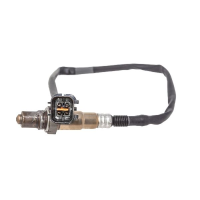
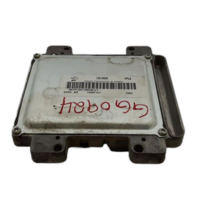
Below are the parts most often responsible for code P2278, ranked by how frequently each one is the actual culprit (per the diagnosis above). Tap any to see what we have for your vehicle.

The information in this article is provided for general reference and educational purposes only. Vehicle specifications, procedures, and part compatibility can vary by production date, trim level, and region. Always consult your vehicle's factory service manual and verify part numbers before purchasing or performing repairs. Safety-critical components such as airbags, seat belts, and braking systems should be installed by a qualified professional.
- 🧭 Diagnostic Flowchart
- 🎬 Helpful Videos
- 🛍️ Shop This Part
- What Does P2278 Mean?
- Can I Drive With P2278?
- Common Causes
- Symptoms
- Common Fixes & Costs
- DIY vs Professional
- Used vs. New Parts: Buying Guide
- What Happens If You Wait — Timeline
- Cost of Not Fixing It
- Diagnosis Steps
- When This Code Triggers (Freeze-Frame Conditions)
- Related Codes
- Climate & Environmental Factors
- How to Talk to a Mechanic About This Code
- Where to Take It: Dealer vs Independent vs Chain
- When to Walk Away From the Repair
- What Scan Tool You Need for This Code
- How to Clear the Code After You Fix It
- Will This Fail Emissions / State Inspection?
- Most Commonly Affected Vehicles
- Manufacturer-Specific Notes
- How to Prevent This Code From Triggering
- Frequently Asked Questions
- Can I fix P2278 myself?
- What happens if I ignore the P2278 code?
- Why did this code appear right after I had my car repaired?
- What's the difference between O2 Sensor 2 and Sensor 3?
- What are common misdiagnosis mistakes for P2278?
- Are there any recalls for code P2278?
- Can a bad catalytic converter cause a P2278 code?
- How do I know which sensor is Bank 1 and Bank 2?
- Key Takeaways
- 🎟️ Get 5% Off