

P2280 on 2014-2018 Ram ProMaster 3.0L EcoDiesel: Air Flow Restriction Fault Guide
P2280 indicates an air flow restriction or leak between the air filter and the mass airflow (MAF) sensor. On the ProMaster 3.0L, this is most commonly caused by a clogged air filter or a cracked/disconnected air intake hose. Unlike other Ram trucks, there is very little specific information for the ProMaster 3.0L EcoDiesel, so a thorough visual inspection of the entire air intake system is the necessary first step before replacing any parts.
- P2280 means there is an airflow restriction or leak between your air filter and MAF sensor.
- The most likely cause on any vehicle is a severely clogged air filter; check this first as it is simple and inexpensive.
- Thoroughly inspect all intake hoses and clamps for cracks or looseness, as this is the next most common cause.
- Be aware that online search results for P2280 on a 'Ram' are almost always for the wrong engine (6.7L Cummins), so their specific advice may not apply to your ProMaster.
- Do not replace any sensors until you have confirmed the physical intake path is clear and sealed.
What's Unique About the 2014-2018 Ram ProMaster
It is critical to note that while P2280 is a generic code, online information is overwhelmingly dominated by the Ram 2500/3500 trucks with the 6.7L Cummins engine, where this code is extremely common and has well-known causes. The 2014-2018 Ram ProMaster uses a completely different 3.0L I4 EcoDiesel engine made by VM Motori/Iveco (also known as the F1C). There is a significant lack of documented, specific causes or repair patterns for the P2280 code on the ProMaster platform, making it crucial to rely on fundamental diagnostics rather than platform-specific assumptions. The European platform mates (Fiat Ducato, etc.) also do not show a high incidence of this specific code.
Symptoms You May Notice
- Check Engine Light is on
- Reduced engine power or sluggish acceleration
- Vehicle may enter 'limp mode'
- Rough or unstable idle
- Possible hissing or whistling sounds from the engine bay
- Stalling at low speeds
- Delayed throttle response
- Replacing the MAF sensor without first inspecting the air filter and intake tubing for physical restrictions or leaks.
Most Likely Causes
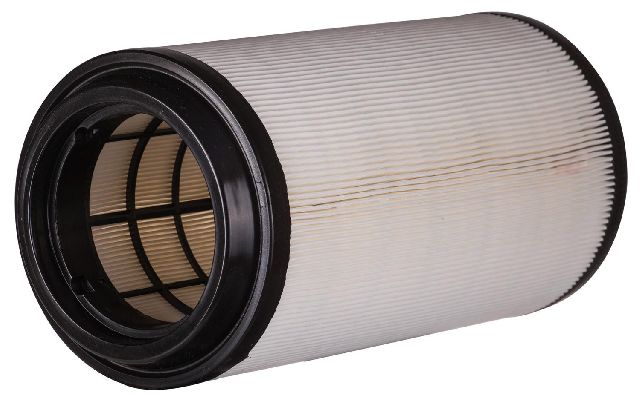
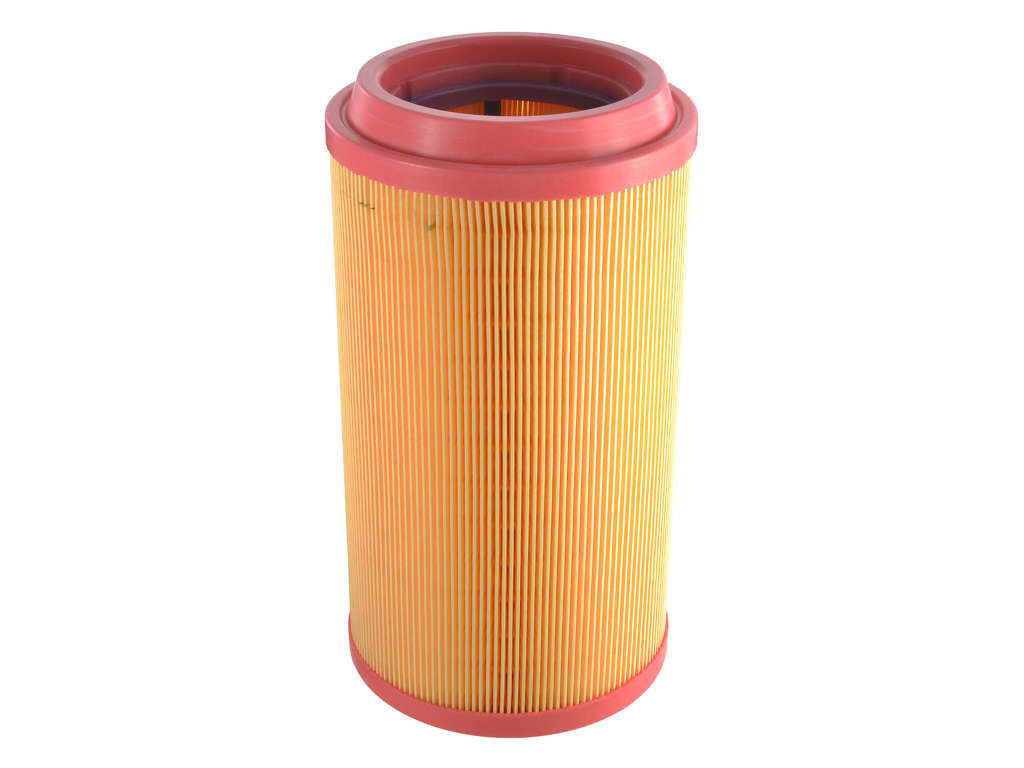
- Clogged or Dirty Engine Air Filter 🔴 High Probability → Shop Air Cleaner Assembly This is the most common cause for this code on any vehicle. Diesel engines require a large volume of clean air, and filters can become clogged with dust, dirt, or debris, leading to a restriction.
How to confirm: Visually inspect the engine air filter. If it is dark, full of debris, or wet, it is restricted.
Typical fix: Replace the engine air filter. 🎬 Watch: Step-by-step guide to replacing your ProMaster air filter.
Est. part cost: $30-$80 - Cracked, Loose, or Disconnected Intake Hose 🟡 Medium Probability The plastic and rubber components of the intake system can become brittle over time due to heat and age, leading to cracks or loose connections. A disconnected hose between the airbox and turbo is a common discovery.
How to confirm: With the engine off, carefully inspect all intake ducting between the air filter box and the turbocharger inlet. Check for visible cracks, listen for vacuum leaks with the engine running, or perform a smoke test. A video for a Ram 5500 showed the intake hose completely disconnected as the cause.
Typical fix: Repair or replace the damaged section of the intake hose and ensure all clamps are tight.
Est. part cost: $50-$250 - Debris in Air Intake Tract ⚪ Low Probability → Shop Engine Air Intake Resonator Rodents building nests or debris being ingested past a damaged filter can physically block the intake path.
How to confirm: Visually inspect the inside of the airbox and intake tubing after removing the air filter.
Typical fix: Remove the obstruction and inspect for any related damage to sensors or tubing.
Est. part cost: $0 - Contaminated or Faulty Mass Airflow (MAF) Sensor ⚪ Low Probability → Shop Fuel Injection Air Flow Meter While the code points to a restriction *before* the MAF, a heavily contaminated or failing MAF sensor can sometimes provide erratic readings that the PCM interprets as a restriction. Oiled air filters (like K&N) can sometimes contribute to contamination.
How to confirm: Remove the MAF sensor and inspect the sensing elements for dirt, oil, or other contaminants. A diagnostic scan tool can be used to monitor live MAF data to see if it responds correctly to changes in engine RPM.
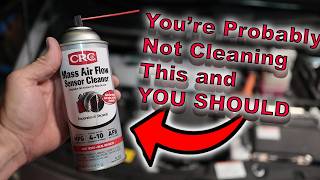
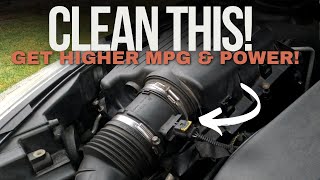
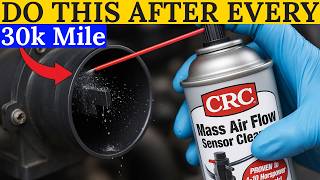
Typical fix: Clean the MAF sensor with dedicated MAF sensor cleaner. 🎬 See how to safely clean your Mass Airflow sensor. If cleaning does not resolve the issue, replace the sensor.
Est. part cost: $75-$200
Rare But Worth Checking
- Faulty PCM Software or Calibration:
Diagnosis Steps
- Retrieve all stored DTCs with a capable OBD-II scanner.
- Turn the ignition off and open the hood.
- Open the air filter housing and perform a thorough visual inspection of the engine air filter. Replace if it is dirty, clogged, or wet.
- While the filter is out, inspect the airbox and intake snorkel for any debris, such as leaves, plastic bags, or animal nests.
- Inspect the entire intake tract from the airbox to the turbocharger inlet. Pay close attention to flexible boots and connections. Look for cracks, loose clamps, or disconnected hoses. A smoke test is the most effective way to find small leaks.
- Locate the Mass Airflow (MAF) sensor and ensure its electrical connector is secure and free of corrosion.
- If no obvious physical issues are found, consider cleaning the MAF sensor with a dedicated electronic cleaner as a precautionary measure. Avoid touching the sensor elements.
- Clear the P2280 code with the scanner and perform a test drive to see if the code returns.
- If the code persists, a more advanced diagnosis using a scan tool to monitor live data from the MAF and pressure sensors may be required to identify an intermittent issue or a failing sensor.
- As a final step if all else fails, consult a dealer to check for any available PCM software updates, as bulletins for other codes suggest software can be a cause of erroneous faults on this platform.
Parts You'll Likely Need
- Engine Air Filter — This is the most common and simplest fix for an airflow restriction code on any vehicle.
Trusted brands: Mopar, Wix, Bosch, Purolator
OEM price range: $50-$80
Aftermarket price range: $30-$50 - Air Intake Hose / Boot
(OEM #68168082AA, 68190498AB, 52014864AA)— The rubber or plastic hoses can crack with age, causing leaks or collapsing under vacuum, which triggers the P2280 code. Several different hoses make up the intake tract.
Trusted brands: Mopar
OEM price range: $100-$250
Aftermarket price range: $50-$150
Technical Service Bulletins (TSBs) & Recalls
- TSB 25-003-23: This TSB extends the warranty on numerous emissions components for 2014-2016 models, including the Mass Airflow sensor and the entire turbocharger system with related hoses. While not a direct fix for P2280, it indicates that if a component listed is found to be the cause, the repair may be covered.
- TSB Bulletin #1813022REVA: This manufacturer bulletin notes that P2280 (Air Flow Restriction / Leak Between Air Cleaner And MAF) has been changed from a one-trip fault to a two-trip fault for certain diesel fuel systems.
- TSB Bulletin #1800322: This bulletin similarly documents that the P2280 diagnostic trouble code has been updated to a two-trip fault status.
- TSB Bulletin #1802321: Manufacturer records indicate that P2280 is among a group of codes, including Catalyst Efficiency, that have been transitioned to a two-trip fault logic.
Documented NHTSA Reports
In addition to manufacturer bulletins, owner reports provide insight into how this code presents in the field. NHTSA ODI #11384489 describes a situation where an owner reported a clogged filter message and a failure to perform a DPF regeneration, with P2280 appearing alongside several other codes including P0102 and P0087.
Mechanic-Grade Diagnostic Values
- Mass Airflow (MAF) Sensor Live Data (g/s) — expected: 2 to 7 grams/second (g/s) at idle, rising to 15 to 25 g/s at 2500 RPM.. Failure: Readings that are stuck, do not rise smoothly with RPM, or are significantly outside the expected range.
- Mass Airflow (MAF) Sensor Signal Voltage — expected: Typically 0.5–0.8 Volts at idle. Should rise smoothly with acceleration.. Failure: Voltage is stuck, erratic, or does not correspond to engine RPM changes.
- Mass Airflow (MAF) Sensor Power Supply — expected: 12 Volts. Failure: No or low voltage at the power supply pin of the sensor connector.
Scan Tool Commands That Help
- Advanced Scan Tool (e.g., wiTECH, AlfaOBD): Live Data Monitoring (MAF, Boost Pressure, etc.) — To observe sensor readings in real-time during idle, revving, and test drives. This is crucial for determining if a sensor is providing linear and logical data or if it's sticking or responding slowly, which is indicative of a failure.
Wiring & Ground Locations
- Primary Engine Ground Strap — A braided strap connecting the transmission case to a bolt on the top of the driver-side transmission mount. It may be accessible by removing the driver-side headlight assembly.. A poor or corroded engine ground can cause inconsistent or incorrect readings from various engine sensors, including the MAF sensor, potentially leading to false airflow-related codes like P2280.
- MAF Sensor Connector — On the air intake tube, located after the air filter housing. It is a 4-pin female connector.. This is the direct connection point for the MAF sensor. Damaged pins, corrosion, or broken wires at this connector will cause a loss of signal or erratic readings, directly triggering the P2280 code.
- Battery Location — Under the floorboard at the driver's feet, accessible by removing a cover panel.. Technicians need to know this location to connect a stable power supply (battery maintainer) during diagnostic procedures or potential PCM software updates, which can be a fix for erroneous codes on this platform.
Model Year Variations Within This Range
- 2014-2018: The 3.0L I4 EcoDiesel (Iveco F1C) engine was an optional engine available from 2014 through the 2018 model year, after which it was discontinued for the ProMaster platform. It is a completely different engine from the 3.0L V6 EcoDiesel found in the Ram 1500 and Jeep Grand Cherokee.
Diagnostic Flowchart
Other Known Issues on This Vehicle
Issues unrelated to this code that are worth knowing about as an owner of this generation:
- EGR Cooler Failure 🔴 High — Common issue, especially on 2014-2016 models. Can lead to coolant loss, overheating, and soot-related engine problems. (Ref: A recall was issued for the V6 EcoDiesel in Ram 1500s, but not specifically for the I4 in the ProMaster, though the failure mode (cracking) is similar.)
- Oil Cooler Failure 🔴 High — Common on 2014-2016 models, especially those under heavy load. Leads to mixing of oil and coolant, requiring extensive flushing and repair. (Ref: An extended warranty was offered for this part on some EcoDiesel models.)
- M40 Automated-Manual Transmission Problems 🔴 High — The diesel ProMaster uses a unique automated-manual transmission (M40 MTA) that is prone to issues like shifting into neutral unexpectedly, no-move conditions, and premature clutch/fork wear.
- DPF System Faults & Soot Buildup 🟠 Medium — Prone to issues with DPF pressure sensors, temperature sensors, and general soot accumulation, often triggering codes like P2463. Can be exacerbated by outdated PCM software. (Ref: TSBs #18-038-15 REV. B and #18-018-15 REV B address software updates for emissions system codes.)
- Crankshaft Reluctor Wheel Failure 🟠 Medium — The reluctor wheel for the crankshaft position sensor can come loose, causing a stall, crank-no-start, or extended crank condition. This is a labor-intensive repair requiring transmission removal.
Used vs. New Parts: Buying Guide for This Vehicle
When a used part is the smart pick: For non-electronic, structural plastic components like the air filter box housing or rigid sections of the intake tract, a used part from a reputable auto recycler is a cost-effective option.
Donor-vehicle mileage cap: roughly under 100000 miles for the part to have meaningful remaining life.
What to inspect on the donor part:
- Inspect all plastic for hairline cracks, especially around mounting points and hose clamp areas.
- Ensure no mounting tabs are broken or missing.
- For any included rubber boots or couplers, verify they are still pliable and not dry-rotted or brittle.
- Confirm the donor vehicle was not in a front-end collision that could have stressed the intake components.
OEM-only on this vehicle (don't cheap out):
- Mass Airflow (MAF) Sensor: While aftermarket sensors are available, using an OEM Mopar/Bosch sensor is strongly recommended to ensure accurate readings and prevent compatibility issues that can lead to persistent or new trouble codes.
Aftermarket brands forum-validated for this vehicle:
- Air Filter: Wix, Bosch, Purolator, Mopar (as noted in Pass 2).
Brands owners have reported issues with on this vehicle:
- No specific brands were consistently reported as problematic in user forums for this repair.
Related OBD-II Codes
Frequently Asked Questions
Is the repair for code P2280 on my 2015 ProMaster EcoDiesel covered under a warranty or TSB?
What is the absolute most common reason for a P2280 code on the Ram ProMaster?
My air filter is new, but I still have the P2280 code. What should I check next?
Can I use a cheaper aftermarket MAF sensor if mine is faulty?
I found a rodent's nest in my airbox. Could this cause the P2280 code?
Could my ProMaster's known transmission problems be related to this engine code?
Helpful Videos
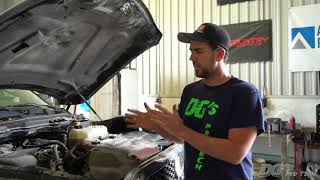
We Have This Part in Stock
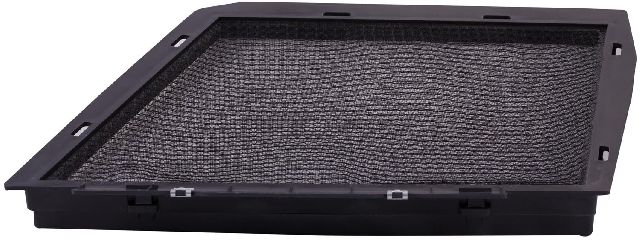
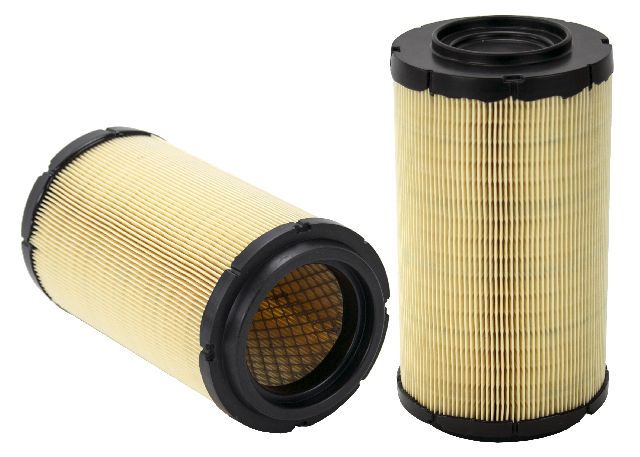

The information in this article is provided for general reference and educational purposes only. Vehicle specifications, procedures, and part compatibility can vary by production date, trim level, and region. Always consult your vehicle's factory service manual and verify part numbers before purchasing or performing repairs. Safety-critical components such as airbags, seat belts, and braking systems should be installed by a qualified professional.
- Ram ProMaster:
- 🧭 Diagnostic Flowchart
- 🎬 Helpful Videos
- 🛍️ Shop This Part
- What's Unique About the 2014-2018 Ram ProMaster
- Symptoms You May Notice
- Most Likely Causes
- Rare But Worth Checking
- Diagnosis Steps
- Parts You'll Likely Need
- Technical Service Bulletins (TSBs) & Recalls
- Documented NHTSA Reports
- Mechanic-Grade Diagnostic Values
- Scan Tool Commands That Help
- Wiring & Ground Locations
- Model Year Variations Within This Range
- Other Known Issues on This Vehicle
- Used vs. New Parts: Buying Guide for This Vehicle
- Related OBD-II Codes
- Frequently Asked Questions
- 🎟️ Get 5% Off