

P2281 on 2014-2020 Ram 3500 6.7L Cummins: Air Leak Causes & Fixes
On a 2014-2020 Ram 3500 with the 6.7L Cummins, code P2281 almost always indicates a physical air leak in the charge air system between the turbocharger and the intake manifold. The most common causes are a cracked rubber intercooler boot or a loose clamp, followed by a cracked factory plastic cold-side intercooler pipe. In some cases, a severe restriction from a soot-clogged EGR cooler or intake heater grid can be misinterpreted by the PCM as a leak. The fix is usually replacing the damaged boot
- P2281 on a 6.7L Cummins almost always means there is a physical air leak in the intake system after the turbo.
- Before buying any parts, perform a thorough visual inspection of all intake hoses and pipes, and check the tightness of all clamps.
- The most likely culprits are the rubber intercooler boots and the factory plastic cold-side intercooler pipe.
- Do not immediately replace expensive sensors like the MAF or MAP; they are rarely the cause of this specific code.
- Upgrading to higher quality silicone boots and a metal intercooler pipe is a worthwhile investment to prevent repeat failures.
What's Unique About the 2014-2020 Ram 3500

The 6.7L Cummins is a high-boost turbodiesel engine that puts significant pressure and heat stress on its intake components. The factory-installed plastic intercooler pipes (especially the cold-side pipe) and rubber boots are known weak points that can become brittle, crack, or split over time. Oil blow-by from the crankcase ventilation (CCV) system can also saturate the inside of the rubber boots, causing them to soften, swell, and eventually rupture under boost. This makes P2281 a relatively common code, especially on trucks used for heavy towing or those with higher mileage, as the leaks often surface under heavy engine load.
Diagnostic Flowchart

Tap your situation to follow the diagnostic path that matches what you're seeing on this vehicle.
Generation note: This range covers the end of the fourth generation (2014-2018) and the beginning of the fifth generation (2019-2020) Ram trucks. While the engine is largely the same, some intake components and part numbers may differ. However, the causes and diagnostic principles for this code are identical for both generations. Several TSBs have been issued for software updates to the PCM to refine the diagnostic logic for P2281, indicating it can sometimes be triggered too sensitively on earlier models.
Symptoms You May Notice

- Check Engine Light is on
- Reduced engine power and acceleration, often described as "limp mode", especially when towing.
- Audible hissing, whistling, or whooshing sound from the engine bay, especially under acceleration. Some owners report a quiet "pop" when the code first sets under load.
- Drastic decrease in fuel economy; one owner reported dropping from 10 MPG to 6 MPG while towing.
- Black smoke from the exhaust under acceleration.
- Boost gauge reading lower than normal, often limited to 10-15 psi.
- Rough or erratic idle.
- Hesitation on acceleration.
- Replacing the MAF sensor. This code is almost never caused by a faulty MAF sensor, but by an air leak or restriction *after* the sensor.
- Replacing only the EGR valve without a full system inspection. A hotshot truck owner on a forum spent thousands replacing the EGR valve and then the EGR cooler for a recurring P2281, highlighting the need to diagnose the entire system, including simple boost leaks, before replacing expensive components.
Most Likely Causes

- Cracked or Split Intercooler Hoses (Boots) 🔴 High Probability → Shop Intercooler The rubber boots connecting the intercooler piping are subjected to high boost pressure, heat, and oil saturation from the CCV system, causing them to degrade, soften, split, or tear over time. The hot-side boot from the turbo outlet is a common failure point.
How to confirm: Visually inspect all rubber boots, especially at the connections to the intercooler and intake horn. Squeeze the hoses to reveal hidden splits or soft, swollen spots. Oily residue around a connection is a tell-tale sign of a boost leak. Spraying soapy water on the connections while the engine is running may show bubbles where air is escaping.
Typical fix: Replace the damaged boot and clamps. Many owners upgrade to more durable multi-ply silicone hoses and stronger T-bolt style clamps to prevent future failures.
Est. part cost: $80-$250 - Cracked Plastic Intercooler Pipe 🔴 High Probability → Shop Intercooler The factory cold-side intercooler pipe, which runs from the intercooler to the intake manifold, is made of plastic that becomes brittle from engine heat cycles and can crack under boost pressure. This is a very common failure point documented across many owner forums.
How to confirm: Visually inspect the entire length of the plastic intercooler pipes for cracks or fractures. A smoke test of the charge air system is the most definitive way to confirm a leak.
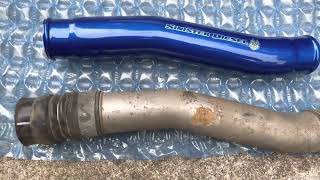
Typical fix: Replace the cracked pipe. Upgrading to a more durable metal aftermarket pipe is a popular and permanent solution.
Est. part cost: $150-$400 - Clogged EGR System or Intake Heater Grid 🟡 Medium Probability The 6.7L Cummins EGR system produces heavy soot that can clog the EGR cooler or intake heater grid. The PCM can misinterpret this severe airflow restriction as an air leak, triggering P2281 even when no physical leak exists. TSB #9003758 specifically directs technicians to contact the STAR Center if P2281 is present and the EGR cooler is found to be plugged with soot.
How to confirm: If no leaks are found with a smoke test, the intake horn must be removed to inspect the heater grid and EGR passages for heavy soot buildup. A technician on a forum noted a case where the heater grid was 60% plugged, causing the code. A dealer can use the wiTECH scan tool to run an EGR Cooler Efficiency Test.
Typical fix: Clean the EGR valve, cooler, crossover tubes, and associated passages. If components are cracked or internally damaged, they must be replaced.
Est. part cost: $0 (if cleaning) - $600+ - Loose Intake System Clamps 🟡 Medium Probability Vibration and pressure cycles can cause the T-bolt clamps on the intercooler boots to loosen over time, creating a leak.
How to confirm: Physically check the tightness of every clamp in the intake path from the turbo to the intake manifold.
Typical fix: Tighten any loose clamps to the proper torque specification. If a clamp is stripped or broken, it must be replaced.
Est. part cost: $5-$20
Rare But Worth Checking
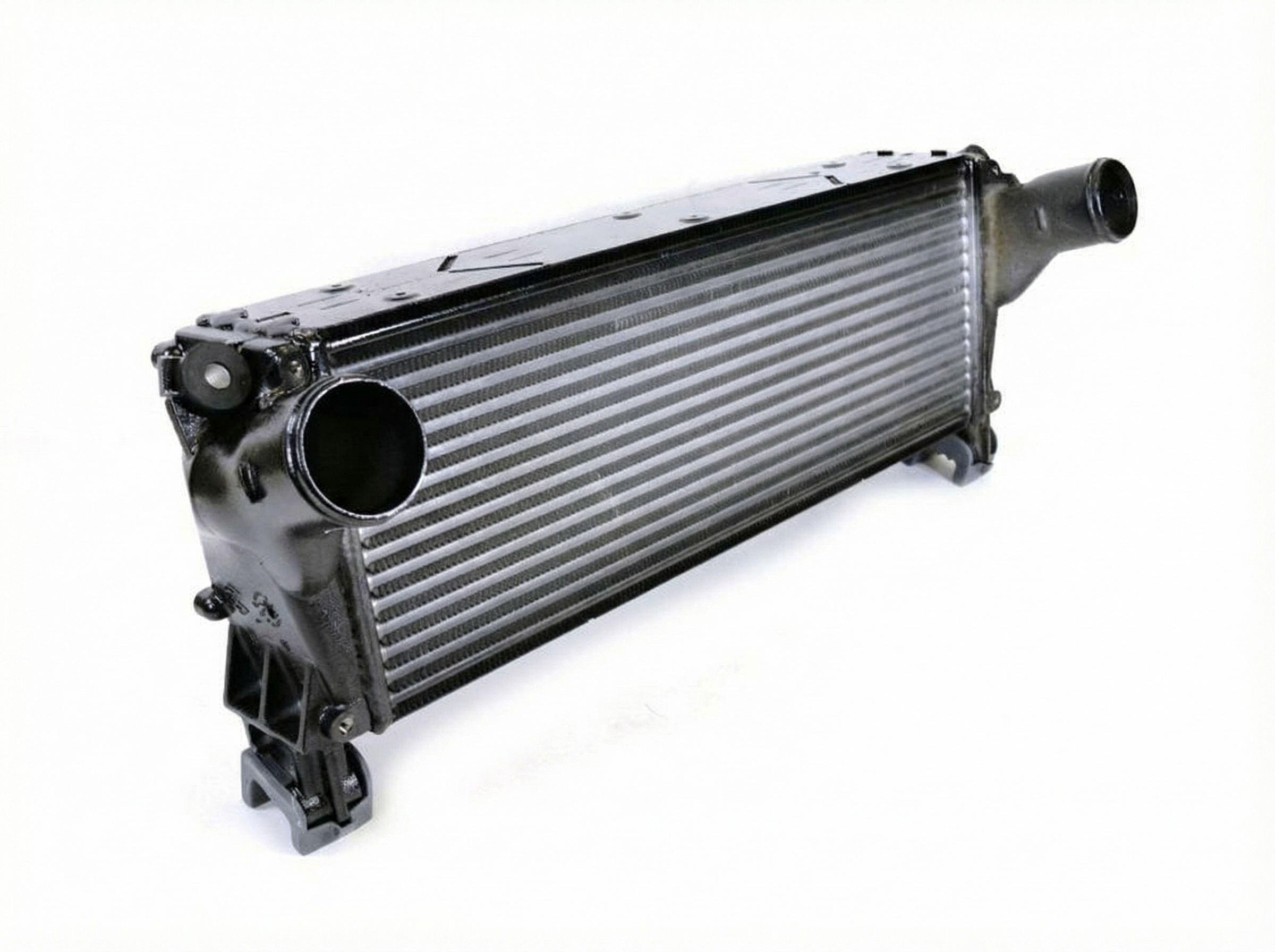
- Cracked Intercooler: → Shop Intercooler Less common than hose or pipe failures, but the intercooler itself can crack, usually at the end tanks where the plastic is crimped to the aluminum core, causing a significant boost leak.
- Missing Bolt or Damaged Gasket: A missing bolt on the intake horn or a failed gasket for the intake manifold, throttle valve, or MAP sensor can create a leak. One owner found a missing bolt under the heater grid was the cause after multiple other attempted fixes. The grid heater itself is also secured by a bolt that is known to fail and fall into the intake, which could cause a leak before causing catastrophic engine damage.
- Dirty or Faulty MAP/TMAP Sensor: While rarely the root cause, a MAP or TMAP (Temperature/Manifold Absolute Pressure) sensor heavily caked in soot can send incorrect readings to the PCM, leading to a P2281 code. One owner on the Turbo Diesel Register forum resolved their code by cleaning a heavily sooted TMAP sensor after a leak test showed no issues.
Diagnosis Steps
- Perform a thorough visual inspection of the entire intake tract from the air filter to the intake manifold. Look for obvious cracks in plastic pipes, splits in rubber boots, and oily residue that indicates a leak.
- Manually check the tightness of every T-bolt clamp on the intercooler boots.
- If no obvious leak is found, perform a smoke test. Introduce pressurized smoke into the intake system (after the MAF sensor) and watch for where it escapes. This is the most effective way to find small leaks.
- A DIY alternative to a smoke test involves creating a vacuum in the charge air system. Remove the intake tube from the air filter box, start the engine, and then cover the turbo inlet with a piece of stiff cardboard to stall the engine. In the silence after the engine stops, any leaks may produce an audible hiss.
- If no leaks are found, check for PCM software updates. Multiple TSBs (e.g., #18-042-20, #1813022) involve reprogramming the PCM to correct overly sensitive diagnostic logic for P2281.
- If no leaks are present, inspect the MAP/TMAP sensor on the intake manifold for heavy soot buildup and clean it carefully with a dedicated sensor cleaner.
- As a final step, remove the intake horn to inspect the intake grid heater and EGR passages for heavy soot buildup that could be causing a restriction.
Parts You'll Likely Need
- Intercooler Hose (Boot)
(OEM #e.g., Hot Side: 68164687AB, Cold Side: 52014729AE (Verify with VIN))— This is the most common failure point. The rubber degrades from heat, pressure, and oil saturation, causing splits and tears.
Trusted brands: Mopar, Dorman, Mishimoto, HPS, Sinister Diesel
OEM price range: $100-$150
Aftermarket price range: $80-$250 - Cold Side Intercooler Pipe
(OEM #52014735AB, 52014735AA (Verify with VIN))— The factory plastic pipe is a well-documented weak point that frequently cracks under boost, causing a P2281 code.
Trusted brands: Mopar, Airaid, Banks Power, Wehrli Custom Fabrication
OEM price range: $200-$300
Aftermarket price range: $250-$400 - EGR Cooler
(OEM #68444084AA, 68048991AA (Verify with VIN))— Can become internally clogged with soot, creating a major airflow restriction that the PCM interprets as a leak.
Trusted brands: Mopar, Bullet Proof Diesel
OEM price range: $500-$700
Aftermarket price range: $450-$1300
Related Codes That Often Appear With This One
- P0401 — Insufficient EGR Flow. An air leak can affect the pressure differential that the PCM uses to calculate EGR flow. This is mentioned in TSB #1813022 and TSB #9003758.
- P0402 — Excessive EGR Flow. Similar to P0401, a leak in the charge air system can confuse the PCM's logic for calculating EGR flow, as noted in TSB #1813022.
- P0234 — Turbocharger Overboost Condition. The turbo may try to compensate for the loss of pressure from a leak, potentially leading to an overboost situation. This is cited in TSB #1813022 and TSB #9003758.
- P0087 — Fuel Rail Pressure Too Low. Software updates mentioned in TSB #18-042-20 and TSB #18-078-15 address P2281 and P0087 together, suggesting a potential link in the PCM's diagnostic logic or a shared trigger under high load.
- P0101 — Mass Air Flow (MAF) Circuit Range/Performance. A large leak can cause a discrepancy between MAF readings and other sensors that is significant enough to trigger a fault for the MAF sensor's performance, even if the sensor is working correctly.
Technical Service Bulletins (TSBs) & Recalls
- PCM software update for 2016 models to address MIL illumination for P2281 along with EGR and turbo overboost codes (P0401, P0402, P0234).
- PCM software update for 2014 models to address several codes, including P2281 and P0087 (Fuel Rail Pressure Too Low), and changes some codes from one-trip to two-trip faults.
- An internal communication directing technicians to contact the STAR Center for assistance if a P2281, P0401, or P0234 code is present and the EGR cooler is found to be plugged with soot, confirming this as a known cause.
- PCM software update for 2014 Ram 3500/4500/5500 Chassis Cab models to address several codes, including P2281.
Platform-Specific Known Issues
- The factory plastic cold-side intercooler pipe is a notorious weak point and a primary cause of P2281 on these trucks.
- TSB #18-042-20 involves a PCM software update to address MIL illumination for P2281 and other codes, indicating the diagnostic logic itself has been revised by the manufacturer.
- TSB #9003758 (referenced in search results) specifically calls out that a plugged EGR cooler can cause P2281, confirming that a restriction can be misinterpreted as a leak by the PCM.
Mechanic-Grade Diagnostic Values
- MAP Sensor Power Supply Voltage — expected: Approximately 5V. Failure: A reading significantly lower than 5V points to a wiring or PCM issue.
- MAP Sensor Ground Circuit Voltage — expected: Less than 100mV (0.1V). Failure: Voltage higher than 100mV indicates a poor ground connection, which can skew sensor readings.
- MAP Sensor Signal Voltage (KOEO) — expected: 4.5V - 5.0V. Failure: A voltage outside this range with the engine off can indicate a faulty sensor.
- MAP Sensor Signal Voltage (at Idle) — expected: 1.0V - 2.0V. Failure: Voltage should drop from the KOEO reading as engine vacuum is created. If it stays high, the sensor may be faulty or clogged.
Scan Tool Commands That Help
- wiTECH (OEM Dealer Tool): INTAKE AIR SYSTEM PRESSURE TEST — This is the guided, systematic procedure recommended by the service manual to find leaks in the charge air system after a visual inspection is inconclusive.
- wiTECH (OEM Dealer Tool): EGR Cooler Efficiency Test — Use this function if no boost leaks are found via smoke test. It helps determine if the EGR cooler is plugged with soot, a known cause of P2281, by monitoring turbo speed and other parameters while actuating the EGR valve.
Wiring & Ground Locations
- MAP/TMAP Sensor — Mounted on the intake manifold air horn, on the driver's side of the engine.. This sensor's readings are critical for the P2281 diagnostic. Its location makes it susceptible to heavy soot buildup from the EGR system, which can clog the sensor port and cause incorrect readings.
- Engine Wiring Harness — General harness routing around the engine bay, particularly near the driver-side shock tower, ECM/TCM bracket, and A/C lines.. While no specific chafe point is universally cited for the MAP sensor circuit, general engine vibration can cause the main harness to rub against metal components, potentially damaging the wiring for the MAP sensor or other related circuits, leading to intermittent signals.
Real Owner Repair Stories
- cumminsforum.com user (2016 Ram 3500 (Hotshot truck) with 45,000 miles) — Recurring P2281 and 'limp mode', especially when hauling a heavy load uphill.
❌ Tried (didn't work) Dealer replaced EGR Valve ($1,400), Another dealer replaced EGR Cooler ($2,600), System was cleaned of soot buildup, Owner replaced MAF sensor
✅ What actually fixed it The issue was repeatedly caused by components in the emissions system getting clogged with soot under heavy use. The final fix by a dealer involved a thorough cleaning of the entire EGR system, not just replacing one component. This highlights that part replacement without addressing the root cause (soot buildup) is ineffective. - Turbo Diesel Register forum user 'brillmtb' (Ram 3500 with 45,000 miles) — P2281 code and significant power loss would only appear when towing a 5th wheel.
❌ Tried (didn't work) Replaced air filter and pressurized air hoses, Cleaned EGR valve, Replaced EGR valve
✅ What actually fixed it The dealer replaced the EGR cooler, which was noted as being plugged with soot, and also replaced the MAP sensor at the owner's request. This combination finally resolved the code. - Turbo Diesel Register forum user 'ProLean' (2014 Ram 2500 with 130,000 miles) — P2281 code, boost limited to 10psi, major power loss, and poor fuel economy (6 MPG) while towing.
❌ Tried (didn't work) Visual inspection of hoses, DIY vacuum test (stalling engine with cardboard) which indicated no leaks
✅ What actually fixed it The owner removed the TMAP (Temperature/Manifold Absolute Pressure) sensor and found it had heavy carbon buildup. Cleaning the sensor with electronics cleaner and reinstalling it cleared the code and restored power. - RamForum.com user story (2020 Ram 3500 with 78,000+ miles) — Recurring P2281, especially when towing.
❌ Tried (didn't work) Multiple other attempted fixes (details not specified).
✅ What actually fixed it A technician discovered and replaced a missing bolt located under the intake heater grid, which was the source of the air leak.
"I Checked Everything" — The Actual Cause
- In a documented case on a 2017 Ram, the truck repeatedly passed a smoke test of the charge air system. The actual cause of the P2281 and P0101 codes was found to be an intake heater grid that was 60% plugged with soot, creating an airflow restriction that the PCM interpreted as a leak.
- An owner of a 2014 Ram performed a DIY vacuum test that showed no audible leaks. The P2281 code was ultimately resolved by removing and cleaning the TMAP sensor, which was heavily caked in soot and providing incorrect pressure readings to the PCM.
When the Usual Fixes Don't Work
- While the vast majority of P2281 codes are caused by physical air leaks in the charge air cooler piping, a significant number of cases, especially those that are difficult to diagnose, are not caused by a leak at all. Multiple owner and technician reports confirm that a severe restriction from a soot-plugged EGR cooler or intake heater grid can cause the PCM to set a P2281 code, even when a smoke test shows no leaks. Furthermore, a heavily sooted MAP/TMAP sensor can send erroneous data to the PCM, causing the code without any physical leak or restriction being present. Therefore, if a thorough visual inspection and smoke test do not reveal a leak, the next diagnostic step should be to inspect for restrictions and sensor contamination, rather than continuing to search for a phantom leak.
OEM Part Supersession History
Mopar 68282012AB→Cummins 5698456— This is a direct cross-reference for the MAP sensor located on the intake manifold air horn.
Heads up: This sensor fits a wide range of model years (2007-2024), but it's crucial to verify the correct part for the specific vehicle as multiple MAP sensors are listed by Dodge/Ram.68321026AB, 68321026AC→68321026AD— Part revisions for the main air filter box on 2019+ models.68417829AB→Current PN not specified— Part revision for intercooler ducting on 2019+ models.
Model Year Variations Within This Range
- 2019-2020: The 5th generation trucks (2019+) feature a redesigned factory air intake system that incorporates a cold air feed from the grille. The intercooler piping also differs, with aftermarket kits for these years often using larger 3.5-inch hot and cold side pipes, compared to a mix of sizes on earlier models.
- 2014-2018: The 4th generation trucks have an older style airbox that primarily pulls air from the engine bay and fender well, making it more susceptible to heat soak. The factory plastic cold-side intercooler pipe is a known weak point prone to cracking.
Helpful Videos
Used OEM Parts in Stock
New Aftermarket Parts Available


The information in this article is provided for general reference and educational purposes only. Vehicle specifications, procedures, and part compatibility can vary by production date, trim level, and region. Always consult your vehicle's factory service manual and verify part numbers before purchasing or performing repairs. Safety-critical components such as airbags, seat belts, and braking systems should be installed by a qualified professional.
- Ram 3500:
- 🧭 Diagnostic Flowchart
- 🎬 Helpful Videos
- 🛍️ Shop This Part
- What's Unique About the 2014-2020 Ram 3500
- Symptoms You May Notice
- Most Likely Causes
- Rare But Worth Checking
- Diagnosis Steps
- Parts You'll Likely Need
- Related Codes That Often Appear With This One
- Technical Service Bulletins (TSBs) & Recalls
- Platform-Specific Known Issues
- Mechanic-Grade Diagnostic Values
- Scan Tool Commands That Help
- Wiring & Ground Locations
- Real Owner Repair Stories
- "I Checked Everything" — The Actual Cause
- When the Usual Fixes Don't Work
- OEM Part Supersession History
- Model Year Variations Within This Range
- 🎟️ Get 5% Off