

P2299 on 2012-2017 Fiat 500: Brake and Accelerator Pedal Conflict Explained
Code P2299 on a Fiat 500 almost always means the brake and accelerator pedals were pressed at the same time. This is most often caused by 'two-footed driving' and is not a part failure. Before replacing any parts, change your driving style to use only your right foot for both pedals. In some cases, a faulty brake light switch can also trigger this code.
- P2299 means the car's computer detected the brake and gas pedals being pressed at the same time.
- The most common cause is not a broken part, but a driving style where the left foot rests on the brake pedal.
- Before buying any parts, try driving with only your right foot to see if the code returns.
- If driving style isn't the cause, the next most likely culprit is a faulty brake light switch, which is an inexpensive and simple DIY repair.
What's Unique About the 2012-2017 Fiat 500

For the Fiat 500, the manufacturer (FCA) has been very clear about this code. They have issued multiple Technical Service Bulletins (TSBs) stating that P2299 is typically caused by the driver's habits ('two footed driver') and explicitly warn technicians *not* to replace the accelerator pedal for this fault. This is a deliberate system design to prevent unintended acceleration, and the code is often a sign of the system working as intended rather than a component failure. 🎬 Watch: A short explanation of the P2299 fault code. The pedal placement, with the gas pedal further inward than the brake, can make it challenging for some drivers to avoid simultaneous input, especially during performance driving techniques like heel-and-toe.
Diagnostic Flowchart

Tap your situation to follow the diagnostic path that matches what you're seeing on this vehicle.
Symptoms You May Notice
- Check Engine Light is on
- Electronic Throttle Control (ETC) warning light may be illuminated
- Vehicle enters 'limp mode' with significantly reduced engine power and acceleration
- Cruise control may not work
- Unresponsive accelerator pedal
- Brake lights may be stuck on (if caused by a faulty switch)
- Hill Start Assist warning may appear intermittently
- Replacing the accelerator pedal assembly. Manufacturer TSBs #9003413 and #53034160A specifically state that the accelerator pedal should not be replaced for this fault code, as it is almost always caused by driving habits.
Most Likely Causes

- Driver Habit (Two-Footed Driving) 🔴 High Probability The vehicle's control module is highly sensitive to overlapping brake and accelerator inputs. Fiat has issued multiple TSBs confirming this is the most common cause. The pedal ergonomics can also contribute, as the gas pedal is set further inward than the brake pedal.
How to confirm: Observe your driving habits. Do you rest your left foot on the brake pedal while your right foot is on the accelerator? Clear the code and test drive using only your right foot for both pedals. If the code does not return, driver habit is the cause.
Typical fix: Change driving style to use only the right foot for both pedals. No parts are required.
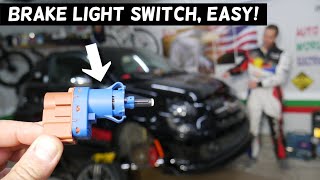
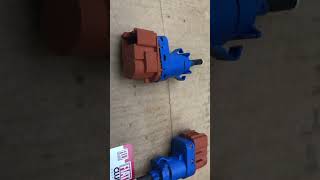
Est. part cost: $0 - Faulty or Sticking Brake Light Switch 🟡 Medium Probability → Shop Brake Light Switch The brake light switch (also called a stop lamp switch) tells the PCM when the brakes are applied. If it sticks in the 'on' position, the car will think the brakes are engaged even when they are not, creating a conflict when the accelerator is pressed. This is a known common fault on Fiat 500s.
How to confirm: Check if your brake lights are stuck on even when the pedal is not pressed. A scan tool can also monitor the live data from the switch to see if it's sending an 'on' signal constantly. A user on fiatforum.com found the broken switch piece in the passenger footwell before noticing the brake lights were stuck on. A simple diagnostic test is to disconnect the switch's electrical connector and use a jumper wire to bridge the power and signal terminals; if the brake lights illuminate, the switch is bad.
Typical fix: Replace the brake light switch. It is located at the top of the brake pedal arm and is typically a simple twist-and-pull component to replace. The switch is inserted at an 11 o'clock position and twisted clockwise to the 1 o'clock position to lock it in place.
Est. part cost: $15-$40
Rare But Worth Checking
- Wiring or Connector Issue: A TSB mentions checking wiring and connectors to the accelerator pedal and brake switch. Damage or corrosion could cause incorrect signals. A poor connection at the female pin of the connector to the male pin of the sensor can cause intermittent issues that are hard to diagnose.
- Faulty Accelerator Pedal Position (APP) Sensor: → Shop Accelerator Pedal Assembly While TSBs explicitly warn against replacing the pedal for this code, a failing sensor is a remote possibility if all other causes are ruled out. This should be the last resort after confirming driving habits, the brake switch, and wiring are all correct.
- Outdated Powertrain Control Module (PCM) Software: → Shop Engine Control Module (ECM) A TSB from 2014 (18-007-14 REV. A) for 2012-2013 models mentions P2299 in conjunction with a crank/no-start condition, which could be resolved by a PCM software update. The update also included cold weather starting enhancements.
- Weak Battery or Poor Electrical Connection: Some owners on fiatforum.com have reported that intermittent P2299 codes, especially in cold weather, were resolved by cleaning battery terminals or replacing a weak battery. Low voltage can cause various electronic modules to behave erratically.
Diagnosis Steps
- First, ask the primary driver(s) if they drive with two feet (one on brake, one on gas). This is the most common cause.
- Clear the fault code using an OBD-II scanner.
- Test drive the vehicle ensuring only the right foot is used for both pedals. If the code does not return, the problem is solved.
- If the code returns, visually check if the brake lights are stuck on. If they are, the brake light switch is the highly likely culprit.
- Using a scan tool with live data capability, monitor the status of the brake pedal switch and the accelerator pedal position sensors. Press each pedal individually and ensure the other sensor shows no activity. The brake switch should show 'off' when the pedal is released.
- Inspect the wiring and electrical connectors for the brake light switch and the accelerator pedal assembly for any signs of damage, corrosion, or looseness. Pay attention to the connector pins for proper tension.
- If the brake switch is suspected, perform a bypass test by disconnecting its connector and jumping the power and signal wires to see if the brake lights turn on.
- Check for any available PCM software updates with a Fiat dealer, especially for 2012-2013 models that may experience crank/no-start issues.
- If all other steps fail, the accelerator pedal position sensor may be faulty, but this is extremely rare for this specific code.
Parts You'll Likely Need
- Brake Light Switch
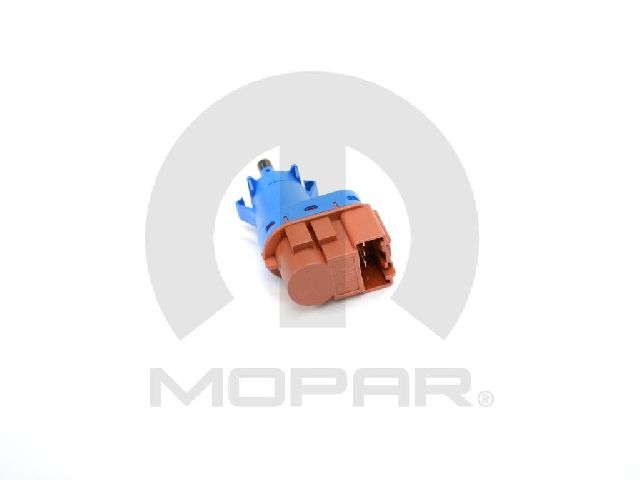
(OEM #46840510)— If the code is not caused by driving habits, a sticking or faulty brake light switch is the next most likely cause, sending a constant 'brake on' signal.
Trusted brands: Mopar, Bosch, FAE, Febi Bilstein, Metzger
OEM price range: $25-$40
Aftermarket price range: $13-$30
Related Codes That Often Appear With This One
- P2122 — This code for 'Accelerator Pedal Position Sensor 1 Circuit Low' can be set if the pedal's electrical connector is disconnected during diagnosis.
- P2127 — This code for 'Accelerator Pedal Position Sensor 2 Circuit Low' can also be set if the pedal's connector is disconnected during diagnosis.
- P1220-62 — Seen in a forum post alongside P2299, this code for 'Accelerator pedal potentiometer (feasibility) - Signal compare failure' points towards a conflict in pedal signals.
Technical Service Bulletins (TSBs) & Recalls

- 9003413: States P2299 is usually caused by a 'two footed driver' and the accelerator pedal should not be replaced.
- 53034160A: Repeats the warning about two-footed drivers and advises checking wiring before replacing the pedal.
- 18-053-16: Defines P2299-00 as 'Brake Pedal Position/Accelerator Pedal Position Incompatible' as part of a larger list of codes addressed by a software update.
- 18-007-14 REV. A: Associates P2299 with a potential crank/no-start condition on 2012-2013 models, fixed by a PCM software update. Also notes the update includes cold weather starting enhancements.
Platform-Specific Known Issues
- Multiple official Fiat Chrysler TSBs have been released specifically to address this code, emphasizing that it is usually caused by the driver and that parts should not be replaced without proper diagnosis.
- A user on a forum for the Fiat Ducato (a commercial van sharing electronics) reported their dealer also blamed driver error for P2299, but another user correctly suggested the brake switch was the more likely mechanical fault.
- On right-hand drive models, the brake switch is located in the passenger footwell due to the LHD-to-RHD conversion linkage, making it potentially vulnerable to being kicked or damaged by a passenger.
Mechanic-Grade Diagnostic Values
- Accelerator Pedal Position (APP) Sensor Supply Voltage — expected: ~5V. Failure: Voltage significantly lower than 5V indicates a wiring or PCM issue.
- APP Sensor 1 Signal Voltage vs. APP Sensor 2 Signal Voltage — expected: The voltage from the second potentiometer should be exactly half of the voltage from the first (main) potentiometer throughout the pedal's travel.. Failure: If the 2:1 ratio is not maintained, it indicates a failing sensor assembly.
- Brake Pedal Position (BPP) Sensor Voltage (Live Data) — expected: ~0.5V when released, ~4.5V when fully pressed.. Failure: Voltage that is high when the pedal is released, or does not change when pressed, indicates a stuck or faulty switch.
- Main Chassis Ground Resistance — expected: < 0.1 Ω. Failure: Higher resistance indicates corrosion or a loose connection, which can cause widespread, intermittent electrical issues.
Scan Tool Commands That Help
- wiTECH (Fiat/Chrysler Dealer Tool): PCM Flash/Reprogramming — For 2012-2013 models with an intermittent crank/no-start condition alongside P2299, as specified in TSB 18-007-14 REV. A. This software update also includes cold weather starting enhancements. The procedure requires a battery charger and wiTECH software level 15.01 or higher.
- wiTECH: Cruise Control Learn Procedure — This procedure is required after reprogramming the PCM to ensure cruise control functionality is restored.
Wiring & Ground Locations
- Accelerator Pedal Connector — At the top of the accelerator pedal assembly, under the driver's side dashboard.. This 6-pin connector provides power, ground, and signal paths for the two redundant pedal position sensors. A poor connection here is a primary point of failure.
- Brake Light Switch Connector — At the top of the brake pedal arm. On LHD models, it's in the driver's footwell. On RHD models, it's in the passenger footwell due to a cross-car linkage.. This connector provides the 'brake applied' signal to the PCM. A fault here can cause the PCM to believe the brakes are always on.
- ECU Connector A (Vehicle Side) — On the IAW 5SF9 ECU, this is one of the two main harness connectors.. Pin 14 and Pin 52 are inputs from the brake pedal switch. Pin 51 is the signal from accelerator potentiometer 1, and Pin 38 is the signal from potentiometer 2. Technicians can test for signal continuity directly at these pins.
- Main Engine/Chassis Ground Strap — A cable running from the battery negative terminal, to a point on the chassis below the battery tray, and then continuing down to a bolt on the gearbox.. Corrosion or failure of this strap is a known issue on Fiat 500s and can cause a wide range of difficult-to-diagnose electrical problems, including starting issues and random warning lights, by creating an unstable ground reference for all vehicle electronics.
- G31 Ground Point — A wiring diagram for the 2012 Abarth lists a ground point G31 relevant to the Body Control Module.. The BCM processes the brake switch signal. A poor ground here could affect its interpretation of the signal.
Real Owner Repair Stories
- fiatforum.com user 'stu0710' (Fiat 500 (RHD model), year not specified but likely pre-2013) — Found a broken plastic piece in the passenger footwell, followed by the discovery that the brake lights were permanently on. Also experienced a 'weird hesitancy' when pulling away in first gear where revs would die off.
❌ Tried (didn't work) Initially, the owner could not identify the broken part.
✅ What actually fixed it Re-installing a new brake light switch (Mopar P/N 46840510). The user confirmed the broken piece was the switch, which had fallen out of its bracket on the RHD brake linkage in the passenger footwell. The fix not only corrected the brake lights but also resolved the engine hesitation issue.
OEM Part Supersession History
46840510→46840510 is the currently specified Mopar part number.— This part number is widely cited across Fiat, Alfa Romeo, and Lancia platforms, indicating a long-standing, stable design.
Heads up: While the part number appears stable, it is crucial to ensure the replacement switch is for the correct application, as it is used across many FCA vehicles.
Model Year Variations Within This Range
- 2012-2013: These model years are specifically called out in TSB 18-007-14 REV. A for a potential PCM software update to resolve P2299 when it appears with an intermittent crank/no-start condition. Later models may have shipped with this updated software from the factory.
Helpful Videos
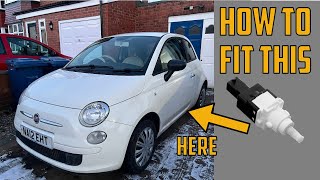
We Have This Part in Stock


The information in this article is provided for general reference and educational purposes only. Vehicle specifications, procedures, and part compatibility can vary by production date, trim level, and region. Always consult your vehicle's factory service manual and verify part numbers before purchasing or performing repairs. Safety-critical components such as airbags, seat belts, and braking systems should be installed by a qualified professional.
- Fiat 500:
- 🧭 Diagnostic Flowchart
- 🎬 Helpful Videos
- 🛍️ Shop This Part
- What's Unique About the 2012-2017 Fiat 500
- Symptoms You May Notice
- Most Likely Causes
- Rare But Worth Checking
- Diagnosis Steps
- Parts You'll Likely Need
- Related Codes That Often Appear With This One
- Technical Service Bulletins (TSBs) & Recalls
- Platform-Specific Known Issues
- Mechanic-Grade Diagnostic Values
- Scan Tool Commands That Help
- Wiring & Ground Locations
- Real Owner Repair Stories
- OEM Part Supersession History
- Model Year Variations Within This Range
- 🎟️ Get 5% Off