

P2299 on 2015-2019 Jeep Cherokee: Brake & Accelerator Pedal Incompatibility Explained
This code almost always means the driver is pressing the brake and accelerator pedals at the same time ('two-footed driving'). The fix is usually a change in driving habits, not a parts replacement. Before buying any parts, clear the code and see if it returns with one-foot driving.
- P2299 on a Jeep Cherokee is most often caused by the driver's foot resting on the brake while accelerating.
- Do not replace any parts, especially the accelerator pedal, before confirming the issue is not related to driving style.
- The first diagnostic step is to ask about driving habits and clear the code.
- If the code returns, the next most likely (but still uncommon) cause is a faulty brake light switch, not the accelerator pedal sensor.
- The vehicle may enter a reduced power mode as a safety precaution when this code is active.
What's Unique About the 2015-2019 Jeep CHEROKEE
For the 2015-2019 Jeep Cherokee, Jeep has been very clear about the primary cause of P2299. Multiple Technical Service Bulletins (TSBs) have been issued stating this code is 'usually caused by a two footed driver'. This strong guidance from the manufacturer is meant to prevent technicians and owners from unnecessarily replacing the accelerator pedal assembly when the issue is actually related to driving style. In some cases for 2016-2017 models, a PCM software update (TSB 18-049-16 REV. B) was issued to address this code, suggesting the factory logic was overly sensitive.
Diagnostic Flowchart
Tap your situation to follow the diagnostic path that matches what you're seeing on this vehicle.
Symptoms You May Notice
- Check Engine Light is on
- Electronic Throttle Control (ETC) warning light (a red lightning bolt symbol) may illuminate 🎬 Watch: How to fix and reset the ETC warning light.
- Vehicle may enter a reduced power or 'limp' mode
- Cruise control may be disabled
- Unresponsive or sluggish accelerator pedal
- Replacing the Accelerator Pedal Assembly. The official TSBs for the Jeep Cherokee explicitly state that the accelerator pedal should not be replaced for this fault unless proper diagnostics confirm it has failed. The cause is far more likely to be the driver's habits or a needed software update.
Most Likely Causes
- Driver pressing both brake and accelerator pedals simultaneously 🔴 High Probability → Shop Accelerator Pedal Assembly The system is sensitive to this input, and Jeep has issued multiple TSBs to highlight this as the most common cause to prevent misdiagnosis. This can happen by resting the left foot on the brake pedal or during aggressive driving like heel-toe shifting (though less common on an automatic).
How to confirm: Question the driver about their habits (e.g., resting their left foot on the brake pedal). Clear the code and test drive using only the right foot for both pedals. If the code does not return, this was the cause.
Typical fix: Advise the driver to use only one foot for both pedals. No parts are required.
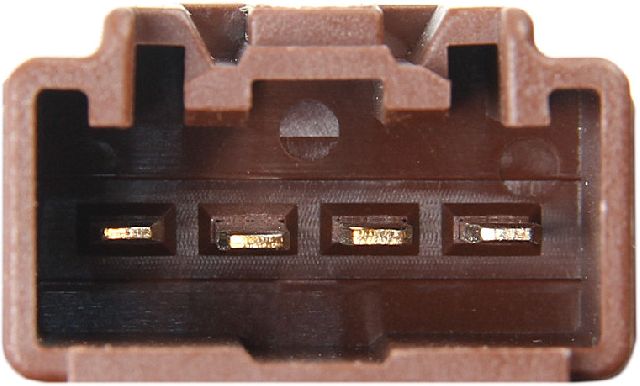
Est. part cost: $0 - Faulty or sticking Brake Light Switch (Stop Lamp Switch) ⚪ Low Probability → Shop Brake Light Switch While less common than driver habit, a brake light switch can fail and send a constant 'brake applied' signal to the PCM, even when the pedal is not pressed. This creates a conflict when the accelerator is used.
How to confirm: Use a scan tool to monitor the brake pedal position sensor's live data. If it shows 'ON' or 'Pressed' when the pedal is released, the switch is likely faulty. Also, visually check if brake lights are stuck on. A simple continuity test with a multimeter can also verify function: the switch should have continuity when the plunger is out (pedal pressed) and no continuity when the plunger is in (pedal released).
Typical fix: Replace the brake light switch. It is typically a twist-in component located above the brake pedal arm.
Est. part cost: $15-$40 - Faulty Accelerator Pedal Position (APP) Sensor ⚪ Low Probability → Shop Accelerator Pedal Assembly The TSBs specifically warn against replacing the pedal for this fault unless all other diagnostics have been performed. However, the sensor is electronic and can fail, sending an incorrect voltage signal that doesn't match the pedal's physical position.
How to confirm: Use a scan tool to monitor the APP sensor's live data. The voltage should be low (~0.5V) when the pedal is released and increase smoothly to ~4.5V when fully pressed. If the voltage is stuck high, is erratic, or doesn't change, the sensor has likely failed.
Typical fix: Replace the entire accelerator pedal assembly, as the sensor is typically integrated.
Est. part cost: $50-$120
Rare But Worth Checking
- Wiring or Connector Issue: Corrosion or damage in the wiring for either the brake or accelerator pedal sensors can cause erratic signals, leading to the P2299 code. This should be checked if sensors test good but the problem persists, paying close attention to the connectors at each pedal assembly.
- Powertrain Control Module (PCM) Software Glitch: → Shop Engine Control Module (ECM) TSB 18-049-16 REV. B indicates that for some 2016-2017 models, a PCM software update is the specific fix. This suggests a logic or sensitivity issue that can be resolved with a reflash at a dealership, rather than a hardware failure.
Diagnosis Steps
- Ask the driver if they drive with two feet (one on the brake, one on the gas). This is the most common cause.
- If so, clear the code and advise the driver to change their driving style. A test drive should confirm the fix.
- If the driver uses one foot, connect a scan tool (like wiTECH for dealers) and check for any other stored codes. Address other codes first.
- Check if the vehicle has any open recalls or TSBs. Specifically, check for TSB 18-049-16 REV. B if you have a 2016-2017 model, as a PCM reflash may be the required fix. 🎬 Watch: 5 ways to reset your Jeep for free.
- View live data for the Accelerator Pedal Position (APP) sensor and the Brake Pedal Position (BPP) sensor.
- With the vehicle on and in park, check that the BPP sensor reads 'OFF' or 'Released' and the APP sensor shows 0% application and minimum voltage.
- Press each pedal individually and ensure the corresponding sensor value changes smoothly and returns to its base reading when released.
- If the BPP sensor is stuck 'ON', inspect the brake light switch and its wiring. Check if the brake lights are stuck on.
- If the APP sensor shows a voltage/percentage at rest or has an erratic signal, inspect the accelerator pedal assembly and its connector.
- Inspect the wiring harnesses and connectors for both pedals for any signs of damage, corrosion, or looseness.
- If a sensor is confirmed to be faulty, replace it. For the APP, this usually means replacing the whole pedal assembly.
Parts You'll Likely Need
- No parts needed — The most frequent cause is two-footed driving, which requires a change in habit, not a new part.
OEM price range: $0
Aftermarket price range: $0 - Brake Light Switch
(OEM #53378929 (Mopar))— If a part has failed, a sticking or faulty brake light switch is a more likely culprit than the accelerator pedal sensor.
Trusted brands: Mopar, Duralast, Standard Motor Products
OEM price range: $25-$50
Aftermarket price range: $15-$40 - Accelerator Pedal Assembly
(OEM #53032868AD (Mopar/Crown))— This is an uncommon cause for this specific code and should only be replaced after confirming its failure with a scan tool, as per manufacturer TSBs.
Trusted brands: Mopar, Hella, Standard Motor Products
OEM price range: $100-$150
Aftermarket price range: $60-$120
Related Codes That Often Appear With This One
- U0128 — A TSB mentions this code, 'Lost Communication With Park Brake Control Module', appearing alongside P2299, suggesting a broader electrical or network issue in some cases.
- P0571 — This code relates to the Brake Switch/Cruise Control circuit. If the brake switch is faulty and causing P2299, it will often set a specific brake switch code as well.
Technical Service Bulletins (TSBs) & Recalls
- 9003413: States that P2299 is usually caused by a 'two footed driver' and the accelerator pedal should not be replaced for this fault.
- 53034160A: Repeats the warning that P2299 is typically caused by a two-footed driver and to follow diagnostic procedures before replacing the accelerator pedal.
- 1807722: Lists P2299 as 'Brake Pedal Position/Accelerator Pedal Position Incompatible' in a list of potential diagnostic trouble codes.
- 18-049-16 REV. B: Involves reprogramming the Powertrain Control Module (PCM) with the latest software to resolve P2299 on some 2016-2017 Jeep Grand Cherokee and Dodge Durango models, suggesting a logic sensitivity issue from the factory.
Mechanic-Grade Diagnostic Values
- Accelerator Pedal Position Sensor 1 (APPS No. 1) Voltage — expected: Approximately 0.45V with pedal released, increasing smoothly to approximately 4.6V with pedal fully pressed.. Failure: Voltage is stuck, erratic, or does not fall within this range.
- Accelerator Pedal Position Sensor 2 (APPS No. 2) Voltage — expected: Approximately 0.22V with pedal released, increasing smoothly to approximately 2.31V with pedal fully pressed.. Failure: Voltage is stuck, erratic, or does not fall within this range. The two APP signals must be plausible relative to each other.
- Brake Light Switch Continuity — expected: With the switch removed, there should be an audible continuity tone from a multimeter when the plunger is out (simulating a pressed pedal).. Failure: No continuity when the plunger is out, or continuity when the plunger is pressed in (simulating a released pedal).
Scan Tool Commands That Help
- wiTECH: Reprogram the PCM with the latest software. — This is the specific fix for TSB 18-049-16 REV. B on affected 2016-2017 models to correct overly sensitive logic that triggers P2299. It should be performed after verifying no hardware faults exist.
- wiTECH: Cruise Control Learn Procedure — This procedure is required after reprogramming the PCM to ensure cruise control functions correctly.
- Generic Scan Tool: View Live Data for APP and BPP sensors — This is the primary diagnostic step to simultaneously monitor both pedal inputs and see if the PCM is receiving conflicting signals (e.g., BPP shows 'ON' while APP shows >0% application).
Wiring & Ground Locations
- F14 & F77 — In the main engine fuse box, located on the driver's side of the engine bay.. These are the fuses for the brake pedal switch circuit. A blown fuse here would cause the brake signal to be inoperative, which could potentially conflict with accelerator inputs.
- PCM Fuses (F8, F13, F16, etc.) & Relays (K9, K10, etc.) — In the main engine fuse box.. These supply power to the Powertrain Control Module (PCM), which processes the pedal signals. An intermittent power supply to the PCM could cause various erroneous codes, including P2299.
- Chassis & PCM Grounds — Key locations include straps from the negative battery terminal to the chassis, grounds on the engine block (often near the dipstick tube), and grounds under the dashboard near the steering column.. Poor grounds are a common source of floating voltages and erratic sensor readings on Jeeps. A bad ground for the PCM or one of the pedal sensors can cause the reference voltage to be incorrect, leading to implausible signal comparisons and triggering P2299.
Real Owner Repair Stories
- jeep4x4club.ru forum user 'Bort098' (Jeep Cherokee KK 2.8L (Liberty in North America, a close platform relative)) — ETC light illuminated, engine revving on its own and not returning to idle, P2299 code stored.
❌ Tried (didn't work) Initial diagnosis, considering cleaning the throttle body.
✅ What actually fixed it Replaced the brake light switch (referred to by the Russian slang 'лягушку' or 'frog'). - Ask Scotty Community user 'David' (Not specified, but general P2299 issue.) — P2299 code, engine cutting out.
❌ Tried (didn't work) Initial diagnosis.
✅ What actually fixed it Performed a computer reset by disconnecting the battery. The user reported the issue was resolved afterward, suggesting a temporary glitch in the PCM's learned parameters.
When the Usual Fixes Don't Work
- While the manufacturer TSBs heavily emphasize 'two-footed driving' as the cause for P2299, real-world owner experiences show this is not always the case. In a documented instance on a related Jeep platform, the code and associated throttle problems were definitively resolved only after replacing a faulty brake light switch. This confirms that while driver habit should be the first check, it should not be the only check, and a hardware failure (particularly the inexpensive brake switch) remains a valid root cause that can be missed if the TSBs are followed too rigidly.
OEM Part Supersession History
53032868AA, 53032868AB, 53032868AC→53032868AD— Standard part revision and improvement by the manufacturer.
Heads up: The newer part number (53032868AD) is the correct replacement for the earlier versions. Using old stock is possible but the latest revision is recommended.
Model Year Variations Within This Range
- 2016-2017: These model years may have overly sensitive PCM logic that incorrectly sets P2299. TSB 18-049-16 REV. B addresses this with a software reflash, which is the specified repair if no hardware fault is found.
- 2019: The 2019 model year marked a significant refresh for the Cherokee (KL), including a new front fascia, hood, LED headlamps, and a revamped interior with the Uconnect 4 system. Additionally, some 2019 models were subject to a recall (Chrysler #UC4) for faulty instrument clusters that could fail to display warnings, indicating a change in the dashboard electrical architecture.
Helpful Videos
We Have This Part in Stock


The information in this article is provided for general reference and educational purposes only. Vehicle specifications, procedures, and part compatibility can vary by production date, trim level, and region. Always consult your vehicle's factory service manual and verify part numbers before purchasing or performing repairs. Safety-critical components such as airbags, seat belts, and braking systems should be installed by a qualified professional.
- Jeep CHEROKEE:
- 🧭 Diagnostic Flowchart
- 🎬 Helpful Videos
- 🛍️ Shop This Part
- What's Unique About the 2015-2019 Jeep CHEROKEE
- Symptoms You May Notice
- Most Likely Causes
- Rare But Worth Checking
- Diagnosis Steps
- Parts You'll Likely Need
- Related Codes That Often Appear With This One
- Technical Service Bulletins (TSBs) & Recalls
- Mechanic-Grade Diagnostic Values
- Scan Tool Commands That Help
- Wiring & Ground Locations
- Real Owner Repair Stories
- When the Usual Fixes Don't Work
- OEM Part Supersession History
- Model Year Variations Within This Range
- 🎟️ Get 5% Off