

P2299 on 2015-2017 Ram PROMASTER: Brake and Accelerator Pedal Conflict Explained
This code almost always means the brake and accelerator pedals were pressed at the same time. Before replacing any parts, check your driving habits, as Ram has issued service bulletins stating this is usually caused by 'two-footed driving' and parts should not be replaced. If driving style is ruled out, the next most likely cause is a faulty brake light switch, not the accelerator pedal.
- P2299 is a 'behavioral' code more often than a 'broken part' code. The first step is always to check if you are inadvertently pressing the brake and gas pedals at the same time.
- Do NOT replace the accelerator pedal assembly unless all other possibilities have been exhausted. Ram explicitly warns against this as a first step.
- Check for simple physical obstructions like a bunched-up floor mat before assuming a part has failed.
- If the problem persists after changing driving habits, the most likely failed part is the inexpensive brake light switch, not the costly accelerator pedal.
What's Unique About the 2015-2017 Ram PROMASTER
For the Ram ProMaster and other Ram/FCA vehicles, the manufacturer has been very direct about this code. Multiple Technical Service Bulletins (TSBs) have been issued to technicians warning them that P2299 is 'usually caused by a two footed driver and accelerator pedal should not be replaced for this fault.' This strong guidance from the manufacturer is intended to prevent the unnecessary replacement of expensive parts like the accelerator pedal assembly when the root cause is driver behavior. The ProMaster is a rebadged Fiat Ducato, and this issue is also reported on that platform, often with the same initial diagnosis of driver error.
Diagnostic Flowchart
Tap your situation to follow the diagnostic path that matches what you're seeing on this vehicle.
Symptoms You May Notice
- Check Engine Light is on
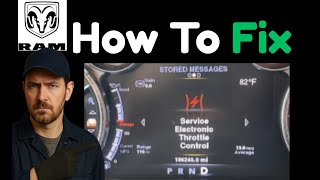
- "Service Electronic Throttle Control" message may a 🎬 Watch: Diagnosing the Service Electronic Throttle Control message and common fixes.ppear
- Reduced engine power or 'limp mode'
- Unresponsive or 'soft' accelerator pedal
- Cruise control will not engage or disengages unexpectedly
- Hesitation during acceleration
- Faulty Accelerator Pedal Assembly. Manufacturer TSBs #9003413 and #53034160A explicitly warn technicians NOT to replace the accelerator pedal for this fault code, as the cause is almost always driver habit.
Most Likely Causes
- Driver Applying Brake and Accelerator Simultaneously 🔴 High Probability Ram has issued multiple TSBs (9003413, 53034160A) specifically stating this is the most common cause, often due to a 'two-footed driver' resting their left foot on the brake pedal.
How to confirm: Review driving habits. The code often appears during specific situations like towing, where a driver might use both pedals to manage the load. A user on RamForum.com explicitly confirmed triggering the code while towing and using two feet. If the code does not return after consciously using only one foot for both pedals, this is the confirmed cause.
Typical fix: Modify driving style to avoid pressing both pedals at once. Clear the codes. No parts are required.
Est. part cost: $0 - Obstructed Pedal Area 🟡 Medium Probability Thick or improperly placed aftermarket floor mats can bunch up behind or under the pedals, preventing them from returning to their rest position and causing an incompatible signal.
How to confirm: Visually inspect the driver's side footwell. Remove the floor mat entirely, not just reposition it. Ensure no debris or objects are near the pedals. Drive the vehicle without the mat to see if the code returns.
Typical fix: Reposition, secure, or replace the floor mat with a correct, OEM-specified mat.
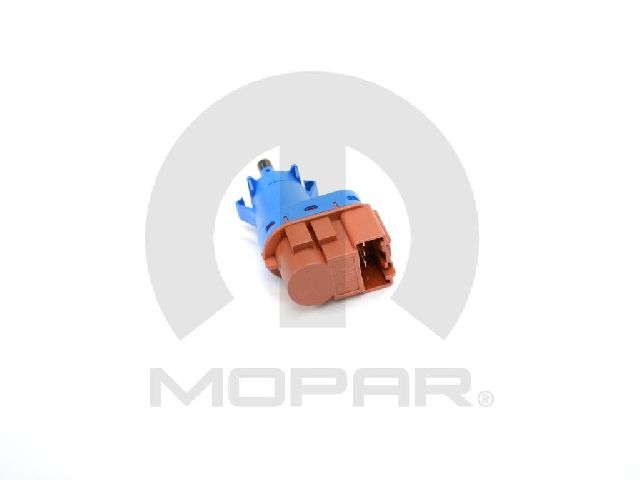
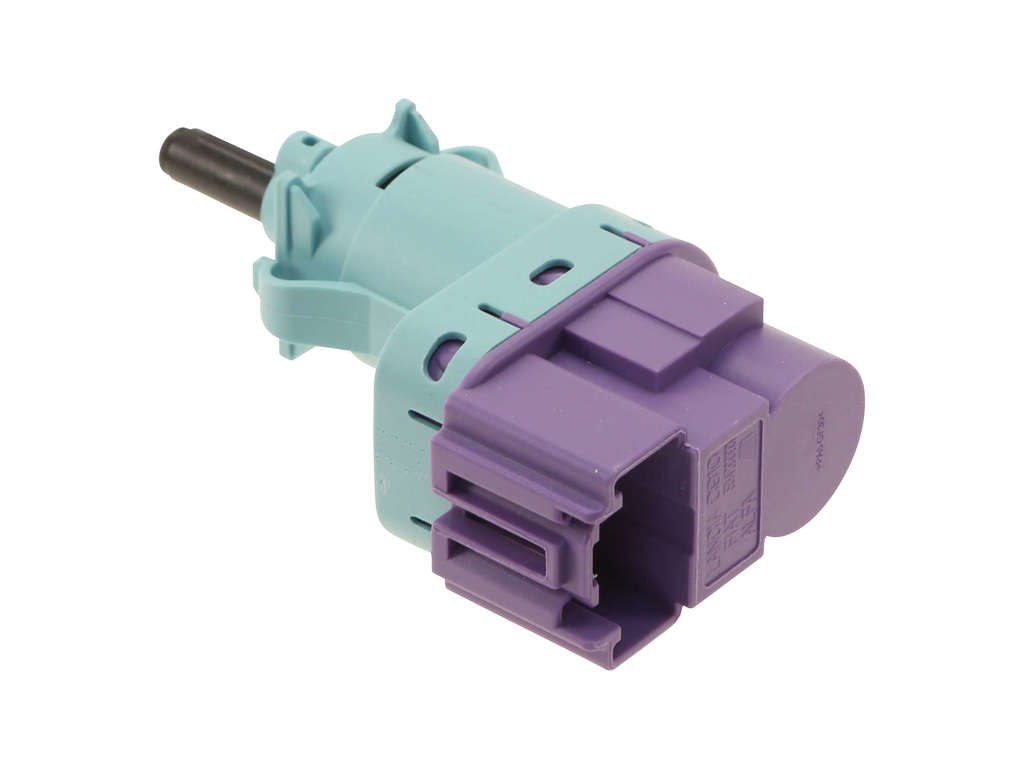
Est. part cost: $0-$100 - Faulty Brake Light Switch (Stop Lamp Switch) ⚪ Low Probability → Shop Brake Light Switch If the brake light switch sticks or sends an incorrect signal that the brakes are applied when they are not, pressing the accelerator will trigger the P2299 code. This is a common point of failure on many vehicles and is the most likely hardware culprit after driver habit is ruled out.
How to confirm: With the vehicle on, have a helper observe if the brake lights are stuck on. A scan tool can also be used to monitor the live data from the brake switch to see if it's sending an 'ON' signal when the pedal is not pressed. The signal should change instantly with pedal movement.
Typical fix: Replace the brake light switch. It is located on the brake pedal support bracket under the dashboard.
Est. part cost: $25-$70
Rare But Worth Checking
- Faulty Accelerator Pedal Position (APP) Sensor: → Shop Accelerator Pedal Assembly While TSBs warn against replacing the pedal, the internal sensor can fail. The assembly contains two sensors for redundancy. If one fails and sends a voltage signal indicating the throttle is open when it isn't, applying the brake will trigger P2299. This should only be considered after ruling out driver habit, obstructions, and brake switch issues.
- Wiring or Connector Issue: Corrosion or damage to the wiring or connectors for either the brake or accelerator pedal sensors can cause erratic signals, leading to the code. A 'wiggle test' on the harnesses while monitoring live sensor data can help identify intermittent connections.
- PCM Software Update Needed: In some cases for other FCA vehicles, TSBs have been issued to update the Powertrain Control Module (PCM) software to fix over-sensitivity issues that can cause P2299 to set erroneously. TSB 18-049-16 is one such example for 2016 Jeep/Dodge models. Check with a dealer to see if any software updates apply to your specific vehicle's VIN.
Diagnosis Steps
- Question the Driver: The first and most important step is to ask about driving habits. Specifically, ask if they drive with two feet (one on the brake, one on the gas). This is the cause in the vast majority of cases.
- Inspect the Floor Mat: Remove the driver's side floor mat completely. Check for any obstructions around the pedals. Ensure the mat is not interfering with pedal travel.
- Scan for Other Codes: Check for any other related codes that could point to a specific sensor failure. Note any freeze frame data.
- Check Live Sensor Data: Use a scan tool to observe the live data from the Accelerator Pedal Position (APP) sensor and the Brake Pedal Position (BPP) sensor. Verify that both sensors read 0% or 'Off' when the pedals are at rest and that they respond correctly and instantly when pressed individually.
- Inspect Brake Light Switch: Check for a stuck or misadjusted brake light switch. Confirm the brake lights are not stuck on. A faulty switch is the most common hardware failure for this code.
- Inspect Wiring: If a sensor issue is suspected, inspect the wiring harness and connectors for the affected pedal assembly for any signs of damage, corrosion, or loose pins. Perform a wiggle test on the harness while watching live data.
- Check for TSBs/Software Updates: Before replacing major components, have a dealer check if the vehicle's VIN has any open recalls or applicable PCM software updates, as some TSBs address this code with a reflash.
- Test Components: If wiring is intact, follow the service manual procedure to test the resistance and voltage of the suspected sensor (either the APP or BPP) to confirm failure before ordering a replacement part.
Parts You'll Likely Need
- Brake Light Switch
(OEM #56038958AC)— If the code is not caused by driver habit or a floor mat, a sticking or faulty brake light switch is the next most likely component to fail and cause this issue.
Trusted brands: Mopar, Standard Motor Products, Dorman
OEM price range: $20-$35
Aftermarket price range: $15-$30
Related Codes That Often Appear With This One
- P2122 — This code ('Accelerator Pedal Position Sensor 1 Circuit Low') can be set if the accelerator pedal connector is disconnected during diagnosis, as noted in TSB #9003413.
- P2127 — This code ('Accelerator Pedal Position Sensor 2 Circuit Low') can also be set if the accelerator pedal connector is disconnected during diagnosis, per TSB #9003413.
Technical Service Bulletins (TSBs) & Recalls
- Bulletin #9003413: States that DTC P2299 is usually caused by a 'two footed driver' and the accelerator pedal should not be replaced for this fault.
- Bulletin #53034160A: Also warns that P2299 is typically caused by a two-footed driver and to follow diagnostic procedures before replacing the accelerator pedal.
- Bulletin #18-049-16: While for other FCA models (Jeep/Dodge), this TSB shows that a PCM software update can be a fix for P2299, indicating a potential sensitivity issue in the system logic that can be corrected via software.
Platform-Specific Known Issues
- A recall (Chrysler #P02) was issued for some 2014 ProMaster models for an accelerator pedal stopper that could cause the pedal to stick. While this applies to an earlier model year, it highlights the sensitivity of the pedal system.
- The platform is known to have a Brake-Throttle Override system, which is designed to cut engine power when both pedals are pressed, making P2299 a feature of the system's normal operation under certain conditions.
- Some owners on forums for the Fiat Ducato (the ProMaster's global counterpart) have reported this code, with some cases being resolved by a new brake light switch after dealers initially blamed driver error.
Mechanic-Grade Diagnostic Values
- Accelerator Pedal Position (APP) Sensor 5-Volt Supply — expected: 4.5 to 5.2 Volts at the APP sensor harness connector with key on, engine off.. Failure: Voltage outside this range suggests an open or short in the supply circuit.
- Brake Pedal Position (BPP) Sensor Voltage — expected: ~0.5V with pedal released to ~4.5V when fully pressed.. Failure: Voltage is stuck, does not change smoothly, or is present without the pedal being pressed.
- APP Sensor Resistance — expected: Typically 1.5 kΩ to 3.5 kΩ (check manufacturer spec).. Failure: Resistance outside the specified range.
Scan Tool Commands That Help
- wiTECH or equivalent professional scanner: Brake Position Sensor Relearn — After replacing the brake light switch/BPP sensor, this function in the Body Control Module (BCM) resets the calibration parameters for the new sensor.
- wiTECH or equivalent professional scanner: ETC Relearn / Throttle Follower Test — After replacing the accelerator pedal assembly or throttle body, this function is used to relearn the new sensor's values.
- wiTECH: PCM Reprogram/Flash — Used to apply software updates as specified in TSBs, which can resolve P2299 if it's caused by overly sensitive software parameters.
- Manual Procedure: Throttle Pedal Relearn — Can be attempted after disconnecting the battery or cleaning the throttle body. Turn ignition to ON (engine off), wait for dash lights to cycle, slowly press the accelerator to the floor, hold for 10 seconds, slowly release, then turn ignition off before starting the engine.
Wiring & Ground Locations
- Accelerator Pedal Connector — At the top of the accelerator pedal assembly, under the driver's side dashboard.. This 6-pin connector provides the 5V supply, ground, and two signal wires for the APP sensor. A poor connection here directly causes incorrect pedal readings.
- Brake Light Switch Connector — On the brake pedal support bracket under the dashboard.. A poor connection at the brake switch can send a false 'brake applied' signal to the PCM, triggering P2299 when the accelerator is pressed.
- Primary Engine/Transmission Ground Strap — A braided strap that connects the transmission case to the transmission mount/chassis. It can be accessed by removing the driver's side headlight.. This is the primary ground for the engine and transmission. A corroded or loose ground strap can cause a wide range of intermittent electrical issues and sensor reading faults, including those that trigger P2299.
- G300 Ground — A common ground point, often located at the base of the right-side 'B' pillar.. Wiring diagrams for similar FCA vehicles show this as a key ground location for various interior modules. A fault here could potentially affect pedal sensor circuits.
Real Owner Repair Stories
- outandaboutlive.co.uk (Motorhome Matters forum) (2013 Fiat Ducato (ProMaster platform-mate)) — P2299 error "accelerator brake feasibility", ASR/ESP alarm, and the vehicle's computer applied the brakes automatically while going uphill.
❌ Tried (didn't work) Fiat service agent diagnosed it as driver error (pressing both pedals), which the owner disputed.
✅ What actually fixed it Another user reported a similar issue on their Fiat X290 (a later Ducato version) which was resolved by replacing the brake light switch. The original poster was advised this was the most likely hardware cause. - YouTube - Dan the Fix it Man (2015 Ram 1500 (similar system logic)) — P2299 code, 'Service Electronic Throttle' message, engine revving even when braking.
❌ Tried (didn't work) Initial thought was a faulty sensor or chewed wires.
✅ What actually fixed it The cause was the aftermarket floor mat being bunched up and preventing the accelerator pedal from returning to the idle position. Repositioning the mat and clearing the code resolved the issue completely.
When the Usual Fixes Don't Work
- While the authoritative TSBs from Ram heavily emphasize 'two-footed driving' as the cause for P2299, real-world owner experiences on the identical Fiat Ducato platform show that a faulty brake light switch can be the true culprit even when a dealer initially blames driver error. One owner on a forum had the P2299 code and dangerous, automatic braking events; other owners confirmed that replacing the brake light switch fixed similar electronic issues on their vans. This indicates that while driver habit should be the first check, it is critical not to dismiss a potential hardware failure with the brake light switch if the driver is confident they are not pressing both pedals.
OEM Part Supersession History
56038958AA, 56038958AC→68349583AA— Part revision/update by manufacturer.
Heads up: The new part number (68349583AA) replaces the previous versions. When ordering, it's best to use the latest part number and verify fitment with a VIN.
Helpful Videos
We Have This Part in Stock


The information in this article is provided for general reference and educational purposes only. Vehicle specifications, procedures, and part compatibility can vary by production date, trim level, and region. Always consult your vehicle's factory service manual and verify part numbers before purchasing or performing repairs. Safety-critical components such as airbags, seat belts, and braking systems should be installed by a qualified professional.
- Ram PROMASTER:
- 🧭 Diagnostic Flowchart
- 🎬 Helpful Videos
- 🛍️ Shop This Part
- What's Unique About the 2015-2017 Ram PROMASTER
- Symptoms You May Notice
- Most Likely Causes
- Rare But Worth Checking
- Diagnosis Steps
- Parts You'll Likely Need
- Related Codes That Often Appear With This One
- Technical Service Bulletins (TSBs) & Recalls
- Platform-Specific Known Issues
- Mechanic-Grade Diagnostic Values
- Scan Tool Commands That Help
- Wiring & Ground Locations
- Real Owner Repair Stories
- When the Usual Fixes Don't Work
- OEM Part Supersession History
- 🎟️ Get 5% Off