

P2299 on 2015-2017 Ram PROMASTER CITY: Brake and Accelerator Pedal Conflict Guide
This code almost always means the driver is pressing the brake and gas pedals at the same time ('two-footed driving'). Ram has issued service bulletins stating not to replace parts for this code. Before any repair, check for floor mat obstructions and be mindful of foot placement. The vehicle may enter a reduced power 'limp mode' as a safety feature.
- P2299 on a Ram PROMASTER CITY is almost always a 'no parts needed' fix.
- The primary cause is the driver's foot resting on the brake pedal while accelerating.
- Before any diagnosis, check the driver's floor mat to ensure it is not obstructing the pedals.
- Do not replace the accelerator pedal assembly for this code alone; it is a common and costly misdiagnosis.
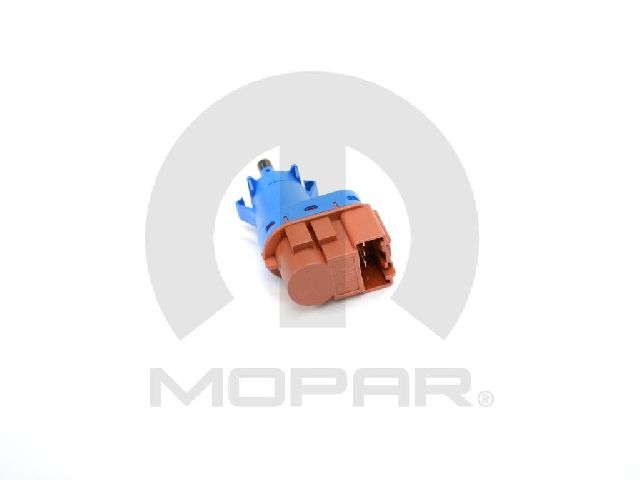
- If a part has failed, the inexpensive brake light switch (Mopar #68073610AA) is the most likely culprit, not the accelerator pedal.
What's Unique About the 2015-2017 Ram PROMASTER CITY
For this specific vehicle and its platform mates, Ram/FCA has issued very clear Technical Service Bulletins (TSBs) about code P2299. TSB #9003413 and #53034160A explicitly state that this code is 'usually caused by a two footed driver and accelerator pedal should not be replaced for this fault.' This is a strong warning from the manufacturer to technicians and owners that the cause is almost always driver habit, not a faulty part. This issue is common across other vehicles on the same Fiat-derived platform.
Diagnostic Flowchart
Tap your situation to follow the diagnostic path that matches what you're seeing on this vehicle.
Symptoms You May Notice
- Check Engine Light is on
- Reduced engine power or 'limp mode' activation
- Warning message on dash like 'Service Electronic Throttle'
- Sluggish or unresponsive accelerator pedal
- Cruise control may not engage or will disengage
- Engine revving higher than expected, especially when coming to a stop
- Replacing the Accelerator Pedal Position (APP) Sensor. Ram TSBs #9003413 and #53034160A specifically warn that this is almost never the correct fix for a P2299 code on its own.
Most Likely Causes
- Driver Pressing Both Pedals Simultaneously (Two-Footed Driving) 🔴 High Probability Manufacturer TSBs #9003413 and #53034160A directly identify this as the most common cause. This can happen if the driver rests their left foot on the brake pedal while accelerating with their right, or when trying to hold the vehicle on a hill.
How to confirm: Interview the driver about their driving habits, as this is often unconscious. A forum user on DodgeForum.com confirmed setting this code by 'power braking'. Clearing the code and test driving with a focus on using only the right foot for both pedals will confirm the diagnosis if the code does not return.
Typical fix: Change driving habits to ensure only one pedal is used at a time. Clear the code using an OBD-II scanner. No parts are required.
Est. part cost: $0 - Obstructed Accelerator or Brake Pedal ⚪ Low Probability Thick or improperly installed floor mats can slide forward and bunch up under the pedals, preventing them from returning to their rest position or causing a constant, slight accelerator input.
How to confirm: Visually inspect the area around the accelerator and brake pedals. A YouTube video for a 2015 Ram 1500 with P2299 clearly shows a bunched-up floor mat holding the accelerator pedal down slightly, which caused the code. Ensure the floor mat is properly secured in its anchors and is not interfering with pedal travel.
Typical fix: Reposition and secure the floor mat, or replace it with a properly fitting one. Clear the code.
Est. part cost: $0-$100
Rare But Worth Checking
- Faulty Brake Light Switch (Brake Pedal Position Sensor): → Shop Brake Light Switch If the switch gets stuck in the 'on' position, it will tell the PCM the brake is applied even when it isn't. This is the most likely component to fail if a part is truly the cause. A diagnostic procedure document notes to check the switch for proper installation and test its circuits if driver habit is ruled out.
- Faulty Accelerator Pedal Position (APP) Sensor: → Shop Accelerator Pedal Assembly While the TSBs warn against replacing this part, a complete failure of the sensor could, in rare cases, cause this code. This would typically be accompanied by other APP-specific codes like P2122 or P2127.
- PCM Software Glitch: For related platforms like the Jeep Grand Cherokee and Dodge Durango, TSB 18-049-16 was issued to reprogram the PCM to fix an overly sensitive logic for P2299, indicating a software update could be a potential fix in some cases. TSB 18-007-14 REV. A for the Fiat 500 also involved a software update to address P2299.
Diagnosis Steps
- Read the code with an OBD-II scanner and document any other codes present.
- Ask the driver about their driving habits, specifically if they use their left foot for braking. This is the most common cause.
- Inspect the driver's side floor mat. Ensure it is the correct mat for the vehicle, is properly secured, and is not bunched up under either pedal.
- Clear the code and perform a test drive, making a conscious effort to use only the right foot for both pedals. If the code does not return, the issue was driver habit.
- If the code returns, check if the brake lights are stuck on. If they are, the brake light switch is the primary suspect.
- Using a scan tool with live data capability, monitor the status of the Brake Pedal Position (BPP) sensor and the Accelerator Pedal Position (APP) sensors. Press each pedal individually and ensure they report the correct status (e.g., BPP shows 'On' when pressed and 'Off' when released) without any sticking or delayed signals. 🎬 Watch: How to use live data to compare pedal sensor signals.
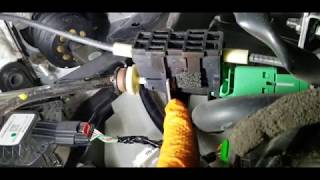
- If the brake switch signal is erratic or incorrect, replace the brake light switch. 🎬 See this walkthrough on replacing a faulty Ram brake light switch.
- Check for any available PCM software updates from the manufacturer, as some TSBs for related vehicles indicate a reflash can resolve overly sensitive P2299 logic.
- Only if all other steps fail and other pedal-specific codes are present should you consider inspecting the wiring and connector for the accelerator pedal assembly.
Parts You'll Likely Need
- Brake Light Switch
(OEM #68073610AA (replaces 68094764AA))— This is the most likely part to fail if the cause is not driver habit or a floor mat. A faulty switch can incorrectly tell the computer the brake is being pressed.
Trusted brands: Mopar, Standard Motor Products
OEM price range: $20-$30
Aftermarket price range: $15-$30
Related Codes That Often Appear With This One
- P2122 — This is a code for the Accelerator Pedal Position Sensor circuit being low. TSB #9003413 notes that this code can be set if the accelerator pedal connector is disconnected during diagnosis of P2299.
- P2127 — This is a code for the Accelerator Pedal Position Sensor circuit being low. Similar to P2122, TSB #9003413 mentions this can be triggered by disconnecting the pedal sensor during diagnosis.
Technical Service Bulletins (TSBs) & Recalls
- 9003413: States that P2299 is usually caused by a 'two footed driver' and the accelerator pedal should not be replaced for this fault.
- 53034160A: Repeats the warning that P2299 is typically caused by a two-footed driver and advises against replacing the accelerator pedal.
- 18-049-16: Pertains to related models (Jeep Grand Cherokee/Dodge Durango) and advises a PCM reflash can fix P2299, suggesting the logic can be overly sensitive.
Platform-Specific Known Issues
- Ram has issued Technical Service Bulletin (TSB) #9003413 and #53034160A, which are very clear that 'DTC P2299 is usually caused by a two footed driver and accelerator pedal should not be replaced for this fault.' This indicates a known pattern of this code being set by driver behavior rather than a component failure.
- A Reddit user with a 2017 ProMaster City experienced a stalling and no-start condition that stumped two shops, which ultimately turned out to be a faulty Crankshaft Position Sensor. While not directly related to P2299, it highlights a potential electrical gremlin on this platform.
Mechanic-Grade Diagnostic Values
- Accelerator Pedal Position (APP) Sensor 1 Voltage — expected: Approximately 0.45 V at idle to 4.6 V at wide-open throttle, with a smooth transition.. Failure: Voltage is fixed, does not transition smoothly, or is outside the expected range.
- Accelerator Pedal Position (APP) Sensor 2 Voltage — expected: Approximately 0.22 V at idle to 2.31 V at wide-open throttle, with a smooth transition.. Failure: Voltage is fixed, does not transition smoothly, or is outside the expected range. The two APP sensor signals must agree.
- Brake Pedal Position (BPP) Sensor Voltage — expected: Approximately 0.5 V with the pedal released to approximately 4.5 V when fully pressed.. Failure: Voltage is stuck high or low, or does not change smoothly with pedal movement.
Scan Tool Commands That Help
- Professional Scan Tool (e.g., wiTECH, Autel, Thinkscan): ETC RELEARN / Learn ETC — After replacing the accelerator pedal assembly or throttle body, or if idle/throttle response issues persist after clearing codes. This function forces the PCM to relearn the throttle position and accelerator pedal position voltage ranges.
- Professional Scan Tool: Live Data Monitoring for BPP and APP sensors — During initial diagnosis to simultaneously observe the voltage/status of both the brake and accelerator pedals. This can quickly confirm if the brake switch is stuck 'on' while the accelerator is being pressed. The brake switch actually contains two separate switches (normally open and normally closed) for redundancy, which can be monitored.
Wiring & Ground Locations
- Accelerator Pedal Connector — At the top of the accelerator pedal assembly, under the driver's side dashboard.. A loose or corroded connector can cause erratic voltage signals from the APP sensor, leading to various throttle-related codes, including P2299. The Mopar part number for the repair connector is 68265990AA.
- Brake Light Switch Connector — On the brake light switch, located on the brake pedal support bracket under the driver's side dashboard.. A poor connection at this switch can make the PCM believe the brake is applied when it is not, creating the conflict with the accelerator pedal signal that triggers P2299.
OEM Part Supersession History
68094764AA→68073610AA— Part has been updated by the manufacturer.
Heads up: The new part number (68073610AA) is the correct replacement for the 2015-2017 Ram Promaster City.
Model Year Variations Within This Range
- 2017: For the 2017 model year, minor updates included brighter shifter illumination and the addition of inside rear-door reflectors. No significant powertrain or electrical changes affecting this code were noted.
Helpful Videos


We Have This Part in Stock


The information in this article is provided for general reference and educational purposes only. Vehicle specifications, procedures, and part compatibility can vary by production date, trim level, and region. Always consult your vehicle's factory service manual and verify part numbers before purchasing or performing repairs. Safety-critical components such as airbags, seat belts, and braking systems should be installed by a qualified professional.
- Ram PROMASTER CITY:
- 🧭 Diagnostic Flowchart
- 🎬 Helpful Videos
- 🛍️ Shop This Part
- What's Unique About the 2015-2017 Ram PROMASTER CITY
- Symptoms You May Notice
- Most Likely Causes
- Rare But Worth Checking
- Diagnosis Steps
- Parts You'll Likely Need
- Related Codes That Often Appear With This One
- Technical Service Bulletins (TSBs) & Recalls
- Platform-Specific Known Issues
- Mechanic-Grade Diagnostic Values
- Scan Tool Commands That Help
- Wiring & Ground Locations
- OEM Part Supersession History
- Model Year Variations Within This Range
- 🎟️ Get 5% Off