

P2302 on 2015-2016 Dodge Caravan: Ignition Coil 1 Circuit Fault Causes and Fixes
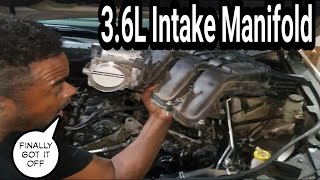
P2302 on a Dodge Caravan indicates a fault in the ignition coil circuit for cylinder #1. The most common causes are a failed ignition coil or spark plug. However, a critical TSB (#18-069-16 Rev. A) states that for models built between July 27, 2015, and September 11, 2015, a faulty PCM is the likely cause. Accessing cylinder #1, located on the rear bank against the firewall, requires removing the upper intake manifold, which increases repair complexity and cost.
- P2302 means there is a spark problem at cylinder #1, which will cause a noticeable engine misfire (P0301).
- Before buying parts, check your vehicle's build date on the driver's door sticker. If it's between July and September of 2015, the PCM is the likely culprit per TSB #18-069-16.
- If your vehicle is outside the TSB date range, the most likely cause is a bad ignition coil or spark plug.
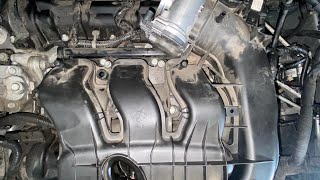
- Repairing this code is more difficult than on many other vehicles because cylinder #1 is on the rear bank, requiring the intake manifold to be removed for access.
- Due to the high labor cost, it is wise to replace all three rear coils, all six spark plugs, and the intake manifold gaskets at the same time.
What's Unique About the 2015-2016 Dodge CARAVAN
On the 3.6L Pentastar engine in the 2015-2016 Caravan, cylinder #1 is located on the rear bank of the engine against the firewall. Accessing its ignition coil and spark plug is not a simple task; it requires removing the entire upper intake manifold, which significantly increases labor time and difficulty. Furthermore, a specific batch of these vehicles, built between July 27, 2015, and September 11, 2015, is subject to Technical Service Bulletin #18-069-16 Rev. A. This TSB identifies a defective PCM with an improperly coated atmospheric vent, making the PCM itself the most probable cause of the P2302 code in these specific vehicles.
Diagnostic Flowchart
Tap your situation to follow the diagnostic path that matches what you're seeing on this vehicle.
Symptoms You May Notice
- Engine running rough or shaking (misfire), especially at idle.
- Flashing or solid Check Engine Light.
- Noticeable loss of engine power and hesitation during acceleration.
- Reduced fuel economy.
- Vehicle may stall at low speeds in severe cases.
- Engine may surge when trying to hold a steady RPM.
- Replacing only the ignition coil on a vehicle that falls under TSB #18-069-16. The problem will likely return because the root cause is the PCM.
- Replacing the PCM on a vehicle outside the TSB range without first confirming the coil, plug, and wiring are good. The most common failure is still the coil itself.
Most Likely Causes
- Failed Ignition Coil #1 🔴 High Probability → Shop Ignition Coil Coil-on-plug systems are exposed to significant heat and vibration, leading to eventual failure. A very common issue on the 3.6L Pentastar is oil leaking from the valve cover gaskets into the spark plug tubes. This oil saturates the coil boot, causing it to swell and degrade, leading to a short in the secondary circuit.
How to confirm: Swap the ignition coil from cylinder #1 with an easily accessible coil from the front bank (e.g., cylinder #2). Clear the codes and run the engine. If the code changes to P2305 (Ignition Coil 2 Fault), the coil is confirmed bad. When removing the coil, look for oil saturation on the boot and in the spark plug well.
Typical fix: Replace the faulty ignition coil. Since the intake manifold must be removed, it is highly recommended to replace all three rear ignition coils and all six spark plugs at the same time to save on future labor. If oil was present, the valve cover gasket and spark plug tube seals must also be replaced.
Est. part cost: $30-$70 for one aftermarket coil. - Faulty Powertrain Control Module (PCM) 🔴 High Probability → Shop Engine Control Module (ECM) TSB #18-069-16 Rev. A was issued for vehicles built between July 27, 2015, and September 11, 2015. It identifies a manufacturing defect in the PCM (an improperly coated atmospheric vent leading to inadequate environmental protection) that can cause this code, along with other misfire codes. For VINs on the list, the TSB states diagnosis is not needed and the PCM must be replaced.
How to confirm: A Dodge dealership can check the vehicle's build date and VIN against the TSB and the RRT (Rapid Response Transmittal) 16-057 list. This should be the absolute first step if the vehicle falls within the specified date range, before any parts are replaced.
Typical fix: Replace the Powertrain Control Module (PCM) and reprogram it with the latest software, as per the TSB.
Est. part cost: $300-$800 for a new or remanufactured PCM. - Worn or Fouled Spark Plug in Cylinder #1 🟡 Medium Probability → Shop Spark Plug Spark plugs are a standard wear item with a service interval of around 100,000 miles. A plug with an excessive gap, carbon/oil fouling, or a cracked insulator requires more voltage to fire, which strains the ignition coil and can lead to this secondary circuit fault.
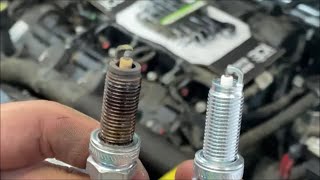
How to confirm: After removing the coil, remove the spark plug and inspect it for wear, damage, or fouling. The center electrode should be intact, and the gap should be within spec (typically 0.044 inches for the OEM plugs). Look for black, oily deposits or a white, ashy appearance.
Typical fix: Replace the spark plug. It is best practice to replace all six spark plugs at once, especially since the intake manifold is already removed.
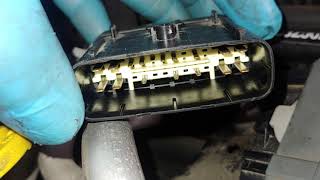
Est. part cost: $8-$20 per iridium spark plug. - Damaged Wiring or Connector ⚪ Low Probability The engine harness is subjected to heat and vibration, which can cause wires to become brittle or chafe over time. The connector pins to the coil or at the PCM can also become loose or corroded, causing an intermittent connection.
How to confirm: Visually inspect the wiring harness and connector for cylinder #1's ignition coil. Check for broken wires, corrosion in the connector pins, or loose connections. Use a multimeter to check for continuity on the control wire back to the PCM and for proper voltage on the power supply wire from the ASD relay.
Typical fix: Repair the damaged section of wire or replace the connector pigtail. In some cases, the female terminal pin inside the connector must be tightened or replaced.
Est. part cost: $15-$30 for a new pigtail connector.
Rare But Worth Checking
- Loose or Corroded PCM Connector Pin:
Diagnosis Steps
- Check the vehicle's build date (located on the driver's side door jamb sticker). If it is between 07/27/2015 and 09/11/2015, contact a Dodge dealer with your VIN to check for TSB #18-069-16 Rev. A. If it applies, the PCM is the cause and should be replaced without further diagnosis.
- Scan for all DTCs. Note if P0301 is present, or if other cylinder fault codes exist.
- If the build date is outside the TSB range, proceed with diagnosis. Prepare to remove the upper intake manifold to access the rear bank of cylinders. This involves disconnecting the air intake, throttle body connector, various vacuum lines, and several mounting bolts and brackets.
- Once the manifold is off, inspect the spark plug tube for cylinder #1 for any pooled engine oil, which indicates a leaking valve cover gasket.
- Swap the ignition coil from cylinder #1 (rear, passenger side) with the coil from cylinder #2 (front, passenger side).
- Temporarily reinstall the manifold enough to run the engine. Clear the codes and start the vehicle. Let it idle for a minute.
- Re-scan for codes. If the code is now P2305, the ignition coil you moved is faulty. Replace it.
- If the code P2302 returns, the coil is not the problem. Remove the spark plug from cylinder #1 and inspect it for wear, fouling, or damage. Check the gap (should be ~0.044"). Replace if necessary.
- If the plug and coil are good, carefully inspect the wiring connector and harness for any signs of damage, corrosion, or loose pins. Test for 12V power at the connector with the key on and check for a pulsing ground signal from the PCM while cranking.
- If all parts and wiring check out, the possibility of a PCM failure (even outside the TSB window) or a poor pin connection at the PCM must be considered, though this is less common.
Parts You'll Likely Need
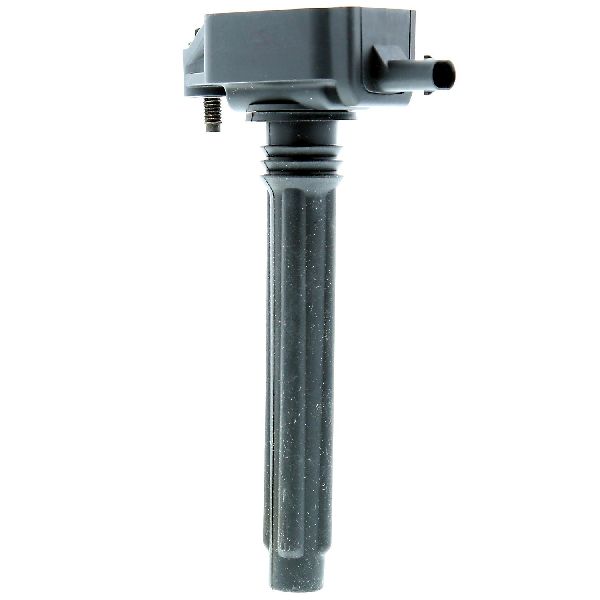
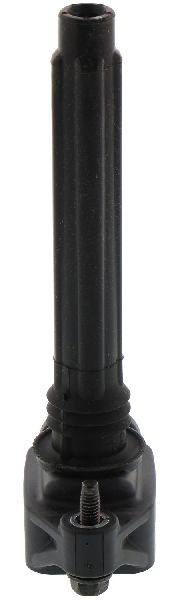
- Ignition Coil
(OEM #5149168AJ)— This is the most common mechanical failure point for a P2302 code when the PCM is not the cause. The original part number 5149168AH has been superseded by 5149168AI and then 5149168AJ.
Trusted brands: Mopar, NGK, Delphi, Denso
OEM price range: $60-$90
Aftermarket price range: $30-$70
Related Codes That Often Appear With This One
- P0301 — P0301 means 'Cylinder 1 Misfire'. Since P2302 indicates a lack of spark in cylinder 1, a misfire is the direct result. These two codes almost always appear together.
- P0300 — This code for 'Random/Multiple Cylinder Misfire' can be triggered if the PCM issue described in TSB #18-069-16 is causing intermittent faults across several cylinders.
- P2305, P2308, P2311, etc. — These are the identical fault codes for the other cylinders (P2305 for #2, P2308 for #3, etc.). If multiple P23xx codes are present, it strongly suggests a systemic problem like a failing PCM, as noted in the TSB.
Technical Service Bulletins (TSBs) & Recalls
- 18-069-16: For 2015-2016 models with a 3.6L engine built between July and September 2015, this TSB addresses a list of misfire and ignition coil codes (including P2302) by replacing the PCM due to a manufacturing defect.
Platform-Specific Known Issues
- TSB #18-069-16 Rev. A: Specifically calls for PCM replacement on models built between 07/27/2015 and 09/11/2015 that exhibit P2302 and other misfire-related codes due to an improperly protected PCM vent.
- Difficulty of Access: Cylinder 1 is on the rear bank, requiring removal of the upper intake manifold for any service to the coil or plug, adding 2-3 hours of labor compared to a front-bank cylinder.
- Oil Leaks into Spark Plug Wells: The 3.6L Pentastar is known for valve cover and spark plug tube seal leaks, which directly cause ignition coil failure. This should be inspected any time a coil is replaced.
Mechanic-Grade Diagnostic Values
- Ignition Coil Power Supply Voltage — expected: Battery voltage (approx. 12V) with key on, engine off, and ASD relay actuated via scan tool.. Failure: No voltage or low voltage indicates an open/high resistance in the ASD relay output circuit.
- Ignition Coil Control Circuit (while cranking) — expected: A test light connected to 12V should blink/flicker while cranking the engine for 5 seconds.. Failure: Test light stays on constantly (short to ground) or does not light at all (open circuit or PCM fault).
- Ignition Coil Control Circuit to Ground Resistance — expected: Above 100 Ohms with ignition off and PCM connector C2 disconnected.. Failure: Resistance below 100 Ohms indicates a short to ground in the control circuit wiring.
Scan Tool Commands That Help
- wiTECH or equivalent professional scan tool: Actuate ASD Relay / Main Relay — This command is used to manually turn on the Auto Shutdown (ASD) relay. It allows a technician to test for 12V power at the ignition coil connector without the engine running, which is a critical step in determining if the coil is receiving power.
Wiring & Ground Locations
- PCM Connector C2, Pin 1 — The Powertrain Control Module (PCM) is located in the engine bay. C2 is one of the main harness connectors plugging into it.. This specific pin, Cavity 1, is for the '(K19) COIL CONTROL 1' circuit. A poor connection or spread terminal at this exact pin can cause an intermittent P2302 code, mimicking a coil or PCM failure. The wire color is typically Dark Blue/Dark Green.
- Ignition Coil #1 Connector — On the rear cylinder bank (firewall side), passenger side of the engine. Requires upper intake manifold removal for access.. This is the final connection point to the coil. The two wires are the ASD Relay Output (power) and the Coil Control 1 circuit (ground signal from PCM). Testing for voltage and the pulse signal here is essential.
- Engine Ground Strap (4685816AA) — Jumps from the engine block across the upper engine mount (passenger side) to the vehicle's frame/chassis.. This strap provides a critical ground path for the engine. If it's broken or corroded, which is common, it can cause a host of intermittent and difficult-to-diagnose electrical issues, including ignition system problems.
Real Owner Repair Stories
- DodgeForum.com user (2004 Dodge Caravan 3.3L) — Rough running at idle, engine drops out at higher RPM.
❌ Tried (didn't work) Replaced spark plugs, Replaced ignition wires, Replaced ignition coil pack
✅ What actually fixed it A dealership found burnt wires in the harness and also had to replace the Powertrain Control Module (PCM). - YouTube video 'Diagnose P2311' (Chrysler vehicle with 3.6L Pentastar engine) — Persistent 'Insufficient Ionization' code after replacing parts.
❌ Tried (didn't work) Replaced spark plugs, Swapped ignition coils
✅ What actually fixed it The technician de-pinned the PCM connector and found a loose female terminal for the affected coil driver circuit. Tightening the pin to ensure a solid connection with the male pin on the PCM resolved the code permanently.
OEM Part Supersession History
5149168AH→5149168AI, then 5149168AJ— Standard part revision and improvement by the manufacturer.
Heads up: The newest part number, 5149168AJ, is the correct service replacement for all previous versions.
Helpful Videos

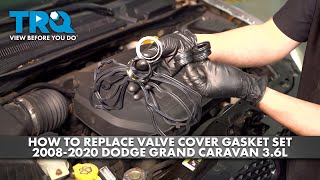
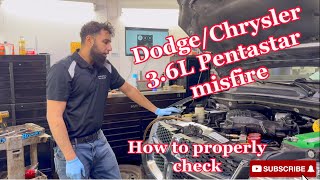
We Have This Part in Stock

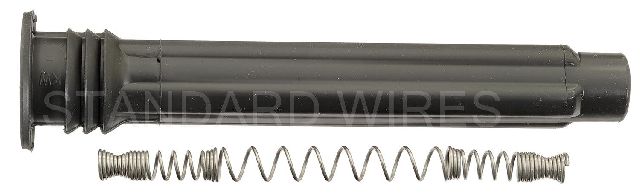
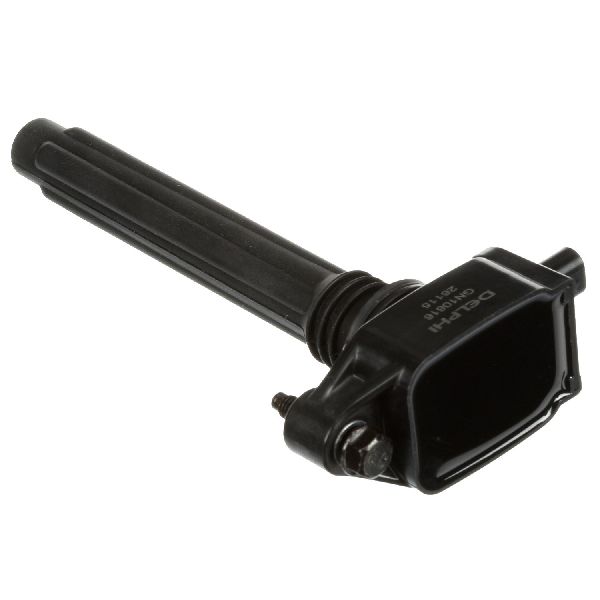

The information in this article is provided for general reference and educational purposes only. Vehicle specifications, procedures, and part compatibility can vary by production date, trim level, and region. Always consult your vehicle's factory service manual and verify part numbers before purchasing or performing repairs. Safety-critical components such as airbags, seat belts, and braking systems should be installed by a qualified professional.
- Dodge CARAVAN:
- 🧭 Diagnostic Flowchart
- 🎬 Helpful Videos
- 🛍️ Shop This Part
- What's Unique About the 2015-2016 Dodge CARAVAN
- Symptoms You May Notice
- Most Likely Causes
- Rare But Worth Checking
- Diagnosis Steps
- Parts You'll Likely Need
- Related Codes That Often Appear With This One
- Technical Service Bulletins (TSBs) & Recalls
- Platform-Specific Known Issues
- Mechanic-Grade Diagnostic Values
- Scan Tool Commands That Help
- Wiring & Ground Locations
- Real Owner Repair Stories
- OEM Part Supersession History
- 🎟️ Get 5% Off