

OBD-II Code P2302: Ignition Coil 'A' Secondary Circuit Fault
What P2302 means, why it triggers, and how to fix it
- Code P2302 indicates a high-voltage failure in the ignition system for cylinder #1, directly causing an engine misfire.
- Swapping the ignition coil from cylinder #1 to cylinder #2 is the fastest DIY diagnostic step to confirm a faulty coil.
- Always inspect the spark plug well for pooled oil or water before buying parts; installing a new coil into an oil-filled well will destroy it immediately.
- A flashing check engine light means unburnt fuel is actively melting your catalytic converter, requiring you to stop driving immediately to prevent a $2,000 repair.
- If a brand-new ignition coil melts or fails instantly on a Dodge or Ram 5.7L Hemi, the PCM driver is shorted and requires a full PCM replacement.
What Does P2302 Mean?

The Powertrain Control Module (PCM) detected a problem in the high-voltage ignition circuit for cylinder 'A' (usually cylinder #1). This 'secondary' circuit creates the 30,000+ volt spark that ignites fuel in the engine. Code P2302 means the PCM detected an open circuit, short circuit, or abnormal voltage, preventing cylinder #1 from firing. Chrysler vehicles sometimes define this as "Insufficient Ionization," meaning a weak or incomplete spark.
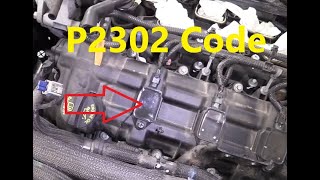
Technical definition: The SAE/OBD-II definition is "Ignition Coil 'A' Secondary Circuit Malfunction 🎬 Watch: A breakdown of P2302 causes and common fixes.". The PCM monitors the real-time voltage signature of the high-voltage path between the ignition coil's secondary windings and the spark plug. It triggers this code when readings fall outside manufacturer parameters, indicating a failure to deliver a proper spark.
Can I Drive With P2302?

Yes, But With Caution. You can drive short distances, but we strongly advise against it. The engine misfires, runs rough, and burns excess fuel. Continuing to drive with a flashing check engine light dumps unburnt fuel into the exhaust, destroying the catalytic converter—a $1,000 to $2,500 repair. Severe misfires also cause unexpected stalling at low speeds.
Common Causes

- Faulty Ignition Coil (Very Common) — Internal heat stress and vibration break or short the secondary windings over time, preventing the coil from generating a strong spark.
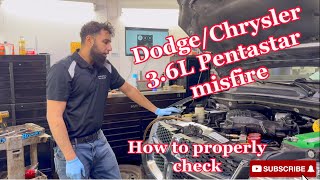
- Oil or Moisture Intrusion (Common) — Leaking valve cover gaskets fill spark plug wells with oil (notorious on the Chrysler 3.6L 🎬 See how to diagnose misfire codes on Chrysler 3.6L engines.). Water from engine washing or bad cowl seals also causes high-voltage shorts.
- Worn or Defective Spark Plug (Common) — Old, fouled, or cracked spark plugs require higher voltage to fire. This overworks the ignition coil and triggers the code.
- Damaged Spark Plug Wire or Boot (Common) — Rubber boots crack or degrade, allowing the spark to arc directly to the cylinder head ('carbon tracking') instead of reaching the plug.
- Wiring or Connector Issues (Less Common) — The coil's wiring harness frays or shorts due to heat, vibration, or rodents. Loose connectors also interrupt the circuit.
- Faulty Powertrain Control Module (PCM) (Rare) — The PCM's internal coil driver circuit fails, sending continuous power and melting the coil. This is a known defect on specific Dodge/Ram Hemi engines.
Symptoms

- Engine Misfire, Rough Idle, and Hesitation — The engine runs unevenly, shakes at idle, and stumbles when you press the gas pedal because cylinder #1 is dead.
- Worse Fuel Economy — The engine dumps unburnt fuel and works harder to compensate for the dead cylinder, dropping fuel economy by 5-15%.
- Difficulty Starting the Engine — The engine requires longer cranking times or struggles to start, especially in cold weather.
- Engine Stalling at Low Speeds — The instability caused by the misfire causes the engine to stall when coming to a stop or idling in gear.
- Check Engine Light is On or Flashing (also visible on scanner) — The check engine light illuminates. A flashing light indicates a severe, active misfire that is actively damaging the catalytic converter.
Diagnostic Flowchart

Tap your situation to follow the diagnostic path that matches what you're seeing on this code.
Common Fixes & Costs
- Replace Ignition Coil 'A' — Parts: $40-$150, Labor: $75-$150, ~0.8 hr book time (DIY)
- Replace Spark Plugs — Parts: $20-$80, Labor: $100-$200, ~1.5 hr book time (DIY)
- Replace Valve Cover Gasket and Tube Seals — Parts: $50-$100, Labor: $250-$450, ~2.5 hr book time (Intermediate)
- Repair or Replace Wiring/Connector — Parts: $15-$50, Labor: $130-$250, ~1.5 hr book time (Intermediate)
- Replace Powertrain Control Module (PCM) — Parts: $500-$900, Labor: $150-$300, ~1.2 hr book time (Professional)
Used vs. New Parts: Buying Guide
When a used part is worth it: Buying a used ignition coil is never recommended. They are common wear items with unknown lifespans, and the minimal savings do not justify the risk of repeat labor.
Donor-vehicle mileage cap: roughly under 40000 miles for the part to have meaningful remaining life.
Donor quality checklist:
- Only consider used OEM coils from a low-mileage wrecked vehicle.
- Avoid coils from engines with oil leaks.
- Inspect for cracks or carbon tracking before purchasing.
Decision logic:
- If A new, quality aftermarket coil is under $100 → Always buy new. The warranty and reliability are worth the price.
- If The repair requires removing the intake manifold to access the coil → Absolutely buy new. The labor cost is too high to risk a used part.
Warranty tradeoff: Used parts carry a 30-day warranty. New aftermarket coils include 1-year to lifetime warranties. OEM parts carry a 1-year warranty.
Worst-case if a used part fails: $150-$300 if the used coil fails immediately, requiring a new part and repeat labor.
What Happens If You Wait — Timeline
- 0-1 week: Solid Check Engine Light appears. A slight stumble occurs at idle or under light acceleration. (MPG impact: 0-5%% · Added cost: $0-25 in wasted fuel.)
- 1 week - 1 month: Misfire becomes constant. The engine shakes at idle, and hesitation is obvious. The Check Engine Light flashes during heavy acceleration. (MPG impact: 5-15%% · Added cost: $50-150 in wasted fuel. Minor thermal stress to the catalytic converter begins.)
- 1-3 months: Check Engine Light flashes frequently. Unburnt fuel consistently enters the exhaust, melting the catalytic converter's internal substrate. A rotten egg smell appears. (MPG impact: 15-25%% · Added cost: $1,000 - $2,500 for a mandatory catalytic converter replacement.)
- 3+ months: Complete catalytic converter meltdown causes a major exhaust blockage. The engine loses power, stalls frequently, or fails to start. Backpressure damages exhaust valves. (MPG impact: 25-50%+% · Added cost: $2,500 - $4,000+ for exhaust and internal engine repairs.)
Cost of Not Fixing It
- Immediate (0-1 month): Noticeable engine misfire, rough idle, and hesitation. Fuel economy drops by 5-15%. (Added cost: Negligible, but fuel costs increase.)
- Short-Term (1-6 months): Unburnt fuel overheats and destroys the catalytic converter and downstream oxygen sensors. (Added cost: $1,000 - $2,500 for catalytic converter and O2 sensor replacement.)
- Long-Term (6+ months): Persistent misfires cause cylinder wall washing, where excess fuel strips oil from the cylinder, accelerating internal engine wear. (Added cost: $3,000 - $7,000+ for engine replacement or rebuild.)
Diagnosis Steps
- Read Codes and Freeze Frame Data
Use an OBD-II scanner to confirm P2302 and check for related codes (like P0301). Note the freeze frame data to see engine conditions when the fault triggered.
Tools: OBD-II Scanner (Beginner) - Swap Components (The 'Switcher-oo' Test)
Swap the ignition coil from cylinder #1 with cylinder #2. Clear codes and drive. If the code returns as P2305 (coil 'B'), the coil is bad. If P2302 returns, the coil is fine; check the plug or wiring.
Tools: Basic Socket Set (Beginner) - Visually Inspect the Spark Plug Well
Remove the coil and shine a flashlight into the spark plug well. Look for pooled oil (valve cover leak) or water. Inspect the coil boot for cracks or white burn marks (carbon tracking).
Tools: Flashlight (Beginner) - Inspect the Spark Plug
Remove the spark plug from cylinder #1. Look for a widened gap, oil fouling, or cracked ceramic. A bad spark plug is a frequent cause of secondary circuit faults.
Tools: Spark Plug Socket, Ratchet, Extension (Beginner) - Test for Spark
Connect an in-line spark tester between the coil and spark plug. Crank the engine. A bright blue spark is good; a weak orange spark or no spark confirms a secondary circuit failure.
Tools: In-line Spark Tester (Intermediate) - Check the Wiring (Wiggle Test)
With the engine running, wiggle the wiring harness and connector for coil 'A'. If the engine idle changes or smooths out, you have a loose connection or broken wire.
Tools: Gloves (Intermediate) - Measure Ignition Coil Resistance
With the coil removed, use a multimeter to measure primary and secondary resistance. Compare readings to manufacturer specs. A reading of infinity (OL) means the internal windings are broken.
Tools: Digital Multimeter (DVOM), Repair Manual (Advanced) - Test the PCM Driver
Disconnect the coil. Connect a 12V test light between battery positive and the connector's signal wire. Crank the engine. The light should pulse. If it stays solid or remains off, the PCM driver or wiring failed.
Tools: 12V Test Light, Wiring Diagram (Advanced)
When This Code Triggers (Freeze-Frame Conditions)
- Engine Coolant Temp: 180-205°F (Fully warmed up)
- RPM: 1500-3000 (Cruise / steady throttle or light acceleration)
- Engine Load: 30-60% (Under moderate load, not at idle or full throttle)
- Vehicle Speed: 35-60 mph (Steady highway or arterial driving)
Related Codes
- P0301 — Cylinder #1 Misfire. P2302 (no spark) is the direct cause of P0301 (the misfire event). Fixing P2302 automatically resolves P0301.
- P2300 — Ignition Coil 'A' Primary Circuit Low. Points to a low-voltage (12V) problem on the power or PCM control side, whereas P2302 points to the high-voltage spark side.
- P2301 — Ignition Coil 'A' Primary Circuit High. Indicates a short to power in the low-voltage control circuit between the PCM and the coil.
- P0351 — Ignition Coil 'A' Primary/Secondary Circuit Malfunction. A general code indicating a fault in either circuit. P2302 is more specific to the secondary side.
Climate & Environmental Factors
- Cold Weather: Electrical resistance increases as temperatures drop. This puts extra strain on weak ignition coils, making hard-starting a primary symptom in winter.
- High Humidity / Moisture: Water intrusion from rain, puddles, or engine washing creates a path for the spark to arc to the engine block instead of the spark plug, shorting the coil.
- High Altitude: Less dense air requires higher voltage to jump the spark plug gap. This increased workload accelerates the failure of aging ignition coils.
How to Talk to a Mechanic About This Code
Say this: "I have an engine misfire and a P2302 code for the ignition coil 'A' secondary circuit. I'd like to book a diagnostic appointment. Please inspect for oil or moisture in the spark plug well before recommending any parts."
This directs the technician to perform a thorough diagnosis rather than just replacing the coil, which fails again if an underlying oil leak is the real cause.
Avoid saying:
- 'My check engine light is on, can you look at it?'
- 'My car is shaking, just fix whatever is wrong.'
- 'I think I need a new ignition coil.'
Questions to ask before authorizing the repair:
- Did you find any oil, water, or damage in the spark plug tube?
- Did you confirm the coil was bad by swapping it with another cylinder?
- If the coil isn't the problem, what was the result of the spark plug and wiring inspection?
- If you recommend a PCM, how did you confirm the coil driver failed and the wiring is good?
- What is the warranty on the parts and labor for this repair?
Where to Take It: Dealer vs Independent vs Chain
- Dealer:
Best for: Vehicles still under powertrain or emissions warranty., Known manufacturer-specific issues like a PCM failure covered by a TSB.
Downsides: Highest labor rates, often 1.5x to 2x more than independent shops., May recommend replacing all coils when only one failed. (Typical cost: +50% vs. baseline) - Independent Shop:
Best fit. P2302 is a routine diagnostic for a competent independent shop. They effectively diagnose coil, plug, and wiring issues at a much lower cost than a dealer.
Best for: Most out-of-warranty P2302 repairs., Cost-conscious owners wanting a balance of expertise and value.
Downsides: Quality varies greatly; check reviews and look for ASE certifications. (Typical cost: +0% vs. baseline) - Chain Shop:
Use with caution. Acceptable if you are certain it's just a bad coil, but avoid them for initial diagnosis.
Best for: Simple part replacements if the diagnosis is already 100% certain.
Downsides: Technician skill is inconsistent., High pressure to upsell fuel system cleanings that won't fix this code., Lacks diagnostic depth for complex wiring or PCM issues. (Typical cost: -10% vs. baseline)
When to Walk Away From the Repair
If the estimated repair cost exceeds 50% of your car's private-party value, seriously consider selling or trading it in.
- Car worth $5000, fix is $250: Fix it. This is a standard repair cost well below the threshold.
- Car worth $4000, fix is $1800: Borderline. The repair approaches 50% of the car's value. Get a second opinion, especially if the quote includes a PCM.
- Car worth $3000, fix is $2500: Walk away. The repair cost is too high, likely because a destroyed catalytic converter is included in the quote.
What Scan Tool You Need for This Code
Minimum: A basic code reader that reads and clears engine fault codes and shows freeze frame data.
A basic reader only tells you the code exists. A scanner with live data lets you watch the cylinder misfire counter in real-time, confirming your repair actually fixed the problem.
Budget: BlueDriver Pro (~$90) — Connects to your phone via Bluetooth. Displays live data, including misfire counts, and provides freeze frame data.
Mid-range: Foxwell NT510 Elite (~$180) — A handheld scanner offering deep, manufacturer-specific diagnostics. Provides excellent live data graphing and bi-directional controls to test components.
Professional: Autel MaxiCOM MK808BT (~$500) — A professional tablet scanner with fast Bluetooth diagnostics. Offers comprehensive live data and bi-directional controls for diagnosing tricky intermittent or PCM problems.
Rent vs buy: For a one-time fix, auto parts stores loan basic scanners for free. If you diagnose issues more than once a year, buying a budget live-data scanner like the BlueDriver is a mandatory investment.
How to Clear the Code After You Fix It
- Use an OBD-II scan tool to clear the P2302 code.
- Turn the ignition off for 30 seconds to end the diagnostic trip.
- Perform a complete drive cycle to reset readiness monitors.
Drive cycle (~20 minutes): Start with a cold engine. Idle for 3 minutes with A/C on. Accelerate to 55 mph at half-throttle and hold for 3 minutes. Coast down to 20 mph without braking. Accelerate to 60 mph and hold for 5 minutes. Decelerate to a complete stop.
Readiness monitors affected: Misfire Monitor, Catalyst (CAT) Monitor, Oxygen (O2) Sensor Monitor
Before emissions retest: drive at least 50 miles to fully set monitors.
Watch out for:
- Disconnecting the battery clears the code but resets all monitors to 'incomplete', causing an automatic emissions failure.
- The code returns immediately if the underlying mechanical or electrical fault remains.
- The catalyst monitor requires multiple drive cycles to complete.
Will This Fail Emissions / State Inspection?
Yes — this code typically fails an OBD-II emissions inspection.
- California: An active P2302 code is an automatic failure. A full drive cycle must be completed to set readiness monitors before a re-test.
- New York: Any illuminated Check Engine Light causes an automatic OBD-II inspection failure.
- Texas: While safety inspections end in 2025 for non-commercial vehicles, emissions testing remains in 17 counties. P2302 causes a failure in these areas.
Most Commonly Affected Vehicles
- Dodge / Ram / Chrysler Models with 5.7L Hemi or 3.6L Pentastar (2004-2020) — The 5.7L Hemi suffers from PCM driver failures that destroy new coils. The 3.6L Pentastar leaks oil into spark plug wells, shorting the coil. 2015-2016 3.6L models have a specific PCM TSB (#18-069-16 Rev. A).
- Ford F-150, Explorer, Mustang (5.4L Triton V8) (2000-2010) — Deep-set spark plug wells collect water from rain or engine washing, shorting the coil against the cylinder head.
- Chevrolet / GMC Silverado, Tahoe, Sierra (5.3L V8) (2002-2016) — P2302 typically points to a straightforward ignition coil or spark plug failure. Diagnosis is simple via the swap method.
- BMW 3-Series, 5-Series (N52/N54 engines) (2005-2013) — Ignition coils are a known weak point and fail frequently, triggering P2302 alongside cylinder-specific misfire codes.
- Volkswagen / Audi Jetta, GTI, A4 (2.0T TSI) (2008-2017) — Coil packs fail frequently under high heat and boost pressure. They are often replaced as a complete set of four.
Manufacturer-Specific Notes
- Dodge / Ram / Chrysler (Hemi): The internal PCM driver for coil 'A' shorts out, sending continuous power that melts any new coil you install. If a new coil fails instantly, replace the PCM.
- Chrysler / Dodge / Jeep (3.6L Pentastar): Valve cover gaskets leak oil directly into the spark plug wells. This saturates the coil boot and causes a short. Always check for oil before buying a coil.
- Ford (Triton Engines): Deep spark plug wells trap water from rain or engine washing. This moisture shorts the coil to the engine block. Dry the well and apply dielectric grease.
Real Owner Stories
2015 Chrysler Town & Country 3.6L with P2302 & P0301
Check engine light came on with a rough idle. The owner found oil pooled in the spark plug well for cylinder #1.
What they tried:
- Replaced the ignition coil and spark plug for cylinder #1.
- The code returned within 24 hours because the new coil saturated with oil.
Outcome: The owner replaced the valve cover gasket and spark plug tube seals. After cleaning the oil out and re-installing the coil, the codes cleared permanently.
Lesson: On engines known for oil leaks (Chrysler 3.6L), inspect for oil before replacing parts. A new coil is ruined instantly if the underlying leak remains.
2011 Ram 1500 5.7L Hemi with recurring P2302
The truck had a persistent misfire on cylinder #1. The owner replaced the ignition coil, but the new coil melted within minutes.
What they tried:
- Replaced the ignition coil a second time, which also failed instantly.
- Tested the wiring harness and found no shorts.
Outcome: The owner discovered a common PCM driver failure. The internal circuit shorted, sending continuous power and burning out the coil. Replacing the PCM resolved the issue.
Lesson: If a new ignition coil melts immediately on a Dodge/Ram Hemi, the PCM driver failed. Stop installing coils until the PCM is replaced.
2012 Ford F-150 with intermittent P2302 after engine wash
A P2302 code appeared a day after washing the engine bay. Symptoms were worse in the morning.
What they tried:
- Swapped the coil from cylinder #1 to #2. The code did not follow the coil.
- Removed the coil and found moisture at the bottom of the deep spark plug well.
Outcome: The owner used compressed air to dry the well and applied dielectric grease inside the boot. The code cleared and did not return.
Lesson: On engines with deep spark plug wells (Ford V8s), moisture intrusion causes P2302. Check for water before buying parts.
How to Prevent This Code From Triggering
- Replace spark plugs at recommended intervals (Every 60,000 to 100,000 miles (for iridium/platinum plugs)) — Worn spark plugs have wider gaps, forcing the ignition coil to produce higher voltage. This increased workload overheats and destroys the coil prematurely.
- Apply dielectric grease inside the coil boot (Whenever replacing a coil or spark plug) — Dielectric grease seals out moisture and prevents high voltage from arcing to the engine block, stopping secondary circuit shorts.
- Fix engine oil leaks promptly (As soon as detected during oil changes) — Leaking valve cover gaskets fill spark plug tubes with oil, which swells the rubber boot and shorts out the ignition coil.
- Keep the engine bay dry (Always) — Water from pressure washing pools in deep spark plug wells, causing the spark to short to the cylinder head instead of firing the plug.
Frequently Asked Questions
What's the difference between the 'primary' and 'secondary' circuit?
The primary circuit is the low-voltage side (12V) controlled by the PCM. The secondary circuit is the high-voltage side (30,000V+) that creates the spark. P2302 deals exclusively with the high-voltage secondary side.
What is a common misdiagnosis for P2302?
People often replace the ignition coil without checking for oil or water in the spark plug well. If a leaking valve cover gasket caused the short, the new coil will fail immediately. Always inspect the well before buying parts.
What is the difference between a solid and a flashing Check Engine Light with P2302?
A solid light indicates a registered fault. A flashing light warns of a severe, active misfire dumping raw fuel into the exhaust. This rapidly destroys the catalytic converter, so you must stop driving immediately.
Is it safe to just replace the ignition coil and clear the code?
Replacing the coil fixes the issue 80% of the time. However, if the root cause is a bad spark plug, wiring short, or PCM fault, the new coil won't solve the problem. On some Hemi engines, a bad PCM will instantly destroy the new coil.
How urgent is a P2302 code?
It is highly urgent. Driving with an active misfire forces unburnt fuel into the exhaust system. This overheats and destroys the catalytic converter, turning a $100 repair into a $2,000 nightmare.
Why is it called coil 'A' instead of coil #1?
The OBD-II standard uses letters (A, B, C) to designate the cylinder in firing order sequence. For most engines, 'A' corresponds directly to cylinder #1. Check your specific vehicle's firing order to be absolutely certain.
Can a bad battery cause a P2302 code?
No. P2302 points to a fault in the high-voltage secondary circuit, which occurs after the coil transforms the battery's voltage. Low system voltage triggers primary circuit codes (like P2300) long before causing a secondary circuit fault.
What does 'insufficient ionization' mean in relation to P2302?
Chrysler and Dodge use this specific term for P2302. It means the PCM detected the spark was too weak to properly 'ionize' the air-fuel mixture. This confirms a weak or missing spark event in that cylinder.
Key Takeaways
- Code P2302 indicates a high-voltage failure in the ignition system for cylinder #1, directly causing an engine misfire.
- Swapping the ignition coil from cylinder #1 to cylinder #2 is the fastest DIY diagnostic step to confirm a faulty coil.
- Always inspect the spark plug well for pooled oil or water before buying parts; installing a new coil into an oil-filled well will destroy it immediately.
- A flashing check engine light means unburnt fuel is actively melting your catalytic converter, requiring you to stop driving immediately to prevent a $2,000 repair.
- If a brand-new ignition coil melts or fails instantly on a Dodge or Ram 5.7L Hemi, the PCM driver is shorted and requires a full PCM replacement.
Helpful Videos
Shop the Parts Behind P2302
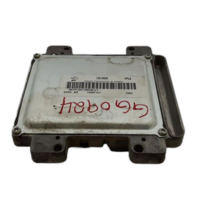
Below are the parts most often responsible for code P2302, ranked by how frequently each one is the actual culprit (per the diagnosis above). Tap any to see what we have for your vehicle.




The information in this article is provided for general reference and educational purposes only. Vehicle specifications, procedures, and part compatibility can vary by production date, trim level, and region. Always consult your vehicle's factory service manual and verify part numbers before purchasing or performing repairs. Safety-critical components such as airbags, seat belts, and braking systems should be installed by a qualified professional.
- 🧭 Diagnostic Flowchart
- 🎬 Helpful Videos
- 🛍️ Shop This Part
- What Does P2302 Mean?
- Can I Drive With P2302?
- Common Causes
- Symptoms
- Common Fixes & Costs
- Used vs. New Parts: Buying Guide
- What Happens If You Wait — Timeline
- Cost of Not Fixing It
- Diagnosis Steps
- When This Code Triggers (Freeze-Frame Conditions)
- Related Codes
- Climate & Environmental Factors
- How to Talk to a Mechanic About This Code
- Where to Take It: Dealer vs Independent vs Chain
- When to Walk Away From the Repair
- What Scan Tool You Need for This Code
- How to Clear the Code After You Fix It
- Will This Fail Emissions / State Inspection?
- Most Commonly Affected Vehicles
- Manufacturer-Specific Notes
- Real Owner Stories
- 2015 Chrysler Town & Country 3.6L with P2302 & P0301
- 2011 Ram 1500 5.7L Hemi with recurring P2302
- 2012 Ford F-150 with intermittent P2302 after engine wash
- How to Prevent This Code From Triggering
- Frequently Asked Questions
- What's the difference between the 'primary' and 'secondary' circuit?
- What is a common misdiagnosis for P2302?
- What is the difference between a solid and a flashing Check Engine Light with P2302?
- Is it safe to just replace the ignition coil and clear the code?
- How urgent is a P2302 code?
- Why is it called coil 'A' instead of coil #1?
- Can a bad battery cause a P2302 code?
- What does 'insufficient ionization' mean in relation to P2302?
- Key Takeaways
- 🎟️ Get 5% Off