

OBD-II Code P2303: Ignition Coil 'B' Primary Control Circuit Low
The Ultimate 2026 Guide to Diagnosing and Fixing P2303
- Code P2303 indicates a low-voltage short to ground in the control circuit for ignition coil 'B', which corresponds to engine cylinder #2.
- Swapping the cylinder #2 ignition coil with cylinder #1 is a free, 10-minute test that instantly proves whether the coil or the wiring is faulty.
- Driving more than 50 miles with an active P2303 code dumps unburnt fuel into the exhaust, risking a $1,200 to $2,500 catalytic converter replacement.
- Inspect the #2 spark plug well for pooled oil from a leaking valve cover gasket, a primary cause of electrical shorts that trigger this code.
What Does P2303 Mean?
The Powertrain Control Module (PCM) detected a low-voltage fault in the electrical circuit for ignition coil 'B' (typically cylinder #2). The ignition coil transforms the battery's 12 volts into the thousands of volts required to fire the spark plug. Code P2303 triggers when the PCM reads near-zero voltage on the coil's control circuit when it expects high voltage, indicating a short to ground in the wiring or a failed coil.
Technical definition: The SAE/OBD-II definition is 'Ignition Coil 'B' Primary Control Circuit Low'. The powertrain control module (PCM) uses a dedicated transistor (driver) to rapidly switch each coil's ground circuit on and off. This code sets when the PCM detects commanded voltage on the control circuit for ignition coil 'B' falls below the expected threshold during the non-charging phase, confirming a short to ground or a failed PCM driver.
Can I Drive With P2303?
No — Do Not Drive. Driving is strongly discouraged. A P2303 fault indicates a persistent misfire, causing unexpected stalling, hesitation, and significant power loss. Continuing to drive for more than 50 miles with a flashing check engine light overheats the catalytic converter with unburnt fuel, leading to a $1,200 to $2,500 replacement.
Common Causes
- Failed Ignition Coil 'B' (Very Common) — The ignition coil fails internally, creating an electrical short in its primary windings. This is the most frequent trigger for a P2303 code across all vehicle makes.
- Damaged Wiring or Connectors (Very Common) — Engine heat melts or frays the wires leading to the ignition coil, causing them to chafe against the cylinder head and short to ground. Corroded or bent pins in the plastic connector also disrupt the circuit.
- Oil or Water Contamination (Common) — A leaking valve cover gasket allows engine oil to pool in the spark plug tubes, soaking the coil boot and causing a short circuit. Moisture from engine washing or high humidity also disrupts the connection.
- Worn or Fouled Spark Plug (Common) — A degraded spark plug increases resistance in the secondary circuit, forcing the ignition coil to overheat and fail electrically. Always replace the spark plug when replacing a failed coil.
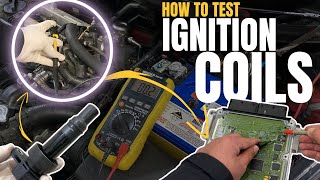
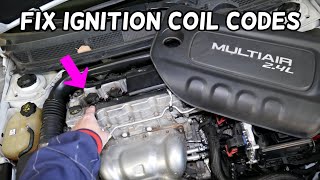
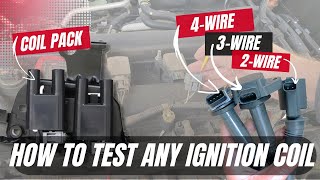
- Faulty Powertrain Control Module (PCM) (Less Common) — The internal driver circuit inside the PCM that controls the ignition coil fails, permanently holding the circuit low. Consider this only after definitively ruling out the coil and wiring. 🎬 Watch: How to test ignition coils, wiring, and PCM circuits.
- Blown Fuse or Faulty Relay (Rare) — The main fuse or relay supplying power to the ignition coils fails, causing a total loss of voltage. This typically triggers multiple ignition codes simultaneously.
- Weak Battery or Charging System (Rare) — A failing battery or alternator drops overall system voltage, prompting the PCM to register a false low-voltage condition on the control circuit during cranking.
- Rodent or Wildlife Damage (Rare) — Rodents nest in the engine bay and chew through the wiring harness, creating a direct short to ground in the ignition coil control wire.
Symptoms
- Rough Engine Idle and Misfires — The engine shakes, vibrates, and sounds uneven at idle. You feel a distinct stutter as cylinder 'B' misfires.
- Engine Stalling or Hesitation — The vehicle stalls at stops or hesitates severely during acceleration, with noticeable power loss on hills.
- Fuel Smell from Exhaust — The persistent misfire dumps unburnt raw gasoline into the exhaust system, creating a strong fuel odor at the tailpipe.
- Poor Fuel Economy — Engine inefficiency forces the vehicle to consume 10-25% more fuel to maintain normal speeds.
- Hard Starting or No Start — The engine cranks longer than usual or fails to start entirely if the short circuit is severe.
- Check Engine Light On (also visible on scanner) — The Malfunction Indicator Lamp illuminates immediately. A flashing light indicates a severe, catalyst-damaging misfire.
Diagnostic Flowchart
Tap your situation to follow the diagnostic path that matches what you're seeing on this code.
Common Fixes & Costs
- Replace Ignition Coil 'B' and Spark Plug — Parts: $50-$130, Labor: $75-$150, ~1 hr book time (Intermediate)
- Repair Damaged Wiring or Connector — Parts: $5-$25, Labor: $125-$350, ~2 hr book time (Intermediate)
- Replace Powertrain Control Module (PCM) — Parts: $800-$1,500, Labor: $150-$300, ~1.5 hr book time (Professional)
- Professional Diagnosis — Parts: $0, Labor: $90-$180, ~1.2 hr book time (Professional)
DIY vs Professional
- Replace Ignition Coil and/or Spark Plug 🟢 Beginner
Tools: Socket set, ratchet, extension, spark plug socket, torque wrench. - Repair Damaged Wiring or Connector 🟢 Beginner
Tools: Multimeter, wire cutters/strippers, soldering iron or quality crimp tool, heat shrink tubing, wiring diagrams. - Replace Powertrain Control Module (PCM) 🟢 Beginner
Tools: Socket set, specialized dealer-level scan tool for programming and key relearning.
Used vs. New Parts: Buying Guide
When a used part is worth it: For an inexpensive part like an ignition coil, buying used is generally not recommended. The savings are minimal, and the part has an unknown history and limited lifespan. A used OEM coil from a low-mileage, verified wreck might be preferable to a new, no-name aftermarket coil, but a new OEM or reputable aftermarket part is the safest bet.
Donor-vehicle mileage cap: roughly under 50000 miles for the part to have meaningful remaining life.
Donor quality checklist:
- Verify the donor vehicle's mileage and that it was not scrapped due to engine failure.
- Inspect the used coil for any cracks, corrosion, or heat damage before purchasing.
- Match the part number exactly.
Decision logic:
- If The cost of a new OEM or reputable aftermarket coil (e.g., Bosch, Denso, NGK) is under $100. → Buy new. The warranty and guaranteed lifespan are worth the small extra cost over a used part.
- If The vehicle is very old and budget is the absolute top priority. → A used OEM coil is a viable risk, but understand it fails much sooner than a new part.
- If You are choosing between used OEM and a cheap, unknown aftermarket brand. → Favor the used OEM part, as many cheap aftermarket coils have very high failure rates.
Warranty tradeoff: Used parts from a salvage yard typically have a 30-90 day warranty. New aftermarket coils often come with a 1-year to limited lifetime warranty. New OEM parts carry a manufacturer's warranty, typically for 12 months.
Worst-case if a used part fails: $100-$250 if a used or cheap aftermarket coil fails shortly after installation, requiring repeat labor costs and the purchase of another part.
What Happens If You Wait — Timeline
- 0-1 week: Solid Check Engine Light appears. Engine has a noticeable rough idle and hesitates slightly on acceleration. The code P2303 is stored. (MPG impact: 5-10%% · Added cost: $0-$20 in wasted fuel.)
- 1 week - 1 month: The Check Engine Light begins to flash during acceleration or under load. This indicates a severe, catalyst-damaging misfire. Unburnt fuel is actively being sent into the hot catalytic converter. (MPG impact: 10-25%% · Added cost: $50-$100 in wasted fuel.)
- 1-3 months: The catalytic converter's internal substrate begins to overheat, crack, and melt from burning the raw fuel. The car feels noticeably weaker as exhaust flow becomes restricted. The damage is now permanent. (MPG impact: 20-35%% · Added cost: $1200-$2800 (catalytic converter replacement is now required in addition to the original ignition fault).)
- 3+ months: Complete catalytic converter meltdown and blockage. The engine struggles to run at all due to extreme exhaust backpressure. This causes damage to exhaust valves and oxygen sensors, compounding the repair cost. (MPG impact: 35-50%+% · Added cost: $3000+ (includes catalytic converter, O2 sensors, and potential further engine diagnosis/repair).)
Cost of Not Fixing It
- Immediate (0-1 month): Significant drop in fuel economy (10-25%), rough idle, stalling, and poor acceleration. Flashing check engine light indicates unburnt fuel is entering the exhaust. (Added cost: $50-$150 in wasted fuel.)
- Short Term (1-3 months): Catalytic converter damage. Unburnt fuel overheats the converter, melting its internal substrate. This leads to a much more expensive repair and causes exhaust blockages that further reduce engine power. (Added cost: $1200-$2800 for catalytic converter replacement.)
- Long Term (3+ months): Potential for engine damage. A persistent misfire leads to fouled spark plugs, damaged oxygen sensors, and in extreme cases, washing of cylinder walls, which affects compression and requires extensive engine work. (Added cost: $3000+ for catalytic converter, O2 sensors, and potential engine repairs.)
Diagnosis Steps
- Read Codes, Freeze Frame Data, and Check TSBs
Use an OBD-II scanner to confirm P2303. Check freeze frame data for engine conditions when the code set. Look for P0302 (Cylinder 2 Misfire), which corroborates the fault. Search for Technical Service Bulletins (TSBs) for your specific VIN.
Tools: OBD-II Scanner (Beginner) - Swap the Ignition Coils
Swap ignition coil 'B' (cylinder 2) with coil 'A' (cylinder 1). Clear codes and drive. If the code changes to P2300 (Coil A), the coil is bad. If P2303 returns, the wiring or PCM is faulty.
Tools: Socket wrench or screwdriver (Intermediate) - Visually Inspect the Area
Inspect ignition coil 'B' and its wiring harness. Look for melted insulation, chafed wires touching the engine block, or oil pooled in the spark plug well from a leaking gasket.
Tools: Flashlight, Inspection Mirror (Beginner) - Test the Coil's Primary Circuit with a Multimeter
Disconnect the coil connector. With the key on (engine off), use a multimeter to verify 12.0V-12.6V at the power supply wire. Check the control wire; a reading of 0V indicates a short to ground or a bad PCM driver.
Tools: Multimeter (Intermediate) - Test for a Short to Ground
Disconnect the battery and PCM connector. Set a multimeter to ohms. Check for continuity between the control wire terminal at the coil connector and a chassis ground. Near-zero ohms confirms a shorted wire.
Tools: Multimeter (Advanced) - Check Battery and Fuses
Verify the battery reads over 12.4V (engine off) and over 13.5V (running). Inspect the fuse box for blown ignition system fuses.
Tools: Multimeter, Socket Wrench (Beginner) - Advanced: Test Ignition Coil Resistance
Remove the coil. Measure primary resistance (typically 0.4-2.0 ohms) and secondary resistance (5,000-20,000 ohms) with a multimeter. Zero ohms means a short; infinite (OL) means an open circuit.
Tools: Multimeter (Advanced) - Advanced: Monitor Live Data Misfire Counts
Use an advanced scanner to monitor 'Cylinder 2 Misfire Count'. A rapidly increasing counter confirms cylinder 2 is the misfire source, ruling out PCM software glitches.
Tools: Advanced OBD-II Scanner (Advanced) - Pro Tip: Use a Test Light to Check the PCM Driver Signal
Connect a test light to the battery positive and probe the control wire terminal. Crank the engine. A flashing light confirms the PCM driver works. A constant light indicates a short to ground.
Tools: 12V Test Light or Noid Light Kit (Advanced) - Pro Tip: Analyze the Control Circuit with an Oscilloscope
View the voltage waveform on the control wire. A healthy signal shows a square wave pulling from 12V to near-zero. A flatline near zero volts confirms the 'circuit low' condition.
Tools: Oscilloscope (Scope) (Professional)
When This Code Triggers (Freeze-Frame Conditions)
- Engine Coolant Temp: 180-210°F (Fully warmed up during operation.)
- RPM: 700-2500 RPM (The fault detects at idle, but often registers under light to moderate acceleration.)
- Engine Load: 20-50% (Often occurs under load, such as when accelerating or climbing a hill, which demands more from the ignition system.)
- Vehicle Speed: 0-60 mph (Triggers at any speed, from a rough idle at a stoplight to hesitation during highway cruising.)
Related Codes
- P0302 — This means 'Cylinder 2 Misfire Detected'. P0302 is a symptom, while P2303 is a specific electrical cause. If you have both, the P2303 fault is the reason for the misfire. Fix the P2303 circuit problem first.
- P2302 — 'Ignition Coil B Secondary Circuit Malfunction'. P2303 points to the low-voltage primary control circuit from the PCM. P2302 points to the high-voltage secondary side (from the coil to the spark plug).
- P2300 — 'Ignition Coil A Primary Control Circuit Low'. This is the identical fault as P2303, but for cylinder 'A' (usually cylinder 1). Swapping coils between cylinders 1 and 2 changes the code from P2303 to P2300 if the coil is faulty.
- P0352 — 'Ignition Coil B Primary/Secondary Circuit Malfunction'. This is a more general code than P2303. P0352 means the PCM knows the coil circuit has a problem but isn't specific about whether it's on the primary or secondary side.
Climate & Environmental Factors
- High Humidity / Water Exposure: Moisture is a primary environmental cause of ignition system faults. Water from rain, engine washing, or humid air penetrates connectors and spark plug wells, causing corrosion and electrical shorts that trigger P2303.
- Extreme Heat: Engine bay heat breaks down the plastic insulation on wiring harnesses over time, making them brittle and prone to cracking. This exposes the copper wire, leading to shorts against the engine block or cylinder head.
- Cold Climates / Road Salt: In cold regions, rodents seeking warmth build nests in engine bays and chew through wiring. Additionally, road salt used in winter accelerates the corrosion of electrical connectors, pins, and chassis grounds, leading to poor connections.
How to Talk to a Mechanic About This Code
Say this: "I have an OBD-II code P2303, which indicates 'Ignition Coil B Primary Control Circuit Low'. I'm also experiencing a rough idle and hesitation. I'd like to schedule a diagnosis, but I want to ensure we test the circuit properly before replacing parts."
This signals that you understand the code is electrical and not just a bad part. It encourages the technician to perform a proper diagnosis (like checking the wiring for a short) rather than immediately replacing the most common part (the coil), which might not be the root cause.
Avoid saying:
- 'My car is shaking, just fix it.'
- 'My check engine light is on, can you look at it?' (too vague, invites a broad and expensive diagnostic fee)
- 'I think I need a new ignition coil.' (This leads them to replace it without proper diagnosis, potentially wasting your money if the coil isn't the problem.)
Questions to ask before authorizing the repair:
- Did you swap the coil with another cylinder to see if the fault code moved? What was the result?
- If the code didn't move, did you test the control wire for a short to ground? What did you find?
- Can you confirm the spark plug for cylinder 2 is in good condition and there's no oil in the spark plug well?
- What is the warranty on the parts and labor for this repair?
Where to Take It: Dealer vs Independent vs Chain
- Dealer:
Best for: Vehicles still under a powertrain or emissions warranty., Newer vehicles where a Technical Service Bulletin (TSB) applies (like the Ford Bronco software issue)., Complex electrical issues where a PCM replacement is suspected.
Downsides: Typically higher labor rates (1.5-2x) compared to independent shops., Recommends replacing an entire wiring harness when a simple wire repair suffices. (Typical cost: +50% vs. baseline) - Independent Shop:
Best fit for most situations. A P2303 code is a common issue that any competent independent mechanic diagnoses and repairs effectively and affordably.
Best for: Most out-of-warranty vehicles., Straightforward diagnosis and replacement of common failure items like ignition coils, spark plugs, and wiring repairs.
Downsides: Diagnostic capabilities and technician skill vary greatly. Vet the shop through online reviews and look for ASE certifications. (Typical cost: +0% vs. baseline) - Chain Shop:
Use with caution. Acceptable if you are certain a specific part needs replacing, but AVOID for initial diagnosis of an electrical fault like P2303, as they replace parts unnecessarily.
Best for: Simple, clear-cut parts replacement if you have already diagnosed the issue yourself (e.g., you've confirmed the coil is bad).
Downsides: High pressure to upsell services (e.g., recommending a full tune-up, fuel system cleaning)., Technician experience with electrical diagnostics is inconsistent, potentially leading to misdiagnosis. (Typical cost: -10% vs. baseline)
When to Walk Away From the Repair
If the estimated repair cost for the P2303 fault and any related issues exceeds 40-50% of your car's private-party value (e.g., from Kelley Blue Book), it's time to seriously consider if the investment is worthwhile.
- Car worth $4000, fix is $350: Fix it. This is a relatively low-cost repair that is essential for the car's operation and is well below the walk-away threshold.
- Car worth $3000, fix is $1800: Walk away. If the diagnosis points to a failed PCM, the repair cost is a significant portion of the car's value. It's likely not an economic repair.
What Scan Tool You Need for This Code
Minimum: A scanner that reads and clears codes, and critically, displays live data streams, including cylinder-specific misfire counts.
A basic $20 code reader only shows you the P2303 code. It cannot show you live misfire data to confirm the problem is active on cylinder #2, nor can it read freeze-frame data to see the conditions when the fault occurred. You will be guessing at the repair.
Budget: BlueDriver Pro Scan Tool (~$100) — Connects to your smartphone via Bluetooth. It reads and clears the P2303 code, views freeze-frame data, and displays live data, including misfire counts, which is essential for confirming the fault.
Mid-range: Foxwell NT510 Elite (~$200) — This handheld scanner offers everything the budget pick does, plus bidirectional controls. This allows you to actively command the ignition coil to fire, providing a definitive test to see if the coil itself or the PCM driver is responding. This is a powerful diagnostic feature for this specific code.
Professional: Autel MaxiCOM MK808 (~$500) — A professional-level tablet scanner with full bidirectional controls, extensive live data graphing, and OE-level diagnostic capabilities for all vehicle modules. It quickly performs active tests on the ignition coil circuit and provides a much deeper level of data for complex electrical diagnoses.
Rent vs buy: Many auto parts stores like AutoZone read your codes for free. For a one-time issue, this is your best option. If you plan to do your own repairs and maintenance regularly, buying a scanner like the BlueDriver Pro offers excellent value and saves you money on diagnostic fees over time.
How to Clear the Code After You Fix It
- Reconnect the battery if it was disconnected for the repair.
- Use an OBD-II scan tool to formally clear the P2303 and any related codes.
- Perform a complete drive cycle to allow the vehicle's readiness monitors to run their self-tests.
Drive cycle (~30 minutes): A generic drive cycle includes a cold start (after sitting for 8+ hours), 2-3 minutes of idling, 10-15 minutes of mixed city/suburban driving with stops, followed by 5-10 minutes of steady highway speed (55-60 mph).
Readiness monitors affected: Misfire Monitor, Catalyst Monitor, Oxygen (O2) Sensor Monitor
Before emissions retest: drive at least 50 miles to fully set monitors.
Watch out for:
- Simply disconnecting the battery clears the code, but it also resets all the readiness monitors to 'incomplete', causing an automatic failure at an emissions testing station.
- The code returns immediately if the underlying electrical short or component failure has not been properly repaired.
Will This Fail Emissions / State Inspection?
Yes — this code typically fails an OBD-II emissions inspection.
- California: An active P2303 code is an automatic Smog Check failure. After repairs, all OBD readiness monitors must be 'Ready' or 'Complete' to pass, which requires driving 50-100 miles over several trips.
- New York: A vehicle automatically fails the emissions portion of the NYS inspection if the Check Engine Light is on. After clearing the code, the vehicle must be driven through a drive cycle to set the readiness monitors before it can be re-inspected.
- Texas: In the 17 counties requiring emissions testing, an active P2303 code causes the vehicle to fail the OBD-II test. The Check Engine Light must be off and the required readiness monitors must be set.
Most Commonly Affected Vehicles
- Ford Focus (2005-2011) — Coil pack failure and faulty wiring connectors are very common issues on these models, often causing juddering and this specific code. The coil pack wiring harness is susceptible to chafing.
- Jeep Compass, Renegade, Cherokee (2014-2020) — Vehicles with the 2.4L MultiAir engine are known to set this code, often pointing directly to a failed ignition coil. It's highly recommended to replace the spark plug at the same time.
- Dodge Dart (2013-2016) — Also equipped with the 2.4L MultiAir engine, these cars share the same common ignition coil failure pattern as their Jeep and Chrysler cousins.
- Chrysler 200 (2015-2017) — The 2.4L MultiAir engine in the Chrysler 200 is also prone to setting ignition coil circuit codes like P2303. The fix is almost always a new coil and plug for cylinder 2.
- Ford Bronco (2021-2024) — On the 2.3L engine, TSB 24-2406 notes a PCM software glitch causes P2303 to set when the fault is actually on a different cylinder. A power balance test is required to find the true misfiring cylinder before replacing parts.
- Volkswagen Jetta, Golf (2018-2021) — Owners report this code appearing on the 1.4L engine. The issue traces to the wiring harness chafing near the cylinder head, not a failed coil.
- Chevrolet Cruze, Sonic (2011-2016) — Service information for the 1.8L engine lists P2303 as a potential code, indicating the ECM detected a short to ground in the ignition coil control circuit. Using a scan tool with bi-directional controls is a key diagnostic step.
- Land Rover Various Models (2000-2015) — Wiring harness issues and connector corrosion from moisture are frequently cited causes for this code, requiring careful inspection of the harness back to the ECM.
Manufacturer-Specific Notes
- Ford: On many older 4-cylinder Ford engines (pre-Coil-on-Plug), a single 'waste spark' coil pack fires two cylinders at once (e.g., 1 & 4, 2 & 3). A failure in the half of the pack that fires cylinder 2 triggers P2303. The wiring connector to this coil pack is a known failure point.
- Jeep/Dodge/Chrysler (Stellantis): On the 2.4L MultiAir engine, ignition coil failures are extremely common. Mechanics often see P2303 paired with P0302, making diagnosis straightforward: replace the coil and spark plug for that cylinder.
- General Motors (Chevrolet/GMC): GM service literature heavily emphasizes using a capable scan tool. Bi-directional controls allow a technician to command the specific coil driver on and off manually while monitoring voltage, quickly isolating a bad PCM driver from a wiring fault.
- Volkswagen/Audi: For VW and Audi engines, particularly the 1.4T, the engine wiring harness routes tightly. A common failure point is the harness rubbing against the edge of the cylinder head, wearing through the insulation on the coil control wire and causing a short to ground.
Real Owner Stories
2015 Dodge Dart with 2.4L MultiAir Engine at 85,000 miles
Check engine light came on with a rough, vibrating idle. The car hesitated badly when accelerating from a stop. Scanner showed codes P2303 and P0302.
What they tried:
- Based on forum advice for the 2.4L engine, the owner suspected a common coil failure.
Outcome: Replaced the ignition coil and spark plug on cylinder #2. The repair took less than 30 minutes. Cleared the codes, and the engine ran smoothly immediately. The problem did not return.
Lesson: On engines known for frequent coil failures like the 2.4L MultiAir, the combination of a primary circuit code (P2303) and a misfire code for the same cylinder (P0302) makes a failed coil the most probable cause.
2016 Ford Mustang with 110,000 miles
Car suddenly developed a severe misfire and the check engine light came on. The owner pulled codes P2303 and P2304 (Ignition Coil 'B' Primary Control Circuit High).
What they tried:
- Swapped the ignition coil from cylinder #2 with cylinder #1, but the P2303/P2304 codes remained for cylinder #2.
- This indicated the problem was in the wiring, not the coil itself.
Outcome: A mechanic inspected the wiring harness leading to coil #2 and found a broken wire inside the protective loom. The wire was repaired with a solder joint and heat shrink. After the repair, the codes were cleared and did not return.
Lesson: Always perform the 'coil swap' test before buying parts. If the code does not move with the coil, the fault is almost certainly in the wiring or connector. A simple visual inspection is not enough; wires break inside the harness.
2022 Ford Bronco with 2.3L EcoBoost Engine
Check engine light appeared with code P2303. The owner did not notice any significant performance issues but took it to the dealer for diagnosis.
What they tried:
- The owner initially assumed the coil on cylinder #2 was faulty and considered replacing it.
Outcome: The dealership technician consulted Ford's Technical Service Bulletins and found TSB 24-2406. This TSB warns that a PCM software glitch causes the wrong cylinder's fault code to be displayed. The technician performed a power balance test, which identified the actual misfire was on cylinder #4. They replaced the coil on cylinder #4 and updated the PCM software. The P2303 code was resolved.
Lesson: Always check for TSBs, especially on newer vehicles. A fault code does not always point to the correct component due to software errors. Blindly replacing the part indicated by the code (Coil 'B' for P2303) would not have fixed this issue.
How to Prevent This Code From Triggering
- Replace spark plugs at manufacturer-recommended intervals. (Every 60,000-100,000 miles (vehicle dependent).) — Worn spark plugs have a larger gap, which forces the ignition coil to generate a higher voltage to create a spark. This extra strain causes the coil to overheat and fail prematurely.
- Perform regular visual inspections of engine wiring. (Every oil change.) — Catching potential issues early, like a wiring harness rubbing against a hot or sharp engine component, prevents the insulation from wearing through and causing a short circuit.
- Address engine oil leaks promptly. (As needed.) — A leaking valve cover gasket is a common cause of oil contamination in spark plug wells. This oil degrades the ignition coil boot and shorts out the electrical connector, leading to coil failure.
- Use dielectric grease on coil connectors. (When replacing coils or during tune-ups.) — Applying a small amount of dielectric grease to the inside of the connector boot and seal helps keep moisture out, preventing corrosion on the electrical pins that causes intermittent connections and faults.
- Use high-quality OEM or reputable aftermarket ignition parts. (When making repairs.) — Cheap, low-quality aftermarket ignition coils have a significantly higher failure rate. Using parts from trusted brands like NGK, Denso, Bosch, or the original OEM ensures better reliability and longevity.
Frequently Asked Questions
What does the 'B' in 'Ignition Coil B' mean?
The letter 'B' corresponds to the engine's second cylinder in the firing order. 'A' is cylinder 1, 'B' is cylinder 2, and 'C' is cylinder 3. Always verify your vehicle's specific cylinder numbering, as it varies by manufacturer.
I replaced the coil and spark plug, but P2303 came back. What now?
This strongly indicates the problem is in the circuit, not the coil. Inspect the wiring harness for shorts to ground and test the connector for good pin contact. If the wiring tests good, the final possibility is a failed coil driver in the PCM.
What is the difference between the primary and secondary ignition circuit?
The primary circuit is the low-voltage side, involving the 12V wiring from the PCM to the ignition coil. The secondary circuit is the high-voltage side, carrying thousands of volts from the coil to the spark plug. Code P2303 specifically identifies a fault in the low-voltage primary circuit.
Can I just clear the code and keep driving?
Clearing the code provides no benefit because the underlying electrical short remains. Ignoring it causes dangerous stalling in traffic and destroys your catalytic converter via unburnt fuel, turning a $100 repair into a $2,000 nightmare.
Is it better to replace just one coil or all of them?
If your car has over 80,000 miles and one original coil fails, the others are nearing the end of their lifespan. Replacing all coils and spark plugs simultaneously prevents future breakdowns and saves on repeated labor costs.
Why is replacing the PCM so expensive?
The PCM is the vehicle's main computer, making the hardware inherently expensive. After installation, it requires specialized dealer-level tools to program the software to your specific Vehicle Identification Number (VIN). This mandatory programming adds significant labor costs.
Could a bad oil leak cause code P2303?
Yes. A leaking valve cover gasket allows engine oil to pool in the spark plug tubes. This oil degrades the ignition coil boot and shorts out the electrical connector, triggering the P2303 code.
Can a bad ground connection cause P2303?
P2303 indicates the control circuit is already grounded when it shouldn't be (a short to ground). However, a poor main engine ground causes erratic electrical problems and false codes. Always verify main ground connections are clean and tight during electrical diagnosis.
What are the most common mistakes when diagnosing P2303?
The biggest mistake is replacing the ignition coil without performing a free coil swap test to confirm the part is actually faulty. Another common error is clearing codes before checking freeze-frame data, erasing valuable diagnostic clues. Always test the circuit before buying parts.
Key Takeaways
- Code P2303 indicates a low-voltage short to ground in the control circuit for ignition coil 'B', which corresponds to engine cylinder #2.
- Swapping the cylinder #2 ignition coil with cylinder #1 is a free, 10-minute test that instantly proves whether the coil or the wiring is faulty.
- Driving more than 50 miles with an active P2303 code dumps unburnt fuel into the exhaust, risking a $1,200 to $2,500 catalytic converter replacement.
- Inspect the #2 spark plug well for pooled oil from a leaking valve cover gasket, a primary cause of electrical shorts that trigger this code.
Helpful Videos
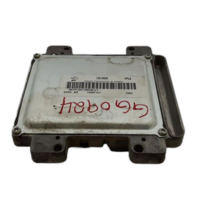
Shop the Parts Behind P2303
Below are the parts most often responsible for code P2303, ranked by how frequently each one is the actual culprit (per the diagnosis above). Tap any to see what we have for your vehicle.



The information in this article is provided for general reference and educational purposes only. Vehicle specifications, procedures, and part compatibility can vary by production date, trim level, and region. Always consult your vehicle's factory service manual and verify part numbers before purchasing or performing repairs. Safety-critical components such as airbags, seat belts, and braking systems should be installed by a qualified professional.
- 🧭 Diagnostic Flowchart
- 🎬 Helpful Videos
- 🛍️ Shop This Part
- What Does P2303 Mean?
- Can I Drive With P2303?
- Common Causes
- Symptoms
- Common Fixes & Costs
- DIY vs Professional
- Used vs. New Parts: Buying Guide
- What Happens If You Wait — Timeline
- Cost of Not Fixing It
- Diagnosis Steps
- When This Code Triggers (Freeze-Frame Conditions)
- Related Codes
- Climate & Environmental Factors
- How to Talk to a Mechanic About This Code
- Where to Take It: Dealer vs Independent vs Chain
- When to Walk Away From the Repair
- What Scan Tool You Need for This Code
- How to Clear the Code After You Fix It
- Will This Fail Emissions / State Inspection?
- Most Commonly Affected Vehicles
- Manufacturer-Specific Notes
- Real Owner Stories
- 2015 Dodge Dart with 2.4L MultiAir Engine at 85,000 miles
- 2016 Ford Mustang with 110,000 miles
- 2022 Ford Bronco with 2.3L EcoBoost Engine
- How to Prevent This Code From Triggering
- Frequently Asked Questions
- What does the 'B' in 'Ignition Coil B' mean?
- I replaced the coil and spark plug, but P2303 came back. What now?
- What is the difference between the primary and secondary ignition circuit?
- Can I just clear the code and keep driving?
- Is it better to replace just one coil or all of them?
- Why is replacing the PCM so expensive?
- Could a bad oil leak cause code P2303?
- Can a bad ground connection cause P2303?
- What are the most common mistakes when diagnosing P2303?
- Key Takeaways
- 🎟️ Get 5% Off