

P2306 on 2021-2024 Ford Bronco 2.3L: Ignition Coil 'C' Circuit Fixes
P2306 on a 2.3L EcoBoost Bronco typically indicates a faulty ignition coil (Motorcraft DG-576) or spark plug on cylinder #3. However, due to a known PCM software glitch (TSB 24-2406), the fault may be on a different cylinder. A simple coil swap is the first diagnostic step, but a dealer power balance test may be required to find the true culprit. Expect to pay $40-$85 for a new Motorcraft coil and around $15 for a spark plug.
- P2306 on your Bronco 2.3L points to an ignition issue on cylinder #3.
- The most likely cause is a bad ignition coil, which is a straightforward DIY replacement.
- Always check the spark plug for cylinder #3 when replacing the coil.
- Be aware of Ford TSBs 24-2406 and SSM 52342; a PCM software update at a dealership may be required if new parts don't fix the problem.
- Before replacing parts, consider swapping the coil from cylinder #3 to another cylinder to confirm the coil is the faulty component.
What's Unique About the 2021-2024 Ford BRONCO
The 2021-2024 Ford Bronco with the 2.3L EcoBoost engine is subject to specific Technical Service Bulletins (TSBs) related to ignition coil circuit faults, including P2306. Ford issued TSB 24-2406 and SSM 52342 acknowledging that a list of ignition codes may appear due to an issue within the PCM software. This indicates a known pattern where the PCM may incorrectly map the fault to the wrong cylinder, complicating diagnosis. For example, the code may point to cylinder #3 (P2306), but the actual problem could be on cylinder #2. SSM 52342 explicitly advises technicians to perform a power balance test with the Ford Diagnostic & Repair System (FDRS) to identify the true source of the misfire before replacing parts. While a bad coil is still a likely culprit, this known software issue means a trip to the dealer for a PCM update might be the ultimate fix.
Diagnostic Flowchart
Tap your situation to follow the diagnostic path that matches what you're seeing on this vehicle.
Symptoms You May Notice
- Check Engine Light is on
- Rough or shaking idle
- Engine hesitation or stumbling during acceleration
- Noticeable loss of power
- Flashing Check Engine Light under heavy load
- Reduced fuel economy
- Replacing the wrong ignition coil due to the PCM software issue described in SSM 52342, which can incorrectly report the faulting cylinder.
- Replacing the ignition coil when the actual fault is a worn spark plug or a simple carbon-tracked coil boot.
Most Likely Causes
- Faulty Ignition Coil 🔴 High Probability → Shop Ignition Coil Ignition coils are common wear items. The platform-specific TSBs indicate a higher-than-normal rate of ignition system faults for this engine, though the root cause may be software. Some technicians strongly recommend using only OEM Motorcraft coils, as aftermarket coils have a reputation for premature failure.
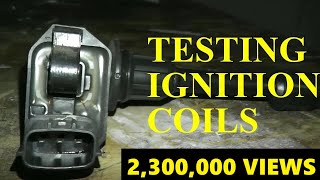
How to confirm: Swap the ignition coil from cylinder #3 with another cylinder (e.g., cylinder #2). Clear the codes and drive. If the code changes to P2303 (Ignition Coil 'B'), the coil is confirmed bad. If the code P2306 returns, 🎬 See how to test ignition coils using basic hand tools the issue is not the coil. Be aware of the PCM mapping issue (SSM 52342); a power balance test is the most definitive way to confirm the faulting cylinder before swapping parts.
Typical fix: Replace the faulty ignition coil on the confirmed problem cylinder.
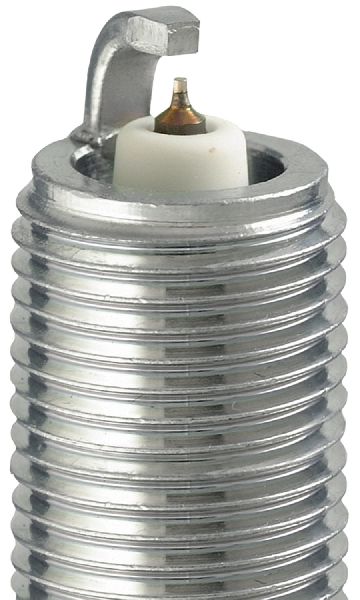
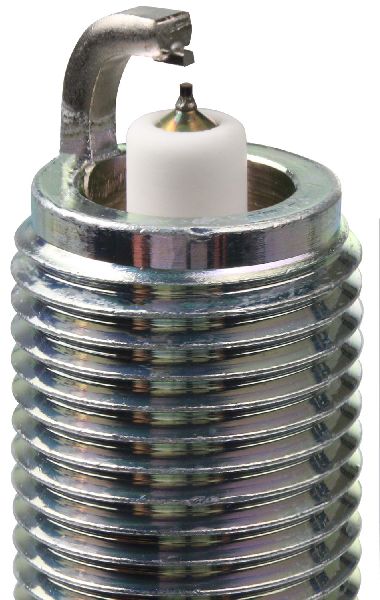
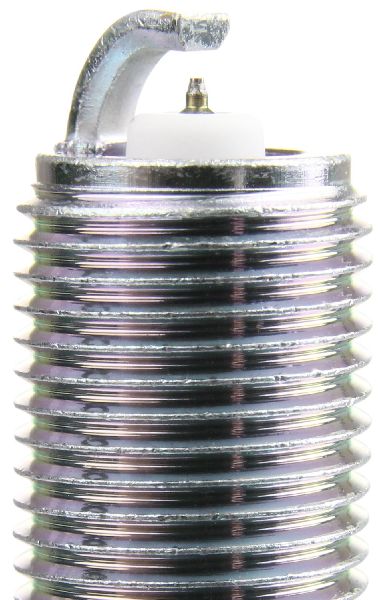
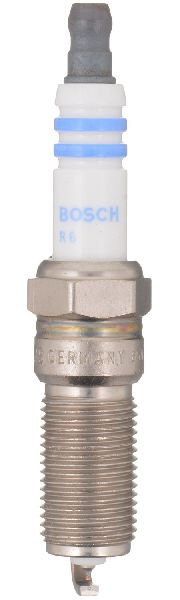
Est. part cost: $40 - $85 - Worn or Fouled Spark Plug 🟡 Medium Probability → Shop Spark Plug A worn spark plug creates a larger gap or can become carbon tracked, forcing the ignition coil to work harder, which can lead to coil failure or misfires. This is a common maintenance item.
How to confirm: After ruling out the coil, remove the spark plug from the suspect cylinder. Inspect for wear (rounded electrode), carbon buildup, oil fouling, or a white, burned appearance. A crack in the porcelain insulator is a definitive failure.
Typical fix: Replace the spark plug. It is best practice to replace all spark plugs at the same time to maintain consistent performance.
Est. part cost: $15 - $25 per plug - PCM Software Issue 🟡 Medium Probability Ford TSB 24-2406 and SSM 52342 directly address an issue with 'incorrect cylinder to DTC mapping' in the PCM software for 2021-2024 Broncos with the 2.3L engine.
How to confirm: This can only be confirmed by a Ford dealer or a shop with a Ford Diagnostic & Repair System (FDRS) scan tool. They can check the current software version against the latest available update. The presence of the code without a confirmed hardware fault on the indicated cylinder is a strong indicator.
Typical fix: Reprogram the Powertrain Control Module (PCM) to the latest software calibration level.
Est. part cost: $0 (if under warranty), $100 - $250 for labor otherwise - Damaged Wiring or Connector ⚪ Low Probability Wiring can be damaged by heat, vibration, or improper servicing. The plastic locking tabs on connectors can become brittle over time.
How to confirm: Visually inspect the wiring harness and pigtail connector for the cylinder #3 ignition coil. Look for any signs of chafing, melting, corrosion on the pins, or loose wires. Use a multimeter to perform a pin-out test to check for proper voltage and ground at the connector with the key on.
Typical fix: Repair the damaged section of the wiring harness or replace the pigtail connector.
Est. part cost: $15 - $40
Rare But Worth Checking
- Faulty Powertrain Control Module (PCM): → Shop Engine Control Module (ECM) While the TSB points to a software issue, in very rare cases, the ignition driver circuit inside the PCM itself can fail. This should only be considered after all other possibilities, including the software update, have been exhausted. A user on a Ford truck forum with a similar EcoBoost engine confirmed a repaired PCM fixed their P2306 and P2309 codes after extensive diagnostics.
Diagnosis Steps
- Read the trouble codes with an OBD-II scanner to confirm P2306 and any other related codes (e.g., P0303, P0353).
- CRITICAL STEP for this vehicle: Due to TSB 24-2406/SSM 52342, recognize that cylinder 'C' (Cylinder 3) may not be the actual source of the problem. The most accurate diagnosis is to use a high-level scan tool (like the dealer's FDRS) to perform a Power Balance Test. This test measures the power contribution of each cylinder to pinpoint the true offender.
- If a Power Balance Test is not available, proceed with caution. Visually inspect the wiring harness and electrical connector for the ignition coil on cylinder #3 (the third coil from the front of the engine). Look for damage, melting, or corrosion.
- Perform an ignition coil swap. Label and move the coil from cylinder #3 to cylinder #2. Clear the codes and run the engine. If the code returns as P2303 (Coil 'B'), the ignition coil is faulty and needs replacement.
- If the code P2306 returns after the coil swap, the problem is likely not the coil itself but rather the spark plug, wiring, or PCM for that specific circuit.
- Inspect the spark plug for cylinder #3. Check for excessive wear, fouling, or incorrect gap. Replace if necessary. It's good practice to replace the set.
- If the coil and plug are good, test the ignition coil connector for power (voltage) and ground using a multimeter. A fault here indicates a wiring issue between the PCM and the coil.
- If all hardware (coil, plug, wiring) for the specified cylinder checks out, the issue is almost certainly the PCM software glitch identified in Ford's TSBs. Contact a Ford dealership to have the PCM reprogrammed to the latest calibration.
Parts You'll Likely Need
- Ignition Coil
(OEM #DG-576)— This is the most frequent cause of a P2306 code. The coil is responsible for generating the spark, and internal failures are common. Using the OEM Motorcraft part is highly recommended.
Trusted brands: Motorcraft
OEM price range: $70-$85
Aftermarket price range: $40-$60 - Spark Plug
(OEM #SP-594)— A worn or fouled spark plug can cause the ignition coil to fail and should be inspected or replaced when servicing the coil.
Trusted brands: Motorcraft
OEM price range: $15-$20
Aftermarket price range: $8-$15 - Ignition Coil Connector Pigtail — If the connector's locking tab is broken or the terminals are corroded/melted, the connector itself will need to be replaced.
Trusted brands: Motorcraft, Dorman
OEM price range: $25-$40
Aftermarket price range: $15-$25
Related Codes That Often Appear With This One
- P0303 — P0303 means 'Cylinder 3 Misfire Detected.' P2306 identifies the electrical fault in the coil's primary circuit, while P0303 reports the resulting mechanical misfire event.
- P0353 — P0353 is 'Ignition Coil 'C' Primary/Secondary Circuit Malfunction.' It is a closely related code that can be set along with P2306, pointing to a general fault in the same coil's electrical circuits.
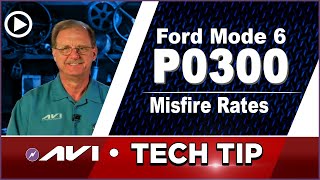
- P0300 — P0300 indicates 'Random or Multiple Cylinder Misfire Detected.' This may appear if the issue is intermittent or affecting more than one cylinder. 🎬 Watch: Using Ford Mode 6 to track misfire rates
Technical Service Bulletins (TSBs) & Recalls
- TSB 24-2406: 2.3L/3.0L -
Platform-Specific Known Issues
- TSB 24-2406: Ford issued this bulletin for 2021-2024 Broncos with the 2.3L engine that exhibit ignition system DTCs, including P2306. The prescribed fix is to reprogram the PCM to the latest software level.
- SSM 52342: This Special Service Message also applies to 2021-2024 Broncos with the 2.3L engine. It warns that due to 'incorrect cylinder to DTC mapping within the PCM,' the stored trouble code may not point to the actual cylinder with the ignition problem. It advises technicians to use a power balance test to identify the true source of the misfire before replacing parts. It further explains that the PCM will shut off fuel to the cylinder that has the DTC, so if two cylinders show a drop in the power balance test, the one *without* a DTC is the real culprit.
Mechanic-Grade Diagnostic Values
- Ignition Coil Primary Circuit Voltage — expected: Approximately 12 Volts (Battery Voltage). Failure: No voltage or significantly low voltage indicates a problem with the power supply, fuse, or wiring.
- Ignition Coil Primary Resistance — expected: ~0.49 - 0.50 ohms. Failure: A reading far outside this range may indicate a faulty coil. Note: These values are based on aftermarket OEM-replacement coils.
- Ignition Coil Secondary Resistance — expected: ~7.3k ohms. Failure: A reading far outside this range may indicate a faulty coil. Note: This value is based on an aftermarket OEM-replacement coil.
Hidden / Shadow Codes Worth Checking
- Mode $06, TID $53: This is not a DTC, but a Test ID within the onboard diagnostic monitors. TID $53 tracks the misfire count for each specific cylinder during the last driving cycle. A technician can view these raw counts to see which cylinder is actually misfiring, which is critical when a TSB warns that the PCM may be reporting the wrong cylinder. (see via A professional scan tool with Mode $06 capability is required. The data is often found under 'Non-Continuous Monitors' or 'On-Board Monitored Systems'.)
Scan Tool Commands That Help
- Ford FDRS/IDS or equivalent professional scan tool: Power Balance Test — This is the most crucial diagnostic function for this specific problem. It graphically displays the power contribution of each cylinder by sequentially disabling the fuel injector for each one and measuring the RPM drop. If a cylinder is already misfiring, disabling its injector will cause little to no drop in RPM, while healthy cylinders will show a significant drop. This allows a technician to definitively identify the misfiring cylinder, bypassing the potentially incorrect DTC set by the PCM.
Wiring & Ground Locations
- PCM Connectors (C175B, C175E, C175T) — Located on the passenger side firewall in the engine bay.. The ignition coil driver circuits originate from the PCM. A poor connection, corrosion, or damaged pin at these main connectors could cause the low voltage condition for the P2306 code.
- Ignition Coil Power Wire — At the connector for each ignition coil.. When testing for power at the coil connector, the specific wire to probe for 12V is Red with a Light Green stripe (RD-GN). Knowing the color code saves diagnostic time.
- Main Engine Grounds — Various points on the engine block and chassis.. The control system for the 2.3L EcoBoost is noted to be extremely sensitive to ground issues. A poor or corroded ground can cause erratic voltage readings and trigger codes like P2306. A continuity test between all ground points and the battery negative terminal is recommended.
OEM Part Supersession History
DG-576→JX6Z-12029-B— Standard part revision or improvement by the manufacturer.
Heads up: The new part number is the correct service replacement for the original.
Helpful Videos
Used OEM Parts in Stock
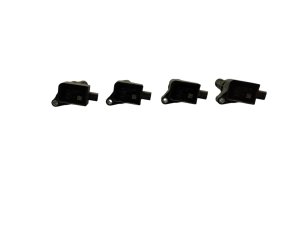
New Aftermarket Parts Available


The information in this article is provided for general reference and educational purposes only. Vehicle specifications, procedures, and part compatibility can vary by production date, trim level, and region. Always consult your vehicle's factory service manual and verify part numbers before purchasing or performing repairs. Safety-critical components such as airbags, seat belts, and braking systems should be installed by a qualified professional.
- Ford BRONCO:
- 🧭 Diagnostic Flowchart
- 🎬 Helpful Videos
- 🛍️ Shop This Part
- What's Unique About the 2021-2024 Ford BRONCO
- Symptoms You May Notice
- Most Likely Causes
- Rare But Worth Checking
- Diagnosis Steps
- Parts You'll Likely Need
- Related Codes That Often Appear With This One
- Technical Service Bulletins (TSBs) & Recalls
- Platform-Specific Known Issues
- Mechanic-Grade Diagnostic Values
- Hidden / Shadow Codes Worth Checking
- Scan Tool Commands That Help
- Wiring & Ground Locations
- OEM Part Supersession History
- 🎟️ Get 5% Off