

OBD-II Code P2310: Ignition Coil 'D' Primary Control Circuit High
What P2310 means, why it triggers, and how to fix it
- P2310 indicates a high-voltage fault in the ignition coil 'D' primary control circuit, immediately causing an engine misfire.
- A failed ignition coil causes over 70% of P2310 codes, followed closely by chafed wiring or corroded connectors.
- Swap coil 'D' with an adjacent coil; if the misfire code moves to the new cylinder, replace the coil to fix the issue.
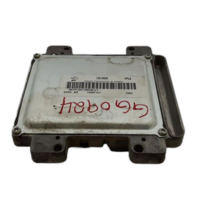
- Never replace the $600+ PCM without testing the wiring harness with a multimeter first, as wiring shorts are far more common.
- Driving with an active P2310 code dumps unburnt fuel into the exhaust, destroying a $1,500+ catalytic converter within weeks.
What Does P2310 Mean?
The Powertrain Control Module (PCM) detects abnormal high voltage in the ignition coil 'D' primary control circuit. The primary circuit is the low-voltage side the PCM uses to charge and trigger the coil. This fault prevents the spark plug from firing, causing an immediate engine misfire and power loss.
Technical definition: SAE/OBD-II defines P2310 as "Ignition Coil 'D' Primary Control Circuit High". The PCM detects voltage on cylinder 'D's coil control circuit stuck above the normal range (typically 12V-14.5V instead of switching near 0V). This indicates an open circuit, a short to power, or a failed internal coil winding.
Can I Drive With P2310?
Yes, But With Caution. You can drive short distances, but it is highly discouraged. A constant misfire dumps unburnt fuel into the exhaust, which overheats and destroys the catalytic converter. This secondary damage costs between $800 and $2,500 to repair. The engine computer often disables the fuel injector to the affected cylinder to prevent this, resulting in severe power loss.
Common Causes
- Faulty Ignition Coil 'D' (Very Common) — An internal short or open in the primary windings prevents the coil from charging, causing a high voltage reading. This is the most frequent cause of P2310.
- Wiring Harness Damage (Shorts, Opens, or Corrosion) (Common) — Corroded connectors, frayed wires, or rodent damage cause shorts to a power source or open circuits. Engine heat and vibration frequently degrade these connections, holding the circuit high and preventing the PCM from grounding the coil.
- Failed Spark Plug (Less Common) — A severely fouled or worn spark plug increases electrical resistance, stressing the ignition coil and causing premature failure.
- Bad Engine or PCM Ground (Less Common) — A corroded or loose ground strap creates high electrical resistance, skewing voltage readings and triggering circuit codes.
- Blown Fuse or Faulty Relay (Rare) — A stuck ignition relay provides constant power, disrupting the coil control circuit's normal switching operation.
- Faulty Powertrain Control Module (PCM) (Rare) — The internal PCM driver circuit controlling the coil fails, sending an incorrect signal. Only consider this after exhaustively ruling out wiring faults.
Symptoms
- Check Engine Light is On — The Malfunction Indicator Lamp illuminates immediately upon detecting the circuit fault.
- Poor Acceleration and Power Loss — The vehicle feels sluggish and hesitates when pressing the gas pedal because one cylinder provides no power.
- Reduced Fuel Economy — Gas mileage drops significantly because unburnt fuel is wasted in the non-firing cylinder.
- Engine Misfiring and Rough Idle (also visible on scanner) — The engine shakes noticeably at idle and stumbles or jerks under load due to the dead cylinder.
Diagnostic Flowchart
Tap your situation to follow the diagnostic path that matches what you're seeing on this code.
Common Fixes & Costs
- Replace Ignition Coil 'D' — Parts: $50-$150, Labor: $80-$150, ~0.8 hr book time (DIY)
- Repair Wiring or Replace Connector — Parts: $10-$50, Labor: $150-$600, ~3.5 hr book time (Intermediate)
- Replace Spark Plugs — Parts: $20-$80, Labor: $80-$150, ~1.5 hr book time (DIY)
- Replace Ignition System Fuse or Relay — Parts: $5-$30, Labor: $20-$50, ~0.2 hr book time (DIY)
- Replace Powertrain Control Module (PCM) — Parts: $600-$1200, Labor: $200-$300, ~2.0 hr book time (Professional)
Used vs. New Parts: Buying Guide
When a used part is worth it: Buying a used ignition coil is only viable as a temporary emergency fix. The minimal cost savings do not justify the risk of installing a part with an unknown history.
Donor-vehicle mileage cap: roughly under 50000 miles for the part to have meaningful remaining life.
Donor quality checklist:
- Verify the donor vehicle was not scrapped for engine-related issues.
- Avoid coils showing physical damage, melting, or oil contamination.
- OEM coils from a low-mileage wreck are preferable to cheap, no-name aftermarket parts.
Decision logic:
- If The part is an ignition coil. → Buy a new, quality aftermarket (Bosch, Denso, NGK) or OEM part. The warranty is worth the small price difference.
- If Vehicle is high-mileage (>100k miles) and one coil fails. → Replace all coils as a set with new parts, as the others are nearing the end of their service life.
- If Budget is extremely tight and the car is old. → A used OEM coil from a reputable salvage yard is a last-resort option.
Warranty tradeoff: Used parts typically have a 30-day warranty. New aftermarket parts offer 1-year to limited lifetime warranties. OEM parts carry 12-24 month warranties.
Worst-case if a used part fails: 200-500 if a used coil fails, requiring repeat labor costs and a new part.
What Happens If You Wait — Timeline
- 0-1 month: Check Engine Light is on. A consistent rough idle is noticeable, and there is slight hesitation during acceleration. (MPG impact: 5-10%% · Added cost: $50-100 in wasted fuel.)
- 1-3 months: Power loss is significant. Unburnt fuel is consistently dumped into the exhaust, starting to overheat the catalytic converter. (MPG impact: 10-20%% · Added cost: $100-250 in wasted fuel.)
- 3-6 months: The catalytic converter's internal honeycomb structure begins to melt and clog from extreme heat. Damage becomes permanent. (MPG impact: 15-25%% · Added cost: $1,000-2,500 (catalytic converter replacement required).)
- 6+ months: The catalytic converter completely fails and clogs, causing severe backpressure. This damages oxygen sensors and potentially the engine. (MPG impact: 25%+% · Added cost: $1,500-4,000+ (includes catalytic converter, O2 sensors, and engine diagnostics).)
Cost of Not Fixing It
- 0-1 month: Noticeable drop in fuel economy (5-15%), rough idle, and poor acceleration. Failed emissions test. (Added cost: 50-150)
- 1-6 months: Risk of overheating and damaging the catalytic converter due to unburnt fuel. (Added cost: 1000-2500)
- 6+ months: Severe catalytic converter failure, damaged oxygen sensors, and potential internal engine damage. (Added cost: 1500-4000+)
Diagnosis Steps
- Read the Codes and Freeze Frame Data
Use an OBD-II scanner to confirm P2310. Look for related codes like P0304 (Cylinder 4 Misfire) to confirm the problem cylinder. Note the freeze frame data for engine conditions when the fault triggered.
Tools: OBD-II Scanner (Beginner) - Swap the Ignition Coil
Swap coil 'D' with an adjacent cylinder (e.g., coil 'C'). Clear codes, start the engine, and re-scan. If the code changes to P2307 (coil 'C'), the coil is faulty. If P2310 returns, the issue is wiring or the PCM.
Tools: Basic hand tools (socket set, screwdriver) (Beginner) - Visually Inspect the Ignition System
Inspect coil 'D', its electrical connector, and the wiring harness for melting, corrosion, or loose connections. Look closely for chewed wires from rodent damage.
Tools: Flashlight (Beginner) - Check for Technical Service Bulletins (TSBs)
Search online for TSBs related to P2310 for your specific vehicle. Manufacturers frequently release bulletins for known wiring harness chafing or connector moisture issues.
Tools: Internet Access (Beginner) - Test the Coil's Primary Circuit Power
With the key on and engine off, check for proper voltage at the ignition coil connector. The power feed wire requires battery voltage (12.0V - 14.5V). If missing, check related fuses and relays.
Tools: Multimeter (Intermediate) - Check for a Short to Power
Disconnect the ignition coil and PCM connectors. Check for continuity between the coil 'D' control wire and the positive battery terminal. Continuity indicates the control wire is shorted to power in the harness.
Tools: Multimeter, Vehicle Wiring Diagram (Advanced) - Advanced Circuit Integrity Test
With the coil and PCM disconnected, measure resistance on the control wire between the coil connector and the PCM connector. Resistance under 1.0 Ohm is normal. Infinite resistance ('O.L.') confirms a broken wire.
Tools: Multimeter, Vehicle Wiring Diagram, Connector Pinout Chart (Advanced) - Ignition Coil Resistance Test
Measure resistance of the primary windings (positive to negative terminals). A typical reading is 0.4 to 2.0 Ohms. An infinite ('O.L.') or zero reading confirms a failed coil.
Tools: Multimeter (Advanced) - Live Data Scan Tool Analysis
Monitor live data PIDs with the engine running. Watch misfire counters for cylinder 'D'. Observe Fuel Trims; unburnt oxygen from a misfire causes the O2 sensor to report lean, driving fuel trims excessively positive.
Tools: Advanced OBD-II Scan Tool (Advanced) - Ignition Coil Waveform Analysis
Backprobe the control wire with a lab scope. A P2310 fault typically shows voltage stuck high at battery voltage with no drop to ground, confirming the PCM trigger signal is missing or the coil is shorted.
Tools: Automotive Oscilloscope (Lab Scope) (Professional)
When This Code Triggers (Freeze-Frame Conditions)
- Engine Coolant Temp: 180-210°F (Engine at normal operating temperature.)
- RPM: 1500-3000 (During acceleration or steady cruise.)
- Engine Load: 25-70% (Moderate load, not full throttle or idle.)
- Vehicle Speed: 30-60 mph (City or highway driving.)
Related Codes
- P0304 — 'Cylinder 4 Misfire Detected'. This appears alongside P2310 because the high voltage fault prevents the spark plug from firing. Fixing P2310 resolves P0304.
- P2309 — 'Ignition Coil 'D' Primary Control Circuit Low'. The opposite of P2310, indicating voltage is too low. This suggests a short to ground rather than a short to power.
- P2311 — 'Ignition Coil 'D' Secondary Circuit'. Refers to the high-voltage output side of the coil. Seeing both P2310 and P2311 together confirms a total internal coil failure.
- P0354 — 'Ignition Coil 'D' Primary/Secondary Circuit Malfunction'. A general fault code for the circuit. P2310 provides the specific nature of the fault (high voltage).
Climate & Environmental Factors
- High Humidity / Heavy Rain: Moisture penetrates worn connector seals, causing shorts or high resistance. This frequently triggers codes on GM trucks and exacerbates chafed wiring issues.
- Cold Climates: Rodents seek warmth in engine bays and chew on soy-based wiring insulation, causing opens and shorts in ignition coil circuits.
- Extreme Heat Cycles: High engine temperatures make wiring insulation and plastic connectors brittle. This breaks connector locking tabs (common on VW/Audi), resulting in poor connections.
How to Talk to a Mechanic About This Code
Say this: "I have a P2310 code for the ignition coil 'D' primary circuit. Please start by swapping the coil with another cylinder to see if the fault follows the coil. If it doesn't, please test the wiring harness for a short or open before quoting a new PCM."
This guides the mechanic down the most cost-effective diagnostic path and prevents them from replacing expensive parts without confirming the root cause.
Avoid saying:
- 'My check engine light is on, can you look at it?'
- 'My car is running rough, just fix it.'
- 'I think I need a tune-up.'
Questions to ask before authorizing the repair:
- Did the fault code move when you swapped the ignition coil?
- If the coil was good, did you find the short or open in the wiring harness with a multimeter?
- Can you show me the damaged wire or the failed part before you replace it?
- What is the warranty on the parts and labor for this repair?
Where to Take It: Dealer vs Independent vs Chain
- Dealer:
Use for warranty work or as a last resort for PCM replacement. Otherwise, an independent shop is more cost-effective.
Best for: Vehicles still under powertrain warranty., Known manufacturer-specific wiring issues covered by a TSB., If the final diagnosis is a failed PCM requiring brand-specific programming.
Downsides: Significantly higher labor rates., May recommend an expensive PCM replacement before exhaustively testing wiring. (Typical cost: +50% vs. baseline) - Independent Shop:
Best overall fit. A reputable independent shop is perfectly equipped to diagnose and repair this common electrical fault.
Best for: Out-of-warranty vehicles., Standard electrical diagnostics like coil swaps and wiring tests., Cost-conscious owners seeking good value.
Downsides: Shop quality varies; look for ASE certifications., May lack specific tools to program a new PCM. (Typical cost: +0% vs. baseline) - Chain Shop:
Risky. They are not the right choice for wiring diagnostics if the coil isn't the problem.
Best for: Simple parts replacement if you have already diagnosed a bad coil yourself.
Downsides: Technician skill in electrical diagnostics is highly variable., High pressure to upsell services like a full tune-up which won't fix a circuit code. (Typical cost: -10% vs. baseline)
When to Walk Away From the Repair
If the total estimated repair cost exceeds 50% of your car's private-party value, pause and consider your options. For P2310, this only happens if the diagnosis points to an expensive PCM plus significant labor.
- Car worth $3200, fix is $400: Fix it. A $400 repair for a new coil and spark plug on a car worth over $3,000 is a straightforward decision.
- Car worth $3200, fix is $1800: Walk away. If a shop quotes $1,800 for a PCM replacement and harness repair on a car worth $3,200, the repair is not economically sound.
- Car worth $15000, fix is $1800: Fix it. Even a worst-case PCM replacement is well below the 50% threshold on a vehicle worth $15,000.
What Scan Tool You Need for This Code
Minimum: A scanner that reads and clears engine codes and displays live data, including misfire counts per cylinder.
A basic $20 code reader only shows 'P2310'. It won't show the associated misfire (P0304) or let you watch live misfire data to confirm the repair.
Budget: BlueDriver Pro Scan Tool (~$119) — Connects to your smartphone via Bluetooth. Reads codes and shows live misfire counts (Mode 6 data), essential for DIY diagnosis.
Mid-range: Foxwell NT510 Elite / Autel MaxiCOM MK808S (~$180-380) — Handheld units offering bi-directional control to perform active tests on components and graph live data.
Professional: Autel MaxiSys / Launch X431 Series (~$500-1500+) — Professional-grade tools offering OE-level diagnostics and programming functions necessary if the PCM needs replacement.
How to Clear the Code After You Fix It
- Use an OBD-II scan tool to clear the code.
- Perform a complete drive cycle to allow readiness monitors to run.
- Reconnect battery (last resort, as this clears all learned memory).
Drive cycle (~30 minutes): Start the engine cold and idle for 3 minutes. Drive in mixed city/highway conditions, including steady driving at 55-60 mph for 5 minutes. Allow the vehicle to cool down completely.
Readiness monitors affected: Catalyst Monitor, Misfire Monitor, Oxygen (O2) Sensor Monitor
Before emissions retest: drive at least 100 miles to fully set monitors.
Watch out for:
- Clearing the code without fixing the underlying problem guarantees the code returns immediately.
- Disconnecting the battery resets all readiness monitors, requiring a full drive cycle before passing an emissions test.
Will This Fail Emissions / State Inspection?
Yes — this code typically fails an OBD-II emissions inspection.
- California: An active P2310 code causes an automatic smog check failure. All readiness monitors must be 'Ready' to pass.
- New York: The NYS DMV inspection includes an OBD-II scan. An illuminated Check Engine Light is an automatic failure.
- Texas: In the 17 counties requiring emissions testing, an active P2310 code fails the OBD-II inspection.
Most Commonly Affected Vehicles
- Chevrolet Silverado 1500 (2014-2018) — GM bulletin PIP5147 addresses misfire codes caused by water intrusion or loose terminals in coil connectors. Applying dielectric grease prevents recurrence.
- GMC Sierra 1500 (2014-2018) — Shares the Silverado platform and suffers from the identical coil connector moisture issues.
- Jeep Compass & Renegade (2014-2020) — The 2.4L MultiAir engine frequently sets this code. TSB #18-033-19 fixes misfires by replacing ignition coil insulating boots.
- Ram ProMaster City (2015-2020) — Equipped with the 2.4L MultiAir engine, these vans experience high failure rates of the cylinder 4 ignition coil.
- Mercedes-Benz ML350 / C200 / E250 (2006-2012) — Often paired with a P0304 misfire code. The root cause is almost always a failed coil or degraded wiring harness.
- Ford Focus (2005-2014) — The engine wiring harness chafes against the cylinder head, shorting the coil control wire. Recall 14S17 addressed similar wiring splice issues.
- BMW 3-Series (E90) (2006-2011) — N52 and N54 engines are notorious for premature ignition coil failures, triggering circuit codes like P2310.
- Volkswagen / Audi Jetta / Golf / Tiguan / A4 (2008-2014) — The 2.0T engine suffers from brittle coil pack connectors. Broken locking tabs cause intermittent high resistance and trigger the code.
Manufacturer-Specific Notes
- General Motors (Chevrolet/GMC): GM bulletin PIP5147 notes misfire codes are caused by water in the ignition coil connector. The fix requires cleaning the terminals and applying dielectric grease to the seal.
- Jeep / Ram / Fiat (Stellantis): TSB #18-033-19 addresses 2.4L MultiAir engine misfires by replacing the ignition coil insulating boots, a known weak point that stresses the coil.
- Ford: Focus engine wiring harnesses are routed tightly and chafe against the cylinder head, exposing the coil control wire and causing shorts.
- Volkswagen / Audi: Plastic clips on 2.0T ignition coil connectors become extremely brittle and break. A loose connector causes intermittent high resistance and triggers P2310.
Real Owner Stories
2011 Ford Focus at 115K miles with P2310 & P0304
Check Engine Light came on with a rough idle. Owner previously replaced the cylinder 4 coil a year ago.
What they tried:
- Swapped the coil from cylinder 4 to 3. Codes P2310 & P0304 returned, confirming the coil was good.
- Inspected the wiring harness running over the engine.
- Found the control wire for coil #4 chafed and shorting against the metal cylinder head.
Outcome: Repaired the damaged wire with a splice and heat shrink. Codes cleared and did not return.
Lesson: Always inspect the wiring harness for chafing before replacing parts. If a coil swap test shows the coil is good, wiring is the culprit.
2015 Ram ProMaster City at 80K miles
Sudden engine misfire and flashing Check Engine Light. Codes read P2310 and P0304.
What they tried:
- Visually inspected the ignition coil and connector for cylinder 4.
- Replaced the ignition coil for cylinder 4 with a new Mopar part.
- Cleared the codes and test drove.
Outcome: The new ignition coil resolved the misfire and the code in under 30 minutes.
Lesson: A failed ignition coil is the most common and direct cause. Starting with a coil replacement is the quickest path to a fix.
2014 Chevy Silverado after a cold, wet winter
Intermittent rough running on damp mornings. The P2310 code appeared and cleared on its own.
What they tried:
- Replaced the spark plug and ignition coil, but the intermittent issue remained.
- Took the truck to a mechanic who referenced GM bulletin PIP5147.
Outcome: Mechanic found moisture in the ignition coil connector. Cleaned the connector and applied dielectric grease. The code did not return.
Lesson: If the fault is intermittent and weather-related, suspect moisture at the connector. Dielectric grease is a crucial preventive step.
Subaru Outback with unknown mileage
Engine running rough, code P2310 present. Owner noticed nesting material in the engine bay.
What they tried:
- Found a mouse nest near the firewall.
- Traced the ignition coil wiring harness and discovered chewed wires, including the control wire for coil 'D'.
Outcome: Spliced and repaired multiple wires in the engine harness. The code cleared and the engine ran smoothly.
Lesson: If you see rodent droppings or nests, immediately suspect wiring damage before buying any parts.
How to Prevent This Code From Triggering
- Replace spark plugs at scheduled intervals (typically 60k-100k miles). (Per vehicle manufacturer's schedule.) — Worn spark plugs create a wider gap, forcing the ignition coil to generate higher voltage. This extra load causes the coil to overheat and fail prematurely.
- Apply dielectric grease to coil boots and connector seals. (Whenever replacing a coil or spark plug.) — Seals out moisture and prevents corrosion on electrical contacts, stopping high-voltage electricity from arcing to ground.
- Address engine oil and coolant leaks immediately. (As needed.) — Oil and coolant degrade plastic and rubber components. Leaks saturate coil boots and connectors, causing them to swell and short out.
- Use rodent deterrents in the engine bay. (Ongoing, especially in cold climates.) — Prevents rodents from nesting and chewing through the soy-based wiring insulation used in modern cars.
- Choose OEM or high-quality aftermarket ignition coils. (When replacement is needed.) — Premium brands use superior insulation that resists heat and vibration. Budget coils often fail in under 20,000 miles.
Frequently Asked Questions
What does the 'D' in P2310 mean?
The 'D' refers to the fourth cylinder in the engine's firing order. On a 4-cylinder engine, it is usually cylinder 4, but V6 or V8 layouts vary. Consult a vehicle-specific service manual to identify the exact cylinder.
I replaced the coil and spark plug, but P2310 came back. What's next?
If new parts did not fix the problem, the issue is a wiring fault or a bad PCM. Inspect the wiring harness for chafing or rodent damage. Use a multimeter to test the control circuit for a short to power.
What is the most common misdiagnosis for a P2310 code?
Replacing the spark plug alone will not fix a 'Circuit High' code, which is strictly electrical. Another common mistake is replacing the PCM before testing the wiring harness. Wiring shorts are far more common than computer failures.
What's the difference between the 'Primary' (P2310) and 'Secondary' (P2311) circuit?
The primary circuit is the low-voltage input side (power and control wires) that charges the coil. The secondary circuit is the high-voltage output side that delivers the spark to the plug. P2310 indicates a fault on the low-voltage input side.
Is it safe to drive with a P2310 code?
You can drive short distances in an emergency, but it is highly discouraged. A constant misfire dumps unburnt fuel into the exhaust, which overheats the catalytic converter. This causes permanent damage requiring a $1,500+ replacement.
Can a bad battery cause a P2310 code?
A failing battery causes general electrical issues, but rarely triggers a single-cylinder code like P2310. This code points to an isolated fault in one specific coil circuit. However, an overcharging alternator could theoretically cause high voltage conditions.
Why would rodents cause this car problem?
Rodents seek warmth in engine bays during cold weather. They are attracted to the soy-based wiring insulation used in many modern vehicles. Chewing through these wires causes the shorts and open circuits that trigger P2310.
Key Takeaways
- P2310 indicates a high-voltage fault in the ignition coil 'D' primary control circuit, immediately causing an engine misfire.
- A failed ignition coil causes over 70% of P2310 codes, followed closely by chafed wiring or corroded connectors.
- Swap coil 'D' with an adjacent coil; if the misfire code moves to the new cylinder, replace the coil to fix the issue.
- Never replace the $600+ PCM without testing the wiring harness with a multimeter first, as wiring shorts are far more common.
- Driving with an active P2310 code dumps unburnt fuel into the exhaust, destroying a $1,500+ catalytic converter within weeks.
Shop the Parts Behind P2310
Below are the parts most often responsible for code P2310, ranked by how frequently each one is the actual culprit (per the diagnosis above). Tap any to see what we have for your vehicle.





The information in this article is provided for general reference and educational purposes only. Vehicle specifications, procedures, and part compatibility can vary by production date, trim level, and region. Always consult your vehicle's factory service manual and verify part numbers before purchasing or performing repairs. Safety-critical components such as airbags, seat belts, and braking systems should be installed by a qualified professional.
- 🧭 Diagnostic Flowchart
- 🛍️ Shop This Part
- What Does P2310 Mean?
- Can I Drive With P2310?
- Common Causes
- Symptoms
- Common Fixes & Costs
- Used vs. New Parts: Buying Guide
- What Happens If You Wait — Timeline
- Cost of Not Fixing It
- Diagnosis Steps
- When This Code Triggers (Freeze-Frame Conditions)
- Related Codes
- Climate & Environmental Factors
- How to Talk to a Mechanic About This Code
- Where to Take It: Dealer vs Independent vs Chain
- When to Walk Away From the Repair
- What Scan Tool You Need for This Code
- How to Clear the Code After You Fix It
- Will This Fail Emissions / State Inspection?
- Most Commonly Affected Vehicles
- Manufacturer-Specific Notes
- Real Owner Stories
- 2011 Ford Focus at 115K miles with P2310 & P0304
- 2015 Ram ProMaster City at 80K miles
- 2014 Chevy Silverado after a cold, wet winter
- Subaru Outback with unknown mileage
- How to Prevent This Code From Triggering
- Frequently Asked Questions
- What does the 'D' in P2310 mean?
- I replaced the coil and spark plug, but P2310 came back. What's next?
- What is the most common misdiagnosis for a P2310 code?
- What's the difference between the 'Primary' (P2310) and 'Secondary' (P2311) circuit?
- Is it safe to drive with a P2310 code?
- Can a bad battery cause a P2310 code?
- Why would rodents cause this car problem?
- Key Takeaways
- 🎟️ Get 5% Off