

OBD-II Code P2318: Ignition Coil 'G' Primary Control Circuit Low
The Definitive Guide to Diagnosing and Fixing P2318
- P2318 indicates a low-voltage fault in the primary control circuit for ignition coil 'G' (cylinder 7), caused by a short to ground or a failed coil.
- Swap the cylinder 7 ignition coil with cylinder 1 to instantly confirm if the coil is dead before spending $50-$120 on replacement parts.
- Driving with an active P2318 misfire dumps raw fuel into the exhaust, destroying a $1,500+ catalytic converter within weeks.
- If a new coil does not clear the code, visually inspect the wiring harness for heat damage or rodent chews before suspecting a $1,000 PCM failure.
- Mercedes-Benz owners must check the CAN bus network first, as P2318 frequently flags a failed electronic gear shifter module rather than an ignition issue.
What Does P2318 Mean?
P2318 means the Powertrain Control Module (PCM) detects low voltage in the electrical circuit controlling ignition coil 'G' (usually cylinder 7). This 'low' condition indicates a short to ground, a failing coil drawing excessive current, or a faulty PCM driver.
Technical definition: Ignition Coil 'G' Primary Control Circuit Low. The PCM detects voltage in the primary control circuit for ignition coil 'G' below the specified range. The primary circuit is the switched side of the ignition coil, controlled by a PCM transistor that provides a ground path to charge the coil.
Can I Drive With P2318?
Yes, But With Caution. You can drive short distances, but it is strongly discouraged. Continuous driving with a misfire dumps unburned fuel into the exhaust, rapidly destroying the catalytic converter. This turns a $100 repair into a $1,500+ major expense.
Common Causes
- Faulty Ignition Coil 'G' (Very Common) — The ignition coil fails internally, developing a short in its primary windings. This draws excessive current, pulling the control circuit voltage down and triggering P2318.
- Wiring Harness Damage (Common) — Wires leading to the ignition coil fray, melt against hot exhaust, or are chewed by rodents. This creates a direct short to ground, causing the low voltage drop.
- Bad Electrical Connection (Common) — The electrical connector at the ignition coil or PCM is loose, corroded, or waterlogged, preventing a solid connection and causing persistent low voltage readings.
- Blown Fuse or Faulty Relay (Less Common) — A blown fuse or failing relay supplying power to the ignition coils causes a low voltage condition for one or more coils.
- Poor Engine Ground (Less Common) — A loose or corroded ground strap between the engine block and chassis introduces resistance, causing the PCM to incorrectly perceive a low voltage condition.
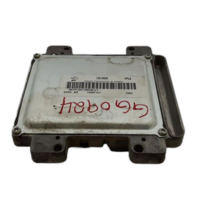
- Failing Powertrain Control Module (PCM) (Rare) — The internal driver circuit (MOSFET transistor) within the PCM that controls coil 'G' fails due to thermal stress or internal shorts. Consider this only after ruling out wiring and coils.
- PCM Software/Calibration Issue (Rare) — Outdated PCM software contains a calibration error misinterpreting normal voltage fluctuations as a fault. TSBs or software updates resolve this without parts replacement.
Symptoms
- Engine Misfire or Rough Idle — Cylinder 'G' fails to fire, causing the engine to run unevenly. This feels like a stumble, vibration, or shudder at idle or under load.
- Reduced Engine Power — The vehicle feels sluggish and struggles to accelerate, especially when climbing hills.
- Decreased Fuel Economy — The engine runs inefficiently, burning more fuel to produce the same power.
- Rotten Egg Smell from Exhaust — Unburned fuel enters the exhaust, overheating the catalytic converter and producing a distinct sulfur smell. Indicates imminent catalyst failure.
- Check Engine Light is On (also visible on scanner) — The PCM illuminates the MIL immediately. The light flashes if the misfire is severe enough to damage the catalytic converter.
Diagnostic Flowchart
Tap your situation to follow the diagnostic path that matches what you're seeing on this code.
Common Fixes & Costs
- Replace Ignition Coil 'G' — Parts: $50-$120, Labor: $100-$150, ~0.8 hr book time (DIY)
- Repair Damaged Wiring or Connector — Parts: $20-$80, Labor: $150-$600, ~2.5 hr book time (Intermediate)
- Replace Spark Plug for Cylinder 'G' — Parts: $10-$30, Labor: $50-$150, ~0.5 hr book time (DIY)
- Update PCM Software — Parts: $0, Labor: $100-$250, ~1 hr book time (Professional)
- Replace Powertrain Control Module (PCM) — Parts: $800-$1,500, Labor: $150-$300, ~1.5 hr book time (Professional)
DIY vs Professional
- Replace Ignition Coil & Spark Plug 🟢 Beginner
Tools: Socket set, spark plug socket, torque wrench, dielectric grease. - Repair Damaged Wiring or Connector 🟢 Beginner
Tools: Multimeter, wire strippers, crimpers, heat shrink tubing, wiring diagrams. - Replace Powertrain Control Module (PCM) 🟢 Beginner
Tools: J2534 pass-through device, manufacturer diagnostic software, battery maintainer.
Used vs. New Parts: Buying Guide
When a used part is worth it: Used ignition coils are rarely recommended. A new aftermarket coil ($50-$80) makes the risk of a used part failing not worth the labor cost.
Donor-vehicle mileage cap: roughly under 50000 miles for the part to have meaningful remaining life.
Donor quality checklist:
- Verify exact part number match.
- Avoid coils showing oil leaks or heat-cracked plastic.
- Avoid parts from cars scrapped due to engine failure.
Decision logic:
- If A new OEM or quality aftermarket coil is under $100. → Buy new. The warranty and reliability are worth the cost.
- If The vehicle is >20 years old and the part is for temporary diagnosis. → A used coil from a salvage yard is acceptable.
Warranty tradeoff: Salvage yards offer 30-90 day warranties. New aftermarket coils offer 1-year to lifetime warranties. New OEM parts carry 1-2 year warranties.
Worst-case if a used part fails: $150-$300 if a used coil fails, requiring repeat labor and a new part.
What Happens If You Wait — Timeline
- 0-1 week: Check Engine Light illuminates. An intermittent stumble occurs at idle or initial acceleration. (MPG impact: 0-5%% · Added cost: $0)
- 1 week - 2 months: Misfire becomes consistent. Constant rough idle and shuddering under load. The MIL flashes during acceleration, warning of catalyst damage. (MPG impact: 5-15%% · Added cost: $50-$150 in wasted fuel.)
- 2-4 months: Unburned fuel melts the internal substrate of the catalytic converter. A 'rotten egg' smell is prominent. Severe power loss. (MPG impact: 15-25%% · Added cost: $1,500-$2,800 (Catalytic converter replacement required).)
- 4+ months: Catalytic converter completely clogs. Extreme exhaust backpressure causes stalling, overheating, and potential exhaust valve or piston ring damage. (MPG impact: >25%% · Added cost: $3,000-$5,000+)
Cost of Not Fixing It
- 0-1 month: Drop in fuel economy (5-15%), rough idle, and poor acceleration. Risk of stalling. (Added cost: Increased fuel consumption.)
- 1-6 months: Unburned fuel overheats and destroys the catalytic converter. Fouls oxygen sensors. (Added cost: $1500-$2800)
- 6+ months: Severe catalytic converter blockage causes engine backpressure and internal engine damage from un-lubricated cylinder walls ('cylinder wash'). (Added cost: $3000+)
Diagnosis Steps
- Read Codes and Check TSBs
Use an OBD-II scanner to confirm P2318 and check for related misfire codes (e.g., P0307). Note the cylinder letter ('G' usually corresponds to cylinder #7). Check manufacturer Technical Service Bulletins (TSBs) for known issues.
Tools: OBD-II Scanner (Beginner) - Swap the Ignition Coil
Swap the ignition coil from cylinder 'G' with a known good cylinder (like #1). Clear codes and test drive. If the code moves to the new cylinder (e.g., P2301), the coil is definitively dead.
Tools: Basic socket set (Beginner) - Perform a Visual Inspection
If the code did not move, inspect the wiring harness and connector for coil 'G'. Look for melted wires, chafing against metal brackets, rodent chew marks, or green corrosion on connector pins.
Tools: Flashlight (Beginner) - Check for Power at the Coil Connector
Disconnect the coil 'G' connector. Turn the ignition 'On' (engine off). Use a multimeter set to DC Volts to check for battery voltage (12.0V - 12.6V) at the power supply wire. No voltage indicates a blown fuse, bad relay, or broken power wire.
Tools: Multimeter (Intermediate) - Test the Control Circuit Wiring for Shorts
With ignition off, disconnect the coil and PCM connectors. Set the multimeter to Resistance (Ohms). Test continuity between the control wire's pin at the coil connector and a known good ground. A reading near 0 ohms confirms a direct short to ground in the harness. Infinite resistance ('OL') means the wire is not shorted.
Tools: Multimeter, Vehicle-specific wiring diagram (Advanced) - Verify the PCM Driver Signal
Reconnect the PCM. Connect a noid light to the control and power pins on the coil connector. Crank the engine. A flashing light confirms the PCM driver is working. No flash points to a failed PCM driver.
Tools: Noid light (Intermediate) - Advanced: Test Ignition Coil Resistance
Measure the resistance of the coil's primary windings (between positive and negative terminals). It should be 0.4 to 2.0 ohms. A reading of 0 ohms indicates an internal short. Compare to manufacturer specs.
Tools: Multimeter (Advanced) - Advanced: Analyze Live Data
Use an advanced scanner to monitor Mode $06 misfire counts for cylinder 7. A rapidly increasing count confirms the active fault.
Tools: Advanced OBD-II Scanner (Advanced) - Pro Tip: Analyze Primary Voltage Waveform
Connect an oscilloscope to the primary control circuit. A good waveform shows a sharp voltage drop to near zero, followed by a 200-400V inductive kick. A P2318 fault often shows voltage stuck near 0V with no inductive kick, confirming a short to ground.
Tools: Oscilloscope, 10:1 or 20:1 Attenuator, Back-probe pins (Professional)
When This Code Triggers (Freeze-Frame Conditions)
- Engine Coolant Temp: 185-210°F (Engine at full operating temperature.)
- RPM: 1200-2800 RPM (During light to moderate acceleration or steady cruise.)
- Engine Load: 25-70% (Fault detected when the engine is under moderate load, not at idle.)
- Vehicle Speed: 25-60 mph (Occurs during city or highway driving rather than at a standstill.)
Related Codes
- P0307 — Cylinder 7 Misfire Detected. Appears alongside P2318 because the circuit fault prevents the spark plug from firing. P2318 explains WHY the misfire is happening.
- P0357 — Ignition Coil 'G' Primary/Secondary Circuit Malfunction. A general code for a fault in the same coil's circuit, triggered by low voltage, high voltage, or secondary side faults.
- P2319 — Ignition Coil 'G' Primary Control Circuit High. The opposite of P2318. Indicates an open circuit, broken wire, or poor ground causing higher-than-expected voltage.
- P0300 — Random/Multiple Cylinder Misfire. Appears if the underlying electrical issue (bad relay, poor ground) affects multiple ignition coils intermittently.
Climate & Environmental Factors
- High Heat: Prolonged exposure to engine heat makes wiring insulation brittle, leading to cracks and shorts. Common on HEMI engines where harnesses route near exhaust manifolds.
- Humidity and Moisture: Moisture and winter road salt corrode connector pins, creating high resistance or bridging terminals to cause a short circuit.
- Extreme Cold: Cold weather encourages rodents to nest in warm engine bays, where they chew through wiring insulation and cause direct shorts.
- Vibration: Engine vibration chafes wires against brackets. Over time, this wears through insulation and shorts the wire to ground.
How to Talk to a Mechanic About This Code
Say this: "I have a check engine light with a P2318 code, indicating an ignition coil G primary circuit low fault. Please test the circuit and swap the coil to confirm the issue before recommending parts."
Signals you understand the code is electrical. Directs the mechanic to perform proper diagnostics (coil swap, wiring test) rather than blindly replacing the coil.
Avoid saying:
- 'My check engine light is on, can you just fix it?'
- 'I think I need a new ignition coil.'
- 'Just do whatever it takes.'
Questions to ask before authorizing the repair:
- Did you swap the coil, and did the fault code move to the new cylinder?
- If the coil was good, did you test the control wire for a short to ground? What was the multimeter reading?
- Can you show me the damaged section of the wiring harness before I approve the repair?
Where to Take It: Dealer vs Independent vs Chain
- Dealer:
Best for: Vehicles under powertrain warranty., Mercedes-Benz models where P2318 indicates a CAN bus/shifter issue., Complex electrical issues requiring PCM replacement and programming.
Downsides: Highest labor rates., Defaults to expensive module replacement instead of wiring repair. (Typical cost: +50% vs. baseline) - Independent Shop:
Best fit for most vehicles. A competent independent mechanic easily diagnoses and repairs common P2318 causes (bad coil, damaged wire) for a reasonable price.
Best for: Out-of-warranty vehicles., Standard diagnosis (coil swap, wiring test) and part replacement.
Downsides: Quality varies; look for ASE certification in electrical diagnostics. (Typical cost: +0% vs. baseline) - Chain Shop:
AVOID for diagnosis.
Best for: Only if you diagnosed a bad coil yourself and need labor to install it.
Downsides: Technician skill varies dramatically; not recommended for electrical diagnosis., High pressure to upsell unrelated services. (Typical cost: -10% vs. baseline)
When to Walk Away From the Repair
If the estimated repair cost exceeds 40-50% of the car's private-party value, seriously consider selling or trading in the vehicle.
- Car worth $5000, fix is $350: Fix it. A coil or simple wiring repair is a minor cost relative to the car's value.
- Car worth $4000, fix is $1800: Borderline. Implies a PCM replacement. Get a second opinion. Repair cost approaches 45% of the car's value.
- Car worth $2500, fix is $1800: Walk away. Repair cost is 72% of the vehicle's value. Not economically sensible.
What Scan Tool You Need for This Code
Minimum: A basic OBD-II code reader to read and clear codes. A basic socket set and multimeter are more important for P2318 diagnosis.
Basic readers cannot view live Mode $06 misfire counts, which help confirm the specific misfiring cylinder before swapping parts.
Budget: BlueDriver Pro (~$119) — Reads/clears codes, provides freeze-frame data, and displays live engine RPM.
Mid-range: Innova 5610 / Foxwell NT510 Elite (~$300) — Accesses Mode $06 data to show raw misfire counts per cylinder, confirming the misfire location.
Professional: Autel MaxiCOM MK808 (~$450) — Provides full bidirectional control to command specific components. Overkill for a one-time P2318 diagnosis.
Rent vs buy: For a one-time diagnosis, use the free 'Loan-A-Tool' program from auto parts stores. Buy a scanner only if you regularly repair cars.
How to Clear the Code After You Fix It
- Use an OBD-II scan tool to clear the diagnostic trouble codes.
- Ensure the fuel tank is between 25% and 75% full.
- Perform a complete OBD-II drive cycle to allow readiness monitors to run.
Drive cycle (~30 minutes): Start engine cold. Idle 3 minutes with A/C on. Accelerate to 55 mph and hold for 5 minutes. Decelerate to 20 mph without braking, then accelerate back to 55 mph. Drive 20 minutes in mixed traffic with four 30-second idle periods.
Readiness monitors affected: Catalyst Monitor, Oxygen Sensor Monitor, Misfire Monitor
Before emissions retest: drive at least 100 miles to fully set monitors.
Watch out for:
- Clearing the code resets all readiness monitors to 'Not Ready', guaranteeing an emissions test failure until a drive cycle is completed.
- Disconnecting the battery does not clear codes from all modules.
- The code returns immediately if the electrical short is not repaired.
Will This Fail Emissions / State Inspection?
Yes — this code typically fails an OBD-II emissions inspection.
- California: An active P2318 code is an automatic smog check failure. A complete drive cycle must set all readiness monitors before re-testing.
- New York: Any active Check Engine Light fails the NYS inspection. Clearing the code right before the test fails due to 'Not Ready' monitors.
- Texas: In emissions-testing counties, an illuminated Check Engine Light is an automatic fail.
Most Commonly Affected Vehicles
- Ford F-150, Mustang, Explorer (2004-2014) — Models with 5.4L 3V and 4.6L 2V V8 engines have high rates of ignition coil failure (Motorcraft DG-511).
- Dodge/Ram/Chrysler 1500, 2500, 300, Charger (2005-2013) — 5.7L HEMI V8s experience this code due to coil failure or wiring harnesses chafing near hot exhaust components.
- Jeep Grand Cherokee (2005-2013) — 5.7L HEMI models suffer identical wiring harness heat damage and coil failures as Dodge/Chrysler counterparts.
- Chevrolet/GMC Silverado, Sierra, Tahoe (2007-2014) — V8 models experience failed coils or wiring issues. Always check for PCM software update TSBs regarding misfire detection.
- Volkswagen/Audi Jetta, Passat, A4 (2008-2018) — Brittle wiring and connector degradation cause ignition coil circuit codes as these vehicles age.
- Mercedes-Benz S-Class, E-Class, C-Class (2000-2007) — CRITICAL: P2318 indicates a CAN Bus communication failure with the Electronic Selector Lever Module (gear shifter), NOT an ignition fault.
- Nissan/Infiniti Titan, Armada, QX56 (2004-2015) — 5.6L V8 engines set this code due to coil failure or issues with the main power distribution module (IPDM) failing to provide correct power.
Manufacturer-Specific Notes
- Mercedes-Benz: On early 2000s models, P2318 is triggered by a CAN bus communication failure with the electronic gear shifter, completely unrelated to the ignition system. Diagnosis must focus on the CAN network.
- Chrysler/Dodge/Jeep: HEMI engine ignition coil harnesses route dangerously close to exhaust manifolds. The plastic conduit turns brittle, allowing wires to chafe and short to ground. Inspecting the rear cylinder head harness is mandatory.
- Ford: Triton V8 engines (5.4L 3V) frequently fail coil-on-plug units. Always use OEM Motorcraft coils (DG-511) to prevent aftermarket compatibility issues.
Real Owner Stories
2008 Dodge Ram 1500 5.7L HEMI at 135K miles
Check engine light illuminated with a rough idle and hesitation from a stop. Codes pulled were P2318 and P0307.
What they tried:
- Replaced the spark plug for cylinder 7, but the misfire remained.
- Swapped the ignition coil from cylinder 7 to cylinder 1.
- Cleared codes and test drove. The code changed to P2301 (Ignition Coil 'A' Primary Control Circuit Low).
Outcome: Replaced the faulty ignition coil with a new OEM part for $65. The 15-minute repair cleared the codes permanently.
Lesson: Always swap the coil to another cylinder before buying parts. This free, 15-minute diagnostic step definitively proves if the coil is the culprit.
2006 Ford F-150 5.4L 3V at 160K miles
Intermittent rough idle, solid check engine light for P2318, and severe power loss.
What they tried:
- Replaced the ignition coil on cylinder 7 with a new aftermarket part. Code returned within a day.
- Exchanged the new part assuming it was defective. Code returned again.
- Took the truck to an independent shop for electrical diagnosis.
Outcome: A mechanic found the wiring harness running over the passenger-side cylinder head had become brittle. The insulation on coil #7's control wire chafed and shorted to the engine block. A $250 wiring repair fixed the issue.
Lesson: If a new part doesn't fix a circuit code, the problem is in the wiring. Inspect the harness in high-heat areas before replacing more components.
2004 Mercedes E55 AMG at 211K miles
Car intermittently entered limp mode with the gear display vanishing from the dashboard on short trips. Codes P2318 and P240C were present.
What they tried:
- Suspected the ignition system based on the generic P2318 definition.
- Researched Mercedes-specific forums and learned P2318 indicates a CAN bus communication timeout from the Electronic Selector Lever Module (gear shifter).
Outcome: Traced the problem to a faulty internal circuit board in the gear selector module (N15/5). Replaced and programmed the module to the VIN, resolving the limp mode.
Lesson: For early 2000s Mercedes-Benz models, P2318 has nothing to do with the ignition system. It indicates a CAN bus failure with the gear shifter. Always verify manufacturer-specific code definitions.
How to Prevent This Code From Triggering
- Apply Dielectric Grease to Coil Boots (Whenever replacing coils or spark plugs) — Seals out moisture to prevent corrosion on the high-voltage connection and stops the boot from seizing to the spark plug porcelain.
- Inspect and Secure Wiring Harnesses (Every 12,000 miles) — Ensures harnesses are not rubbing against sharp metal edges or hot exhaust components. Zip-tie loose wires to prevent chafing and shorts.
- Replace Spark Plugs at Recommended Intervals (Every 60,000-100,000 miles) — Worn spark plug electrodes widen the gap, requiring higher voltage to spark. This strains the ignition coil, causing it to overheat and fail prematurely.
- Keep Engine Grounds Clean and Tight (Every 30,000 miles) — A loose or corroded main ground strap creates resistance, causing the PCM to incorrectly read control circuit voltages.
Frequently Asked Questions
How do I find which cylinder is 'G'?
Ignition coil 'G' corresponds to the 7th cylinder in the engine's firing order. On most V8 engines (Ford, GM, Dodge), this is cylinder #7. Consult a vehicle-specific firing order diagram to confirm the layout for your exact engine.
What is the most common misdiagnosis for P2318?
A common mistake is replacing the ignition coil and spark plug without performing electrical tests. Swapping the coil to another cylinder is a free, 15-minute test to confirm if the coil is the true cause. If the code doesn't move, the problem is in the wiring.
I replaced the ignition coil, but the code came back. What now?
If the P2318 code returns on the same cylinder after a coil replacement, the coil is not the issue. You must diagnose the wiring harness for a short to ground or check the connector's integrity. Only after ruling out wiring should you suspect a failing PCM.
Can a bad spark plug cause a P2318 code?
No, a bad spark plug will not cause a P2318 code, as this code specifically monitors the coil's low-voltage primary circuit. However, a faulty coil will quickly foul the spark plug. Always replace the spark plug on the affected cylinder when installing a new coil.
How do I tell the difference between P2318, P2319, and P0357?
P2318 (Circuit Low) indicates a short to ground or a component drawing excessive current. P2319 (Circuit High) points to an open wire or a disconnected ground. P0357 is a general circuit malfunction code that can be triggered by either condition.
Why is the repair cost for a PCM so high?
The PCM is a complex computer that requires VIN-specific software programming to function. This programming requires specialized dealer-level tools and software subscriptions. The combination of expensive hardware and specialized labor drives the cost to $800-$1,500.
Can I just clear the P2318 code and keep driving?
Clearing the code does not fix the underlying electrical short, so the check engine light will return immediately. Driving with this code causes a continuous misfire that dumps raw fuel into the exhaust. This destroys your catalytic converter, turning a $100 repair into a $2,000+ nightmare.
Key Takeaways
- P2318 indicates a low-voltage fault in the primary control circuit for ignition coil 'G' (cylinder 7), caused by a short to ground or a failed coil.
- Swap the cylinder 7 ignition coil with cylinder 1 to instantly confirm if the coil is dead before spending $50-$120 on replacement parts.
- Driving with an active P2318 misfire dumps raw fuel into the exhaust, destroying a $1,500+ catalytic converter within weeks.
- If a new coil does not clear the code, visually inspect the wiring harness for heat damage or rodent chews before suspecting a $1,000 PCM failure.
- Mercedes-Benz owners must check the CAN bus network first, as P2318 frequently flags a failed electronic gear shifter module rather than an ignition issue.
Shop the Parts Behind P2318
Below are the parts most often responsible for code P2318, ranked by how frequently each one is the actual culprit (per the diagnosis above). Tap any to see what we have for your vehicle.



The information in this article is provided for general reference and educational purposes only. Vehicle specifications, procedures, and part compatibility can vary by production date, trim level, and region. Always consult your vehicle's factory service manual and verify part numbers before purchasing or performing repairs. Safety-critical components such as airbags, seat belts, and braking systems should be installed by a qualified professional.
- 🧭 Diagnostic Flowchart
- 🛍️ Shop This Part
- What Does P2318 Mean?
- Can I Drive With P2318?
- Common Causes
- Symptoms
- Common Fixes & Costs
- DIY vs Professional
- Used vs. New Parts: Buying Guide
- What Happens If You Wait — Timeline
- Cost of Not Fixing It
- Diagnosis Steps
- When This Code Triggers (Freeze-Frame Conditions)
- Related Codes
- Climate & Environmental Factors
- How to Talk to a Mechanic About This Code
- Where to Take It: Dealer vs Independent vs Chain
- When to Walk Away From the Repair
- What Scan Tool You Need for This Code
- How to Clear the Code After You Fix It
- Will This Fail Emissions / State Inspection?
- Most Commonly Affected Vehicles
- Manufacturer-Specific Notes
- Real Owner Stories
- 2008 Dodge Ram 1500 5.7L HEMI at 135K miles
- 2006 Ford F-150 5.4L 3V at 160K miles
- 2004 Mercedes E55 AMG at 211K miles
- How to Prevent This Code From Triggering
- Frequently Asked Questions
- How do I find which cylinder is 'G'?
- What is the most common misdiagnosis for P2318?
- I replaced the ignition coil, but the code came back. What now?
- Can a bad spark plug cause a P2318 code?
- How do I tell the difference between P2318, P2319, and P0357?
- Why is the repair cost for a PCM so high?
- Can I just clear the P2318 code and keep driving?
- Key Takeaways
- 🎟️ Get 5% Off