

OBD-II Code P2322: Ignition Coil 'H' Primary Control Circuit High
What P2322 means, why it triggers, and how to fix it
- Code P2322 indicates the primary control circuit for ignition coil 'H' (typically cylinder 8) is stuck at high voltage, preventing the spark plug from firing.
- Swap the ignition coil from cylinder 8 to cylinder 1; if the code changes to P2300, the coil is definitively the failed component.
- Stop driving immediately if the Check Engine Light flashes, as the resulting raw fuel dump destroys a $1,500 catalytic converter in under 50 miles.
- If a new coil does not clear the code, use a multimeter to test the 2-wire connector for a broken 12V power supply or a shorted ground wire.
What Does P2322 Mean?
Your vehicle's Powertrain Control Module (PCM) detects a high-voltage electrical fault in the ignition system for cylinder 'H' (typically cylinder 8 on a V8 engine). The ignition coil is not receiving the correct ground signal to create a spark, preventing fuel combustion and causing a direct engine misfire.
Technical definition: The SAE/OBD-II definition is Ignition Coil 'H' Primary Control Circuit High. The PCM monitors the low-voltage control wire used to command the ignition coil. It expects voltage to switch between battery voltage (high) and near zero (low) as it pulses the coil. A 'Circuit High' fault means the voltage is stuck high, indicating an open ground, a short to voltage, or a failed internal coil winding.
Can I Drive With P2322?
No — Do Not Drive. Driving with this code causes engine stalling, reduced power, and destroys your catalytic converter. A severe misfire dumps raw fuel into the exhaust, which overheats and melts the catalytic converter substrate—a secondary repair costing between $800 and $2,500. Stop driving immediately if the Check Engine Light is flashing.
Common Causes
- Faulty Ignition Coil (Very Common) — An internal short or open circuit inside the ignition coil's primary winding is the most frequent cause, locking the control circuit voltage high and preventing the coil from firing.
- Damaged Wiring or Connector (Common) — Engine heat, vibration, or rodents damage the wiring harness, causing a short to voltage on the control wire. Corroded connector pins also create an open circuit.
- Oil or Coolant Leak (Less Common) — A leaking valve cover gasket allows engine oil to fill the spark plug tube. This oil saturates the ignition coil boot and connector, causing a short circuit.
- Worn or Fouled Spark Plug (Less Common) — A severely worn spark plug increases secondary circuit resistance. While this is a secondary fault, it overheats and destroys the ignition coil, leading to a primary circuit failure.
- Faulty Powertrain Control Module (PCM) (Rare) — The PCM's internal driver circuit for coil 'H' shorts out, failing to pull the circuit to ground. This requires module replacement and reprogramming.
- Blown Ignition Fuse or Relay (Rare) — A blown fuse cuts power to the ignition system. However, this typically affects an entire bank of coils rather than isolating the fault to cylinder 'H'.
Symptoms
- Rough Idle and Stalling — The engine shakes violently when stopped in gear and stalls unexpectedly at low speeds.
- Sluggish Acceleration — The vehicle hesitates and stumbles when pressing the gas pedal due to the dead cylinder.
- Fuel Smell from Exhaust — A strong odor of raw gasoline emits from the tailpipe because unburned fuel from cylinder 'H' passes straight through the exhaust.
- Reduced Fuel Economy — Fuel efficiency drops by 10-25% as the engine dumps wasted fuel into the dead cylinder.
- Check Engine Light is On or Flashing (also visible on scanner) — The light illuminates immediately. A flashing light indicates a severe, catalyst-damaging misfire.
Diagnostic Flowchart
Tap your situation to follow the diagnostic path that matches what you're seeing on this code.
Common Fixes & Costs
- Replace Ignition Coil 'H' — Parts: $30-$120, Labor: $50-$110, ~0.8 hr book time
- Repair Wiring or Replace Connector — Parts: $10-$50, Labor: $125-$250, ~1.5 hr book time
- Replace Spark Plugs — Parts: $64-$240, Labor: $100-$250, ~1.8 hr book time
- Replace Valve Cover Gasket — Parts: $30-$90, Labor: $200-$600, ~3 hr book time
- Replace Powertrain Control Module (PCM) — Parts: $500-$1200, Labor: $150-$300, ~1.5 hr book time
DIY vs Professional
- Replace Ignition Coil 'H' 🟢 Beginner
Tools: Socket set (8mm or 10mm), dielectric grease. - Repair Wiring or Replace Connector 🟢 Beginner
Tools: Wire strippers, crimpers, heat shrink tubing, multimeter. - Replace Spark Plugs 🟢 Beginner
Tools: Spark plug socket, ratchet with extensions, torque wrench, dielectric grease. - Replace Valve Cover Gasket 🟢 Beginner
Tools: Extensive socket set, torque wrench, gasket scraper, sealant. - Replace Powertrain Control Module (PCM) 🟢 Beginner
Tools: Professional scan tools for programming.
Used vs. New Parts: Buying Guide
When a used part is worth it: Buying a used ignition coil rarely makes sense. The $20 savings do not outweigh the risk of premature failure and unknown remaining lifespan.
Donor-vehicle mileage cap: roughly under 40000 miles for the part to have meaningful remaining life.
Donor quality checklist:
- Only select a coil from a documented low-mileage vehicle.
- Visually inspect the boot for cracks and the pins for corrosion.
- Ensure the part number is an exact match, as manufacturers frequently update coil designs mid-generation.
Decision logic:
- If The cost of a new OEM or premium aftermarket coil is under $100. → Always buy new. The reliability and warranty are worth the extra cost.
- If Your vehicle is very old and you are on an extremely tight budget. → A used coil is a temporary option, but expect a significantly shorter life.
- If The part has a known high failure rate for your vehicle model. → Favor a new OEM part with an updated revision number.
Warranty tradeoff: Salvage yards offer a 30-day warranty. New aftermarket parts offer 1-year to lifetime warranties. New OEM parts carry a 1-2 year warranty.
Worst-case if a used part fails: $100-$250. If the used part fails, you pay for a replacement part plus the labor cost to install it again.
What Happens If You Wait — Timeline
- 0-1 week: Check Engine Light illuminates. A slight, intermittent rough idle is noticeable on cold starts. No major performance loss yet. (MPG impact: 1-5%% · Added cost: $0-20 in wasted fuel.)
- 1 week - 2 months: Rough idle becomes constant. Noticeable hesitation during acceleration. The Check Engine Light flashes during heavy acceleration. (MPG impact: 5-15%% · Added cost: $50-150 in wasted fuel. Minor stress on catalytic converter begins.)
- 2-4 months: Constant flashing Check Engine Light. Unburned fuel continuously dumps into the exhaust, causing the catalytic converter to overheat and glow red. Engine stalls at stops. (MPG impact: 15-25%% · Added cost: $1200-$2800 as the catalytic converter's internal substrate melts and fails.)
- 4+ months: Catalytic converter is completely clogged, creating extreme exhaust backpressure. Unburned fuel washes oil from cylinder walls, causing accelerated piston ring wear. (MPG impact: >25%% · Added cost: $3000+ for catalytic converter replacement and internal engine repairs.)
Cost of Not Fixing It
- 0-1 month: Noticeable drop in fuel economy (10-25%), rough idle, and poor acceleration. High risk of stalling in traffic. (Added cost: $20-$60 in wasted fuel.)
- 1-6 months: Catalytic converter failure due to overheating from unburned fuel. The substrate melts and clogs the exhaust. (Added cost: $1200-$2800 for catalytic converter replacement.)
- 6+ months: Internal engine damage. Unburned fuel washes lubricating oil off cylinder walls, causing accelerated wear to piston rings. (Added cost: $3000+ for extensive engine rebuilds.)
Diagnosis Steps
- Read Codes and Freeze Frame Data
Use an OBD-II scanner to confirm P2322. Look for companion misfire codes like P0308. Note the freeze frame data to see engine conditions when the fault occurred.
Tools: OBD-II Scanner (Beginner) - Perform a Coil Swap Test
Swap the ignition coil from cylinder 'H' (usually #8) with a known good coil from another cylinder (e.g., #1). Clear the codes and run the engine. If the code moves to the new cylinder (e.g., P2300), the coil is definitively bad. If P2322 returns, the coil is fine; the issue is wiring or the PCM.
Tools: Basic socket set (8mm or 10mm) (Beginner) - Visually Inspect the Ignition Circuit
Inspect the wiring harness leading to coil 'H' for chafing, melted insulation, or rodent damage. Disconnect the coil and check the pins for green corrosion or pushed-back terminals. Look for oil pooled in the spark plug well.
Tools: Flashlight (Beginner) - Test Coil Connector Power and Ground
Disconnect the coil. With the key 'On' (engine off), use a multimeter to verify 12V at the power supply wire. Next, check the control wire for a short to ground by testing continuity to the chassis; it should read infinite resistance (OL).
Tools: Multimeter (Intermediate) - Measure Coil Primary Resistance
Set your multimeter to Ohms (Ω). Measure resistance between the positive and negative terminals on the coil itself. A healthy coil reads between 0.4 and 2.0 Ohms. A reading of zero indicates a short; OL indicates an open internal winding.
Tools: Multimeter (Intermediate) - Inspect the Spark Plug
Remove the spark plug from cylinder 'H'. Check for a melted electrode, heavy carbon fouling, or a cracked ceramic insulator. Replace the plug if it shows severe wear.
Tools: Spark plug socket, ratchet, extension (Intermediate) - Check PCM Control Signal Continuity
Disconnect the PCM and the coil. Measure resistance on the control wire from the PCM connector to the coil connector. It should be less than 1 Ohm. If it reads OL, the wire is broken inside the harness.
Tools: Multimeter, vehicle-specific wiring diagram (Advanced) - Analyze the Primary Waveform
Connect an oscilloscope to the coil control wire. A normal waveform shows voltage dropping to near zero (charging), then a sharp vertical spike (firing). A flat high-voltage line confirms the PCM is not grounding the circuit.
Tools: Oscilloscope with attenuator (Advanced) - Confirm PCM Failure
If the coil, spark plug, and wiring test perfectly, but the oscilloscope shows no ground pulse from the computer, the PCM's internal coil driver has failed. Take the vehicle to a diagnostic technician for module replacement and programming.
Tools: Advanced scan tools, professional expertise (Advanced)
When This Code Triggers (Freeze-Frame Conditions)
- Engine Coolant Temp: 180-200°F (The fault is most often detected once the engine reaches full operating temperature, as heat expands damaged wiring or failing internal coil components.)
- RPM: 1500-2500 (The code frequently sets during steady-state cruising or light acceleration when ignition demand is consistent.)
- Engine Load: 30-60% (Moderate engine load requires a stronger spark, exposing weaknesses in the primary ignition circuit.)
- Vehicle Speed: 35-55 mph (These speeds correspond to driving conditions where the PCM actively monitors misfire and coil feedback data.)
Related Codes
- P0308 — Cylinder 8 Misfire Detected. P2322 is the electrical cause, and P0308 is the mechanical effect. Fixing the high voltage fault in the coil circuit resolves the misfire.
- P0300 — Random/Multiple Cylinder Misfire. If present with P2322, the electrical short is intermittently affecting the shared ground or power supply for other coils.
- P0358 — Ignition Coil H Primary/Secondary Circuit Malfunction. P0358 is a general fault for either the low-voltage or high-voltage side. P2322 specifically isolates the fault to high voltage on the primary control circuit.
- P2323 — Ignition Coil 'H' Primary Control Circuit Low. The companion code indicating a short to ground, whereas P2322 indicates an open circuit or short to power.
Climate & Environmental Factors
- High Humidity and Water Intrusion: Moisture penetrates weathered connector seals, causing corrosion and shorts. Several manufacturer TSBs note water dripping from the cowl directly onto rear ignition coils.
- Extreme Cold: Freezing temperatures make plastic connectors and wiring insulation brittle, causing them to crack and short out when subjected to engine vibration.
- High Altitude: Reduced air density above 5,000 feet decreases the insulating properties of air, increasing the likelihood of external spark flashover and stressing aging coils.
How to Talk to a Mechanic About This Code
Say this: "I have a P2322 code and a misfire on cylinder 8. I'd like a diagnosis to confirm if it's the coil, the spark plug, or the wiring. Can you start with a coil swap to a different cylinder to see if the fault follows the coil?"
This signals you understand logical diagnostic steps and prevents a shop from immediately replacing parts without testing.
Avoid saying:
- 'Just fix whatever's wrong'
- 'My check engine light is on, can you look at it?'
- 'Replace my ignition coils'
Questions to ask before authorizing the repair:
- Did you confirm the fault moved to the new cylinder during the swap test?
- If the coil swap didn't move the fault, what were the results of the wiring tests?
- Can you show me the damaged part or wiring before you replace it?
- What is your warranty on this specific repair, including both parts and labor?
Where to Take It: Dealer vs Independent vs Chain
- Dealer:
Best for: Vehicles still under powertrain or emissions warranty, Complex electrical issues on German brands (BMW, VW) where a bad coil damages the ECU, Confirmed PCM failure requiring programming
Downsides: Highest labor rate ($150-$250/hr), May recommend replacing an entire $800 harness when a $25 pigtail splice works (Typical cost: +50% vs. baseline) - Independent Shop:
Best fit for most cases. A reputable independent shop easily diagnoses a bad coil, plug, or wiring issue.
Best for: Out-of-warranty vehicles where cost is a factor, Standard diagnosis of common codes like P2322
Downsides: Quality varies widely; vet the shop via reviews and ASE certifications, May lack expensive, manufacturer-specific diagnostic tools for complex PCM issues (Typical cost: +0% vs. baseline) - Chain Shop:
Use with caution. Acceptable for a free initial code scan, but avoid for complex wiring or PCM diagnosis.
Best for: Simple, high-turnover jobs like oil changes and brakes
Downsides: Technician skill is inconsistent; lacks deep electrical diagnostic experience, Incentivized to sell parts rather than perform detailed diagnostics (Typical cost: -10% vs. baseline)
When to Walk Away From the Repair
If the estimated repair cost exceeds 40-50% of the car's Kelley Blue Book (KBB) private-party value, pause and consider alternatives.
- Car worth $5000, fix is $200: Fix it. The cost for a common coil or wiring repair is well below the threshold.
- Car worth $3000, fix is $1600: Walk away. A worst-case scenario (PCM replacement) is not economical for this vehicle's value.
- Car worth $10000, fix is $3500: Borderline. If the car needs a new catalytic converter due to the misfire, get a second opinion before authorizing.
What Scan Tool You Need for This Code
Minimum: A basic code reader that displays codes, clears codes, and shows freeze frame data.
A $20 reader only shows 'P2322'. You need freeze frame data and live misfire counters to verify the fix.
Budget: BlueDriver Pro Scan Tool (~$99) — Connects via Bluetooth. Reads/clears codes, shows freeze frame data, and graphs live data. Reads ABS and transmission codes.
Mid-range: Innova 5610 (~$350) — Offers full system diagnostics, live data graphing, and bidirectional controls useful for advanced testing.
Professional: Autel MaxiCOM MK808 (~$500) — Professional-grade tablet with full bidirectional control to command specific modules. Essential for diagnosing a faulty PCM, but overkill for DIY.
Rent vs buy: If this is a one-time fix, use the free loaner tool program at AutoZone or O'Reilly Auto Parts. Buy a scanner only if you perform your own repairs regularly.
How to Clear the Code After You Fix It
- Reconnect battery (if disconnected for repair).
- Use an OBD-II scan tool to clear the P2322 code and any related misfire faults.
- Perform a complete OBD-II drive cycle to reset readiness monitors.
Drive cycle (~30 minutes): Start the engine cold and idle for 3 minutes. Drive in stop-and-go traffic for 15 minutes. Drive at a steady highway speed (55 mph) for 10 minutes. Allow the vehicle to cool down completely.
Readiness monitors affected: Catalyst (CAT) monitor, Oxygen (O2) sensor monitor, Misfire monitor
Before emissions retest: drive at least 100 miles to fully set monitors.
Watch out for:
- Clearing the code resets readiness monitors to 'Not Ready,' causing an automatic emissions test failure until driven.
- Disconnecting the battery does not clear the code from permanent memory on modern vehicles.
- The code returns immediately if the underlying electrical short has not been repaired.
Will This Fail Emissions / State Inspection?
Yes — this code typically fails an OBD-II emissions inspection.
- California: Fails smog check if the Check Engine Light is on. California allows at most one 'Not Ready' monitor for gasoline vehicles 2001 and newer.
- New York: An illuminated Check Engine Light results in an automatic NYS inspection failure.
- Texas: Automatically fails in the 17 emissions-testing counties. Requires 50-100 miles of driving to reset monitors before a re-test.
Most Commonly Affected Vehicles
- Dodge Ram 1500 (2009-2018) — V8 Hemi engines frequently log this code on cylinder 8. Ensure the correct coil part number is used for 2013-2014 models due to mid-cycle design changes.
- Ford F-150 (2004-2010) — The 5.4L 3V Triton V8 is notorious for ignition system issues. Spark plugs on these models are difficult to remove and frequently break.
- Jeep Grand Cherokee (2011-2019) — Models equipped with the 5.7L Hemi V8 experience identical coil and wiring faults as the Dodge Ram.
- Chevrolet Silverado 1500 (2014-2021) — Subject to TSBs PIP5147A and 21-NA-149 regarding water intrusion in coil connectors and harness chafing against the ECM bracket.
- Volkswagen Jetta, GTI (2010-2015) — On VW/Audi 2.0T engines, 'H' corresponds to the 8th coil in the manufacturer's designated sequence, not necessarily cylinder 8.
- BMW V8 Models (N63 Engine) (2008-2017) — Prone to ignition coil failures. A shorted coil on these models frequently damages the DME (ECU), turning a $100 repair into a $1,500 repair.
- Chrysler 300 (2005-2014) — Hemi V8-equipped models are highly susceptible to ignition coil and wiring faults triggering this code.
- Mercedes-Benz V8 Models (E550, S550) (2007-2014) — Susceptible to age-related coil and wiring harness degradation that logs primary circuit faults.
Manufacturer-Specific Notes
- Chrysler/Dodge/Jeep: On 5.7L Hemi engines, a persistent misfire code that doesn't resolve with a new coil or plug is often an early sign of a failing valve lifter or worn camshaft. While this is a mechanical problem, the resulting rough running triggers various ignition codes.
- Ford: TSB 06-17-8 notes that water from the cowl or A/C system drips directly onto the rear engine coils, causing severe corrosion and misfires. Always check for water intrusion before replacing parts.
- Chevrolet/GMC: TSB 21-NA-149 addresses engine wire harness chafing on 2019-2022 models. The harness rubs against the ECM bracket or shock tower, causing shorts that trigger P2322. The fix involves repairing the wire and rerouting the harness.
- BMW: A short circuit in an ignition coil's primary control wire frequently damages the engine computer (DME). The DME sets a fault for 'relay ignition and injectors, activation: line disconnection' as it shuts down the circuit to protect itself.
Real Owner Stories
2013 Dodge Ram 1500 5.7L Hemi at 115K miles
Check engine light illuminated with a rough idle. Codes P2322 and P0308 were present.
What they tried:
- Swapped the ignition coil from cylinder 8 to cylinder 2.
- Cleared codes and drove the truck.
- The code returned as P2305 (Ignition Coil 'B' Primary Control Circuit High) and P0302 (Cylinder 2 Misfire).
Outcome: The problem followed the coil, confirming the original coil from cylinder 8 was faulty. Replaced the single ignition coil for $55. The repair took 15 minutes and permanently cleared the codes.
Lesson: Always perform the free coil swap test before buying parts. It definitively confirms if the coil is the culprit, saving time and money.
2008 Ford F-150 5.4L Triton at 140K miles
Constant misfire with a flashing check engine light. Code P2322 was stored.
What they tried:
- Replaced the ignition coil on cylinder 8. The code returned immediately.
- Replaced the spark plug, but P2322 persisted.
- Inspected the wiring harness and found cracked, brittle insulation near the connector.
Outcome: Spliced in a new $25 connector pigtail (Motorcraft WPT-931). The exposed wire had been shorting to a nearby ground. The misfire was resolved, but the owner wasted $80 on an unneeded coil.
Lesson: If a new part doesn't fix the code, the problem is in the circuit. A thorough visual inspection of the wiring is critical on high-mileage vehicles.
2015 Chevy Silverado 1500 at 75K miles
Engine ran rough and threw code P2322 immediately after a heavy rainstorm.
What they tried:
- Took the truck to an independent shop.
- Mechanic noticed moisture inside the coil connector and spark plug well.
- Referenced TSB PIP5147A regarding water intrusion.
Outcome: The mechanic dried the connector, applied dielectric grease to the weather seal, and cleared the code. The repair cost one hour of diagnostic labor ($120).
Lesson: If a fault appears after a car wash or rainstorm, moisture intrusion is the likely cause. Always check manufacturer TSBs for known water leak issues.
How to Prevent This Code From Triggering
- Replace Spark Plugs at Recommended Intervals (Every 30,000 to 100,000 miles, per manufacturer) — Worn spark plugs have a wider gap, requiring higher voltage to create a spark. This strains the ignition coil, causing it to overheat and fail prematurely.
- Address Engine Oil Leaks Promptly (As soon as noticed) — Leaking valve cover gaskets allow oil to saturate the ignition coil boot. Oil degrades the rubber and causes short circuits.
- Use Dielectric Grease on Coil Boots (When replacing coils or spark plugs) — A small amount of dielectric grease seals out moisture, prevents corrosion on the terminal, and stops the rubber boot from sticking to the plug.
- Inspect Engine Bay for Rodents (Seasonally, especially in colder months) — Rodents chew on soy-based wiring insulation. Using deterrents like peppermint oil or capsaicin-treated tape prevents costly harness damage.
Frequently Asked Questions
What does the 'H' in P2322 mean?
The 'H' refers to the eighth cylinder in the engine's firing sequence. On a V8 engine, this is typically labeled as cylinder #8. For engines with fewer cylinders, letters designate coils in a specific order defined by the manufacturer.
What is the most common misdiagnosis for P2322?
The most common mistake is immediately replacing the ignition coil without performing any diagnosis. Always perform a visual inspection and a free coil swap test before buying parts. This prevents wasting money on a coil when the issue is a broken wire.
Can I just replace the one bad ignition coil?
Yes, you can replace just the one faulty coil. However, if your car has over 80,000 miles, replace all coils and spark plugs simultaneously. This prevents identical failures on other cylinders in the near future.
Is it safe to drive with a flashing Check Engine Light?
No. A flashing Check Engine Light indicates a severe misfire dumping unburned fuel into the exhaust. This quickly overheats and destroys your catalytic converter, turning a $100 repair into a $2,000 nightmare.
Why did the code come back after I replaced the ignition coil?
If the code returns for the same cylinder after replacing the coil, the fault lies in the wiring or the PCM. Test the wiring harness for a short to voltage or an open circuit. If the wiring is intact, the PCM's internal driver has failed.
What is the difference between the primary and secondary ignition circuit?
The primary circuit is the low-voltage 12V side the PCM uses to trigger the coil. The secondary circuit is the high-voltage side (up to 40,000V) that creates the spark. Code P2322 specifically isolates the fault to the low-voltage primary control circuit.
Can a bad battery cause code P2322?
While a weak battery causes widespread electrical gremlins, it does not cause an isolated P2322 code. This code points to a fault strictly within cylinder 8's control circuit. Focus your diagnosis on that specific coil and its wiring.
Key Takeaways
- Code P2322 indicates the primary control circuit for ignition coil 'H' (typically cylinder 8) is stuck at high voltage, preventing the spark plug from firing.
- Swap the ignition coil from cylinder 8 to cylinder 1; if the code changes to P2300, the coil is definitively the failed component.
- Stop driving immediately if the Check Engine Light flashes, as the resulting raw fuel dump destroys a $1,500 catalytic converter in under 50 miles.
- If a new coil does not clear the code, use a multimeter to test the 2-wire connector for a broken 12V power supply or a shorted ground wire.
Shop the Parts Behind P2322
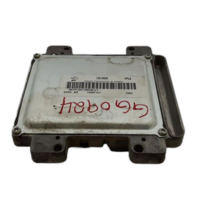
Below are the parts most often responsible for code P2322, ranked by how frequently each one is the actual culprit (per the diagnosis above). Tap any to see what we have for your vehicle.




The information in this article is provided for general reference and educational purposes only. Vehicle specifications, procedures, and part compatibility can vary by production date, trim level, and region. Always consult your vehicle's factory service manual and verify part numbers before purchasing or performing repairs. Safety-critical components such as airbags, seat belts, and braking systems should be installed by a qualified professional.
- 🧭 Diagnostic Flowchart
- 🛍️ Shop This Part
- What Does P2322 Mean?
- Can I Drive With P2322?
- Common Causes
- Symptoms
- Common Fixes & Costs
- DIY vs Professional
- Used vs. New Parts: Buying Guide
- What Happens If You Wait — Timeline
- Cost of Not Fixing It
- Diagnosis Steps
- When This Code Triggers (Freeze-Frame Conditions)
- Related Codes
- Climate & Environmental Factors
- How to Talk to a Mechanic About This Code
- Where to Take It: Dealer vs Independent vs Chain
- When to Walk Away From the Repair
- What Scan Tool You Need for This Code
- How to Clear the Code After You Fix It
- Will This Fail Emissions / State Inspection?
- Most Commonly Affected Vehicles
- Manufacturer-Specific Notes
- Real Owner Stories
- 2013 Dodge Ram 1500 5.7L Hemi at 115K miles
- 2008 Ford F-150 5.4L Triton at 140K miles
- 2015 Chevy Silverado 1500 at 75K miles
- How to Prevent This Code From Triggering
- Frequently Asked Questions
- What does the 'H' in P2322 mean?
- What is the most common misdiagnosis for P2322?
- Can I just replace the one bad ignition coil?
- Is it safe to drive with a flashing Check Engine Light?
- Why did the code come back after I replaced the ignition coil?
- What is the difference between the primary and secondary ignition circuit?
- Can a bad battery cause code P2322?
- Key Takeaways
- 🎟️ Get 5% Off