

OBD-II Code P2365: Cylinder 11 Combustion Performance
What P2365 means, why it triggers, and how to fix it
- Code P2365 flags an inefficient combustion event in cylinder 11, requiring deeper diagnosis than a standard P0311 misfire code.
- Because cylinder 11 only exists on V12 or W12 engines, this code exclusively affects flagship luxury vehicles from Mercedes-Benz, BMW, Audi, and Aston Martin.
- Swap the cylinder 11 ignition coil with cylinder 12; if the misfire moves, replace the faulty coil to fix the most common cause of this code.
- Stop driving immediately if the check engine light flashes; unburned fuel from cylinder 11 melts the catalytic converter and adds $2,500+ to your repair bill.
What Does P2365 Mean?
Trouble code P2365 means the Engine Control Module (ECM) detected abnormal fuel combustion in cylinder 11. This is not a simple misfire; the ECM's advanced monitoring flagged an unusual or inefficient burn. Because cylinder 11 only exists on V12 or W12 engines, this code exclusively applies to flagship luxury and exotic vehicles.
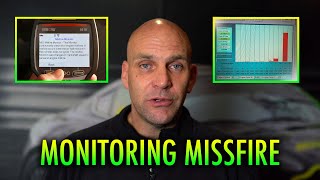
Technical definition: The SAE/ISO definition for P2365 is "Cylinder 11 Combustion Performance 🎬 Watch: How to monitor misfire counts with an OBD reader.". The Powertrain Control Module (PCM) triggers this code when it detects an abnormal combustion event by analyzing rotational speed changes via the crankshaft position sensor, detonation via knock sensors, and cylinder pressure data.
Can I Drive With P2365?
Yes, But With Caution. You can drive, but limit trips to a maximum of 50 miles strictly to reach a repair facility. The engine runs rough, lacks power, and hesitates. A flashing check engine light indicates a severe misfire that destroys the catalytic converter in minutes, adding $2,500 to $5,000 to your repair bill.
Common Causes
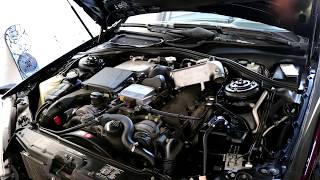
- Faulty Ignition Coil (Very Common) — The ignition coil provides high voltage for the spark. A weak or failed cylinder 11 coil cannot produce a strong spark, causing poor combustion. This is the most frequent failure point on V12 engines. 🎬 See this walkthrough on removing and installing V12 coil packs.
- Worn or Fouled Spark Plug (Common) — An old, carbon-fouled, or cracked spark plug in cylinder 11 fails to ignite the air-fuel mixture properly.
- Clogged or Faulty Fuel Injector (Common) — A clogged or electrically faulty cylinder 11 injector delivers incorrect fuel volume or a poor spray pattern, directly disrupting combustion.
- Intake Valve Carbon Buildup (Less Common) — On direct-injection engines like the Audi W12 or BMW N74, carbon deposits bake onto intake valves, restricting airflow to cylinder 11 and causing inefficient burns.
- Wiring or Connector Issues (Less Common) — Frayed wires, melted insulation, or corroded connector pins interrupt the ECM signal to the cylinder 11 coil or injector.
- ECM Software/Calibration Glitch (Less Common) — Corrupted calibration data causes the ECM to misinterpret normal operation as a fault. Re-flashing the ECM with updated manufacturer software resolves this.
- Vacuum Leak (Rare) — A cracked intake manifold gasket specifically affecting the runner for cylinder 11 introduces unmetered air, creating a lean mixture.
- Engine Mechanical Problems (Rare) — Low compression in cylinder 11 from worn piston rings, a burnt valve, or a leaking head gasket physically prevents proper combustion.
- Faulty Powertrain Control Module (PCM) (Very Rare) — An internal hardware failure in the engine computer falsely reports a cylinder 11 issue. Rule out all other causes before replacing this $1,500+ component.
Symptoms
- Check Engine Light is On — The check engine light illuminates on your dashboard. A flashing light indicates a severe misfire that rapidly destroys your catalytic converter.
- Rough Idle and Engine Vibration — The engine shakes or vibrates heavily, especially when stopped or at low speeds, feeling lumpy as if it is about to stall.
- Reduced Engine Power and Hesitation — The vehicle suffers a significant loss of power and hesitates or stumbles during acceleration.
- Poor Fuel Economy — Fuel efficiency drops by 2-5 MPG because cylinder 11 is not contributing power.
- Strong Fuel Smell from Exhaust — A strong smell of raw gasoline emits from the exhaust because unburned fuel passes through the engine.
Diagnostic Flowchart
Tap your situation to follow the diagnostic path that matches what you're seeing on this code.
Used vs. New Parts: Buying Guide
When a used part is worth it: For ignition coils, a used OEM part from a low-mileage, accident-damaged vehicle is a cost-effective alternative to a cheap aftermarket part. Avoid used coils from high-mileage vehicles.
Donor-vehicle mileage cap: roughly under 60000 miles for the part to have meaningful remaining life.
Donor quality checklist:
- Verify the exact OEM part number matches; superseded parts have design improvements.
- Inspect the plastic housing for cracks or heat damage and check electrical connectors for corrosion.
- Ask for the donor vehicle's VIN to check its history for flood damage.
Decision logic:
- If The part is a known high-failure item with revised designs available (e.g., Mercedes M275 coil pack). → Buy a new OEM or high-quality aftermarket part with the latest part number to ensure longevity.
- If The vehicle is over 10 years old and budget is the primary concern. → A used OEM coil is safer and more reliable than a cheap, unbranded new aftermarket coil.
- If The part requires significant labor to access. → Buy new to minimize the risk of paying for the same labor twice if a used part fails prematurely.
Warranty tradeoff: Used parts typically come with a 30-90 day warranty. New aftermarket parts range from 1 year to a limited lifetime warranty. New OEM parts carry a 12-24 month warranty.
Worst-case if a used part fails: $300-$800 if a used coil fails after installation, primarily due to repeated diagnostic and labor costs.
What Happens If You Wait — Timeline
- 0-2 weeks: Check Engine Light illuminates with code P2365. A slight, intermittent rough idle occurs on cold starts. No major performance loss is noticeable. (MPG impact: 1-5%% · Added cost: $0-$25 in wasted fuel)
- 2 weeks - 3 months: The rough idle becomes consistent, and hesitation occurs during acceleration. The Check Engine Light flashes during heavy acceleration, indicating a severe misfire. (MPG impact: 5-10%% · Added cost: $50-$150 in wasted fuel. The catalytic converter begins to overheat.)
- 3-6 months: Engine runs rough continuously with significant power loss. The catalytic converter's internal substrate melts and breaks apart from constant exposure to raw fuel. (MPG impact: 10-20%% · Added cost: $2,500-$5,000+. The catalytic converter is permanently damaged and requires replacement.)
- 6+ months: Catastrophic failure. The melted catalytic converter completely blocks the exhaust. Excess fuel washes lubricating oil off the cylinder wall, scoring the cylinder and destroying piston rings. (MPG impact: 20-40%% · Added cost: $8,000-$20,000+. The engine requires a complete rebuild or replacement due to loss of compression.)
Cost of Not Fixing It
- Immediate (especially with a flashing CEL): Raw, unburned fuel dumps into the exhaust, superheating and melting the internal structure of the catalytic converter. (Added cost: $2,500-$5,000+)
- 1-3 months: Persistent poor fuel economy, fouled oxygen sensors from rich exhaust, and secondary catalytic converter damage from debris. (Added cost: $400-$800)
- 6+ months: Severe engine damage from 'bore washing,' where excess fuel washes lubricating oil off cylinder walls, destroying piston rings and requiring an engine rebuild. (Added cost: $8,000-$20,000+)
When This Code Triggers (Freeze-Frame Conditions)
- Engine Coolant Temp: 180-210°F (82-99°C) (The engine is fully warmed up and operating in closed-loop fuel control.)
- Engine RPM: 1500-3000 RPM (The code sets under light to moderate load, such as steady-state cruising or gentle acceleration.)
- Engine Load: 20-60% (The engine is working but not under extreme stress, providing the ideal window for the ECU to run detailed combustion analysis.)
- Vehicle Speed: 40-70 mph (Occurs during highway or arterial road driving, consistent with steady RPM and load conditions.)
Related Codes
- P0300 — Indicates a random or multiple cylinder misfire. If present with P2365, a systemic issue like low fuel pressure or a large vacuum leak is causing the problem.
- P0311 — A direct misfire code for cylinder 11. Seeing both together strongly points to a localized problem with cylinder 11's ignition or fuel delivery.
- P0291 — Points to a low circuit for the cylinder 11 fuel injector. P2365 is the result of this electrical fault. The fuel injector or its wiring is the primary suspect.
- P0361 — Indicates a malfunction in the ignition coil 'K' primary/secondary circuit (cylinder 11). The ignition coil or its wiring is almost certainly the culprit.
Climate & Environmental Factors
- Cold Weather: Cold temperatures exacerbate underlying issues with ignition coils and fuel injectors. Thickened engine oil strains the battery, lowering voltage to the ignition system and causing misfires.
- High Humidity: Moisture in the air penetrates electrical connections, causing intermittent faults in the ignition or injector circuits. High humidity accelerates corrosion on wiring connectors.
- High Altitude: Less dense air at high altitudes reduces oxygen for combustion, lowering engine power by 3% per 1,000 feet. This unmasks marginal combustion performance issues, triggering the P2365 code.
How to Talk to a Mechanic About This Code
Say this: "I have a P2365 code on my vehicle, indicating a combustion performance issue on cylinder 11. I'd like to book a diagnostic. Please start by testing the ignition coil, spark plug, and fuel injector for that specific cylinder before recommending broader repairs."
This signals you understand the code is specific to one cylinder. It directs the technician to the most likely causes first, preventing a costly 'shotgun' approach of replacing unrelated parts.
Avoid saying:
- 'Just fix whatever's wrong'
- 'My check engine light is on, can you look at it?'
- 'Whatever you recommend'
Questions to ask before authorizing the repair:
- Did you confirm the fault by swapping the ignition coil from cylinder 11 to another cylinder to see if the code moved?
- What were the results of the electrical tests on the cylinder 11 fuel injector and its wiring?
- Can you provide the freeze-frame data that was stored when the P2365 code was set?
- What is the warranty on the recommended parts and labor for this repair?
- Are you using OEM or aftermarket parts, and why?
Where to Take It: Dealer vs Independent vs Chain
- Dealer:
Best for: Vehicles still under powertrain or emissions warranty., Complex, manufacturer-specific quirks (e.g., Mercedes M275 coil packs, BMW injector coding)., Access to proprietary diagnostic tools (STAR/ISTA) and the latest technical service bulletins (TSBs).
Downsides: Highest labor rates, often 1.5-2x more than independent shops., Recommends replacing large, expensive assemblies when a smaller component is the sole issue. (Typical cost: +50% vs. baseline) - Independent Shop:
A strong choice, but ONLY if it is a reputable shop specializing in your vehicle's brand (Mercedes, BMW, Audi, etc.). A general mechanic is not equipped for this job.
Best for: Out-of-warranty vehicles where cost is a major factor., Owners who want a personal relationship with their technician.
Downsides: Quality and expertise vary dramatically. Must be a specialist for your specific brand., Lacks the latest, most expensive brand-specific diagnostic software. (Typical cost: +0% vs. baseline) - Chain Shop:
AVOID. The risk of misdiagnosis, causing more damage, and being oversold unnecessary parts is extremely high for this specific code.
Best for: Simple, high-volume jobs like oil changes, tires, and brake pads on common vehicles.
Downsides: Technicians almost never have experience with V12/W12 engines., High pressure to upsell unnecessary services., Lacks the specific tools and diagnostic software required for these complex vehicles. (Typical cost: -10% vs. baseline)
When to Walk Away From the Repair
If the estimated repair cost exceeds 40-50% of the car's private-party value (use Kelley Blue Book or Edmunds), sell the car instead of fixing it.
- Car worth $15000, fix is $2500: Fix it. The repair cost is well below the 40-50% threshold and is a common issue for this type of vehicle.
- Car worth $18000, fix is $8000: Walk away. The repair cost approaches 45% of the car's value. Put this money toward a replacement vehicle.
- Car worth $35000, fix is $15000: Borderline. This is a major repair. Get a second opinion from another specialist before proceeding. Consider the car's overall condition.
What Scan Tool You Need for This Code
Minimum: A scanner that reads manufacturer-specific codes and displays live data for individual cylinder misfire counters.
A basic $20 code reader only shows 'P2365'. It cannot show live misfire data needed to confirm if swapping an ignition coil moves the fault to another cylinder. You will be guessing and replacing expensive parts blindly.
Budget: iCarsoft MB II (for Mercedes) or ANCEL BM700 (for BMW) (~$100) — Provides brand-specific diagnostic access to read and clear codes from all modules, not just the engine. Essential for seeing the full picture on complex cars.
Mid-range: Foxwell NT510 Elite (with brand-specific software) (~$180) — Offers deep, dealer-level diagnostics. It performs active/bi-directional tests to command a coil to fire or an injector to click, and handles service functions like battery registration.
Professional: Autel MaxiCOM MK808BT Pro (~$550) — Full bi-directional control for all systems, allowing you to test components without removing them. Offers comprehensive live data graphing and injector coding.
Rent vs buy: For a one-time fix, a free rental from an auto parts store is not sufficient for this code. Given the high cost of diagnostics at a dealer ($200+), buying a brand-specific mid-range scanner like the Foxwell NT510 Elite pays for itself after one use.
How to Clear the Code After You Fix It
- Use an OBD-II scan tool to erase the fault codes.
- Ensure the fuel tank is between 30% and 70% full for EVAP monitor testing.
- Perform a complete drive cycle to allow the vehicle's readiness monitors to run.
Drive cycle (~20 minutes): Start the engine cold and idle for 3 minutes. Accelerate to a steady 55 mph and hold for 10 minutes. Coast down to 20 mph without using the brakes. Perform stop-and-go city driving for 10 minutes. Let the vehicle cool down completely.
Readiness monitors affected: Misfire Monitor, Catalyst Monitor, Oxygen (O2) Sensor Monitor, Fuel System Monitor
Watch out for:
- Disconnecting the battery clears the code but resets all readiness monitors to 'Not Ready', guaranteeing an emissions test failure.
- The code returns immediately if the underlying mechanical or electrical fault remains unfixed.
- Short city trips prevent the Catalyst and EVAP monitors from completing their tests.
Will This Fail Emissions / State Inspection?
Yes — this code typically fails an OBD-II emissions inspection.
- California: An illuminated Check Engine Light is an automatic failure. All readiness monitors except for the EVAP monitor must be 'Ready'. After a repair, a full drive cycle is required before re-testing.
- New York: A vehicle automatically fails the emissions inspection if the Check Engine Light is on. Clearing the code right before the test results in a failure because the readiness monitors read 'Not Ready'.
- Texas: An illuminated Check Engine Light results in an automatic failure of the OBD-II test. The vehicle also fails if the monitors are not ready, which occurs after clearing codes or disconnecting the battery.
Most Commonly Affected Vehicles
- Mercedes-Benz S600, CL600, SL600 (with M275 V12 engine) (2003-2014) — Extremely common for ignition coil pack failures. The cylinder 11 fault requires replacement of the entire right-side coil pack (part A2751500680).
- BMW 760i/Li, M760i (with N73/N74 V12 engines) (2003-2022) — N73/N74 engines suffer from high-pressure fuel pump and fuel injector failures that trigger combustion codes. Software updates frequently resolve calibration issues.
- Aston Martin DB9, DBS, Vanquish (with V12 engines) (2004-2018) — Misfire codes relate to the ignition system or vapor management valves. These systems are highly sensitive to battery voltage drops.
- Ferrari 612 Scaglietti, 599 GTB Fiorano (with V12 engines) (2004-2012) — A weak battery is the most frequent cause of random electronic faults and misfire codes. Always verify battery health before diagnosing deeper.
- Lamborghini Murciélago, Aventador (with V12 engines) (2001-2022) — Misfire codes trace back to faulty ignition coils or spark plugs. Tight packaging makes labor costs significantly higher than average.
- Rolls-Royce Phantom, Ghost, Cullinan (with V12 engines) (2003-Present) — Utilizing BMW-derived V12 engines, these vehicles log combustion performance codes for faulty injectors or ignition components.
- Jaguar XJ12, XJS V12 (1971-1997 (Pre-OBDII, but equivalent faults exist)) — These classic models experienced similar cylinder-specific combustion issues from ignition system faults (e.g., Lucas ignition amplifier failure).
- Audi A8L W12 (2004-2018) — The W12 engine is highly susceptible to carbon buildup on the intake valves due to its FSI direct injection design, requiring professional walnut blasting.
Manufacturer-Specific Notes
- Mercedes-Benz: On M275 V12 models, ignition coil packs are replaced as a complete unit for one bank of cylinders. The OEM part number for the right-side coil pack is A2751500680.
- BMW: Programming failures during routine software updates brick control modules. Always use a high-quality power supply connected to the battery during flashing.
- Audi/VW: Direct injection (FSI) engines guarantee carbon buildup over time. Walnut shell blasting is a necessary maintenance item, not an optional one.
- Ferrari/Lamborghini: Extremely sensitive to battery voltage. A weak battery causes a cascade of random electronic glitches and fault codes. Ensure perfect battery health first.
Real Owner Stories
2007 Mercedes S600 (M275) at 85,000 miles
Check engine light came on with a noticeable rough idle and hesitation when accelerating. Codes P2365 and P0311 were present.
What they tried:
- Swapped the spark plug from cylinder 11 to 12, but the misfire code remained on cylinder 11.
- Tested the voltage transformer, which passed.
Outcome: Replaced the entire right-side ignition coil pack (OEM part A2751500680). The repair cost $1,200 for the part, and the owner performed the labor themselves. The codes cleared and did not return.
Lesson: On the Mercedes M275 V12, a cylinder-specific combustion code almost always points to the large, bank-specific coil pack. Be prepared to replace the entire unit.
2011 BMW 760Li (N74) at 70,000 miles
Vehicle had a persistent rough idle and threw combustion codes for cylinder 11 (P2365) and a fuel injector code (P0291).
What they tried:
- A local shop replaced the coil and spark plug for cylinder 11, but the problem persisted.
- The shop recommended replacing the ECU for $2,500.
Outcome: A BMW specialist diagnosed a faulty fuel injector. The injector for cylinder 11 was replaced with the updated Index 12 version for $500 in parts plus labor, solving the problem.
Lesson: When a combustion code pairs with a specific component code (like P0291 for an injector), that component is the culprit. Never replace an ECU without testing the injector circuits first.
2009 Audi A8L W12 at 95,000 miles
Gradual loss of power, decreasing fuel economy, and a flashing check engine light with misfire codes P0311 and P0312.
What they tried:
- Replaced all 12 spark plugs and two ignition coils based on the codes, with no improvement.
- Performed a smoke test and found no vacuum leaks.
Outcome: An Audi specialist diagnosed severe carbon buildup on the intake valves. A professional walnut blasting service was performed for $1,100, restoring full engine power and clearing all codes.
Lesson: On direct-injection engines, if basic ignition and fuel parts fail to solve a persistent misfire, carbon buildup on the intake valves is the guaranteed cause.
2005 Aston Martin DB9 at 6,000 miles
Vehicle experienced random misfires on multiple cylinders, including P0311. The owner replaced the battery and O2 sensors with no luck.
What they tried:
- Dealer replaced coils for cylinders 6 and 9 for $1,600, but misfires returned immediately.
- Dealer suspected a complex ECU issue.
Outcome: The root cause was liquid fuel in the vapor management valve, causing unmetered fuel to enter the engine. The repair required replacing the vapor management system for $800.
Lesson: If replacing common parts like coils and plugs fails, demand a systematic diagnosis of the entire fuel and vapor system before condemning the ECU.
How to Prevent This Code From Triggering
- Use Top Tier certified gasoline with high-quality detergents (e.g., Chevron with Techron, Shell V-Power). (Every fill-up) — Detergents prevent and clean carbon deposits from fuel injectors, ensuring a proper spray pattern and efficient combustion.
- Perform regular oil changes with high-quality, manufacturer-specified synthetic oil. (Every 5,000 miles) — High-quality oil resists thermal breakdown, reducing the formation of sludge and carbon deposits that clog PCV systems and foul intake valves.
- Replace spark plugs at the recommended service interval. (Every 40,000 to 60,000 miles) — Worn spark plugs have a wider gap, forcing the ignition coil to produce higher voltage. This extra strain overheats and destroys the ignition coil.
- On direct-injection (GDI/FSI) engines, perform a professional intake valve cleaning service. (Every 50,000 miles) — Because fuel does not wash over the intake valves, carbon bakes onto them, restricting airflow. Walnut blasting removes this buildup and restores performance.
- Add a dedicated GDI-specific fuel system cleaner to the fuel tank. (Every 5,000 miles) — Concentrated cleaners remove stubborn deposits from high-pressure fuel injector tips, preventing the poor spray patterns that trigger combustion codes.
Frequently Asked Questions
Why can't I find P2365 listed for my Honda, Ford, or Toyota?
Code P2365 specifically refers to 'Cylinder 11', which only exists on engines with 12 or more cylinders. Most consumer vehicles have 4, 6, or 8-cylinder engines, making this code physically impossible for them. It is reserved for V12 and W12 engines found in luxury and exotic vehicles.
What's the difference between a 'misfire' (P0311) and 'combustion performance' (P2365)?
A traditional misfire code (P0311) means the computer detected a complete lack of combustion. 'Combustion performance' (P2365) means the cylinder fired, but the event was abnormal, weak, or erratic. It indicates an inefficient burn rather than no burn at all.
What are the most common misdiagnoses for P2365?
A common mistake is replacing the expensive PCM/ECM before thoroughly testing the spark plug, coil, or injector. Technicians also overlook software issues; a simple ECM re-flash often fixes calibration errors that cause a false code. Always verify wiring and connector pins before condemning major components.
Can I just clear the code and keep driving?
You can clear the code with a scanner, but it will return within a few drive cycles. Ignoring the underlying problem causes persistent poor performance and destroys the catalytic converters.
Is it expensive to fix a P2365 code?
Yes, because this code appears exclusively on high-end V12 engines, parts and labor carry a premium. A simple spark plug replacement costs hundreds due to labor, while a failed Mercedes coil pack or Audi carbon cleaning easily exceeds $1,500.
Should I replace all 12 spark plugs and ignition coils at once?
Yes, replace all 12 spark plugs as a set if they are near the end of their service life. While you can replace a single faulty ignition coil, replacing all of them saves significant labor costs on tightly packaged V12 engines.
Can a bad fuel pump cause a P2365 on just one cylinder?
No, a failing low-pressure or high-pressure fuel pump affects all cylinders, triggering random misfire (P0300) or low fuel pressure (P0087) codes. P2365 is a cylinder-specific code. It points to a fault isolated entirely to cylinder 11, such as its specific injector.
Key Takeaways
- Code P2365 flags an inefficient combustion event in cylinder 11, requiring deeper diagnosis than a standard P0311 misfire code.
- Because cylinder 11 only exists on V12 or W12 engines, this code exclusively affects flagship luxury vehicles from Mercedes-Benz, BMW, Audi, and Aston Martin.
- Swap the cylinder 11 ignition coil with cylinder 12; if the misfire moves, replace the faulty coil to fix the most common cause of this code.
- Stop driving immediately if the check engine light flashes; unburned fuel from cylinder 11 melts the catalytic converter and adds $2,500+ to your repair bill.
Helpful Videos

The information in this article is provided for general reference and educational purposes only. Vehicle specifications, procedures, and part compatibility can vary by production date, trim level, and region. Always consult your vehicle's factory service manual and verify part numbers before purchasing or performing repairs. Safety-critical components such as airbags, seat belts, and braking systems should be installed by a qualified professional.
- 🧭 Diagnostic Flowchart
- 🎬 Helpful Videos
- What Does P2365 Mean?
- Can I Drive With P2365?
- Common Causes
- Symptoms
- Used vs. New Parts: Buying Guide
- What Happens If You Wait — Timeline
- Cost of Not Fixing It
- When This Code Triggers (Freeze-Frame Conditions)
- Related Codes
- Climate & Environmental Factors
- How to Talk to a Mechanic About This Code
- Where to Take It: Dealer vs Independent vs Chain
- When to Walk Away From the Repair
- What Scan Tool You Need for This Code
- How to Clear the Code After You Fix It
- Will This Fail Emissions / State Inspection?
- Most Commonly Affected Vehicles
- Manufacturer-Specific Notes
- Real Owner Stories
- 2007 Mercedes S600 (M275) at 85,000 miles
- 2011 BMW 760Li (N74) at 70,000 miles
- 2009 Audi A8L W12 at 95,000 miles
- 2005 Aston Martin DB9 at 6,000 miles
- How to Prevent This Code From Triggering
- Frequently Asked Questions
- Why can't I find P2365 listed for my Honda, Ford, or Toyota?
- What's the difference between a 'misfire' (P0311) and 'combustion performance' (P2365)?
- What are the most common misdiagnoses for P2365?
- Can I just clear the code and keep driving?
- Is it expensive to fix a P2365 code?
- Should I replace all 12 spark plugs and ignition coils at once?
- Can a bad fuel pump cause a P2365 on just one cylinder?
- Key Takeaways
- 🎟️ Get 5% Off