

P2402 on 2009-2011 Audi A6 3.0T: EVAP Pump Circuit High Causes and Fixes
For a 2009-2011 Audi A6 3.0T, code P2402 is most often caused by a faulty EVAP Leak Detection Pump (LDP), a wiring short, or a failed driver in the Engine Control Module (ECM). Start by inspecting the pump's wiring near the rear passenger wheel, but be prepared for a more complex electrical diagnosis as ECM failure is a known, albeit less common, cause on this platform.
- P2402 on your A6 3.0T is an electrical fault, not an EVAP leak.
- The most likely causes are the Leak Detection Pump itself or the wiring going to it.
- Before buying parts, carefully inspect the wiring harness near the rear passenger wheel for damage.
- Be aware that in some cases, the fault lies within the Engine Control Module (ECM), which is a more complex and costly repair.
What's Unique About the 2005-2011 Audi A6
This guide specifically covers the facelifted 'C6.5' generation Audi A6 (2009-2011) equipped with the 3.0T supercharged engine. While the Leak Detection Pump (LDP) or its wiring can fail on any vehicle, this particular platform has documented cases where the root cause is not the pump itself, but a failed output driver within the Engine Control Module (ECM). This makes diagnosis more critical, as simply replacing the pump may not fix the issue. One owner on the Ross-Tech forums went through extensive wiring and pump checks before concluding the ECM was at fault.
Generation note: The 2005-2011 Audi A6 spans the C6 generation. However, the 3.0T engine was only introduced in the 2009 model year as part of the C6.5 facelift. This guide is only applicable to the 2009, 2010, and 2011 model years.
Symptoms You May Notice
- Check Engine Light is on.
- Vehicle fails emissions testing due to the EVAP readiness monitor not setting 🎬 See this walkthrough on diagnosing Audi EVAP system leaks.
- No noticeable impact on drivability, idle quality, or fuel economy.
- Possible fuel odor if a separate EVAP leak exists, though this is not a direct symptom of the P2402 circuit fault.
- Replacing the gas cap. A loose or faulty gas cap will typically cause an EVAP leak code (like P0456 or P0442), not a circuit-specific code like P2402.
- Replacing the N80 EVAP Purge Solenoid. The N80 valve is related to purge flow codes (like P0441) and is not part of the LDP control circuit.
Most Likely Causes
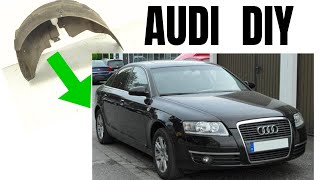
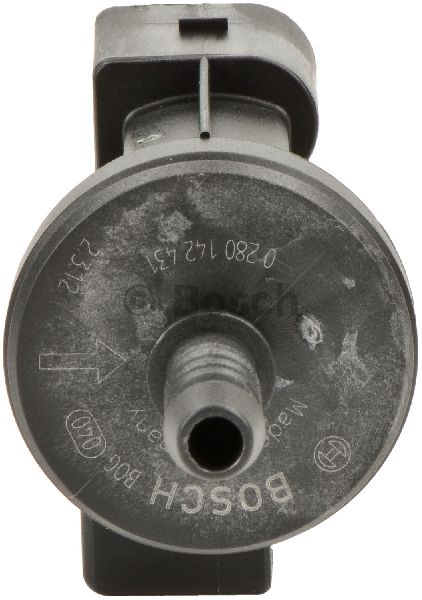
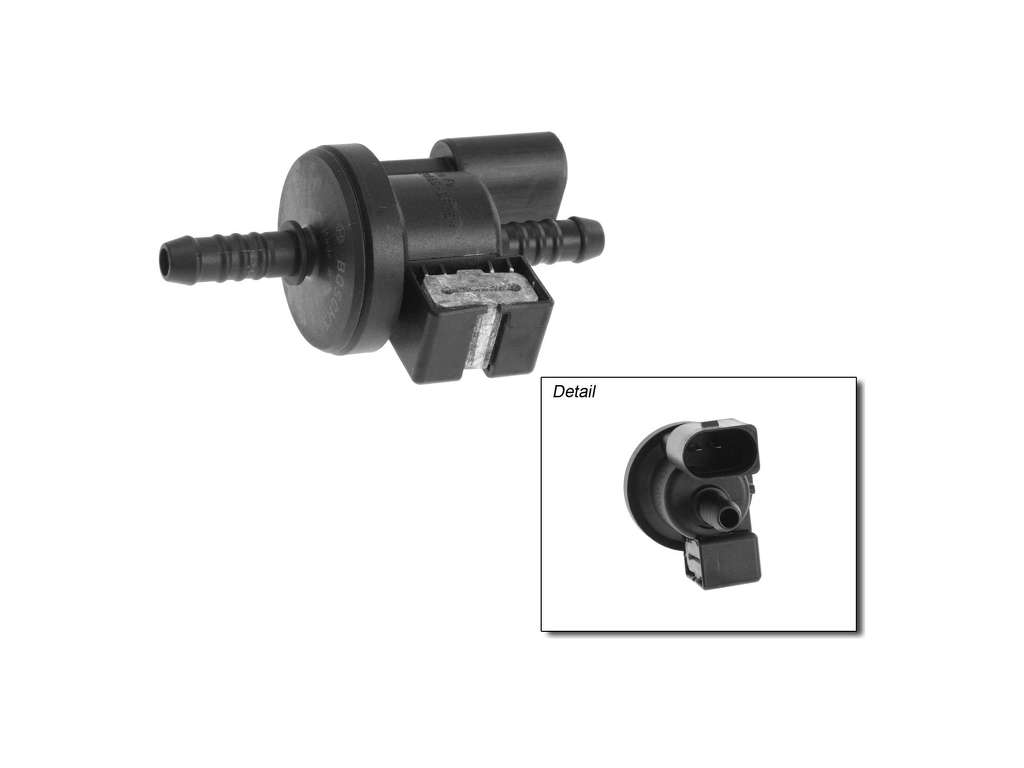
- Faulty Leak Detection Pump (LDP) 🔴 High Probability → Shop Evaporative Emissions System Leak Detection Pump The LDP is located behind the rear passenger-side wheel well liner 🎬 Watch: How to remove the rear wheel arch liner, exposing it to road spray, salt, and debris which can lead to internal corrosion and electrical failure over time.
How to confirm: After checking wiring, if the pump fails to operate during a scan tool output test (e.g., with VCDS) or has an internal resistance outside of the specified range (Pin 1 to 3: 640-720 Ohms; Pin 2 to 3: 15-17 Ohms), it is likely faulty. A bench test applying power can also confirm failure.
Typical fix: Replace the Leak Detection Pump.
Est. part cost: $150-$260 - Wiring Short to Power 🟡 Medium Probability The code definition "Short to Plus" points directly to an electrical short. The wiring harness to the LDP can become chafed or damaged from road debris, improper servicing, or age, causing the control wire to contact a 12V power source.
How to confirm: Visually inspect the harness running to the LDP for damage. Use a multimeter to check the control wire (Pin 2 at the pump connector, often a Brown/Red wire) for voltage with the key on. If you see battery voltage when the ECM is not commanding the pump on, a short exists. Trace the wire back to the ECM (Pin 69 on the 94-pin connector) to isolate the short.
Typical fix: Repair the damaged section of the wiring harness and protect it from future damage using loom or tape.
Est. part cost: $5-$20 - Failed Engine Control Module (ECM) ⚪ Low Probability → Shop Engine Control Module (ECM) There are documented cases on this platform of the internal driver circuit in the ECM failing. The ECM is responsible for providing a ground signal to activate the pump; when the driver fails, it can no longer pull the circuit voltage low, resulting in a P2402 code. This is a known failure mode for various output stages on Bosch ECUs of this era.
How to confirm: This is a diagnosis of exclusion. After confirming the LDP and its wiring harness are in perfect condition, the ECM is the most likely remaining cause. An advanced test involves using an oscilloscope to monitor the voltage on the LDP control wire (Pin 69 at the ECM connector). If the ECM commands the pump on but the voltage does not drop close to 0V (e.g., it stays above 2V), the ECM driver is faulty.
Typical fix: Replace the ECM with a new or refurbished unit, which will require programming to the vehicle, or send the original ECM to a specialist for repair.
Est. part cost: $250-$1000+ - Faulty Engine Component Power Supply Relay (J757) ⚪ Low Probability → Shop Wiring Relay A faulty power relay can cause various intermittent and strange electrical issues in the engine bay, including incorrect voltage supply to emissions components. This has been noted as a possible cause for EVAP codes on the C6 platform. The J757 relay is located in the electronics box in the plenum (under the windshield).
How to confirm: Swap the relay with a known good one, such as the main ECU power relay (J271) if they are the same part number. The relays are typically located in the engine bay plenum box on the driver's side.
Typical fix: Replace the J757 relay.
Est. part cost: $20-$40
Diagnosis Steps
- Read the fault codes with an Audi-specific scanner (like VCDS) to confirm P2402 is present and check for any other related codes (e.g., P2404). Note the freeze frame data.
- Gain access to the Leak Detection Pump (LDP). It is located behind the wheel well liner of the rear passenger-side wheel.
- Visually inspect the LDP connector and its wiring harness. Look for any signs of corrosion, melted plastic, chafed wires, or poor pin fitment.
- With the ignition on (engine off), disconnect the LDP connector. Use a multimeter to check for voltage at the pins. Pin 3 (Power) should have battery voltage. Pin 2 (Control) is the control wire from the ECM; if it shows battery voltage without the pump being commanded on, there is a short to power in the harness.
- If the wiring appears okay, use a capable scan tool (like VCDS) to perform an output test on the LDP (V144). Listen for a clicking sound from the pump, indicating the solenoid is trying to actuate. The light on a test light connected between Pin 2 and Pin 3 should flash during the output test.
- If the pump does not click and wiring is confirmed good, the pump is likely faulty. You can verify by checking the resistance between pins 1&3 (should be 640-720 Ohms) and pins 2&3 (should be 15-17 Ohms).
- (Advanced) If a new pump and good wiring do not resolve the code, the final step is to suspect the ECM. This requires testing the control signal directly at the ECM connector (Pin 69 of the 94-pin connector) with an oscilloscope to see if the driver is failing to provide a proper ground signal when commanded. This confirms the fault is internal to the ECM.
Parts You'll Likely Need
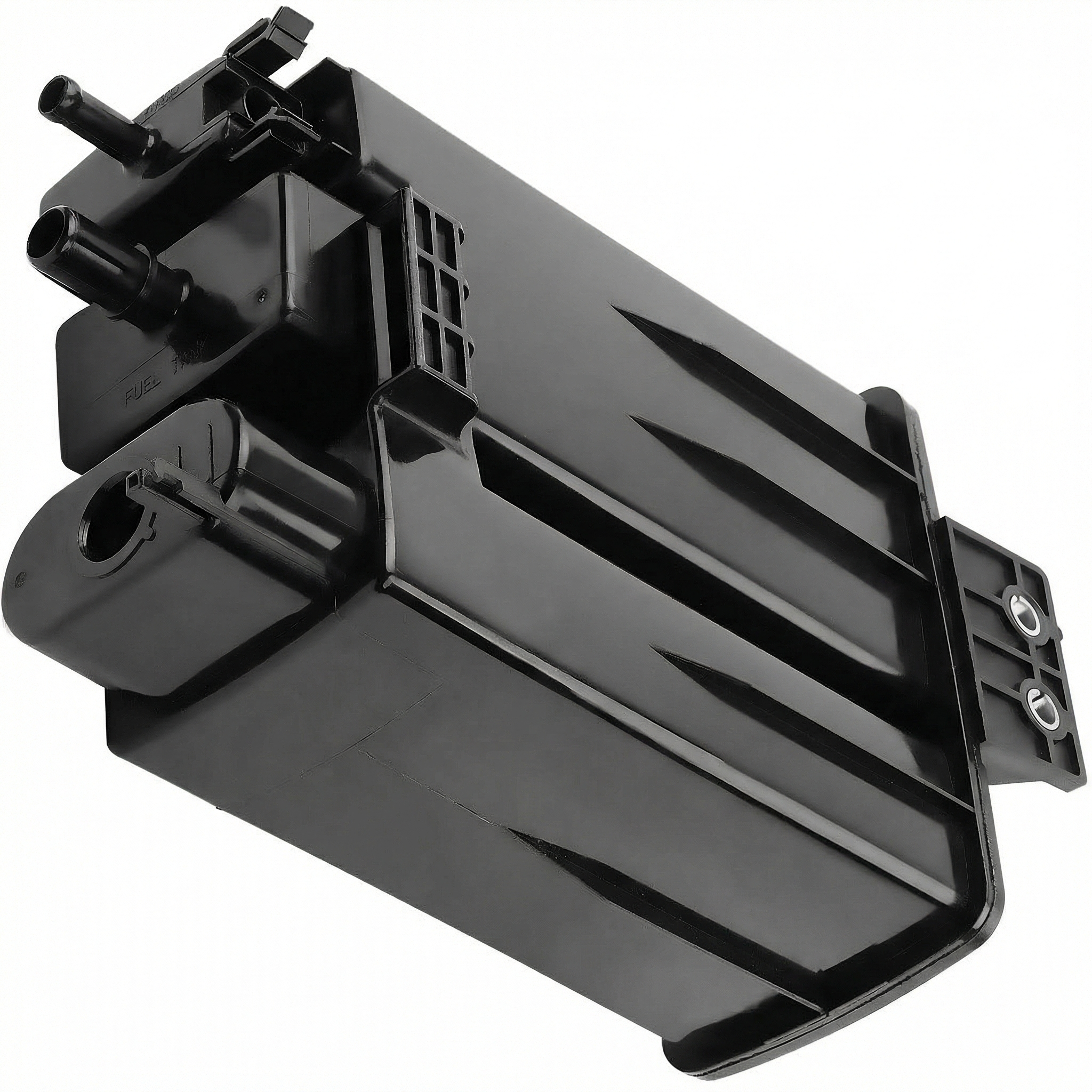
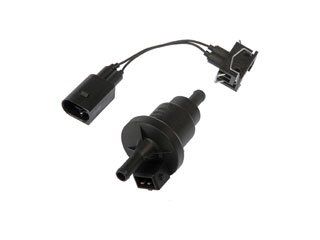
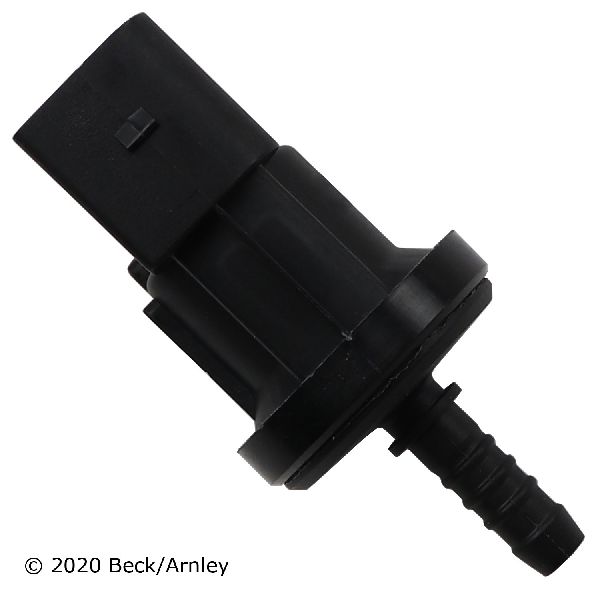
- EVAP Leak Detection Pump
(OEM #8K0906253L)— This pump is the most common component to fail, either through internal electrical shorts or mechanical failure, directly causing the P2402 code. The latest part number is 8K0906253L or 8K0906253N, which supersedes previous versions like ...A, ...C, ...E, ...J, and ...M.
Trusted brands: Genuine Audi, Bosch, URO Parts
OEM price range: $230-$280
Aftermarket price range: $110-$180
Related Codes That Often Appear With This One
- P2404 — P2404 is for the LDP Sense Circuit ('Implausible Signal'). Since both codes relate to the electrical function and monitoring of the same component, a fault in the pump or wiring can trigger both simultaneously. P2402 points to the control side, while P2404 points to the feedback/sense side. 🎬 Watch: A quick fix for common VAG EVAP sensor codes
Platform-Specific Known Issues
- A known but uncommon issue is the failure of the ECM's internal driver for the LDP circuit, which requires advanced diagnostics to confirm and is a more expensive repair than the pump itself.
- A user on Ross-Tech forums with a 2010 A6 3.0T documented an exhaustive diagnostic process for P2402, testing wiring continuity to ECM pin 69, checking relay J757, and bench testing multiple pumps before suspecting the ECM itself. URL: https://forums.ross-tech.com/index.php?threads/25619/
Mechanic-Grade Diagnostic Values
- Leak Detection Pump (V144) internal resistance between pins 1 and 3 — expected: 640 to 720 Ω. Failure: A reading outside this range indicates a faulty pump.
- Leak Detection Pump (V144) internal resistance between pins 2 and 3 — expected: 15 to 17 Ω. Failure: A reading outside this range indicates a faulty pump.
- ECM ground signal voltage at LDP connector pin 2 during actuation (Output Test) — expected: Near 0 Volts (e.g., < 400mV). Failure: A voltage that remains high (e.g., > 2V) during commanded actuation points to a faulty driver in the ECM.
Scan Tool Commands That Help
- VCDS (VAG-COM): Engine -> Output Tests -> EVAP Leak Detection Pump (V144) — This command directly activates the LDP solenoid. You should hear the pump click or buzz. It's used to confirm if the pump is responding to commands from the ECM, which helps differentiate between a dead pump and a wiring/control issue.
- VCDS (VAG-COM): Engine -> Basic Settings -> Group 070 (or 071 on some controllers) — This initiates the full EVAP system leak test sequence. It should be used after a repair to verify the system is functioning correctly and can set the readiness monitor.
Wiring & Ground Locations
- LDP Connector — Behind the rear passenger-side wheel well liner, connected to the Leak Detection Pump.. This is the primary connection point to test for power (Pin 3), ECM control signal (Pin 2), and the sense circuit (Pin 1).
- ECM Connector T94, Pin 69 — On the Engine Control Module (ECM), which is located in the electronics box in the plenum chamber at the base of the windshield.. This is the specific pin on the ECM that provides the switched ground signal to control the LDP. It is the final test point to confirm a faulty ECM driver.
- Ground Point 646 — On the bulkhead on the right side of the engine compartment.. This is a major ground point for engine electronics. A poor connection here could potentially cause strange voltage issues, although it's not a direct cause of a 'Short to Plus' code.
- Relay J757 — In the relay holder inside the electronics box (E-box) in the left plenum chamber.. This is the Engine Component Power Supply Relay. A faulty relay can cause power supply issues to various components, including potentially the LDP circuit.
Real Owner Repair Stories
- Ross-Tech Forums user (2010 Audi A6 3.0T, 109k miles) — Check Engine Light with code P2402 would appear a few seconds after a cold start (e.g., after sitting overnight).
❌ Tried (didn't work) Replaced LDP with a used part from eBay., Replaced power supply relays J757 and J271., Verified LDP resistance values were in spec., Confirmed continuity on the control wire from the LDP connector (Pin 2) to the ECM connector (Pin 69)., Bench tested the pump with a jump pack and vacuum source, confirming it could inflate a balloon.
✅ What actually fixed it The root cause was a failed driver inside the Engine Control Module (ECM). This was confirmed by using an oscilloscope on the LDP control wire (Pin 2), which showed the voltage was not dropping below 2V when commanded ON by the ECM. A good ECM should pull the voltage down to near 0V (<400mV). Replacing the ECM with a used unit resolved the issue.
OEM Part Supersession History
8K0906253 / 8K0906253A / 8K0906253B / 8K0906253C / 8K0906253D / 8K0906253E / 8K0906253F / 8K0906253G / 8K0906253H / 8K0906253J / 8K0906253K / 8K0906253M→8K0906253L or 8K0906253N (check with dealer for latest)— Likely revisions to improve reliability and prevent internal electrical failures or corrosion, which are common failure modes.
Heads up: All listed part numbers are generally interchangeable for this application. It is always best to install the latest available revision.
Diagnostic Flowchart
Other Known Issues on This Vehicle
Issues unrelated to this code that are worth knowing about as an owner of this generation:
- Timing Chain Tensioner Rattle on Cold Start 🟠 Medium — Common issue, especially on pre-2012 models. Noise typically lasts 1-3 seconds. While Audi states it's a noise issue and not damaging, failure can be catastrophic. (Ref: TSB 2039995 / 15-15-26 addresses replacing upper tensioners with improved parts.)
- Thermostat Failure 🔴 High — Common failure item, often occurring between 60,000-100,000 miles. The original plastic housing becomes brittle and fails, causing the thermostat to stick and leading to overheating. (Ref: Customer satisfaction bulletins were issued for some early models. Aftermarket aluminum housings are a popular upgrade.)
- PCV / Oil Separator Failure 🟠 Medium — Very common failure, typically between 60,000-100,000 miles. Symptoms include high-pitched whistling noise, increased oil consumption, and codes like P052E. (Ref: No recall, but updated part revisions exist (e.g., 06E103547AC). Repair is labor-intensive as the supercharger must be removed.)
- Water Pump Failure 🔴 High — A well-known weak spot, especially on 2009-2012 models. The seals fail, leading to coolant leaks. Often replaced preventatively with the thermostat. (Ref: Subject of class-action lawsuits for various model years. Improved part designs were introduced for later models.)
- Carbon Buildup on Intake Valves 🟡 Low — An inherent issue with all direct-injection engines. Typically requires cleaning (walnut blasting) every 80,000-100,000 miles to restore performance and smooth operation.
Used vs. New Parts: Buying Guide for This Vehicle
When a used part is the smart pick: A used Leak Detection Pump (LDP) can be a cost-effective option if sourced from a reputable auto recycler with a warranty and return policy. Given the high failure rate, a used part is a gamble, but can save significant money over a new OEM part. A used Engine Control Module (ECM) is also a viable option but introduces significant complexity.
Donor-vehicle mileage cap: roughly under 60000 miles for the part to have meaningful remaining life.
What to inspect on the donor part:
- For a used LDP, check for a clean, corrosion-free electrical connector and housing. Avoid parts from vehicles in heavy salt-belt regions.
- For a used ECM, ensure the part number matches exactly. Obtain the VIN of the donor car if possible, as you may need it and the original key's PIN for immobilizer adaptation.
- Ask the seller to confirm the part is from a running and driving vehicle with no EVAP-related fault codes.
OEM-only on this vehicle (don't cheap out):
- Engine Control Module (ECM): While a used OEM unit can work, it requires specialized tools (like VCDS) and knowledge to adapt the immobilizer to your vehicle. A new OEM unit from the dealer simplifies this process but is very expensive. Aftermarket/cloned ECMs are not recommended due to potential software and immobilizer conflicts.
Aftermarket brands forum-validated for this vehicle:
- Bosch: As the original equipment manufacturer for many Audi electronics, a Bosch-branded LDP is considered equivalent to Genuine Audi and is a reliable choice.
Brands owners have reported issues with on this vehicle:
- Unbranded, 'white-box' parts from online marketplaces. While cheap, these often have high failure rates and may not meet the precise specifications required by the Audi EVAP system, leading to the code returning quickly.
Real Owner Stories
Aggregated from forums and TSBs cited above. Mileages and costs reflect what owners reported in those sources.
2010 Audi A6 3.0T
Symptoms: The vehicle had a persistent P2402 fault code. The owner performed an exhaustive diagnostic process, including testing wiring continuity to the ECM, checking relays, and bench testing multiple pumps.
What fixed it: The final diagnosis pointed to a failed internal driver circuit within the Engine Control Module (ECM), which was confirmed by using an oscilloscope on the control wire at ECM pin 69.
Source hint: Ross-Tech Forums: 'P2402 Code, EVAP Leak Detection Pump Control Circuit short to plus'
Related OBD-II Codes
Frequently Asked Questions
Where is the Leak Detection Pump (LDP) located on my 2005-2011 Audi A6?
Will a P2402 code affect my A6's performance or fuel economy?
I'm testing my LDP. What are the correct resistance values I should see with a multimeter?
I replaced the LDP, but the P2402 code is still present. What should I check next?
Is it possible for the Engine Control Module (ECM) to cause the P2402 code on this car?
Could a bad relay be the source of my P2402 fault?
Which other Audi models with the 3.0T engine might experience this same P2402 issue?
Helpful Videos
Used OEM Parts in Stock
New Aftermarket Parts Available


The information in this article is provided for general reference and educational purposes only. Vehicle specifications, procedures, and part compatibility can vary by production date, trim level, and region. Always consult your vehicle's factory service manual and verify part numbers before purchasing or performing repairs. Safety-critical components such as airbags, seat belts, and braking systems should be installed by a qualified professional.
- Audi A6:
- 🧭 Diagnostic Flowchart
- 🎬 Helpful Videos
- 🛍️ Shop This Part
- What's Unique About the 2005-2011 Audi A6
- Symptoms You May Notice
- Most Likely Causes
- Diagnosis Steps
- Parts You'll Likely Need
- Related Codes That Often Appear With This One
- Platform-Specific Known Issues
- Mechanic-Grade Diagnostic Values
- Scan Tool Commands That Help
- Wiring & Ground Locations
- Real Owner Repair Stories
- OEM Part Supersession History
- Other Known Issues on This Vehicle
- Used vs. New Parts: Buying Guide for This Vehicle
- Real Owner Stories
- 2010 Audi A6 3.0T
- Related OBD-II Codes
- Frequently Asked Questions
- 🎟️ Get 5% Off