

P2402 on 2004-2009 Toyota Prius: EVAP Pump Circuit High Causes and Fixes
On a 2004-2009 Prius, code P2402 almost always indicates a failed charcoal canister assembly, especially if seen with codes P043E, P043F, P2401, and P2419. The fix is to replace the entire canister unit (OEM Part #77740-47050 for 2004-05, #77740-47051 for 2006-09). The OEM part costs around $300-$450, with aftermarket options like the Dorman 911-650 also available. It's a DIY job, but rusted bolts are a common obstacle.
- P2402 on a 2004-2009 Prius is an electrical code for the EVAP leak detection pump circuit.
- Check for other codes. If you see P043E, P043F, P2401, or P2419 alongside P2402, the charcoal canister assembly has almost certainly failed.
- The most reliable fix is to replace the entire charcoal canister assembly. Use OEM Part #77740-47050 for 2004-2005 models or #77740-47051 for 2006-2009 models.
- To prevent recurrence, never 'top off' the fuel tank after the pump nozzle clicks off.
- The vehicle is safe to drive with this code, but it will not pass an emissions inspection until repaired.
What's Unique About the 2004-2009 Toyota Prius
On the second-generation Prius, P2402 is rarely a simple wiring or fuse issue. Owner experiences on forums like PriusChat show that this code, especially when part of a larger cluster of EVAP codes (the 'five codes of death'), almost always points to an internal failure of the charcoal canister assembly. This failure is often caused by two main factors: the unique bladder-style fuel tank design where repeatedly 'topping off' can force raw fuel into the canister, and water intrusion from driving through deep puddles, which shorts the pump electronics.
Symptoms You May Notice
- Check Engine Light is on.
- Difficulty refueling (gas pump nozzle clicks off repeatedly).
- Inability to pass an emissions test.
- A cluster of other EVAP codes stored along with P2402.
- Replacing the gas cap. While a loose gas cap can cause other EVAP codes, it will not cause a P2402 circuit high fault.
Most Likely Causes
- Failed Charcoal Canister Assembly 🔴 High Probability → Shop Vapor Canister The integrated leak detection pump fails internally due to an open circuit or shorts from water intrusion. This is often caused by fuel saturation from overfilling the bladder-style fuel tank or from water getting into the system's fresh air inlet. The bolts securing the canister are also notorious for rusting severely, making removal difficult.
How to confirm: Scan for other codes. If P2402 is present with any combination of P043E, P043F, P2401, and P2419, the canister assembly is the confirmed culprit. You can also remove the canister and check for signs of being saturated with fuel or water.
Typical fix: Replace the entire charcoal canister assembly. The leak detection pump is not sold separately from Toyota, but aftermarket options exist. Pre-soaking the mounting bolts with penetrating oil for several days is highly recommended.
Est. part cost: $290-$450 - Damaged Wiring or Corroded Connector ⚪ Low Probability The wiring harness is located under the vehicle, exposing it to road salt and moisture, which can lead to corrosion over time. NHTSA ODI #11387241 notes that research into the P2402 cluster often points to either EVAP canister failure or a possible wiring failure.
How to confirm: Visually inspect the wiring harness and the 5-pin connector going to the charcoal canister assembly for any breaks, chafing, or green/white corrosion. Use a multimeter to check for proper voltage and ground at the connector according to the factory service manual.
Typical fix: Repair the damaged section of the wiring harness or clean/replace the corroded connector.
Est. part cost: $5-$50
Rare But Worth Checking
- Blown Fuse: While a 'circuit high' code usually suggests an open circuit, in some vehicle architectures, a blown fuse on a related circuit can cause unexpected voltage readings. It is worth checking the relevant fuses in the fuse box as a quick, preliminary step.
- Faulty Engine Control Module (ECM): → Shop Engine Control Module (ECM) This is very rare. The ECM should only be considered if a new, known-good canister assembly has been installed and the wiring has been verified to be in perfect condition, yet the code persists.
Diagnosis Steps
- Scan the vehicle for all stored trouble codes.
- If codes P043E, P043F, P2401, and/or P2419 are present alongside P2402, this is the classic '5 codes of death' cluster. The charcoal canister assembly has failed. Proceed to replacement.
- If P2402 appears alone, perform a thorough visual inspection of the wiring harness and connector leading to the charcoal canister, which is located under the driver's side rear of the vehicle. Look for any signs of damage, corrosion, or loose pins.
- If the wiring appears intact, use a multimeter to test the power supply and ground at the canister connector based on the vehicle's service manual specifications. A 'circuit high' code often points to a loss of ground or an internal open circuit in the component.
- If wiring and power are confirmed to be good, the fault is internal to the canister assembly. Replace the canister assembly.
Parts You'll Likely Need
- Vapor Canister Assembly
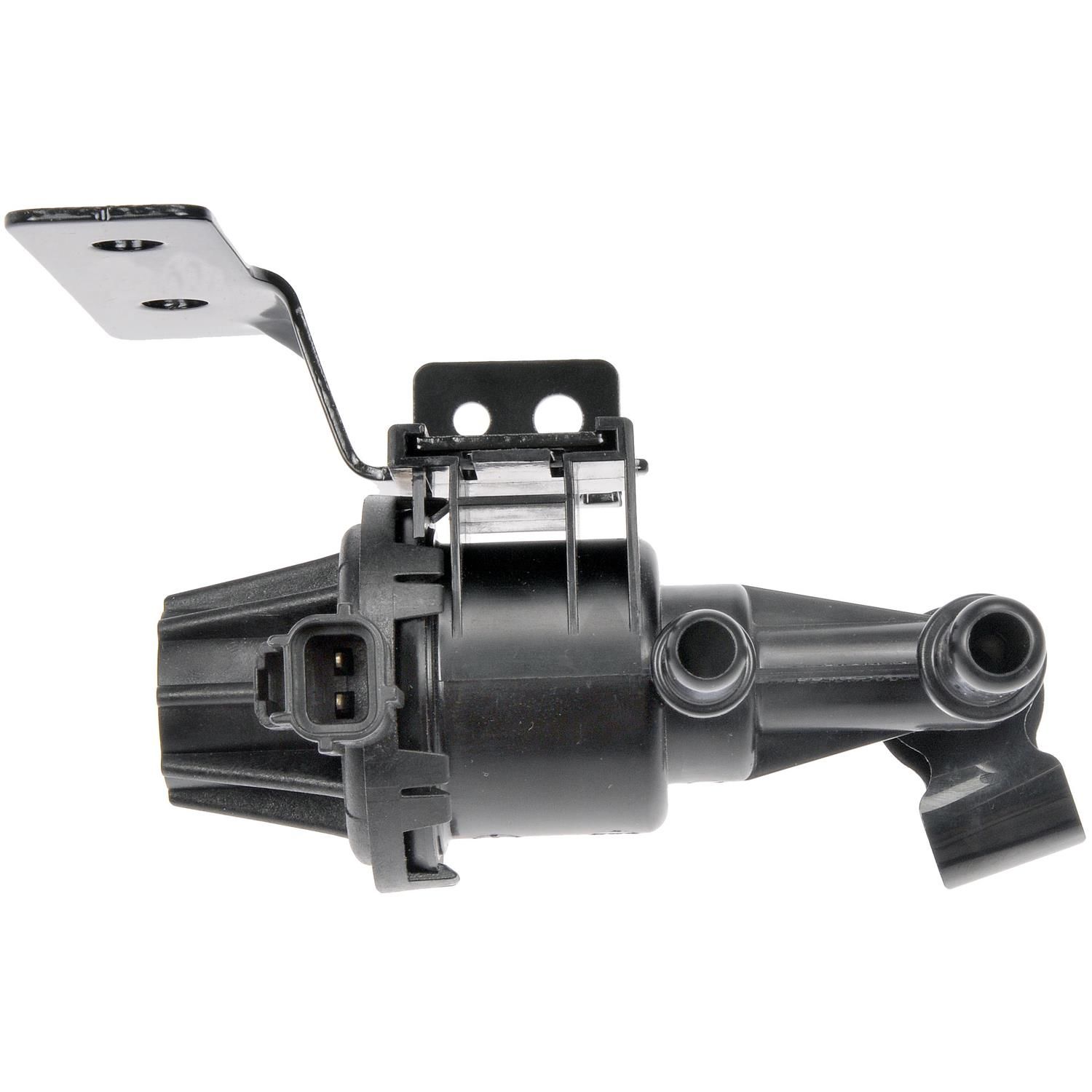
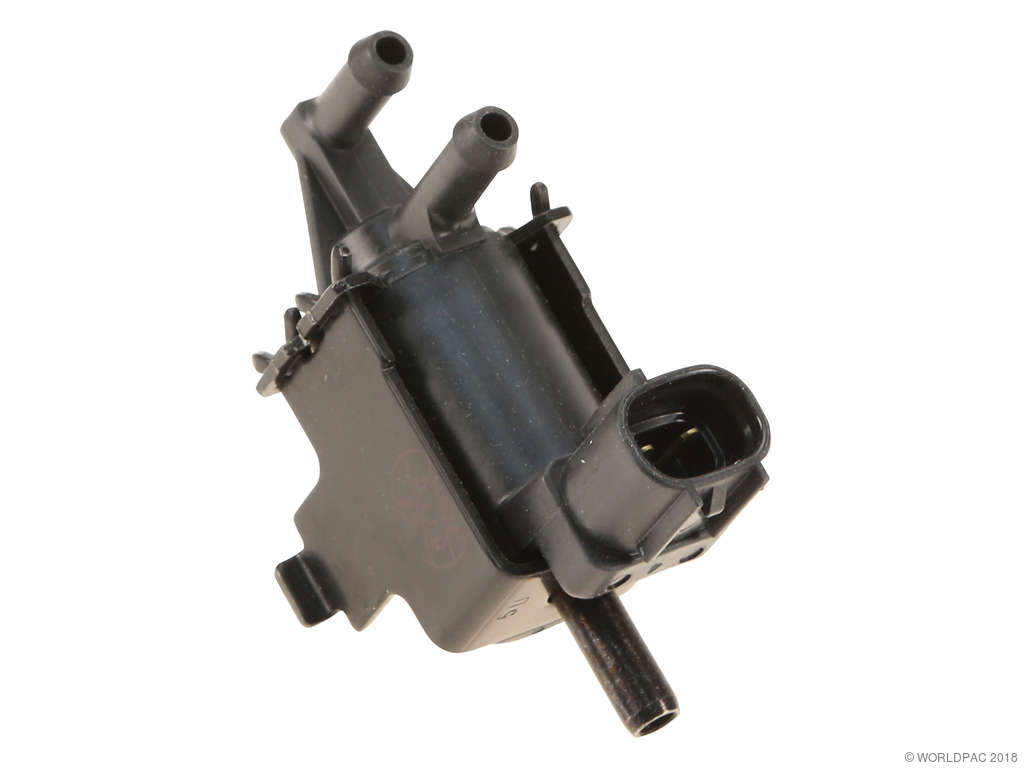
(OEM #77740-47050 (2004-2005), 77740-47051 (2006-2009))— This assembly contains the leak detection pump that fails and triggers the P2402 code. On this Prius model, the pump is not available as a separate component from Toyota. The part number was updated for the 2006 model year.
Trusted brands: Toyota (Genuine OEM), Dorman (Part #911-650)
OEM price range: $290-$450
Aftermarket price range: $200-$350
Related Codes That Often Appear With This One
- P043E — Part of the common five-code cluster (P043E, P043F, P2401, P2402, P2419) that indicates a failed charcoal canister assembly on Toyota vehicles.
- P043F — A companion code that frequently appears with P2402 when the leak detection pump or canister orifices are blocked or damaged.
- P2401 — Indicates a low circuit condition for the same pump; seeing both high (P2402) and low (P2401) codes simultaneously points to a comprehensive internal failure of the pump module.
- P2419 — Refers to the EVAP pressure switching valve, which is also part of the canister assembly. It gets triggered by the same internal failure.
Technical Service Bulletins (TSBs) & Recalls
- T-SB-0064-11 / T-SB-0200-11: While for other models (Corolla/Matrix), these TSBs document the exact same cluster of five EVAP codes (P043E, P043F, P2401, P2402, P2419) caused by water intrusion into the charcoal canister, confirming the failure pattern and the fix of replacing the entire canister assembly.
- TSB EG048-07: As noted in NHTSA ODI #10694017 and #10442353, this bulletin describes how water can enter the filler pipe cover and contaminate the EVAP components, leading to the illumination of the Check Engine Lamp with the P2402 code cluster.
Platform-Specific Known Issues
- The Gen 2 Prius uses a flexible bladder-style fuel tank. Habitually overfilling the tank by adding more fuel after the pump automatically shuts off can force liquid gasoline into the vapor canister, destroying the sensitive pump and charcoal bed inside.
- The bolts holding the canister assembly to the vehicle are highly prone to severe rust, often requiring cutting or breaking them off and replacing them with new hardware. It is a very common point of frustration during the repair.
Mechanic-Grade Diagnostic Values
- Leak Detection Pump Motor Test — expected: A clicking sound should be heard from the pump.. Failure: No clicking sound indicates a failed pump motor.
- Leak Detection Pump Motor Power Application — expected: Connect a positive (+) lead of a battery to terminal 5 and a negative (-) lead to terminal 1 of the pump connector.. Failure: If no clicking sound is heard, the pump is faulty and the canister assembly needs replacement.
- Voltage at Pump Driver Input (Key On) — expected: 11.5V - 12.5V. Failure: A reading above 13V indicates a high-voltage condition that can trigger P2402.
Scan Tool Commands That Help
- Toyota Techstream: EVAP System Test (Automatic Mode or Cold Soak Bypass) — This allows a technician to force the EVAP leak test to run without waiting the usual 5+ hours for the vehicle to cool down. It manually activates the leak detection pump and valves, allowing for immediate verification of pump operation (or lack thereof) after a repair or during diagnosis.
Wiring & Ground Locations
- Charcoal Canister Assembly — Under the rear of the vehicle, near the fuel tank, typically on the driver's side, just aft of the fuel tank itself.. This is the location of the leak detection pump. The entire assembly must be accessed for testing the connector or replacing the unit.
- Ground Point IC — Under the rear of the vehicle, near the fuel tank and charcoal canister assembly.. A corroded or loose ground at this location can cause a variety of EVAP system electrical faults, including a 'circuit high' condition like P2402 due to a floating ground reference.
- 5-Pin Canister Connector — The electrical connector attached directly to the charcoal canister assembly.. This is the primary test point. Pin 1 is the ground and Pin 5 is the power supply from the battery for testing the pump motor directly.
Real Owner Repair Stories
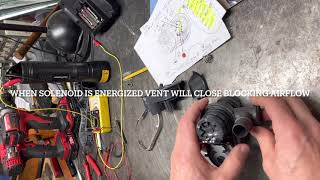
- YouTube video by user 'repairsfan' (Toyota vehicle (model not specified, but with identical 5-code cluster)) — Check Engine Light with the full cluster of EVAP codes: P043E, P043F, P2401, P2402, P2419.
❌ Tried (didn't work) Initial attempt to repair the pump by cleaning it after finding water inside. The codes returned.
✅ What actually fixed it The problem was permanently solved by replacing only the leak detection pump, which is mounted to the charcoal canister with three small screws. The user notes that after replacement and clearing the codes, the light stayed off after multiple drive cycles. - NHTSA ODI #11533362 — An owner reported that the EVAP leak detection pump control circuit high (P2402) and circuit low (P2401) were both confirmed as active faults on their vehicle.
- NHTSA ODI #11419086 — A driver reported that an AWD malfunction and engine light returned with the P2402 code cluster (P043E, P043F, P2401, P2419), requesting that the manufacturer address the recurring problem.
OEM Part Supersession History
77740-47050→77740-47051— Part number was updated for the 2006 model year refresh. The specific internal changes are not documented, but it's a standard model year part progression.
Heads up: The parts are generally considered interchangeable for the 2004-2009 generation, but it is best practice to use the part number specified for the vehicle's model year.
Model Year Variations Within This Range
- 2004-2005 vs 2006-2009: The OEM part number for the charcoal canister assembly changed from 77740-47050 to 77740-47051 starting with the 2006 model year.
Diagnostic Flowchart
Other Known Issues on This Vehicle
Issues unrelated to this code that are worth knowing about as an owner of this generation:
- Combination Meter Failure 🟠 Medium — Very common as vehicles age. The dashboard display (speedometer, fuel gauge) goes completely blank. The car remains drivable, but without instrumentation. (Ref: TSB EG030-08 (later revised, e.g., T-SB-0172-09) was issued for intermittent display issues, providing for a replacement of the combination meter ECU.)
- Inverter Coolant Pump Failure 🔴 High — A very common failure that can lead to the hybrid system overheating and shutting down. Triggers code P0A93. (Ref: Subject to Safety Recall C0U / Limited Service Campaign A0N. Toyota replaced these pumps free of charge.)
- Brake Actuator Assembly Failure 🔴 High — Widespread issue causing a loud, frequent buzzing/honking noise from the engine bay, a trio of warning lights (ABS, BRAKE, VSC), and potential loss of braking assist. Common codes are C1256 and C1391. (Ref: Toyota issued a Warranty Enhancement Program (ZE1) that extended coverage, but it has since expired. No full safety recall was issued.)
- Excessive Oil Consumption 🟠 Medium — Many 1NZ-FXE engines begin to consume significant amounts of oil (e.g., 1 quart per 1000-2000 miles) as they accumulate mileage, typically over 100k miles. This is often attributed to carbon buildup on low-tension piston rings. (Ref: No recall, but it's a widely acknowledged characteristic. Toyota's official stance is that consumption up to 1.1 quarts per 600 miles is 'normal'. Replacing the PCV valve is a commonly suggested first step.)
- HID Headlight Failure 🟡 Low — The original High-Intensity Discharge (HID) headlights are prone to flickering and failing. This can be due to either the bulb or the ballast.
Used vs. New Parts: Buying Guide for This Vehicle
When a used part is the smart pick: For this specific repair, buying a used charcoal canister assembly from a junkyard is NOT recommended. The internal leak detection pump is a very common failure item due to electronic failure and sensitivity to water/fuel. The risk of a used part failing quickly is very high.
What to inspect on the donor part:
- Not applicable, as used parts are not advised for this component.
OEM-only on this vehicle (don't cheap out):
- While not strictly OEM-only, using a Genuine Toyota canister assembly is the most reliable fix with the lowest chance of comeback issues.
Aftermarket brands forum-validated for this vehicle:
- Dorman (Part #911-650) is a widely available and commonly used aftermarket alternative to the complete OEM assembly.
Brands owners have reported issues with on this vehicle:
- No specific brands are consistently cited as problematic, but ultra-low-cost, unbranded parts from online marketplaces carry a higher risk of premature failure or incorrect fitment.
Real Owner Stories
Aggregated from forums and TSBs cited above. Mileages and costs reflect what owners reported in those sources.
2009 Prius 1.5L — 260418 miles
Symptoms: Check engine light came on the morning after purchase, car stinks like gas. Codes P2401, P043E, P043F, P2402, P2419 were present.
What fixed it: The report identifies the issue as a flow issue in the EVAP system requiring repair of a bad component (charcoal canister), though the user was warned the seller likely cleared codes before the sale.
Source hint: reddit r/prius
2004-2009 Prius 1.5L
Symptoms: Found water in the canister; cleared it out as a temporary fix.
What fixed it: The problem returned with the next rainy season, confirming that replacing the charcoal canister is the necessary permanent fix for the 5-code cluster.
Source hint: PriusChat - Thread Title: 'Evaporative System Codes P043E, P043F, P2401, P2402, P2419.'
Related OBD-II Codes
Frequently Asked Questions
I have P2402 along with P043E, P043F, P2401, and P2419. What does this 'cluster' mean for my Prius?
Can overfilling my gas tank cause the P2402 code on a Gen 2 Prius?
Do TSB-0064-11 or TSB-0200-11 apply to my 2004-2009 Prius?
Why is it so difficult to remove the charcoal canister on this vehicle?
Can I just replace the leak detection pump to fix P2402?
Is there a risk of the P2402 code returning if I just dry out the canister?
Helpful Videos

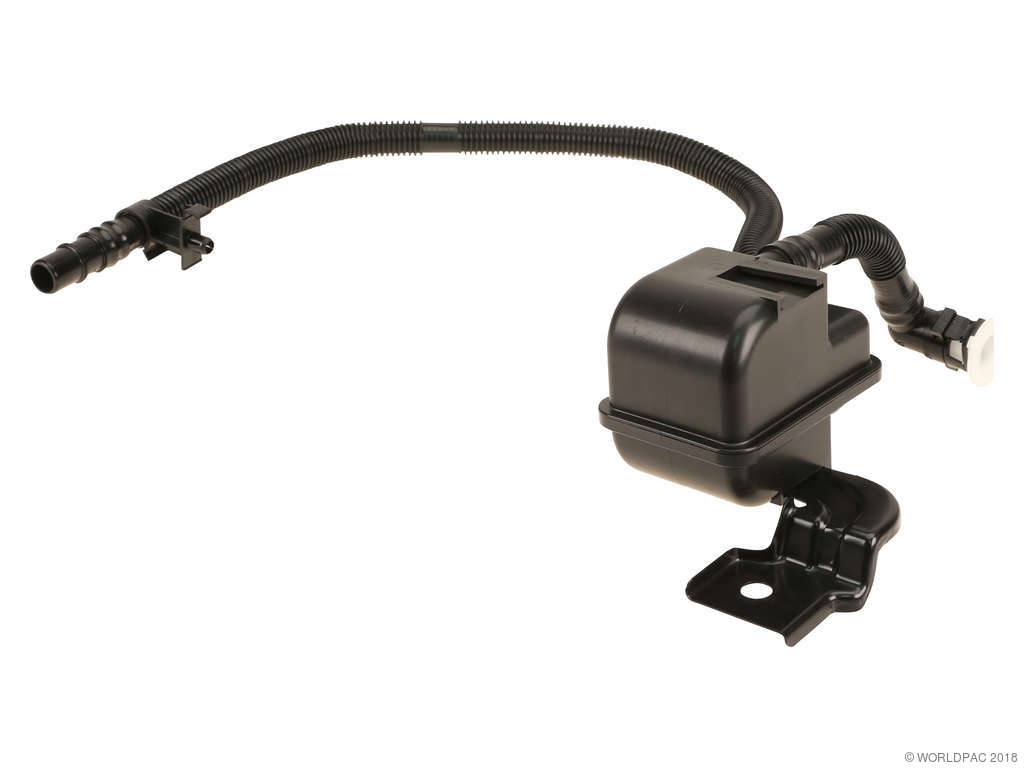
Used OEM Parts in Stock

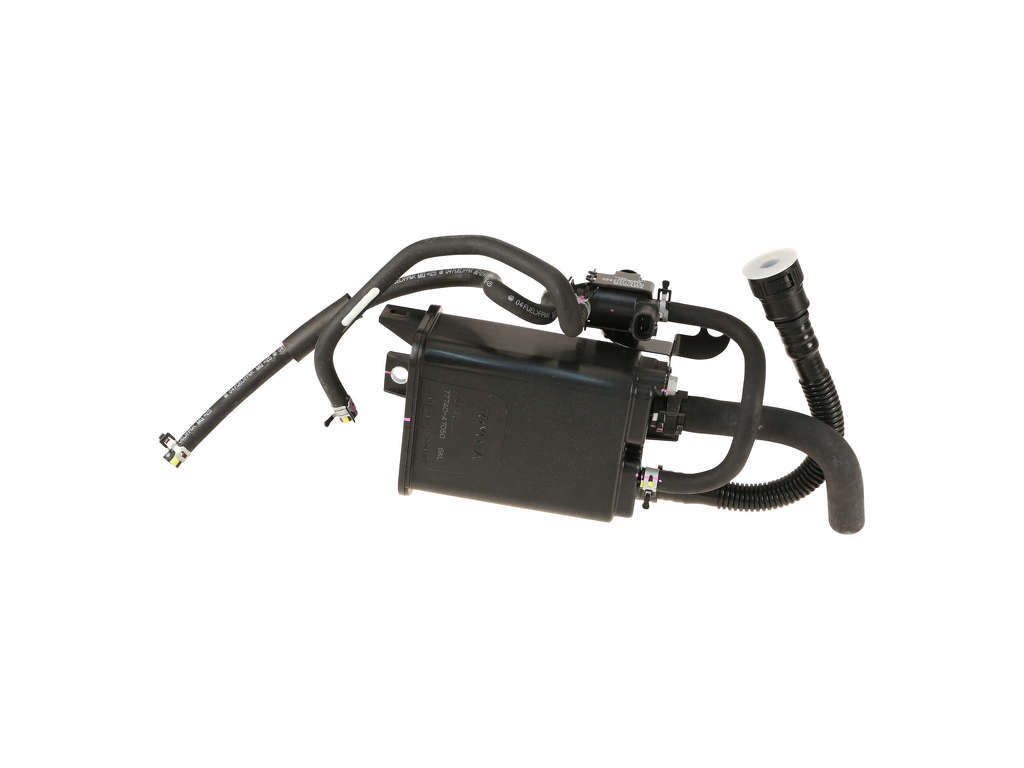
New Aftermarket Parts Available


The information in this article is provided for general reference and educational purposes only. Vehicle specifications, procedures, and part compatibility can vary by production date, trim level, and region. Always consult your vehicle's factory service manual and verify part numbers before purchasing or performing repairs. Safety-critical components such as airbags, seat belts, and braking systems should be installed by a qualified professional.
- Toyota Prius:
- 🧭 Diagnostic Flowchart
- 🎬 Helpful Videos
- 🛍️ Shop This Part
- What's Unique About the 2004-2009 Toyota Prius
- Symptoms You May Notice
- Most Likely Causes
- Rare But Worth Checking
- Diagnosis Steps
- Parts You'll Likely Need
- Related Codes That Often Appear With This One
- Technical Service Bulletins (TSBs) & Recalls
- Platform-Specific Known Issues
- Mechanic-Grade Diagnostic Values
- Scan Tool Commands That Help
- Wiring & Ground Locations
- Real Owner Repair Stories
- OEM Part Supersession History
- Model Year Variations Within This Range
- Other Known Issues on This Vehicle
- Used vs. New Parts: Buying Guide for This Vehicle
- Real Owner Stories
- 2009 Prius 1.5L — 260418 miles
- 2004-2009 Prius 1.5L
- Related OBD-II Codes
- Frequently Asked Questions
- 🎟️ Get 5% Off