

P2402 on 2007-2011 Toyota Tundra: EVAP Pump Circuit High Causes and Fixes
On a 2007-2011 Tundra, code P2402 almost always indicates a failed charcoal canister assembly, especially if it appears with other EVAP codes like P2419. A known issue is water getting into the system via the fuel filler neck, which is addressed by a Toyota TSB (T-SB-0178-11) when a specific cluster of five codes is present. The standard repair is to replace the entire canister assembly, and in TSB cases, the fuel filler pipe as well.
- P2402 is an electrical circuit code for the EVAP leak detection pump, not a leak code.
- On the 2007-2011 Tundra, this code is almost always caused by a failed charcoal canister assembly.
- Before buying parts, check if you have the specific cluster of five codes (P043E, P043F, P2401, P2402, and P2419) which points to a known water intrusion issue covered by a TSB.
- A DIY repair may be possible if the canister is not internally destroyed; one owner successfully fixed the issue by finding a small crack, sealing it, and drying the canister with compressed air.
- Do not replace the gas cap for this code; it will not fix a 'Circuit High' electrical fault.
What's Unique About the 2007-2011 Toyota Tundra
For the 2007-2011 Tundra, this code is very frequently part of a larger, well-documented issue. Toyota issued Technical Service Bulletin (TSB) T-SB-0178-11 for a condition where water and debris enter the EVAP system through the fresh air inlet on the fuel tank filler pipe, causing P2402 along with four other specific codes (P043E, P043F, P2401, and P2419). Even outside of this specific TSB scenario, mechanics report that the combination of P2402 and P2419 on a modern Toyota almost guarantees a failure of the integrated charcoal canister assembly, which contains the leak detection pump.
Symptoms You May Notice
- Check Engine Light is on.
- Inability to pass an emissions inspection.
- No noticeable drivability problems.
- EVAP readiness monitor will show as "not ready".
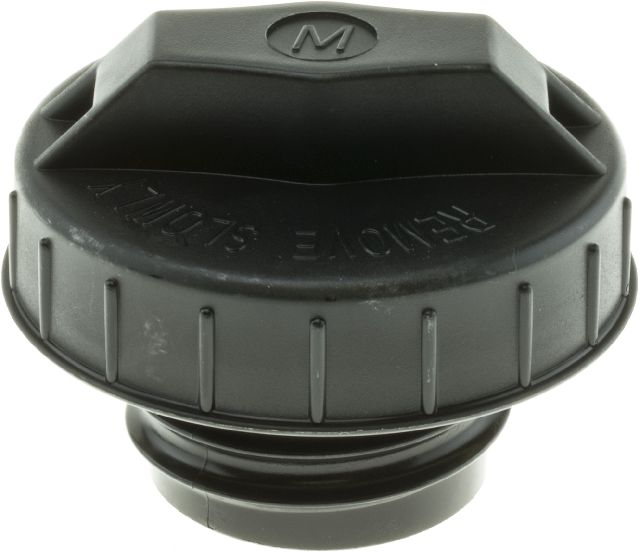
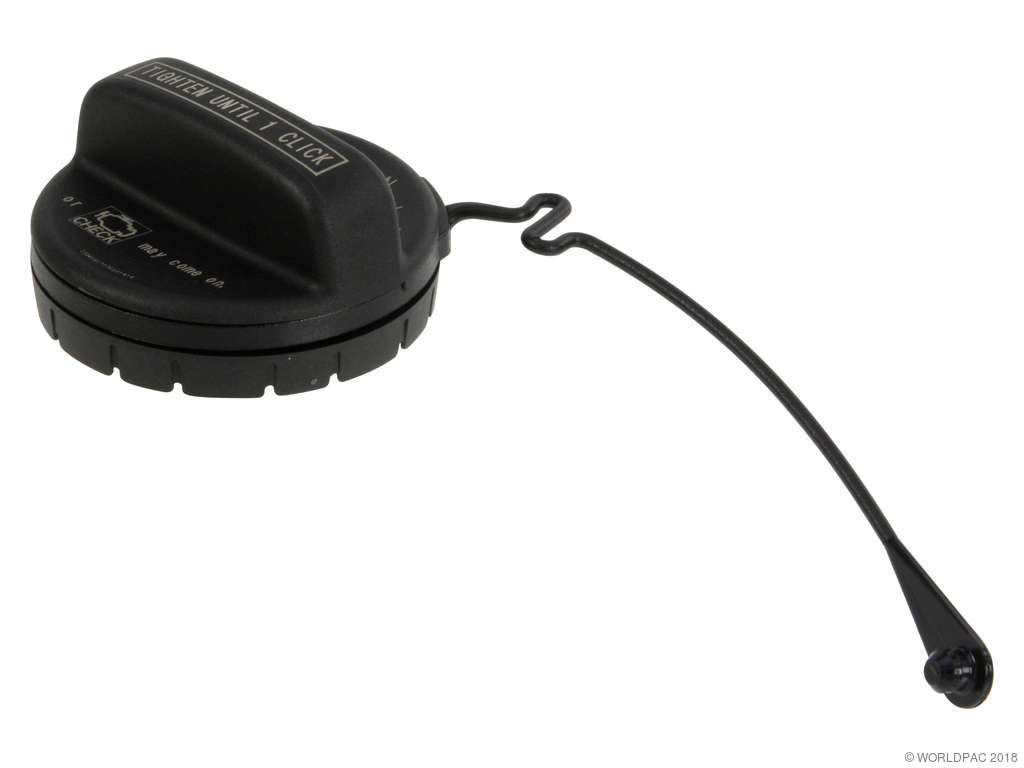
- Replacing just the gas cap. While a bad gas cap can cause other EVAP codes (like for a small leak), it will not cause a 'Circuit High' electrical code like P2402. Some owners have reported replacing the cap with no success for this code cluster.
Most Likely Causes
- Failed Charcoal Canister Assembly 🔴 High Probability → Shop Vapor Canister The leak detection pump is integrated into the charcoal canister. These assemblies are known to fail from internal electrical shorts or from contamination. On the Tundra, water intrusion via the fuel filler neck is a documented cause of failure, as noted in TSB T-SB-0178-11. The canister's location near the rear of the truck also exposes it to road elements.
How to confirm: Check for the presence of other EVAP codes. If P043E, P043F, P2401, P2402, and P2419 are all present, TSB T-SB-0178-11 applies and the cause is almost certainly water intrusion. If P2402 and P2419 are present together, the canister assembly is the most likely cause. A technician in a forum noted this combination means a new canister is needed 99% of the time on late-model Toyotas. Physical inspection after removal may show signs of water or charcoal debris inside the pump housing.
Typical fix: Replace the entire charcoal canister assembly. If the TSB conditions are met, also replace the fuel tank filler pipe with the revised part (P/N 77201-0C080) to prevent recurrence.
Est. part cost: $600-$900 - Wiring or Connector Issue ⚪ Low Probability
How to confirm: Visually inspect the wiring harness and the 5-pin electrical connector going to the charcoal canister assembly. The canister is located at the rear of the truck, near the spare tire, making it susceptible to road debris and moisture. Check for any signs of damage, corrosion, or a loose connection. Test for correct voltage at the connector pins. An owner report in NHTSA ODI #11387241 noted that research into this specific code cluster often points to either EVAP canister failure or a possible wiring failure.
Typical fix: Repair the damaged section of the wiring harness or clean/replace the connector.
Est. part cost: $10-$50
Rare But Worth Checking
- Failed Engine Control Module (ECM): → Shop Engine Control Module (ECM) This is extremely rare. A 'Circuit High' code can theoretically be caused by a faulty driver circuit within the ECM, but all other possibilities, especially the charcoal canister and wiring, should be exhaustively ruled out before considering the ECM as the cause.
Diagnosis Steps
- Scan the ECM for all stored trouble codes. Note if P2402 appears alone or with other codes.
- If codes P043E, P043F, P2401, P2402, and P2419 are all present, refer to Toyota TSB T-SB-0178-11. This is the strongest indicator of the water intrusion issue.
- Per the TSB, visually inspect for water or debris by disconnecting the vent hose from the canister assembly. If evidence of water is found, the TSB applies.
- If P2402 appears with P2419 (but not the full set from the TSB), the charcoal canister assembly is still highly suspect.
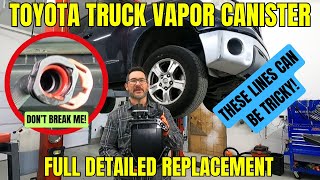
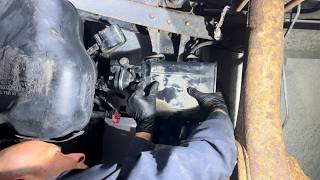
- Locate the charcoal canister at the rear of the vehicle, behind the gas tank and often near the spare tire. 🎬 See how to remove and install the canister
- Thoroughly inspect the electrical connector and wiring harness going to the canister for any signs of corrosion, damage, or loose pins.
- If the wiring appears intact, the most probable cause is a failed leak detection pump, which is internal to the charcoal canister assembly.
- Replace the charcoal canister assembly. If TSB conditions were met, also replace the fuel tank filler pipe with the updated part to prevent the problem from happening again.
Parts You'll Likely Need
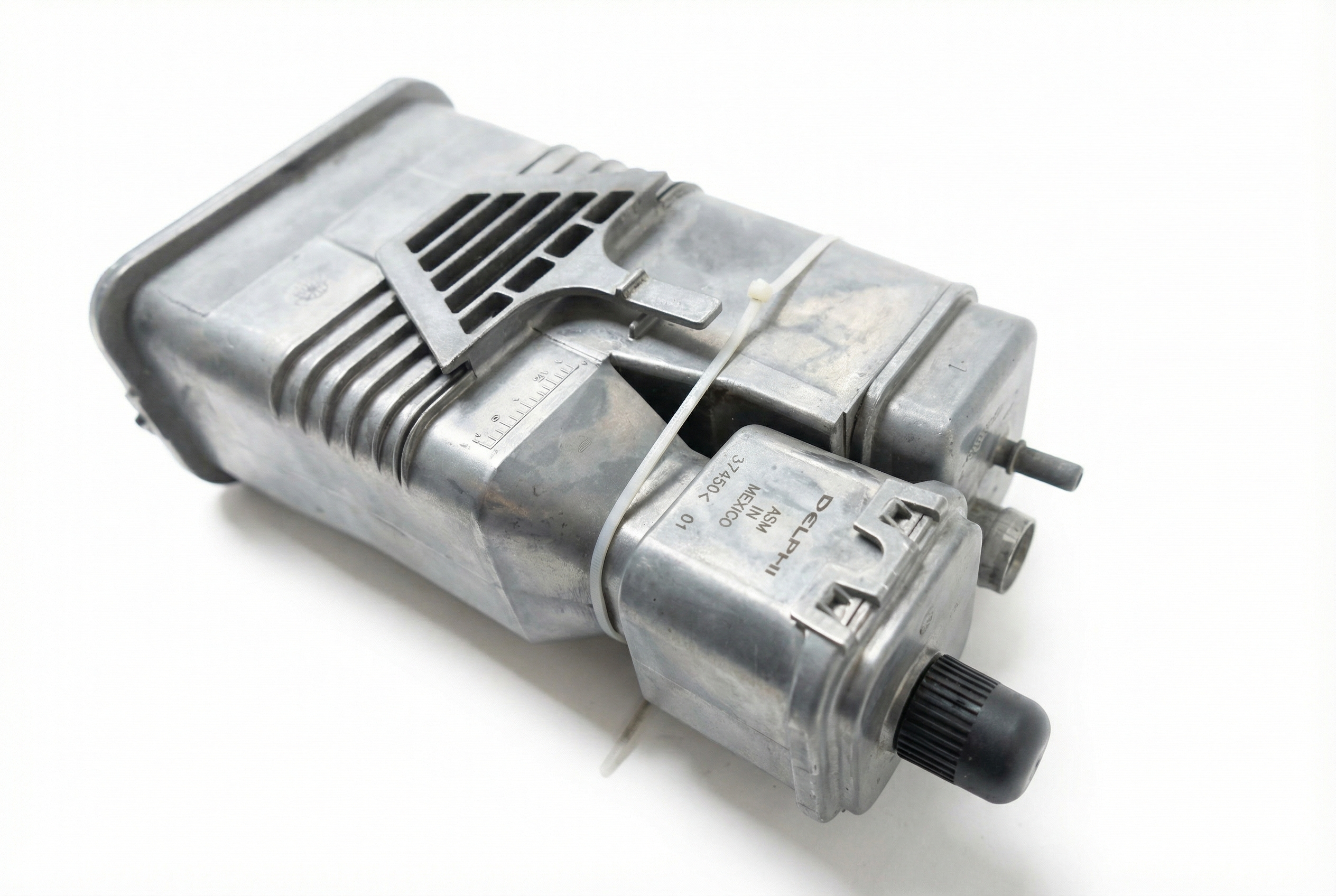
- Vapor Canister / Charcoal Canister Assembly
(OEM #77740-0C050 (or 77740-0C051))— This assembly contains the leak detection pump that is the source of the 'Circuit High' fault. On this platform, it is the most common point of failure for code P2402.
Trusted brands: Toyota Genuine, Denso
OEM price range: $680-$870
Aftermarket price range: $275-$500 - Fuel Tank Filler Pipe
(OEM #77201-0C080)— Only needed if the conditions of TSB T-SB-0178-11 are met (all five specific DTCs are present). The original design can allow water into the EVAP system, and Toyota released this revised part to fix this.
Trusted brands: Toyota Genuine
OEM price range: $150-$250
Related Codes That Often Appear With This One
- P043E — Part of a five-code cluster indicating a failure of the charcoal canister assembly, often due to water intrusion per TSB T-SB-0178-11. 🎬 Watch: Diagnosing the five-code EVAP cluster
- P043F — Part of a five-code cluster indicating a failure of the charcoal canister assembly, often due to water intrusion per TSB T-SB-0178-11.
- P2401 — Indicates the pump control circuit is 'Low', the opposite of P2402. Seeing them together often points to an erratic internal electrical failure within the pump module, as documented in the TSB cluster. NHTSA ODI #11533362 confirms seeing P2401 (Circuit Low) and P2402 (Circuit High) stored together.
- P2419 — References the EVAP switching valve control circuit. Its appearance with P2402 is a very strong indicator of a complete charcoal canister assembly failure on Toyotas.
Technical Service Bulletins (TSBs) & Recalls
- T-SB-0178-11: MIL "ON" P043E, P043F, P2401, P2402 & P2419 Due to Water Intrusion into Charcoal Canister.
Platform-Specific Known Issues
- A known design flaw with the fuel filler pipe's fresh air inlet can allow water and debris to enter the EVAP system, destroying the charcoal canister and triggering a specific set of five DTCs, including P2402. This is documented in TSB T-SB-0178-11.
Mechanic-Grade Diagnostic Values
- Leak Detection Pump Ground Circuit Resistance — expected: Less than 1.0 Ohm. Failure: Resistance greater than 1.0 Ohm indicates a poor ground connection, which can cause a variety of electrical faults.
- Leak Detection Pump Motor Voltage at ECM — expected: 9V - 14V (Pump Commanded ON); 0V - 3V (Pump Commanded OFF). Failure: A 'Circuit High' code like P2402 suggests voltage is remaining high when it should be low. Verifying this requires a scan tool to command the pump and a multimeter to test voltage at the ECM or pump connector. Specific pin numbers for the Tundra's connector are not available in public-facing documents.
- Leak Detection Pump Motor Resistance — expected: Not specified in public sources. A generic test for similar DC motors would be to check for a reading between 20-50 Ohms and ensure it is not an open circuit (infinite resistance) or a short circuit (near zero resistance).. Failure: A reading of OL (Over Limit/Open) or near 0 Ohms would indicate a failed pump motor.
Scan Tool Commands That Help
- Toyota Techstream: Evaporative System Check (Utility) — This utility allows a technician to force the EVAP system self-test, including activating the leak detection pump, without waiting for the 5-hour 'soak time' that normally occurs after the vehicle is shut off. It's essential for verifying a repair or actively testing the pump circuit. The path is typically Engine and ECT -> Utility -> Evaporative System Check.
- Professional Bidirectional Scanner (e.g., Snap-on, Autel): EVAP System Test / Active Test — Similar to Techstream, these tools can command the leak detection pump on and off. This is critical for diagnosing a P2402 'Circuit High' fault, as it allows the technician to see if the circuit voltage drops as commanded or stays high, indicating a short to power or failed component.
Wiring & Ground Locations
- Canister Pump Module Connector — On the charcoal canister assembly, which is located at the rear of the truck, above and forward of the rear axle, often near the spare tire.. This 5-pin connector is the primary point for physically testing for power, ground, and signal integrity directly at the component. A visual inspection for corrosion or damage here is a critical first step.
- ECM Connectors (e.g., D8, D9) — In the engine compartment, typically on the right (passenger) side.. This is where the control and sense circuits from the leak detection pump terminate. If tests at the pump connector are inconclusive, checking for continuity and correct voltage here can determine if there is a break or short in the wiring harness between the pump and the ECM.
- EVAP Circuit Ground Point — The specific ground point (e.g., Gxxx) for the canister pump module is not identified in public wiring diagrams. General frame grounds are located in the rear of the vehicle, and a faulty ground is a possible but less common cause for a 'Circuit High' code compared to an internal pump failure.. A high-resistance ground could potentially cause erratic voltage readings, though it more commonly leads to 'Circuit Low' codes. Verifying ground integrity by measuring resistance from the connector's ground pin to a clean chassis point is a key diagnostic step.
Real Owner Repair Stories
- TundraTalk.net Forum user 'Mr. Seven' (2007-2011 Toyota Tundra (exact year not specified)) — Check Engine Light with the five-code cluster: P043E, P043F, P2401, P2402 & P2419.
❌ Tried (didn't work) Not specified, but the user opted for a DIY repair instead of immediate replacement.
✅ What actually fixed it The owner removed the charcoal canister and noted water came out. They sealed the hose barbs and used a blow gun with very low pressure (<10 psi) and soapy water to find a small leak at one of the canister's freeze plugs. After sealing the leak with a sealant, they used compressed air to blow out and dry the inside of the canister. After reinstallation, the codes were cleared and did not return for over 3,000 miles. - YouTube channel 'Will Fix It!' (2007 Toyota Tundra i-Force V8) — Check Engine Light with codes P2401, P2402, and P2419.
❌ Tried (didn't work) Initial diagnosis pointed directly to the leak detection pump.
✅ What actually fixed it The leak detection pump, which is mounted to the charcoal canister, was replaced as a separate component. After replacement and clearing the codes, the check engine light did not return after multiple key cycles and driving.
Documented NHTSA Reports
- An owner reported in NHTSA ODI #10694017 that their check engine lamp illuminated during highway travel with stored codes P043E, P043F, P2401, P2402, and P2419, noting that water enters the filler pipe cover and contaminates components.
- Another report, NHTSA ODI #10442353, describes the same five-code cluster (P043E, P043F, P2401, P2402, and P2419) appearing during highway travel due to water entering the filler pipe.
- In NHTSA ODI #11419086, a Toyota owner requested the manufacturer address the recurring engine light and AWD malfunction involving codes P043E, P043F, P2401, P2402, and P2419.
OEM Part Supersession History
90910-AF005 (and others like 90910-14005, 90910-AF003, 90910-AF004)→90910-AF006— Likely internal design improvements to the pump motor or integrated sensor to improve durability and prevent premature failure from moisture or wear.
Heads up: No incompatibility is noted. The latest part number, 90910-AF006, is the correct direct replacement for all previous versions for this application.
Diagnostic Flowchart
Other Known Issues on This Vehicle
Issues unrelated to this code that are worth knowing about as an owner of this generation:
- Secondary Air Injection System (SAIS) Failure 🔴 High — Very common, especially on 2007-2012 models. Failure often forces the vehicle into 'limp mode'. (Ref: Multiple TSBs exist (e.g., T-SB-0350-09, T-SB-0178-11) and a warranty extension was offered due to widespread water intrusion into the air pumps.)
- Camshaft Tower Oil Leak 🟠 Medium — Common on the 5.7L (3UR-FE) V8 engine. Often appears as a slow seep from the back of the cylinder heads, visible from the wheel wells. (Ref: No recall, but a very well-documented issue. The repair is labor-intensive, costing $2,000-$4,000 as it requires removing timing components to re-apply sealant (FIPG).)
- Frame Rust / Corrosion 🔴 High — Widespread on 2007-2008 models, particularly in salt-belt states. Can lead to structural failure of the frame or perforation of the rear crossmember. (Ref: Toyota initiated a large-scale warranty enhancement program and lawsuit settlement, offering frame inspections, anti-corrosion compound application, or full frame replacement.)
- Water Pump Failure 🟠 Medium — A known failure point on the 5.7L V8. Leaks are often identified by pink, crusty residue around the pump's weep hole.
- Cracked/Leaking Exhaust Manifolds 🟡 Low — Fairly common. Owners report a ticking noise on startup that may disappear as the engine warms up and the metal expands.
Used vs. New Parts: Buying Guide for This Vehicle
When a used part is the smart pick: A used charcoal canister assembly is a high-risk purchase for this vehicle and is generally not recommended. The primary failure mode is internal damage from water intrusion, which is impossible to see from the outside. A used part may have the same latent defect or existing damage. It should only be considered if the price is extremely low and you can personally inspect the donor vehicle for signs of the TSB-related water leak (e.g., from the fuel filler neck area) or if the seller can guarantee it is dry and functional.
Donor-vehicle mileage cap: roughly under 80000 miles for the part to have meaningful remaining life.
What to inspect on the donor part:
- Shake the canister vigorously; there should be no sound of sloshing water or loose charcoal pellets.
- Disconnect a hose and look inside the port with a flashlight for any signs of white, chalky residue (from dried water) or black dust (from broken charcoal).
- Inspect the electrical connector pins for any green or white corrosion.
- If possible, perform a low-pressure leak test (under 2 psi) with soapy water to check for cracks in the plastic housing or around the seals, as detailed in forum repair stories.
OEM-only on this vehicle (don't cheap out):
- Charcoal Canister Assembly: While aftermarket options exist, the OEM part is the most reliable choice given the complexity of the integrated pump and valves. The TSB fix also specifies an updated OEM fuel filler pipe.
- Fuel Tank Filler Pipe: If replacing due to the TSB, only the revised OEM part (77201-0C080) should be used to ensure the water intrusion issue is resolved.
Aftermarket brands forum-validated for this vehicle:
- Denso (Often the OEM supplier)
- Standard Motor Products (SMP)
Brands owners have reported issues with on this vehicle:
- No-name, unbranded units from online marketplaces are a significant gamble due to the precise calibration required for the internal pump and sensors.
Real Owner Stories
Aggregated from forums and TSBs cited above. Mileages and costs reflect what owners reported in those sources.
2011 Toyota Tundra — 711 miles
Symptoms: Brand new vehicle exhibiting multiple EVAP codes including P2402 and P2419.
What fixed it: Replacement of the charcoal canister assembly.
Source hint: toyotadude.blogspot.com article titled 'P043E, P043F, P0441, P0455, P2401, P2402'
2010 Toyota Tundra SR5
Symptoms: Check engine light on with codes P043F, P2419, P043E, P2402, & P2401.
What fixed it: The owner initially replaced the gas cap which seemed to fix it temporarily, but they ultimately ordered a new EVAP canister and pumps to resolve the issue.
Source hint: tundras.com thread titled 'Codes P043F, P2419, P043E, P2402, & P2401'
2007-2011 Toyota Tundra
Symptoms: Five specific TSB codes (P043E, P043F, P2401, P2402, P2419) present; owner confirmed gas cap replacement did not work.
What fixed it: Replacing the EVAP charcoal canister.
Source hint: TundraTalk.net Forum thread 'codes-p043f-p2419-p043e-p2402-p2401'
Related OBD-II Codes
Frequently Asked Questions
My 2010 Tundra has codes P043E, P043F, P2401, P2402, and P2419. Is there a specific bulletin for this?
What is the recommended fix for the water intrusion issue on a 2007-2011 Tundra?
Can I just replace the gas cap to fix P2402 on my Tundra?
Where is the charcoal canister located on the 2007-2011 Tundra?
Does the Sequoia suffer from the same P2402 issues as the Tundra?
Will P2402 prevent me from passing my vehicle inspection?
Helpful Videos


Used OEM Parts in Stock

New Aftermarket Parts Available


The information in this article is provided for general reference and educational purposes only. Vehicle specifications, procedures, and part compatibility can vary by production date, trim level, and region. Always consult your vehicle's factory service manual and verify part numbers before purchasing or performing repairs. Safety-critical components such as airbags, seat belts, and braking systems should be installed by a qualified professional.
- Toyota Tundra:
- 🧭 Diagnostic Flowchart
- 🎬 Helpful Videos
- 🛍️ Shop This Part
- What's Unique About the 2007-2011 Toyota Tundra
- Symptoms You May Notice
- Most Likely Causes
- Rare But Worth Checking
- Diagnosis Steps
- Parts You'll Likely Need
- Related Codes That Often Appear With This One
- Technical Service Bulletins (TSBs) & Recalls
- Platform-Specific Known Issues
- Mechanic-Grade Diagnostic Values
- Scan Tool Commands That Help
- Wiring & Ground Locations
- Real Owner Repair Stories
- Documented NHTSA Reports
- OEM Part Supersession History
- Other Known Issues on This Vehicle
- Used vs. New Parts: Buying Guide for This Vehicle
- Real Owner Stories
- 2011 Toyota Tundra — 711 miles
- 2010 Toyota Tundra SR5
- 2007-2011 Toyota Tundra
- Related OBD-II Codes
- Frequently Asked Questions
- 🎟️ Get 5% Off