

P2404 on 2008-2016 Audi A4 2.0T: EVAP Leak Detection Pump Circuit Causes and Fixes
For a B8 Audi A4, code P2404 is most often caused by a faulty EVAP Leak Detection Pump (LDP) or corroded wiring to the pump. Expect to pay $150-$250 for a new pump and check the wiring harness near the rear passenger-side wheel for damage before replacing parts. In many cases, a broken vacuum line to the pump is the culprit.
- P2404 points to an electrical fault in the Leak Detection Pump (LDP) circuit, not necessarily an EVAP leak.
- Before buying any parts, remove the right-rear wheel well liner and thoroughly inspect the LDP's wiring connector for corrosion.
- The two most likely fixes are replacing the LDP itself or repairing its corroded wiring harness.
- Do not replace the N80 purge valve or gas cap for this specific code, as they are not the cause.
- Avoid topping off your fuel tank to prevent saturating the charcoal canister, a less common but possible cause of this code.
What's Unique About the 2008-2016 Audi A4
On the B8 platform Audi A4 (and its platform mates like the A5 and Q5), the Leak Detection Pump (LDP) is located near the rear passenger-side wheel well, exposing it and its wiring to road salt, water, and debris. This leads to a high incidence of corroded connectors and wiring harnesses, which can mimic the symptoms of a failed pump. While the pump itself is a common failure point, owners often find that repairing the wiring or a broken vacuum line is the actual fix, making a thorough inspection of the harness and vacuum supply critical before ordering parts.
Generation note: This guide covers the B8 generation of the Audi A4 (2008-2016) and its mid-cycle refresh, the B8.5 (2013-2016). The 2.0T engine and the associated EVAP system components are fundamentally the same across this entire range, so the causes and fixes are consistent. The issue is also common on other vehicles using this platform, such as the Audi A5, Q5, and VW Tiguan.
Symptoms You May Notice
- Check Engine Light is on.
- Inability to set the EVAP system readiness monitor, leading to a failed emissions test.
- In rare cases, difficulty refueling where the pump clicks off repeatedly, which may indicate a blocked charcoal canister associated with this fault.
- Audible vacuum leak noise from the engine bay if a vacuum line is disconnected or broken.
- Replacing the N80 Purge Valve. This is a common EVAP system part but is not related to the LDP sense circuit and will not fix a P2404 code.
- Replacing the gas cap. A faulty gas cap typically causes large leak codes (e.g., P0455), not an electrical circuit code like P2404.
Most Likely Causes
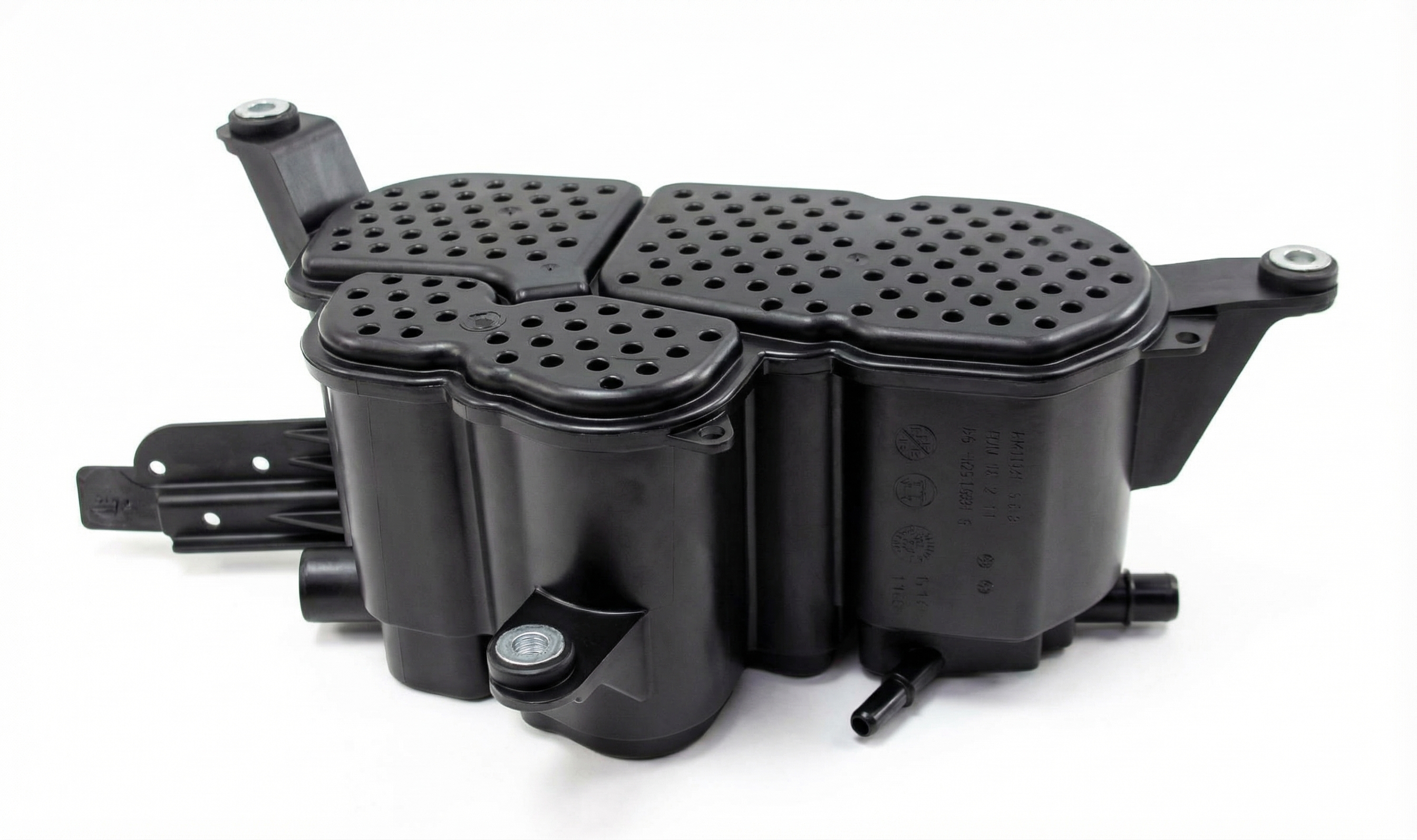
- Faulty Leak Detection Pump (LDP) 🔴 High Probability → Shop Evaporative Emissions System Leak Detection Pump The pump contains internal electronics and a reed switch for the sense circuit that can fail over time due to heat cycles and vibration. The internal diaphragm can also fail to hold a vacuum, even if the electronics test correctly.
How to confirm: After confirming wiring and vacuum supply are intact, the most definitive test is to replace the pump. A VAG-specific scan tool (like VCDS) can attempt to run the LDP basic setting (test 071), but failure can still be ambiguous between the pump and wiring. A technician can also manually apply vacuum to the pump and see if it holds.
Typical fix: Replace the Leak Detection Pump.
Est. part cost: $150-$250 - Corroded or Damaged Wiring/Connector 🔴 High Probability The LDP is located behind the rear passenger-side wheel liner, an area prone to moisture and road salt, which corrodes the connector pins and wires. This is a very common point of failure reported by owners and dealers.
How to confirm: Visually inspect the LDP connector and harness for green or white corrosion, chafed insulation, or broken wires. Test for power, ground, and signal continuity at the connector with a multimeter. A load test using a light bulb can confirm the wire's integrity under load.
Typical fix: Clean the connector terminals and apply dielectric grease. If corrosion is severe, replace the connector pigtail or repair the damaged section of the wiring harness.
Est. part cost: $20-$50 for a connector pigtail - Broken or Disconnected Vacuum Line 🟡 Medium Probability Plastic and rubber vacuum lines become brittle with age and can crack or become disconnected. A small line that supplies vacuum to the LDP often breaks near the brake booster in the engine bay or gets disconnected during unrelated service.
How to confirm: Check for vacuum at the supply line to the LDP with the engine running. If there is no vacuum, trace the line back to the engine bay to find the break or disconnection. A common failure point is a ripped boot on the vacuum hose where it connects to the intake manifold.
Typical fix: Repair the broken line with a new hose section or connector. The entire hose assembly may need replacement if multiple breaks are found.
Est. part cost: $5-$100, depending on whether a small repair or full hose assembly is needed. - Saturated or Blocked Charcoal Canister 🟡 Medium Probability → Shop Vapor Canister Consistently over-filling the fuel tank past the first click can force liquid gasoline into the charcoal canister, which is designed only for vapor.
How to confirm: The canister may feel heavy or you may smell raw fuel near it. A recurring P2404 after pump and wiring repair, especially if accompanied by refueling issues (pump clicking off), points to a saturated canister. A dealer or specialist shop can perform a system test to confirm blockage.
Typical fix: Replace the charcoal canister. It is critical to stop over-filling the fuel tank to prevent a recurrence.
Est. part cost: $200-$400
Rare But Worth Checking
- Failed Engine Control Module (ECM): → Shop Engine Control Module (ECM) This is an uncommon but frustrating cause. If the LDP, wiring, vacuum supply, and canister have all been replaced and the code persists, the driver circuit within the ECM may have failed. This is a last resort after all other possibilities are exhausted.
Diagnosis Steps
- Scan the vehicle for any other related fault codes. Note them and the freeze-frame data.
- Locate the Leak Detection Pump (LDP) and charcoal canister. On the B8 A4, this is typically behind the right-rear wheel well liner.
- Visually inspect the LDP's electrical connector and the nearby wiring harness for any signs of corrosion (green/white powder), damage, or loose connections.
- If corrosion is found, disconnect the battery, clean the terminals thoroughly, apply dielectric grease, and reconnect. Clear codes and re-test.
- Check for a disconnected or cracked vacuum supply line running to the pump. Start in the engine bay near the brake booster and trace it back. Confirm vacuum is present at the pump's supply port with the engine running.
- If wiring and vacuum are good, the Leak Detection Pump itself is the next most likely cause. A shop can test it, but for a DIYer, replacement is often the next step.
- A real-world case on Ross-Tech forums showed a user whose P2404 returned even after a dealer replaced the LDP, wiring, and charcoal canister, highlighting the diagnostic complexity.
- If the code returns after replacing the pump and verifying the wiring and vacuum, investigate the charcoal canister for signs of fuel saturation, especially if refueling issues are present.
- As a final, rare step, if all other components are confirmed good, diagnosis of the ECM itself may be required.
Parts You'll Likely Need
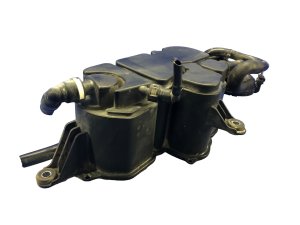
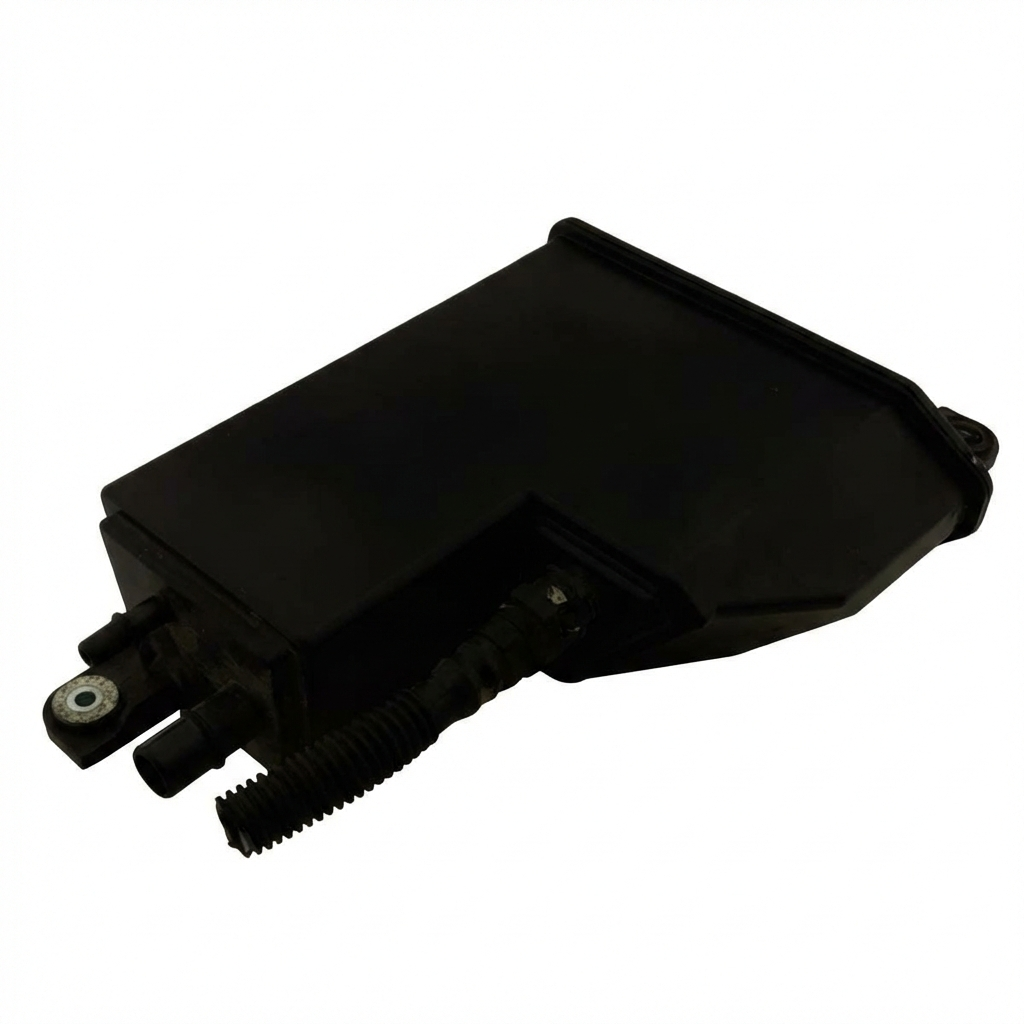
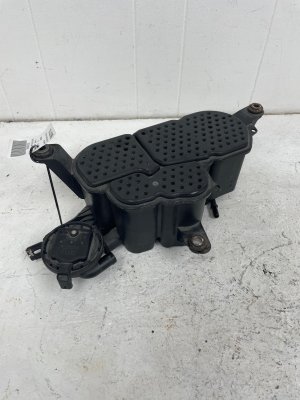
- EVAP Leak Detection Pump
(OEM #8K0906253N)— This is the most common part to fail internally, causing the P2404 code. Note that this part number has had several revisions (e.g., 8K0906253A, C, E, J, L). Always verify with your VIN.
Trusted brands: Bosch, Genuine Audi
OEM price range: $200-$250
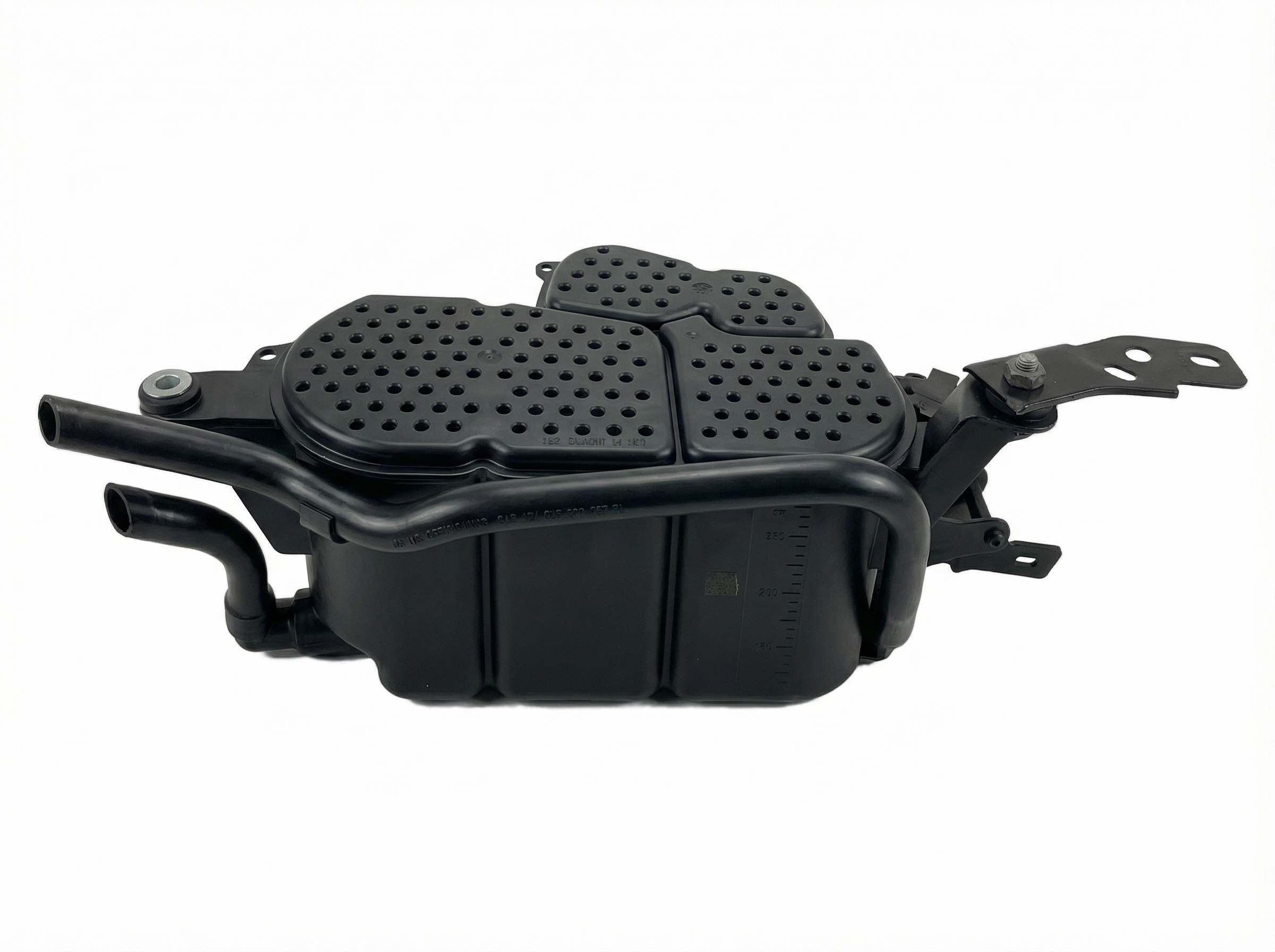
Aftermarket price range: $150-$200 - Charcoal Canister
(OEM #8K0201801C)— If the canister is saturated with fuel from over-filling the tank, it can cause the LDP to work improperly and set this code. This part number may have revisions; 8K0201801A is a previous version.
Trusted brands: Genuine Audi
OEM price range: $250-$400
Aftermarket price range: $200-$300 - Vacuum Hose (to LDP) — The vacuum line running from the engine to the LDP can become brittle and crack, especially at the connection to the intake manifold near the brake booster.
Trusted brands: Genuine Audi, Aftermarket hose repair kits
OEM price range: $75-$125 for the full assembly
Aftermarket price range: $10-$30 for repair sections
Related Codes That Often Appear With This One
- P2400 — P2400 indicates an open in the LDP control circuit. If seen with P2404, it strongly suggests a wiring harness or connector problem common to both the control and sense circuits.
- P0455 — Indicates a large EVAP system leak. While P2404 is an electrical fault, sometimes a sequence of events (like a saturated canister) can lead to multiple codes being stored.
- P0441 — Indicates an incorrect purge flow in the EVAP system. This can sometimes appear alongside P2404 if there are multiple compounding issues within the EVAP system.
Technical Service Bulletins (TSBs) & Recalls
- While no specific TSB for the Audi A4 was found, Subaru issued TSB 09-108-23 for a similar P2404 issue, addressing it with an ECM logic update to prevent the pump from seizing, indicating that software can sometimes be a factor in this code.
- Audi has issued extended warranties for other emissions components on related vehicles, so it is always worth checking with a dealer to see if any coverage applies to the LDP for your specific VIN.
Platform-Specific Known Issues
- A user on AudiWorld forums with a 2008 A4 fixed their P2404 by replacing a vacuum hose near the brake booster that had a ripped boot where it connected to the intake manifold.
- A detailed thread on Ross-Tech forums for a 2009 A4 highlights a frustrating real-world scenario where a dealer replaced the LDP, repaired wiring, and then replaced the charcoal canister, yet the P2404 code kept returning, demonstrating how difficult this code can be to resolve.
- Another Ross-Tech case study on a 2010 VW Tiguan (a platform mate) with the same 2.0T engine and P2404 code found the cause to be a simple disconnected vacuum line in the engine bay after the LDP had already been replaced.
Mechanic-Grade Diagnostic Values
- Leak Detection Pump (V144) resistance between pins 1 and 3 — expected: 640 - 720 Ω. Failure: A reading outside this range indicates an electrical fault in the pump's solenoid or internal wiring.
- Leak Detection Pump (V144) resistance between pins 2 and 3 — expected: Approximately 16 Ω. Failure: A significantly different reading suggests a fault with the reed switch sense circuit.
- Leak Detection Pump (V144) manual vacuum test — expected: Holds 20" Hg (0.700 BAR) of vacuum without dropping.. Failure: If the pump fails to hold vacuum, its internal diaphragm has failed, even if electrical tests pass.
Scan Tool Commands That Help
- VCDS (VAG-COM): Basic Settings - Group 071 — This function manually runs the LDP to test the EVAP system. A test that fails immediately (within 10 seconds) often points to a lack of vacuum supply or a major electrical issue, rather than a small leak.
- VCDS (VAG-COM): Output Tests - N80 and LDP — This allows for individual activation of the N80 purge valve and the LDP to check their function and listen for clicks, helping to isolate a non-responsive component.
Wiring & Ground Locations
- LDP Connector — Behind the rear passenger-side wheel well liner, attached to the Leak Detection Pump on the charcoal canister assembly.. This connector and its wiring are highly susceptible to corrosion from road salt and water, which is a primary cause of the P2404 circuit code.
- Ground Connection 663 — In the rear of the vehicle, on the right side panel.. This is a likely ground point for components in the rear right of the vehicle, including the LDP. A poor ground here can cause erratic voltage and trigger the sense circuit fault.
Real Owner Repair Stories
- AudiWorld Forums user (2008 Audi A4) — P2404 fault code.
❌ Tried (didn't work) Considering replacing the N80 valve.
✅ What actually fixed it The user found a ripped boot on a small vacuum line near the brake booster, which also ran through the firewall. Replacing this vacuum hose assembly for $100 resolved the code. - Ross-Tech Forums user (2009 Audi A4 2.0T Quattro) — Recurring P2404 code, difficulty refueling (gas pump clicks off repeatedly).
❌ Tried (didn't work) Dealer replaced the Leak Detection Pump (LDP)., Dealer repaired corroded wiring to the LDP., Dealer replaced the charcoal canister, stating it was full of fuel.
✅ What actually fixed it The forum thread documents the extensive and frustrating diagnosis but does not contain a final post confirming the ultimate fix. It serves as a strong example of how complex this code can be, persisting even after common, high-cost repairs are performed by a dealer.
"I Checked Everything" — The Actual Cause
- In multiple documented cases, a standard EVAP smoke test passed with no leaks found, yet the P2404 code persisted. The actual cause was not a physical leak but an electrical or vacuum supply issue. One owner on AudiWorld forums had a shop perform a smoke test which found nothing, but the problem was eventually traced to a corroded connector pin. Another case study showed that the root cause was a complete lack of vacuum to the pump from a broken line in the engine bay, which a smoke test of the canister system would not identify.
OEM Part Supersession History
8K0906253 / 8K0906253A / 8K0906253B / 8K0906253C / 8K0906253D / 8K0906253E / 8K0906253F / 8K0906253G / 8K0906253H / 8K0906253J / 8K0906253K / 8K0906253L→8K0906253M and subsequently 8K0906253N— Likely internal improvements to the pump's diaphragm, reed switch, or solenoid to increase durability and prevent premature failure.
Heads up: All listed part numbers are generally interchangeable for the B8 A4. However, it is always recommended to install the latest available revision (currently 'N') to benefit from all design improvements.
Model Year Variations Within This Range
- 2008-2012 (B8) vs 2013-2016 (B8.5): While the fundamental 2.0T engine and EVAP system design are consistent, later model years (B8.5) may have benefited from factory-installed LDPs with later, more reliable part number revisions. However, the physical location and vulnerability to corrosion and vacuum line failure remain the same across the entire 2008-2016 range.
Diagnostic Flowchart
Other Known Issues on This Vehicle
Issues unrelated to this code that are worth knowing about as an owner of this generation:
- Excessive Oil Consumption 🔴 High — Very common on 2009-2011 2.0T (CAEB) engines, typically noticeable between 50k-80k miles. Caused by defective piston rings. (Ref: Subject of a class-action lawsuit which resulted in a settlement and warranty extensions for some vehicles.)
- Timing Chain Tensioner Failure 🔴 High — Common on early B8 models (approx. 2008-2012) with the original tensioner design. Failure can occur with little warning, often between 80k-150k km, leading to catastrophic engine damage. (Ref: An updated tensioner was released. A class-action lawsuit led to a warranty extension (U35) for some vehicles covering this failure for 10 years/100,000 miles.)
- Cracked/Leaking Water Pump 🟠 Medium — The original plastic water pump housing is prone to cracking and leaking coolant, often occurring from 60k miles onward. (Ref: No recall, but it is a widely recognized failure. Many owners proactively replace it with an aftermarket unit featuring a metal housing.)
- PCV Valve Failure 🟠 Medium — The PCV / oil separator diaphragm can tear, causing a large vacuum leak, rough idle, lean codes, and high-pitched whistling noises. Failure is common around 60k-100k miles.
Used vs. New Parts: Buying Guide for This Vehicle
When a used part is the smart pick: A used Leak Detection Pump (LDP) or charcoal canister assembly from a low-mileage, dry-climate donor vehicle can be a cost-effective option. Given the high cost of new OEM parts, a used part can save significant money if its history is known.
Donor-vehicle mileage cap: roughly under 60000 miles for the part to have meaningful remaining life.
What to inspect on the donor part:
- Check the electrical connector on the used LDP for any signs of green or white corrosion on the pins.
- Inspect the plastic housing of the pump and canister for cracks or damage.
- If possible, ask the seller if the donor car had any EVAP-related trouble codes.
- Avoid parts from the salt-belt or regions with heavy rainfall, as these are more likely to have corrosion issues.
Aftermarket brands forum-validated for this vehicle:
- Bosch (Often the Original Equipment Manufacturer for Audi)
Brands owners have reported issues with on this vehicle:
- Unbranded, no-name parts from online marketplaces are a gamble. Owners frequently report these parts failing quickly or being dead-on-arrival.
Real Owner Stories
Aggregated from forums and TSBs cited above. Mileages and costs reflect what owners reported in those sources.
2008 Audi A4 2.0T
Symptoms: Check Engine Light with code P2404.
What fixed it: Replaced a vacuum hose near the brake booster that had a ripped boot where it connected to the intake manifold.
Source hint: AudiWorld.com forums, as cited in vehicle_specific_issues
2009 Audi A4 2.0T
Symptoms: A persistent P2404 code that kept returning after multiple repair attempts.
What fixed it: The issue was not resolved, even after a dealer replaced the Leak Detection Pump, repaired the wiring, and then replaced the charcoal canister, highlighting the diagnostic difficulty of the code.
Source hint: Ross-Tech forums, as cited in vehicle_specific_issues
2010 Volkswagen Tiguan 2.0T
Symptoms: The P2404 code returned even after the Leak Detection Pump (LDP) had been replaced.
What fixed it: The actual cause was a simple disconnected vacuum line in the engine bay, which was reconnected.
Source hint: Ross-Tech case study, as cited in vehicle_specific_issues
Audi Q5 2.0T
Symptoms: Check Engine Light with code P2404.
What fixed it: The code remained after replacing the Leak Detection Pump at an independent shop, indicating that the pump was not the root cause and the initial diagnosis was incorrect.
Source hint: AudiWorld.com Q5 Forum, as cited in forum_citations
Related OBD-II Codes
Frequently Asked Questions
Where is the Leak Detection Pump (LDP) located on my 2008-2016 Audi A4?
Could over-filling my gas tank cause the P2404 code?
I replaced the LDP, but the Check Engine Light with P2404 came back. What should I check next?
Is there a specific TSB or recall from Audi for the P2404 code on the A4?
What are the common symptoms of a P2404 fault besides the Check Engine Light?
My mechanic suspects a wiring issue. What are the typical signs of failure on the LDP connector?
We Have This Part in Stock


The information in this article is provided for general reference and educational purposes only. Vehicle specifications, procedures, and part compatibility can vary by production date, trim level, and region. Always consult your vehicle's factory service manual and verify part numbers before purchasing or performing repairs. Safety-critical components such as airbags, seat belts, and braking systems should be installed by a qualified professional.
- Audi A4:
- 🧭 Diagnostic Flowchart
- 🛍️ Shop This Part
- What's Unique About the 2008-2016 Audi A4
- Symptoms You May Notice
- Most Likely Causes
- Rare But Worth Checking
- Diagnosis Steps
- Parts You'll Likely Need
- Related Codes That Often Appear With This One
- Technical Service Bulletins (TSBs) & Recalls
- Platform-Specific Known Issues
- Mechanic-Grade Diagnostic Values
- Scan Tool Commands That Help
- Wiring & Ground Locations
- Real Owner Repair Stories
- "I Checked Everything" — The Actual Cause
- OEM Part Supersession History
- Model Year Variations Within This Range
- Other Known Issues on This Vehicle
- Used vs. New Parts: Buying Guide for This Vehicle
- Real Owner Stories
- 2008 Audi A4 2.0T
- 2009 Audi A4 2.0T
- 2010 Volkswagen Tiguan 2.0T
- Audi Q5 2.0T
- Related OBD-II Codes
- Frequently Asked Questions
- 🎟️ Get 5% Off