

P2404 on 2011-2017 Hyundai Sonata: EVAP Leak Detection Pump Circuit Fixes
This code points to an electrical problem with the EVAP Leak Detection Pump, not a fuel leak. The most common fix is replacing the leak detection pump assembly located near the fuel tank, or repairing its damaged wiring. Expect to pay $100-$200 for the part.
- P2404 indicates an electrical fault with the EVAP Leak Detection Pump's sense circuit, not a fuel vapor leak.
- The most likely cause on a 2011-2017 Sonata is a failed leak detection pump assembly.
- Before replacing the pump, always inspect the wiring and connector underneath the vehicle for corrosion or damage, as this is a common and cheaper fix.
- This issue will not leave you stranded but must be fixed to pass an emissions test.
- Do not confuse this with a faulty gas cap or purge valve, which cause different trouble codes.
What's Unique About the 2011-2017 Hyundai Sonata
On the 2011-2017 Sonata, the P2404 code typically points directly to a failure of the leak detection pump assembly itself or a problem with its wiring. Unlike some other manufacturers where software updates are a common fix for this code, for the Sonata, a physical part failure or wiring damage is the more frequent cause. The pump and its wiring are located under the rear of the vehicle, making them vulnerable to corrosion and damage from road debris and moisture.
Generation note: The 2011-2017 year range covers two Sonata generations: the YF (2011-2014) and the LF (2015-2017). While the specific part numbers for the EVAP components differ, the location of the system (near the fuel tank) and the common causes for code P2404 are consistent across both generations. The leak detection pump for the YF generation is typically part number 31430-3S500, while the LF generation uses part number 31430-C1000.
Symptoms You May Notice
- Check Engine Light is on.
- Inability to pass an emissions inspection. 🎬 Watch: A quick guide to understanding the P2404 engine code.
- Replacing the gas cap. A loose or faulty gas cap will typically cause a leak-related code (like P0455 or P0456), not a circuit code like P2404.
- Replacing the canister purge valve (in the engine bay). This valve can cause other EVAP codes, but it is not related to the leak detection pump's sense circuit.
Most Likely Causes
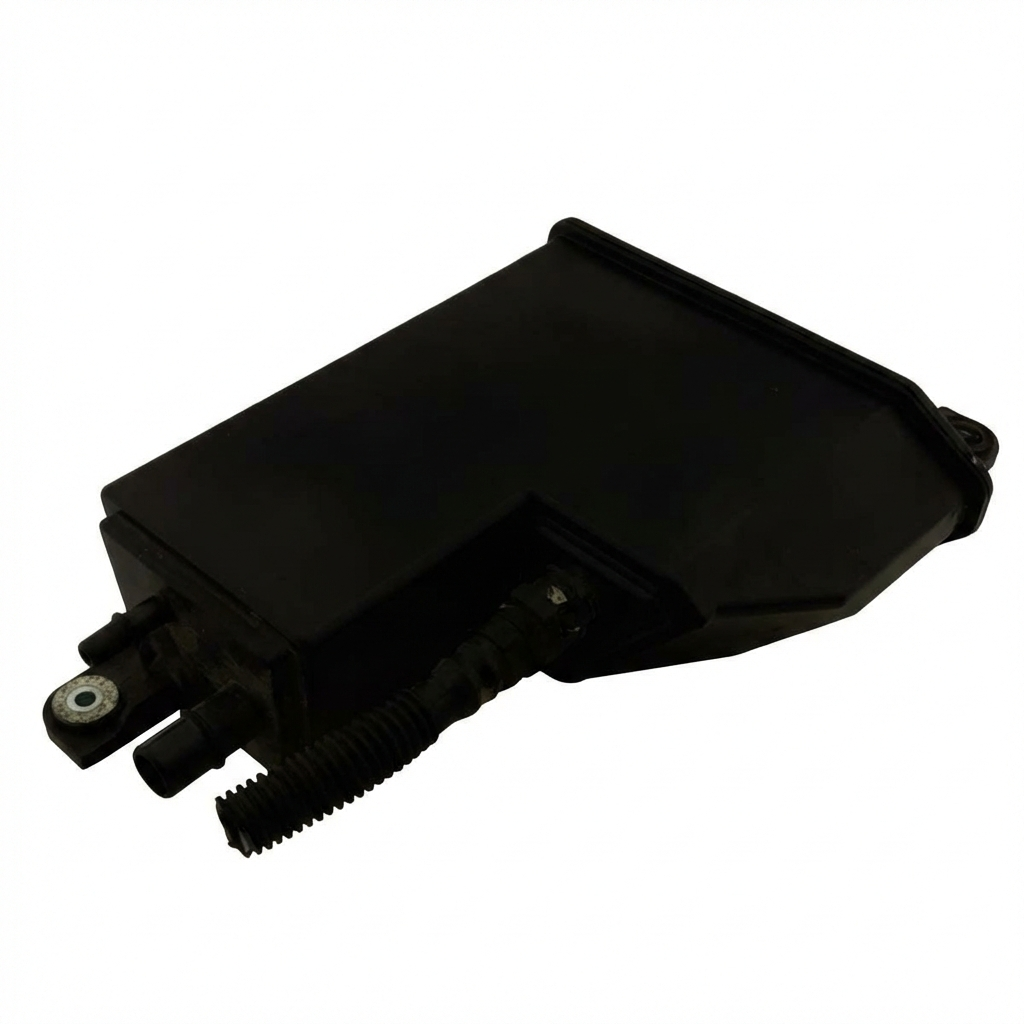
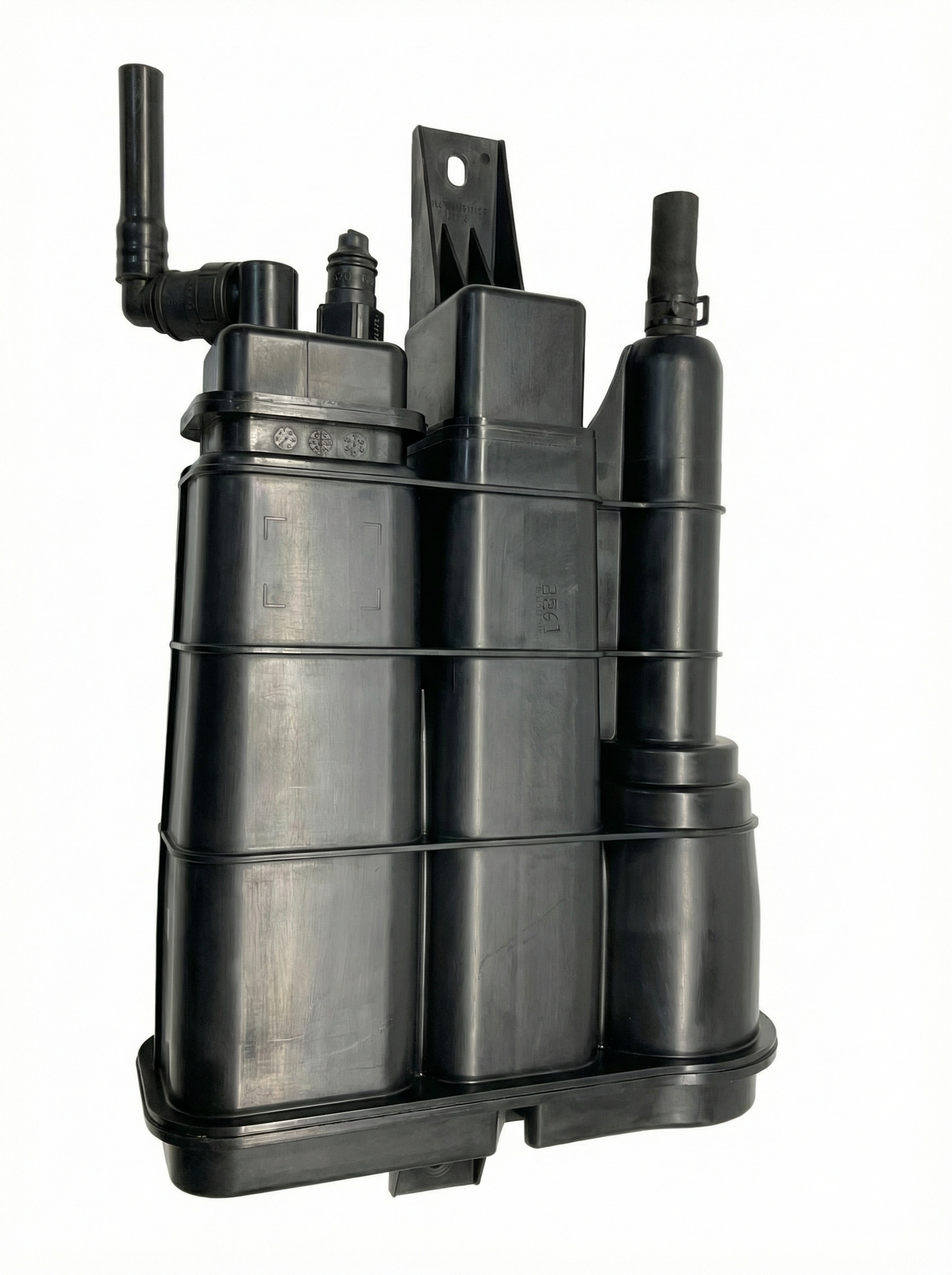
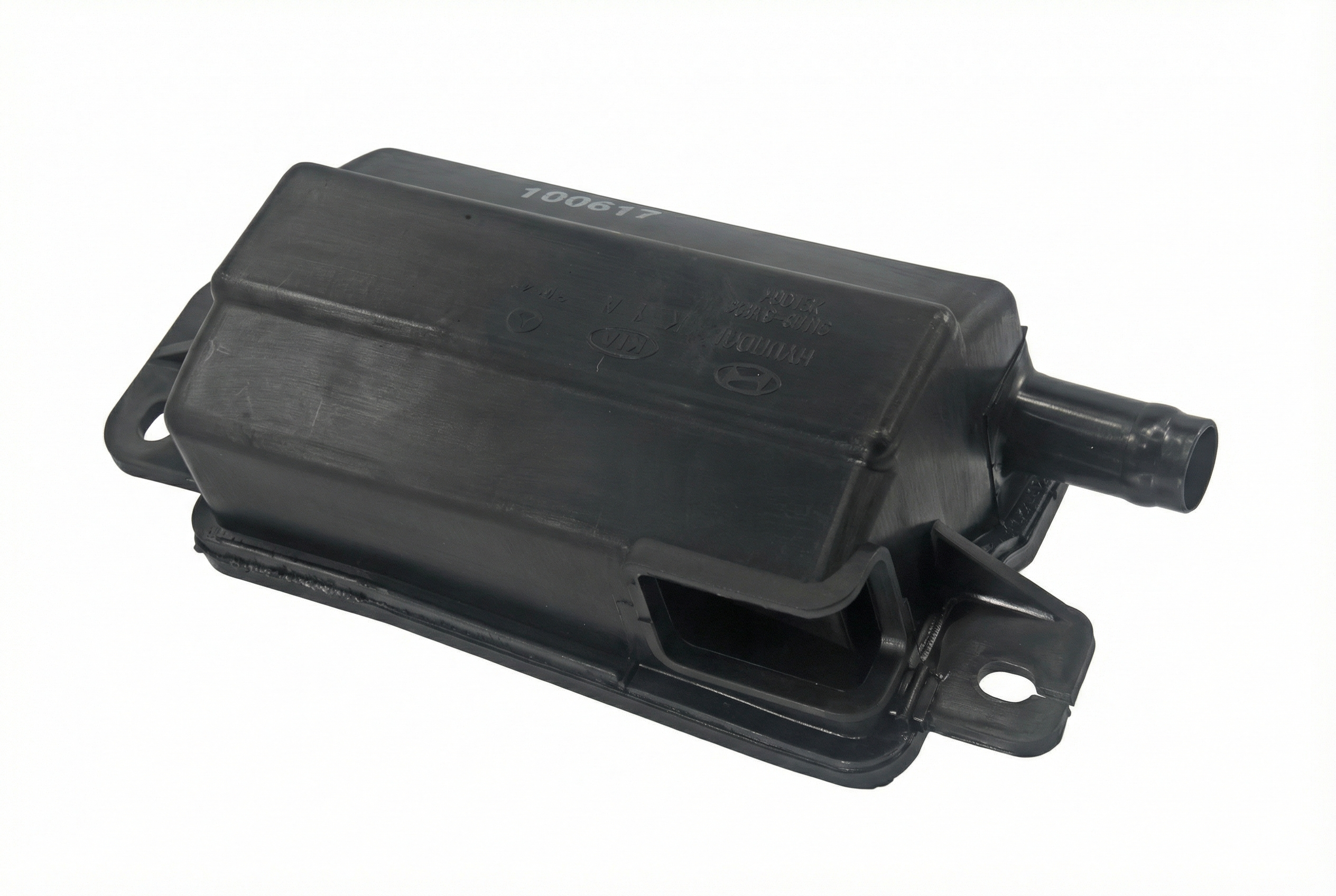
- Faulty EVAP Leak Detection Pump 🔴 High Probability → Shop Vapor Canister The pump contains an internal sensor and motor that can fail over time. Its location under the vehicle exposes it to the elements, potentially leading to internal corrosion or electronic failure.
How to confirm: Diagnosis requires a bi-directional scan tool to command the pump to run and observe the feedback signal. A simpler method is to rule out wiring issues first; if the wiring is good, the pump is the likely culprit.
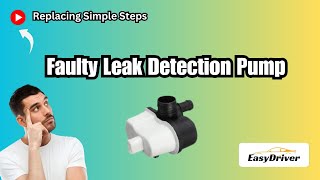
Typical fix: Replace the entire leak detection pump assembly. 🎬 See this walkthrough on how to replace a faulty pump. This part is typically located near the charcoal canister at the rear of the vehicle. For 2011-2014 (YF) models, use OEM part #31430-3S500. For 2015-2017 (LF) models, use OEM part #31430-C1000.
Est. part cost: $100-$200 - Damaged Wiring or Corroded Connector 🟡 Medium Probability The wiring harness to the leak detection pump is routed underneath the car, making it highly susceptible to damage from road salt, moisture, and physical impact from debris.
How to confirm: Visually inspect the wiring harness leading to the leak detection pump for any breaks, chafing, or corrosion. Check the electrical connector for bent, loose, spread, or corroded pins. Use a multimeter to check for proper power and ground at the connector.
Typical fix: Repair the damaged section of wire or clean/replace the corroded connector.
Est. part cost: $5-$50 - Clogged Leak Detection Pump Air Filter ⚪ Low Probability → Shop Evaporative Emissions System Leak Detection Pump The pump uses a small filter to draw in fresh air for its tests. Over time, this filter can become clogged with dirt and debris, preventing the pump from operating correctly and potentially causing a performance range error.
How to confirm: Locate the air filter for the leak detection pump (it may be integrated or connected by a hose) and inspect it for blockage.
Typical fix: Clean or replace the air filter.
Est. part cost: $15-$40
Rare But Worth Checking
- Faulty Powertrain Control Module (PCM): → Shop Engine Control Module (ECM) This is very rare. The PCM should only be considered after all other possibilities, including the pump and wiring, have been thoroughly tested and ruled out.
Diagnosis Steps
- Scan the vehicle for any other stored trouble codes.
- Visually inspect the gas cap to ensure it is tight and the seal is intact, although this is not a primary cause for P2404. 🎬 Watch: Why you shouldn't just throw parts at EVAP leaks.
- Lift the vehicle and locate the EVAP leak detection pump assembly near the charcoal canister at the rear of the car.
- Carefully inspect the electrical connector and wiring harness going to the pump. Look for any signs of corrosion, damage, or loose connections.
- If wiring appears intact, use a multimeter to check for power and ground at the pump's connector with the key on.
- If power and ground are present, the leak detection pump assembly is the most likely failure point.
- If you have a bi-directional scan tool, you can command the pump to activate and monitor the sense circuit voltage to confirm the fault.
Parts You'll Likely Need
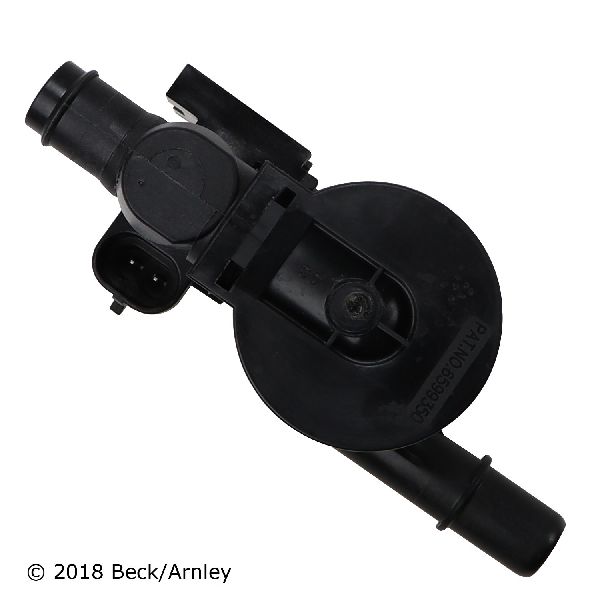
- EVAP Leak Detection Pump
(OEM #31430-3S500 (2011-2014 YF) or 31430-C1000 (2015-2017 LF) - Verify with VIN)— This is the component that the code directly references. An internal failure of the pump's motor or sense circuit is the most common reason for this code when wiring is confirmed to be good.
Trusted brands: Hyundai (Genuine OEM), Bosch, Dorman (911-396), Standard Motor Products
OEM price range: $150-$250
Aftermarket price range: $100-$200
Related Codes That Often Appear With This One
- P2401 — P2401 indicates a 'Pump Control Circuit Low' condition. Seeing it with P2404 strongly suggests an electrical issue, like a wiring short or a failed pump, affecting both the control and sense circuits.
Platform-Specific Known Issues
- While not directly related to code P2404, the 2011-2019 Sonata Hybrid is known to have issues with its Natural Vacuum Leak Detection (NVLD) sensor, especially in coastal areas. This is documented in Hyundai TSBs and typically causes leak codes like P0456, not circuit code P2404.
Mechanic-Grade Diagnostic Values
- Leak Detection Pump (LDP) Sense Circuit Voltage — expected: Typically 0.5V (pump off) to 5.0V (pump at full speed).. Failure: A voltage reading that is stuck, erratic, or outside the expected 0.5V-5.0V range when the pump is commanded on/off with a scan tool.
- LDP Power and Ground — expected: Approximately 12V (battery voltage) at the power pin and a good ground on the ground pin when measured with a multimeter at the pump connector with the key on.. Failure: Lack of 12V power or a high-resistance ground points to a wiring issue before the pump itself.
- Continuity of Sense Circuit Wire — expected: A resistance reading of less than 5.0 ohms between the LDP connector's sense pin and the corresponding pin at the PCM connector.. Failure: A reading of OL (Open Line) or significantly higher resistance indicates a break in the wire.
Scan Tool Commands That Help
- Hyundai GDS (Global Diagnostic System): Active Test: EVAP Leak Test or Leak Detection Pump Activation — This command allows a technician to manually turn the leak detection pump on and off. While commanding the pump on, the technician can monitor the live data for the sense circuit voltage to see if it responds correctly. This is the definitive way to determine if the pump is failing to respond or if the sense circuit is not reporting the pump's action.
Wiring & Ground Locations
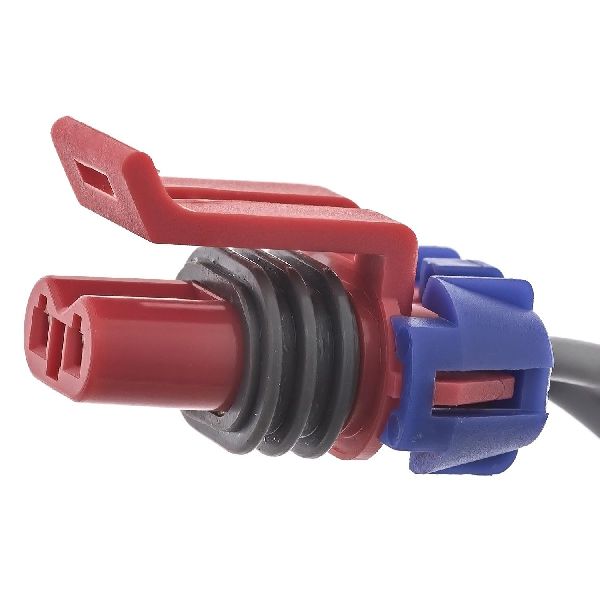
- EVAP Leak Detection Pump Connector — The pump and its connector are located at the rear of the vehicle, mounted to or near the charcoal canister, which is typically situated near the fuel tank. You will need to lift the vehicle to access it.. This connector is the primary point of failure for wiring issues. Its location under the car makes it highly vulnerable to corrosion from road salt and moisture, and physical damage from road debris. A visual inspection of the connector pins for green/white corrosion or physical damage is a critical first step.
- Ground Points (General) — While a specific ground point for the LDP circuit is not commonly documented in general repair data, Hyundai wiring diagrams show multiple chassis grounds in the rear of the vehicle. A technician would trace the ground wire from the LDP connector back to its termination point on the chassis.. A corroded or loose ground connection can cause a voltage drop or intermittent signal on the sense circuit, triggering a P2404 code even if the pump and the rest of the wiring are perfectly fine.
Diagnostic Flowchart
Other Known Issues on This Vehicle
Issues unrelated to this code that are worth knowing about as an owner of this generation:
- Catastrophic Engine Failure (Theta II GDI) 🔴 High — Widespread across 2.0L & 2.4L GDI engines. Manufacturing debris could restrict oil flow, leading to connecting rod bearing failure, engine knocking, and eventual seizure. Failures can occur at various mileages, often before 100,000 miles. (Ref: Multiple recalls (e.g., NHTSA 15V568000, 17V226000) and a class-action lawsuit settlement led to lifetime engine warranties for affected vehicles.)
- Worn Steering Column Coupler 🟠 Medium — Very common issue causing a distinct clicking or 'thud' noise from the steering column when turning the wheel. The flexible rubber coupler wears out over time. (Ref: Hyundai issued TSB 17-ST-002 and extended the warranty for this specific part to 10 years / 100,000 miles. The part number for the improved coupler is 56315-2K000-FFF.)
- Peeling White Paint 🟡 Low — Affects vehicles with factory white or pearl white paint, which can bubble and peel off in large sheets, particularly on the hood and roof. This is a cosmetic, not mechanical, issue. (Ref: Hyundai extended the paint warranty for this issue to 10 years with unlimited miles for affected models.)
- Excessive Oil Consumption 🟠 Medium — Often a precursor or related symptom to the larger Theta II engine problems. Owners report needing to add oil frequently between changes. (Ref: Covered under the extended engine warranty resulting from the class-action lawsuit.)
Used vs. New Parts: Buying Guide for This Vehicle
When a used part is the smart pick: A used EVAP Leak Detection Pump from a junkyard can be a cost-effective option, especially if it's from a low-mileage, rear-end collision vehicle where the part was not damaged. Since the failure is often electronic, it's a gamble, but the potential savings can be significant.
Donor-vehicle mileage cap: roughly under 80000 miles for the part to have meaningful remaining life.
What to inspect on the donor part:
- Check the electrical connector pins on the donor part for any signs of corrosion (green or white powder). Do not buy if corroded.
- Inspect the plastic housing for cracks or signs of extreme weather exposure (brittleness, severe fading).
- If possible, choose a part from a vehicle originating from a dry, non-salt-belt state to minimize the risk of internal corrosion.
- Ensure the part number on the donor unit exactly matches the one you are replacing (31430-3S500 for YF, 31430-C1000 for LF).
OEM-only on this vehicle (don't cheap out):
- While not required, using a Genuine Hyundai OEM part provides the highest assurance of compatibility and longevity for this specific component.
Aftermarket brands forum-validated for this vehicle:
- Dorman (specifically part 911-396) is a widely available aftermarket replacement mentioned for this application.
- Bosch and Standard Motor Products (SMP) are also reputable brands that manufacture this component.
Brands owners have reported issues with on this vehicle:
- There are no specific brands widely reported to be problematic, but ultra-low-cost, unbranded parts from online marketplaces carry a higher risk of premature failure or incorrect calibration.
Real Owner Stories
Aggregated from forums and TSBs cited above. Mileages and costs reflect what owners reported in those sources.
2013 Hyundai Sonata
Symptoms: The owner experienced code P2404 and the associated Check Engine Light.
What fixed it: The issue was resolved by the replacement of the EVAP Leak Detection Pump Assembly, using part #31430-3S500.
Source hint: hyundai-forums.com thread titled 'P2404 EVAP Leak Detection Pump Sense Circuit'
Related OBD-II Codes
Frequently Asked Questions
What is the correct part number for the EVAP leak detection pump on my 2013 Hyundai Sonata?
I have a 2016 Sonata with code P2404. Is the part number the same as the earlier models?
Could a loose gas cap cause the P2404 code on my Sonata?
Are there any good aftermarket brands for the leak detection pump if I don't want to buy an OEM part?
Where is the leak detection pump located on the 2011-2017 Sonata?
I heard Sonata Hybrids have a TSB for a leak detection sensor. Is that related to my P2404 code?
Is the wiring for the leak detection pump a common failure point on this car?
Helpful Videos
![What is P2404 Engine Code [Quick Guide]](https://img.youtube.com/vi/Mr_xesO7EwE/mqdefault.jpg)
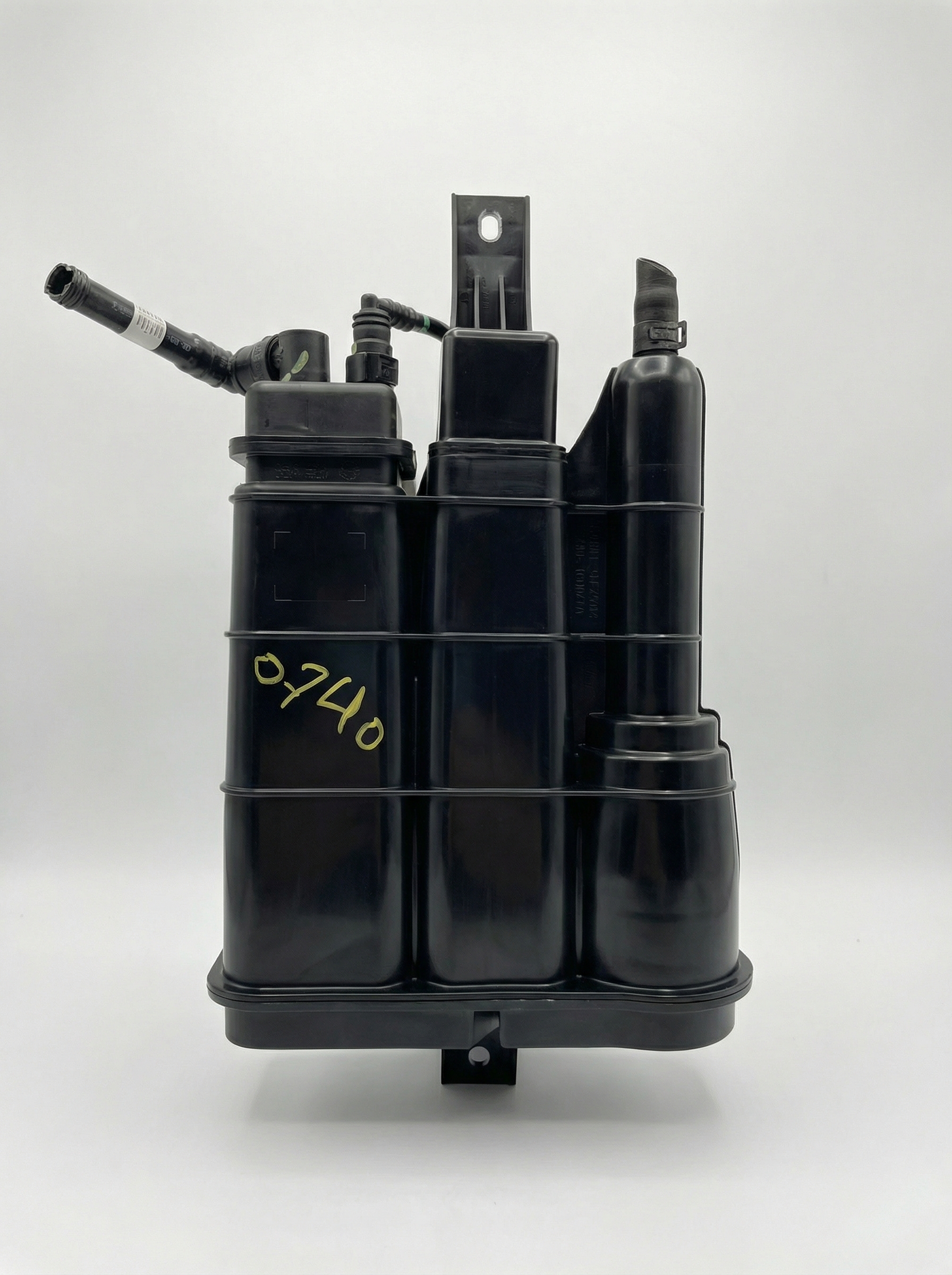
Used OEM Parts in Stock
New Aftermarket Parts Available


The information in this article is provided for general reference and educational purposes only. Vehicle specifications, procedures, and part compatibility can vary by production date, trim level, and region. Always consult your vehicle's factory service manual and verify part numbers before purchasing or performing repairs. Safety-critical components such as airbags, seat belts, and braking systems should be installed by a qualified professional.
- Hyundai Sonata:
- 🧭 Diagnostic Flowchart
- 🎬 Helpful Videos
- 🛍️ Shop This Part
- What's Unique About the 2011-2017 Hyundai Sonata
- Symptoms You May Notice
- Most Likely Causes
- Rare But Worth Checking
- Diagnosis Steps
- Parts You'll Likely Need
- Related Codes That Often Appear With This One
- Platform-Specific Known Issues
- Mechanic-Grade Diagnostic Values
- Scan Tool Commands That Help
- Wiring & Ground Locations
- Other Known Issues on This Vehicle
- Used vs. New Parts: Buying Guide for This Vehicle
- Real Owner Stories
- 2013 Hyundai Sonata
- Related OBD-II Codes
- Frequently Asked Questions
- 🎟️ Get 5% Off