

P2407 on 2022 Audi Q3: EVAP Pump Circuit Fault Causes and Fixes
For a 2022 Audi Q3, code P2407 is most often caused by overly sensitive engine computer software, not a faulty part. An official Audi Technical Service Bulletin (TSB 2071770/5) calls for a simple software update at a dealership, which should be the first step before replacing any parts. This issue is common across other VW and Audi models on the same platform.
- For a 2022 Audi Q3, do not immediately replace parts for a P2407 code.
- The most likely cause is overly sensitive software, which is fixed with an update from an Audi dealer per TSB 2071770/5.
- This code indicates an electrical circuit problem, not a physical leak, so a new gas cap or a smoke test will not fix it.
- Only consider replacing the Leak Detection Pump (OEM P/N: 5Q0906253D) or repairing wiring if the software update does not resolve the issue.
What's Unique About the 2022-2022 Audi Q3
Unlike on many other vehicles where a P2407 code often leads to replacing the leak detection pump or hunting for bad wires, Audi has identified a specific issue for the 2022 Q3. The manufacturer released a Technical Service Bulletin (TSB 2071770/5) stating that the original engine control software has diagnostics that are too sensitive, causing it to falsely trigger the P2407 code. Therefore, the primary and most common fix for this specific vehicle is a software update, not a hardware replacement. This same software sensitivity issue has been noted on platform-mates like the VW Atlas and Tiguan.
Symptoms You May Notice
- Illuminated Check Engine Light
- Inability to pass an emissions test due to the EVAP monitor being 'not ready'
- On some related VW models, the remote start feature may be disabled when this code is active.
- Replacing the gas cap. A bad gas cap will cause a leak code (like P0455 or P0456), not a circuit code like P2407.
- Performing a smoke test. A smoke test is used to find physical leaks in hoses. P2407 is an electrical fault, so a smoke test is not a useful diagnostic step.
Most Likely Causes
- Overly Sensitive Engine Control Module (ECM) Software 🔴 High Probability → Shop Engine Control Module (ECM) Audi has officially documented this issue in Technical Service Bulletin 01 24 16 2071770/5, stating 'OBD diagnostics too sensitive'. This TSB was an update to a prior informational bulletin (2066675) where dealers were initially told to just clear the code and wait for a fix.
How to confirm: Contact an Audi dealership and reference TSB 2071770/5. They can check if your vehicle's software has been updated. The TSB applies to ECM part number 83A.906.259.D, updating software version 0001 to 0002 or higher.
Typical fix: An Audi dealer performs a software update on the Engine Control Module using the SVM action code specified in the TSB. The update makes the diagnostic less sensitive to minor current fluctuations from the pump.
Est. part cost: $0 - Faulty EVAP Leak Detection Pump (LDP) ⚪ Low Probability → Shop Vapor Canister While possible, this is much less likely than the software issue on this specific model year. The internal sensor (reed switch or Hall-effect sensor) within the pump can fail, causing erratic signals.
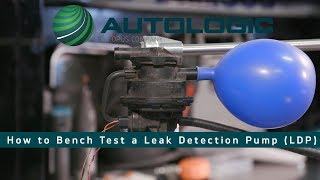
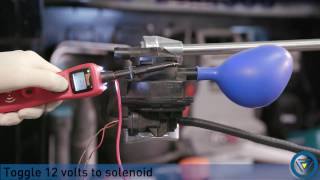
How to confirm: If the TSB software update does not resolve the code, a technician can use a scan tool to command the pump on and monitor the sense circuit voltage for dropouts or instability. A bench test can also be performed by checking resistance across the connector pins. 🎬 See how to bench test your leak detection pump properly.
Typical fix: Replace the leak detection pump. The OEM part number is 5Q0906253D, which supersedes previous versions 5Q0906253A, 5Q0906253B, and 5Q0906253C.
Est. part cost: $150-$300 - Damaged Wiring or Corroded Connector ⚪ Low Probability The LDP is located underneath the vehicle, exposing its wiring harness and connector to moisture, road salt, and debris which can lead to corrosion or physical damage. This is a common failure point on VW/Audi vehicles with underbody-mounted pumps.
How to confirm: Visually inspect the wiring harness leading to the leak detection pump, which is typically near the charcoal canister by the fuel tank. Unplug the connector and check for green or white corrosion on the pins.
Typical fix: Clean the connector terminals or repair/replace the damaged section of the wiring harness. A replacement connector pigtail (OEM part 1J0973703) is available for robust repairs.
Est. part cost: $5-$50
Diagnosis Steps
- Verify the code with an OBD-II scanner.
- Contact an Audi dealership and inquire about TSB 01 24 16 2071770/5. This is the most critical first step. Confirm your vehicle is eligible and has not already been updated.
- If your vehicle is eligible, have the dealer perform the ECM software update. The TSB explicitly warns technicians not to replace components before performing the update.
- If the code returns after the software update, proceed with physical diagnosis.
- Locate the EVAP leak detection pump near the charcoal canister under the rear of the vehicle, often behind the passenger-side wheel well liner.
- Visually inspect the wiring harness for any signs of damage, such as chafing, melting, or rodent damage.
- Disconnect the electrical connector from the pump and inspect the pins for corrosion or moisture. The 3-pin connector housing is part number 8K0973703. Clean as necessary.
- If wiring and the connector are in good condition, perform electrical tests on the pump and harness using a multimeter. Check for ~12V at Pin 3, test for a ground signal from the ECM at Pin 2 during an output test, and measure resistance between pins.
- If electrical tests point to a faulty pump, replace it. The correct OEM part is 5Q0906253D.
Parts You'll Likely Need
- Engine Control Module Software Update
(OEM #83A.906.259.D (update from v0001 to v0002))— This is the official fix documented by Audi in TSB 2071770/5 for overly sensitive diagnostics on the 2022 Q3.
Trusted brands: Audi Genuine
OEM price range: $0-$250
Aftermarket price range: N/A - EVAP Leak Detection Pump
(OEM #5Q0906253D)— This part is only needed if the official software update does not fix the code and the pump's internal sensor has been diagnosed as faulty. Part number 5Q0906253D supersedes previous versions.
Trusted brands: Bosch, Audi Genuine
OEM price range: $80-$250
Aftermarket price range: $50-$120
Technical Service Bulletins (TSBs) & Recalls
- 01 24 16 2071770/5 (Audi): '01 MIL on, DTC P240700 Leak Detection Pump Current Fluctuating'. This TSB confirms the cause is often overly sensitive software and the fix is an ECM update for the 2022 Q3.
- 01-23-04 (2069630) (VW): A related Volkswagen TSB for the GTI which also cites overly sensitive software for P2407 and requires a software update.
- 24FY (VW): A proactive software update campaign for 2020-2021 VW Atlas models to prevent P2407 among other codes, demonstrating the widespread nature of the software issue.
Platform-Specific Known Issues
- Audi has issued Technical Service Bulletin (TSB) 01 24 16 2071770/5, which states that for the 2022 Q3, the P2407 code is often triggered by overly sensitive OBD diagnostics, and the solution is an update to the engine control module's software. This TSB supersedes a previous bulletin (2066675) that advised dealers to simply clear the code and wait for a solution to be developed.
Mechanic-Grade Diagnostic Values
- Leak Detection Pump (V144) Internal Resistance — expected: 640 to 720 Ω between terminals 1 & 3; 15 to 17 Ω between terminals 2 & 3.. Failure: Readings outside these ranges indicate an internal failure of the pump's solenoid or sensor.
- LDP Connector Pin 3 Voltage (Power Supply) — expected: ~12V (Battery Voltage) with key on.. Failure: No voltage indicates a problem with the power supply from the relay or a break in the wire.
- LDP Connector Pin 2 Signal (ECM Control) — expected: The ECM provides a ground on this pin to activate the pump during a test.. Failure: If the ECM never provides a ground during an output test, it suggests a wiring issue or a fault in the ECM driver circuit.
- LDP Ground Strap Resistance — expected: < 0.1 Ω from the ground point to a clean chassis location.. Failure: A higher resistance reading points to a corroded or loose ground connection, which can cause erratic circuit behavior.
- LDP Sense Circuit Voltage (Live Scan Tool Data) — expected: A stable voltage, typically around 4.5-5.0V, when the pump is commanded on.. Failure: Rapid spikes or drops to 0V confirm the 'intermittent/erratic' condition described by the P2407 code.
Scan Tool Commands That Help
- VCDS (VAG-COM) or ODIS: Output Test for EVAP Leak Detection Pump (V144) — This is a quick initial test to see if the pump's solenoid clicks when commanded by the scan tool. A click confirms the ECM can send a signal and the pump's solenoid coil is not completely open.
- VCDS (VAG-COM) or ODIS: Basic Settings - Group 071 (Fuel tank leak test) — This initiates the full, automated EVAP system leak test. The scan tool will display the test status and the state of the pump's internal reed switch ('Reed Open' / 'Reed Closed'), which is crucial for diagnosing an erratic sense circuit. The final result will be 'Syst. OK' or 'Syst. Not OK'.
Wiring & Ground Locations
- LDP Connector Pin 1 — On the 3-pin connector at the Leak Detection Pump.. This is the 'sense' wire that sends the reed switch status back to the ECM. An intermittent signal on this wire is the direct cause of the P2407 code.
- LDP Connector Pin 2 — On the 3-pin connector at the Leak Detection Pump.. This is the control wire that receives a ground signal from the ECM to activate the pump's solenoid.
- LDP Connector Pin 3 — On the 3-pin connector at the Leak Detection Pump.. This is the 12V power supply for the pump, typically supplied by the Engine Component Power Supply Relay (J757).
- LDP Connector Housing (8K0973703) / Pigtail (1J0973703) — Connects the vehicle harness to the Leak Detection Pump.. This connector is a common failure point due to corrosion from its exposed location under the vehicle. Knowing the part number allows for proper replacement if the housing is brittle or the terminals are too corroded to clean.
- Rear Chassis Ground Point — General location is in the rear of the vehicle, often near the tail light assemblies or in the trunk/spare tire area.. While not exclusively for the LDP, a poor chassis ground in this area can affect multiple components and cause intermittent electrical faults like P2407.
OEM Part Supersession History
5Q0906253A, 5Q0906253B, 5Q0906253C→5Q0906253D— Component revision and improvement by the manufacturer.
Diagnostic Flowchart
Other Known Issues on This Vehicle
Issues unrelated to this code that are worth knowing about as an owner of this generation:
- Infotainment (MMI) System Glitches 🟠 Medium — Commonly reported on 2020-2022 models. Issues include freezing, random reboots, 'ghost touching', and connectivity problems with profiles or phones. (Ref: Software updates from the dealer often resolve these issues, but some cases have required control module replacement.)
- Premature Brake Wear 🟡 Low — Owners report faster than expected wear of brake pads and rotors, sometimes as early as 20,000-30,000 miles, especially in city driving.
- Jerky/Hesitant Automatic Transmission 🟡 Low — Some 2019-2022 models with the 8-speed automatic have reported rough shifts or hesitation at low speeds. (Ref: Software updates have reportedly improved this behavior in later models.)
- Sunroof Leaks 🟠 Medium — Reported on 2019-2021 models, typically caused by clogged or defective sunroof drainage channels, which can lead to water in the cabin and potential damage to electronics.
- Auto Start-Stop System Malfunctions 🟡 Low — In 2020-2022 models, the system can sometimes cause stalling or sluggish restarts, often related to battery health or software glitches.
Used vs. New Parts: Buying Guide for This Vehicle
When a used part is the smart pick: For this specific repair, buying a used Leak Detection Pump is generally not recommended. The primary fix is a software update, and if the pump itself is faulty, it is often due to wear or corrosion from its exposed location under the car. A used part may have limited remaining life.
Donor-vehicle mileage cap: roughly under 40000 miles for the part to have meaningful remaining life.
What to inspect on the donor part:
- Inspect the electrical connector pins for any signs of green or white corrosion.
- Check the plastic housing for cracks or damage from road debris.
- If possible, ask for the donor vehicle's history to avoid parts from flood-damaged or high-salt regions.
OEM-only on this vehicle (don't cheap out):
- Engine Control Module (ECM) Software Update: This can only be performed by an Audi dealership or a specialized shop with access to Audi's software servers.
Aftermarket brands forum-validated for this vehicle:
- Bosch (Often the original OEM supplier for this part)
Brands owners have reported issues with on this vehicle:
- No-name, unbranded pumps from online marketplaces, as their internal sensors may not meet the precise specifications required by the ECM, leading to continued or new fault codes.
Real Owner Stories
Aggregated from forums and TSBs cited above. Mileages and costs reflect what owners reported in those sources.
2022 Audi Q5
Symptoms: The Check Engine Light came on, but the dealer initially said to ignore it.
What fixed it: The dealer found TSB 2071770 and confirmed that a software update was the correct fix for the P2407 code.
Source hint: AudiWorld Forums - '2022 Q5 CEL? Dealer says ignore.'
New Audi S3 — ~2000 miles
Symptoms: Fault code P2407 appeared on a very low-mileage vehicle.
What fixed it: The context indicates this is consistent with a software flaw rather than a part failure, which is addressed by a dealer-performed ECM software update per the relevant TSB.
Source hint: Reddit r/Audi - 'Fault code P2407. Probably loose gas cap, right?'
Related OBD-II Codes
Frequently Asked Questions
What is the first thing I should do if my 2022 Audi Q3 shows a P2407 code?
My dealer wants to replace the EVAP leak detection pump for P2407. Is this correct for a 2022 Q3?
How do I know if my Q3 is covered by the software update TSB for P2407?
My remote start stopped working at the same time the Check Engine Light for P2407 came on. Are these related?
If the software update doesn't fix the P2407 code, what is the next most likely cause?
Does this P2407 software sensitivity issue affect other vehicles besides the Q3?
Helpful Videos
![What is P2407 Engine Code [Quick Guide]](https://img.youtube.com/vi/sJcDbFUMfNY/mqdefault.jpg)
Used OEM Parts in Stock
New Aftermarket Parts Available


The information in this article is provided for general reference and educational purposes only. Vehicle specifications, procedures, and part compatibility can vary by production date, trim level, and region. Always consult your vehicle's factory service manual and verify part numbers before purchasing or performing repairs. Safety-critical components such as airbags, seat belts, and braking systems should be installed by a qualified professional.
- Audi Q3:
- 🧭 Diagnostic Flowchart
- 🎬 Helpful Videos
- 🛍️ Shop This Part
- What's Unique About the 2022-2022 Audi Q3
- Symptoms You May Notice
- Most Likely Causes
- Diagnosis Steps
- Parts You'll Likely Need
- Technical Service Bulletins (TSBs) & Recalls
- Platform-Specific Known Issues
- Mechanic-Grade Diagnostic Values
- Scan Tool Commands That Help
- Wiring & Ground Locations
- OEM Part Supersession History
- Other Known Issues on This Vehicle
- Used vs. New Parts: Buying Guide for This Vehicle
- Real Owner Stories
- 2022 Audi Q5
- New Audi S3 — ~2000 miles
- Related OBD-II Codes
- Frequently Asked Questions
- 🎟️ Get 5% Off